





Tire Repair Kit Explained – Mechanic Advice
What a Tire Repair Kit Is, How to Use One, and When It’s Actually Safe
A flat tire can happen without warning, and many modern vehicles no longer come with a full-size spare. Instead, manufacturers often include a tire repair kit designed to temporarily restore mobility. While these kits can be useful in emergencies, they are often misunderstood.
This in-depth guide explains what a tire repair kit is, how different types work, how to use a tire repair kit properly, and when a tire repair kit should not be relied on as a permanent solution. The guidance aligns with tire and safety recommendations discussed across Simi Valley Chrysler Dodge Jeep Ram service resources.
For proper tire inspection and long-term repair, professional service at Simi Valley Chrysler Dodge Jeep Ram Service Center is always recommended.
https://www.simivalleychryslerdodgejeepram.com/service.aspx
What Is a Tire Repair Kit?
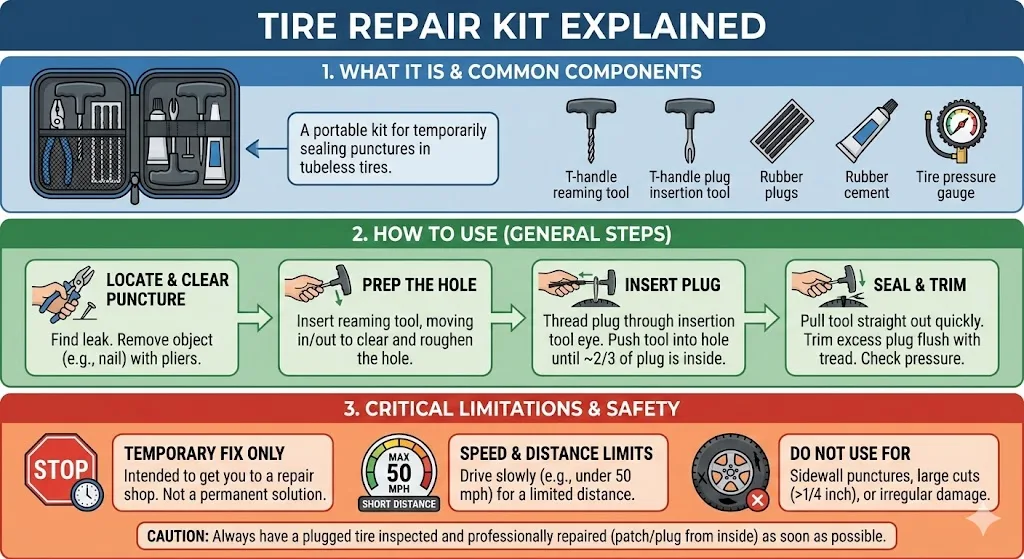
A tire repair kit is an emergency solution designed to temporarily seal a puncture and restore air pressure so you can safely drive to a repair facility. Tire repair kits vary by vehicle and purpose, but they generally fall into two categories:
- Plug-style tire repair kits
- Sealant-based flat tire repair kits
Some kits are designed specifically for tubeless tires, while others are compact sealant systems paired with a small air compressor.
Common Types of Tire Repair Kits
Flat Tire Repair Kit (Sealant + Compressor)
A flat tire repair kit typically includes:
- Liquid sealant
- Small electric air compressor
- Inflation hose and power cable
These kits inject sealant into the tire and inflate it simultaneously. They are commonly supplied with newer vehicles in place of a spare tire.
Simi CDJR service articles often address the limitations of sealant-based systems and why professional inspection is required afterward.
https://www.simivalleychryslerdodgejeepram.com/blogs/5737
Tubeless Tire Repair Kit
A tubeless tire repair kit usually contains:
- T-handle reaming tool
- Plug insertion tool
- Rubber plugs
- Adhesive or rubber cement
These kits are used to physically plug a puncture in a tubeless tire’s tread area.
Bike Tire Repair Kit / Bicycle Tire Repair Kit
A bike tire repair kit or bicycle tire repair kit is specifically designed for:
- Thinner tire casings
- Lower air pressures
- Inner tube or tubeless bicycle systems
These kits should never be used on automotive tires, as they are not designed for vehicle weight, speed, or load.
How to Use a Tire Repair Kit
One of the most common searches is how to use a tire repair kit, and the answer depends on the type of kit you have.
How to Use a Sealant-Based Flat Tire Repair Kit
This process applies to most factory-supplied flat tire repair kits.
Step 1: Park Safely
- Pull over to a safe, flat location
- Turn off the engine
- Engage the parking brake
Step 2: Connect the Sealant
- Attach the sealant hose to the tire valve
- Plug the compressor into the vehicle’s power outlet
Step 3: Inflate the Tire
- Turn on the compressor
- Allow sealant and air to enter the tire
- Inflate to the recommended pressure
Step 4: Drive Immediately
- Drive for 5–10 minutes
- This spreads the sealant inside the tire
After use, the tire must be professionally inspected, even if it appears to hold air.
Simi CDJR service technicians routinely clean and inspect tires after sealant use to ensure no internal damage exists.
https://www.simivalleychryslerdodgejeepram.com/service.aspx
How to Use a Tubeless Tire Repair Kit
Drivers also frequently search how to use tubeless tire repair kit. This applies to plug-style kits.
- Locate the puncture
- Remove the object
- Ream the hole
- Insert the plug
- Trim excess rubber
- Inflate tire
- Check for leaks
This method is typically considered a temporary repair, not a permanent fix.
Are Tire Repair Kits Permanent?
This is one of the most misunderstood aspects of tire repair kits.
Most tire repair kits are NOT permanent solutions.
Sealant kits:
- Do not inspect internal tire structure
- Can mask internal damage
- Often void tire warranties
Plug kits:
- Do not reinforce internal layers
- Cannot detect belt separation
Professional tire repair standards require:
- Tire removal
- Internal inspection
- Patch or patch-plug repair
Simi CDJR recommends professional evaluation after any tire repair kit use.
https://www.simivalleychryslerdodgejeepram.com/service.aspx
Does Tesla Come With a Tire Repair Kit?
Many drivers ask does Tesla come with a tire repair kit, especially Tesla Model 3 owners. Some Tesla vehicles include a sealant-based repair kit, while others do not.
Regardless of brand, the limitations of tire repair kits remain the same:
- Temporary mobility only
- Speed and distance restrictions
- Mandatory professional inspection afterward
The same principles apply to Chrysler, Dodge, Jeep, and Ram vehicles equipped with repair kits instead of spare tires.
How to Use Tesla Tire Repair Kit Model 3 (General Principles)
Searches like how to use Tesla tire repair kit Model 3 reflect confusion around electric vehicles and tire repair. While procedures vary slightly by manufacturer, the fundamentals are the same:
- Sealant + compressor
- Temporary use only
- Speed limitations
- Immediate service required
Simi CDJR service guidance applies similar caution to all sealant-based systems.
https://www.simivalleychryslerdodgejeepram.com/service.aspx
When NOT to Use a Tire Repair Kit
Do not use a tire repair kit if:
- Damage is on the sidewall
- Tire has a blowout
- Tire has multiple punctures
- Wheel is damaged
- Tire pressure dropped to zero at speed
In these cases, towing or tire replacement is the safest option.
Tire Repair Kit vs Spare Tire
Tire repair kit advantages:
- Lightweight
- Saves trunk space
- Quick roadside use
Disadvantages:
- Temporary repair
- Limited effectiveness
- Cannot repair large damage
Spare tire advantages:
- True replacement
- No sealant residue
- No speed restrictions
Simi CDJR service teams can help drivers evaluate whether a spare tire conversion is appropriate.
https://www.simivalleychryslerdodgejeepram.com/service.aspx
How Long Can You Drive on a Tire Repaired With a Kit?
Most manufacturers recommend:
- Driving no more than 50–100 miles
- Staying below highway speeds
- Visiting a service center immediately
Driving longer than recommended increases the risk of tire failure.
Are Tire Repair Kits Safe?
Tire repair kits are safe only when used correctly and temporarily.
They are unsafe when:
- Used as permanent repairs
- Used on sidewall damage
- Ignored without follow-up inspection
Safety systems like ABS and traction control depend on tire integrity.
Professional Tire Repair at Simi CDJR
At Simi Valley Chrysler Dodge Jeep Ram, tire service includes:
- Internal tire inspection
- Proper patch installation
- Sealant cleanup
- TPMS sensor inspection
- Tire replacement if necessary
This ensures your vehicle remains safe at highway speeds and under load.
https://www.simivalleychryslerdodgejeepram.com/service.aspx
Final Thoughts
A tire repair kit is an emergency mobility solution — not a permanent fix. While it can help you get back on the road temporarily, it does not replace professional tire repair or replacement.
If you’ve used a tire repair kit, or your vehicle came equipped with one instead of a spare, schedule a tire inspection at Simi Valley Chrysler Dodge Jeep Ram Service Center to ensure long-term safety and reliability.
https://www.simivalleychryslerdodgejeepram.com/service.aspx
Tire Plug Kit Guide : Mechanic Advice
How to Use a Tire Plug Kit, Are Tire Plug Kits Safe, and When You Shouldn’t Use One
A flat tire can happen anywhere — on the freeway, at work, or in your driveway. When it does, many drivers turn to a tire plug kit as a quick roadside solution. But questions remain:
- How to use a tire plug kit properly?
- Are tire plug kits safe?
- Are tire plug kits permanent?
- How long does a tire plug kit last?
- What is the best tire plug kit?
This complete guide answers those questions and explains when a tire plug repair kit is appropriate — and when professional tire repair is the safer option.
For proper tire inspection and repair, Simi Valley Chrysler Dodge Jeep Ram provides professional tire services that ensure safe and long-lasting results.
https://www.simivalleychryslerdodgejeepram.com/service.aspx
What Is a Tire Plug Kit?
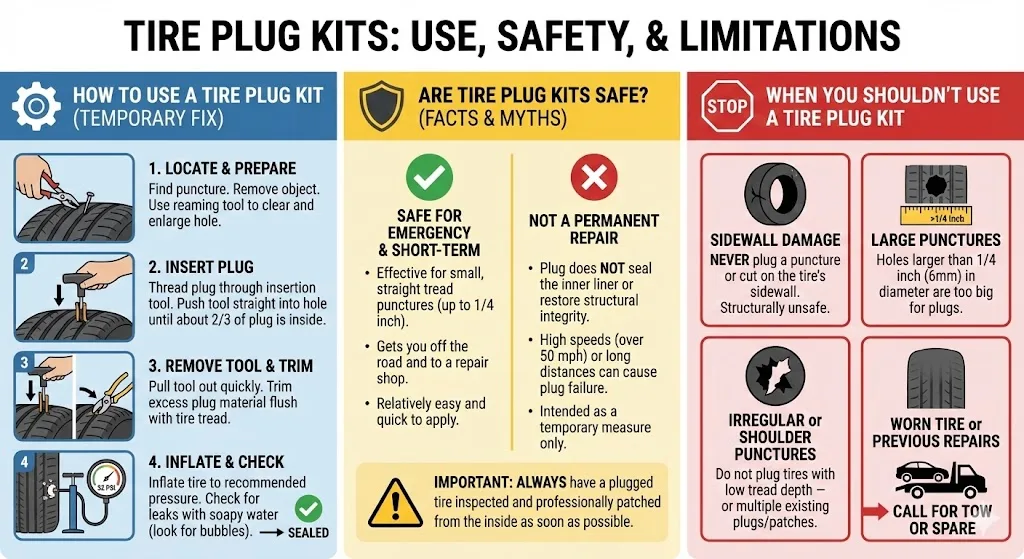
A tire plug kit is a compact repair kit designed to temporarily seal punctures in tubeless tires. Most kits include:
- T-handle reaming tool
- Insertion tool
- Sticky rubber plugs
- Rubber cement (in some kits)
- Razor blade
Common variations include:
- Slime tire plug kit
- Slime deluxe tire plug kit
- CRC tire plug kits
- Basic tire plug repair kit options
These kits are commonly used for small punctures caused by nails or screws in the tread area.
How to Use a Tire Plug Kit
One of the most searched questions is how to use a tire plug kit, and while the process may seem simple, proper steps matter.
Step 1: Locate the Puncture
- Inspect the tire carefully
- Identify the object causing the leak
- Confirm it is in the tread area
Do not attempt to plug:
- Sidewall damage
- Large tears
- Blowouts
Step 2: Remove the Object
- Use pliers to pull out the nail or screw
- Be prepared for air loss
Step 3: Use the Reaming Tool
- Insert the reamer into the hole
- Move it in and out to clean and widen the puncture
- This prepares the tire for the plug
This step ensures the plug bonds properly.
Step 4: Insert the Plug
- Thread the sticky plug through the insertion tool
- Apply rubber cement if included
- Push the plug into the puncture firmly
- Leave about half an inch exposed
Then pull the tool straight out.
Step 5: Trim Excess Plug
- Cut off excess rubber
- Inflate tire to proper pressure
- Check for leaks
That explains how to plug a tire with a plug kit, but the bigger question is whether it’s a safe long-term fix.
Are Tire Plug Kits Permanent?
This is one of the most important questions.
Are tire plug kits permanent?
In most cases, no.
A tire plug kit is typically considered a temporary repair. While some plugs may last months or even years, professional tire repair standards recommend:
- Internal patch + plug combination
- Tire removal for inspection
- Damage verification
Professional repair ensures no internal sidewall damage occurred.
Simi CDJR recommends professional inspection after any puncture to verify structural integrity.
https://www.simivalleychryslerdodgejeepram.com/service.aspx
Are Tire Plug Kits Safe?
Are tire plug kits safe?
They can be safe under specific conditions:
Safe when:
- Puncture is less than 1/4 inch
- Damage is in the tread area
- No sidewall damage
- Tire is otherwise in good condition
Unsafe when:
- Damage is near the sidewall
- Tire has internal separation
- Multiple punctures exist
- Tire is worn below safe tread depth
A tire plug alone does not allow inspection of internal tire layers. That’s why professional repair is considered safer.
How Long Do Tire Plug Kits Last?
Another common question: how long does a tire plug kit last?
There is no guaranteed lifespan. Some plugs may last the remaining life of the tire, while others may fail sooner depending on:
- Driving conditions
- Tire age
- Installation quality
- Speed and load stress
For daily driving and highway speeds, professional patch repair is strongly recommended after using a plug as a temporary fix.
Do Tire Plug Kits Work?
Yes — for small tread punctures, a tire plug repair kit can stop air loss effectively.
However:
- It does not restore structural integrity
- It does not inspect for internal damage
- It may void tire warranties
Professional tire services provide a more complete solution.
https://www.simivalleychryslerdodgejeepram.com/service.aspx
Best Tire Plug Kit: What to Look For
When people search best tire plug kit, they typically compare:
- Slime tire plug kit
- Slime deluxe tire plug kit
- Heavy-duty T-handle kits
- Compact roadside kits
What matters most:
- Strong insertion tool
- Quality rubber plugs
- Durable reaming tool
- Clear instructions
Brand matters less than correct usage and understanding limitations.
Where to Buy a Tire Plug Kit
Drivers often ask:
- Where to buy tire plug kit
- Does dollar general sell tire plug kits
While many retail stores sell basic kits, quality and completeness vary.
For safety-critical repairs, professional tire inspection is more reliable than retail plug-only solutions.
https://www.simivalleychryslerdodgejeepram.com/service.aspx
How Much Does a Tire Plug Kit Cost?
Another frequent question:
- How much is a tire plug kit?
- How much does a tire plug kit cost?
Most retail kits range between $10 and $30 depending on brand and included tools.
However, cost should not be the only factor when considering tire safety.
How to Plug a Tire Without a Kit
Some drivers search:
- How to plug a tire without a kit
- How to plug a tire without a plug kit
This is strongly discouraged.
Improvised methods:
- Do not seal properly
- Risk sudden failure
- Compromise safety
Always use proper equipment or seek professional repair.
How to Use a Slime Tire Plug Kit
The process for how to use a Slime tire plug kit or Slime deluxe tire plug kit is similar to other kits:
- Remove puncturing object
- Ream the hole
- Insert plug
- Trim excess
- Inflate and test
Brand does not change repair limitations.
Tire Plug Kit vs Patch Repair
Key difference:
Plug:
- Installed externally
- Quick roadside solution
- Temporary in most cases
Patch:
- Installed internally
- Requires tire removal
- More reliable long-term
Professional patch-plug combination repairs are considered industry standard.
Simi Valley Chrysler Dodge Jeep Ram offers tire inspections and safe repair procedures to ensure long-term reliability.
https://www.simivalleychryslerdodgejeepram.com/service.aspx
When NOT to Use a Tire Plug Kit
Do not use a tire plug kit if:
- Damage is on sidewall
- Puncture is larger than 1/4 inch
- Tire cords are visible
- Tire is severely worn
- Tire has multiple punctures close together
These situations require professional evaluation or tire replacement.
Why Professional Tire Service Is Safer
At Simi Valley Chrysler Dodge Jeep Ram, tire service includes:
- Full tire removal
- Internal inspection
- Proper patch installation
- TPMS inspection
- Pressure balancing
This ensures the tire remains safe at highway speeds and under load.
Final Thoughts
A tire plug kit can be a useful emergency solution. It answers the immediate need to restore air pressure and get you moving again. However, it is rarely considered a permanent repair.
If you’ve used a plug or are unsure about tire safety, schedule a professional tire inspection at Simi Valley Chrysler Dodge Jeep Ram Service Center.
How to Read Tire Size : Mechanic Guide
A Complete Guide to Understanding Tire Size Numbers on Your Vehicle
Tire size numbers can look confusing at first glance, but they contain critical information about your vehicle’s handling, safety, ride comfort, and performance. Whether you are replacing worn tires, upgrading wheels, or preparing for seasonal driving, understanding how to read a tire size ensures you choose the correct fit for your Chrysler, Dodge, Jeep, or Ram vehicle.
This in-depth guide explains how to read tire size numbers, what each marking means, where to find your factory tire size, and how incorrect sizing can impact performance. The information aligns with guidance commonly discussed in Simi Valley Chrysler Dodge Jeep Ram service and maintenance resources.
For tire inspections, fitment verification, or professional tire replacement, visit Simi Valley Chrysler Dodge Jeep Ram Service Center.
https://www.simivalleychryslerdodgejeepram.com/service.aspx
What Does Tire Size Mean?
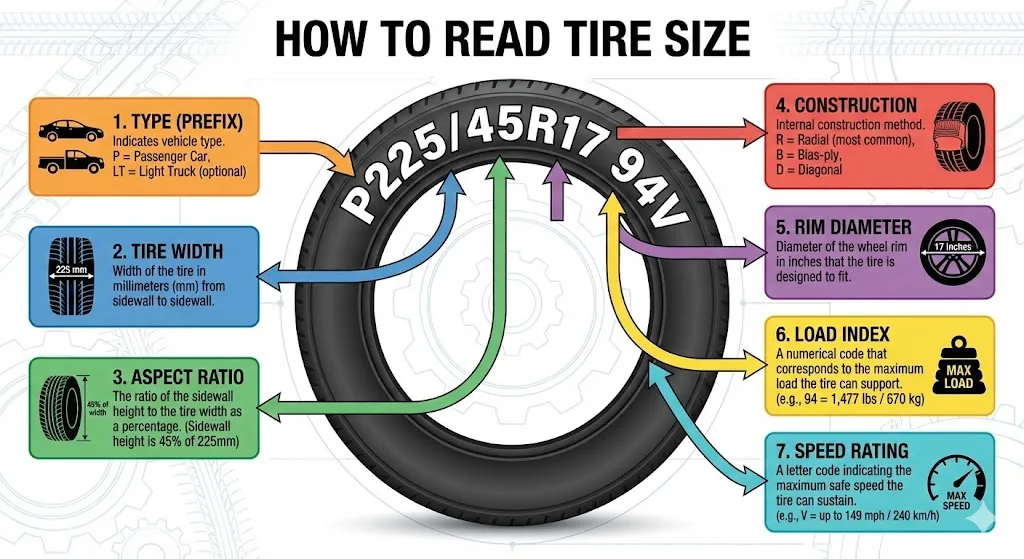
A tire size is a standardized code printed on the sidewall of every tire. This code describes the tire’s:
- Width
- Sidewall height
- Construction type
- Wheel diameter
- Load capacity
- Speed rating
Understanding how to read tire sizes ensures your replacement tires match factory specifications, maintaining correct speedometer calibration, suspension geometry, and braking performance.
Simi CDJR service content regularly highlights the importance of using manufacturer-approved tire sizes for safety and warranty compliance.
https://www.simivalleychryslerdodgejeepram.com/blogs/5737
Where to Find Your Tire Size
Before learning how to read tire size numbers, you should know where to find them:
- On the tire sidewall – the most common location
- Driver’s door jamb placard – lists factory tire size and pressure
- Owner’s manual – includes approved tire specifications
The door jamb label is the most reliable reference if your tires have been changed previously.
How to Read a Tire Size: Step-by-Step Breakdown
Let’s break down a common example:
P265/70R17 113T
This format is used across nearly all passenger vehicles and trucks.
1. Tire Type Prefix (P)
The first letter indicates the tire type.
- P = Passenger vehicle tire
- LT = Light truck tire (common on Ram trucks)
Many Jeep and Ram vehicles use LT-rated tires for higher load capacity. Simi CDJR tire service articles often discuss the importance of selecting the correct tire class for trucks and SUVs.
https://www.simivalleychryslerdodgejeepram.com/service.aspx
2. Tire Width (265)
The first number represents tire width in millimeters.
- 265 means the tire is 265 mm wide from sidewall to sidewall
Wider tires generally offer improved traction but may impact fuel economy and steering feel.
Understanding how to read tire size numbers helps ensure clearance with suspension components and fenders.
3. Aspect Ratio (70)
The aspect ratio is the height of the tire’s sidewall expressed as a percentage of the width.
- 70 means the sidewall height is 70 percent of 265 mm
Higher aspect ratios provide:
- More ride comfort
- Better absorption of road imperfections
Lower aspect ratios offer:
- Sharper handling
- Sportier appearance
4. Construction Type (R)
The letter R stands for radial construction, which is standard on modern vehicles.
Radial tires:
- Improve durability
- Enhance ride quality
- Reduce rolling resistance
Nearly all Chrysler, Dodge, Jeep, and Ram vehicles use radial tires.
5. Wheel Diameter (17)
This number tells you the wheel diameter in inches.
- 17 means the tire fits a 17-inch wheel
This is one of the most critical numbers when replacing tires. Installing a tire on the wrong wheel diameter is unsafe and impossible.
Simi CDJR technicians verify wheel diameter during every tire replacement service.
https://www.simivalleychryslerdodgejeepram.com/service.aspx
6. Load Index (113)
The load index represents how much weight each tire can safely support.
- 113 corresponds to a specific weight rating
Using a tire with an insufficient load index can result in premature wear or failure, especially on trucks and SUVs.
7. Speed Rating (T)
The final letter indicates the tire’s maximum safe speed.
Common speed ratings include:
- S – typical for sedans
- T – common for SUVs
- H / V – performance-oriented vehicles
Your replacement tire should always meet or exceed the factory speed rating.
How to Read Tire Sizes for Trucks and SUVs
Many Jeep and Ram vehicles use LT tire sizing, which looks slightly different:
LT275/65R18
Key differences:
- LT indicates light truck construction
- Thicker sidewalls
- Higher load ratings
Simi CDJR service guidance emphasizes matching LT ratings for vehicles designed for towing or off-road use.
https://www.simivalleychryslerdodgejeepram.com/service.aspx
Why Tire Size Matters More Than You Think
Using the wrong tire size can cause:
- Speedometer inaccuracies
- Reduced braking performance
- Uneven tire wear
- Suspension strain
- Traction control errors
Modern vehicles rely on precise tire diameter calculations for ABS and stability systems. Even small deviations can affect system performance.
Common Tire Size Reading Mistakes
Misreading Width vs Wheel Size
Some drivers confuse tire width with wheel diameter, leading to incorrect purchases.
Ignoring Load Index
Choosing tires based only on size without matching load rating can compromise safety.
Mixing Sizes
Different tire sizes front and rear can disrupt traction systems unless factory-approved.
Simi CDJR technicians routinely correct these issues during tire inspections.
https://www.simivalleychryslerdodgejeepram.com/service.aspx
How to Read Tire Size Numbers on the Sidewall
In addition to the main size code, tires include other markings:
- DOT code – manufacturing date
- UTQG ratings – treadwear, traction, temperature
- Maximum load and pressure
While important, these markings do not replace the primary tire size code when selecting replacements.
Can You Change Tire Size?
In some cases, yes — but changes should be approved and calculated carefully.
Potential reasons for changing tire size:
- Off-road upgrades
- Winter tire packages
- Wheel upgrades
Risks include:
- Rubbing against suspension
- Incorrect gearing
- Reduced fuel efficiency
Before changing tire size, Simi CDJR recommends professional fitment verification.
https://www.simivalleychryslerdodgejeepram.com/service.aspx
Tire Size and Seasonal Tires
Winter tires often use:
- Slightly narrower widths
- Higher sidewall ratios
This improves traction in snow and slush. The correct winter tire size should still remain within manufacturer-approved limits.
Simi CDJR service teams regularly assist with seasonal tire sizing and installation.
https://www.simivalleychryslerdodgejeepram.com/service.aspx
How Often Should Tire Size Be Checked?
You should confirm tire size:
- When replacing tires
- After buying a used vehicle
- When upgrading wheels
- Before seasonal tire changes
Incorrect tire sizing is one of the most common causes of drivability complaints.
Professional Tire Services at Simi CDJR
At Simi Valley Chrysler Dodge Jeep Ram, tire services include:
- Factory tire size verification
- Load and speed rating matching
- Tire mounting and balancing
- TPMS inspection
- Alignment checks
Using dealership-grade tools ensures your vehicle maintains factory handling and safety standards.
https://www.simivalleychryslerdodgejeepram.com/service.aspx
Final Thoughts
Knowing how to read a tire size empowers you to make informed decisions about tire replacement and upgrades. Tire size numbers are not random — each digit plays a role in how your vehicle handles, rides, and performs.
If you’re unsure about tire sizing or want professional guidance, schedule a tire inspection at Simi Valley Chrysler Dodge Jeep Ram Service Center.
https://www.simivalleychryslerdodgejeepram.com/service.aspx
Throttle Body Cleaner Explained
What Throttle Body Cleaning Is, Why It Matters, and How to Do It Safely
Throttle body cleaning is one of the most overlooked yet impactful maintenance tasks for modern vehicles. While engine oil changes and brake inspections are commonly discussed, throttle body buildup often goes unnoticed until drivability issues begin to appear. Reduced throttle response, rough idle, stalling, or poor fuel efficiency can all trace back to a dirty throttle body.
This in-depth guide explains what throttle body cleaning is, how throttle body cleaner works, when it’s needed, and whether DIY cleaning is safe for Chrysler, Dodge, Jeep, and Ram vehicles. The information aligns with service best practices outlined throughout the Simi Valley Chrysler Dodge Jeep Ram blog and service resources.
For vehicles with electronic throttle control or advanced intake systems, professional inspection at Simi Valley Chrysler Dodge Jeep Ram Service Center is strongly recommended.
https://www.simivalleychryslerdodgejeepram.com/service.aspx
What Is Throttle Body Cleaning?
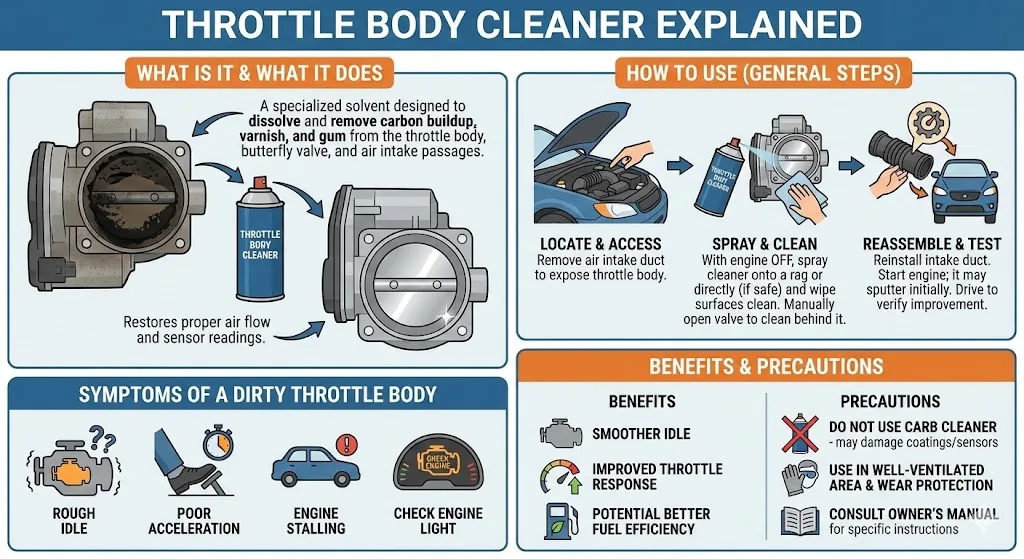
The throttle body controls how much air enters the engine. When you press the accelerator, the throttle plate opens, allowing air to mix with fuel for combustion. Over time, carbon deposits, oil vapors, and residue from the PCV system build up on the throttle plate and bore.
Throttle body cleaning is the process of removing this buildup using a specialized throttle body cleaner, restoring proper airflow and throttle response.
Simi CDJR maintenance articles frequently reference air intake and throttle cleanliness as a key factor in smooth engine operation and consistent idle quality.
https://www.simivalleychryslerdodgejeepram.com/blogs/5737
Why Throttle Body Cleaning Is Important
A dirty throttle body affects engine performance in multiple ways:
- Restricted airflow causes sluggish acceleration
- Carbon buildup prevents the throttle plate from closing properly
- Idle air control becomes inconsistent
- Engine computer struggles to maintain stable idle
- Fuel economy may decrease
Modern vehicles rely on precise airflow calculations. Even minor contamination can disrupt how the engine control module regulates idle speed and throttle response.
At Simi Valley Chrysler Dodge Jeep Ram, throttle body inspections are commonly performed during drivability diagnostics and routine service visits.
https://www.simivalleychryslerdodgejeepram.com/service.aspx
Common Symptoms of a Dirty Throttle Body
If your vehicle is experiencing any of the following, throttle body cleaning may be necessary:
- Rough or unstable idle
- Stalling when coming to a stop
- Delayed throttle response
- Hesitation during acceleration
- Reduced fuel efficiency
- Check engine light related to airflow or idle control
These symptoms often appear gradually, which is why many drivers don’t immediately associate them with throttle body contamination.
Throttle Body Cleaner vs Other Cleaners
What Is Throttle Body Cleaner?
Throttle body cleaner is a specially formulated solvent designed to safely dissolve carbon deposits without damaging sensitive throttle components, seals, or electronic sensors.
Popular products include CRC throttle body cleaner and CRC throttle body & air intake cleaner, both formulated specifically for modern throttle systems.
Using the correct cleaner is critical. Simi CDJR service guidance strongly emphasizes avoiding harsh solvents that may damage throttle coatings or electronic throttle motors.
https://www.simivalleychryslerdodgejeepram.com/blogs/5737
Can I Use Brake Cleaner to Clean a Throttle Body?
This is a common question — and the answer is no.
Brake cleaner is far more aggressive than throttle body cleaner. It can:
- Damage throttle body coatings
- Dry out seals
- Harm electronic throttle components
- Cause long-term drivability issues
Brake cleaner is designed for metal brake components, not precision airflow parts.
Can You Use Carb Cleaner on a Throttle Body?
Carburetor cleaner is also not recommended for modern throttle bodies.
Older carbureted engines tolerated aggressive cleaners, but modern throttle bodies often include:
- Electronic throttle motors
- Sensitive sensors
- Coated throttle plates
Using carb cleaner can result in throttle calibration issues or sensor damage.
If you’re unsure which cleaner to use, professional service at Simi Valley Chrysler Dodge Jeep Ram eliminates the risk entirely.
https://www.simivalleychryslerdodgejeepram.com/service.aspx
How to Use Throttle Body Cleaner (DIY Overview)
If your vehicle allows safe access and you understand the risks, the following explains how to use throttle body cleaner properly. Note that some vehicles require throttle relearn procedures afterward.
Step 1: Locate the Throttle Body
- Turn off the engine
- Open the hood
- Follow the air intake hose from the air filter box
- The throttle body is mounted where the intake hose meets the engine
Step 2: Remove the Intake Hose
- Loosen hose clamps carefully
- Disconnect any sensors gently
- Move the intake hose aside
Do not force any connectors. Modern vehicles are sensitive to airflow sensor damage.
Step 3: Inspect the Throttle Plate
You may see:
- Black carbon buildup
- Sticky residue around the throttle edges
This buildup is normal over time, especially on vehicles with direct injection or high mileage.
Step 4: Apply Throttle Body Cleaner
- Spray throttle body cleaner onto a clean cloth
- Wipe the throttle plate and bore gently
- Avoid spraying directly into electronic components
Never scrape the throttle plate with hard tools.
Step 5: Reassemble and Restart
- Reinstall the intake hose
- Ensure all clamps are tight
- Start the engine
The idle may be slightly rough at first as the engine recalibrates airflow.
Electronic Throttle Bodies and Relearn Procedures
Many Chrysler, Dodge, Jeep, and Ram vehicles use electronic throttle control. After cleaning, these systems may require a throttle relearn to restore proper idle behavior.
Improper relearn procedures can cause:
- High idle
- Stalling
- Check engine lights
Simi CDJR technicians use manufacturer-approved diagnostic tools to perform throttle relearn procedures safely.
https://www.simivalleychryslerdodgejeepram.com/service.aspx
How Often Should Throttle Body Cleaning Be Done?
There is no universal interval, but general guidelines include:
- Every 30,000 to 50,000 miles
- When drivability symptoms appear
- During major service intervals
- When replacing air intake components
Vehicles driven in stop-and-go traffic or dusty conditions may require more frequent cleaning.
Throttle Body Cleaning vs Intake Cleaning
Throttle body cleaning focuses specifically on:
- Throttle plate
- Throttle bore
Intake cleaning may include:
- Intake valves
- Manifold runners
They serve different purposes and are often performed together depending on vehicle design.
Simi CDJR service recommendations are based on engine type, mileage, and driving conditions.
https://www.simivalleychryslerdodgejeepram.com/service.aspx
Is DIY Throttle Body Cleaning Always a Good Idea?
While DIY throttle body cleaning can work for some vehicles, there are risks:
- Damaging electronic throttle motors
- Triggering check engine lights
- Incorrect reassembly
- Skipping relearn procedures
For newer vehicles or those under warranty, professional service is often the safer option.
Why Professional Throttle Body Cleaning Makes Sense
At Simi Valley Chrysler Dodge Jeep Ram, throttle body cleaning includes:
- Correct cleaner selection
- Safe disassembly and inspection
- Electronic throttle calibration
- Diagnostic scanning
- Verification test drive
This ensures improved drivability without unintended side effects.
https://www.simivalleychryslerdodgejeepram.com/service.aspx
Final Thoughts
Throttle body cleaning is a simple concept with significant impact. When airflow is restricted, the engine cannot operate efficiently, no matter how well other systems perform. Using the correct throttle body cleaner, avoiding improper solvents like brake or carb cleaner, and knowing when professional service is required can prevent drivability issues and costly repairs.
If your vehicle shows signs of rough idle, hesitation, or reduced throttle response, schedule an inspection with Simi Valley Chrysler Dodge Jeep Ram Service Center.
https://www.simivalleychryslerdodgejeepram.com/service.aspx
How to Check Transmission Fluid: Mechanic Guide
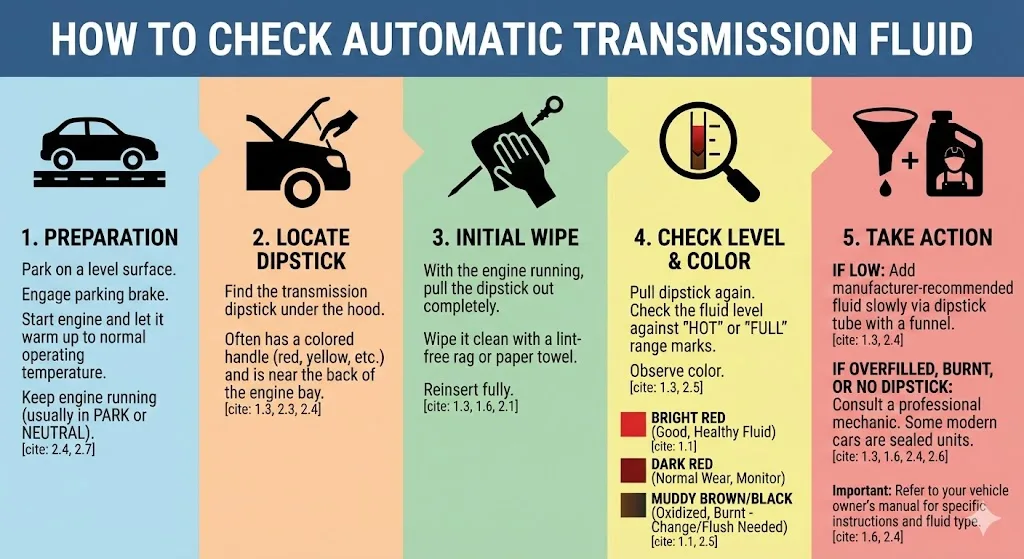
Transmission fluid is one of the most overlooked yet critical fluids in your vehicle. While most drivers understand the importance of engine oil, transmission fluid often goes unchecked until shifting problems appear or warning lights turn on. Unfortunately, by that point, damage may already be occurring internally.
This in-depth guide explains how to check transmission fluid correctly, why it matters, how procedures differ by transmission type, and when professional service is required. This information aligns with maintenance best practices discussed throughout the Simi Valley Chrysler Dodge Jeep Ram blog and service resources.
For vehicles with sealed transmissions or manufacturer-specific fluid requirements, professional inspection at Simi Valley Chrysler Dodge Jeep Ram Service Center is strongly recommended.
https://www.simivalleychryslerdodgejeepram.com/service.aspx
Why Transmission Fluid Is So Important
Transmission fluid performs multiple critical roles simultaneously:
- Lubricates internal gears, bearings, and clutch packs
- Maintains hydraulic pressure for smooth and precise shifting
- Transfers heat away from internal components
- Prevents corrosion and excessive wear
- Helps suspend microscopic debris until filtration or service
Modern automatic transmissions operate under tight tolerances. Even minor fluid degradation can cause delayed shifts, harsh engagement, slipping gears, or overheating. Simi CDJR maintenance content frequently emphasizes that fluid condition is just as important as fluid level, especially for vehicles used for towing or daily commuting in stop-and-go traffic.
Which Vehicles Can You Check at Home?
Before attempting to check transmission fluid, it’s critical to understand what type of transmission your vehicle has.
Vehicles that often allow owner checks:
- Older automatic transmissions with dipsticks
- Some trucks and SUVs from earlier model years
Vehicles that usually require professional service:
- Newer Chrysler, Dodge, Jeep, and Ram vehicles
- Vehicles with sealed or “lifetime” transmissions
- CVT and advanced multi-speed automatic units
Simi CDJR has published several technical breakdowns explaining how transmission design has evolved and why many modern units no longer include dipsticks.
https://www.simivalleychryslerdodgejeepram.com/blogs/5737
If your vehicle does not have a dipstick, attempting a DIY check can result in incorrect fluid levels or contamination.
Step-by-Step: How to Check Transmission Fluid (Dipstick Vehicles)
If your vehicle is equipped with a traditional transmission dipstick, follow the process below carefully.
Step 1: Warm the Transmission to Operating Temperature
Transmission fluid expands when warm. Checking it cold produces an inaccurate reading.
- Drive normally for 10 to 20 minutes
- Ensure the transmission shifts through all gears
- Park on a level surface
Simi CDJR’s transmission service articles consistently highlight the importance of checking fluid at operating temperature for accuracy.
https://www.simivalleychryslerdodgejeepram.com/blogs/5737/does-your-transmission-need-to-warm-up-before-a-fluid-change-the-definitive-guide
Step 2: Keep the Engine Running
For most automatic transmissions:
- Leave the engine running
- Shift into Park (or Neutral if specified by the manual)
- Engage the parking brake
Turning the engine off can cause fluid to drain back into the pan, resulting in a false reading.
Step 3: Locate the Transmission Dipstick
Under the hood, locate the transmission dipstick:
- Typically farther back than the engine oil dipstick
- Often marked with a red or yellow handle
- Labeled “TRANS” or “ATF” in some vehicles
If you cannot locate a dipstick, your vehicle likely uses a sealed transmission system.
Step 4: Clean the Dipstick Completely
- Pull the dipstick out slowly
- Wipe it clean using a lint-free cloth
- Ensure no residue remains
Old fluid residue can make levels appear higher than they truly are.
Step 5: Reinsert and Check Fluid Level
- Fully insert the dipstick
- Pull it out again
- Read the level against the markings
Most dipsticks show:
- “HOT” and “COLD” ranges
- Cross-hatched areas indicating proper level
At operating temperature, the fluid should fall within the HOT range.
Step 6: Inspect Fluid Condition
Transmission fluid condition matters as much as level.
Healthy fluid:
- Clear or translucent
- Light red or amber in color
- Neutral or slightly sweet smell
Problematic fluid:
- Dark brown or black
- Burnt odor
- Visible debris or metal particles
If fluid appears degraded, Simi CDJR recommends scheduling professional service rather than simply topping it off.
https://www.simivalleychryslerdodgejeepram.com/service.aspx
Step 7: Adding Transmission Fluid (If Required)
If fluid is low:
- Use only manufacturer-approved fluid
- Add fluid slowly through the dipstick tube
- Recheck level after each small addition
Overfilling is dangerous. Excess fluid can foam, aerate, and cause erratic pressure, leading to slipping or internal damage.
Simi CDJR blog resources frequently explain how using incorrect transmission fluid can lead to long-term issues.
https://www.simivalleychryslerdodgejeepram.com/blogs/5737
Vehicles Without Dipsticks: What You Need to Know
Many modern Chrysler, Dodge, Jeep, and Ram vehicles are built with sealed transmissions. These systems:
- Do not allow visual level checks
- Require specific fluid temperatures for measurement
- Use fill and check plugs under the vehicle
- Often require scan tools to monitor fluid temperature
Attempting to check sealed transmissions without proper equipment can lead to incorrect fluid levels or leaks.
Simi CDJR recommends having sealed transmissions inspected by trained technicians using factory-approved procedures.
https://www.simivalleychryslerdodgejeepram.com/service.aspx
How Often Should Transmission Fluid Be Checked?
General guidelines vary by vehicle, but common recommendations include:
- Every oil change for dipstick-equipped vehicles
- Before towing heavy loads
- When experiencing shifting issues
- During routine service intervals
Even “lifetime” fluids are not immune to heat breakdown, especially in trucks and SUVs that tow or haul.
Simi CDJR maintenance content frequently addresses the misconception around lifetime transmission fluid.
https://www.simivalleychryslerdodgejeepram.com/blogs/5737
Warning Signs of Low or Degraded Transmission Fluid
If you notice any of the following, a fluid check is strongly advised:
- Delayed gear engagement
- Hard or jerky shifts
- Slipping between gears
- Transmission overheating warnings
- Unusual noises while shifting
Ignoring these symptoms can result in internal wear that cannot be reversed by fluid service alone.
Why Professional Service Often Makes Sense
While checking fluid at home is possible for some vehicles, professional service offers several advantages:
- Accurate fluid temperature measurement
- Correct fluid type selection
- Leak inspection
- Electronic diagnostics
- Manufacturer-approved procedures
At Simi Valley Chrysler Dodge Jeep Ram, transmission inspections are performed by trained technicians familiar with Chrysler, Dodge, Jeep, and Ram drivetrains.
https://www.simivalleychryslerdodgejeepram.com/service.aspx
Transmission Fluid vs. Transmission Flush
A fluid check does not mean a flush is required.
- Fluid check: Measures level and condition
- Fluid change: Replaces a portion of fluid
- Flush: Replaces nearly all fluid using equipment
Simi CDJR blog content explains why flushes should only be performed when recommended by manufacturer guidelines.
https://www.simivalleychryslerdodgejeepram.com/blogs/5737
Final Thoughts
Transmission fluid is one of the most important yet misunderstood components of vehicle maintenance. Checking it properly helps prevent costly repairs, improves driving performance, and extends the life of your vehicle.
If your vehicle allows DIY checks, follow the procedure carefully. If it uses a sealed transmission or you’re unsure about fluid condition, professional inspection is the safest and most accurate option.
For inspections, maintenance, or transmission service, schedule your visit with Simi Valley Chrysler Dodge Jeep Ram Service Center.
https://www.simivalleychryslerdodgejeepram.com/service.aspx
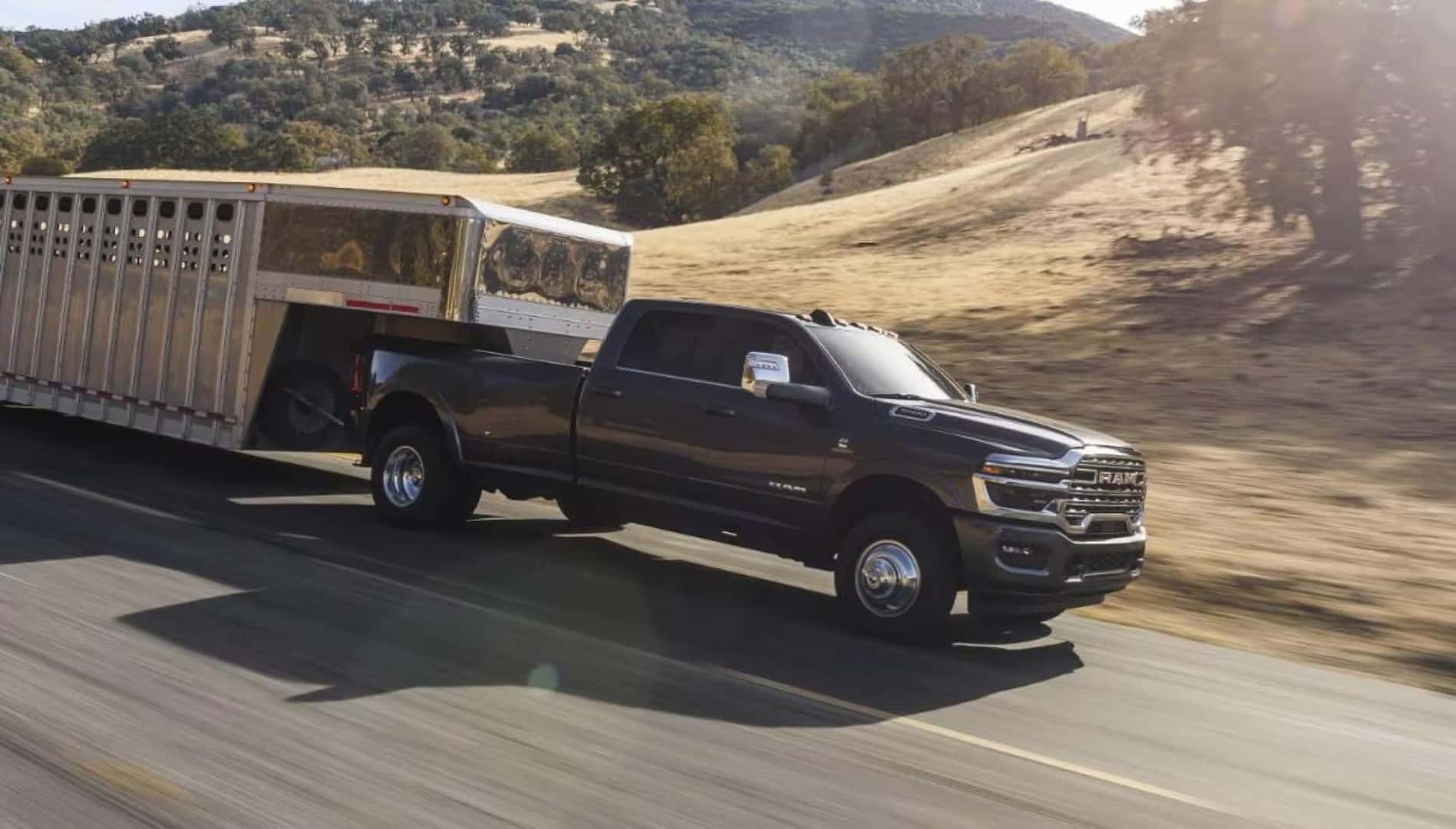
If you’re searching for a 2025 Ram 3500 for sale, you’re already ahead of the market. This isn’t a casual browse. It’s what informed buyers do when they know supply tightens, regulations creep, and the best heavy-duty builds don’t sit around long.
The truth is simple: the Ram 3500 in 2025 hits a rare sweet spot. It blends proven mechanicals, real-world towing muscle, and modern tech without the uncertainty of an all-new platform. That combination is exactly why demand is rising quietly—and quickly.
Below is what dealers won’t explain on a window sticker, and what smart buyers check before everyone else figures it out.
Why the 2025 Ram 3500 Is the “Last Safe Bet” Heavy-Duty Truck
Heavy-duty trucks don’t change fast—but regulations do. The 2025 model year keeps the formula buyers trust while refining the details that matter when you’re hauling serious weight.
What that means in practice:
- No risky first-year redesign issues
- Mature powertrains with known durability
- Towing systems refined, not reinvented
- Strong resale because buyers trust the platform
That stability is why searches for “2025 Ram 3500 for sale” are climbing faster than generic “Ram 3500” queries.
Cummins Diesel: The Real Reason Buyers Don’t Hesitate

Let’s be blunt. Most people don’t buy this truck for cupholders.
They buy it for the 6.7-liter Cummins Turbo Diesel. Not because of brochure numbers—but because of how it behaves under load. High torque at low RPM is what moves weight without stress, and that’s where this engine earns its reputation.
Why experienced owners stick with it:
- Consistent pulling power on long grades
- Better longevity under sustained loads
- Strong resale demand in used markets
- Designed for work cycles, not weekend runs
Gas engines save upfront money. Diesel saves you when the trailer is attached.
Ram 3500 Dually vs SRW: The Decision That Separates Pros From Guessers
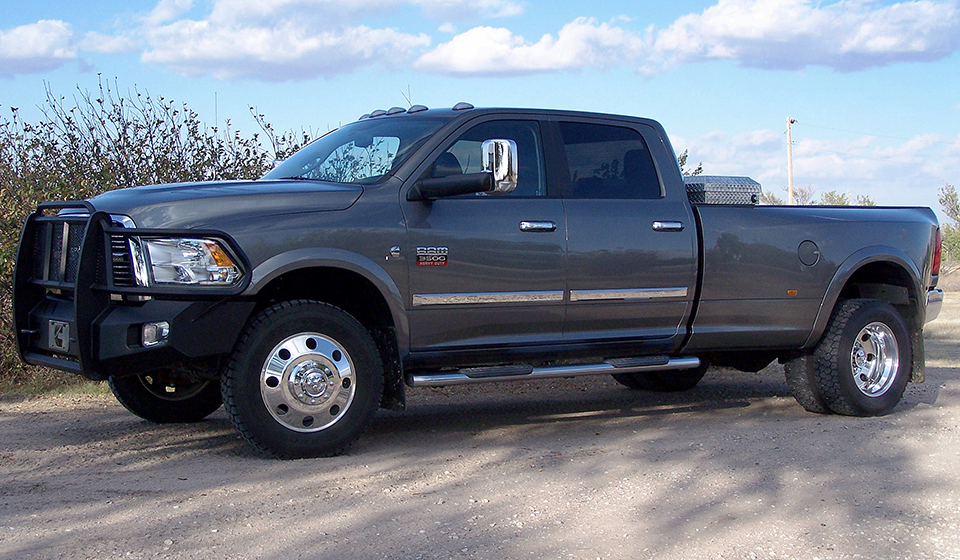
If you’re specifically looking at a Ram 3500 dually for sale, you already know stability matters more than style.
Dual rear wheels:
- Increase rear axle capacity
- Reduce trailer sway under crosswinds
- Improve confidence with fifth-wheel setups
- Spread load more safely at high weights
But here’s what most articles won’t say: if you don’t tow heavy consistently, a dually can be unnecessary friction in daily driving. Wider footprint, tighter parking, and higher tire replacement costs are real tradeoffs.
Smart buyers choose based on actual payload and hitch weight, not internet bragging rights.
2025 Towing Capacity Explained Without the Marketing Noise
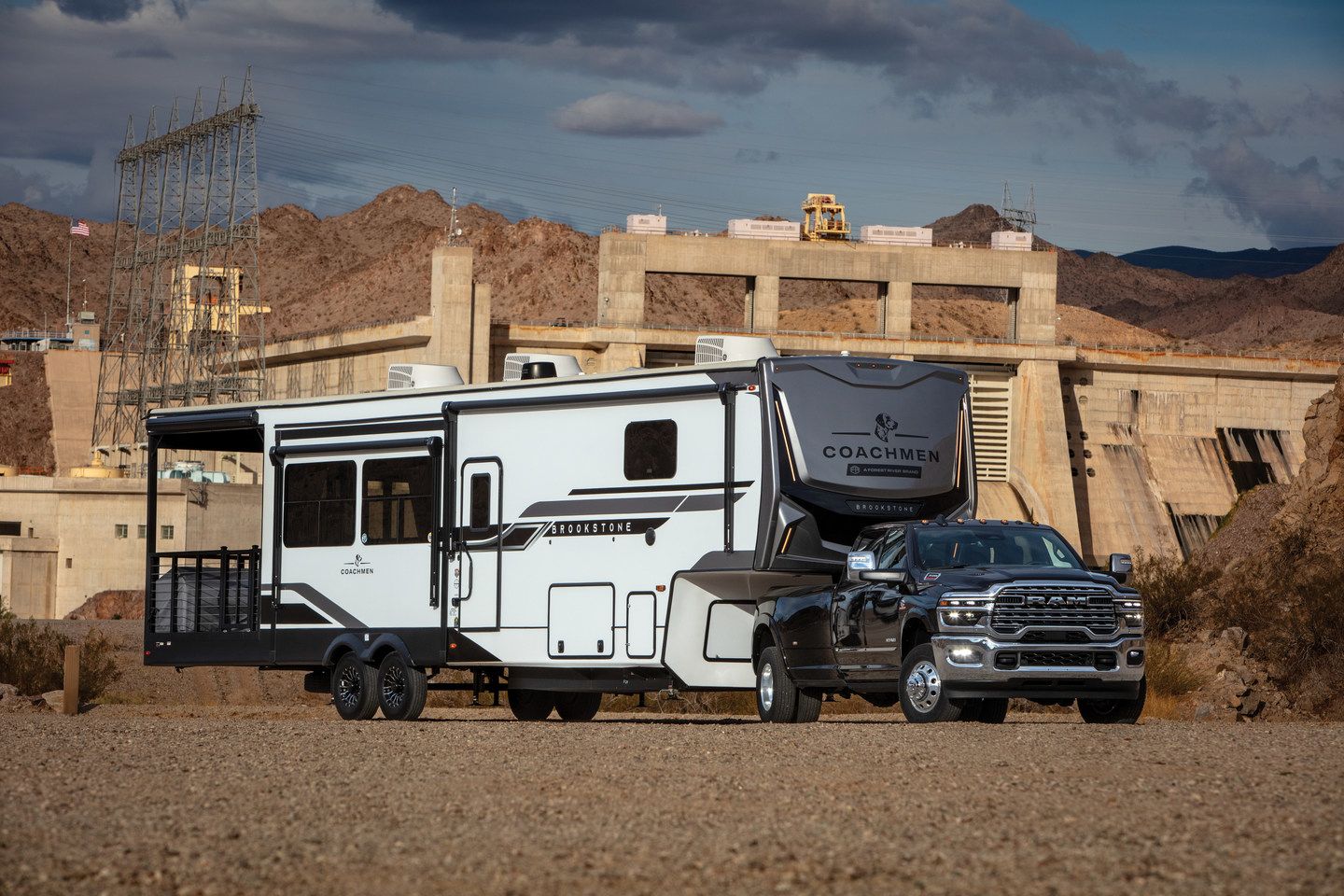
Towing numbers confuse people because they change with configuration.
What really determines your usable capacity:
- Engine choice
- Rear axle ratio
- Single vs dual rear wheels
- Bed length
- Payload rating (often ignored, always critical)
The Ram 3500 shines because it offers flexibility. You can spec it as a workhorse Tradesman or a high-luxury Limited without compromising the core mechanical strength.
Translation: you don’t need to max out ratings to benefit from the platform’s stability.
Trims That Actually Make Sense in 2025
Not all trims are created equal—especially in heavy-duty trucks.
Tradesman
- Best value for pure work
- Ideal for fleets and contractors
- Lowest upfront cost
Laramie
- Sweet spot for mixed work and comfort
- Strong resale demand
- Ideal for owner-operators
Limited / Longhorn
- Luxury without sacrificing capability
- Popular with RV owners
- Commands top dollar on resale
Buyers who plan to keep the truck long-term often skip the base trim. Buyers who flip in three to five years usually don’t.
Used vs New: Why 2025 Might Be the Smarter New Buy
Used Ram 3500s hold value because they last—but that also means the price gap between used and new can be surprisingly small.
Why buyers are choosing new in 2025:
- Warranty coverage on expensive components
- Known service history from day one
- No hidden towing abuse
- Financing incentives often narrow the gap
A used deal only makes sense if the truck was lightly worked and properly maintained. Otherwise, new starts to look cheap over the ownership cycle.
The Ownership Costs Nobody Mentions
Heavy-duty ownership isn’t cheap—but it’s predictable.
Expect:
- Higher fuel consumption than half-tons
- Diesel maintenance (DEF, filters, oil capacity)
- Commercial-grade tire replacements
But here’s the part critics skip: these trucks are built to earn their keep. Whether that’s through work revenue or reliable long-distance towing, the cost equation changes when the truck is a tool, not a toy.
Who Should Buy a 2025 Ram 3500 (and Who Shouldn’t)
You should seriously consider one if:
- You tow large trailers or equipment regularly
- You run a business that depends on uptime
- You want a long-term platform, not a lease toy
- You value resale stability
You probably shouldn’t if:
- You commute short distances daily
- You never tow
- You prioritize fuel economy over capability
Buying too much truck is just as inefficient as buying too little.
Why Buyers Are Acting Now
The quiet truth is that heavy-duty trucks don’t get cheaper, simpler, or less regulated over time. The 2025 Ram 3500 sits in a window where capability, reliability, and familiarity intersect.
That’s why informed buyers aren’t waiting for hype cycles. They’re securing the configuration they want while availability still exists.
If you’re searching for a 2025 Ram 3500 for sale, you’re not chasing trends—you’re making a calculated move.
And in the heavy-duty world, calculation always beats impulse.
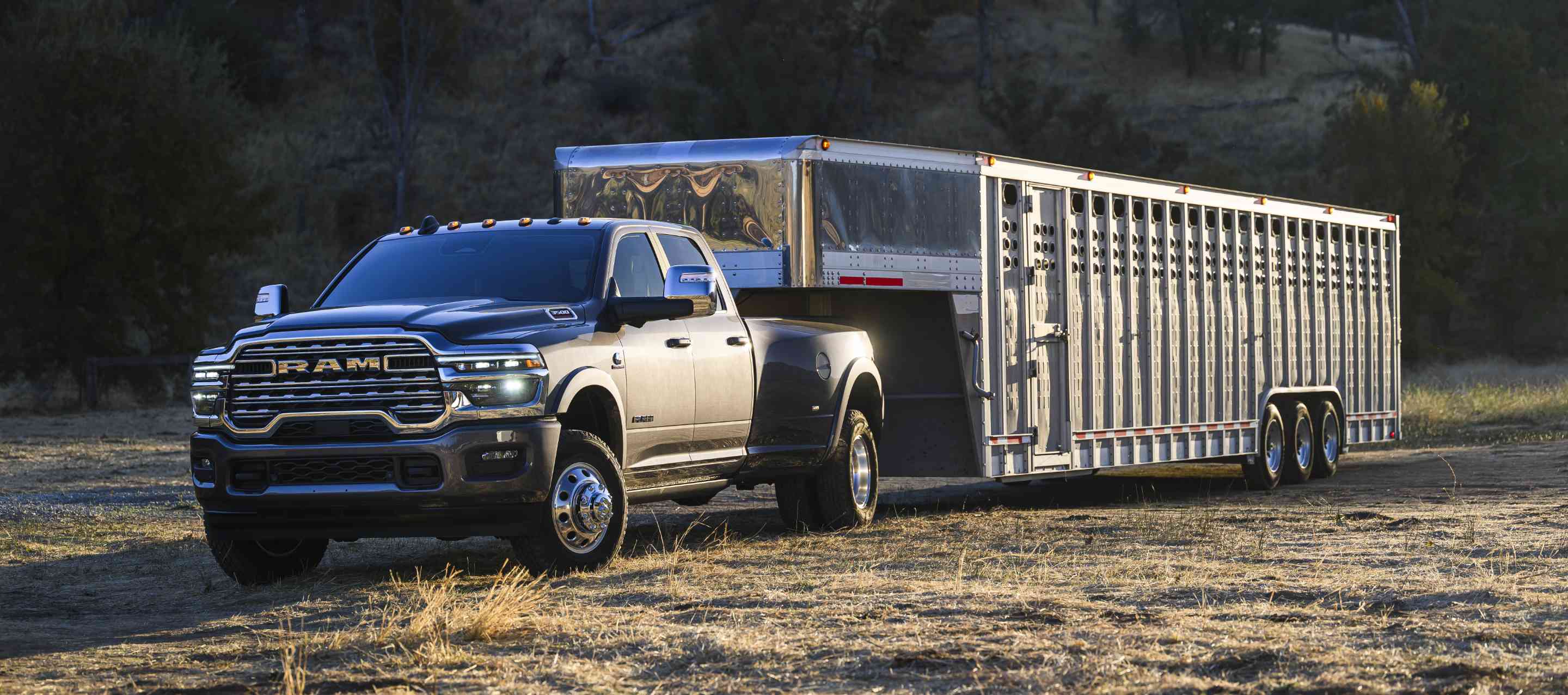
Ram 3500 for Sale: The Heavy-Duty Monster Smart Truck Buyers Are Racing to Grab in 2026
If you’ve been searching for a Ram 3500 for sale, you’re not looking for an ordinary pickup. You’re looking for torque that bends physics, towing power that shrugs off fifth-wheels, and durability that makes half-tons feel like toys. The real question is not whether the Ram 3500 is capable. It’s whether you’re buying the right configuration before inventory tightens again.
Let’s break down why the Ram 3500 continues to dominate the heavy-duty conversation and what you need to know before signing anything.
Why the Ram 3500 Is in a Different League

The Ram 3500 is engineered for serious work. This is not a lifestyle truck pretending to be tough. It’s built on a heavy-duty frame, reinforced suspension components, and available dual rear wheels for maximum stability.
Depending on configuration, the Ram 3500 can deliver:
- Massive conventional towing ratings
- Industry-leading gooseneck and fifth-wheel capability
- Commercial-grade payload capacity
- A high-torque diesel engine that’s become legendary
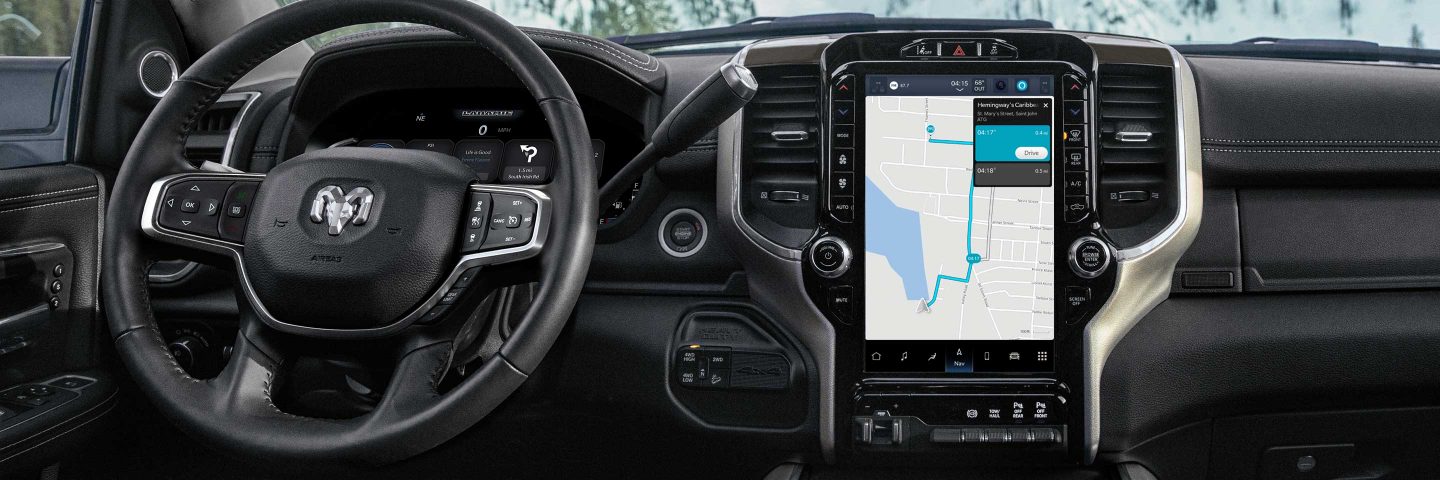
If you tow equipment, livestock, large RVs, or construction trailers, this truck isn’t optional. It’s strategic.
The Cummins Factor: Why Diesel Buyers Refuse to Settle
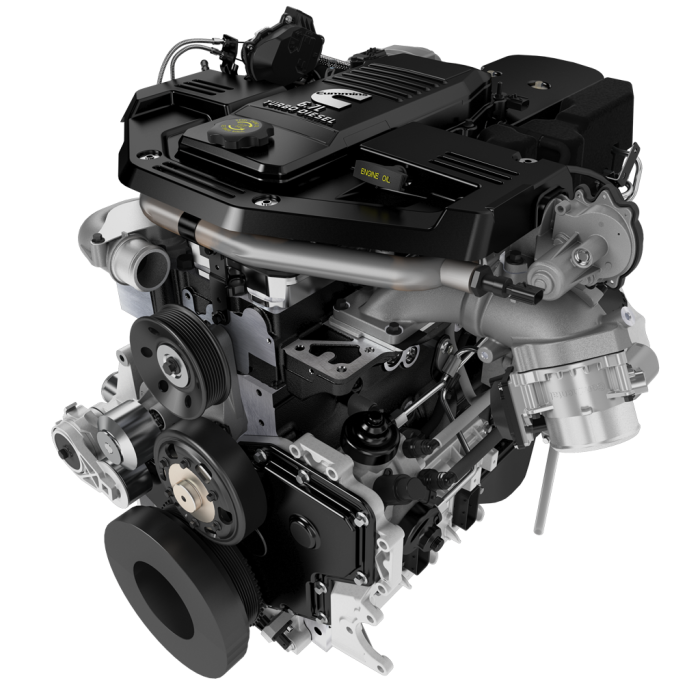
Let’s address the elephant in the room: the 6.7L Cummins Turbo Diesel.
For many buyers searching “Ram 3500 diesel for sale” or “Ram 3500 Cummins for sale,” the engine is the entire reason they’re here.
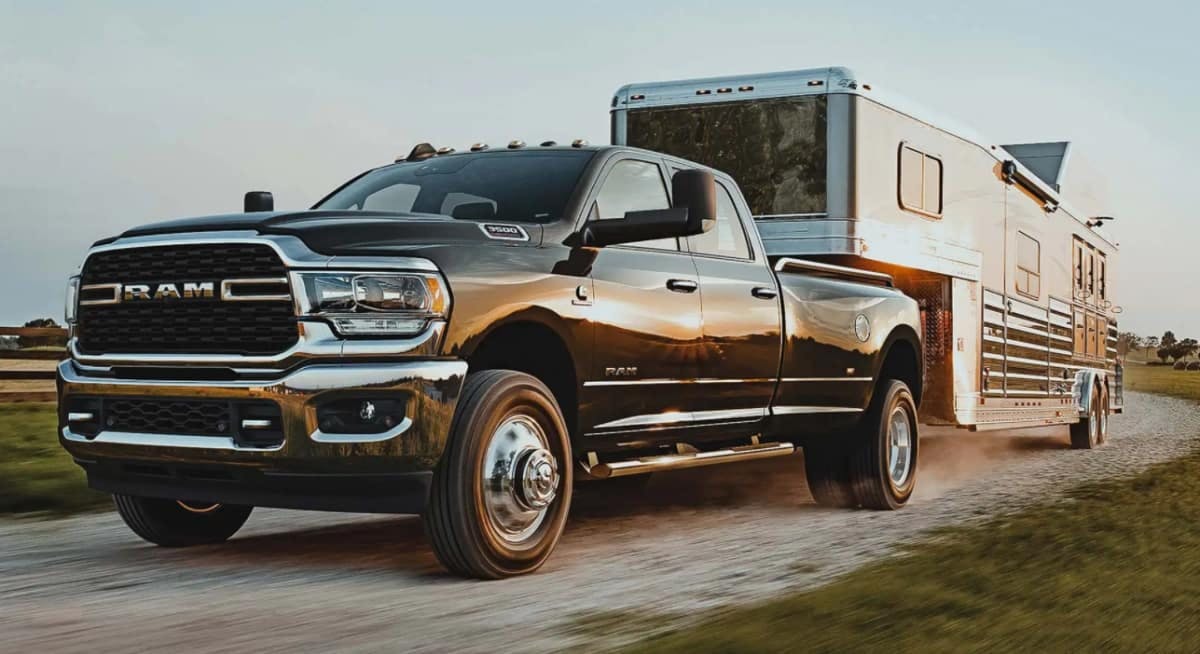
Why?
Because the high-output diesel variant produces staggering torque numbers designed specifically for heavy towing. Torque is what moves weight, not horsepower headlines. That’s why commercial operators and RV owners consistently choose the diesel configuration.
Gas engine buyers save upfront. Diesel buyers win long-term durability and resale value.
Ram 3500 Dually for Sale: Who Actually Needs One?

Searching for a Ram 3500 dually for sale is a different mindset entirely.
A dual rear wheel setup:
- Increases rear axle stability
- Improves weight distribution
- Boosts heavy trailer confidence
- Reduces sway under extreme loads
If you’re pulling a large fifth-wheel RV or heavy commercial equipment regularly, a dually is not overkill. It’s insurance.
However, if your towing is occasional and under maximum ratings, a single rear wheel configuration may be more practical for daily driving.
The key is matching the truck to your real workload, not your ego.
2025 Ram 3500 for Sale: Why Demand Is Heating Up
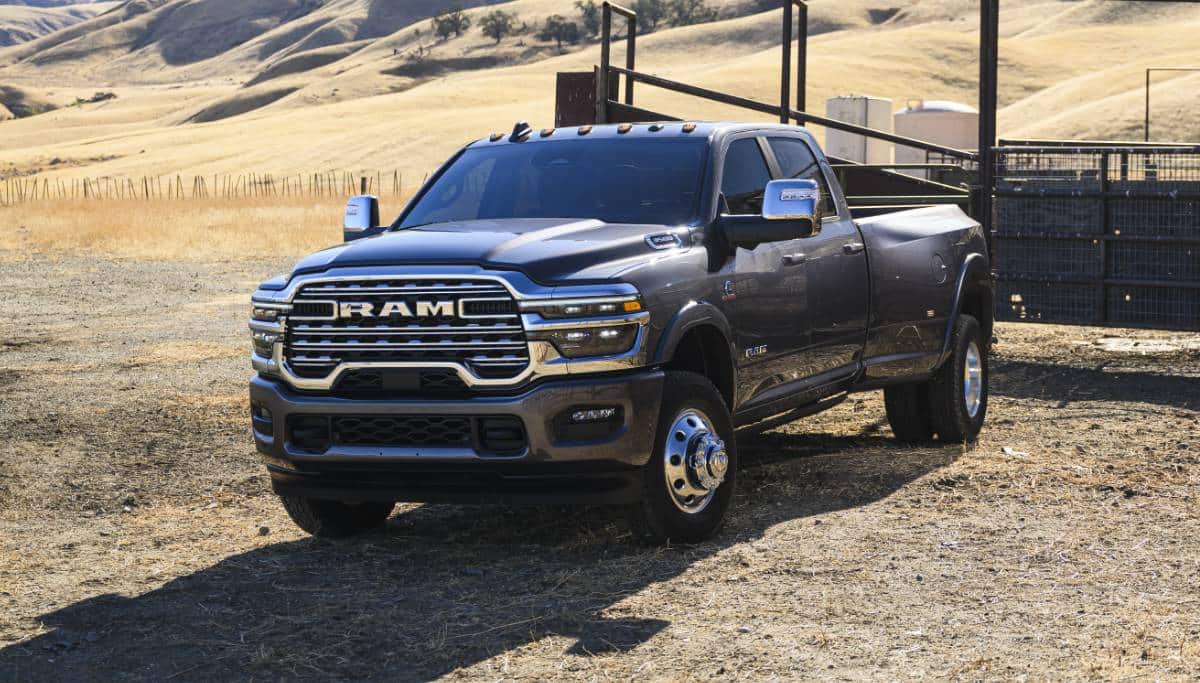
Search volume for 2025 Ram 3500 for sale is climbing fast for a reason.
Modern heavy-duty trucks are no longer stripped-down work rigs. The 2025 model offers:
- Advanced towing technology with integrated trailer brake controls
- Digital driver displays
- Large infotainment screens
- Premium trim levels like Laramie and Limited
- Enhanced safety systems for heavy hauling
The result? You can haul like a contractor and ride like a luxury SUV.
That dual personality is driving serious buyer demand.
Used Ram 3500 for Sale: The Smart Money Move?
The phrase used Ram 3500 for sale consistently ranks because buyers understand one thing: these trucks are built to last.
A well-maintained Ram 3500 with the Cummins diesel can often exceed hundreds of thousands of miles when properly serviced. That’s why resale values remain strong.
But here’s the caution:
Heavy-duty trucks live hard lives. Always inspect:
- Service history
- Towing usage
- Transmission condition
- Frame integrity
- Signs of commercial fleet wear
A clean, privately owned unit can be a major value. A neglected fleet truck can be expensive.
Ram 3500 vs Ram 2500: The Question Nobody Asks Early Enough

Buyers often start searching Ram 3500 for sale near me before asking if they truly need a 3500.
The difference comes down to:
- Rear axle rating
- Suspension strength
- Maximum payload
- Towing ceiling
If you are consistently at the upper edge of 2500 capability, jumping to a 3500 protects your investment and safety margins.
If you never approach those limits, the 2500 may offer a smoother daily ride.
It’s about use case, not badge size.
What It Actually Costs to Own a Ram 3500
Clickbait aside, let’s talk reality.
Ownership includes:
- Higher fuel consumption than half-tons
- Diesel maintenance costs (if equipped)
- Commercial-grade tire replacements
- Insurance variations depending on usage
However, buyers typically offset those costs through:
- Revenue generation (contractors, haulers)
- Resale value retention
- Long-term durability
Heavy-duty trucks are tools. Tools generate income.
Who Should Buy a Ram 3500 Right Now?
You should seriously consider a Ram 3500 if:
- You tow over 15,000 pounds regularly
- You operate construction, landscaping, or agricultural equipment
- You haul large fifth-wheel RVs
- You need maximum payload capacity
- You want a long-term diesel investment
You probably don’t need one if:
- You commute daily with minimal towing
- You prioritize fuel economy
- You never approach heavy-duty ratings
Be honest with your use case.

The Bottom Line: Why the Ram 3500 Still Dominates
The heavy-duty segment is competitive, but the Ram 3500 continues to command loyalty because it blends brute strength with modern refinement.
Buyers searching “Ram 3500 for sale” are not browsing. They’re preparing to move serious weight.
Whether you’re looking at:
- A Ram 3500 dually for sale
- A used Ram 3500 for sale
- A 2025 Ram 3500 for sale
- Or a diesel Cummins configuration
The real decision is configuration, not capability. Capability is already proven.
The smart move is to compare trims, confirm towing specs, and lock in the right build before availability tightens.
Heavy-duty buyers don’t impulse buy. They calculate.
Now the only question left is this:
Are you buying power you’ll grow into, or settling for power you’ll outgrow?

What Trucks Are Made in the USA ?

The pickup trucks made in the USA include the Ford F-150, Ford Super Duty, Chevrolet Silverado, GMC Sierra, Ram 1500, Toyota Tundra, Honda Ridgeline, Jeep Gladiator, Nissan Frontier, Ford F-150 Lightning, Rivian R1T, and Tesla Cybertruck. Most full-size trucks sold in America are still assembled in U.S. plants, while midsize trucks are more mixed. If you want to confirm that a specific truck is American-built, check the first character of the VIN. A VIN starting with 1, 4, or 5 means final assembly happened in the United States.
Full-Size Pickup Trucks Made in the USA
Full-size pickups are the strongest category for U.S. assembly. Most major full-size trucks sold in North America are still built in American plants.
Ford F-150
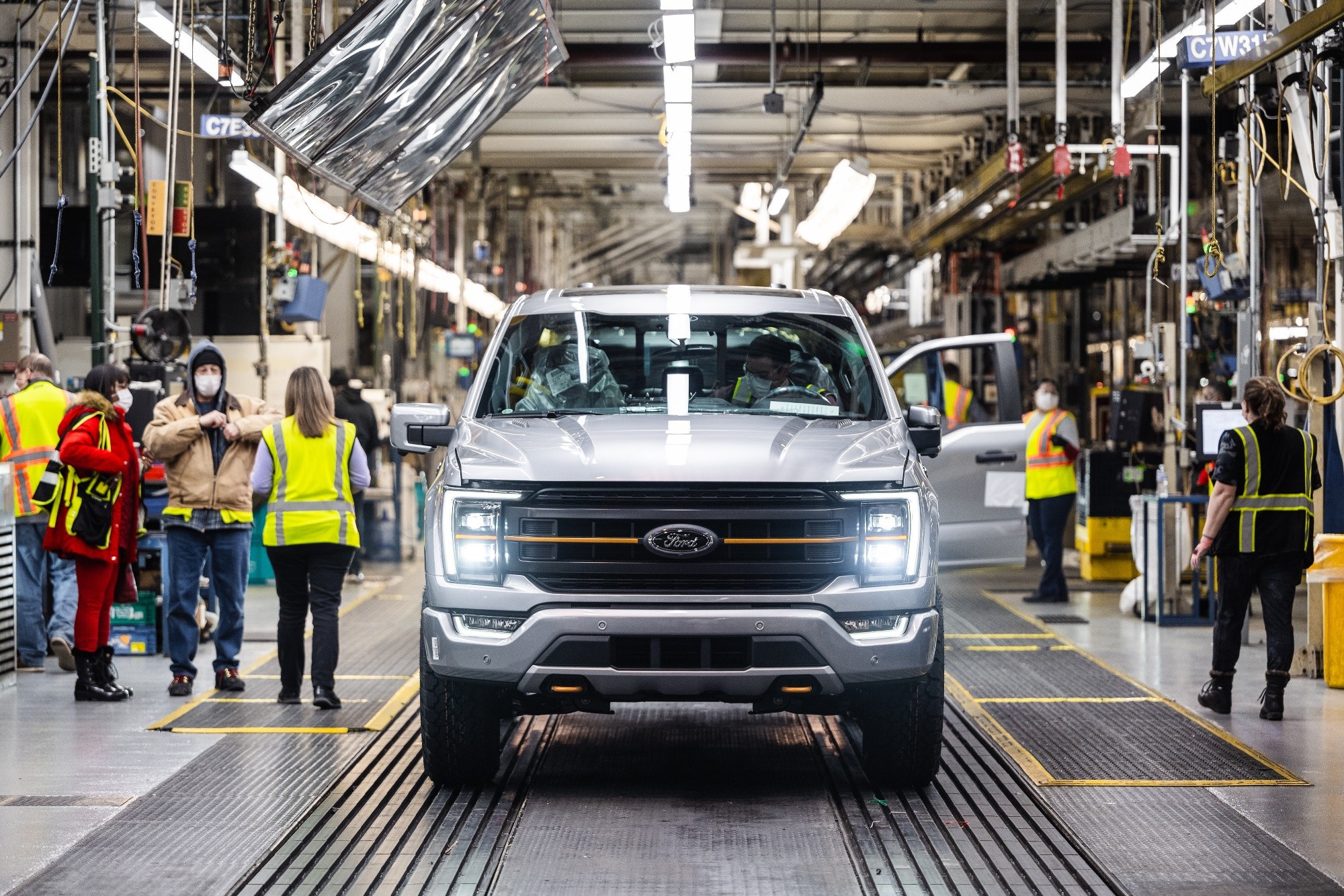
The Ford F-150 is built in the United States at the Dearborn Truck Plant in Michigan and the Kansas City Assembly Plant in Missouri.
This includes popular F-150 trims such as XL, XLT, Lariat, Platinum, PowerBoost Hybrid, and Raptor.
Chevrolet Silverado 1500
The Chevrolet Silverado 1500 is assembled at Fort Wayne Assembly in Indiana.
The Silverado remains one of the most important American-built full-size trucks, with both light-duty and heavy-duty versions produced in the U.S.
GMC Sierra 1500
The GMC Sierra 1500 is also built at Fort Wayne Assembly in Indiana.
It shares its core platform with the Chevrolet Silverado but offers different styling, trim levels, and premium features.
Ram 1500
The Ram 1500 is built at the Sterling Heights Assembly Plant in Michigan.
It is one of the best-known U.S.-assembled trucks and remains a major option for buyers who want comfort, towing strength, and full-size pickup capability.
Toyota Tundra
The Toyota Tundra is built in San Antonio, Texas.
Even though Toyota is a Japanese brand, the Tundra is assembled in the United States and supports a large American manufacturing workforce.
Heavy-Duty Pickup Trucks Made in the USA
Heavy-duty trucks are also heavily tied to U.S. production because they are built mainly for American work, towing, and commercial use.
U.S.-built heavy-duty trucks include:
Ford Super Duty
Chevrolet Silverado HD
GMC Sierra HD
Some Ram 2500 and Ram 3500 configurations
Ram HD production can vary, so buyers should check the VIN before assuming every configuration is assembled in the U.S.
Midsize Pickup Trucks Made in the USA
Midsize trucks are more complicated. Some are built in the United States, while others are assembled in Mexico.
Honda Ridgeline
The Honda Ridgeline is built in Lincoln, Alabama.
It is a unibody pickup, so it is different from traditional body-on-frame trucks, but it is still assembled in the United States.
Jeep Gladiator
The Jeep Gladiator is built in Toledo, Ohio.
It is one of the clearest American-built midsize pickup options and shares production roots with the Jeep Wrangler.
Nissan Frontier
The Nissan Frontier is built in Mississippi.
It is another midsize truck with U.S. assembly, though buyers should still confirm the exact model year and VIN.
Trucks That May Not Be Made in the USA
Some popular trucks are not always assembled in the United States.
Examples include:
Toyota Tacoma
Ford Ranger
Chevrolet Colorado
GMC Canyon
These can still be good trucks, but if your goal is to buy a U.S.-built pickup, you should verify the VIN and assembly location.
Electric Pickup Trucks Made in the USA
Several electric pickups are also built in the United States.
The Ford F-150 Lightning is built in Michigan.
The Rivian R1T is built in Illinois.
The Tesla Cybertruck is built in Texas.
How to Check If a Truck Was Built in the USA
Check the first character of the VIN.
A VIN starting with 1, 4, or 5 means the truck was assembled in the United States.
A VIN starting with 2 means Canada.
A VIN starting with 3 means Mexico.
A VIN starting with J means Japan.
Final Answer
The main pickup trucks made in the USA are the Ford F-150, Ford Super Duty, Chevrolet Silverado, GMC Sierra, Ram 1500, Toyota Tundra, Honda Ridgeline, Jeep Gladiator, Nissan Frontier, Ford F-150 Lightning, Rivian R1T, and Tesla Cybertruck.
Most full-size pickups are still American-built. Midsize trucks vary more, so the safest way to confirm is to check the VIN before buying.
Where Is the Jeep Grand Cherokee Built?

A Deep Dive Into Its American Manufacturing Roots
The Jeep Grand Cherokee occupies a rare position in the modern SUV market. It is one of the few mainstream midsize SUVs that can credibly claim deep American manufacturing roots while competing head-to-head with luxury brands on refinement, technology, and capability.
But where is the Jeep Grand Cherokee actually built? The short answer is Detroit, Michigan. The long answer reveals why that matters more than most buyers realize.
This in-depth guide breaks down every factory involved, which variants are built where, how the production strategy evolved, and why Detroit remains central to the Grand Cherokee’s identity.
The Core Answer: Built in Detroit, Michigan
All current-generation Jeep Grand Cherokee models sold in North America are assembled in Detroit, Michigan, at two closely linked manufacturing facilities operated by Stellantis.
These plants form what is known collectively as the Detroit Assembly Complex, one of the most strategically important automotive manufacturing hubs in the United States.
Jefferson North Assembly Plant: The Original Home

Jefferson North Assembly Plant (JNAP) – Detroit, MI
The Jefferson North Assembly Plant is the historic birthplace of the Jeep Grand Cherokee.
- Opened: 1992
- Location: Detroit’s east side
- Primary Role: Two-row Jeep Grand Cherokee production
This facility has assembled every generation of the Grand Cherokee since the model debuted in the early 1990s. Few modern vehicles can claim that level of production continuity at a single site.
Today, Jefferson North builds:

- Two-row Jeep Grand Cherokee
- Gasoline and plug-in hybrid (4xe) variants
- Select high-volume trims
The plant underwent massive retooling to support the latest WL generation, including new architectures, electrification systems, and modern quality-control processes.
Detroit Assembly Complex – Mack: Built for the Grand Cherokee L
Detroit Assembly Complex – Mack (DAC-M)
To support Jeep’s expansion into the three-row midsize SUV market, Stellantis invested heavily in a second Detroit facility: Detroit Assembly Complex – Mack.
- Reopened: 2020 after full modernization
- Purpose: Dedicated production of larger Jeep models
- Primary Output: Jeep Grand Cherokee L

The Mack plant was transformed from a legacy engine facility into a state-of-the-art vehicle assembly plant. This move allowed Jeep to build the longer, more complex Grand Cherokee L without disrupting production at Jefferson North.
The result:
- Increased production capacity
- Better quality consistency
- Dedicated tooling for three-row configurations
Why Two Plants for One Vehicle Line?
At first glance, building the same model at two plants may seem redundant. In reality, it reflects how strategically important the Grand Cherokee is to Jeep’s global lineup.
Key reasons for the dual-plant strategy:
- Different Body Styles, Different Needs
- Two-row Grand Cherokee and Grand Cherokee L have different wheelbases, frames, and structural requirements.
- Higher Production Volumes
- The Grand Cherokee consistently ranks as one of Jeep’s top-selling vehicles in North America.
- Electrification Support
- Plug-in hybrid (4xe) models require specialized assembly processes best handled in a modernized plant layout.
- Supply Chain Efficiency
- Keeping production localized in Detroit reduces logistics complexity and supports just-in-time manufacturing.
Is the Jeep Grand Cherokee American-Made?
Yes — and in a way that few SUVs truly are.
While modern vehicles source components globally, the Jeep Grand Cherokee stands out for final assembly, engineering, and production integration occurring in the United States.
What “American-Made” Means in Practice
- Final assembly in Detroit, Michigan
- U.S. manufacturing workforce
- North American supply chain integration
- Engineering and development rooted in Michigan
Many competing SUVs in this segment are assembled in:
- Mexico
- Canada
- Japan
- South Korea
The Grand Cherokee remains a Detroit-built flagship.

A Brief History of Grand Cherokee Production
Understanding where the Grand Cherokee is built today is easier with historical context.
Production Timeline
- 1992: Jefferson North Assembly Plant opens to build the first Grand Cherokee
- 1990s–2000s: Plant expands with each new generation
- 2010s: Major retooling for modern platforms and electronics
- 2020: Detroit Assembly Complex – Mack opens for Grand Cherokee L
- 2021–Present: Dual-plant production supports two-row, three-row, and hybrid variants
Few nameplates have remained so closely tied to one city for over three decades.
What About International Jeep Plants?
Jeep is a global brand, and Stellantis operates factories worldwide. However, those facilities do not build the North American Jeep Grand Cherokee.
Other Jeep Production Locations (Not Grand Cherokee)
- Mexico – Compass
- Brazil – Compass and Renegade
- Italy – Renegade
- India – Compass
- China – Region-specific Jeep models
The Grand Cherokee sold in the U.S. and Canada does not come from these plants.
Does Build Location Affect Quality?

Manufacturing location alone does not guarantee quality, but consistency and specialization do.
The Detroit plants benefit from:
- Long-tenured workforce experienced with the Grand Cherokee platform
- Dedicated tooling refined over multiple generations
- Continuous improvement cycles rather than plant-to-plant transitions
This is one reason why post-2017 Grand Cherokee models show measurable improvements in fit, finish, and long-term reliability compared to earlier generations.
Why Detroit Still Matters for Jeep
Detroit is not just a symbolic location. It remains central to Jeep’s engineering and manufacturing ecosystem.
Strategic Advantages
- Proximity to Stellantis North America engineering teams
- Established supplier network
- Skilled labor pool with SUV and truck expertise
- Faster iteration between design, testing, and production
For a vehicle that balances off-road capability, towing strength, luxury refinement, and electrification, that ecosystem matters.
Quick Summary: Where the Jeep Grand Cherokee Is Built
- Primary Location: Detroit, Michigan
- Two-Row Grand Cherokee: Jefferson North Assembly Plant
- Three-Row Grand Cherokee L: Detroit Assembly Complex – Mack
- Hybrid Models: Built alongside gasoline variants in Detroit
- North American Models: All assembled in the U.S.
Final Thoughts
In an era when many vehicles share platforms, factories, and global supply chains, the Jeep Grand Cherokee stands apart. Its continued production in Detroit is not an accident; it reflects the model’s role as Jeep’s flagship SUV and one of the brand’s most important products.
If you are asking whether the Jeep Grand Cherokee is American-built in a meaningful way, the answer is yes. Not just by label, but by history, workforce, and ongoing investment in Detroit manufacturing.
That legacy is baked into every Grand Cherokee rolling off the line today.
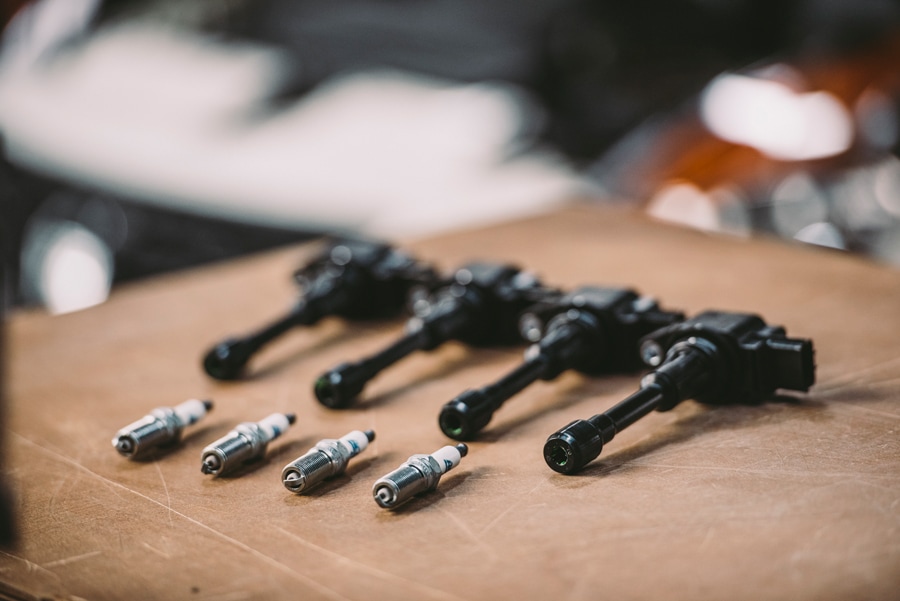
If your car is misfiring, running rough, reducing fuel economy, or displaying a check engine light with codes like P0300 – P0308, one of the most common causes is a failing ignition coil. Choosing the right ignition coil is crucial for proper engine performance, fuel efficiency, and long-term reliability.
In this comprehensive guide, we’ll cover:
- How ignition coils work
- Symptoms of bad coils
- What to look for when buying
- Top ignition coil options on the market
- Installation tips & maintenance
- Answers to common questions
What Is an Ignition Coil?
An ignition coil is a high-voltage transformer that converts the 12-volt power from your car’s battery into the thousands of volts needed to create a spark at the spark plug. That spark ignites the air-fuel mixture inside the combustion chamber.
Each cylinder in most engines either has its own coil (coil-on-plug or COP) or shares a coil with a couple of cylinders via a coil pack.
How Ignition Coils Work (Simple Explanation)
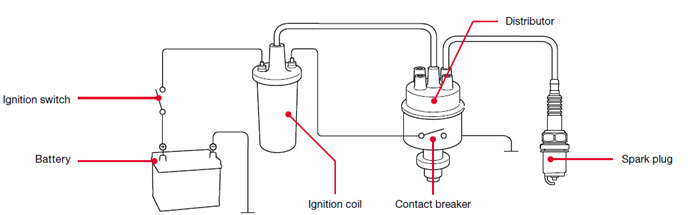
Inside every ignition coil are two wire windings:
- Primary winding: Low voltage side, draws current
- Secondary winding: Steps up voltage to thousands of volts
When current is cut from the primary winding, the collapsing magnetic field induces high voltage in the secondary winding. That high voltage jumps the gap inside the spark plug to create combustion.
Symptoms of a Failing Ignition Coil
Recognizing a bad coil early can save you from bigger engine issues. Common signs include:
- Rough idle or shaking at idle
- Misfires, especially under acceleration
- Loss of power / hesitation
- Decreased fuel economy
- Check engine light on
- Engine surging
- Hard starting
- Backfiring
Diagnostic trouble codes like P030X often accompany coil or spark plug issues.
Types of Ignition Coils
Understanding the types will help you choose the right replacement.
1. Coil-On-Plug (COP)
Each cylinder has its own coil mounted directly above the spark plug.
Pros
- No spark plug wires
- Better spark energy
- Easier diagnostics
Cons
- More expensive to replace
2. Coil Pack
Multiple coils in a single module used on older or V-engine configurations.
Pros
- Lower cost per unit
- Common on many vehicles
Cons
- Failure affects multiple cylinders
3. Distributor Coils
Older design that feeds multiple cylinders via one coil and a distributor.
Pros
- Simple
- Inexpensive
Cons
- Obsolete on most modern vehicles
What to Look for in a Quality Ignition Coil
✔ OEM vs Aftermarket
OEM (Original Equipment Manufacturer) coils match factory specifications exactly, ensuring fit, performance, and reliability. Quality aftermarket coils can be just as good if from reputable brands.
✔ Output Voltage
Higher consistent voltage output improves spark quality and combustion efficiency.
✔ Heat Resistance
Coils run hot; better heat-rated coils resist failure in tough conditions.
✔ Build Quality
Sealed units with quality insulation resist moisture and corrosion.
✔ Warranty
Longer warranties reflect manufacturer confidence. Aim for at least 1-year coverage.

Top Ignition Coils Worth Considering
Below are some of the most recommended ignition coils across categories.
📌 Best Overall – OE Fit and Performance
- Bosch Ignition Coil (Single / Pack) – Excellent heat tolerance and stable output, often OE on European and Japanese vehicles.
- NGK U5061 Ignition Coil – Reliable OEM alternative with solid lifetime value.
- Denso 673-1030 (Exact Fit) – High-quality direct replacement used widely in Asian makes.
Why These Stand Out
✅ High ignition output
✅ Reliable thermal performance
✅ Long life and low maintenance
💪 Best for Performance / High-Output Builds
- MSD Blaster Ignition Coils – Higher secondary voltage for performance engines
- Accel SuperCoil – Designed for aggressive timing and forced induction
- Taylor High-Energy Coils – Smooth idle with increased power
These are ideal if you’ve modified your engine (turbo, supercharger, mild cam, high compression, etc.).
💰 Best Budget / Everyday Use Coils
- Standard Motor Products Ignition Coils
- Delphi Ignition Coil Packs
- Motorcraft (for Ford vehicles)
Affordable options that still meet OEM standards for most daily drivers.
🔧 Best Coil Packs (Multiple Cylinders in One Module)
- Dorman OE Solutions Pack
- ACDelco Ignition Coil Packs
- Valucraft Coil Packs
Ideal for V6/V8 engines or vehicles still using a traditional coil pack setup.
Installation Guide: What to Expect
Replacing ignition coils is generally straightforward but varies by vehicle.
Tools You’ll Need
- Socket set (10mm or 8mm common)
- Ratchet + extension
- Dielectric grease
- Torque wrench (optional)
Basic Steps
- Disconnect the battery
- Remove engine cover (if applicable)
- Unplug the electrical connector from the old coil
- Remove coil mounting bolts
- Remove old coil and inspect boot and spark plug
- Apply dielectric grease to new coil boot
- Install new coil and torque bolts to spec
- Reconnect electrical connector and battery
- Clear fault codes if any
Maintenance Tips for Ignition Coils
Ignition coils don’t need routine replacement like filters or fluids, but taking care of them extends life:
- Keep electrical connectors clean and dry
- Replace spark plugs at recommended intervals (old plugs overwork coils)
- Avoid oil or coolant leaks onto coils
- Inspect wiring harnesses regularly
Ignition Coil Longevity: How Long Should They Last?
Typical life expectancy:
- OEM coils: 100,000 – 150,000+ kilometres
- Performance coils: similar, but track use may shorten life
If your vehicle regularly hits high heat, humidity, or dusty conditions, coils may die sooner.
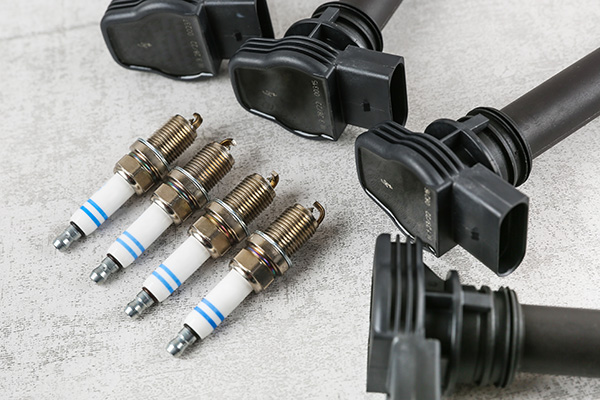
FAQs About Ignition Coils
Q: Can one bad coil cause all cylinders to misfire?
A: Usually one bad coil affects its specific cylinder(s). But if wiring or ignition driver circuits are compromised, misfires can spread.
Q: Should I replace spark plugs when changing coils?
A: Yes — old or fouled plugs force coils to work harder and shorten their life.
Q: Are aftermarket coils any good?
A: Quality aftermarket coils from trusted brands can match OEM performance and are often more affordable.
Q: Why do ignition coils fail?
A: Heat cycling, moisture intrusion, cracked insulation, and worn spark plugs are common causes.
Final Thoughts
Ignition coils are small components with a big impact on engine performance. Choosing the right coils — whether OEM replacements, performance upgrades, or cost-effective daily-driver options — plays a key role in smooth, efficient combustion.
Regular diagnosis, proper spark plug maintenance, and understanding coil design will keep your engine firing strong and reliable.
Connect with us


