





Transmission fluid is one of the most overlooked yet critical fluids in your vehicle. While most drivers understand the importance of engine oil, transmission fluid often goes unchecked until shifting problems appear or warning lights turn on. Unfortunately, by that point, damage may already be occurring internally.
This in-depth guide explains how to check transmission fluid correctly, why it matters, how procedures differ by transmission type, and when professional service is required. This information aligns with maintenance best practices discussed throughout the Simi Valley Chrysler Dodge Jeep Ram blog and service resources.
For vehicles with sealed transmissions or manufacturer-specific fluid requirements, professional inspection at Simi Valley Chrysler Dodge Jeep Ram Service Center is strongly recommended.
https://www.simivalleychryslerdodgejeepram.com/service.aspx
Why Transmission Fluid Is So Important
Transmission fluid performs multiple critical roles simultaneously:
- Lubricates internal gears, bearings, and clutch packs
- Maintains hydraulic pressure for smooth and precise shifting
- Transfers heat away from internal components
- Prevents corrosion and excessive wear
- Helps suspend microscopic debris until filtration or service
Modern automatic transmissions operate under tight tolerances. Even minor fluid degradation can cause delayed shifts, harsh engagement, slipping gears, or overheating. Simi CDJR maintenance content frequently emphasizes that fluid condition is just as important as fluid level, especially for vehicles used for towing or daily commuting in stop-and-go traffic.
Which Vehicles Can You Check at Home?
Before attempting to check transmission fluid, it’s critical to understand what type of transmission your vehicle has.
Vehicles that often allow owner checks:
- Older automatic transmissions with dipsticks
- Some trucks and SUVs from earlier model years
Vehicles that usually require professional service:
- Newer Chrysler, Dodge, Jeep, and Ram vehicles
- Vehicles with sealed or “lifetime” transmissions
- CVT and advanced multi-speed automatic units
Simi CDJR has published several technical breakdowns explaining how transmission design has evolved and why many modern units no longer include dipsticks.
https://www.simivalleychryslerdodgejeepram.com/blogs/5737
If your vehicle does not have a dipstick, attempting a DIY check can result in incorrect fluid levels or contamination.
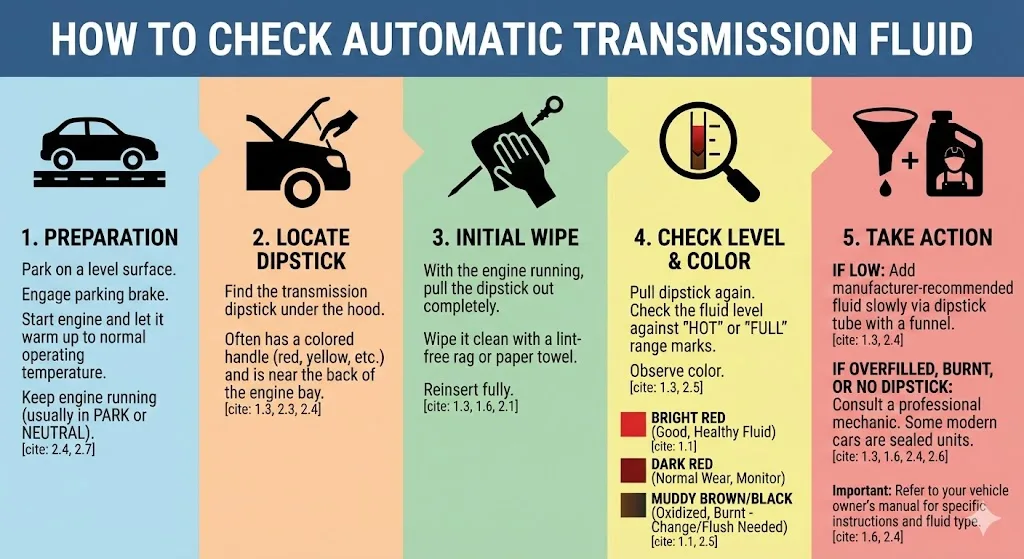
Step-by-Step: How to Check Transmission Fluid (Dipstick Vehicles)
If your vehicle is equipped with a traditional transmission dipstick, follow the process below carefully.
Step 1: Warm the Transmission to Operating Temperature
Transmission fluid expands when warm. Checking it cold produces an inaccurate reading.
- Drive normally for 10 to 20 minutes
- Ensure the transmission shifts through all gears
- Park on a level surface
Simi CDJR’s transmission service articles consistently highlight the importance of checking fluid at operating temperature for accuracy.
https://www.simivalleychryslerdodgejeepram.com/blogs/5737/does-your-transmission-need-to-warm-up-before-a-fluid-change-the-definitive-guide
Step 2: Keep the Engine Running
For most automatic transmissions:
- Leave the engine running
- Shift into Park (or Neutral if specified by the manual)
- Engage the parking brake
Turning the engine off can cause fluid to drain back into the pan, resulting in a false reading.
Step 3: Locate the Transmission Dipstick
Under the hood, locate the transmission dipstick:
- Typically farther back than the engine oil dipstick
- Often marked with a red or yellow handle
- Labeled “TRANS” or “ATF” in some vehicles
If you cannot locate a dipstick, your vehicle likely uses a sealed transmission system.
Step 4: Clean the Dipstick Completely
- Pull the dipstick out slowly
- Wipe it clean using a lint-free cloth
- Ensure no residue remains
Old fluid residue can make levels appear higher than they truly are.
Step 5: Reinsert and Check Fluid Level
- Fully insert the dipstick
- Pull it out again
- Read the level against the markings
Most dipsticks show:
- “HOT” and “COLD” ranges
- Cross-hatched areas indicating proper level
At operating temperature, the fluid should fall within the HOT range.
Step 6: Inspect Fluid Condition
Transmission fluid condition matters as much as level.
Healthy fluid:
- Clear or translucent
- Light red or amber in color
- Neutral or slightly sweet smell
Problematic fluid:
- Dark brown or black
- Burnt odor
- Visible debris or metal particles
If fluid appears degraded, Simi CDJR recommends scheduling professional service rather than simply topping it off.
https://www.simivalleychryslerdodgejeepram.com/service.aspx
Step 7: Adding Transmission Fluid (If Required)
If fluid is low:
- Use only manufacturer-approved fluid
- Add fluid slowly through the dipstick tube
- Recheck level after each small addition
Overfilling is dangerous. Excess fluid can foam, aerate, and cause erratic pressure, leading to slipping or internal damage.
Simi CDJR blog resources frequently explain how using incorrect transmission fluid can lead to long-term issues.
https://www.simivalleychryslerdodgejeepram.com/blogs/5737
Vehicles Without Dipsticks: What You Need to Know
Many modern Chrysler, Dodge, Jeep, and Ram vehicles are built with sealed transmissions. These systems:
- Do not allow visual level checks
- Require specific fluid temperatures for measurement
- Use fill and check plugs under the vehicle
- Often require scan tools to monitor fluid temperature
Attempting to check sealed transmissions without proper equipment can lead to incorrect fluid levels or leaks.
Simi CDJR recommends having sealed transmissions inspected by trained technicians using factory-approved procedures.
https://www.simivalleychryslerdodgejeepram.com/service.aspx
How Often Should Transmission Fluid Be Checked?
General guidelines vary by vehicle, but common recommendations include:
- Every oil change for dipstick-equipped vehicles
- Before towing heavy loads
- When experiencing shifting issues
- During routine service intervals
Even “lifetime” fluids are not immune to heat breakdown, especially in trucks and SUVs that tow or haul.
Simi CDJR maintenance content frequently addresses the misconception around lifetime transmission fluid.
https://www.simivalleychryslerdodgejeepram.com/blogs/5737
Warning Signs of Low or Degraded Transmission Fluid
If you notice any of the following, a fluid check is strongly advised:
- Delayed gear engagement
- Hard or jerky shifts
- Slipping between gears
- Transmission overheating warnings
- Unusual noises while shifting
Ignoring these symptoms can result in internal wear that cannot be reversed by fluid service alone.
Why Professional Service Often Makes Sense
While checking fluid at home is possible for some vehicles, professional service offers several advantages:
- Accurate fluid temperature measurement
- Correct fluid type selection
- Leak inspection
- Electronic diagnostics
- Manufacturer-approved procedures
At Simi Valley Chrysler Dodge Jeep Ram, transmission inspections are performed by trained technicians familiar with Chrysler, Dodge, Jeep, and Ram drivetrains.
https://www.simivalleychryslerdodgejeepram.com/service.aspx
Transmission Fluid vs. Transmission Flush
A fluid check does not mean a flush is required.
- Fluid check: Measures level and condition
- Fluid change: Replaces a portion of fluid
- Flush: Replaces nearly all fluid using equipment
Simi CDJR blog content explains why flushes should only be performed when recommended by manufacturer guidelines.
https://www.simivalleychryslerdodgejeepram.com/blogs/5737
Final Thoughts
Transmission fluid is one of the most important yet misunderstood components of vehicle maintenance. Checking it properly helps prevent costly repairs, improves driving performance, and extends the life of your vehicle.
If your vehicle allows DIY checks, follow the procedure carefully. If it uses a sealed transmission or you’re unsure about fluid condition, professional inspection is the safest and most accurate option.
For inspections, maintenance, or transmission service, schedule your visit with Simi Valley Chrysler Dodge Jeep Ram Service Center.
https://www.simivalleychryslerdodgejeepram.com/service.aspx
Connect with us


