





A Complete Guide to Understanding Tire Size Numbers on Your Vehicle
Tire size numbers can look confusing at first glance, but they contain critical information about your vehicle’s handling, safety, ride comfort, and performance. Whether you are replacing worn tires, upgrading wheels, or preparing for seasonal driving, understanding how to read a tire size ensures you choose the correct fit for your Chrysler, Dodge, Jeep, or Ram vehicle.
This in-depth guide explains how to read tire size numbers, what each marking means, where to find your factory tire size, and how incorrect sizing can impact performance. The information aligns with guidance commonly discussed in Simi Valley Chrysler Dodge Jeep Ram service and maintenance resources.
For tire inspections, fitment verification, or professional tire replacement, visit Simi Valley Chrysler Dodge Jeep Ram Service Center.
https://www.simivalleychryslerdodgejeepram.com/service.aspx
What Does Tire Size Mean?
A tire size is a standardized code printed on the sidewall of every tire. This code describes the tire’s:
- Width
- Sidewall height
- Construction type
- Wheel diameter
- Load capacity
- Speed rating
Understanding how to read tire sizes ensures your replacement tires match factory specifications, maintaining correct speedometer calibration, suspension geometry, and braking performance.
Simi CDJR service content regularly highlights the importance of using manufacturer-approved tire sizes for safety and warranty compliance.
https://www.simivalleychryslerdodgejeepram.com/blogs/5737
Where to Find Your Tire Size
Before learning how to read tire size numbers, you should know where to find them:
- On the tire sidewall – the most common location
- Driver’s door jamb placard – lists factory tire size and pressure
- Owner’s manual – includes approved tire specifications
The door jamb label is the most reliable reference if your tires have been changed previously.
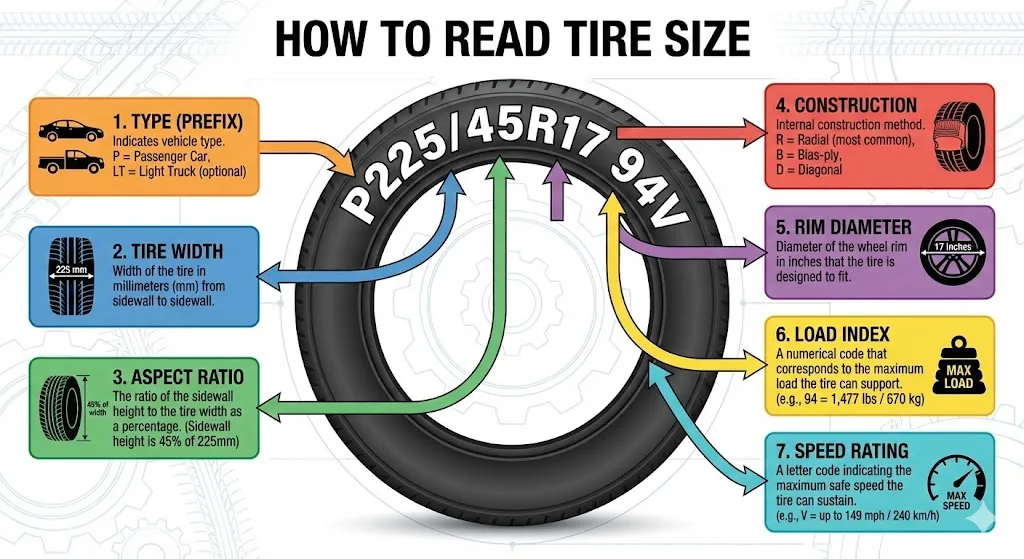
How to Read a Tire Size: Step-by-Step Breakdown
Let’s break down a common example:
P265/70R17 113T
This format is used across nearly all passenger vehicles and trucks.
1. Tire Type Prefix (P)
The first letter indicates the tire type.
- P = Passenger vehicle tire
- LT = Light truck tire (common on Ram trucks)
Many Jeep and Ram vehicles use LT-rated tires for higher load capacity. Simi CDJR tire service articles often discuss the importance of selecting the correct tire class for trucks and SUVs.
https://www.simivalleychryslerdodgejeepram.com/service.aspx
2. Tire Width (265)
The first number represents tire width in millimeters.
- 265 means the tire is 265 mm wide from sidewall to sidewall
Wider tires generally offer improved traction but may impact fuel economy and steering feel.
Understanding how to read tire size numbers helps ensure clearance with suspension components and fenders.
3. Aspect Ratio (70)
The aspect ratio is the height of the tire’s sidewall expressed as a percentage of the width.
- 70 means the sidewall height is 70 percent of 265 mm
Higher aspect ratios provide:
- More ride comfort
- Better absorption of road imperfections
Lower aspect ratios offer:
- Sharper handling
- Sportier appearance
4. Construction Type (R)
The letter R stands for radial construction, which is standard on modern vehicles.
Radial tires:
- Improve durability
- Enhance ride quality
- Reduce rolling resistance
Nearly all Chrysler, Dodge, Jeep, and Ram vehicles use radial tires.
5. Wheel Diameter (17)
This number tells you the wheel diameter in inches.
- 17 means the tire fits a 17-inch wheel
This is one of the most critical numbers when replacing tires. Installing a tire on the wrong wheel diameter is unsafe and impossible.
Simi CDJR technicians verify wheel diameter during every tire replacement service.
https://www.simivalleychryslerdodgejeepram.com/service.aspx
6. Load Index (113)
The load index represents how much weight each tire can safely support.
- 113 corresponds to a specific weight rating
Using a tire with an insufficient load index can result in premature wear or failure, especially on trucks and SUVs.
7. Speed Rating (T)
The final letter indicates the tire’s maximum safe speed.
Common speed ratings include:
- S – typical for sedans
- T – common for SUVs
- H / V – performance-oriented vehicles
Your replacement tire should always meet or exceed the factory speed rating.
How to Read Tire Sizes for Trucks and SUVs
Many Jeep and Ram vehicles use LT tire sizing, which looks slightly different:
LT275/65R18
Key differences:
- LT indicates light truck construction
- Thicker sidewalls
- Higher load ratings
Simi CDJR service guidance emphasizes matching LT ratings for vehicles designed for towing or off-road use.
https://www.simivalleychryslerdodgejeepram.com/service.aspx
Why Tire Size Matters More Than You Think
Using the wrong tire size can cause:
- Speedometer inaccuracies
- Reduced braking performance
- Uneven tire wear
- Suspension strain
- Traction control errors
Modern vehicles rely on precise tire diameter calculations for ABS and stability systems. Even small deviations can affect system performance.
Common Tire Size Reading Mistakes
Misreading Width vs Wheel Size
Some drivers confuse tire width with wheel diameter, leading to incorrect purchases.
Ignoring Load Index
Choosing tires based only on size without matching load rating can compromise safety.
Mixing Sizes
Different tire sizes front and rear can disrupt traction systems unless factory-approved.
Simi CDJR technicians routinely correct these issues during tire inspections.
https://www.simivalleychryslerdodgejeepram.com/service.aspx
How to Read Tire Size Numbers on the Sidewall
In addition to the main size code, tires include other markings:
- DOT code – manufacturing date
- UTQG ratings – treadwear, traction, temperature
- Maximum load and pressure
While important, these markings do not replace the primary tire size code when selecting replacements.
Can You Change Tire Size?
In some cases, yes — but changes should be approved and calculated carefully.
Potential reasons for changing tire size:
- Off-road upgrades
- Winter tire packages
- Wheel upgrades
Risks include:
- Rubbing against suspension
- Incorrect gearing
- Reduced fuel efficiency
Before changing tire size, Simi CDJR recommends professional fitment verification.
https://www.simivalleychryslerdodgejeepram.com/service.aspx
Tire Size and Seasonal Tires
Winter tires often use:
- Slightly narrower widths
- Higher sidewall ratios
This improves traction in snow and slush. The correct winter tire size should still remain within manufacturer-approved limits.
Simi CDJR service teams regularly assist with seasonal tire sizing and installation.
https://www.simivalleychryslerdodgejeepram.com/service.aspx
How Often Should Tire Size Be Checked?
You should confirm tire size:
- When replacing tires
- After buying a used vehicle
- When upgrading wheels
- Before seasonal tire changes
Incorrect tire sizing is one of the most common causes of drivability complaints.
Professional Tire Services at Simi CDJR
At Simi Valley Chrysler Dodge Jeep Ram, tire services include:
- Factory tire size verification
- Load and speed rating matching
- Tire mounting and balancing
- TPMS inspection
- Alignment checks
Using dealership-grade tools ensures your vehicle maintains factory handling and safety standards.
https://www.simivalleychryslerdodgejeepram.com/service.aspx
Final Thoughts
Knowing how to read a tire size empowers you to make informed decisions about tire replacement and upgrades. Tire size numbers are not random — each digit plays a role in how your vehicle handles, rides, and performs.
If you’re unsure about tire sizing or want professional guidance, schedule a tire inspection at Simi Valley Chrysler Dodge Jeep Ram Service Center.
https://www.simivalleychryslerdodgejeepram.com/service.aspx
Connect with us


