





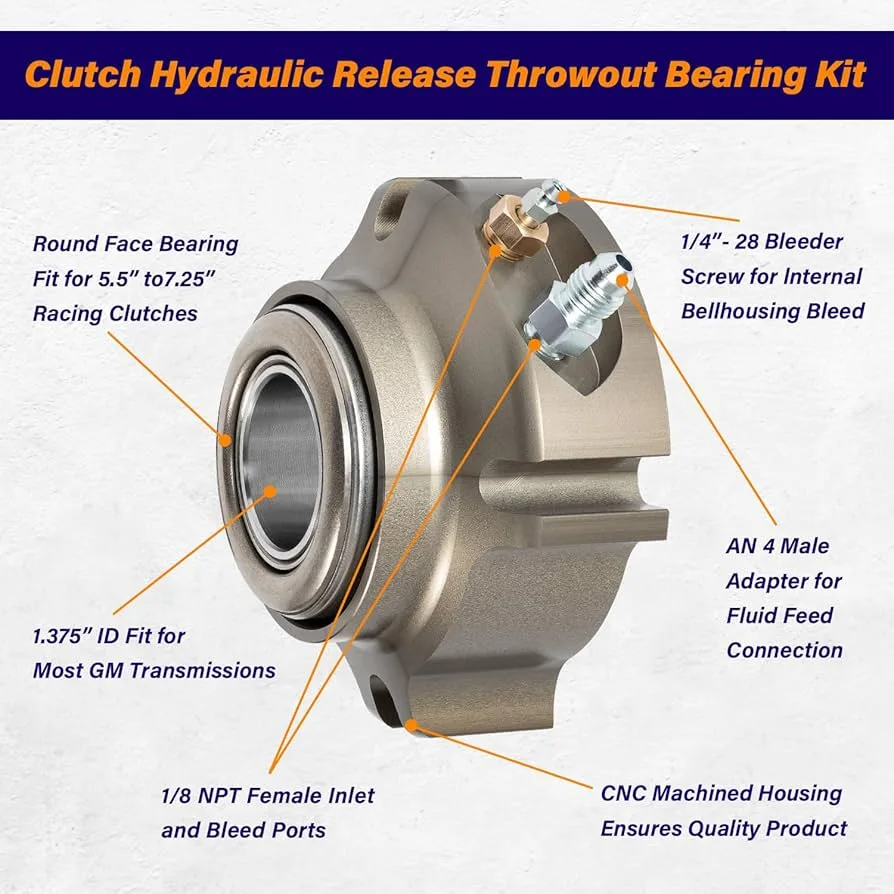
Throwout Bearing: What It Is, What It Does, and What Happens When It Fails
A throwout bearing, also called a clutch release bearing, is the part in a manual transmission system that helps disconnect the engine from the transmission when you press the clutch pedal.
The simple answer is this: the throwout bearing pushes against the clutch pressure plate so the clutch disc can disengage from the flywheel, allowing you to shift gears smoothly. When it starts failing, you may hear grinding, squealing, chirping, rattling, or whining noises when pressing the clutch pedal.
A bad throwout bearing is not something to ignore. It may start as a small noise, but if it fails completely, it can make the clutch hard to use, damage the pressure plate, and eventually leave the vehicle unable to shift properly.
What Is a Throwout Bearing?
A throwout bearing is a small but important bearing inside a manual transmission clutch system.
It sits between the clutch fork or hydraulic release mechanism and the pressure plate. When you press the clutch pedal, the release system moves the throwout bearing forward. The bearing then presses against the pressure plate fingers, releasing clamping force on the clutch disc.
That moment allows the engine and transmission to separate briefly so you can change gears.
Haynes explains the basic clutch operation clearly: the clutch connects and disconnects engine power from the gearbox so the driver can change gears. The throwout bearing is one of the key parts that makes that disengagement happen.
Why Is It Called a Throwout Bearing?
It is called a throwout bearing because it “throws out” or releases the clutch pressure.
The name sounds old-school because it is. Many mechanics also call it a clutch release bearing because that name better describes what it actually does.
Both terms mean the same thing in normal repair conversations.
If a shop tells you the release bearing is bad, they are usually talking about the throwout bearing.
Where Is the Throwout Bearing Located?
The throwout bearing is located inside the bell housing, between the engine and transmission.
That location is why replacement can be expensive. The bearing itself may not be extremely costly, but reaching it usually requires removing the transmission from the vehicle.
On most manual cars and trucks, the throwout bearing is not an easy external part you can replace in a few minutes. It is buried inside the clutch assembly area.
That is why many shops recommend replacing the full clutch kit when the throwout bearing fails, especially if the vehicle already has higher mileage.
What Does a Throwout Bearing Do?
The throwout bearing helps disengage the clutch.
When your foot is off the clutch pedal, the clutch is engaged. The engine sends power through the clutch disc into the transmission.
When you press the clutch pedal, the throwout bearing moves forward and presses on the pressure plate. That releases the clutch disc from the flywheel, allowing the transmission input shaft to slow down or separate from engine torque so you can shift gears.
When you release the pedal, the bearing moves back, the pressure plate clamps the clutch disc again, and power flows back through the drivetrain.
In simple terms: no throwout bearing, no proper clutch release.
Symptoms of a Bad Throwout Bearing
The most common symptom of a bad throwout bearing is noise when pressing the clutch pedal.
You may hear a chirping, squealing, grinding, rattling, or whining sound. The noise may appear only when the clutch pedal is pressed, or it may get worse as the pedal moves.
Other symptoms can include a rough clutch pedal feel, vibration through the pedal, difficulty shifting gears, clutch engagement problems, or a pedal that feels inconsistent.
The key clue is when the noise happens. If the noise changes when you press or release the clutch pedal, the throwout bearing becomes a strong suspect.
Throwout Bearing Noise: What It Sounds Like
A failing throwout bearing can make several different sounds.
A light chirping sound may happen in the early stages. A squealing or whining sound can appear when the bearing is dry, worn, or spinning poorly. A grinding sound is more serious and can mean the bearing is failing badly.
If the sound gets louder when you press the clutch pedal, that often points toward the throwout bearing because pressing the pedal loads the bearing against the pressure plate.
If the noise happens when your foot is off the clutch pedal, the issue may be something else, such as the input shaft bearing, pilot bearing, transmission bearing, or another clutch-related component.
Bad Throwout Bearing vs Bad Pilot Bearing
A throwout bearing and pilot bearing are not the same part.
The throwout bearing helps release the clutch when you press the pedal. The pilot bearing or pilot bushing supports the transmission input shaft where it meets the engine crankshaft.
A bad throwout bearing often makes noise when the clutch pedal is pressed.
A bad pilot bearing may make noise when the clutch is disengaged, especially when the vehicle is stopped with the clutch pedal down.
Both can create confusing clutch noises, so proper diagnosis matters. A good mechanic will listen to when the noise occurs, how the pedal feels, and whether shifting is affected.
What Causes Throwout Bearing Failure?
Throwout bearings fail from wear, heat, age, contamination, poor clutch adjustment, hydraulic problems, or driver habits.
One of the biggest causes is riding the clutch. If you rest your foot on the clutch pedal while driving, the throwout bearing can stay lightly loaded. That can make it spin more often than it should and wear out faster.
Holding the clutch pedal down for long periods at stoplights can also add wear. It is better to shift into neutral and release the clutch when safely stopped for longer periods.
Other causes include a worn clutch fork, bad clutch hydraulics, poor installation, misalignment, dirt, moisture, or a failing pressure plate.
Can You Drive With a Bad Throwout Bearing?
You can sometimes drive with a noisy throwout bearing for a short time, but it is not a smart long-term plan.
A mild noise may last for a while, but a failing bearing can get worse without much warning. If the bearing seizes, breaks apart, or damages the pressure plate, you may lose proper clutch operation.
That can make shifting difficult or impossible. It can also turn a repair that might have been a clutch service into a more expensive transmission removal and clutch-system repair.
If the noise is getting louder, the pedal feels rough, or shifting becomes difficult, stop delaying the repair.
How Much Does It Cost to Replace a Throwout Bearing?
Replacing a throwout bearing usually costs $500 to $1,500 or more, depending on the vehicle, labor rate, drivetrain layout, and whether the full clutch is replaced.
The bearing itself may only cost a small amount compared with the labor. The expensive part is removing the transmission to access it.
Because of that labor, most shops do not recommend replacing only the throwout bearing unless the clutch is nearly new. It usually makes more sense to replace the clutch disc, pressure plate, throwout bearing, pilot bearing or bushing, and sometimes resurface or replace the flywheel at the same time.
RepairPal shows clutch replacement can be a major repair because of the labor involved, and that is the same reason throwout bearing replacement often becomes part of a full clutch job.
Should You Replace the Clutch With the Throwout Bearing?
Yes, in most cases, replace the clutch when replacing the throwout bearing.
Since the transmission must usually come out, it makes sense to replace other wear parts while everything is accessible. If you replace only the bearing and the clutch fails later, you may pay the same large labor bill again.
A proper clutch job often includes:
Clutch disc.
Pressure plate.
Throwout bearing.
Pilot bearing or bushing.
Flywheel inspection.
Hydraulic inspection.
Rear main seal inspection if accessible.
This is the smarter repair because it reduces the chance of repeating the same labor.
Is a Throwout Bearing Included in a Clutch Kit?
Usually, yes.
Most clutch kits include a clutch disc, pressure plate, and throwout bearing. Some kits also include a pilot bearing or pilot bushing, alignment tool, or other small parts.
Do not assume every kit includes everything. Always check the parts list before buying.
If you are paying a shop, ask exactly what is included in the clutch replacement quote. A cheap clutch quote may not include flywheel work, hydraulic parts, rear main seal inspection, or other recommended items.
How Long Does a Throwout Bearing Last?
A throwout bearing can last 80,000 to 150,000 miles or more, depending on the vehicle and driving habits.
It may last as long as the clutch in many vehicles. But if the driver rides the clutch, sits at lights with the pedal down, or drives aggressively, the bearing can wear sooner.
City driving can also wear clutch components faster than highway driving because the clutch is used more often.
A properly driven manual vehicle can go a long time before clutch and throwout bearing replacement. A poorly driven one can wear out much sooner.
How to Make a Throwout Bearing Last Longer
The best way to protect the throwout bearing is to avoid unnecessary clutch pedal use.
Do not rest your foot on the clutch pedal while driving.
Do not hold the clutch pedal down at every long stop.
Shift into neutral when safely stopped.
Use smooth clutch engagement.
Do not slip the clutch more than necessary.
Fix hydraulic clutch problems early.
Use quality parts during clutch replacement.
A throwout bearing is designed to work when you press the clutch, not to stay loaded all the time.
Can a Bad Throwout Bearing Damage the Clutch?
Yes, a bad throwout bearing can damage the clutch system.
If the bearing fails, it can damage the pressure plate fingers. If it seizes, it may create heat, noise, rough pedal feel, and poor clutch release. In severe cases, it can contribute to clutch drag, difficult shifting, or complete clutch release failure.
This is why early diagnosis matters. A small bearing noise can eventually become a larger clutch repair.
Throwout Bearing Replacement Labor
Throwout bearing replacement is labor-heavy because the transmission must usually be removed.
On a rear-wheel-drive vehicle, the job may be more straightforward than on a front-wheel-drive car, but it still takes time. On some all-wheel-drive vehicles, performance cars, trucks, or compact engine bays, the job can be more involved.
Labor time is the main reason the cost varies so much.
If the shop already has the transmission out, it is usually wise to inspect the clutch, flywheel, rear main seal, clutch fork, hydraulic slave cylinder, and pilot bearing.
Manual Transmission Diagnosis: Do Not Guess
Clutch noises can be tricky.
A noise that sounds like a throwout bearing may also come from the pilot bearing, input shaft bearing, clutch fork, pressure plate, transmission, or even engine-related vibration.
Before approving a major repair, ask the mechanic to explain how they diagnosed it. The timing of the noise matters. Whether it happens with the pedal up, pedal down, in neutral, in gear, moving, or stopped can all point to different causes.
A good diagnosis can save money and prevent replacing the wrong part.
FAQs About Throwout Bearings
What is a throwout bearing?
A throwout bearing, also called a clutch release bearing, is the part that presses against the clutch pressure plate when you push the clutch pedal. It helps disengage the clutch so you can shift gears.
What are symptoms of a bad throwout bearing?
Common symptoms include squealing, chirping, grinding, rattling, or whining when pressing the clutch pedal. You may also feel clutch pedal vibration, rough pedal movement, or difficulty shifting.
Can I drive with a bad throwout bearing?
You may be able to drive for a short time if the noise is mild, but it is risky. If the bearing fails completely, you may lose proper clutch operation and damage other clutch components.
How much does it cost to replace a throwout bearing?
Throwout bearing replacement often costs $500 to $1,500 or more because the transmission usually has to be removed. Many shops recommend replacing the full clutch kit at the same time.
Should I replace the clutch with the throwout bearing?
Yes, usually. Since the transmission is already out, it often makes sense to replace the clutch disc, pressure plate, throwout bearing, and pilot bearing together.
How long does a throwout bearing last?
A throwout bearing can last 80,000 to 150,000 miles or more, depending on driving habits, vehicle design, clutch condition, and maintenance.
What causes a throwout bearing to fail?
Common causes include normal wear, riding the clutch, holding the clutch pedal down for long periods, heat, poor installation, clutch misalignment, contamination, or related clutch-system problems.
Final Thoughts: A Small Bearing With a Big Job
The throwout bearing is small, but it plays a major role in how a manual transmission vehicle shifts.
When it is healthy, you barely notice it. When it starts failing, you may hear squealing, grinding, chirping, or rattling every time you press the clutch pedal. Ignoring it can lead to clutch damage, poor shifting, and a more expensive repair.
If your clutch makes noise when you press the pedal, get it inspected before it gets worse. A throwout bearing problem is much easier to manage early than after it damages the rest of the clutch system.
Connect with us


