





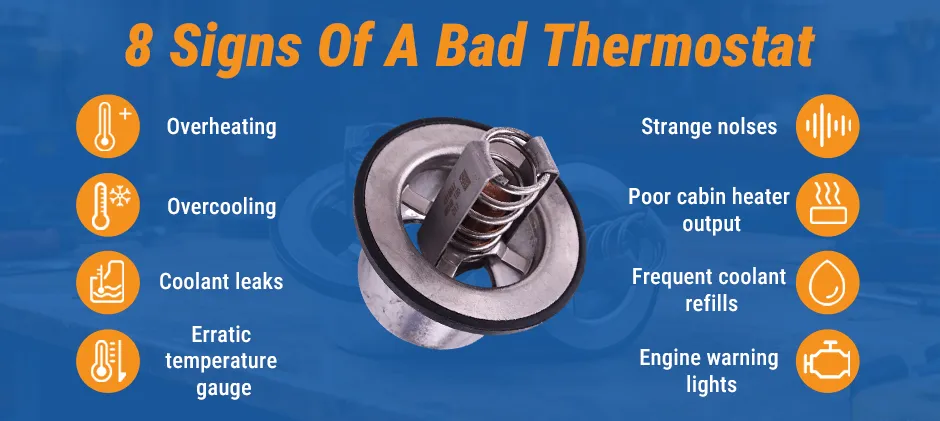
Bad Car Thermostat Symptoms
A bad car thermostat usually causes engine overheating, a temperature gauge that moves unpredictably, poor cabin heat, coolant leaks near the thermostat housing, or an engine that takes too long to warm up.
The simple answer is this: if the thermostat gets stuck closed, the engine can overheat quickly. If it gets stuck open, the engine may run too cold and the heater may blow weak or cold air. J.D. Power explains that overheating is one of the most common signs of a failing thermostat because a stuck-closed thermostat can stop coolant from reaching the radiator.
A thermostat is a small part, but it controls a major job. It helps regulate coolant flow between the engine and radiator so the engine reaches and stays near its proper operating temperature.
What Does a Car Thermostat Do?
A car thermostat is a temperature-controlled valve in the cooling system.
When the engine is cold, the thermostat stays closed so the engine can warm up faster. Once the engine reaches operating temperature, the thermostat opens and allows coolant to flow through the radiator.
That balance is important. An engine that runs too hot can suffer serious damage. An engine that runs too cold can use more fuel, run poorly, trigger warning lights, and give you weak cabin heat.
In plain English, the thermostat helps the engine stay in the right temperature range.
1. Engine Overheating
Overheating is one of the most serious bad thermostat symptoms.
If the thermostat is stuck closed, coolant cannot circulate properly to the radiator. The engine heats up fast, and the temperature gauge may climb toward the red zone.
NAPA says a rapid temperature increase during normal operation can point to a stuck-closed thermostat. If your temperature gauge rises quickly, do not keep driving like everything is fine.
Overheating can damage the head gasket, cylinder head, radiator, hoses, and even the engine itself. If the gauge is climbing or steam is coming from under the hood, pull over safely and shut the vehicle off.
2. Engine Runs Too Cold
A thermostat can also fail by staying open.
When that happens, coolant flows through the radiator too soon and too often. The engine may struggle to reach normal operating temperature, especially in cold weather.
This can cause poor fuel economy, weak heater performance, rough running, and a check engine light on some vehicles.
CarParts.com explains that modern thermostats often fail by opening too soon or sticking open, which can make the engine run too cool.
If your temperature gauge stays low even after driving for a while, the thermostat may be stuck open.
3. Temperature Gauge Fluctuates
A bad thermostat can make the temperature gauge move up and down unpredictably.
The gauge may climb, drop suddenly, then climb again. This can happen when the thermostat opens and closes at the wrong time or sticks intermittently.
Temperature fluctuation can also be caused by low coolant, air in the cooling system, a bad radiator cap, a failing water pump, a clogged radiator, or a cooling fan issue. But the thermostat is one of the first parts mechanics often check because it directly controls coolant flow.
If the gauge is not steady, do not ignore it.
4. Heater Blows Cold Air
A bad thermostat can affect the cabin heater.
Your car heater works by using hot engine coolant to warm air before it enters the cabin. If the thermostat is stuck open, the engine may not get hot enough to provide strong heat.
PartSource notes that a stuck-open thermostat can cause coolant to flow constantly through the radiator, preventing the engine from warming up enough to supply heat to the cabin.
This is especially noticeable in winter. If your heater blows cold or lukewarm air and the temperature gauge stays low, a stuck-open thermostat is a strong possibility.
5. Coolant Leaks Near the Thermostat Housing
A bad thermostat can sometimes lead to leaks around the thermostat housing.
If the thermostat sticks closed, pressure and heat can build in the cooling system. That can stress gaskets, hoses, and plastic housings. Some vehicles also have thermostat housings that crack or leak with age.
NAPA points out that leaks near the thermostat housing can happen when pressure compromises gaskets or weaker parts of the system.
Look for coolant puddles, crusty residue, a sweet coolant smell, or dampness around the thermostat housing and nearby hoses.
6. Check Engine Light
A bad thermostat can trigger the check engine light.
One common thermostat-related code is P0128, which usually means the engine is not reaching the expected operating temperature quickly enough. This often points to a thermostat stuck open, but it can also involve coolant temperature sensors, low coolant, or other cooling-system issues.
Do not replace parts blindly based only on a code. A scan tool gives direction, but the cooling system still needs proper diagnosis.
If the check engine light is on and the temperature gauge is staying low, the thermostat may be the issue.
7. Poor Fuel Economy
A stuck-open thermostat can hurt fuel economy.
When the engine runs too cool, the computer may keep the fuel mixture richer than normal because it thinks the engine is still warming up. That can waste fuel and reduce efficiency.
You may also notice the vehicle idling differently, running less smoothly, or taking longer to settle into normal operation.
Bad fuel economy alone does not prove the thermostat is bad, but combined with a low temperature gauge and weak heater, it becomes a strong clue.
8. Coolant Boiling or Steam From the Hood
Steam from the hood is a serious warning sign.
If the thermostat is stuck closed and the engine overheats, coolant may boil, overflow, or escape from the radiator cap, reservoir, hoses, or weak points in the system.
Do not open the radiator cap when the engine is hot. Hot coolant is under pressure and can cause severe burns.
If you see steam, pull over safely, shut the engine off, and let it cool before checking anything.
Stuck Open vs. Stuck Closed Thermostat
A thermostat can fail in two main ways.
A stuck-closed thermostat blocks coolant from reaching the radiator. This usually causes overheating.
A stuck-open thermostat lets coolant circulate too early and too often. This usually causes the engine to run too cold, weak cabin heat, worse fuel economy, and sometimes a check engine light.
Both are problems, but a stuck-closed thermostat is usually more urgent because overheating can destroy an engine quickly.
Can You Drive With a Bad Thermostat?
You should not keep driving with a suspected bad thermostat if the engine is overheating.
A stuck-open thermostat may let the vehicle drive, but it can still cause poor performance, bad fuel economy, weak heat, and long-term wear. A stuck-closed thermostat is much more dangerous because it can overheat the engine quickly.
If the temperature gauge is rising, stop driving. If the gauge stays cold and the heater does not work, schedule a repair soon.
How Much Does It Cost to Replace a Car Thermostat?
A thermostat replacement usually costs $150 to $500, depending on the vehicle, thermostat location, labor rate, coolant type, and whether the housing is replaced.
Some vehicles are simple. Others have thermostats buried under intake parts, attached to plastic housings, or integrated with sensors. On those vehicles, labor and parts cost more.
The thermostat itself is often not expensive. The cost comes from labor, coolant refill, bleeding air from the system, and replacing related gaskets or housings.
What Else Can Cause Similar Symptoms?
A bad thermostat is common, but it is not the only cooling-system problem.
Overheating can also come from low coolant, coolant leaks, a bad radiator cap, failing water pump, clogged radiator, bad cooling fans, air trapped in the system, collapsed hoses, or a blown head gasket.
No cabin heat can also come from low coolant, a clogged heater core, bad blend door, weak blower motor, or heater control problem.
That is why proper diagnosis matters. The thermostat may be the issue, but the whole cooling system should be checked.
How to Prevent Thermostat Problems
You cannot prevent every thermostat failure, but you can reduce risk.
Use the correct coolant. Keep the coolant level full. Fix leaks early. Follow the service schedule. Do not ignore overheating. Replace old coolant when due. Avoid mixing incompatible coolants.
If the thermostat is being replaced, use a quality part and make sure the cooling system is properly bled afterward. Air pockets can cause overheating even after a new thermostat is installed.
FAQs About Bad Car Thermostat Symptoms
What are the most common symptoms of a bad thermostat?
The most common symptoms are overheating, engine running too cold, temperature gauge fluctuations, weak cabin heat, coolant leaks near the thermostat housing, check engine light, and poor fuel economy.
What happens if the thermostat is stuck closed?
A stuck-closed thermostat blocks coolant from flowing to the radiator, which can cause rapid overheating and serious engine damage.
What happens if the thermostat is stuck open?
A stuck-open thermostat lets coolant circulate too much, causing the engine to run too cold, the heater to blow weak or cold air, and fuel economy to drop.
Can a bad thermostat cause no heat?
Yes. If the thermostat is stuck open, the engine may not warm up properly, which can cause weak or cold cabin heat.
Can I drive with a bad thermostat?
Do not drive if the engine is overheating. If the thermostat is stuck open and the engine runs cold, you may be able to drive short-term, but it should still be repaired.
How much does it cost to replace a thermostat?
Most car thermostat replacements cost about $150 to $500, depending on the vehicle and labor involved.
Final Thoughts: Do Not Ignore Cooling System Warnings
A bad thermostat can look minor at first, but it can cause major problems.
If your engine overheats, runs too cold, has weak cabin heat, leaks coolant, or shows strange temperature gauge behavior, the thermostat should be checked. A thermostat is much cheaper than a head gasket, radiator, or engine replacement.
The safest move is simple: treat temperature problems seriously, stop driving if the engine overheats, and get the cooling system diagnosed before a small repair becomes a major bill.
Connect with us


