





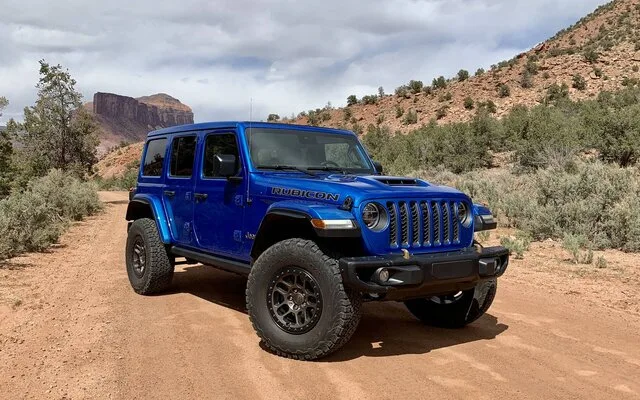
When shopping for a Jeep Wrangler, many buyers focus on off-road capability, towing power, or rugged design — but one overlooked spec can impact all of these: weight. So, how much does a Jeep Wrangler weigh?
The answer isn’t one-size-fits-all. Whether you’re eyeing a 2-door Sport or a plug-in hybrid 4xe, curb weight varies significantly across the Wrangler lineup. This article breaks it all down so you can make a smarter, more informed decision — especially if you’re hauling gear, planning off-road mods, or comparing models.
🧰 What Is “Curb Weight” and Why Does It Matter?
Before diving into the numbers, let’s define curb weight:
Curb Weight = The total weight of a vehicle with all fluids (oil, coolant, fuel) but without passengers or cargo.
This figure is critical because it influences:
- Towing and payload capacity
- Fuel economy
- Acceleration and braking
- Off-road performance
- Transport and garage storage
Heavier vehicles generally feel more planted but can consume more fuel and have reduced agility off-road.
📊 Jeep Wrangler Weight by Model (2025)
| Trim & Configuration | Curb Weight (Approx.) |
|---|---|
| Wrangler Sport 2-Door | 1,808 kg (3,985 lbs) |
| Wrangler Sport S 2-Door | 1,836 kg (4,047 lbs) |
| Wrangler Willys 2-Door | 1,870 kg (4,123 lbs) |
| Wrangler Rubicon 2-Door | 1,950 kg (4,299 lbs) |
| Wrangler Sport 4-Door (Unlimited) | 1,904 kg (4,197 lbs) |
| Wrangler Sahara 4-Door | 1,996 kg (4,401 lbs) |
| Wrangler Rubicon 4-Door | 2,050 kg (4,519 lbs) |
| Wrangler 4xe PHEV (Hybrid) | 2,268 kg (5,000 lbs) |
| Wrangler Rubicon 392 (V8 HEMI) | 2,370 kg (5,225 lbs) |
Looking for exact trim specs? Explore our new Jeep Wrangler inventory to compare them side by side.
🧱 2-Door vs 4-Door: What’s the Weight Difference?
A major factor in Wrangler weight is body style.
- 2-Door Wranglers are lighter, shorter, and more maneuverable, ideal for tight trails and daily driving.
- 4-Door Unlimited models offer more space and utility but add roughly 90–150 kg (200–330 lbs) due to the extra doors, wheelbase, and structure.
This added weight affects suspension articulation and off-road nimbleness but improves interior space and highway stability.
🔋 The Heavyweight: Jeep Wrangler 4xe Plug-In Hybrid
The Wrangler 4xe is a game-changer — combining Jeep’s trail-rated DNA with plug-in electric efficiency. But that hybrid battery adds serious heft:
- Weight: ~2,268 kg (5,000 lbs)
- Battery Pack: Adds ~400+ lbs
- Drivetrain: Complex electric motors + 2.0L turbo engine
Despite its weight, the 4xe remains one of the most capable and efficient Wranglers ever made.
You can browse Wrangler 4xe models here.
🔥 The Beast: Jeep Wrangler Rubicon 392
If weight equals muscle, the Wrangler Rubicon 392 is in a class of its own.
- Engine: 6.4L V8 HEMI (470 hp)
- Weight: ~2,370 kg (5,225 lbs)
This model is built for extreme power, and while it’s the heaviest Wrangler, it’s also the fastest — going 0–60 mph in about 4.5 seconds. That weight gives it high-speed confidence but comes at the cost of fuel economy and trail flexibility.
Want a test drive? Contact Simi Valley CDJR today.
🧭 Does Jeep Wrangler Weight Affect Off-Roading?
Absolutely. Here’s how:
- Light = Agile: Lighter 2-door models like the Sport S are great for rock crawling and steep inclines.
- Heavy = Stable: Heavier 4-door or 392 models offer more stability on descents and better highway comfort.
Suspension upgrades, tire size, and roof configuration also play a role — for example, steel bumpers or a hardtop can add another 90–180 kg (200–400 lbs).
🔄 Add-Ons That Increase Weight
Jeep owners love customization — but every mod adds weight:
| Accessory | Estimated Added Weight |
|---|---|
| Steel Bumpers (Front+Rear) | +90–135 kg (200–300 lbs) |
| Winch System | +20–45 kg (45–100 lbs) |
| Rock Rails / Skid Plates | +30–60 kg (65–130 lbs) |
| Roof Racks & Ladders | +25–50 kg (55–110 lbs) |
| Aftermarket Tires/Wheels | +40–100 kg (90–220 lbs) |
If you’re planning mods, consider the added strain on brakes, fuel economy, and suspension.
🧪 Jeep Wrangler Weight vs Competitors
| SUV | Weight Range |
|---|---|
| Jeep Wrangler 2-Door | 1,808–1,950 kg (3,985–4,299 lbs) |
| Ford Bronco 2-Door | ~1,900–2,020 kg (4,189–4,455 lbs) |
| Toyota 4Runner | ~2,130 kg (4,700 lbs) |
| Land Rover Defender 90 | ~2,050 kg (4,519 lbs) |
Wrangler models remain competitive in weight, especially the 2-door Sport variants — known for their agility and simple construction.
🚗 Shop Jeep Wrangler in Simi Valley, CA
Ready to explore the Jeep Wrangler lineup? Whether you’re looking for a lightweight 2-door trail machine or a fully loaded 4xe plug-in, Simi Valley Chrysler Dodge Jeep Ram has the inventory and expertise to help you find your perfect match.
✅ View Wrangler Inventory
💸 Check Jeep Specials
📞 Get In Touch With Our Team
🔚 Final Thoughts: Know Before You Tow, Crawl, or Haul
Understanding how much a Jeep Wrangler weighs helps you:
- Plan for garage space and transport
- Choose the right trim for off-road agility vs daily comfort
- Know your towing and payload limits
- Factor in fuel economy and mod load
Whether you’re going with a bare-bones Sport or a beefy Rubicon 392, Jeep’s diverse weight range gives you the flexibility to choose a Wrangler that matches your lifestyle — from weekend trail runs to weekday commutes.
Jeep Wrangler Weight – Frequently Asked Questions (FAQ)
1. How much does a Jeep Wrangler weigh?
The weight of a Jeep Wrangler depends on the model and configuration:
- 2-Door Sport: ~3,985 lbs (1,808 kg)
- 4-Door Sahara: ~4,401 lbs (1,996 kg)
- Wrangler 4xe Hybrid: ~5,000 lbs (2,268 kg)
- Wrangler Rubicon 392: ~5,225 lbs (2,370 kg)
Most Wranglers fall between 3,900 and 5,200 lbs, with 2-door models being the lightest and V8 or hybrid versions the heaviest.
2. Why does Wrangler weight vary so much?
Weight varies based on:
- Body style: 2-door vs. 4-door (Unlimited)
- Engine choice: turbo-4, hybrid, or V8
- Added features: larger wheels, off-road gear, and roof material (soft vs. hardtop)
- Trim level: Rubicon and 392 models have added reinforcements and accessories.
Each element adds functionality and strength — but also increases overall curb weight.
3. Does Wrangler weight affect off-road performance?
Yes.
- Lighter Wranglers (like the 2-door Sport) are more nimble on tight trails and easier to handle when rock crawling.
- Heavier Wranglers (like the 392 or 4xe) offer better stability on descents and smoother high-speed control.
Your choice should depend on how and where you plan to drive.
4. How much heavier is the Wrangler 4-door than the 2-door?
The 4-door Unlimited models typically weigh 200–330 lbs (≈ 90–150 kg) more than their 2-door counterparts.
That extra weight comes from the extended wheelbase, extra doors, and reinforced chassis — which add comfort and cargo space but slightly reduce agility.
5. How heavy is the Jeep Wrangler 4xe Hybrid?
The Wrangler 4xe Plug-In Hybrid weighs around 5,000 lbs (2,268 kg).
Its high-capacity battery pack adds roughly 400 lbs (181 kg) over the gas models, but in return you get electric torque, hybrid efficiency, and up to 49 MPGe combined.
6. What is the heaviest Jeep Wrangler?
The Wrangler Rubicon 392 is the heaviest model in the lineup at around 5,225 lbs (2,370 kg).
It’s powered by a 6.4L V8 HEMI engine producing 470 horsepower, designed for drivers who want maximum power and on-road presence.
7. Do aftermarket mods increase Wrangler weight?
Yes — accessories can add significant pounds.
| Accessory | Added Weight (Approx.) |
|---|---|
| Steel Bumpers | +200–300 lbs (90–135 kg) |
| Winch System | +45–100 lbs (20–45 kg) |
| Rock Rails / Skid Plates | +65–130 lbs (30–60 kg) |
| Roof Racks / Ladders | +55–110 lbs (25–50 kg) |
| Off-road Tires / Wheels | +90–220 lbs (40–100 kg) |
Keep these in mind if you plan to customize your Wrangler for overlanding or heavy trail use.
8. How does the Wrangler compare to other SUVs by weight?
| SUV | Weight Range |
|---|---|
| Jeep Wrangler 2-Door | 3,985–4,299 lbs |
| Ford Bronco 2-Door | 4,189–4,455 lbs |
| Toyota 4Runner | 4,700 lbs |
| Land Rover Defender 90 | 4,519 lbs |
The Wrangler sits right in the middle — lighter than some midsize SUVs yet strong enough to maintain Jeep’s signature durability.
9. Does Wrangler weight affect towing or fuel economy?
Yes.
- Heavier models like the Rubicon 392 or 4xe have slightly lower fuel economy but more torque and capability.
- Lighter trims offer improved efficiency and easier daily driving.
All Wranglers can typically tow 2,000–3,500 lbs, depending on trim and drivetrain.
10. Which Jeep Wrangler is best for me?
- Choose a 2-Door Sport or Willys if you want agility, light weight, and pure off-road fun.
- Choose a 4-Door Sahara or Rubicon for added comfort, space, and trail stability.
- Choose the Wrangler 4xe if you want hybrid efficiency with true Jeep 4×4 capability.
- Choose the Rubicon 392 if performance, sound, and power matter most.
11. Where can I explore Jeep Wrangler models in California?
Find the full lineup at:
📍 Simi Valley Chrysler Dodge Jeep Ram
📞 Sales: 805-387-9755
🔗 View Jeep Wrangler Inventory
🔗 Apply for Financing
🔗 Value Your Trade
🔗 Contact Our Team
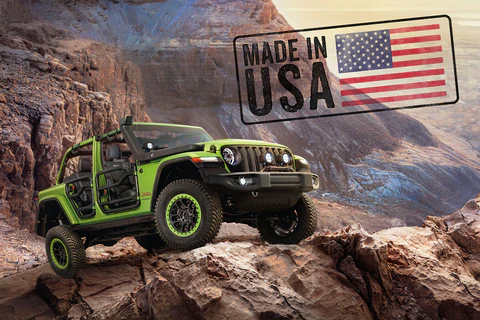
Is Jeep American Made? Uncovering the Truth Behind the Brand
Yes, Jeep is an American-born brand, and several of its most iconic models are still built in the United States. But the full answer is more nuanced: Jeep is American in heritage, design identity, and major U.S. production, but it is owned by Stellantis, a global automaker, and some Jeep models or components can come from outside the U.S.
The simple answer is this: Jeep is American made when you are talking about models like the Wrangler and Gladiator, but not every Jeep is 100% American in parts, ownership, or production footprint. Stellantis North America confirmed that the Wrangler 4xe is assembled at the Toledo Assembly Complex in Ohio, while Cars.com’s 2025 American-Made Index ranked the Jeep Gladiator in the top five and called it the highest-ranked American-made pickup truck.
Jeep’s American Roots
Jeep’s identity is deeply American.
The brand traces its roots back to the military vehicles of World War II, especially the original Willys MB. That vehicle became a symbol of durability, mobility, and utility. After the war, Jeep evolved into civilian vehicles that eventually shaped the modern SUV and off-road market.
That is why Jeep feels different from many global SUV brands. The Wrangler still carries the shape and spirit of the original military-style Jeep: upright windshield, removable roof, removable doors, short overhangs, four-wheel-drive hardware, and trail-first character.
Even though Jeep is now part of a multinational company, the brand’s core identity remains tied to American off-road culture.
Who Owns Jeep Today?
Jeep is owned by Stellantis.
Stellantis was formed in 2021 through the merger of Fiat Chrysler Automobiles and PSA Group. That means Jeep is no longer owned by a purely American company in the old-school sense. It sits inside a global corporation with brands such as Chrysler, Dodge, Ram, Fiat, Alfa Romeo, Peugeot, Citroën, Opel, and others.
That does not erase Jeep’s American heritage. It simply means ownership is global.
This is common in the modern auto industry. A vehicle can be American in brand identity and assembly location while still being part of an international company.
Where Are Jeep Wranglers Made?
The Jeep Wrangler is built in Toledo, Ohio.
That is one of the clearest answers to the “is Jeep American made?” question. The Wrangler is Jeep’s most iconic vehicle, and it is still assembled in the United States. Stellantis North America reported that the 250,000th Wrangler 4xe rolled off the line at the Toledo Assembly Complex, showing how central Ohio remains to Wrangler production.
For many shoppers, that matters. If they ask whether “the real Jeep” is American made, the Wrangler gives them the strongest yes.
Where Is the Jeep Gladiator Made?
The Jeep Gladiator is also built in Toledo, Ohio.
The Gladiator shares much of its identity with the Wrangler, but adds a pickup bed. It is one of the most American-feeling vehicles in the Jeep lineup because it combines Wrangler-style off-road hardware with pickup utility.
Cars.com ranked the Gladiator fifth on its 2025 American-Made Index and identified it as the highest-ranked American-made pickup truck. Cars.com American-Made Index
That ranking matters because it looks at more than just where a badge comes from. Cars.com considers assembly location, parts content, engine and transmission sourcing, and manufacturing workforce.
What About the Jeep Grand Cherokee?
The Jeep Grand Cherokee has also had major U.S. production ties, especially in Michigan.
The Grand Cherokee is not as simple as the Wrangler answer because production, platforms, and supply chains can vary by generation and market. But the Grand Cherokee has long been closely connected to U.S. manufacturing and Jeep’s North American product strategy.
For shoppers, the best move is to check the Monroney window sticker on the specific vehicle. That sticker shows final assembly point, parts content, engine origin, and transmission origin.
That is more accurate than assuming every Grand Cherokee is built the same way.
What About Wagoneer and Grand Wagoneer?
The Jeep Wagoneer and Grand Wagoneer are tied to U.S. truck production.
A 2025 Stellantis investment announcement noted that Warren Truck Assembly in Michigan currently produces the Jeep Wagoneer and Grand Wagoneer. Construction Dive
These models are large, premium SUVs aimed strongly at the North American market. They are part of Jeep’s attempt to compete in the full-size SUV space against vehicles like the Chevrolet Tahoe, GMC Yukon, Ford Expedition, and Cadillac Escalade.
Are All Jeeps Made in America?
No, not all Jeeps are made in America.
Jeep is a global brand. Some Jeep models are built in different countries for different markets. Global production helps Jeep sell vehicles in Europe, Latin America, Asia, and other regions without relying only on U.S. assembly.
That is why the answer depends on the model.
A Wrangler or Gladiator sold in the U.S. is strongly tied to American assembly. Some other Jeep models may have more global sourcing or production depending on year, market, and configuration.
American Brand vs American Made
There is a difference between an American brand and an American-made vehicle.
An American brand means the company or nameplate has American roots.
An American-made vehicle usually means the vehicle is assembled in the United States and uses a meaningful amount of U.S. or North American parts and labor.
Jeep checks the American-brand box easily. For certain models like Wrangler and Gladiator, it also checks the American-made box strongly. But because modern vehicles use global supply chains, no mass-market vehicle is completely isolated from international parts sourcing.
How to Know If Your Jeep Was Made in America
The easiest way is to check the window sticker or VIN.
The window sticker will list the final assembly point and parts-content information. The VIN can also help identify the country of final assembly. If the VIN starts with 1, 4, or 5, the vehicle was assembled in the United States. If it starts with 2, it was assembled in Canada. If it starts with 3, it was assembled in Mexico.
But the VIN alone does not tell the whole story. A vehicle can be assembled in the U.S. with parts from multiple countries. The window sticker gives the clearest breakdown.
Is the Jeep Wrangler One of the Most American Vehicles?
Yes, the Wrangler often performs well in American-made discussions because of its Toledo assembly and strong U.S. identity.
The Wrangler is not just another SUV wearing an American badge. It is one of the few vehicles that still looks and feels directly connected to its original national story. It has been modernized, but it still carries the same core idea: rugged, open-air, go-anywhere utility.
That is why the Wrangler is often the model people think of first when they ask whether Jeep is American made.
Is Jeep More American Than Ford or Chevy?
That depends on the model.
Some Ford, Chevrolet, Ram, Jeep, Tesla, Honda, Toyota, and Acura models are built in the U.S. with high domestic content. Some are not. Brand nationality does not always match assembly location or parts content.
For example, a Jeep Gladiator can rank highly on an American-made index, while some vehicles from traditional American brands may rank lower if they use more imported content or are assembled outside the U.S.
The modern auto industry is not as simple as “American badge equals American made.”
Why Jeep Still Feels American
Jeep still feels American because of what it represents.
It represents off-road freedom, trail culture, military heritage, open-air driving, rugged design, and a connection to places like Moab, Rubicon Trail, and Toledo. The seven-slot grille, Wrangler silhouette, and Jeep Wave are all part of that identity.
Ownership may be global. Parts may be globally sourced. But the brand image is still rooted in American adventure culture.
That is why people do not usually ask this question about ordinary crossovers. They ask it about Jeep because Jeep carries history.
Should American-Made Status Matter When Buying a Jeep?
It can matter, but it should not be the only factor.
If buying American-made is important to you, focus on models with strong U.S. assembly ties like the Wrangler and Gladiator. Then confirm the specific vehicle’s window sticker.
But also consider reliability, condition, warranty, safety features, drivetrain, resale value, fuel economy, and whether the Jeep fits your actual driving needs.
For Southern California shoppers, compare new Jeep inventory by trim, engine, and model. If you are shopping used, check used Jeep inventory and verify the VIN, build sheet, assembly location, and service history before buying.
FAQs About Whether Jeep Is American Made
Is Jeep an American brand?
Yes. Jeep is an American-born brand with roots going back to World War II military vehicles and the Willys Jeep.
Is Jeep owned by an American company?
Jeep is owned by Stellantis, a global automaker formed from Fiat Chrysler Automobiles and PSA Group.
Are Jeep Wranglers made in America?
Yes. Jeep Wranglers are assembled at the Toledo Assembly Complex in Ohio.
Are Jeep Gladiators made in America?
Yes. Jeep Gladiators are built in Toledo, Ohio, and ranked highly on Cars.com’s 2025 American-Made Index.
Are all Jeeps made in the United States?
No. Jeep is a global brand, and some models or market-specific versions may be built outside the United States.
How can I tell where my Jeep was built?
Check the window sticker, VIN, or build sheet. The window sticker is usually the best source because it lists final assembly location and parts-content details.
Is Jeep still considered American?
Yes, Jeep is still widely considered American because of its heritage, design identity, and major U.S. production of iconic models like the Wrangler and Gladiator.
Final Thoughts: Jeep Is American, But the Full Truth Is Global
Jeep is American in the ways that matter most to many buyers: history, identity, culture, and key U.S.-built models.
The Wrangler and Gladiator are still strongly tied to Toledo, Ohio. The brand’s roots go back to American military history. Its design language still reflects rugged American utility.
But Jeep is also part of Stellantis, a global automaker, and not every Jeep model or component is purely American. So the honest answer is this: Jeep is an American-born brand with important U.S.-made models, but it operates in a global manufacturing world.
The 2019 Ram 1500 marked the launch of the fifth generation of Ram’s light-duty trucks, blending power, comfort, and advanced technology. From its refined coil-spring suspension to its spacious Crew Cab interior, it was built to satisfy both work and lifestyle needs. But one detail often overlooked by casual truck owners — and prized by serious drivers — is the axle gear ratio.
If you’ve ever wondered whether you can change the gear ratio on a 2019 Ram 1500, the short answer is yes. But the longer answer involves understanding what gear ratios do, how they affect performance, and what’s required to upgrade or modify them. This blog will guide you through everything you need to know.
For factory-trained service and genuine parts, you can always trust Simi Valley Chrysler Dodge Jeep Ram to handle gear ratio changes and upgrades the right way.
⚙️ What Is a Gear Ratio?
A gear ratio in a truck refers to the relationship between the driveshaft’s rotations and the axle’s wheel rotations. In simpler terms, it controls how many times your driveshaft turns for each wheel revolution.
- A higher gear ratio (numerically larger, like 3.92) means the driveshaft spins more often per wheel turn. This produces stronger torque at the wheels, improving towing and acceleration, but at the expense of fuel economy.
- A lower gear ratio (numerically smaller, like 3.21) means fewer driveshaft spins per wheel revolution, prioritizing fuel economy but sacrificing low-end pulling power.
Think of gear ratios as choosing between muscle vs. efficiency.
📊 Stock Gear Ratios on the 2019 Ram 1500
Ram offered the 2019 1500 with several factory-set ratios depending on engine and trim:
- 3.21: Standard on many base models, good for highway fuel economy.
- 3.55: Balanced option, blending decent towing with everyday efficiency.
- 3.92: Available on towing packages and off-road trims like the Rebel, delivering max pulling power.
These ratios were paired with differentials designed for either 2WD or 4WD setups, and the selection significantly influenced towing and payload specs.
🚛 Why Change Your Gear Ratio?
Owners consider gear ratio changes for a few key reasons:
- Towing Heavy Loads
If you bought a Ram 1500 with a 3.21 axle and later decided to tow a large boat or camper, you might feel underpowered. Upgrading to a 3.55 or 3.92 provides stronger low-end torque, making towing more controlled. - Fuel Economy Goals
Drivers who rarely tow and spend most of their time on highways may prefer dropping to a lower ratio (like 3.21) for better fuel efficiency. - Larger Tires or Lift Kits
When you add oversized tires, the effective gear ratio changes. Larger tires reduce torque at the wheels, so upgrading to a higher ratio (like 4.10 aftermarket) restores performance. - Performance Tuning
Enthusiasts who want quicker launches or off-road capability often choose higher ratios for maximum torque and response.
🔧 How to Change the Gear Ratio on a 2019 Ram 1500
Yes, you can change it — but it’s not a DIY bolt-on job. It requires ring and pinion swaps in the differentials. Here’s what’s involved:
- Ring and Pinion Replacement
- The existing differential gears (ring and pinion) are removed.
- New gears with the desired ratio are installed.
- Precision shimming is required to ensure proper contact patterns and backlash settings.
- Front and Rear Matching (4×4)
- If your truck is 4WD, both the front and rear differentials must have matching gear ratios. Mismatched gears will destroy your drivetrain.
- Reprogramming the ECU/PCM
- After changing ratios, the truck’s computer must be recalibrated. Otherwise, your speedometer, transmission shift points, and traction systems will read incorrectly.
- Professional Installation
- Gear swaps require experience with setting bearing preload, backlash, and pinion depth. A dealership or experienced shop is highly recommended.
⚡ Effects of Changing Ratios
Going Higher (e.g., 3.21 → 3.92)
- ✅ Better towing and hauling capability
- ✅ Faster acceleration and throttle response
- ❌ Lower fuel efficiency at highway speeds
- ❌ Higher engine RPMs at cruising speeds
Going Lower (e.g., 3.92 → 3.21)
- ✅ Improved fuel economy
- ✅ Lower RPMs on the highway (quieter ride)
- ❌ Reduced towing capacity
- ❌ Slower launches from a stop
🛠 Maintenance and Durability
Upgraded gear ratios also require proper maintenance:
- Break-In Period: New gears should be driven gently for the first 500 miles with light loads.
- Fluid Change: Differential fluid should be replaced after break-in to remove metal particles from the new gears.
- Regular Inspections: Proper lubrication and periodic inspections prevent premature wear.
📈 Cost of Changing Gear Ratios
Changing gear ratios on a Ram 1500 isn’t cheap because it involves precision labor and parts. Expect:
- Parts (ring & pinion kits): $400–$1,000 per axle
- Labor: $600–$1,200 per axle, depending on complexity
- Reprogramming/Calibration: $100–$300
- Total for 4×4 trucks: $1,500–$3,000+
While costly, the benefits can transform how your truck performs, especially if towing or running larger tires.
🔍 Comparing Ram 1500 Ratios to Competitors
- Ford F-150 (2019): Offered ratios from 3.15 to 3.73, with optional 4.10.
- Chevy Silverado 1500 (2019): Ranged from 3.23 to 3.73, with off-road trims hitting 4.10.
- Toyota Tundra (2019): Mostly 4.30 ratio, limiting highway mpg but maximizing towing.
The Ram 1500’s range of 3.21 to 3.92 struck a smart balance, but aftermarket options allow owners to match or exceed competitors if needed.
🏞 Real-World Examples
- Work Truck Owner: Tradesman with 3.21 gears struggled towing a 7,000 lb trailer. After swapping to 3.92 gears, towing became more manageable, with less downshifting on hills.
- Highway Commuter: A Big Horn owner who never tows swapped to 3.21 from 3.92 and reported improved mpg on long trips from Los Angeles to Phoenix.
- Off-Road Enthusiast: Rebel owners with oversized tires often re-gear to 4.10 aftermarket to regain torque lost to larger diameter wheels.
📍 Why Choose Simi Valley CDJR for Gear Ratio Upgrades
Changing gear ratios requires precision and expertise. At Simi Valley Chrysler Dodge Jeep Ram, you’ll find:
- ✅ Factory-trained technicians with Ram drivetrain experience
- ✅ Genuine Mopar ring & pinion sets
- ✅ Advanced calibration tools to reprogram your truck’s ECU
- ✅ Service warranties for peace of mind
- ✅ Financing options for larger service jobs
For Southern California truck owners, Simi Valley CDJR is your trusted partner for both routine maintenance and performance upgrades.
✅ Final Thoughts
So, can you change the gear ratio on a 2019 Ram 1500? Yes — absolutely. It’s one of the most effective ways to tailor your truck to your needs, whether that’s towing, fuel efficiency, off-roading, or performance driving.
- Higher ratios deliver more torque and towing power.
- Lower ratios improve fuel economy and highway cruising.
- Installation requires professional expertise to avoid costly mistakes.
👉 Ready to upgrade your truck’s performance? Schedule a consultation today with Simi Valley Chrysler Dodge Jeep Ram.
FAQs About 2019 Ram 1500 Gear Ratios
1. Can I change the gear ratio on my 2019 Ram 1500?
Yes — you can change the factory axle gear ratio on a 2019 Ram 1500. However, it’s a complex job involving differential disassembly, ring-and-pinion replacement, and ECU recalibration. Professional installation at a certified Ram service center such as Simi Valley Chrysler Dodge Jeep Ram is strongly recommended.
2. What gear ratios were available from the factory?
The 2019 Ram 1500 offered three primary axle ratios, depending on trim and equipment:
- 3.21: Standard on base and highway-focused trims (best for fuel efficiency).
- 3.55: Balanced option for daily driving and moderate towing.
- 3.92: Towing/off-road-oriented ratio, available on Rebel and Max Tow packages.
3. What does the gear ratio actually do?
The axle ratio determines how many times the driveshaft spins for each wheel rotation:
- Higher ratios (like 3.92) = More torque, stronger towing, quicker launches, lower MPG.
- Lower ratios (like 3.21) = Better fuel economy, quieter cruising, less towing power.
Think of it as choosing between strength vs. efficiency depending on your driving style.
4. Why would someone change their gear ratio?
Drivers re-gear their Ram 1500 for several reasons:
- Towing heavier trailers or boats — higher ratio = more torque.
- Improving fuel economy — lower ratio = reduced RPMs at highway speeds.
- Larger tires/lift kits — restore lost torque and speedometer accuracy.
- Performance tuning — achieve faster throttle response or off-road traction.
5. How difficult is a gear ratio swap?
It’s not a DIY project. A proper re-gear requires:
- Removing the ring and pinion gears in both differentials (on 4x4s).
- Setting correct pinion depth, backlash, and bearing preload.
- Matching front and rear ratios on 4WD trucks to avoid drivetrain damage.
- Reprogramming the truck’s computer (ECU) for correct speed and shift calibration.
Only an experienced technician with specialized tools should handle the process.
6. How much does it cost to change the gear ratio?
Approximate cost breakdown for a 2019 Ram 1500:
| Category | Estimated Cost |
|---|---|
| Ring & Pinion Gear Sets | $400–$1,000 per axle |
| Labor | $600–$1,200 per axle |
| ECU Recalibration | $100–$300 |
| Total (4×4 models) | $1,500–$3,000+ |
While not inexpensive, it can completely transform towing performance or fuel efficiency.
7. What happens if front and rear ratios don’t match on a 4×4?
Mismatched ratios will cause severe drivetrain binding, leading to major transmission and differential damage. Always ensure both axles use the exact same ratio if your Ram is equipped with 4WD.
8. Do I need to recalibrate my truck after a gear change?
Yes. After re-gearing, your speedometer, odometer, and transmission shift logic must be reprogrammed to the new ratio. Failing to do this can cause inaccurate readings and erratic shifting.
9. How does changing the ratio affect towing and fuel economy?
- Higher ratio (e.g., 3.21 → 3.92):
- ✅ Better towing power and throttle response
- ❌ Lower fuel economy
- Lower ratio (e.g., 3.92 → 3.21):
- ✅ Improved MPG and quieter cruising
- ❌ Reduced towing torque
Choose based on how you use your truck most often.
10. What’s the break-in procedure after a re-gear?
To ensure longevity:
- Drive gently for the first 500 miles with light loads.
- Avoid towing during break-in.
- Change differential fluid after the break-in to remove metal debris.
- Continue regular fluid checks every 15,000–30,000 miles.
11. What are aftermarket options for higher performance?
Owners seeking even more torque can upgrade to 4.10 or 4.56 ratios through reputable aftermarket kits. These are popular for off-road builds, lifted trucks, and heavy towing setups, but require recalibration and professional installation.
12. Where can I get my Ram 1500 re-geared or serviced?
Right here in Southern California:
📍 Simi Valley Chrysler Dodge Jeep Ram
📞 Sales & Service: 805-387-9755
🔧 Factory-trained technicians with Ram drivetrain expertise
⚙️ Genuine Mopar ring & pinion sets and calibration tools
🔗 Schedule Service
🔗 View Ram Service Specials
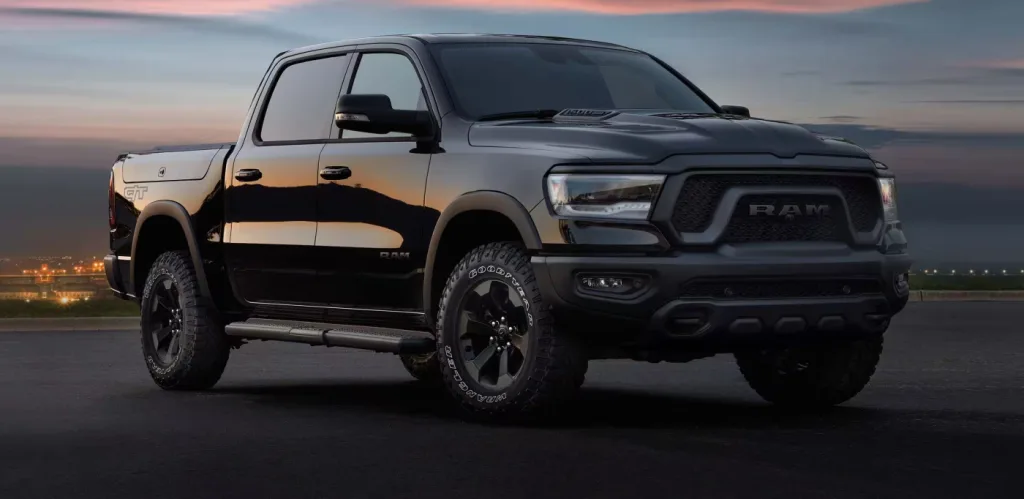
When you think of a pickup truck, weight might not be the first thing that comes to mind. Most buyers focus on horsepower, towing numbers, or interior comfort. But understanding how much a Ram 1500 weighs is more than trivia — it impacts towing capacity, payload limits, handling, braking, fuel efficiency, and even what license or road rules may apply in some states.
The Ram 1500 has been one of America’s best-selling trucks for decades, and its weight is carefully engineered to balance strength and efficiency. So how heavy is it really? Let’s dive deep into the numbers across trims, cab configurations, engines, and years, with special focus on the 2019–2025 fifth-generation Ram 1500 models.
For those in Southern California, you can explore the latest Ram trucks, schedule service, or get advice from experts directly at Simi Valley Chrysler Dodge Jeep Ram.
⚖️ Understanding Truck Weight Terms
Before breaking down Ram 1500 weights, it’s important to know the different categories manufacturers use:
- Curb Weight: The weight of the truck with all standard equipment and fluids (oil, coolant, full tank of fuel), but without passengers or cargo.
- Gross Vehicle Weight Rating (GVWR): The maximum safe weight of the truck fully loaded with passengers, cargo, and tongue weight from a trailer.
- Payload Capacity: How much weight you can safely carry in the cab and bed combined.
- Gross Combined Weight Rating (GCWR): The maximum allowable weight of the truck plus whatever it’s towing.
Knowing these figures prevents overloading and ensures safety while towing or hauling.
📊 Ram 1500 Weight Range
The Ram 1500 is considered a light-duty full-size pickup, but don’t let the term “light” fool you — these trucks are anything but featherweights. Depending on trim and configuration, curb weight ranges from around 4,765 lbs (2,162 kg) to nearly 6,400 lbs (2,903 kg).
- Lowest curb weight: Tradesman Quad Cab 2WD with 3.6L V6 – ~4,765 lbs
- Heaviest curb weight: Limited Crew Cab 4×4 with 5.7L HEMI eTorque – ~6,400 lbs
This broad range reflects the diversity of trims, cabs, drivetrains, and optional equipment in the Ram 1500 lineup.
🚛 Ram 1500 Weights by Engine
3.6L Pentastar V6 with eTorque
- Curb Weight: ~4,765–5,150 lbs
- GVWR: 6,800 lbs
- Best for: Daily driving, light towing, efficiency
This is the base engine, standard in lower trims. Despite being lighter, it provides plenty of capability with a modern mild-hybrid system.
5.7L HEMI V8
- Curb Weight: ~5,300–5,800 lbs
- GVWR: 7,100 lbs
- Best for: Towing, hauling, and those who want classic V8 rumble
The HEMI adds hundreds of pounds thanks to its larger block and heavier components but pays off with stronger towing and acceleration.
5.7L HEMI V8 with eTorque
- Curb Weight: ~5,600–6,400 lbs
- GVWR: 7,100 lbs
- Best for: Max towing, improved efficiency under load
This is the heaviest option but also the most capable in terms of towing (up to 12,750 lbs when properly equipped).
EcoDiesel 3.0L V6 (2019–2023 availability)
- Curb Weight: ~5,200–6,000 lbs
- GVWR: 7,000–7,100 lbs
- Best for: Long-distance hauling with excellent fuel economy
The EcoDiesel adds weight but balances it with low-end torque and class-leading highway mpg.
🏗 Weights by Cab and Bed Configuration
The Ram 1500 offers multiple cab and bed combinations, which also influence curb weight.
Quad Cab (smaller rear seating area)
- Weight Range: 4,765–5,500 lbs
- Payload: ~2,000 lbs
- Best for: Work truck owners who prioritize bed space
Crew Cab (larger rear seating)
- Weight Range: 5,100–6,400 lbs
- Payload: ~1,600–1,900 lbs
- Best for: Families, road trips, daily drivers who need comfort
Bed Lengths
- 5’7” Bed: Saves some weight and improves maneuverability
- 6’4” Bed: Adds ~100–150 lbs, better for hauling large cargo
📈 Trim-Level Weight Differences
Each trim adds features, luxury materials, and technology that increase the truck’s weight.
- Tradesman: ~4,765–5,300 lbs
- Big Horn/Lone Star: ~5,100–5,600 lbs
- Laramie: ~5,500–5,900 lbs
- Rebel (off-road focus): ~5,700–6,000 lbs (extra skid plates, suspension components add weight)
- Limited & Limited Longhorn: ~6,000–6,400 lbs (luxury features, larger wheels, more electronics)
📊 Quick Reference Table – 2019–2025 Ram 1500
| Trim / Engine | Drivetrain | Curb Weight (lbs) | GVWR (lbs) |
|---|---|---|---|
| Tradesman V6 | 2WD Quad | ~4,765 | 6,800 |
| Big Horn V6 | 4×4 Crew | ~5,200 | 6,800 |
| Rebel HEMI V8 | 4×4 Crew | ~5,900 | 7,100 |
| Laramie HEMI | 4×4 Crew | ~6,000 | 7,100 |
| Limited HEMI eTorque | 4×4 Crew | ~6,400 | 7,100 |
Numbers are approximate and vary by options (wheel size, axle ratio, towing packages).
🔍 Why Weight Matters for Ram 1500 Owners
- Towing Capacity – Heavier trucks with stronger engines can tow more, but too much curb weight eats into payload.
- Fuel Efficiency – Lighter trims with the V6 achieve better mpg.
- Handling & Braking – A heavier truck requires larger brake calipers and rotors, which is why Ram’s braking system is among the best in its class.
- Registration & Fees – In some states, registration cost and insurance premiums factor in GVWR.
- Off-Roading – Lower weight helps in sand or mud, but heavier trims with skid plates and suspension upgrades are more durable.
🛠 Maintenance & Weight
Weight also affects wear on key parts:
- Tires: Heavier trims wear tires faster; proper rotation is key.
- Brakes: More mass requires larger calipers (Ram uses up to 60 mm front pistons).
- Suspension: Towing near max capacity frequently can stress shocks and springs.
Keeping up with maintenance ensures your Ram 1500 delivers performance safely no matter how heavy it is.
For service, brake inspections, or OEM parts, visit Simi Valley Chrysler Dodge Jeep Ram.
🏁 Real-World Examples
- A Tradesman Quad Cab V6 2WD feels nimble and efficient, weighing under 5,000 lbs — closer to some midsize trucks.
- A fully-loaded Limited Crew Cab 4×4 HEMI eTorque tips the scales over 6,300 lbs, rivaling some ¾-ton trucks in sheer presence.
- Off-road-ready Rebel models gain extra armor and suspension weight but deliver rugged stability.
✅ Final Thoughts
So, how much does a Ram 1500 weigh? The answer depends on configuration, but you’re looking at anywhere between 4,765 lbs and 6,400 lbs curb weight, with GVWR ratings around 6,800–7,100 lbs.
That range allows the Ram 1500 to serve everyone — from fleet buyers who want an efficient work truck, to families who want a luxurious daily driver, to enthusiasts towing boats or trailers on weekends.
Understanding your truck’s weight isn’t just about numbers; it’s about knowing your truck’s limits and maximizing its strengths.
👉 If you’re ready to explore the full lineup or need expert service for your Ram, visit Simi Valley Chrysler Dodge Jeep Ram — your trusted local Ram dealership
Ram 1500 Weight FAQ
1) How much does a Ram 1500 weigh?
Depending on configuration, the Ram 1500 weighs between 4,765 and 6,400 pounds (2,162–2,903 kg). Lower trims with the V6 engine weigh less, while fully loaded 4×4 Crew Cab HEMI models sit at the top end of the range.
2) What’s the average weight of a Ram 1500?
Most Ram 1500 models on the road today fall between 5,200 and 5,900 pounds. That’s a good balance of strength and efficiency for towing, hauling, and daily use.
3) Does cab size affect the Ram 1500’s weight?
Yes.
- Quad Cab models: 4,765–5,500 lbs
- Crew Cab models: 5,100–6,400 lbs
Crew Cabs have larger rear seating and added structure, which increases overall weight.
4) Which engine option makes the Ram 1500 heaviest?
The 5.7L HEMI V8 with eTorque is the heaviest setup, reaching up to ~6,400 lbs curb weight, but it also delivers the highest towing capacity — up to 12,750 lbs when properly equipped.
5) What’s the lightest Ram 1500 configuration?
The Tradesman Quad Cab 2WD with the 3.6L V6 eTorque is the lightest at roughly 4,765 lbs, offering excellent fuel economy for a full-size pickup.
6) How does the Ram 1500’s weight compare to rivals like the F-150 or Silverado 1500?
The Ram 1500 is mid-range among full-size trucks:
- Ford F-150: ~4,600–6,200 lbs
- Chevy Silverado 1500: ~4,400–6,000 lbs
- Ram 1500: ~4,765–6,400 lbs
Its structure and coil-spring suspension add comfort but slightly increase weight over some competitors.
7) What’s the difference between curb weight and GVWR?
- Curb Weight: Truck with all fluids and full tank but no passengers or cargo.
- GVWR (Gross Vehicle Weight Rating): The maximum safe weight of truck + passengers + cargo + trailer tongue load.
Ram 1500 GVWR ranges from 6,800 to 7,100 lbs, depending on trim.
8) How does weight affect towing and payload?
Heavier trims can tow more but usually have slightly lower payload capacity. For example:
- Light V6 models: ~2,000 lbs payload
- Heavy luxury trims: ~1,600–1,800 lbs payload
9) Does weight impact fuel efficiency?
Yes. Lighter trims and V6 models typically return better fuel economy. The 3.6L V6 eTorque delivers the best mileage, while heavier V8 and diesel models trade some efficiency for power.
10) Why is the Ram 1500 heavier than midsize trucks?
The Ram 1500 is a full-size, half-ton pickup built for towing and hauling. Its frame, suspension, and safety systems are engineered for strength — naturally adding weight over midsize models like the Tacoma or Ranger.
11) Does adding accessories or towing equipment change weight?
Yes. Aftermarket items such as toolboxes, lift kits, larger wheels, or winches can add 100–500 lbs or more, reducing available payload.
12) What’s the GCWR of the Ram 1500?
The Gross Combined Weight Rating (GCWR) — the truck plus whatever it’s towing — is typically 12,900 to 19,000 lbs, depending on engine, axle ratio, and towing package.
13) How does bed length affect weight?
The 6’4” bed adds roughly 100–150 lbs over the 5’7” bed, improving hauling space at a small cost to efficiency and maneuverability.
14) What is the payload capacity of the Ram 1500?
Payload varies between 1,600–2,300 lbs, depending on trim, engine, drivetrain, and options. Always check your driver-side door label for the exact figure for your truck.
15) How can I find my Ram 1500’s exact weight?
You can:
- Check your door jamb label (lists GVWR and payload).
- Visit the Simi Valley CDJR service department for a full spec lookup by VIN.
- Consult your owner’s manual for curb and towing specs.
16) Does the Ram 1500 EcoDiesel weigh more?
Yes — the 3.0L EcoDiesel models weigh ~5,200–6,000 lbs due to the diesel engine’s heavier block and cooling systems. However, they’re among the most fuel-efficient full-size pickups.
17) Do weight differences affect braking or suspension?
Heavier trims use larger brake calipers (up to 60 mm pistons) and reinforced suspension to maintain stopping power and ride comfort.
18) What’s the best weight setup for off-roading?
The Ram 1500 Rebel hits a sweet spot (~5,700–6,000 lbs). It’s heavy enough for stability, yet balanced for trail agility thanks to its off-road suspension and skid plates.
19) Does truck weight impact registration or insurance?
In some states, yes. Fees and premiums may factor in GVWR classifications, especially for commercial or high-capacity configurations.
20) Where can I get exact Ram 1500 specs or service help?
Visit Simi Valley Chrysler Dodge Jeep Ram — your certified local Ram experts.
📍 Simi Valley, CA
📞 Sales & Service: 805-387-9755
🔗 View Ram Inventory
🔗 Schedule Service
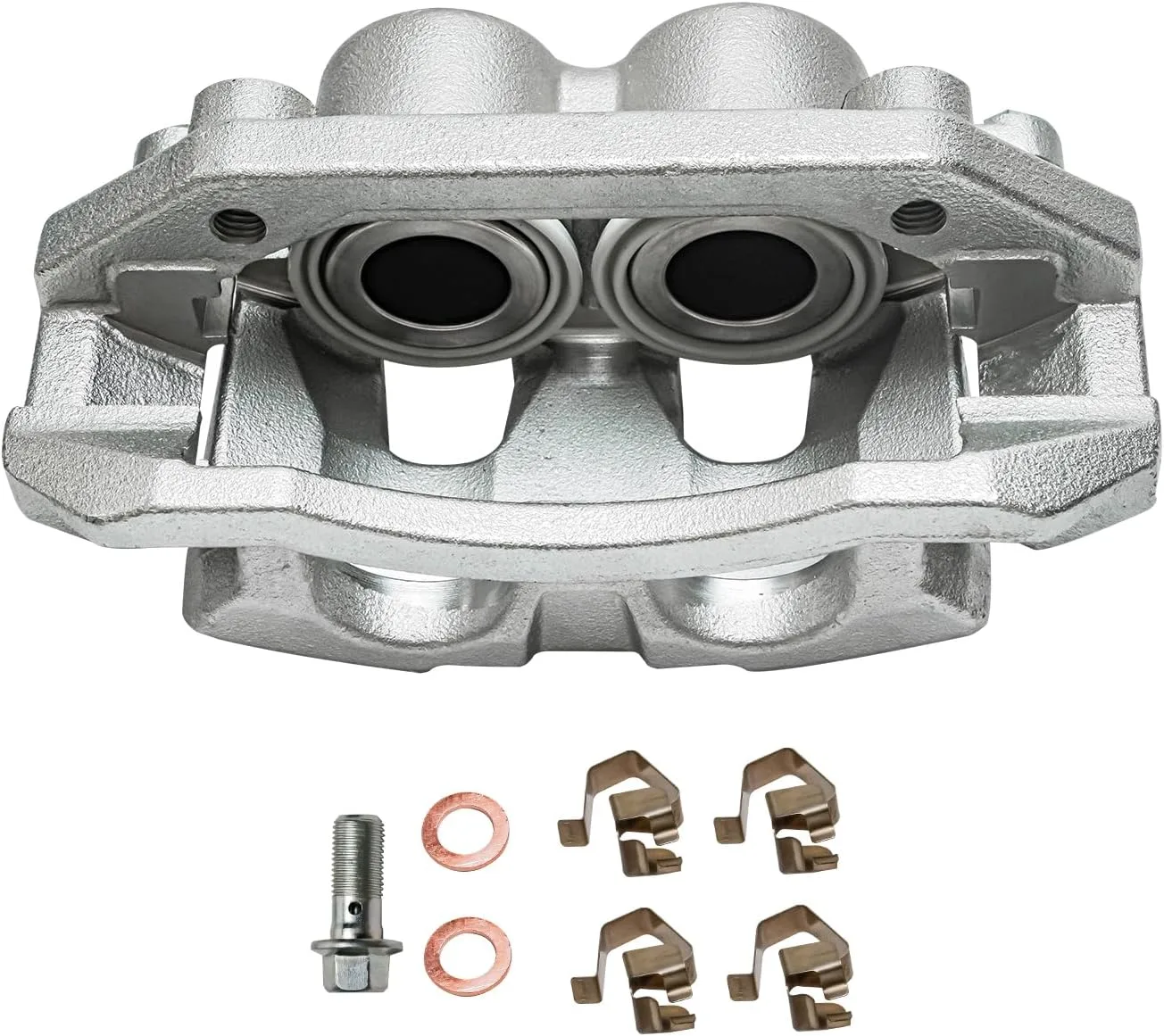
The 2019 Ram 1500 marked a turning point in Ram’s pickup truck lineup. With a complete redesign, more powertrain options, improved towing capacity, and a lighter, stronger frame, the fifth-generation Ram became a favorite among truck enthusiasts. But while most headlines highlighted HEMI engines, coil-spring suspension, and luxury-grade interiors, one critical component often goes unnoticed: the brakes.
Specifically, the brake calipers on the 2019 Ram 1500 play a massive role in ensuring that this full-size truck can haul, tow, and stop with confidence. In this deep-dive, we’ll cover everything you need to know about the size of the brake calipers, their role in braking performance, comparisons across trims, maintenance tips, and why upgrading might be worth considering if you’re a serious truck owner.
For those in California looking to maintain or upgrade their truck, you can always rely on Simi Valley Chrysler Dodge Jeep Ram for OEM brake parts, service, and expert advice.
🔧 Brake Caliper Basics
Before we jump into the exact dimensions, let’s start with the basics.
A brake caliper is a clamping device that houses the brake pads and pistons. When you press the brake pedal, hydraulic pressure pushes the pistons, squeezing the pads against the rotors. This friction slows down and stops your vehicle.
On a heavy-duty vehicle like the Ram 1500, brake calipers need to be significantly larger and more robust than those found on sedans or compact SUVs. This ensures they can handle the extra stress from towing heavy loads, hauling cargo, and stopping a truck that weighs over 2,300 kg (5,100 lbs) before passengers, cargo, or trailers are even factored in.
📏 2019 Ram 1500 Brake Caliper Size
The 2019 Ram 1500 comes with a range of brake sizes depending on trim and wheel options. But across the lineup, Ram equipped the truck with some of the largest calipers in the half-ton class at the time.
- Front Brake Calipers:
The front brakes are the workhorses of any vehicle. On the 2019 Ram 1500, the front calipers are dual-piston calipers measuring approximately 60 mm (2.36 inches) per piston. This gives a combined clamping area large enough to handle aggressive braking and heavy towing situations. - Rear Brake Calipers:
The rear brakes feature single-piston floating calipers measuring about 45 mm (1.77 inches). While smaller than the front, they are still robust enough to provide stability under braking and keep the truck balanced, especially when loaded. - Rotor Pairing:
These calipers pair with massive brake rotors:- Front rotors: 13.8 inches in diameter
- Rear rotors: 14.1 inches in diameter (depending on trim and wheel size)
Put simply, the brake system on the 2019 Ram 1500 is bigger than many SUVs’ entire wheel sizes.
🚛 Why Size Matters on the Ram 1500
A large pickup like the Ram 1500 demands equally large brake calipers. Here’s why size is so important:
- Towing Power – The 2019 Ram 1500 can tow up to 12,750 lbs (when properly equipped). Large calipers provide the clamping force needed to bring a heavy trailer to a stop without overheating the system.
- Payload Capacity – With up to 2,300 lbs of payload, the truck needs calipers strong enough to handle stopping with the bed fully loaded.
- Heat Dissipation – Bigger calipers paired with vented rotors mean better heat management. Overheated brakes lead to fade, where the pedal feels soft and stopping distances increase.
- Longevity – Larger calipers spread braking forces more evenly, reducing wear on both pads and rotors, ensuring the truck remains reliable over the long haul.
⚙️ Variations Across Trims
The 2019 Ram 1500 was available in multiple trims — Tradesman, Big Horn, Laramie, Rebel, Limited, and more. While the brake caliper design remained largely consistent across trims, certain wheel and axle configurations came with slightly larger rotors and upgraded calipers.
- Standard Models (Tradesman, Big Horn): Dual-piston front calipers with 60 mm pistons, single-piston rears.
- Performance-Oriented Rebel: Reinforced components with stronger pads, same caliper dimensions but tuned for off-road conditions.
- Heavy Towing Packages: Some higher trims with Max Tow configurations used upgraded calipers with thicker pads and heat-resistant coatings for longevity under load.
Regardless of trim, the system was engineered for durability, with Ram engineering emphasizing consistent performance under heavy strain.
🔍 Comparing Ram 1500 Brakes to Competitors
To put things into perspective, let’s compare the 2019 Ram 1500 brake calipers to rivals:
- Ford F-150 (2019): Front calipers around 54 mm pistons, rear around 43 mm. Smaller overall, especially on base trims.
- Chevy Silverado 1500 (2019): Similar dual-piston fronts but smaller rear calipers than Ram.
- Toyota Tundra (2019): Comparable in the front, though older design meant less efficiency in cooling.
Verdict: The 2019 Ram 1500 had one of the most robust brake setups in its class, giving it an edge in stopping power and confidence.
🛠 Maintenance Tips for 2019 Ram 1500 Brake Calipers
Even the best brake calipers need care. Here are essential tips:
- Regular Inspections – Check calipers for leaks, uneven wear, or corrosion every 20,000 km.
- Brake Fluid Flushes – Replace fluid every 2 years to maintain hydraulic pressure.
- Lubrication – Keep slide pins greased to ensure smooth caliper movement.
- Pad Replacement – Always replace pads in pairs to maintain balance and prevent rotor warping.
- OEM Parts – Use genuine Mopar brake parts for the best fit and safety.
For California drivers, Simi Valley Chrysler Dodge Jeep Ram provides factory-trained technicians and OEM-certified brake parts to keep your Ram performing like new.
🔩 When to Consider Upgrades
If you push your Ram 1500 beyond daily driving — such as heavy towing, off-roading, or performance mods — brake upgrades may be worth considering. Popular options include:
- Bigger Calipers – Four-piston or six-piston aftermarket calipers for extra clamping force.
- Slotted & Drilled Rotors – Improve cooling and reduce fade under repeated braking.
- Performance Pads – Provide stronger initial bite and better heat resistance.
- Steel Braided Lines – Enhance pedal feel and reduce flex under pressure.
These upgrades enhance confidence, especially when towing near max capacity or driving through steep California mountain roads.
💬 Real-World Feedback from 2019 Ram 1500 Owners
Many owners reported being impressed with the braking capability of the redesigned Ram. Compared to earlier fourth-gen trucks, the 2019’s larger calipers and rotors significantly improved stopping distances.
One owner review mentioned that even with a 6,000 lb trailer attached, the brakes stayed consistent with no fade after multiple highway merges and stops. Another praised the truck’s control when descending steep inclines, noting how “solid” the pedal felt even under load.
📍 Why Simi Valley CDJR Is Your Best Bet for Brake Service
Owning a truck like the 2019 Ram 1500 means having a partner who understands it. At Simi Valley Chrysler Dodge Jeep Ram, you get:
- 🔧 Factory-trained technicians familiar with Ram braking systems
- 🛠 OEM Mopar brake calipers, pads, and rotors
- 📅 Scheduled maintenance tailored to your truck’s needs
- 🚙 Complimentary multi-point inspections during service
- 💵 Competitive financing options for parts and service upgrades
For California drivers, the dealership is your go-to resource for brake service, replacements, and performance upgrades.
👉 Explore parts, service appointments, and Ram trucks at Simi Valley Chrysler Dodge Jeep Ram.
✅ Final Verdict
So, how big are the 2019 Ram 1500 brake calipers?
- Front: Dual-piston, ~60 mm pistons
- Rear: Single-piston, ~45 mm piston
- Rotors: Up to 14.1 inches in diameter
In short, they’re among the largest in their class, giving the Ram 1500 exceptional stopping power to match its impressive towing and hauling capabilities.
Whether you’re maintaining your truck’s stock setup or upgrading for more performance, knowing the caliper size helps you make smart, safe choices. And when it’s time for parts or service, trust the experts at Simi Valley Chrysler Dodge Jeep Ram to keep your brakes strong and reliable.
2019 Ram 1500 Brake Caliper FAQ
1) What size are the brake calipers on the 2019 Ram 1500?
The front calipers are dual-piston units measuring approximately 60 mm (2.36 inches) per piston, while the rear calipers are single-piston units measuring about 45 mm (1.77 inches).
2) Are the front and rear calipers the same on all trims?
Not exactly. Most trims — including Tradesman, Big Horn, and Laramie — use the same base setup, but performance-focused models like the Rebel feature reinforced components and upgraded brake pads tuned for off-road use.
3) What size are the brake rotors on the 2019 Ram 1500?
The front rotors measure around 13.8 inches, while the rear rotors range up to 14.1 inches depending on the trim and wheel package.
4) How do Ram 1500 brakes compare to Ford and Chevy trucks?
The 2019 Ram 1500 uses larger pistons and rotors than most half-ton competitors. For example:
- Ford F-150 (2019): ~54 mm front pistons
- Chevy Silverado 1500 (2019): Smaller rear calipers
This gives the Ram stronger clamping force and better fade resistance.
5) Why does caliper size matter for trucks?
Bigger calipers provide more braking torque, better heat dissipation, and improved stopping power when towing or hauling. They also help reduce pad wear and maintain consistent braking performance under heavy loads.
6) Which 2019 Ram 1500 engine or trim has the biggest brakes?
The Limited 4×4 and Rebel trims, especially with Max Tow packages, come with the most robust braking systems — thicker pads, larger rotors, and calipers designed for sustained towing and off-road use.
7) How much can the brakes handle when towing?
With towing capacities up to 12,750 lbs, the 2019 Ram 1500’s dual-piston front setup provides enough stopping power to safely control heavy trailers — especially when combined with the truck’s trailer brake controller system.
8) What materials are used in the factory calipers?
OEM calipers are made from cast aluminum alloy, chosen for its balance of strength and weight reduction. The design helps manage heat without adding excess mass to the suspension.
9) What are signs that my calipers need service?
- Uneven pad wear
- Leaking brake fluid near the wheels
- Pulsation or vibration when braking
- Squealing or grinding noises
- Pulling to one side during stops
10) How often should I inspect my brake calipers?
It’s recommended to inspect calipers every 12,000 miles (19,000 km) or at every oil change interval if you tow or drive in hilly areas.
11) Do the 2019 Ram 1500’s brakes use floating or fixed calipers?
The front dual-piston design is a floating caliper setup, which allows one side to move slightly to equalize pressure — ideal for weight balance and ease of maintenance.
12) Can I upgrade to larger calipers or rotors?
Yes. Many Ram 1500 owners upgrade to four-piston or six-piston calipers, slotted/drilled rotors, and steel-braided lines for improved pedal feel and fade resistance. OEM performance kits and reputable aftermarket options are available.
13) Are OEM Mopar calipers better than aftermarket ones?
OEM Mopar calipers ensure correct fitment, proper brake bias, and consistent performance. Aftermarket options can enhance performance, but they should be installed and calibrated by professionals to avoid imbalance or ABS issues.
14) How much does replacing calipers cost?
Expect to pay around $250–$400 per caliper for OEM replacements, plus $150–$250 in labor per axle. Upgrades or performance kits may cost more depending on size and brand.
15) What kind of brake fluid does the 2019 Ram 1500 use?
DOT 3 or DOT 4 brake fluid is recommended. Always check the cap or owner’s manual to confirm compatibility before topping up or flushing.
16) How do I maintain my brake calipers for long life?
- Lubricate slide pins during pad replacements
- Flush brake fluid every 2 years
- Use quality pads and rotors to minimize debris buildup
- Wash off road salt and dirt after off-roading
17) What happens if a caliper seizes or sticks?
You may feel dragging, vibration, or reduced fuel efficiency. Seized calipers overheat the pads and rotors, potentially damaging the entire braking system. Replace or rebuild them immediately.
18) Are the 2019 Ram 1500’s brakes strong enough for lifted trucks or bigger tires?
They perform well up to moderate tire upgrades, but for oversized setups or heavy off-road use, larger calipers and rotors are recommended to maintain safe stopping distances.
19) Did the 2019 redesign improve braking performance from older Rams?
Yes. Compared to the fourth generation, the 2019 Ram 1500 introduced larger calipers, rotors, and improved hydraulic pressure modulation, resulting in shorter stopping distances and better heat control.
20) Where can I get OEM Ram brake parts and service in California?
Visit Simi Valley Chrysler Dodge Jeep Ram for factory-certified technicians, Mopar brake parts, and expert installation.
📍 Simi Valley, CA
📞 805-387-9755
🔗 Book Brake Service
🔗 Shop OEM Parts
2026 Ram 1500 Warlock with Pentastar V6
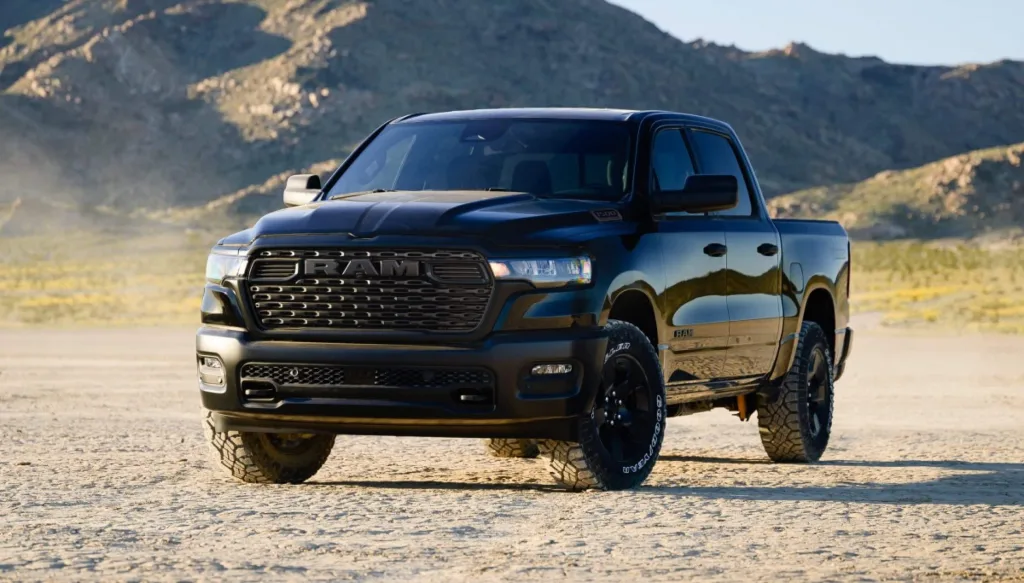
Ram trucks have always been about toughness and individuality, and for 2026, one of the boldest trims makes its return: the Ram 1500 Warlock. Designed with aggressive styling and practical capability, the Warlock offers buyers a truck that looks ready for adventure but is still affordable and well-rounded. At its heart, the standard 3.6L Pentastar V6 with eTorque gives the Warlock reliability and efficiency, making it one of the smartest ways to step into a full-size pickup.
At Simi Valley Chrysler Dodge Jeep Ram, we’re proud to offer the 2026 Ram 1500 Warlock to California drivers. Let’s break down what makes the Warlock special, why the Pentastar engine remains such a strong choice, and how this trim balances rugged design with real-world practicality.
The Warlock Trim – A Return to Boldness
The Warlock has been a fan favorite for years, originally based on the classic Rebel styling but offered at a more attainable price point. For 2026, it continues this legacy with:
- Black powder-coated bumpers
- Black grille and badging
- 20-inch black wheels
- Sport performance hood (available)
- LED lighting accents
- Optional off-road package with skid plates and tow hooks
Visually, the Warlock separates itself from base trims like Tradesman and Express. It looks mean, athletic, and trail-ready — the kind of truck that makes a statement in city traffic and on back roads alike.
The Pentastar 3.6L V6 with eTorque
Under the hood, the 2026 Warlock comes standard with the 3.6L Pentastar V6, paired with Ram’s smooth 8-speed automatic transmission and eTorque mild hybrid technology.
Key Specs
- Horsepower: 305 hp
- Torque: 269 lb-ft
- Fuel Economy (Estimated): 20 mpg city / 25 mpg highway (2WD)
- Max Towing: Up to 7,700 lbs when properly equipped
The Pentastar is a proven engine — it has powered millions of Chrysler, Dodge, Jeep, and Ram vehicles over the last decade. With eTorque, it gains better efficiency and smoother start/stop operation, making it ideal for both daily driving and light towing.
Why Choose the Pentastar Instead of Upgrading?
The Warlock can be optioned with more powerful engines like the Hurricane twin-turbo I6 or the 5.7L HEMI V8, but many buyers stick with the Pentastar for good reason:
- Affordability – The V6 keeps the Warlock’s entry price lower.
- Fuel Savings – More efficient than the larger HEMI or Hurricane.
- Balanced Power – 305 hp is plenty for most daily needs.
- Proven Reliability – The Pentastar has earned a reputation for long-term durability.
- Lower Ownership Costs – Insurance, maintenance, and fuel economy all lean in favor of the V6.
For contractors, families, and weekend adventurers who don’t need maximum towing, the Pentastar-powered Warlock is a smart balance of performance and economy.
Capability and Features
Towing and Hauling
With up to 7,700 lbs of towing capacity and more than 2,000 lbs of payload available, the Warlock has no trouble pulling trailers, small boats, or utility loads.
Suspension and Off-Road Ability
An available off-road package adds skid plates, tow hooks, and an electronic locking rear differential, making the Warlock trail-ready. Even with the Pentastar, the Warlock is no lightweight when it comes to handling rough terrain.
Bed Utility
Ram’s thoughtful features like LED bed lighting, tie-down hooks, and available power outlets turn the Warlock into a versatile work partner.
Interior Comfort and Tech
Inside, the Warlock surprises buyers with a refined cabin:
- Durable cloth seating with available upgrades
- Uconnect touchscreen infotainment system with Apple CarPlay & Android Auto
- Available premium audio system
- Dual-zone automatic climate control (on higher trims/packages)
- Ample storage space with smart bins and compartments
Even though the Warlock emphasizes rugged looks, the interior provides comfort and modern convenience for long drives.
Safety and Assistance Features
The 2026 Warlock includes standard and available advanced safety technology:
- Forward Collision Warning with Automatic Emergency Braking
- Blind Spot Monitoring and Rear Cross-Path Detection
- Adaptive Cruise Control
- Lane Keep Assist
- Rearview camera with available 360-degree surround view
Ram ensures the Warlock isn’t just about style — it’s also about keeping drivers and passengers safe.
Warlock vs. Other Trims
Here’s how the Warlock compares in the 2026 Ram 1500 lineup:
| Trim | Starting Price (Est.) | Engine Options | Key Features |
|---|---|---|---|
| Tradesman | ~$40,000 | Pentastar V6 | Basic work truck |
| Express | ~$42,000 | V6, Hurricane I6 | Body-color trim, bold styling |
| Warlock | ~$45,000 | Pentastar V6 (std), HEMI/Hurricane (opt) | Blackout styling, 20” wheels, off-road package |
| Big Horn | ~$47,000 | V6, HEMI, Hurricane | More upscale interior |
| Rebel | ~$52,000 | Hurricane, HEMI | Hardcore off-road styling |
| Laramie | ~$56,000+ | V6, HEMI, Hurricane | Premium interior + tech |
The Warlock stands out as the style-focused, value-oriented choice — aggressive looks without luxury trim pricing.
Who Is the Warlock Pentastar For?
- Daily Drivers: Those who want a bold truck for commuting without spending more on gas.
- Young Buyers: Affordable entry into the stylish side of the Ram lineup.
- Outdoor Adventurers: Perfect for light off-roading, camping trips, and weekend hauling.
- Contractors / Small Business Owners: Capable enough for jobsite use but affordable for fleet additions.
The Warranty Advantage
Every 2026 Ram 1500 Warlock with Pentastar benefits from Ram’s new 10-year / 100,000-mile powertrain warranty. That means your V6 engine and drivetrain are protected longer than most competitors, reducing long-term ownership risk and boosting resale value.
Why Buy from Simi Valley CDJR?
At Simi Valley Chrysler Dodge Jeep Ram, we make finding the right 2026 Ram 1500 Warlock easy:
- Huge selection of new trucks including the latest Warlock models
- Transparent trade-in tools
- Fast and secure financing options
- Competitive prices across Southern California
- A trusted reputation with expert service to support your truck long after purchase
Whether you’re from Simi Valley, Thousand Oaks, or Los Angeles, we’re the go-to destination for Ram trucks.
Final Thoughts
The 2026 Ram 1500 Warlock with the Pentastar V6 is one of the smartest choices in the full-size truck market today. It combines aggressive blackout styling with a proven, fuel-efficient engine that delivers the capability most buyers need. With Ram’s new 10-year powertrain warranty backing it up, the Warlock Pentastar is built for both style and substance.
Visit Simi Valley Chrysler Dodge Jeep Ram to see the Warlock in person, explore available colors and configurations, and take advantage of our latest offers. Your next bold Ram truck awaits.
2026 Ram 1500 Warlock FAQ
1) What engine comes standard in the 2026 Ram 1500 Warlock?
The standard engine is the 3.6L Pentastar V6 with eTorque, paired with an 8-speed automatic transmission. It produces 305 horsepower and 269 lb-ft of torque, balancing performance and fuel efficiency.
2) Is the Pentastar V6 powerful enough for towing and hauling?
Yes. When properly equipped, the Pentastar-powered Warlock can tow up to 7,700 lbs and carry over 2,000 lbs of payload, making it ideal for daily work or weekend towing.
3) Does the 2026 Warlock offer other engine options?
Yes. Buyers can upgrade to the 5.7L HEMI V8 or the Hurricane twin-turbo I6, both offering more torque and towing capacity, though at a higher cost and lower fuel efficiency.
4) What makes the Warlock trim different from other Ram 1500 models?
The Warlock is a style-driven, value-focused trim that offers:
- Black grille, bumpers, and badging
- 20-inch black wheels
- LED accents and optional sport hood
- Available off-road package with skid plates and tow hooks
It combines the rugged design of the Rebel with a more affordable price point.
5) How fuel-efficient is the 2026 Warlock Pentastar?
Estimated fuel economy is around 20 mpg city / 25 mpg highway (2WD), depending on configuration and driving conditions.
6) What’s new for the 2026 Ram 1500 Warlock?
The 2026 model returns with refreshed styling, updated tech via Uconnect, and extended coverage — including Ram’s new 10-year / 100,000-mile powertrain warranty.
7) How does the Warlock compare to other trims in the lineup?
| Trim | Starting Price (Est.) | Engine Options | Key Features |
|---|---|---|---|
| Tradesman | ~$40,000 | Pentastar V6 | Basic work truck |
| Express | ~$42,000 | V6, Hurricane I6 | Body-color trim |
| Warlock | ~$45,000 | Pentastar V6 (std), HEMI/Hurricane (opt) | Blackout styling, 20” wheels, off-road pack |
| Big Horn | ~$47,000 | V6, HEMI, Hurricane | Upscale cabin |
| Rebel | ~$52,000 | HEMI, Hurricane | Hardcore off-road focus |
8) What safety features are included?
The Warlock includes or offers:
- Forward Collision Warning with Automatic Emergency Braking
- Blind Spot Monitoring with Rear Cross-Path Detection
- Adaptive Cruise Control
- Lane Keep Assist
- Rearview camera with available 360° surround view
9) What off-road features does the Warlock offer?
The optional off-road package includes skid plates, tow hooks, and an electronic locking rear differential. Combined with its elevated ride height, the Warlock is built for weekend trails and uneven terrain.
10) How comfortable is the Warlock interior?
It offers durable cloth seating, Uconnect infotainment with Apple CarPlay/Android Auto, optional premium audio, dual-zone climate control, and ample in-cab storage — a balance of comfort and practicality.
11) What warranty coverage comes with the 2026 Warlock?
All 2026 Ram 1500 Warlocks include a 10-year / 100,000-mile powertrain warranty, protecting the engine and drivetrain well beyond most competitors’ coverage.
12) Is the Warlock a good choice for daily driving?
Yes. With its smooth ride, modern tech, and fuel-efficient V6, it’s an excellent everyday pickup that doesn’t compromise on capability or style.
13) Can the Warlock be customized?
Absolutely. Buyers can add sport hoods, off-road packages, black exterior accents, and interior tech upgrades to match personal style and needs.
14) Who is the Warlock best suited for?
- Daily drivers seeking bold looks and practicality
- Young buyers entering the full-size truck market
- Contractors needing a capable yet affordable work truck
- Outdoor enthusiasts looking for weekend trail performance
15) What colors are available for the 2026 Warlock?
Expected color options include Diamond Black Crystal, Granite Crystal Metallic, Bright White, and Patriot Blue, all complementing its black-out styling theme.
16) Does the Warlock include towing technology?
Yes. Available features like an integrated trailer brake controller, tow/haul mode, and trailer sway control make towing easier and safer.
17) How does the Pentastar V6 compare to the Hurricane engine?
The Pentastar prioritizes reliability, lower costs, and smooth operation, while the Hurricane twin-turbo I6 delivers higher torque and faster acceleration but at higher cost and complexity.
18) Are financing and trade-in options available?
Yes. Simi Valley CDJR offers fast approvals, competitive rates, and an online trade-in tool to make upgrading easy.
19) Can the Warlock handle California terrain?
Absolutely. With its available off-road package, traction control, and balanced weight distribution, the Warlock is well-suited for both city roads and mountain trails.
20) Where can I test drive or buy the 2026 Ram 1500 Warlock?
Visit Simi Valley Chrysler Dodge Jeep Ram to explore the latest Warlock inventory, financing options, and special offers.
📍 Simi Valley, CA
📞 805-387-9755
🔗 View New Ram Inventory
🔗 Apply for Financing
Ram 1500 Canyon Lake Color 2026

2026 Ram 1500 Canyon Lake Color – A Rugged New Look Available at Simi Valley Chrysler Dodge Jeep Ram
Ram has always been known for offering trucks that combine bold design, durability, and modern innovation. For 2026, Ram takes that commitment a step further with the introduction of new exterior paint options — including the head-turning Canyon Lake color. Subtle yet distinctive, Canyon Lake offers Ram 1500 buyers a rugged new look that balances modern appeal with timeless truck character.
At Simi Valley Chrysler Dodge Jeep Ram, we’re excited to bring this color to Southern California truck buyers. Below, we’ll explore everything you need to know about Canyon Lake: what it looks like, which trims offer it, and why it could be the perfect shade for your next 2026 Ram 1500.
What Is Canyon Lake?
Canyon Lake is one of four new colors added to the 2026 Ram 1500 palette. It’s an earthy tone that blends gray and green hues, giving it a modern yet rugged finish. Depending on lighting, it can appear closer to olive green under sunlight or a muted gray in shadows. This chameleon-like quality makes it both practical for everyday driving and bold enough to stand out in a crowded truck lineup.
Unlike metallic reds or blues, Canyon Lake doesn’t scream for attention — instead, it projects confidence and capability. It’s a perfect match for buyers who want their truck to look tough but still refined.
Availability: Trims and Configurations
The 2026 Ram 1500 Canyon Lake color isn’t available across every single configuration, so knowing where it fits is important:
- Crew Cab 5’7” Bed: Currently, Canyon Lake is exclusive to Crew Cab trucks with the 5-foot, 7-inch bed.
- RamBox Exclusion: At launch, Canyon Lake builds aren’t compatible with the RamBox cargo management system.
- Eligible Trims: Tradesman, Express (with Black Express Package), Warlock, Big Horn / Lone Star, Rebel, and Laramie Night Edition.
- Late Availability: Higher trims like Limited, Longhorn, and RHO are expected to offer Canyon Lake later in the production year.
- No-Cost Option: Canyon Lake is offered as a no-cost paint option, meaning buyers don’t have to pay extra compared to standard colors.
This ensures buyers can get Canyon Lake on some of the most popular trims without added expense.
How Canyon Lake Enhances the 2026 Ram 1500
A Rugged Identity
Canyon Lake adds personality to the Ram 1500. While black, white, and silver remain timeless, Canyon Lake offers something different — an earthy, natural tone that pairs beautifully with Southern California’s outdoor lifestyle.
Style in Every Light
In direct sunlight, Canyon Lake leans green; in overcast or shaded environments, it reflects more as a subdued gray. This dynamic appearance means your Ram looks fresh in every setting, whether parked in the driveway, pulling up to the jobsite, or cruising Highway 118.
Works with Blackout Packages
Pairing Canyon Lake with the Black Express Package or Night Edition creates a stunning contrast. Black grilles, wheels, and badging make the earthy tone pop while maintaining a tough, modern edge.
Why Buyers Will Love Canyon Lake
- Unique but Practical – Unlike flashy metallics, Canyon Lake is distinctive without being polarizing.
- Off-Road Appeal – On trims like Rebel and Warlock, Canyon Lake emphasizes the adventurous spirit of Ram trucks.
- Resale-Friendly – Unique colors that aren’t too extreme often hold value well because they appeal to both first and second owners.
- No Added Cost – Being a no-cost paint option makes Canyon Lake even more attractive to buyers who want individuality without extra expense.
Trims That Shine in Canyon Lake
- Ram 1500 Express / Black Express – The blackout trim combined with Canyon Lake creates one of the boldest new looks in the lineup.
- Ram 1500 Rebel – For off-road enthusiasts, Canyon Lake enhances the Rebel’s rugged presence with earthy tones.
- Ram 1500 Laramie Night Edition – A premium truck in a unique shade that pairs elegance with toughness.
- Ram 1500 Tradesman / Big Horn – Even more affordable trims benefit from this fresh new option, making them stand out in a crowded full-size segment.
Comparing Canyon Lake with Other 2026 Ram Colors
Ram has expanded its palette for 2026, giving buyers more ways to personalize their trucks. While classic colors like Bright White, Granite Crystal, and Diamond Black remain available, Canyon Lake offers a distinctive middle ground between bold and understated.
Where Hydro Blue or Flame Red are designed to turn heads, Canyon Lake adds a modern, tactical-inspired look. For many California buyers, that balance makes it the perfect fit.
Why This Matters for Southern California Buyers
California drivers know that image matters. Trucks aren’t just tools; they’re statements about lifestyle. Canyon Lake allows buyers to project strength and individuality while staying sophisticated.
- Urban Drivers: In Simi Valley or Los Angeles, Canyon Lake sets your Ram apart in traffic.
- Outdoor Enthusiasts: Heading to the mountains, deserts, or the beach? Canyon Lake’s earthy tone blends naturally with rugged landscapes.
- Everyday Use: It’s easier to maintain than darker shades, making it practical for families or contractors alike.
Frequently Asked Questions
Is Canyon Lake available on all 2026 Ram 1500 trims?
Not yet. At launch, it’s available on Crew Cab 5’7” bed models in specific trims, with more to come later.
Does Canyon Lake cost extra?
No, it’s a no-cost paint option.
Can I order Canyon Lake with RamBox?
Currently, no. The RamBox system isn’t compatible with Canyon Lake builds at launch.
What makes Canyon Lake unique?
Its blend of gray and green tones changes appearance based on lighting, offering a fresh look compared to standard truck colors.
Will Canyon Lake affect resale value?
Unique but versatile colors often help resale, and Canyon Lake should prove popular with second-hand buyers as well.
Why Buy at Simi Valley Chrysler Dodge Jeep Ram
When shopping for the 2026 Ram 1500 Canyon Lake, you want a dealership that knows trucks inside and out. At Simi Valley Chrysler Dodge Jeep Ram, we provide:
- A wide range of new inventory including the latest Ram 1500 trims and colors.
- Strong selection of used vehicles at competitive prices.
- Quick online tools like our trade-in valuation and financing application.
- Expert sales staff who can walk you through every trim, package, and feature.
- A trusted service center to maintain your Ram for years to come.
Final Thoughts
The 2026 Ram 1500 Canyon Lake color proves that sometimes the right paint shade can completely redefine a truck’s look. Earthy, rugged, and modern, Canyon Lake is a no-cost way to make your Ram stand out while staying practical for everyday use.
At Simi Valley Chrysler Dodge Jeep Ram, we’re ready to help you configure, order, and drive home your 2026 Ram 1500 in this exciting new shade. Explore our inventory today, trade in your current vehicle, and experience what makes Canyon Lake one of the most talked-about colors of the year.
2026 Ram 1500 Canyon Lake FAQ
1) What is the Canyon Lake color on the 2026 Ram 1500?
Canyon Lake is a new earthy gray-green exterior paint option introduced for the 2026 Ram 1500. It blends subtle green and gray tones that shift with lighting — appearing olive in sunlight and gray in shade — giving the truck a modern yet rugged look.
2) Which Ram 1500 trims offer Canyon Lake?
At launch, Canyon Lake is available on select trims and configurations:
- Tradesman
- Express (with Black Express Package)
- Warlock
- Big Horn / Lone Star
- Rebel
- Laramie Night Edition
Higher trims like Limited, Longhorn, and RHO will gain the option later in the production year.
3) Is Canyon Lake available on all cab styles?
Currently, no. Canyon Lake is exclusive to Crew Cab 5’7” bed configurations. Other cab or bed options may be added in future updates.
4) Does the Canyon Lake color cost extra?
No, Canyon Lake is a no-cost paint option, making it a standout choice without increasing the vehicle price.
5) Can I get Canyon Lake with the RamBox system?
At launch, RamBox-equipped models are not compatible with the Canyon Lake color option.
6) How does Canyon Lake look in person?
Under bright sunlight, the color leans more toward a greenish hue, while in shade or overcast conditions, it shifts to a cool gray tone. This versatility makes it equally appealing for urban streets and outdoor environments.
7) What trims look best in Canyon Lake?
Canyon Lake pairs exceptionally well with blacked-out or off-road-oriented trims:
- Express / Black Express – Bold, stealthy contrast.
- Rebel – Earthy and adventurous.
- Laramie Night Edition – Refined yet rugged.
- Warlock – Aggressive styling made more distinctive by the natural tone.
8) How does Canyon Lake compare to other Ram 1500 colors?
While traditional colors like Bright White, Granite Crystal, and Diamond Black remain available, Canyon Lake offers a middle ground — not too flashy like Hydro Blue or Flame Red, but still unique and eye-catching with tactical-inspired character.
9) Does Canyon Lake affect resale value?
Yes, positively. Subtle yet unique colors like Canyon Lake often hold resale value better because they attract a wider range of second-hand buyers.
10) Why did Ram introduce Canyon Lake?
Ram wanted to offer a fresh, modern tone that matches the lifestyle of today’s truck owners — blending off-road toughness with refined styling suitable for both work and leisure.
11) How does Canyon Lake perform in California conditions?
Canyon Lake is ideal for Southern California drivers. Its dust-resistant tone hides dirt and scratches well, and it complements the region’s desert, mountain, and coastal scenery.
12) Is Canyon Lake metallic or matte?
Canyon Lake features a subtle metallic finish, providing depth and reflection without being overly shiny.
13) Will Canyon Lake be available on future Ram models?
Yes. Canyon Lake is expected to expand to other Ram vehicles like the Ram 1500 Classic or Ram 2500 depending on demand and production capacity.
14) What makes Canyon Lake unique compared to other earthy tones?
Unlike flat greens or military-inspired finishes, Canyon Lake has dynamic depth, shifting appearance with lighting. It bridges the gap between professional and adventurous aesthetics.
15) Can I order Canyon Lake with the Night Edition package?
Yes — on trims like the Laramie Night Edition, Canyon Lake pairs beautifully with black grilles, wheels, and badges for a bold, stealth-inspired contrast.
16) Is Canyon Lake easy to maintain?
Yes. The muted tone hides dust, light scratches, and water marks better than darker paints like black or deep blue, making it ideal for both work trucks and daily drivers.
17) Can I preview the Canyon Lake color before ordering?
Yes. Visit Simi Valley Chrysler Dodge Jeep Ram to view the color in person or see digital renderings of current inventory in Canyon Lake.
18) Will Canyon Lake be available with the 2026 Ram 1500 Warlock?
Yes. The Warlock trim is one of the featured models offering Canyon Lake from launch, making it an ideal combination of rugged styling and unique color.
19) What kind of buyers will like Canyon Lake the most?
- Outdoor enthusiasts who love subtle, earthy tones.
- Contractors and professionals wanting a durable yet distinctive look.
- California drivers seeking a modern, low-maintenance finish.
- Families who want a stylish but practical full-size truck.
20) Where can I buy a 2026 Ram 1500 in Canyon Lake color?
Visit Simi Valley Chrysler Dodge Jeep Ram — your California destination for the latest Ram trucks, trims, and colors.
📍 Simi Valley, CA
📞 805-387-9755
🔗 Explore New Ram Inventory
🔗 Value Your Trade
🔗 Apply for Financing
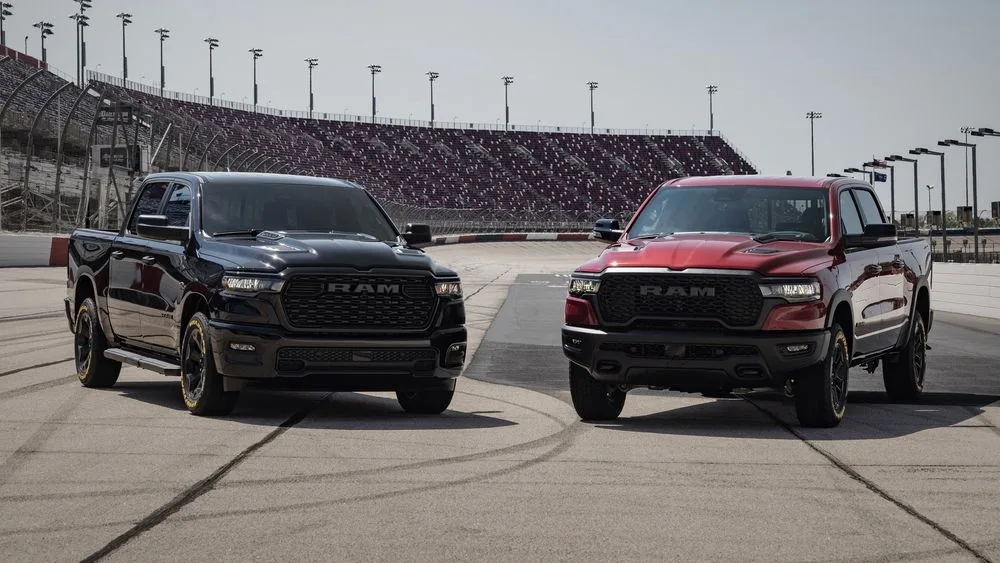
Ram has changed the game in 2026. While competitors stick to standard coverage, Ram decided to raise the bar and give buyers something unprecedented: a 10-year / 100,000-mile limited powertrain warranty. For California drivers looking at the 2026 Ram 1500, this warranty is more than just a headline — it’s a promise of durability, reliability, and long-term value.
At Simi Valley Chrysler Dodge Jeep Ram, we know warranty coverage plays a huge role in how you choose your next truck. That’s why we’re breaking down every detail of the new coverage, how it stacks up against the competition, and why this makes the Ram 1500 one of the most compelling trucks you can buy in 2026.
The Big Shift: 10-Year / 100,000-Mile Powertrain Warranty
Starting with the 2026 model year, Ram now backs the 1500 and other light-duty trucks with a 10-year / 100,000-mile limited powertrain warranty. This is double the coverage of the traditional 5-year / 60,000-mile plans offered by Ford, Chevy, GMC, and Toyota.
The warranty is designed to give long-term owners confidence that their truck’s most expensive mechanical parts — the engine, transmission, transfer case, and axles — are protected far beyond the typical ownership cycle.
For California drivers who often keep trucks 8–10 years or more, this warranty aligns perfectly with real-world use.
What the Powertrain Warranty Covers
The coverage is comprehensive for drivetrain components, including:
- Engines: The standard 3.6L Pentastar V6 with eTorque, the new Hurricane Twin-Turbo I6, and the legendary 5.7L HEMI V8 with eTorque are all included.
- Transmissions: Ram’s 8-speed automatic systems.
- Transfer Case (4×4 models): Full coverage on one of the most important off-road systems.
- Driveshafts, Differentials, and Axles: Ensuring the mechanical foundation of your Ram is backed for the long haul.
This isn’t a partial warranty — it covers the heart of what makes your truck a Ram.
Fine Print: What Owners Should Know
Ram’s coverage is generous, but like any warranty, there are rules:
- Original Owner Only: The 10-year / 100,000-mile warranty applies only to the first retail purchaser or lessee. If the truck is sold, the coverage drops back to 5 years / 60,000 miles for subsequent owners.
- Retail Sales Only: The enhanced warranty doesn’t apply to fleet sales or commercial purchases.
- Exclusions: Routine maintenance items (oil changes, brake pads, tires, filters), cosmetic issues, or damage caused by neglect, abuse, or aftermarket modifications aren’t covered.
- Maintenance Requirements: Owners must follow the recommended service schedule and maintain records for warranty claims.
For buyers who plan to keep their truck long term — or pass it down in the family — the warranty ensures you’re not facing major repair bills during that ownership cycle.
The Basic “Bumper-to-Bumper” Warranty
Alongside the powertrain warranty, Ram continues to provide a 3-year / 36,000-mile new vehicle limited warranty. This covers almost everything else — from electronics to climate systems to interior components.
When combined with the 10-year powertrain coverage, owners get both immediate and long-term protection.
How It Compares to Competitors
To understand the impact of Ram’s move, let’s look at the numbers:
| Brand | Powertrain Warranty | Bumper-to-Bumper Warranty | Notes |
|---|---|---|---|
| Ram 1500 (2026) | 10 years / 100,000 miles | 3 years / 36,000 miles | Best in class for U.S. retail buyers |
| Ford F-150 | 5 years / 60,000 miles | 3 years / 36,000 miles | Industry standard |
| Chevy Silverado 1500 | 5 years / 60,000 miles | 3 years / 36,000 miles | Industry standard |
| Toyota Tundra | 5 years / 60,000 miles | 3 years / 36,000 miles | Industry standard |
| GMC Sierra 1500 | 5 years / 60,000 miles | 3 years / 36,000 miles | Same as Chevy |
Clearly, Ram has set itself apart. No other major truck brand currently matches the decade-long protection.
Why This Warranty Matters for California Drivers
California presents unique challenges for truck ownership:
- Heavy Traffic: Engines face frequent stop-and-go stress.
- Varied Terrain: From mountain passes to desert highways, transmissions and drivetrains are tested daily.
- Towing & Hauling: Boats, trailers, and off-road toys put added strain on powertrains.
- High Costs of Living: Repair bills in California are higher than the national average, making extended warranty coverage financially valuable.
The Ram warranty helps offset these realities by protecting buyers against the most expensive potential failures.
Long-Term Ownership Benefits
Let’s imagine a buyer keeps their 2026 Ram 1500 Express or Laramie for 9 years and drives 12,000 miles annually:
- Under Ford or Chevy, the powertrain warranty would expire after 5 years / 60,000 miles.
- With Ram, coverage continues for nearly twice as long, reducing out-of-pocket risk.
- That means potential repairs — such as a transmission replacement (which can cost $6,000+) or engine repair (often $8,000+) — remain covered.
For many families and contractors, that coverage alone is worth thousands in peace of mind.
How the Warranty Strengthens Ram Resale Value
Another hidden benefit is resale strength. While the 10-year warranty applies only to the first owner, trucks that carry the reputation of longer coverage tend to perform better in resale value.
Buyers know that Ram invested in durability, which reflects in used pricing even if the warranty doesn’t fully transfer.
FAQ: 2026 Ram Warranty Questions
Does the warranty include hybrids or eTorque models?
Yes. The eTorque mild-hybrid systems in both the V6 and V8 are covered.
Can I service outside the dealership?
Yes, but you must keep records. Servicing at Simi Valley CDJR ensures your truck meets factory requirements.
What about the diesel Ram 1500?
The diesel models also benefit from the extended 10-year / 100,000-mile coverage.
Does this apply in Canada?
No. Canadian buyers still receive a 5-year / 100,000 km powertrain warranty. The 10-year plan is for U.S. retail customers.
What if I buy certified pre-owned (CPO)?
The enhanced 10-year warranty doesn’t carry over fully. However, Ram offers additional Mopar warranties for CPO buyers.
Why Shop Simi Valley Chrysler Dodge Jeep Ram?
At Simi Valley Chrysler Dodge Jeep Ram, we’re proud to bring this new warranty to our customers. When you choose us, you’ll find:
- A deep selection of new Ram 1500 trucks, including the 2026 Express and higher trims.
- A wide variety of used cars and trucks to fit every budget.
- Transparent trade-in valuation tools so you can upgrade easily.
- Hassle-free financing options with competitive rates.
- A full-service department that keeps your Ram in peak condition.
We’re not just a dealership — we’re your long-term partner in truck ownership.
Final Thoughts
The 2026 Ram 1500 warranty isn’t just a marketing tool — it’s a genuine advantage for truck buyers. With 10 years / 100,000 miles of coverage, Ram now offers more peace of mind than any other truck brand in the U.S.
For California buyers balancing long commutes, towing needs, and high repair costs, the warranty delivers unmatched value. Combine that with the 1500’s award-winning performance, technology, and bold design, and you have one of the best all-around trucks available.
Visit Simi Valley Chrysler Dodge Jeep Ram today to see the 2026 Ram 1500 for yourself, learn more about this groundbreaking warranty, and drive home a truck that’s built to last a decade or more.
2026 Ram 1500 10-Year Warranty FAQ
1) What is the new Ram 10-year / 100,000-mile warranty?
Starting in 2026, Ram now includes a 10-year / 100,000-mile limited powertrain warranty on all new Ram 1500 light-duty trucks sold at retail. This doubles the coverage offered by Ford, Chevy, GMC, and Toyota, which remain at 5 years / 60,000 miles.
2) What does the Ram powertrain warranty cover?
It protects the most critical and expensive components of your truck, including:
- Engines – 3.6L Pentastar V6, 5.7L HEMI V8, and Hurricane Twin-Turbo I6
- Transmissions – Ram’s 8-speed automatic units
- Transfer Case (4×4 models)
- Driveshafts, Differentials, and Axles
Essentially, it covers everything that makes your truck move.
3) Who is eligible for the 10-year / 100,000-mile warranty?
The warranty applies to first retail owners or lessees only. If the vehicle is sold to a second owner, the powertrain coverage reverts to 5 years / 60,000 miles.
4) Does this warranty apply to fleet or commercial trucks?
No. The extended 10-year warranty is exclusive to retail purchases. Fleet and commercial vehicles still receive standard 5-year / 60,000-mile coverage.
5) What’s excluded from the powertrain warranty?
Routine maintenance and wear items like oil, filters, brakes, tires, and cosmetic damage are not covered. Damage caused by neglect, abuse, or non-OEM modifications is also excluded.
6) What are the maintenance requirements?
Owners must follow Ram’s recommended maintenance schedule and keep records of service to remain eligible for warranty protection. Servicing at an authorized Ram dealer, like Simi Valley CDJR, ensures compliance.
7) Is the eTorque hybrid system covered?
Yes. The eTorque mild-hybrid components used in the Pentastar V6 and HEMI V8 engines are included under the powertrain warranty.
8) What about the diesel-powered Ram 1500?
Diesel variants also benefit from the 10-year / 100,000-mile coverage, giving long-term protection for both gas and diesel engines.
9) How does this compare to other truck brands?
| Brand | Powertrain Warranty | Bumper-to-Bumper Warranty | Notes |
|---|---|---|---|
| Ram 1500 (2026) | 10 yrs / 100,000 mi | 3 yrs / 36,000 mi | Best in class |
| Ford F-150 | 5 yrs / 60,000 mi | 3 yrs / 36,000 mi | Standard |
| Chevy Silverado 1500 | 5 yrs / 60,000 mi | 3 yrs / 36,000 mi | Standard |
| GMC Sierra 1500 | 5 yrs / 60,000 mi | 3 yrs / 36,000 mi | Standard |
| Toyota Tundra | 5 yrs / 60,000 mi | 3 yrs / 36,000 mi | Standard |
Ram now leads the full-size truck segment in factory-backed protection.
10) Does this warranty include bumper-to-bumper coverage?
Yes, all 2026 Ram 1500 trucks also include a 3-year / 36,000-mile new vehicle limited warranty, covering interior electronics, comfort systems, and most non-powertrain parts.
11) Can I transfer the 10-year warranty if I sell my truck?
The enhanced coverage is non-transferable. However, Ram’s long-term reliability reputation and extended first-owner warranty still enhance resale value.
12) How does this warranty help California truck owners?
California’s mountain terrain, stop-and-go traffic, and high labor rates make this coverage especially valuable. The powertrain warranty protects against costly repairs that commonly occur after 5 years of heavy use.
13) What are common repair costs the warranty helps avoid?
- Transmission replacement: $6,000+
- Engine repair or rebuild: $8,000+
- Differential or axle repair: $2,000–$3,500
These are all covered under Ram’s 10-year protection when maintenance is up to date.
14) Will this new warranty help with resale value?
Yes. Even though the warranty doesn’t fully transfer, the reputation of longer coverage helps boost resale value and buyer confidence in used Ram trucks.
15) Is the warranty valid outside the U.S.?
No. The 10-year / 100,000-mile warranty currently applies only to U.S. retail customers. In Canada, Ram continues to offer a 5-year / 100,000 km plan.
16) Does it apply to Certified Pre-Owned (CPO) Ram trucks?
Not automatically. However, CPO vehicles come with dedicated Mopar extended warranty options that provide similar protection.
17) Can I service my truck outside a dealership?
Yes — as long as service is done by a qualified mechanic and receipts are kept. Servicing at Simi Valley Chrysler Dodge Jeep Ram ensures your records meet all factory warranty standards.
18) How does the warranty benefit long-term owners?
For owners who keep their truck 8–10 years, Ram’s warranty covers twice the lifespan of typical coverage — providing peace of mind long after competitors’ plans expire.
19) What if I modify my Ram 1500?
Aftermarket modifications or performance tuning may void parts of the warranty if they cause damage. Always consult with your dealer before installing upgrades.
20) Where can I learn more or shop 2026 Ram 1500 trucks?
Visit Simi Valley Chrysler Dodge Jeep Ram for full details on the new 10-year warranty and explore the latest 2026 Ram 1500 inventory.
📍 Simi Valley, CA
📞 805-387-9755
🔗 View New Ram Inventory
🔗 Schedule a Test Drive
🔗 Apply for Financing
2026 Ram 1500 Express Review
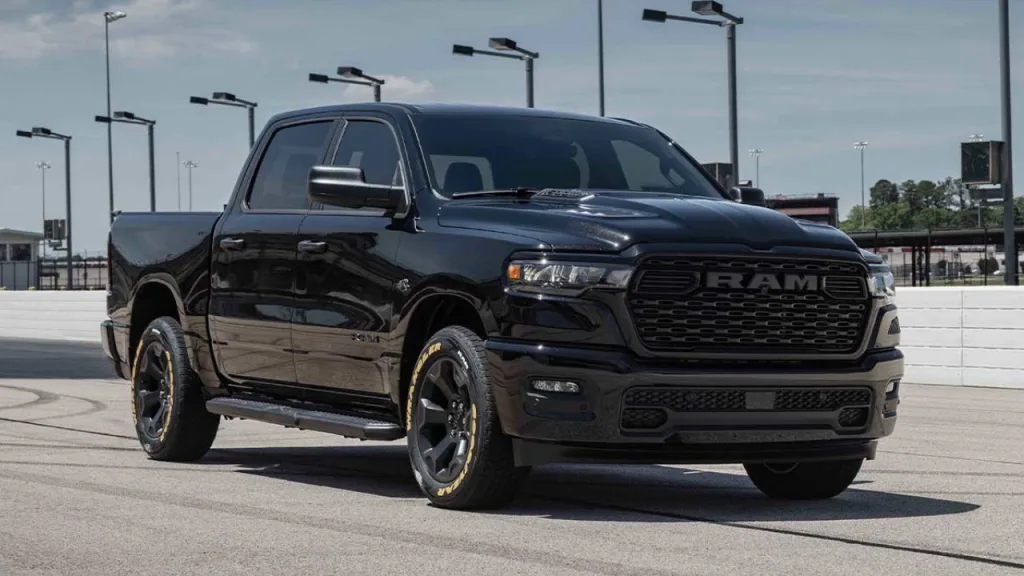
The 2026 Ram 1500 Express marks the return of one of Ram’s most popular trims, delivering rugged style, modern tech, and affordability in a package that U.S. truck buyers have been waiting for. Sitting just above the work-focused Tradesman, the Express trim bridges the gap between an entry-level truck and a stylish daily driver that can handle family duty, weekend adventures, or jobsite demands. At Simi Valley Chrysler Dodge Jeep Ram, drivers can finally experience the reborn Express, now equipped with powerful engine options and a sharp design that stands out from other full-size pickups.
Positioning in the 2026 Ram Lineup
The Express trim returns to give buyers a more attractive entry into the Ram family without sacrificing capability. With a starting price in the mid-$40,000 range (USD), the 2026 Ram 1500 Express provides more standard features than bare-bones models yet remains affordable compared to luxury-leaning trims like Laramie, Limited, or Tungsten.
For buyers in California, this balance makes it one of the smartest choices in the segment — stylish enough for city commutes in Los Angeles, capable enough for towing on the weekends, and practical enough for everyday use.
Exterior Design – Blacked-Out Aggression
Ram designers gave the 2026 Express a distinctive look to separate it from both lower and higher trims. It comes standard with:
- 20-inch wheels
- Body-color front and rear bumpers
- Blacked-out grille surround
- Dark headlamp bezels
- Minimal badging for a clean profile
Buyers can upgrade with the Black Express Package, which adds a sport performance hood, gloss-black 20-inch wheels, side steps, and unique black badging. The result is a truck that looks far more aggressive than its price point suggests, appealing to buyers who want a bold street presence without paying premium trim prices.
Powertrain Choices
3.6L Pentastar V6 with eTorque (Standard)
- 305 horsepower
- 269 lb-ft torque
- Paired with an 8-speed automatic
- Mild-hybrid assist for smoother starts and improved fuel economy
This engine balances efficiency and performance, making it a good fit for drivers who primarily use their truck for commuting and light hauling.
3.0L Hurricane Twin-Turbo I6 (Optional)
- 420 horsepower
- 469 lb-ft torque
- Estimated fuel economy: 18 mpg city / 25 mpg highway (2WD)
- Towing capability up to 11,550 lbs when properly equipped
The Hurricane I6 is the performance sweet spot — strong torque delivery, excellent towing figures, and better fuel efficiency than the returning HEMI V8.
5.7L HEMI V8 with eTorque (Available)
- 395 horsepower
- 410 lb-ft torque
- Hybrid assist for start/stop smoothness and regenerative braking
For customers who still love the sound and feel of a V8, Ram listened and brought back the legendary HEMI. It’s ideal for buyers who demand raw power and traditional truck character.
Interior & Comfort
Inside, the 2026 Ram 1500 Express delivers more refinement than buyers expect at this price point:
- Cloth seating surfaces with optional bucket seats
- Dark “Liquid Graphite” interior accents
- Ample storage with center console
- Available dual wireless smartphone charging pads
- Uconnect infotainment system with touchscreen display
While not as luxurious as the Limited or Tungsten, the Express gives owners a comfortable, practical cabin with just the right blend of features for the daily drive.
Technology & Safety
Ram ensured that safety and driver assistance technology weren’t limited to high trims. Standard and available features include:
- Adaptive Cruise Control
- Forward Collision Warning with Automatic Emergency Braking
- Blind-Spot Monitoring and Rear Cross-Path Detection
- Lane Keep Assist
- Rearview camera with optional 360-degree surround view
For convenience, buyers can add the Ram Digital Key, which allows unlocking and starting the truck with a smartphone, and a walk-up LED lighting animation, features usually found on luxury vehicles.
Capability – Built for Real Work
The Express is still a Ram at heart, and capability remains central to its design:
- Rear-wheel drive standard, 4×4 optional
- Up to 11,500 lbs of towing capacity (with Hurricane engine)
- Payload ratings competitive with other full-size trucks
- 1-inch raised ride height over the outgoing generation
- Available bed utility features including LED lighting, power outlet, and tie-down systems
Whether hauling tools, towing boats, or handling a weekend move, the 1500 Express can do it without feeling like a stripped-down fleet truck.
Comparison with Competitors
In California’s truck market, the 2026 Ram 1500 Express directly competes with the Ford F-150 STX, Chevrolet Silverado Custom, and Toyota Tundra SR5. Here’s how it stacks up:
| Feature | 2026 Ram 1500 Express | Ford F-150 STX | Chevy Silverado Custom | Toyota Tundra SR5 |
|---|---|---|---|---|
| Base HP | 305 (V6) | 325 (EcoBoost V6) | 310 (Turbo I4) | 348 (V6) |
| Optional Power | 420 hp Hurricane I6 / 395 hp HEMI V8 | 400 hp V6 | 355 hp V8 | 389 hp V6 |
| Towing (max) | 11,500 lbs | 14,000 lbs | 13,300 lbs | 12,000 lbs |
| Starting Price | ~$44,495 | ~$46,000 | ~$45,000 | ~$47,000 |
While the Ford and Chevy offer higher max towing in some specs, the Ram 1500 Express shines in style, tech availability, and balanced pricing, making it a smarter value for many buyers.
Why Buy at Simi Valley Chrysler Dodge Jeep Ram?
At Simi Valley Chrysler Dodge Jeep Ram, you’re not just buying a truck — you’re partnering with a dealership that understands California drivers. Here’s why local shoppers choose us:
- Wide selection of new Ram 1500 models, including the 2026 Express
- Competitive offers on used trucks and SUVs
- Easy online trade-in valuation to get more for your current vehicle
- Simple and secure financing application to save time at the dealership
- Expert service and parts support to keep your Ram running for years
Whether you’re in Los Angeles, Thousand Oaks, or Ventura County, Simi Valley CDJR is the trusted destination for Ram trucks.
Final Thoughts
The 2026 Ram 1500 Express proves that you don’t need to overspend to get a stylish, capable, and well-equipped full-size pickup. With its aggressive design, multiple engine options, advanced safety features, and value-driven pricing, it’s set to be one of the hottest trucks of the year.
Visit Simi Valley Chrysler Dodge Jeep Ram today to see the new Ram 1500 Express in person, explore our available configurations, and take advantage of our latest offers. This is your chance to drive one of the best-balanced trucks in America — ready for work, play, and everything in between.
2026 Ram 1500 Express FAQ
1) What is the 2026 Ram 1500 Express?
The 2026 Ram 1500 Express is a returning trim that combines rugged styling, strong performance, and modern features at an affordable price. Positioned above the Tradesman, it offers a perfect blend of capability and everyday comfort for drivers who want more than a basic work truck without paying premium prices.
2) Where does the Express fit in the Ram lineup?
It bridges the gap between the Tradesman and higher trims like Big Horn and Laramie, offering more style and features than entry-level models but remaining much more affordable than luxury trims.
3) What is the starting price for the 2026 Ram 1500 Express?
The Express starts around $44,000–$45,000 (USD) depending on configuration and options.
4) What engines are available for the 2026 Express?
The 2026 Ram 1500 Express offers three powertrain options:
- 3.6L Pentastar V6 with eTorque (Standard): 305 hp / 269 lb-ft torque
- 3.0L Hurricane Twin-Turbo I6 (Optional): 420 hp / 469 lb-ft torque
- 5.7L HEMI V8 with eTorque (Available): 395 hp / 410 lb-ft torque
5) What is the towing capacity of the 2026 Ram 1500 Express?
When properly equipped, the Express can tow up to 11,500 lbs, depending on engine choice and drivetrain configuration.
6) Does the Express come with 4×4 capability?
Yes. Rear-wheel drive is standard, while 4×4 is available for enhanced traction and off-road performance.
7) How is the 2026 Express different from the Tradesman?
The Express adds:
- 20-inch wheels
- Body-color bumpers
- Blacked-out grille and headlamp bezels
- Minimal badging for a sleek look
- Optional Black Express Package with sport hood, gloss-black wheels, and side steps
These upgrades give the Express a tougher, more aggressive appearance.
8) What is the Black Express Package?
An available styling package that enhances the truck’s appearance with:
- Sport performance hood
- Gloss-black 20-inch wheels
- Black badging and grille inserts
- Side steps and dark trim accents
It gives the Express a custom, high-performance street truck look.
9) How fuel-efficient is the 2026 Ram 1500 Express?
Fuel economy varies by engine:
- V6 (Pentastar): Around 20 city / 25 highway mpg
- Hurricane I6: ~18 city / 25 highway mpg
- HEMI V8: ~17 city / 23 highway mpg
10) What’s new for the 2026 model year?
The return of the Express trim, the addition of the Hurricane I6 engine, and new technology features like Ram Digital Key and LED lighting animations make the 2026 model one of the most advanced Express trims ever.
11) What interior features does the Express include?
- Durable cloth seating with available bucket seats
- “Liquid Graphite” interior accents
- Uconnect infotainment system with touchscreen
- Available dual wireless charging pads
- Spacious storage and center console layout
12) What safety and driver assistance features are available?
Standard and available features include:
- Adaptive Cruise Control
- Forward Collision Warning with Automatic Emergency Braking
- Blind Spot Monitoring
- Lane Keep Assist
- Rear Cross-Path Detection
- Rearview camera with optional 360° surround view
13) Does the Express include digital technology?
Yes. The Ram Digital Key allows drivers to unlock, start, and drive using a smartphone. Optional walk-up LED lighting adds a premium touch typically found on higher trims.
14) What are the off-road or work capabilities of the Express?
- Up to 11,500 lbs towing and 2,000+ lbs payload
- 1-inch raised ride height over the previous generation
- Available bed features: LED lighting, 115V outlet, and tie-down system
It’s equally capable for contractors, outdoor enthusiasts, or everyday use.
15) How does the Express compare to competitors?
| Truck | Base HP | Optional Power | Max Towing | Starting Price |
|---|---|---|---|---|
| Ram 1500 Express (2026) | 305 | 420 (Hurricane) / 395 (HEMI) | 11,500 lbs | ~$44,495 |
| Ford F-150 STX | 325 | 400 (V6) | 14,000 lbs | ~$46,000 |
| Chevy Silverado Custom | 310 | 355 (V8) | 13,300 lbs | ~$45,000 |
| Toyota Tundra SR5 | 348 | 389 (V6) | 12,000 lbs | ~$47,000 |
| The Ram 1500 Express outshines rivals with style, technology, and price-to-feature ratio. |
16) What colors are available for the Express?
Expected 2026 color options include Bright White, Granite Crystal, Diamond Black, Billet Silver, and Canyon Lake, the new earthy gray-green tone exclusive to 2026 models.
17) Does the Express qualify for Ram’s new 10-year / 100,000-mile warranty?
Yes. All 2026 Ram 1500 models — including the Express — are covered by Ram’s 10-year / 100,000-mile limited powertrain warranty, giving it best-in-class protection.
18) Who is the Express best suited for?
- Daily Drivers: Wanting a stylish yet affordable truck
- Contractors: Needing power and utility without high cost
- Families: Looking for space, safety, and comfort
- Enthusiasts: Seeking blacked-out design and strong performance
19) What financing or trade-in options are available?
At Simi Valley Chrysler Dodge Jeep Ram, buyers can use:
- Online trade-in valuation tools
- Fast financing approvals
- Competitive rates across new and used inventory
20) Where can I test drive the 2026 Ram 1500 Express?
You can explore and test drive the Express at:
📍 Simi Valley Chrysler Dodge Jeep Ram
📞 805-387-9755
🔗 View New Ram Inventory
🔗 Apply for Financing
🔗 Value Your Trade
What Is the 2026 Ram 1500 Express?

The Ram 1500 has long been a favorite for drivers who want toughness without sacrificing comfort. For 2026, Ram has refreshed its lineup with a range of trims designed to fit different lifestyles. Among them, the 2026 Ram 1500 Express stands out as a sport-styled, value-oriented option that blends aggressive looks, strong capability, and smart features at a price that won’t break the bank. At Simi Valley Chrysler Dodge Jeep Ram, we’re proud to showcase this exciting trim for drivers in Ventura County, Thousand Oaks, and the greater Los Angeles area.
A Fresh, Aggressive Look
Ram knows that trucks are more than just tools — they’re statements. The 2026 Ram 1500 Express reflects that philosophy with bold styling details that give it an edge over the base Tradesman model.
- Blacked-out accents: The grille surround, badging, and headlamp bezels are finished in darker tones for a more aggressive aesthetic.
- Sport hood: Adds visual muscle to the front end, setting the Express apart from more utilitarian trims.
- LED driving lamps: Standard on the Express, these not only enhance visibility but also sharpen its look.
- Interior styling: Cloth bucket seats with a full floor console and dark trim accents create a more athletic cabin feel.
For drivers who want a truck that looks as sharp pulling up to a job site as it does on a weekend drive down the Pacific Coast Highway, the Express delivers. Explore current availability in our new Ram inventory.
Engine Options – Choice Matters
One of the strengths of the 2026 Ram 1500 Express is its range of available engines. Ram ensures drivers can tailor their truck’s performance to their needs and budget.
- Standard 3.6-liter Pentastar V6: Reliable and efficient, this engine balances everyday driving with respectable towing capability.
- Optional 3.0-liter Hurricane inline-six: A turbocharged upgrade that delivers more torque and better responsiveness while keeping efficiency in mind.
- Available 5.7-liter HEMI® V8 with eTorque: Back by popular demand, the HEMI returns for 2026. Paired with mild-hybrid assist, it produces 395 horsepower and 410 lb-ft of torque, while providing smoother start/stop performance and regenerative braking.
All engine options are mated to Ram’s proven 8-speed automatic transmission, ensuring seamless shifts whether you’re navigating city streets or towing heavy loads.
Capability That Counts
The Express may emphasize sporty looks, but it remains every bit a Ram 1500 underneath. Built on the same foundation as its more expensive siblings, it’s capable of serious work:
- Towing capacity: Up to 11,610 pounds when properly equipped. Perfect for hauling campers, boats, or utility trailers.
- Payload capacity: As high as 2,360 pounds, ideal for tools, equipment, or weekend gear.
- 4×2 and 4×4 availability: Depending on configuration, buyers can choose the drivetrain that best suits their lifestyle.
With these numbers, the Express doesn’t just look tough — it proves itself on job sites and highways alike.
Tech & Safety Features
The 2026 Express may be positioned as a value trim, but Ram hasn’t skimped on features. Drivers can expect a well-rounded package that combines convenience and safety.
- Uconnect infotainment system with Apple CarPlay and Android Auto integration.
- Adaptive cruise control for easier highway drives.
- Automatic emergency braking and pedestrian detection for enhanced safety in urban settings.
- Available digital cluster and larger central display for a modern, connected cabin feel.
These features give the Express the balance of practicality and technology today’s drivers demand.
Pricing & Value
Ram has designed the Express to hit a sweet spot in the lineup: more stylish and feature-rich than the Tradesman, but more affordable than trims like the Laramie or Limited.
- Starting price: Around $44,495 (USD), including destination fees.
- Upgrade costs: Opting for the Hurricane inline-six or HEMI V8 increases the price, but many buyers will find the added performance well worth it.
For those looking to stretch their dollar even further, Simi CDJR makes it easy to estimate your current vehicle’s value through our Value Your Trade tool. Pair that with financing support available at our Finance Center, and getting into a new Express is easier than ever.
How It Fits the Ram Lineup
The Express slots neatly into the 2026 Ram 1500 family:
- Tradesman: Base model, focused on utility and affordability.
- Express: Adds sportier styling, more interior features, and stronger curb appeal.
- Big Horn / Lone Star: Expands on creature comforts and options.
- Laramie, Limited, Rebel, TRX: Premium or specialized trims for buyers wanting luxury or extreme off-road capability.
For many shoppers, the Express is the sweet spot — stylish, capable, and affordable, without climbing into premium territory.
Why Simi Valley Drivers Should Pay Attention
In Southern California, trucks aren’t just for worksites — they’re lifestyle vehicles. The Express makes sense here for several reasons:
- Aggressive style for those who want more than a plain work truck.
- Capability to tow recreational gear like ATVs, boats, or small campers for weekend adventures.
- Practicality as a daily driver with safety and comfort features for commutes around Ventura County.
At Simi Valley Chrysler Dodge Jeep Ram, we understand that our customers want versatility in their trucks, and the Express delivers exactly that.
Ordering & Availability
The 2026 Ram 1500 Express is expected to arrive in showrooms late in 2025. Demand is likely to be strong, especially for popular color and engine combinations.
To get ahead of the curve:
- Browse our new inventory for the latest Ram arrivals.
- Reach out through our Contact Us page to ask about pre-orders or incoming allocations.
- Explore special offers to see if limited-time incentives apply.
Final Thoughts
The 2026 Ram 1500 Express is a truck that blends style, function, and value into one compelling package. With aggressive looks, multiple powertrain choices including the returning HEMI V8, and strong towing and payload capability, it’s built for drivers who want more than the basics without paying for full luxury.
For Southern California drivers, it’s the perfect middle ground: practical for daily life, powerful enough for weekend adventures, and stylish enough to stand out wherever you go.
At Simi Valley Chrysler Dodge Jeep Ram, we’re ready to help you discover everything the new Express has to offer. Whether you’re trading up, financing your first truck, or simply curious about Ram’s latest designs, our team is here to make your buying experience seamless and rewarding.
2026 Ram 1500 Express FAQ
1) What makes the 2026 Ram 1500 Express stand out?
The 2026 Ram 1500 Express combines the strength and capability of the Ram 1500 with aggressive styling and great value. It sits between the Tradesman and Big Horn trims, offering sportier looks, blacked-out accents, and a well-equipped interior — all at a price that appeals to both first-time truck buyers and experienced owners.
2) How is the Express different from the Tradesman?
The Express adds:
- 20-inch wheels
- Blacked-out grille and headlamp bezels
- Body-color bumpers
- Optional sport hood
- LED lighting and cloth bucket seats
These upgrades give the Express a more premium appearance and athletic feel without losing its affordability.
3) What are the available engine options for the Express?
Buyers can choose from three proven engines:
- 3.6L Pentastar V6 with eTorque – 305 hp / 269 lb-ft (standard)
- 3.0L Hurricane Twin-Turbo I6 – 420 hp / 469 lb-ft (optional)
- 5.7L HEMI® V8 with eTorque – 395 hp / 410 lb-ft (available)
All pair with Ram’s 8-speed automatic transmission for smooth and efficient power delivery.
4) What’s the towing capacity of the 2026 Ram 1500 Express?
When properly equipped, the Express can tow up to 11,610 lbs, giving it impressive capability for a value-focused trim.
5) What’s the payload capacity?
Depending on configuration, the 2026 Ram 1500 Express offers up to 2,360 lbs of payload capacity, making it ideal for tools, trailers, or recreational gear.
6) Does the Express come in 4×4?
Yes. The Express is available in both 4×2 and 4×4 configurations, allowing buyers to choose based on performance and terrain needs.
7) What are the key exterior design features?
- Black grille surround and headlamp bezels
- Body-color bumpers
- Optional Sport Performance Hood
- LED daytime running lamps
- Minimal badging for a clean, modern look
These elements make the Express one of the most aggressive-looking trims in the 2026 Ram lineup.
8) What’s inside the Express?
The cabin emphasizes comfort and usability:
- Cloth bucket seats with full floor console
- Dark graphite interior accents
- Uconnect infotainment system with touchscreen
- Apple CarPlay and Android Auto
- Available digital cluster and dual wireless charging pads
9) What safety and driver-assist features are offered?
- Adaptive Cruise Control
- Forward Collision Warning with Automatic Emergency Braking
- Blind Spot Monitoring with Rear Cross-Path Detection
- Lane Keep Assist
- Rearview Camera (optional 360° surround view)
10) What technology comes standard?
Even as a mid-level trim, the Express includes Uconnect with smartphone integration, voice command features, and optional digital driver display upgrades — blending classic truck capability with modern tech.
11) How does the Express drive?
With its standard V6 and available turbo or V8 powertrains, the Express offers smooth city driving and confident highway acceleration. The eTorque mild-hybrid assist on V6 and V8 engines improves start/stop response and adds low-end torque.
12) What is the starting price of the 2026 Ram 1500 Express?
The Express starts around $44,495 (USD), including destination. Adding the Hurricane I6 or HEMI V8 increases pricing, but both deliver significant performance and towing upgrades.
13) Does the Express qualify for Ram’s new 10-year / 100,000-mile warranty?
Yes. All 2026 Ram 1500 models, including the Express, come with Ram’s class-leading 10-year / 100,000-mile limited powertrain warranty, ensuring long-term confidence and value.
14) How does the Express compare to competitors?
| Truck | Max HP | Max Towing | Starting Price | Key Strength |
|---|---|---|---|---|
| Ram 1500 Express | 420 (Hurricane) / 395 (HEMI) | 11,610 lbs | ~$44,495 | Best style-value balance |
| Ford F-150 STX | 400 | 13,500 lbs | ~$46,000 | Slightly higher towing |
| Chevy Silverado Custom | 355 | 13,300 lbs | ~$45,000 | Basic styling |
| Toyota Tundra SR5 | 389 | 12,000 lbs | ~$47,000 | Hybrid-only V6 |
| The Ram Express leads on design, affordability, and interior quality. |
15) What colors are available?
Available paint options include:
- Bright White
- Diamond Black
- Granite Crystal
- Billet Silver
- Canyon Lake (new earthy gray-green tone exclusive for 2026)
16) When will the 2026 Ram 1500 Express be available?
The Express is expected to arrive in late 2025 at U.S. dealerships, including Simi Valley Chrysler Dodge Jeep Ram, with pre-orders and early allocations available beforehand.
17) Who is the Express best suited for?
- Contractors / Tradespeople: Need a capable, stylish work truck.
- Families / Commuters: Want daily comfort and weekend versatility.
- First-Time Truck Buyers: Looking for value, reliability, and bold design.
18) Can I trade in my current vehicle?
Yes. Use the Value Your Trade tool at Simi Valley CDJR for an instant estimate and apply it toward your new 2026 Ram 1500 Express.
19) Does the Express offer financing or lease options?
Absolutely. You can apply through the Finance Center for fast approval and access to Ram incentives and special offers.
20) Where can I see or test drive the 2026 Ram 1500 Express?
Visit Simi Valley Chrysler Dodge Jeep Ram to explore available Express inventory and configurations.
📍 Simi Valley, CA
📞 805-387-9755
🔗 View New Ram Inventory
🔗 Contact Us
Connect with us


