





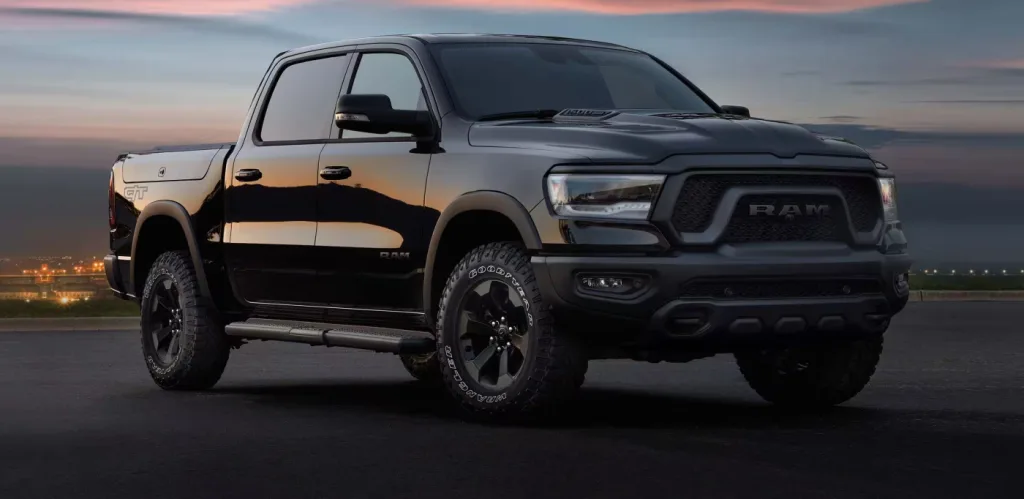
When you think of a pickup truck, weight might not be the first thing that comes to mind. Most buyers focus on horsepower, towing numbers, or interior comfort. But understanding how much a Ram 1500 weighs is more than trivia — it impacts towing capacity, payload limits, handling, braking, fuel efficiency, and even what license or road rules may apply in some states.
The Ram 1500 has been one of America’s best-selling trucks for decades, and its weight is carefully engineered to balance strength and efficiency. So how heavy is it really? Let’s dive deep into the numbers across trims, cab configurations, engines, and years, with special focus on the 2019–2025 fifth-generation Ram 1500 models.
For those in Southern California, you can explore the latest Ram trucks, schedule service, or get advice from experts directly at Simi Valley Chrysler Dodge Jeep Ram.
⚖️ Understanding Truck Weight Terms
Before breaking down Ram 1500 weights, it’s important to know the different categories manufacturers use:
- Curb Weight: The weight of the truck with all standard equipment and fluids (oil, coolant, full tank of fuel), but without passengers or cargo.
- Gross Vehicle Weight Rating (GVWR): The maximum safe weight of the truck fully loaded with passengers, cargo, and tongue weight from a trailer.
- Payload Capacity: How much weight you can safely carry in the cab and bed combined.
- Gross Combined Weight Rating (GCWR): The maximum allowable weight of the truck plus whatever it’s towing.
Knowing these figures prevents overloading and ensures safety while towing or hauling.
📊 Ram 1500 Weight Range
The Ram 1500 is considered a light-duty full-size pickup, but don’t let the term “light” fool you — these trucks are anything but featherweights. Depending on trim and configuration, curb weight ranges from around 4,765 lbs (2,162 kg) to nearly 6,400 lbs (2,903 kg).
- Lowest curb weight: Tradesman Quad Cab 2WD with 3.6L V6 – ~4,765 lbs
- Heaviest curb weight: Limited Crew Cab 4×4 with 5.7L HEMI eTorque – ~6,400 lbs
This broad range reflects the diversity of trims, cabs, drivetrains, and optional equipment in the Ram 1500 lineup.
🚛 Ram 1500 Weights by Engine
3.6L Pentastar V6 with eTorque
- Curb Weight: ~4,765–5,150 lbs
- GVWR: 6,800 lbs
- Best for: Daily driving, light towing, efficiency
This is the base engine, standard in lower trims. Despite being lighter, it provides plenty of capability with a modern mild-hybrid system.
5.7L HEMI V8
- Curb Weight: ~5,300–5,800 lbs
- GVWR: 7,100 lbs
- Best for: Towing, hauling, and those who want classic V8 rumble
The HEMI adds hundreds of pounds thanks to its larger block and heavier components but pays off with stronger towing and acceleration.
5.7L HEMI V8 with eTorque
- Curb Weight: ~5,600–6,400 lbs
- GVWR: 7,100 lbs
- Best for: Max towing, improved efficiency under load
This is the heaviest option but also the most capable in terms of towing (up to 12,750 lbs when properly equipped).
EcoDiesel 3.0L V6 (2019–2023 availability)
- Curb Weight: ~5,200–6,000 lbs
- GVWR: 7,000–7,100 lbs
- Best for: Long-distance hauling with excellent fuel economy
The EcoDiesel adds weight but balances it with low-end torque and class-leading highway mpg.
🏗 Weights by Cab and Bed Configuration
The Ram 1500 offers multiple cab and bed combinations, which also influence curb weight.
Quad Cab (smaller rear seating area)
- Weight Range: 4,765–5,500 lbs
- Payload: ~2,000 lbs
- Best for: Work truck owners who prioritize bed space
Crew Cab (larger rear seating)
- Weight Range: 5,100–6,400 lbs
- Payload: ~1,600–1,900 lbs
- Best for: Families, road trips, daily drivers who need comfort
Bed Lengths
- 5’7” Bed: Saves some weight and improves maneuverability
- 6’4” Bed: Adds ~100–150 lbs, better for hauling large cargo
📈 Trim-Level Weight Differences
Each trim adds features, luxury materials, and technology that increase the truck’s weight.
- Tradesman: ~4,765–5,300 lbs
- Big Horn/Lone Star: ~5,100–5,600 lbs
- Laramie: ~5,500–5,900 lbs
- Rebel (off-road focus): ~5,700–6,000 lbs (extra skid plates, suspension components add weight)
- Limited & Limited Longhorn: ~6,000–6,400 lbs (luxury features, larger wheels, more electronics)
📊 Quick Reference Table – 2019–2025 Ram 1500
| Trim / Engine | Drivetrain | Curb Weight (lbs) | GVWR (lbs) |
|---|---|---|---|
| Tradesman V6 | 2WD Quad | ~4,765 | 6,800 |
| Big Horn V6 | 4×4 Crew | ~5,200 | 6,800 |
| Rebel HEMI V8 | 4×4 Crew | ~5,900 | 7,100 |
| Laramie HEMI | 4×4 Crew | ~6,000 | 7,100 |
| Limited HEMI eTorque | 4×4 Crew | ~6,400 | 7,100 |
Numbers are approximate and vary by options (wheel size, axle ratio, towing packages).
🔍 Why Weight Matters for Ram 1500 Owners
- Towing Capacity – Heavier trucks with stronger engines can tow more, but too much curb weight eats into payload.
- Fuel Efficiency – Lighter trims with the V6 achieve better mpg.
- Handling & Braking – A heavier truck requires larger brake calipers and rotors, which is why Ram’s braking system is among the best in its class.
- Registration & Fees – In some states, registration cost and insurance premiums factor in GVWR.
- Off-Roading – Lower weight helps in sand or mud, but heavier trims with skid plates and suspension upgrades are more durable.
🛠 Maintenance & Weight
Weight also affects wear on key parts:
- Tires: Heavier trims wear tires faster; proper rotation is key.
- Brakes: More mass requires larger calipers (Ram uses up to 60 mm front pistons).
- Suspension: Towing near max capacity frequently can stress shocks and springs.
Keeping up with maintenance ensures your Ram 1500 delivers performance safely no matter how heavy it is.
For service, brake inspections, or OEM parts, visit Simi Valley Chrysler Dodge Jeep Ram.
🏁 Real-World Examples
- A Tradesman Quad Cab V6 2WD feels nimble and efficient, weighing under 5,000 lbs — closer to some midsize trucks.
- A fully-loaded Limited Crew Cab 4×4 HEMI eTorque tips the scales over 6,300 lbs, rivaling some ¾-ton trucks in sheer presence.
- Off-road-ready Rebel models gain extra armor and suspension weight but deliver rugged stability.
✅ Final Thoughts
So, how much does a Ram 1500 weigh? The answer depends on configuration, but you’re looking at anywhere between 4,765 lbs and 6,400 lbs curb weight, with GVWR ratings around 6,800–7,100 lbs.
That range allows the Ram 1500 to serve everyone — from fleet buyers who want an efficient work truck, to families who want a luxurious daily driver, to enthusiasts towing boats or trailers on weekends.
Understanding your truck’s weight isn’t just about numbers; it’s about knowing your truck’s limits and maximizing its strengths.
👉 If you’re ready to explore the full lineup or need expert service for your Ram, visit Simi Valley Chrysler Dodge Jeep Ram — your trusted local Ram dealership
Ram 1500 Weight FAQ
1) How much does a Ram 1500 weigh?
Depending on configuration, the Ram 1500 weighs between 4,765 and 6,400 pounds (2,162–2,903 kg). Lower trims with the V6 engine weigh less, while fully loaded 4×4 Crew Cab HEMI models sit at the top end of the range.
2) What’s the average weight of a Ram 1500?
Most Ram 1500 models on the road today fall between 5,200 and 5,900 pounds. That’s a good balance of strength and efficiency for towing, hauling, and daily use.
3) Does cab size affect the Ram 1500’s weight?
Yes.
- Quad Cab models: 4,765–5,500 lbs
- Crew Cab models: 5,100–6,400 lbs
Crew Cabs have larger rear seating and added structure, which increases overall weight.
4) Which engine option makes the Ram 1500 heaviest?
The 5.7L HEMI V8 with eTorque is the heaviest setup, reaching up to ~6,400 lbs curb weight, but it also delivers the highest towing capacity — up to 12,750 lbs when properly equipped.
5) What’s the lightest Ram 1500 configuration?
The Tradesman Quad Cab 2WD with the 3.6L V6 eTorque is the lightest at roughly 4,765 lbs, offering excellent fuel economy for a full-size pickup.
6) How does the Ram 1500’s weight compare to rivals like the F-150 or Silverado 1500?
The Ram 1500 is mid-range among full-size trucks:
- Ford F-150: ~4,600–6,200 lbs
- Chevy Silverado 1500: ~4,400–6,000 lbs
- Ram 1500: ~4,765–6,400 lbs
Its structure and coil-spring suspension add comfort but slightly increase weight over some competitors.
7) What’s the difference between curb weight and GVWR?
- Curb Weight: Truck with all fluids and full tank but no passengers or cargo.
- GVWR (Gross Vehicle Weight Rating): The maximum safe weight of truck + passengers + cargo + trailer tongue load.
Ram 1500 GVWR ranges from 6,800 to 7,100 lbs, depending on trim.
8) How does weight affect towing and payload?
Heavier trims can tow more but usually have slightly lower payload capacity. For example:
- Light V6 models: ~2,000 lbs payload
- Heavy luxury trims: ~1,600–1,800 lbs payload
9) Does weight impact fuel efficiency?
Yes. Lighter trims and V6 models typically return better fuel economy. The 3.6L V6 eTorque delivers the best mileage, while heavier V8 and diesel models trade some efficiency for power.
10) Why is the Ram 1500 heavier than midsize trucks?
The Ram 1500 is a full-size, half-ton pickup built for towing and hauling. Its frame, suspension, and safety systems are engineered for strength — naturally adding weight over midsize models like the Tacoma or Ranger.
11) Does adding accessories or towing equipment change weight?
Yes. Aftermarket items such as toolboxes, lift kits, larger wheels, or winches can add 100–500 lbs or more, reducing available payload.
12) What’s the GCWR of the Ram 1500?
The Gross Combined Weight Rating (GCWR) — the truck plus whatever it’s towing — is typically 12,900 to 19,000 lbs, depending on engine, axle ratio, and towing package.
13) How does bed length affect weight?
The 6’4” bed adds roughly 100–150 lbs over the 5’7” bed, improving hauling space at a small cost to efficiency and maneuverability.
14) What is the payload capacity of the Ram 1500?
Payload varies between 1,600–2,300 lbs, depending on trim, engine, drivetrain, and options. Always check your driver-side door label for the exact figure for your truck.
15) How can I find my Ram 1500’s exact weight?
You can:
- Check your door jamb label (lists GVWR and payload).
- Visit the Simi Valley CDJR service department for a full spec lookup by VIN.
- Consult your owner’s manual for curb and towing specs.
16) Does the Ram 1500 EcoDiesel weigh more?
Yes — the 3.0L EcoDiesel models weigh ~5,200–6,000 lbs due to the diesel engine’s heavier block and cooling systems. However, they’re among the most fuel-efficient full-size pickups.
17) Do weight differences affect braking or suspension?
Heavier trims use larger brake calipers (up to 60 mm pistons) and reinforced suspension to maintain stopping power and ride comfort.
18) What’s the best weight setup for off-roading?
The Ram 1500 Rebel hits a sweet spot (~5,700–6,000 lbs). It’s heavy enough for stability, yet balanced for trail agility thanks to its off-road suspension and skid plates.
19) Does truck weight impact registration or insurance?
In some states, yes. Fees and premiums may factor in GVWR classifications, especially for commercial or high-capacity configurations.
20) Where can I get exact Ram 1500 specs or service help?
Visit Simi Valley Chrysler Dodge Jeep Ram — your certified local Ram experts.
📍 Simi Valley, CA
📞 Sales & Service: 805-387-9755
🔗 View Ram Inventory
🔗 Schedule Service
Connect with us


