





The 2019 Ram 1500 marked the launch of the fifth generation of Ram’s light-duty trucks, blending power, comfort, and advanced technology. From its refined coil-spring suspension to its spacious Crew Cab interior, it was built to satisfy both work and lifestyle needs. But one detail often overlooked by casual truck owners — and prized by serious drivers — is the axle gear ratio.
If you’ve ever wondered whether you can change the gear ratio on a 2019 Ram 1500, the short answer is yes. But the longer answer involves understanding what gear ratios do, how they affect performance, and what’s required to upgrade or modify them. This blog will guide you through everything you need to know.
For factory-trained service and genuine parts, you can always trust Simi Valley Chrysler Dodge Jeep Ram to handle gear ratio changes and upgrades the right way.
⚙️ What Is a Gear Ratio?
A gear ratio in a truck refers to the relationship between the driveshaft’s rotations and the axle’s wheel rotations. In simpler terms, it controls how many times your driveshaft turns for each wheel revolution.
- A higher gear ratio (numerically larger, like 3.92) means the driveshaft spins more often per wheel turn. This produces stronger torque at the wheels, improving towing and acceleration, but at the expense of fuel economy.
- A lower gear ratio (numerically smaller, like 3.21) means fewer driveshaft spins per wheel revolution, prioritizing fuel economy but sacrificing low-end pulling power.
Think of gear ratios as choosing between muscle vs. efficiency.
📊 Stock Gear Ratios on the 2019 Ram 1500
Ram offered the 2019 1500 with several factory-set ratios depending on engine and trim:
- 3.21: Standard on many base models, good for highway fuel economy.
- 3.55: Balanced option, blending decent towing with everyday efficiency.
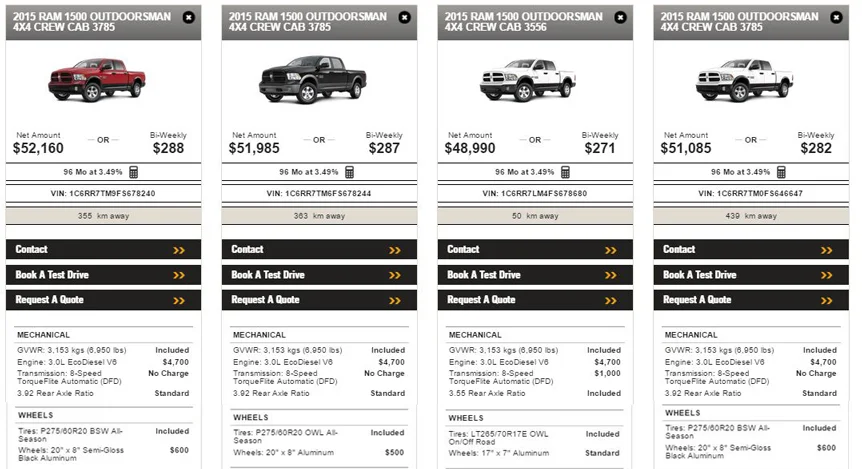
- 3.92: Available on towing packages and off-road trims like the Rebel, delivering max pulling power.
These ratios were paired with differentials designed for either 2WD or 4WD setups, and the selection significantly influenced towing and payload specs.
🚛 Why Change Your Gear Ratio?
Owners consider gear ratio changes for a few key reasons:
- Towing Heavy Loads
If you bought a Ram 1500 with a 3.21 axle and later decided to tow a large boat or camper, you might feel underpowered. Upgrading to a 3.55 or 3.92 provides stronger low-end torque, making towing more controlled. - Fuel Economy Goals
Drivers who rarely tow and spend most of their time on highways may prefer dropping to a lower ratio (like 3.21) for better fuel efficiency. - Larger Tires or Lift Kits
When you add oversized tires, the effective gear ratio changes. Larger tires reduce torque at the wheels, so upgrading to a higher ratio (like 4.10 aftermarket) restores performance. - Performance Tuning
Enthusiasts who want quicker launches or off-road capability often choose higher ratios for maximum torque and response.
🔧 How to Change the Gear Ratio on a 2019 Ram 1500
Yes, you can change it — but it’s not a DIY bolt-on job. It requires ring and pinion swaps in the differentials. Here’s what’s involved:
- Ring and Pinion Replacement
- The existing differential gears (ring and pinion) are removed.
- New gears with the desired ratio are installed.
- Precision shimming is required to ensure proper contact patterns and backlash settings.
- Front and Rear Matching (4×4)
- If your truck is 4WD, both the front and rear differentials must have matching gear ratios. Mismatched gears will destroy your drivetrain.
- Reprogramming the ECU/PCM
- After changing ratios, the truck’s computer must be recalibrated. Otherwise, your speedometer, transmission shift points, and traction systems will read incorrectly.
- Professional Installation
- Gear swaps require experience with setting bearing preload, backlash, and pinion depth. A dealership or experienced shop is highly recommended.
⚡ Effects of Changing Ratios
Going Higher (e.g., 3.21 → 3.92)
- ✅ Better towing and hauling capability
- ✅ Faster acceleration and throttle response
- ❌ Lower fuel efficiency at highway speeds
- ❌ Higher engine RPMs at cruising speeds
Going Lower (e.g., 3.92 → 3.21)
- ✅ Improved fuel economy
- ✅ Lower RPMs on the highway (quieter ride)
- ❌ Reduced towing capacity
- ❌ Slower launches from a stop
🛠 Maintenance and Durability
Upgraded gear ratios also require proper maintenance:
- Break-In Period: New gears should be driven gently for the first 500 miles with light loads.
- Fluid Change: Differential fluid should be replaced after break-in to remove metal particles from the new gears.
- Regular Inspections: Proper lubrication and periodic inspections prevent premature wear.
📈 Cost of Changing Gear Ratios
Changing gear ratios on a Ram 1500 isn’t cheap because it involves precision labor and parts. Expect:
- Parts (ring & pinion kits): $400–$1,000 per axle
- Labor: $600–$1,200 per axle, depending on complexity
- Reprogramming/Calibration: $100–$300
- Total for 4×4 trucks: $1,500–$3,000+
While costly, the benefits can transform how your truck performs, especially if towing or running larger tires.
🔍 Comparing Ram 1500 Ratios to Competitors
- Ford F-150 (2019): Offered ratios from 3.15 to 3.73, with optional 4.10.
- Chevy Silverado 1500 (2019): Ranged from 3.23 to 3.73, with off-road trims hitting 4.10.
- Toyota Tundra (2019): Mostly 4.30 ratio, limiting highway mpg but maximizing towing.
The Ram 1500’s range of 3.21 to 3.92 struck a smart balance, but aftermarket options allow owners to match or exceed competitors if needed.
🏞 Real-World Examples
- Work Truck Owner: Tradesman with 3.21 gears struggled towing a 7,000 lb trailer. After swapping to 3.92 gears, towing became more manageable, with less downshifting on hills.
- Highway Commuter: A Big Horn owner who never tows swapped to 3.21 from 3.92 and reported improved mpg on long trips from Los Angeles to Phoenix.
- Off-Road Enthusiast: Rebel owners with oversized tires often re-gear to 4.10 aftermarket to regain torque lost to larger diameter wheels.
📍 Why Choose Simi Valley CDJR for Gear Ratio Upgrades
Changing gear ratios requires precision and expertise. At Simi Valley Chrysler Dodge Jeep Ram, you’ll find:
- ✅ Factory-trained technicians with Ram drivetrain experience
- ✅ Genuine Mopar ring & pinion sets
- ✅ Advanced calibration tools to reprogram your truck’s ECU
- ✅ Service warranties for peace of mind
- ✅ Financing options for larger service jobs
For Southern California truck owners, Simi Valley CDJR is your trusted partner for both routine maintenance and performance upgrades.
✅ Final Thoughts
So, can you change the gear ratio on a 2019 Ram 1500? Yes — absolutely. It’s one of the most effective ways to tailor your truck to your needs, whether that’s towing, fuel efficiency, off-roading, or performance driving.
- Higher ratios deliver more torque and towing power.
- Lower ratios improve fuel economy and highway cruising.
- Installation requires professional expertise to avoid costly mistakes.
👉 Ready to upgrade your truck’s performance? Schedule a consultation today with Simi Valley Chrysler Dodge Jeep Ram.
FAQs About 2019 Ram 1500 Gear Ratios
1. Can I change the gear ratio on my 2019 Ram 1500?
Yes — you can change the factory axle gear ratio on a 2019 Ram 1500. However, it’s a complex job involving differential disassembly, ring-and-pinion replacement, and ECU recalibration. Professional installation at a certified Ram service center such as Simi Valley Chrysler Dodge Jeep Ram is strongly recommended.
2. What gear ratios were available from the factory?
The 2019 Ram 1500 offered three primary axle ratios, depending on trim and equipment:
- 3.21: Standard on base and highway-focused trims (best for fuel efficiency).
- 3.55: Balanced option for daily driving and moderate towing.
- 3.92: Towing/off-road-oriented ratio, available on Rebel and Max Tow packages.
3. What does the gear ratio actually do?
The axle ratio determines how many times the driveshaft spins for each wheel rotation:
- Higher ratios (like 3.92) = More torque, stronger towing, quicker launches, lower MPG.
- Lower ratios (like 3.21) = Better fuel economy, quieter cruising, less towing power.
Think of it as choosing between strength vs. efficiency depending on your driving style.
4. Why would someone change their gear ratio?
Drivers re-gear their Ram 1500 for several reasons:
- Towing heavier trailers or boats — higher ratio = more torque.
- Improving fuel economy — lower ratio = reduced RPMs at highway speeds.
- Larger tires/lift kits — restore lost torque and speedometer accuracy.
- Performance tuning — achieve faster throttle response or off-road traction.
5. How difficult is a gear ratio swap?
It’s not a DIY project. A proper re-gear requires:
- Removing the ring and pinion gears in both differentials (on 4x4s).
- Setting correct pinion depth, backlash, and bearing preload.
- Matching front and rear ratios on 4WD trucks to avoid drivetrain damage.
- Reprogramming the truck’s computer (ECU) for correct speed and shift calibration.
Only an experienced technician with specialized tools should handle the process.
6. How much does it cost to change the gear ratio?
Approximate cost breakdown for a 2019 Ram 1500:
| Category | Estimated Cost |
|---|---|
| Ring & Pinion Gear Sets | $400–$1,000 per axle |
| Labor | $600–$1,200 per axle |
| ECU Recalibration | $100–$300 |
| Total (4×4 models) | $1,500–$3,000+ |
While not inexpensive, it can completely transform towing performance or fuel efficiency.
7. What happens if front and rear ratios don’t match on a 4×4?
Mismatched ratios will cause severe drivetrain binding, leading to major transmission and differential damage. Always ensure both axles use the exact same ratio if your Ram is equipped with 4WD.
8. Do I need to recalibrate my truck after a gear change?
Yes. After re-gearing, your speedometer, odometer, and transmission shift logic must be reprogrammed to the new ratio. Failing to do this can cause inaccurate readings and erratic shifting.
9. How does changing the ratio affect towing and fuel economy?
- Higher ratio (e.g., 3.21 → 3.92):
- ✅ Better towing power and throttle response
- ❌ Lower fuel economy
- Lower ratio (e.g., 3.92 → 3.21):
- ✅ Improved MPG and quieter cruising
- ❌ Reduced towing torque
Choose based on how you use your truck most often.
10. What’s the break-in procedure after a re-gear?
To ensure longevity:
- Drive gently for the first 500 miles with light loads.
- Avoid towing during break-in.
- Change differential fluid after the break-in to remove metal debris.
- Continue regular fluid checks every 15,000–30,000 miles.
11. What are aftermarket options for higher performance?
Owners seeking even more torque can upgrade to 4.10 or 4.56 ratios through reputable aftermarket kits. These are popular for off-road builds, lifted trucks, and heavy towing setups, but require recalibration and professional installation.
12. Where can I get my Ram 1500 re-geared or serviced?
Right here in Southern California:
📍 Simi Valley Chrysler Dodge Jeep Ram
📞 Sales & Service: 805-387-9755
🔧 Factory-trained technicians with Ram drivetrain expertise
⚙️ Genuine Mopar ring & pinion sets and calibration tools
🔗 Schedule Service
🔗 View Ram Service Specials
Connect with us


