





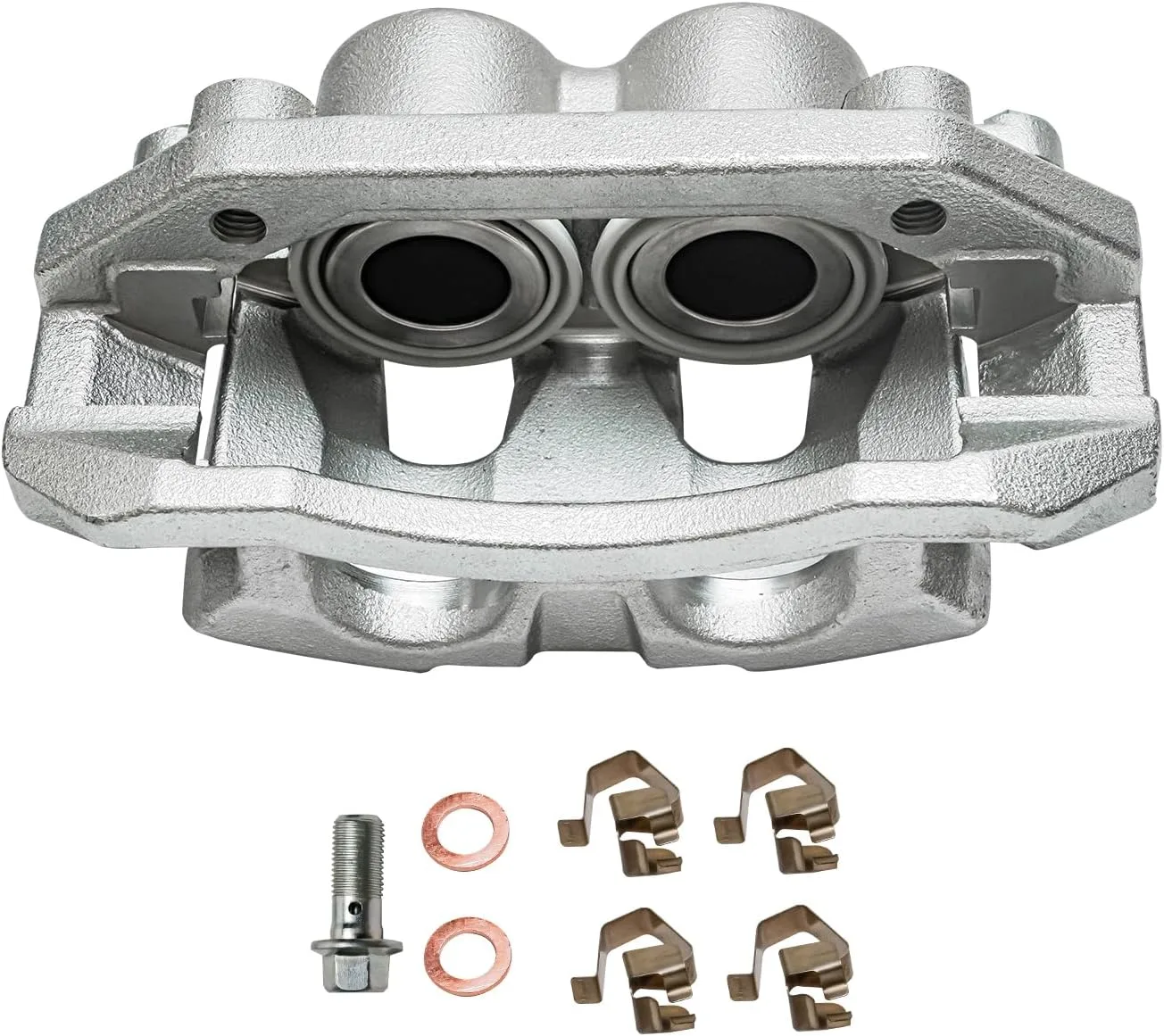
The 2019 Ram 1500 marked a turning point in Ram’s pickup truck lineup. With a complete redesign, more powertrain options, improved towing capacity, and a lighter, stronger frame, the fifth-generation Ram became a favorite among truck enthusiasts. But while most headlines highlighted HEMI engines, coil-spring suspension, and luxury-grade interiors, one critical component often goes unnoticed: the brakes.
Specifically, the brake calipers on the 2019 Ram 1500 play a massive role in ensuring that this full-size truck can haul, tow, and stop with confidence. In this deep-dive, we’ll cover everything you need to know about the size of the brake calipers, their role in braking performance, comparisons across trims, maintenance tips, and why upgrading might be worth considering if you’re a serious truck owner.
For those in California looking to maintain or upgrade their truck, you can always rely on Simi Valley Chrysler Dodge Jeep Ram for OEM brake parts, service, and expert advice.
🔧 Brake Caliper Basics
Before we jump into the exact dimensions, let’s start with the basics.
A brake caliper is a clamping device that houses the brake pads and pistons. When you press the brake pedal, hydraulic pressure pushes the pistons, squeezing the pads against the rotors. This friction slows down and stops your vehicle.
On a heavy-duty vehicle like the Ram 1500, brake calipers need to be significantly larger and more robust than those found on sedans or compact SUVs. This ensures they can handle the extra stress from towing heavy loads, hauling cargo, and stopping a truck that weighs over 2,300 kg (5,100 lbs) before passengers, cargo, or trailers are even factored in.
📏 2019 Ram 1500 Brake Caliper Size
The 2019 Ram 1500 comes with a range of brake sizes depending on trim and wheel options. But across the lineup, Ram equipped the truck with some of the largest calipers in the half-ton class at the time.
- Front Brake Calipers:
The front brakes are the workhorses of any vehicle. On the 2019 Ram 1500, the front calipers are dual-piston calipers measuring approximately 60 mm (2.36 inches) per piston. This gives a combined clamping area large enough to handle aggressive braking and heavy towing situations. - Rear Brake Calipers:
The rear brakes feature single-piston floating calipers measuring about 45 mm (1.77 inches). While smaller than the front, they are still robust enough to provide stability under braking and keep the truck balanced, especially when loaded. - Rotor Pairing:
These calipers pair with massive brake rotors:- Front rotors: 13.8 inches in diameter
- Rear rotors: 14.1 inches in diameter (depending on trim and wheel size)
Put simply, the brake system on the 2019 Ram 1500 is bigger than many SUVs’ entire wheel sizes.
🚛 Why Size Matters on the Ram 1500
A large pickup like the Ram 1500 demands equally large brake calipers. Here’s why size is so important:
- Towing Power – The 2019 Ram 1500 can tow up to 12,750 lbs (when properly equipped). Large calipers provide the clamping force needed to bring a heavy trailer to a stop without overheating the system.
- Payload Capacity – With up to 2,300 lbs of payload, the truck needs calipers strong enough to handle stopping with the bed fully loaded.
- Heat Dissipation – Bigger calipers paired with vented rotors mean better heat management. Overheated brakes lead to fade, where the pedal feels soft and stopping distances increase.
- Longevity – Larger calipers spread braking forces more evenly, reducing wear on both pads and rotors, ensuring the truck remains reliable over the long haul.
⚙️ Variations Across Trims
The 2019 Ram 1500 was available in multiple trims — Tradesman, Big Horn, Laramie, Rebel, Limited, and more. While the brake caliper design remained largely consistent across trims, certain wheel and axle configurations came with slightly larger rotors and upgraded calipers.
- Standard Models (Tradesman, Big Horn): Dual-piston front calipers with 60 mm pistons, single-piston rears.
- Performance-Oriented Rebel: Reinforced components with stronger pads, same caliper dimensions but tuned for off-road conditions.
- Heavy Towing Packages: Some higher trims with Max Tow configurations used upgraded calipers with thicker pads and heat-resistant coatings for longevity under load.
Regardless of trim, the system was engineered for durability, with Ram engineering emphasizing consistent performance under heavy strain.
🔍 Comparing Ram 1500 Brakes to Competitors
To put things into perspective, let’s compare the 2019 Ram 1500 brake calipers to rivals:
- Ford F-150 (2019): Front calipers around 54 mm pistons, rear around 43 mm. Smaller overall, especially on base trims.
- Chevy Silverado 1500 (2019): Similar dual-piston fronts but smaller rear calipers than Ram.
- Toyota Tundra (2019): Comparable in the front, though older design meant less efficiency in cooling.
Verdict: The 2019 Ram 1500 had one of the most robust brake setups in its class, giving it an edge in stopping power and confidence.
🛠 Maintenance Tips for 2019 Ram 1500 Brake Calipers
Even the best brake calipers need care. Here are essential tips:
- Regular Inspections – Check calipers for leaks, uneven wear, or corrosion every 20,000 km.
- Brake Fluid Flushes – Replace fluid every 2 years to maintain hydraulic pressure.
- Lubrication – Keep slide pins greased to ensure smooth caliper movement.
- Pad Replacement – Always replace pads in pairs to maintain balance and prevent rotor warping.
- OEM Parts – Use genuine Mopar brake parts for the best fit and safety.
For California drivers, Simi Valley Chrysler Dodge Jeep Ram provides factory-trained technicians and OEM-certified brake parts to keep your Ram performing like new.
🔩 When to Consider Upgrades
If you push your Ram 1500 beyond daily driving — such as heavy towing, off-roading, or performance mods — brake upgrades may be worth considering. Popular options include:
- Bigger Calipers – Four-piston or six-piston aftermarket calipers for extra clamping force.
- Slotted & Drilled Rotors – Improve cooling and reduce fade under repeated braking.
- Performance Pads – Provide stronger initial bite and better heat resistance.
- Steel Braided Lines – Enhance pedal feel and reduce flex under pressure.
These upgrades enhance confidence, especially when towing near max capacity or driving through steep California mountain roads.
💬 Real-World Feedback from 2019 Ram 1500 Owners
Many owners reported being impressed with the braking capability of the redesigned Ram. Compared to earlier fourth-gen trucks, the 2019’s larger calipers and rotors significantly improved stopping distances.
One owner review mentioned that even with a 6,000 lb trailer attached, the brakes stayed consistent with no fade after multiple highway merges and stops. Another praised the truck’s control when descending steep inclines, noting how “solid” the pedal felt even under load.
📍 Why Simi Valley CDJR Is Your Best Bet for Brake Service
Owning a truck like the 2019 Ram 1500 means having a partner who understands it. At Simi Valley Chrysler Dodge Jeep Ram, you get:
- 🔧 Factory-trained technicians familiar with Ram braking systems
- 🛠 OEM Mopar brake calipers, pads, and rotors
- 📅 Scheduled maintenance tailored to your truck’s needs
- 🚙 Complimentary multi-point inspections during service
- 💵 Competitive financing options for parts and service upgrades
For California drivers, the dealership is your go-to resource for brake service, replacements, and performance upgrades.
👉 Explore parts, service appointments, and Ram trucks at Simi Valley Chrysler Dodge Jeep Ram.
✅ Final Verdict
So, how big are the 2019 Ram 1500 brake calipers?
- Front: Dual-piston, ~60 mm pistons
- Rear: Single-piston, ~45 mm piston
- Rotors: Up to 14.1 inches in diameter
In short, they’re among the largest in their class, giving the Ram 1500 exceptional stopping power to match its impressive towing and hauling capabilities.
Whether you’re maintaining your truck’s stock setup or upgrading for more performance, knowing the caliper size helps you make smart, safe choices. And when it’s time for parts or service, trust the experts at Simi Valley Chrysler Dodge Jeep Ram to keep your brakes strong and reliable.
2019 Ram 1500 Brake Caliper FAQ
1) What size are the brake calipers on the 2019 Ram 1500?
The front calipers are dual-piston units measuring approximately 60 mm (2.36 inches) per piston, while the rear calipers are single-piston units measuring about 45 mm (1.77 inches).
2) Are the front and rear calipers the same on all trims?
Not exactly. Most trims — including Tradesman, Big Horn, and Laramie — use the same base setup, but performance-focused models like the Rebel feature reinforced components and upgraded brake pads tuned for off-road use.
3) What size are the brake rotors on the 2019 Ram 1500?
The front rotors measure around 13.8 inches, while the rear rotors range up to 14.1 inches depending on the trim and wheel package.
4) How do Ram 1500 brakes compare to Ford and Chevy trucks?
The 2019 Ram 1500 uses larger pistons and rotors than most half-ton competitors. For example:
- Ford F-150 (2019): ~54 mm front pistons
- Chevy Silverado 1500 (2019): Smaller rear calipers
This gives the Ram stronger clamping force and better fade resistance.
5) Why does caliper size matter for trucks?
Bigger calipers provide more braking torque, better heat dissipation, and improved stopping power when towing or hauling. They also help reduce pad wear and maintain consistent braking performance under heavy loads.
6) Which 2019 Ram 1500 engine or trim has the biggest brakes?
The Limited 4×4 and Rebel trims, especially with Max Tow packages, come with the most robust braking systems — thicker pads, larger rotors, and calipers designed for sustained towing and off-road use.
7) How much can the brakes handle when towing?
With towing capacities up to 12,750 lbs, the 2019 Ram 1500’s dual-piston front setup provides enough stopping power to safely control heavy trailers — especially when combined with the truck’s trailer brake controller system.
8) What materials are used in the factory calipers?
OEM calipers are made from cast aluminum alloy, chosen for its balance of strength and weight reduction. The design helps manage heat without adding excess mass to the suspension.
9) What are signs that my calipers need service?
- Uneven pad wear
- Leaking brake fluid near the wheels
- Pulsation or vibration when braking
- Squealing or grinding noises
- Pulling to one side during stops
10) How often should I inspect my brake calipers?
It’s recommended to inspect calipers every 12,000 miles (19,000 km) or at every oil change interval if you tow or drive in hilly areas.
11) Do the 2019 Ram 1500’s brakes use floating or fixed calipers?
The front dual-piston design is a floating caliper setup, which allows one side to move slightly to equalize pressure — ideal for weight balance and ease of maintenance.
12) Can I upgrade to larger calipers or rotors?
Yes. Many Ram 1500 owners upgrade to four-piston or six-piston calipers, slotted/drilled rotors, and steel-braided lines for improved pedal feel and fade resistance. OEM performance kits and reputable aftermarket options are available.
13) Are OEM Mopar calipers better than aftermarket ones?
OEM Mopar calipers ensure correct fitment, proper brake bias, and consistent performance. Aftermarket options can enhance performance, but they should be installed and calibrated by professionals to avoid imbalance or ABS issues.
14) How much does replacing calipers cost?
Expect to pay around $250–$400 per caliper for OEM replacements, plus $150–$250 in labor per axle. Upgrades or performance kits may cost more depending on size and brand.
15) What kind of brake fluid does the 2019 Ram 1500 use?
DOT 3 or DOT 4 brake fluid is recommended. Always check the cap or owner’s manual to confirm compatibility before topping up or flushing.
16) How do I maintain my brake calipers for long life?
- Lubricate slide pins during pad replacements
- Flush brake fluid every 2 years
- Use quality pads and rotors to minimize debris buildup
- Wash off road salt and dirt after off-roading
17) What happens if a caliper seizes or sticks?
You may feel dragging, vibration, or reduced fuel efficiency. Seized calipers overheat the pads and rotors, potentially damaging the entire braking system. Replace or rebuild them immediately.
18) Are the 2019 Ram 1500’s brakes strong enough for lifted trucks or bigger tires?
They perform well up to moderate tire upgrades, but for oversized setups or heavy off-road use, larger calipers and rotors are recommended to maintain safe stopping distances.
19) Did the 2019 redesign improve braking performance from older Rams?
Yes. Compared to the fourth generation, the 2019 Ram 1500 introduced larger calipers, rotors, and improved hydraulic pressure modulation, resulting in shorter stopping distances and better heat control.
20) Where can I get OEM Ram brake parts and service in California?
Visit Simi Valley Chrysler Dodge Jeep Ram for factory-certified technicians, Mopar brake parts, and expert installation.
📍 Simi Valley, CA
📞 805-387-9755
🔗 Book Brake Service
🔗 Shop OEM Parts
Connect with us


