





How Many Catalytic Converters Does a Car Have?
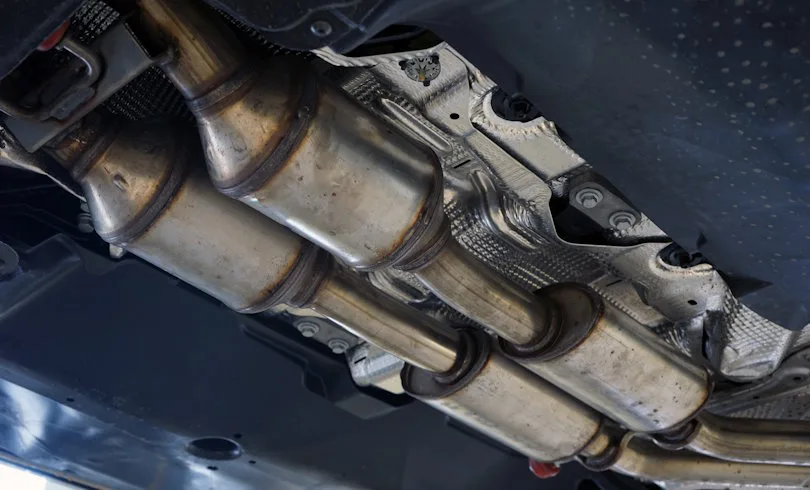
Most cars have one or two catalytic converters, but some vehicles can have three or four depending on the engine layout, emissions system, and whether the vehicle has a V6, V8, turbo engine, or dual exhaust.
The simple answer is this: a basic 4-cylinder car usually has one catalytic converter, while many V6 and V8 vehicles have two. Some modern vehicles also use smaller “pre-cats” near the engine plus a larger main catalytic converter underneath the vehicle.
A catalytic converter is part of the exhaust system. Its job is to reduce harmful emissions before exhaust gases leave the tailpipe. The EPA explains that catalytic converters are emissions-control devices, and replacement units must meet specific requirements.
What Does a Catalytic Converter Do?
A catalytic converter helps clean up exhaust gases.
Inside the converter are precious metals such as platinum, palladium, and rhodium. These metals help convert harmful exhaust pollutants into less harmful gases before they exit the vehicle.
In simple terms, a catalytic converter helps reduce:
Carbon monoxide.
Hydrocarbons.
Nitrogen oxides.
That is why removing a catalytic converter is illegal for normal street-driven vehicles. It can also trigger a check engine light, make the vehicle fail emissions testing, and create exhaust smell or drivability problems.
How Many Catalytic Converters Does a 4-Cylinder Car Have?
Most 4-cylinder cars have one catalytic converter.
Some newer 4-cylinder vehicles may have two converters: one close to the engine and another farther down the exhaust system. This can happen because automakers want the first converter to heat up quickly after startup, while the second converter gives extra emissions control.
A compact car like a Honda Civic, Toyota Corolla, Mazda3, Hyundai Elantra, or Nissan Sentra will usually have one main catalytic converter, but the exact number depends on year, engine, and emissions certification.
How Many Catalytic Converters Does a V6 Have?
Many V6 vehicles have two catalytic converters.
That is because a V6 engine usually has two cylinder banks. Each bank may have its own exhaust manifold and converter. Some V6 vehicles may also have additional downstream converters, which can bring the total to three or four.
A V6 SUV, pickup, minivan, or sedan may have one converter for each side of the engine. This is common on vehicles with dual exhaust routing or tighter emissions requirements.
How Many Catalytic Converters Does a V8 Have?
Most V8 vehicles have two catalytic converters, but some have more.
Like a V6, a V8 has two cylinder banks. Many V8 trucks, SUVs, and performance cars use one catalytic converter per bank. Some systems also include additional converters farther downstream.
That means a V8 Dodge Charger, Ram 1500, Jeep Grand Cherokee, Ford F-150, Chevy Silverado, or similar vehicle may have two or more catalytic converters depending on the exact setup.
Why Do Some Cars Have More Than One Catalytic Converter?
Some vehicles have multiple catalytic converters because modern emissions systems are more complex than older systems.
A vehicle may use:
One converter near the engine for faster warm-up.
One main converter underneath the vehicle.
Separate converters for each side of a V6 or V8 engine.
Extra converters for stricter emissions standards.
Different converter layouts for California emissions vehicles.
The California Air Resources Board has strict rules for aftermarket catalytic converters, especially for California emissions vehicles. This is one reason the exact converter setup can vary by state, emissions package, and model year.
What Is a Pre-Cat?
A pre-cat is a smaller catalytic converter located close to the engine.
Its job is to heat up quickly after startup. Catalytic converters work best when they are hot, so placing a small converter near the engine helps reduce emissions sooner.
Some vehicles have a pre-cat built into or near the exhaust manifold, plus another catalytic converter under the vehicle. This is why a car that looks like it has one main converter underneath may still have another converter closer to the engine.
How Can You Tell How Many Catalytic Converters Your Car Has?
The easiest way is to check your vehicle’s exhaust diagram, repair manual, emissions label, or parts catalog.
You can also ask a trusted mechanic or dealership service department to check by VIN. The VIN matters because the same model may have different converter setups depending on engine, drivetrain, state emissions package, and production year.
You can sometimes see catalytic converters by looking under the vehicle, but not always. Some are hidden near the engine or built into the exhaust manifold area.
Common Catalytic Converter Locations
Catalytic converters are usually found in the exhaust system between the engine and the muffler.
Common locations include:
Near the exhaust manifold.
Under the front of the vehicle.
In the mid-pipe section.
One on each exhaust bank.
Before the muffler or resonator.
On some vehicles, the converter is easy to see from underneath. On others, it is tucked up high near the engine, making it harder to access.
Why Are Catalytic Converters So Expensive?
Catalytic converters are expensive because they contain precious metals and must meet emissions standards.
Replacement cost depends on the vehicle, converter type, labor, and whether the vehicle needs a direct-fit OEM-style converter or an approved aftermarket unit. California emissions vehicles can be more expensive because the replacement converter must be approved for that application.
A stolen catalytic converter can also be expensive to replace because thieves often cut the exhaust pipes, damaging oxygen sensors, shields, and surrounding exhaust parts.
Can a Car Run Without a Catalytic Converter?
A car may physically run without a catalytic converter, but it should not be driven that way on public roads.
Removing the catalytic converter is illegal for normal street use. It can cause a check engine light, louder exhaust, fuel smell, emissions failure, and possible engine-control issues.
If your converter was stolen or damaged, get it repaired properly. Do not replace it with a straight pipe on a street vehicle.
Symptoms of a Bad Catalytic Converter
A failing catalytic converter can cause several symptoms.
Common signs include:
Check engine light.
Rotten egg smell.
Poor acceleration.
Reduced fuel economy.
Rattling noise under the vehicle.
Failed emissions test.
Engine running hot.
Loss of power at highway speeds.
A clogged catalytic converter can restrict exhaust flow, which can make the engine feel weak. A damaged converter may also rattle if the internal material breaks apart.
FAQs About Catalytic Converters
How many catalytic converters does a normal car have?
Most normal cars have one catalytic converter, especially many 4-cylinder vehicles. Some newer cars may have two.
How many catalytic converters does a V6 have?
Many V6 vehicles have two catalytic converters, one for each cylinder bank. Some may have three or four depending on the exhaust and emissions system.
How many catalytic converters does a V8 have?
Most V8 vehicles have two catalytic converters, but some trucks, SUVs, and performance cars may have more.
Why does my car have two catalytic converters?
Your car may have two converters because it has two exhaust banks, stricter emissions equipment, or a pre-cat plus a main catalytic converter.
Is it illegal to remove a catalytic converter?
Yes. Removing a catalytic converter from a street-driven vehicle is illegal and can cause emissions failure, check engine lights, and drivability problems.
How do I know if my catalytic converter is bad?
Common signs include a check engine light, rotten egg smell, poor acceleration, rattling noise, failed emissions test, and reduced fuel economy.
Final Thoughts: Most Cars Have One or Two Catalytic Converters
Most cars have one or two catalytic converters.
A 4-cylinder car usually has one. A V6 or V8 vehicle usually has two. Some modern vehicles have three or four because of pre-cats, dual exhaust layouts, or stricter emissions systems.
The exact number depends on the vehicle’s year, make, model, engine, drivetrain, and emissions package. For the most accurate answer, check by VIN or ask a mechanic to inspect the exhaust system.