





How Close Can You Park to a Stop Sign in the USA?
In most U.S. states, you generally cannot park within 30 feet of a stop sign.
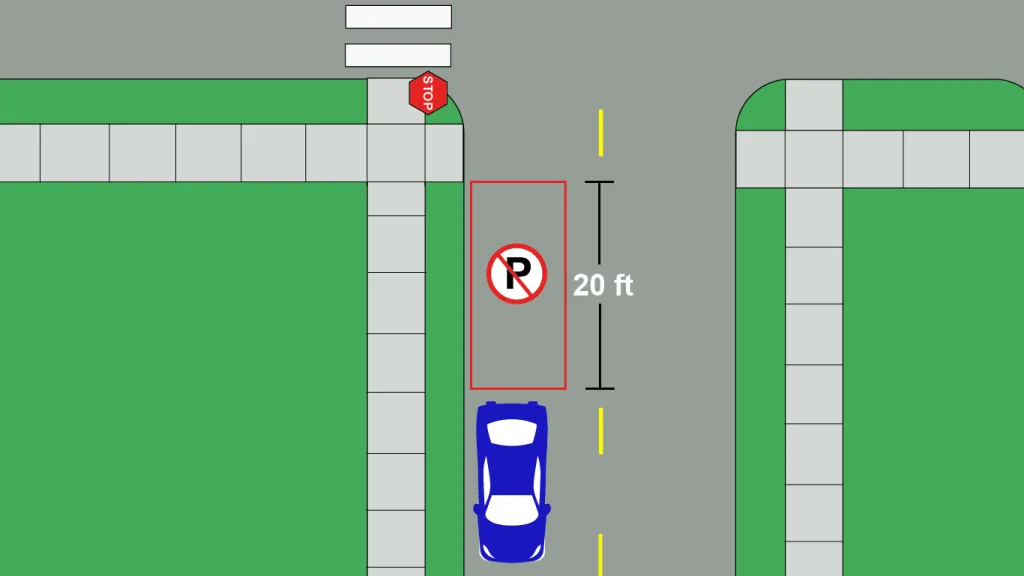
The simple answer is this: leave at least 30 feet between your parked car and a stop sign unless local signs, painted curbs, or city rules require more distance. Many state laws use the same standard: no parking within 30 feet on the approach to a stop sign, flashing signal, yield sign, or traffic control signal.
For example, Florida law prohibits parking within 30 feet upon the approach to a stop sign or traffic control signal. Pennsylvania law uses the same 30-foot rule for stop signs, yield signs, flashing signals, and traffic-control signals.
Why the 30-Foot Rule Exists
The 30-foot parking rule is not random.
Stop signs need to stay visible. Drivers approaching an intersection must be able to see the sign early enough to slow down and stop safely. If a vehicle is parked too close, it can block the stop sign, reduce sightlines, and make the intersection more dangerous for drivers, pedestrians, cyclists, and other road users.
Parking too close to a stop sign can also make turning harder, especially for larger vehicles. Trucks, buses, delivery vans, emergency vehicles, and SUVs need enough space to turn without crossing too far into opposing traffic.
Is the Rule Always 30 Feet?
No. The 30-foot rule is a common U.S. standard, but local rules can vary.
Some states or cities may apply the rule differently depending on whether the stop sign is on the approach side, whether there is a marked crosswalk, whether the curb is painted, and whether local parking signs add extra restrictions.
That is why the safest advice is to leave at least 30 feet from the stop sign and also check for red curbs, no-parking signs, fire hydrants, driveways, bike lanes, crosswalks, and local parking rules.
If a posted sign says no parking farther than 30 feet, the posted sign controls.
What Does “Upon the Approach” Mean?
Many state laws say you cannot park within 30 feet upon the approach to a stop sign.
That usually means the side of the road where traffic is approaching the stop sign. In plain English, it applies before the stop sign as drivers come up to the intersection.
This matters because parking rules may not always apply the same way on every side of the intersection. The safest habit is simple: do not park close to the stop sign from any direction where your vehicle could block visibility, crosswalks, turning movement, or traffic flow.
How Do You Measure 30 Feet?
Measure from the stop sign post or traffic control device, then leave about 30 feet of clear space.
If you do not have a tape measure, 30 feet is roughly:
About two car lengths.
About 10 large walking steps.
About the length of a small school bus.
About half the length of a tractor-trailer.
When in doubt, give yourself more room. A few extra feet is much cheaper than a parking ticket or tow.
What About Crosswalks?
Even if you are far enough from the stop sign, you still need to watch for crosswalk rules.
Many states prohibit parking within 20 feet of a crosswalk at an intersection. In Florida, for example, the same parking statute prohibits parking within 20 feet of a crosswalk at an intersection and within 30 feet of a stop sign or traffic signal.
That means a legal parking spot near a stop sign may still be illegal if it is too close to a crosswalk.
California Has a Special Daylighting Rule
California is different because its newer daylighting rule focuses heavily on crosswalk visibility.
Under California’s daylighting rule, vehicles generally cannot park within 20 feet of the approach side of a marked or unmarked crosswalk, even if there is no red curb. SFMTA explains that California Vehicle Code 22500(n) prohibits stopping, standing, or parking within 20 feet of the vehicle approach side of a marked or unmarked crosswalk, or 15 feet where there is a curb extension.
So in California, do not only think about the stop sign. Think about the intersection and crosswalk too. You may get cited for being too close to the crosswalk even if there is no red paint.
What If the Curb Is Not Painted Red?
Do not assume parking is legal just because the curb is not painted.
In many places, the law applies even without red curb paint. California’s daylighting rule is a strong example: the 20-foot crosswalk restriction applies even when the curb is not painted red, as explained by local California agencies like Pleasant Hill.
The same logic applies in many cities. Painted curbs and signs help drivers, but they are not always required for a parking rule to exist.
Can You Park After the Stop Sign?
Sometimes, but you still need to be careful.
The 30-foot rule often focuses on the approach to the sign. However, you may still be restricted by crosswalks, intersections, driveways, fire hydrants, bike lanes, bus stops, red curbs, or posted no-parking zones after the sign.
If parking after a stop sign blocks visibility, narrows the road, or sits too close to the intersection, it may still be illegal or unsafe.
How Much Is a Ticket for Parking Too Close to a Stop Sign?
Ticket costs vary by city and state.
A ticket for parking too close to a stop sign may be relatively small in some towns and much higher in larger cities. In some cases, your vehicle may also be towed if it creates a hazard, blocks traffic, or violates a signed restriction.
The fine is not the only issue. Parking too close to a stop sign can also increase crash risk and make your vehicle vulnerable to being hit by turning traffic.
Other Parking Distances to Know
Stop signs are only one part of legal parking.
Many states also restrict parking near crosswalks, fire hydrants, fire station driveways, railroad crossings, traffic signals, driveways, bike lanes, bus stops, and intersections.
For example, Florida law lists several common no-parking areas, including within 20 feet of a crosswalk at an intersection, within 30 feet of a stop sign or traffic signal, within 15 feet of a fire hydrant, and within 50 feet of a railroad crossing.
The safest approach is to read the curb, read the signs, and avoid parking close to any traffic control device or intersection.
Practical Rule for Drivers
If you are not sure, use this simple rule:
Stay at least 30 feet away from a stop sign.
Stay at least 20 feet away from a crosswalk.
Stay clear of red curbs, driveways, hydrants, bike lanes, bus stops, and no-parking signs.
Leave more space near corners than you think you need.
This habit keeps your vehicle safer, reduces ticket risk, and helps other road users see clearly.
FAQs About Parking Near a Stop Sign
How close can you park to a stop sign in the U.S.?
In many U.S. states, you cannot park within 30 feet of a stop sign. Local rules can vary, so check your state law and city parking signs.
Is it illegal to park within 30 feet of a stop sign?
In many states, yes. States like Florida and Pennsylvania specifically prohibit parking within 30 feet on the approach to a stop sign or traffic control device.
How do police measure 30 feet from a stop sign?
They may measure from the signpost or traffic control device. In practice, parking enforcement may estimate based on vehicle length, curb markings, nearby landmarks, or direct measurement.
Can I park across the street from a stop sign?
Sometimes, but not if local law, signage, intersection rules, crosswalk rules, or curb markings prohibit it. Make sure your parked vehicle does not block visibility or traffic movement.
Can I park after a stop sign?
Possibly, but you still need to avoid crosswalks, intersections, red curbs, driveways, fire hydrants, bike lanes, and posted restrictions.
What if there is no red curb?
The rule may still apply. Many parking laws do not require the curb to be painted red. In California, the daylighting rule can apply near crosswalks even without red curb markings.
Final Thoughts: Leave at Least 30 Feet
In the USA, the safest general rule is to park at least 30 feet away from a stop sign.
That distance helps keep the sign visible, protects intersection sightlines, and reduces ticket risk. But do not stop your thinking there. Crosswalk rules, local parking ordinances, red curbs, hydrants, driveways, and daylighting laws can all add extra restrictions.
When in doubt, park farther back. A longer walk is better than a ticket, tow, or unsafe intersection.
Connect with us


