




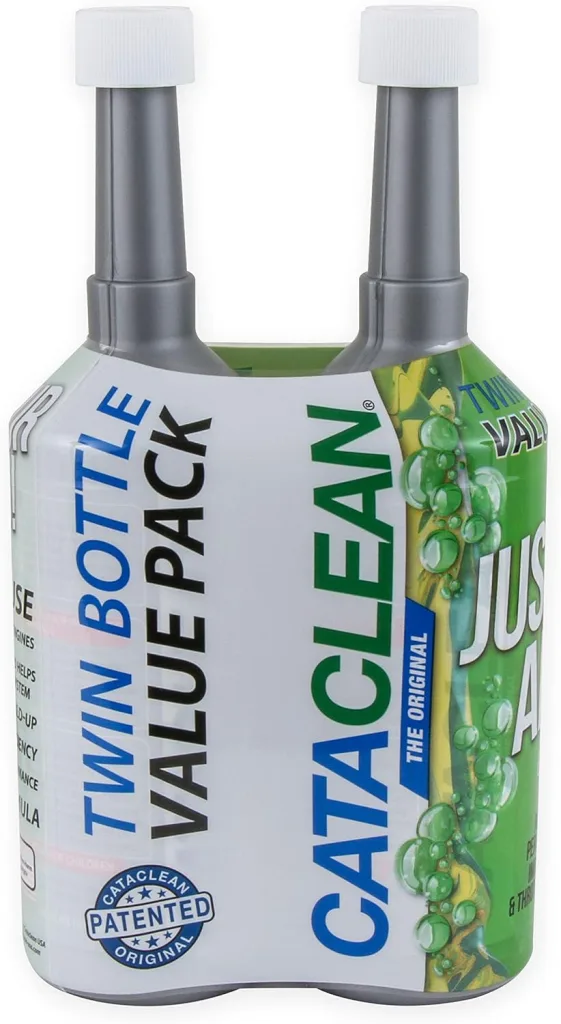
When people search for a fuel and exhaust cleaner, they are usually trying to solve one of a few frustrating problems: a rough idle, reduced fuel economy, sluggish throttle response, a failed emissions test, or a check engine light related to catalyst efficiency. That is why products like Cataclean fuel and exhaust system cleaner, fuel exhaust and emissions system cleaner, and Rislone Cat Complete fuel exhaust and emissions system cleaner have become so popular. They sit in a very specific category of automotive chemicals: they are not ordinary injector cleaners, and they are not miracle bottles that can repair a mechanically failed catalytic converter. They are marketed as system cleaners designed to address carbon buildup and contamination across parts of the fuel, combustion, and exhaust path. Manufacturer descriptions for Cataclean and Rislone both frame these products around cleaning carbon and deposits from components like injectors, oxygen sensors, EGR-related areas, and the catalytic converter itself. (Cataclean)
That distinction matters. A fuel and exhaust system cleaner is best understood as a maintenance or symptom-reduction product, not a hard-parts replacement. If your converter is melted, physically broken, contaminated by severe oil burning, or your engine has an unresolved misfire, no bottle is going to permanently fix that. But if deposits, incomplete combustion, and contamination are contributing to poor performance or marginal emissions behavior, the right cleaner may help. That is why these products keep coming up in searches such as does Cataclean fuel and exhaust system cleaner work and how to use Cataclean fuel and exhaust system cleaner.
For anyone shopping one now, here is the link you provided:
BUY NOW: https://amzn.to/3OKXVdl
What a fuel and exhaust cleaner is actually supposed to do
A true emissions-system cleaner is marketed as more than just a gasoline additive. Basic fuel system cleaners generally target injectors and intake-side deposits. A fuel and exhaust cleaner goes further in its claims. Cataclean describes its product as a cleaner for the fuel and exhaust system and says it targets carbon buildup in areas including valves, injectors, oxygen sensors, the EGR valve, and the catalytic converter. Rislone’s Cat Complete similarly says it is formulated to scrub contaminants, soot, carbon buildup, and oily residue from the injectors, combustion chambers, turbo, EGR, catalytic converter, oxygen sensors, and exhaust system. (Cataclean)
That marketing language lines up with how modern emissions systems work. Vehicles are designed around tightly controlled combustion, sensor feedback, and aftertreatment. EPA guidance explains that emission standards focus on pollutants such as carbon monoxide, hydrocarbons, nitrogen oxides, and particulate matter, while catalytic converters and onboard diagnostics are central parts of that control system. EPA also notes sulfur in gasoline can inhibit catalytic converter effectiveness, which shows how sensitive emission-control systems are to contamination and fuel quality. (US EPA)
In practical terms, when deposits build up or combustion quality worsens, several things can start happening at once. Fuel injectors may not atomize as cleanly. Combustion can become less complete. Sensors can respond to less-than-ideal exhaust chemistry. The catalytic converter may have to work harder. In some cases, the vehicle computer begins to see efficiency readings that edge toward fault thresholds. This is where products like Cataclean and Rislone Cat Complete are positioned: they are sold as cleanup tools for the system before the owner jumps straight to expensive parts replacement. (Rislone)
Why these products are so commonly searched now
The reason cataclean fuel and exhaust system cleaner has strong search interest is simple: catalytic converter-related problems are expensive, and emissions faults are stressful. A modern converter replacement can cost far more than most people want to spend just to “see if it helps.” The same goes for professional diagnosis. When a check engine light comes on and the car still drives, many owners understandably look for the least invasive path first.
Products in this category appeal to drivers dealing with:
- Catalyst-efficiency fault codes
- Slightly rough performance
- Lower-than-normal fuel mileage
- Hesitation or incomplete combustion symptoms
- Emissions-test anxiety
- Preventive maintenance on higher-mileage vehicles
Rislone explicitly markets Cat Complete as helping clean dirty catalytic converters, clear common OBD check engine light codes, help pass emissions testing, and improve overall fuel-system health. Cataclean markets its cleaner around reducing emissions, improving fuel economy, restoring performance, and helping maintain the catalytic converter. (Rislone)
This is also why people often confuse them with “converter repair in a bottle.” That is not the right way to think about them.
What these cleaners can realistically help with
The best-case scenario for a product like this is not magic. It is cleanup. That might sound underwhelming, but cleanup matters in a system where efficiency depends on clean combustion and clean sensor/converter operation.
A good fuel exhaust and emissions system cleaner may help when:
- Deposits are contributing to less efficient combustion
- Injectors are dirty enough to affect fuel delivery
- The converter is contaminated by soot and carbon rather than physically damaged
- The car has seen lots of short trips, poor fuel quality, or long maintenance intervals
- The check engine light is related to marginal efficiency rather than catastrophic failure
You can think of it the same way you think about cleaning a throttle body or intake tract. Cleaning does not rebuild worn hardware, but it can improve the function of parts that are dirty.
That said, there is a line these products cannot cross. If the real issue is an ignition problem, severe oil consumption, coolant entering the combustion chamber, broken substrate in the converter, or a dead oxygen sensor, then a cleaner may do little or nothing. That is why some drivers swear by these products and others say they did not work. The product may not have been the issue. The diagnosis was.
Cataclean fuel and exhaust system cleaner: what it claims
Cataclean positions itself as a cleaner that treats carbon buildup in the fuel and exhaust system. Its product pages state that it can improve fuel economy, reduce emissions, restore performance, and help protect and maintain the catalytic converter, while also cleaning areas including valves, injectors, oxygen sensors, the EGR valve, and the catalytic converter. Cataclean also states on its site that one treatment is added to roughly a quarter tank, about 15 litres, then the vehicle should be driven for around 15 to 20 minutes before refueling. Its FAQ further recommends periodic use every 3,000 miles or 3 months for ongoing maintenance. (Cataclean)
That dosing method is important because it is different from generic “dump it into a full tank” fuel additives. Cataclean is designed to run in a more concentrated treatment ratio before refueling. That concentrated-use pattern is one reason so many people search how to use Cataclean fuel and exhaust system cleaner.
How to use Cataclean fuel and exhaust system cleaner
Based on Cataclean’s official directions, the standard use pattern is straightforward. Add one 500 ml bottle to about a quarter tank of fuel, approximately 15 litres, drive the vehicle for roughly 15 to 20 minutes, and then refuel as needed. Cataclean also recommends repeated maintenance use at regular intervals rather than only using it when the vehicle already has a major problem. (Cataclean)
In real-world terms, the process looks like this:
Step 1: Start with a relatively low fuel level
Do not pour it into a nearly full tank if you want to follow the manufacturer’s intended concentration. The product is meant to be used with roughly a quarter tank.
Step 2: Add the full treatment
Use the bottle size intended for the application. For the standard automotive treatment, Cataclean’s directions refer to a 500 ml dose.
Step 3: Drive the vehicle normally
Drive for at least 15 to 20 minutes so the treated fuel works through the fuel and combustion system. A gentle highway run or sustained mixed driving is usually more meaningful than just idling in a driveway.
Step 4: Refill the tank
After the treatment cycle, refill when needed.
Step 5: Reassess symptoms
If the issue was deposit-related, this is where you would expect improvement in smoothness, response, or emissions readiness. If nothing changes, the vehicle may have an underlying mechanical or sensor fault.
That is the correct answer to how to use Cataclean fuel and exhaust system cleaner according to the brand’s own instructions. (Cataclean)
Does Cataclean fuel and exhaust system cleaner work?
This is the question almost everyone really wants answered.
The honest answer is: it can work in the right situation, but it is not a guaranteed fix for every emissions or converter problem.
Cataclean’s own positioning is that it removes harmful carbon buildup and can improve economy, reduce emissions, and restore performance. Rislone makes similar claims for its Cat Complete cleaner. That means the manufacturers themselves are presenting these as deposit-removal and system-cleanup products, not replacements for failed hard parts. (Cataclean)
So does it work? It can, if:
- Your injectors or combustion system are dirty
- Your converter is loaded with deposits rather than physically destroyed
- Your emissions issue is mild or developing
- The vehicle does not have deeper faults causing the same symptoms
It probably will not work, or will only provide temporary improvement, if:
- The converter substrate is damaged or melted
- The engine is burning oil heavily
- You have a persistent misfire
- There is a vacuum leak, sensor failure, or wiring issue
- The check engine light is caused by something other than deposits and combustion contamination
The most accurate way to frame it is this: Cataclean may help restore performance in a dirty system, but it cannot reverse physical failure.
Rislone Cat Complete fuel exhaust and emissions system cleaner
The other major product in this search category is Rislone Cat Complete fuel exhaust and emissions system cleaner. Rislone markets it very aggressively toward the exact pain points consumers care about: cleaning dirty catalytic converters, addressing common check engine light issues, helping pass emissions testing, and improving fuel-system health. The company’s product information also says the formula removes soot, carbon buildup, contaminants, and oily residue from injectors, combustion chambers, turbo components, the EGR system, catalytic converters, oxygen sensors, and the exhaust system. It also advertises benefits around codes such as P0420 and reduced emissions. (Rislone)
Compared with Cataclean, Rislone Cat Complete is positioned a little more directly as a check-engine-light and emissions-test support product. That does not necessarily make it better or worse. It just means the branding is slightly more diagnostic-problem oriented.
Fuel and exhaust cleaner vs regular fuel system cleaner
A regular injector cleaner and a fuel and exhaust cleaner are not the same category, even if they overlap.
A basic fuel-system cleaner typically focuses on:
- Injectors
- Fuel rail contamination
- Intake-valve deposits in some cases
- Combustion chamber cleanliness
A more emissions-focused product targets or claims to target:
- Injectors
- Combustion quality
- Oxygen sensors
- EGR-related contamination
- Catalytic converter deposits
- Exhaust-side contamination
That difference is why emissions-system cleaners usually cost more than standard injector cleaners. They are marketed as broader, heavier-duty chemical treatments.
Signs a cleaner might be worth trying before bigger repairs
If your vehicle still runs decently and the problem appears moderate rather than catastrophic, trying a reputable cleaner can be a rational first step. It is especially reasonable when:
- The check engine light appeared recently
- The vehicle has high mileage and lots of short-trip driving
- There is no severe misfire
- There is no rattling converter
- Fuel economy has slipped gradually
- You want to attempt a low-cost maintenance intervention before expensive parts replacement
On the other hand, if the vehicle is obviously running badly, consuming oil, overheating, misfiring, or making rattling exhaust noises, a bottle is not where you start. That is when proper diagnosis matters more than chemicals.
What a cleaner cannot fix
This part is critical because too many buyers expect the wrong thing.
A fuel and exhaust system cleaner cannot:
- Rebuild a broken catalytic converter
- Repair a cracked manifold
- Fix an oxygen sensor wiring fault
- Stop oil burning caused by engine wear
- Cure a misfire caused by plugs, coils, or compression loss
- Replace damaged emissions hardware
EPA emissions systems rely on functioning hardware, sensors, diagnostics, and converter efficiency. When the hardware is bad, cleaning chemistry is not a substitute. (US EPA)
How to decide whether Cataclean or Rislone Cat Complete makes more sense
If you are deciding between Cataclean fuel and exhaust system cleaner and Rislone Cat Complete fuel exhaust and emissions system cleaner, the practical answer is to look at your use case.
Choose the Cataclean-style route if you want:
- A known concentrated-treatment process
- A product positioned strongly around fuel economy, emissions reduction, and carbon cleanup
- A maintenance-oriented approach with recurring use guidance
Choose the Rislone-style route if you want:
- A product marketed more directly toward catalyst-efficiency and CEL concerns
- A broader “fuel, exhaust, and emissions” cleaner message
- A formula positioned around passing emissions tests and addressing common code scenarios
Both brands are clearly targeting deposit-related emissions and catalyst-performance issues rather than claiming to physically rebuild damaged parts. (Rislone)
Best practices when using any fuel and exhaust cleaner
If you want the best chance of seeing results, a few rules matter.
First, follow the manufacturer’s directions exactly. More is not always better. Second, use the product in a vehicle that is otherwise mechanically capable of benefiting from it. Third, drive the car long enough after treatment for the system to fully heat-cycle. Catalytic converters do not do their best work on repeated 3-minute trips. Fourth, do not ignore other maintenance. Dirty air filters, bad spark plugs, weak coils, and old oxygen sensors can all contribute to poor emissions performance.
And finally, be realistic. If a product helps, great. If it does nothing, do not keep pouring bottles in while ignoring a deeper engine issue.
Is it worth buying?
For many drivers, yes, as a first-line attempt or preventive treatment.
A quality fuel and exhaust cleaner makes sense when the alternative is jumping immediately to expensive diagnosis or converter replacement without first addressing possible contamination. It is relatively low-risk when used as directed, especially if the vehicle’s symptoms are mild and deposit-related. But it is not a substitute for diagnosis when the problem is severe.
That is the most useful way to think about these products:
- Good for cleanup
- Potentially helpful for mild emissions issues
- Not a replacement for failed parts
- Most effective when used early, not after major failure
Final verdict
The category of fuel and exhaust cleaner exists for a reason. Modern engines and emissions systems are deposit-sensitive, and products like Cataclean fuel and exhaust system cleaner and Rislone Cat Complete fuel exhaust and emissions system cleaner are built around that reality. Official product information from both brands emphasizes carbon and contaminant cleanup across injectors, combustion-related areas, oxygen sensors, EGR-related components, catalytic converters, and the exhaust path. (Rislone)
So, does Cataclean fuel and exhaust system cleaner work? It can, when deposits are the problem. How to use Cataclean fuel and exhaust system cleaner? Use it the way the manufacturer specifies: with roughly a quarter tank, drive it, then refuel. (Cataclean)
If your goal is maintenance, mild symptom reduction, or giving a borderline emissions system a cleanup attempt before spending serious money, this category can be worth trying. If your converter is physically dead or your engine has deeper faults, no bottle will save you.
BUY NOW: https://amzn.to/3OKXVdl
Connect with us


