




Why Do People Put Ducks on Jeeps? 2026 Update
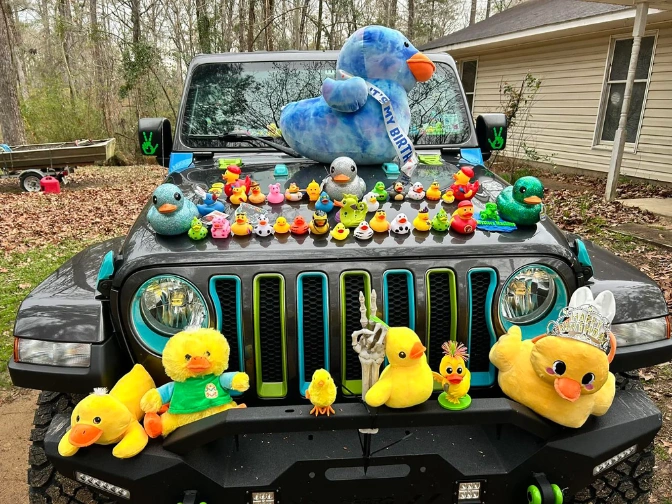
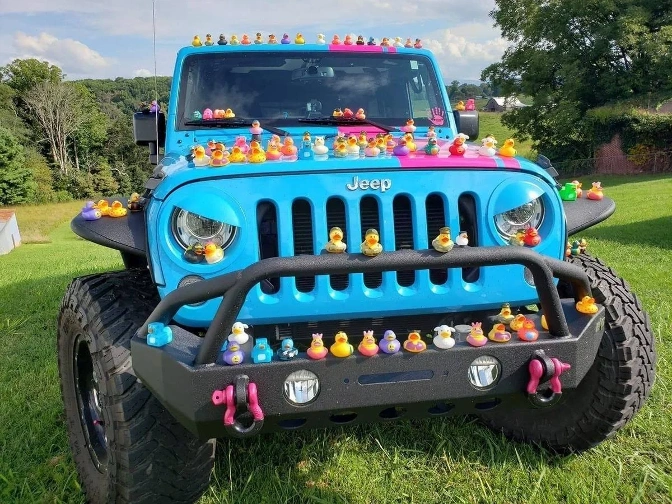
People put rubber ducks on Jeeps because of a friendly tradition called Jeep Ducking or Duck Duck Jeep. It is a small act of kindness where one Jeep owner leaves a rubber duck on another Jeep to say, “Nice Jeep.”
The simple answer is this: a duck on your Jeep means someone liked your Jeep and wanted to make you smile. It is not a warning, insult, prank, or secret code. It is part of Jeep culture.
Jeep’s official ducking page describes ducking as placing a rubber duck on someone else’s Jeep, usually with a kind note like “Love that Jeep” or “You’ve been Ducked.” The goal is simple: spread kindness between people who share the same passion for Jeep vehicles.
What Is Jeep Ducking?
Jeep Ducking is when someone leaves a rubber duck on a Jeep.
The duck is usually placed somewhere easy to see, such as the windshield, door handle, hood, mirror, bumper, or near the wipers. Many ducks come with a small note that says “You’ve been ducked,” “Nice Jeep,” or “Duck Duck Jeep.”
At first, the trend was mostly connected to Jeep Wranglers. By 2026, it has spread across the wider Jeep community, including the Jeep Gladiator, Grand Cherokee, Cherokee, Compass, Renegade, Wagoneer, and Grand Wagoneer.
Still, Wranglers and Gladiators are the most commonly ducked because they have the strongest enthusiast culture.
Where Did Jeep Ducking Start?
The modern Jeep Ducking trend is widely credited to Allison Parliament.
Road & Track reported that Parliament, from Orillia, Ontario, started the now-famous trend in 2020 by placing a rubber duck on another Jeep as a small act of kindness.
The story became popular during the COVID era, when people were looking for simple ways to spread positivity. One rubber duck turned into a global Jeep community tradition.
That is why Jeep Ducking is not just about the duck. It is about the message behind it.
Why Ducks?
Rubber ducks are cheap, bright, fun, and easy to carry.
They also fit the Jeep personality. Jeep owners already have a culture built around waves, trail groups, custom builds, roof-off driving, off-road events, and small community rituals. A rubber duck is playful enough to match that energy.
A duck does not need to be expensive or serious. That is the point. It is a lighthearted way to say, “Your Jeep stood out.”
What Does It Mean If Someone Puts a Duck on Your Jeep?
If someone puts a duck on your Jeep, it usually means they liked your Jeep.
Maybe they liked the color. Maybe they liked the lift, tires, wheels, bumper, lights, decals, roof setup, or overall build. Maybe they just wanted to keep the tradition going.
In most cases, getting ducked means:
Your Jeep caught someone’s attention.
Another Jeep owner appreciated your vehicle.
Someone wanted to spread a positive moment.
You are now part of a Jeep community tradition.
You can keep the duck, display it, or pass it along to another Jeep.
Is Jeep Ducking Still a Thing in 2026?
Yes, Jeep Ducking is still active in 2026.
The trend has moved beyond a viral moment and become part of modern Jeep culture. Jeep owners still bring ducks to meets, trail events, dealerships, parking lots, road trips, and off-road gatherings.
A newer 2026 dealership writeup from Nye Chrysler Dodge Jeep Ram describes Jeep Ducking as a community-driven tradition where Jeep owners leave rubber ducks on other Jeeps as a gesture of kindness and mutual respect.
In other words, it has lasted because it is simple, harmless, and easy to participate in.
Allison Parliament’s Legacy
The 2026 update matters because Jeep Ducking now carries even more meaning.
Allison Parliament passed away in 2024. Road & Track covered her passing and credited her with creating the Jeep Ducking trend that became famous across the Jeep community.
For many Jeep owners, continuing to duck Jeeps is now also a way to honor her original idea: use a small gesture to make someone’s day better.
That is why the trend has not disappeared. It has become part of her legacy.
Is Jeep Ducking Only for Wranglers?
No, Jeep Ducking is not only for Wranglers.
The Wrangler is still the most common model to receive ducks because it is the most recognizable enthusiast Jeep. But many people now duck other Jeep models too.
You may see ducks on:
Jeep Wrangler
Jeep Gladiator
Jeep Grand Cherokee
Jeep Cherokee
Jeep Compass
Jeep Renegade
Jeep Wagoneer
Jeep Grand Wagoneer
Some Jeep owners are selective and only duck Wranglers or Gladiators. Others duck any Jeep they like. There is no official rulebook.
How Do You Duck a Jeep?
Ducking a Jeep is simple.
Buy a small rubber duck, add a friendly note if you want, and place it somewhere visible on another Jeep. The note can say something like “You’ve been ducked,” “Nice Jeep,” or “Love your Jeep.”
The best places to leave a duck are:
Windshield corner
Door handle
Side mirror
Hood edge
Front bumper
Near the wipers
Do not open the vehicle, climb on it, stick anything to the paint, or place the duck where it blocks visibility. Jeep Ducking should be respectful.
What Should a Jeep Ducking Note Say?
A Jeep Ducking note should be short and friendly.
Good examples include:
“You’ve been ducked.”
“Nice Jeep.”
“Love your build.”
“Duck Duck Jeep.”
“Your Jeep made me smile.”
“Pass it on.”
Some owners buy pre-made tags. Others print their own. Some write directly on the duck. The note is optional, but it helps new Jeep owners understand why there is suddenly a rubber duck on their vehicle.
Do You Have to Duck Someone Back?
No. There is no obligation.
If someone ducks your Jeep, you can keep the duck, display it on the dashboard, give it to a passenger, or pass it along to another Jeep. Some people collect every duck they receive. Others prefer to keep the chain moving.
There is no wrong answer as long as the gesture stays positive.
Why Jeep Owners Love Ducking
Jeep owners love ducking because Jeep ownership has always been social.
There is the Jeep Wave. There are trail clubs, Jeep meets, off-road parks, build groups, local cruises, and parking-lot conversations between owners who have never met before.
Jeep Ducking fits that culture perfectly. It gives owners another way to connect without needing a full conversation.
A duck on a Jeep says, “I noticed your Jeep, and I get it.”
Is Jeep Ducking Official?
Jeep Ducking started with owners, not as a corporate campaign.
That is part of why it feels authentic. It came from the community first. But Jeep has since acknowledged the tradition, and the official Jeep ducking tradition page explains it as an act of kindness between Jeep fans.
So while Jeep Ducking is not a factory feature or official requirement, it is now recognized as part of Jeep culture.
Is It Safe to Put Ducks on Jeeps?
Yes, as long as you use common sense.
Do not place the duck somewhere that could block the driver’s view. Do not put it where it could fall into traffic. Do not attach it with tape, glue, magnets, or anything that could damage paint.
A rubber duck on the windshield corner or door handle is usually fine. Touch the vehicle as little as possible and leave it where the owner will notice it safely.
Should You Duck Non-Jeep Vehicles?
Traditionally, Jeep Ducking is for Jeeps.
Some similar trends have appeared in other car communities, but Duck Duck Jeep belongs to Jeep culture. If you want to keep the original spirit, duck Jeeps only.
That said, the point of the trend is kindness. The best rule is to be respectful, harmless, and positive.
What If You Do Not Like Ducks on Your Jeep?
You do not have to participate.
Some Jeep owners love collecting ducks. Others do not care for the trend. Both are fine. If you get ducked and do not want the duck, you can remove it, give it away, or pass it along.
Jeep Ducking should never feel forced. It is supposed to be fun.
Why Jeep Ducking Became So Big
Jeep Ducking became popular because it is easy to understand.
It does not require money, status, or a heavily modified Jeep. A stock Wrangler can get ducked. A lifted Gladiator can get ducked. A colorful Compass can get ducked. A clean Grand Cherokee can get ducked.
The tradition works because it makes people feel seen.
For shoppers who want to join the Jeep community, browsing used Jeep inventory is a practical way to compare Wranglers, Gladiators, Grand Cherokees, and other Jeep models. If you want a newer Jeep with warranty coverage, check current new Jeep inventory.
FAQs About Jeep Ducking
Why do people put ducks on Jeeps?
People put ducks on Jeeps to compliment the vehicle, spread positivity, and connect with other Jeep owners.
What does it mean when someone puts a duck on your Jeep?
It usually means someone liked your Jeep. It is a friendly gesture from another Jeep fan.
Who started Jeep Ducking?
The modern Jeep Ducking movement is widely credited to Allison Parliament, who started it in 2020 by placing a rubber duck on another Jeep as an act of kindness.
Is Jeep Ducking still popular in 2026?
Yes. Jeep Ducking is still active in 2026 and remains part of Jeep-owner culture.
Is Jeep Ducking only for Wranglers?
No. Wranglers are the most common, but many Jeep owners also duck Gladiators, Grand Cherokees, Cherokees, Compasses, Renegades, Wagoneers, and other Jeep models.
Do I have to pass the duck along?
No. You can keep it, display it, or pass it along. There is no strict rule.
Is Jeep Ducking official?
It started as an owner-driven tradition, but Jeep has acknowledged it as part of Jeep community culture.
Final Thoughts: Jeep Ducking Is About Kindness, Not Just Ducks
People put ducks on Jeeps because it is a simple way to spread kindness inside the Jeep community.
What started with Allison Parliament in 2020 has grown into a worldwide tradition. By 2026, Jeep Ducking is still going because it gives owners a fun way to recognize each other, celebrate unique builds, and keep Jeep culture friendly.
A rubber duck on your Jeep means someone noticed your ride and wanted to make your day better. That is the whole point.
Connect with us


