





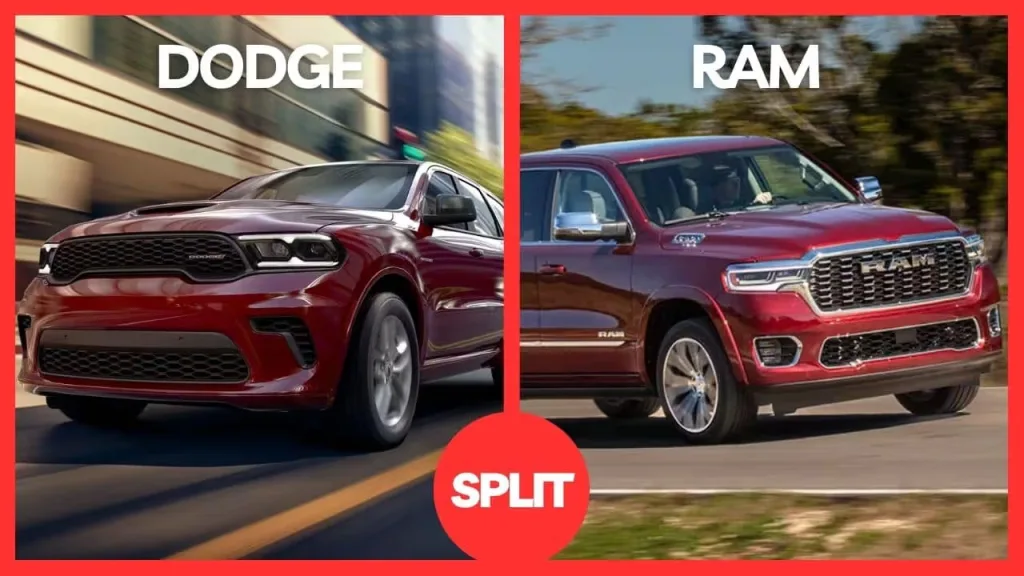
Short answer: Dodge and Ram officially split in 2010.
That’s the year Chrysler separated its brands, making Ram a standalone truck division and removing trucks entirely from Dodge’s lineup. From that point forward, Dodge stopped making trucks, and Ram became the brand responsible for pickups, heavy-duty trucks, and commercial vehicles.
If you’re looking for a clean, definitive date:
Model year 2010 is when the split became real in showrooms, branding, and product lines.
But the story behind that date matters, because this wasn’t a cosmetic name change. It was a structural shift that reshaped how Chrysler, and later Stellantis, organized its entire vehicle portfolio.
The Official Split: 2010
In 2010, Chrysler formally separated Dodge and Ram into two distinct brands.
Before that:
- Trucks were sold as Dodge Ram
- Ram existed as a model name, not a brand
- Dodge handled everything: cars, minivans, SUVs, trucks, performance, fleet, and commercial vehicles
After 2010:
- Dodge became a car and performance brand
- Ram became a truck and commercial brand
- All pickups and commercial vehicles moved under Ram branding
- Dodge stopped producing trucks entirely
From that moment on, the Dodge Ram name ceased to exist as a product line.
The Dodge Ram 1500 became the Ram 1500.
The Dodge Ram 2500 became the Ram 2500.
The Dodge Ram 3500 became the Ram 3500.
Same trucks. Same factories. Same customers.
Different brand structure.
Why Chrysler Made the Split
This wasn’t about marketing language. It was about business clarity.
By the late 2000s, Dodge had become a brand with no clear identity. It was trying to serve too many markets at once:
- Muscle cars
- Family sedans
- Minivans
- SUVs
- Pickup trucks
- Commercial vehicles
- Fleet buyers
- Performance buyers
Everything lived under one badge. That created internal competition for resources, confused brand identity, and diluted long-term strategy.
Trucks, in particular, operate in a completely different business ecosystem than passenger cars:
- Different buyer psychology
- Different ownership cycles
- Different financing structures
- Different fleet relationships
- Different durability expectations
- Different regulatory pressures
- Different electrification challenges
- Different profit models
Chrysler’s solution was structural separation.
Dodge would focus on performance, cars, and lifestyle vehicles.
Ram would focus on trucks, towing, payload, fleet, and commercial markets.
Two brands. Two strategies. Two identities.
What Changed After 2010
Once the split happened, it wasn’t subtle.
Branding changed immediately:
- Dodge badges disappeared from trucks
- Ram branding replaced Dodge branding
- Tailgates, grilles, marketing materials all shifted to RAM
- Dealer signage changed
- Product naming changed
- Corporate structures changed
Product planning changed too:
- Ram development became truck-first, not car-first
- Dodge engineering became performance-first
- Separate marketing strategies were created
- Separate product roadmaps were developed
- Separate long-term electrification plans were built
Ram became a dedicated truck manufacturer in everything but legal corporate ownership.
Why the Dodge Ram Name Didn’t Disappear From Culture
Even though the brand split in 2010, the name never left public language.
People still say “Dodge Ram” because:
1. Decades of brand memory
The Dodge Ram badge existed for generations. It built real trust and recognition long before brand restructuring became a thing people followed.
2. Millions of legacy trucks still on the road
Older Dodge Rams are still everywhere. You see the badge daily.
3. Language inertia
People don’t update vocabulary when companies restructure.
4. Dealership overlap
Dodge, Jeep, and Ram often operate under the same dealership groups, which blurs brand separation for consumers.
5. No functional shock
The trucks didn’t radically change overnight, so the shift didn’t feel real-world disruptive.
So the brand changed.
The language didn’t.
That’s why people still ask:
- “When did Dodge and Ram split?”
- “Is Ram still Dodge?”
- “Why do people still say Dodge Ram?”
- “Did Dodge stop making trucks?”
The Business Impact of the Split
From an industry standpoint, the Dodge–Ram split was a smart strategic move.
It allowed Ram to become a full-category truck brand, not just a pickup line inside a car company.
That changed how Ram operates today:
- Product development is truck-centered
- Platform investment is utility-driven
- Commercial strategy is centralized
- Fleet relationships are brand-specific
- Engineering priorities focus on durability, not performance
- Electrification strategy is utility-first, not lifestyle-first
- Profit models are built around long-term ownership
Ram now competes directly with Ford and GM as a standalone truck brand, not as a division inside a mixed vehicle portfolio.
This structural clarity is why Ram has been able to build a coherent truck identity over the last decade and a half.
What the Split Didn’t Change
Despite the branding shift, several things stayed the same:
- Same factories
- Same workforce
- Same supplier networks
- Same production platforms
- Same core truck architecture
- Same customer base
- Same market segments
- Same use cases
The trucks didn’t change category.
The buyers didn’t change profile.
The market didn’t change structure.
Only the brand hierarchy changed.
The Clean Timeline
Here’s the simple, accurate timeline:
Before 2010:
Trucks sold as Dodge Ram
Brand: Dodge
2010 onward:
Trucks sold as Ram
Brand: Ram (standalone)
Dodge no longer sells trucks.
Ram no longer sells cars.
This structure still exists today.
Why This Still Matters in 2026
Fifteen years later, the split still shapes the market.
Ram is positioned as a truck-only brand.
Dodge is positioned as a performance brand.
Jeep is positioned as an off-road/SUV brand.
Each has a defined role inside the corporate structure.
That clarity helps with:
- Product investment decisions
- Brand messaging
- Market positioning
- Long-term electrification planning
- Regulatory compliance strategies
- Platform development
- Commercial market planning
This is why Ram today feels like a truck company — not a division inside a car company.
The Cultural Reality
Even with all that structure, the public still uses the old name.
People say “Dodge Ram” for the same reason people say:
- “Chevy truck” instead of Chevrolet Silverado
- “Beamer” instead of BMW
- “Benz” instead of Mercedes-Benz
- “Caddy” instead of Cadillac
Brand language evolves socially, not corporately.
The Dodge Ram name lived in culture long enough that it became identity language, not just branding.
That’s why it never fully disappeared.
The Direct Answer
So if someone asks:
“When did Dodge and Ram split?”
The factual answer is:
2010.
That’s when:
- Dodge stopped making trucks
- Ram became its own brand
- The Dodge Ram name ended
- Ram Trucks began operating independently
- The brand structure changed permanently
The Bigger Meaning of the Split
This wasn’t just a rebrand.
It was a focus decision.
Brands that try to be everything usually lose identity.
Brands that specialize usually win categories.
Dodge specialized in performance.
Ram specialized in trucks.
The split clarified both brands instead of weakening them.
And that’s why the structure still exists 15 years later.
Final Takeaway
Dodge and Ram officially split in 2010.
Since then:
- Dodge has not sold trucks
- Ram has not sold cars
- The brands have operated independently
- Ram has functioned as a standalone truck manufacturer
- The Dodge Ram name has existed only in cultural memory
The name changed.
The badge changed.
The corporate structure changed.
But the trucks stayed right where they’ve always been:
On the road.
On job sites.
In fleets.
In driveways.
In daily life.
Different brand.
Same category.
Same purpose.
That’s the real story behind the Dodge–Ram split.
Connect with us


