





If you own a modern vehicle with an Active Fuel Management (AFM) system, you may have heard of AFM disablers, devices that are used to alter the way your engine operates. But what exactly is an AFM system, what does an AFM disabler do, and why would you want to use one? This article will provide an in-depth explanation of AFM systems, how AFM disablers work, the pros and cons of using one, and much more.
What is Active Fuel Management (AFM)?
Active Fuel Management (AFM) is a technology developed by General Motors (GM) to improve fuel efficiency in V8 engines. It works by deactivating half of the engine’s cylinders when the vehicle is cruising at low speeds or under light load conditions, such as highway driving. The system can seamlessly switch between running on all eight cylinders or only four, depending on the demands of the vehicle.
This system aims to save fuel by reducing engine power when full power isn’t needed. However, while AFM can lead to significant fuel savings, some drivers find it less than ideal due to the sometimes noticeable transition between operating on fewer cylinders. This is where AFM disablers come into play.
What is an AFM Disabler?
An AFM disabler is a device designed to prevent the AFM system from deactivating any of the engine’s cylinders. By doing this, it ensures that the engine always runs on all its cylinders, providing consistent power and performance at all times. The device plugs into the vehicle’s OBD-II (On-Board Diagnostics) port, and once activated, it overrides the AFM system.
The primary purpose of an AFM disabler is to eliminate the lag or hesitation that occurs when the engine switches between a four-cylinder and an eight-cylinder operation. Many drivers find this transition to be noticeable and, at times, annoying, especially when accelerating or towing.
How Does an AFM Disabler Work?
AFM disablers work by interrupting the signal that controls the deactivation of the engine’s cylinders. In most vehicles with AFM, the system is controlled by the vehicle’s Engine Control Unit (ECU). The AFM disabler sends a signal to the ECU, telling it to keep all cylinders active, preventing it from switching between operating on four or eight cylinders.
Installing an AFM disabler is usually a simple process. The device is typically designed to plug into the OBD-II port located beneath the dashboard. Once connected, the device is activated, and the vehicle will no longer switch between running on fewer cylinders. Many AFM disablers are designed to be easy to remove, allowing you to return the vehicle to its factory settings if needed.
Why Do People Use AFM Disablers?
There are several reasons why drivers may choose to install an AFM disabler in their vehicles:
- Improved Performance and Power Delivery: AFM systems can sometimes cause a noticeable lag or hesitation when the engine transitions between operating on fewer cylinders. This can be particularly frustrating during acceleration or when towing heavy loads. By disabling the AFM system, the engine runs on all cylinders at all times, providing a more consistent and responsive driving experience.
- Enhanced Throttle Response: The transition between four-cylinder and eight-cylinder operation can also affect throttle response. When AFM is disabled, the vehicle has quicker throttle response and smoother acceleration, which some drivers find more enjoyable, particularly in performance or towing situations.
- Better Sound Quality: Some drivers prefer the more robust sound that comes from a full V8 engine firing on all cylinders. AFM can sometimes cause the engine to sound quieter or more muffled when it’s running on fewer cylinders. Disabling the system allows the engine to produce a fuller, more aggressive exhaust note.
- Improved Towing Performance: When towing heavy loads, AFM can cause the engine to switch between cylinders, which can result in jerky performance. Keeping the engine running on all cylinders helps maintain consistent power, improving towing capability and driving comfort.
Benefits of Using an AFM Disabler
1. Consistent Power Delivery:
One of the main reasons people use AFM disablers is for the consistent power delivery they provide. When AFM is disabled, your engine runs on all cylinders at all times. This results in smoother and more immediate acceleration, which can be especially important for those who drive in situations that require steady power, such as when towing or merging onto highways.
2. Enhanced Throttle Response:
Another benefit of using an AFM disabler is enhanced throttle response. With AFM active, there may be a slight delay in throttle response due to the engine switching between running on all cylinders and only a few. Disabling AFM eliminates this delay, making the vehicle feel more responsive to the driver’s inputs.
3. Improved Engine Sound:
The sound of a V8 engine is often a point of pride for car enthusiasts. Many drivers feel that AFM makes the engine sound less powerful or aggressive when it’s running on only four cylinders. By disabling the AFM system, drivers can enjoy a more constant, full-throttle engine sound at all times.
4. Increased Towing and Hauling Capacity:
When towing a trailer or carrying a heavy load, having all cylinders firing ensures that the engine can maintain its power output, even under stress. AFM can cause a decrease in performance when it activates or deactivates cylinders, which can be problematic in high-demand situations. With an AFM disabler, the engine operates at full capacity, offering more towing and hauling power.
Potential Drawbacks of AFM Disablers
While AFM disablers can provide significant benefits, there are some potential drawbacks to consider:
1. Reduced Fuel Efficiency:
The primary function of the AFM system is to improve fuel efficiency by deactivating cylinders when they are not needed. By disabling AFM, your vehicle will always run on all cylinders, which could lead to reduced fuel economy. While this may not be a major concern for some drivers, those who prioritize fuel savings may want to reconsider installing an AFM disabler.
2. Possible Warranty Issues:
Installing an AFM disabler may void the manufacturer’s warranty in some cases. This is particularly true for vehicles that are still under warranty, as modifying the engine management system may cause the manufacturer to refuse warranty claims. It’s always a good idea to check the terms of your vehicle’s warranty before installing an AFM disabler.
3. Battery Drain:
Some AFM disablers can drain your vehicle’s battery if left plugged in for extended periods of time. This is especially true for devices that don’t have an auto-off function. If you plan to leave your car parked for long periods, it may be necessary to unplug the disabler to avoid draining the battery.
Popular AFM Disablers
There are several AFM disablers on the market, each offering its own set of features. Some of the most popular options include:
1. Range Technology Active Fuel Management Disabler:
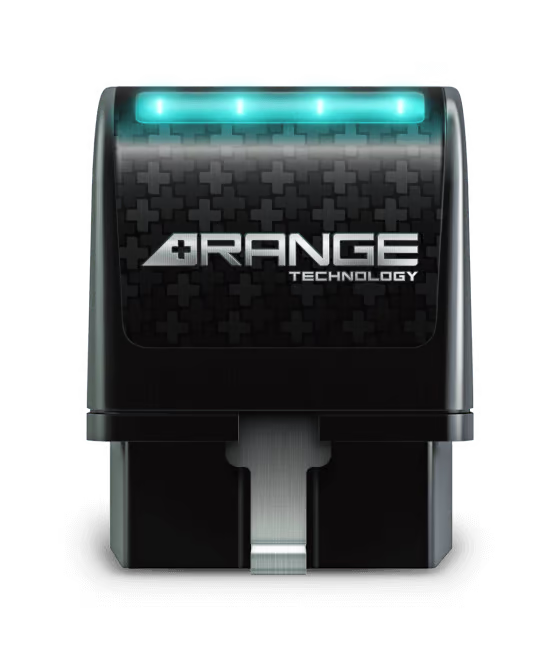
The Range Technology AFM Disabler is one of the most popular devices on the market. It’s a plug-and-play device that easily connects to the OBD-II port and effectively disables the AFM system. It’s known for being easy to install and remove, allowing users to return their vehicle to its factory settings when needed.
2. DiabloSport S1000 Sprint Car Fuel Management Module:
This module is another widely used AFM disabler. It works by interrupting the signal that controls the deactivation of cylinders. Like the Range Technology device, the DiabloSport unit is easy to install and can be removed if desired.
3. TunerTech AFM Disabler:
The TunerTech AFM Disabler is another option that helps prevent the engine from switching between four-cylinder and eight-cylinder operation. It is also easy to install and remove and is known for being an affordable option.
Should You Use an AFM Disabler?
Whether or not you should install an AFM disabler depends on your individual needs and preferences. If you find the transition between four-cylinder and eight-cylinder operation jarring or undesirable, an AFM disabler can offer a smoother driving experience by maintaining full-cylinder power. However, it’s important to consider the potential drawbacks, such as decreased fuel efficiency and possible warranty implications.
If you are primarily concerned with fuel efficiency, or if you drive a vehicle under warranty, it might be best to leave the AFM system intact. On the other hand, if you prioritize performance and a more consistent driving experience, an AFM disabler may be the right choice for you.
Conclusion
AFM disablers are a useful tool for those who want to maintain consistent engine performance by disabling the Active Fuel Management system. They offer benefits such as improved power delivery, throttle response, and towing capabilities. However, they come with some potential drawbacks, such as reduced fuel efficiency and possible warranty concerns.
Before installing an AFM disabler, it’s essential to weigh the pros and cons and consider your specific driving needs. If you’re unsure, it’s always a good idea to consult a mechanic or the vehicle manufacturer to make sure the device is compatible with your car and won’t interfere with your vehicle’s performance or warranty.
Whether you decide to install an AFM disabler or not, it’s important to be informed about how your vehicle’s engine management system works and how it affects your driving experience.
Connect with us


