




What Does a Jeep Wagoneer Cost?

The Jeep Wagoneer has made a powerful return to the full-size SUV market, combining luxury, performance, and off-road capability. If you’re considering buying a Jeep Wagoneer, understanding the cost and the value you’re getting for your investment is crucial. This article will break down the pricing structure of the Jeep Wagoneer, covering its various trims, options, and factors that can influence the overall price.
1. Base Price of the Jeep Wagoneer
The base price of the 2024 Jeep Wagoneer starts around $63,595 for the Series I model. This entry-level trim still offers a host of premium features, including a spacious three-row seating layout, advanced safety technologies, and a powerful 5.7-liter V8 engine with eTorque mild-hybrid technology.
For a luxury SUV, the Wagoneer’s starting price is competitive, especially considering its size and range of features. However, depending on the trim level and additional packages, the price can rise significantly.

2. Jeep Wagoneer Trim Levels and Pricing
The Wagoneer is available in several trims, each offering varying levels of luxury, technology, and performance enhancements. Below are the key trim levels and their approximate starting prices:
- Wagoneer Series I: $63,595
- Wagoneer Series II: $69,990
- Wagoneer Series II Carbide: $72,410
- Wagoneer Series III: $76,405
Each trim builds on the previous one by adding advanced technology, enhanced materials, and luxury features. The higher you go in the trim lineup, the more features you get, but this comes with a higher price tag.
3. Key Features by Trim Level
a. Wagoneer Series I
Starting at $63,595, the Series I offers standard features like:
- 5.7L V8 engine with 392 horsepower
- Three-row seating for up to eight passengers
- Uconnect 5 system with a 10.1-inch touchscreen
- Adaptive cruise control and active lane management
This trim is perfect for those looking for a powerful, well-equipped family SUV without the additional luxury add-ons.
b. Wagoneer Series II
The Series II starts at $69,990 and adds a few more premium features:
- Available 22-inch polished wheels
- Nappa leather-trimmed seating
- Heated and ventilated front seats
- Wireless charging pad
This model caters to buyers seeking a bit more luxury and comfort for long drives and daily commutes.
c. Wagoneer Series II Carbide
Priced at $72,410, the Series II Carbide takes things further with:
- Unique blacked-out exterior design elements
- Panoramic sunroof
- McIntosh® premium audio system with 19 speakers
This trim offers an upgraded appearance and entertainment experience, making it stand out on the road.
d. Wagoneer Series III
At $76,405, the Series III is the top-tier trim, adding features like:
- Active Drive Assist
- Available Head-Up Display
- 360-degree Surround View Camera
- 22-inch wheels with premium finishes
For those who want the ultimate in luxury, safety, and convenience, the Series III is the most premium offering in the Wagoneer lineup.
4. Optional Packages and Add-Ons
In addition to the trim levels, the cost of a Jeep Wagoneer can increase with optional packages and features. These packages allow you to customize the Wagoneer to suit your needs, but they can also push the price higher.
a. Advanced All-Terrain Package
For those who plan to take their Wagoneer off the beaten path, this package includes features like skid plates, a two-speed transfer case, and an electronic limited-slip rear differential. Adding this package can cost around $2,295 but is essential for off-road enthusiasts.
b. Premium Group Package
Available on higher trims, this package adds ventilated second-row seats, upgraded leather upholstery, and premium entertainment options. This can add about $4,495 to the overall price, depending on the specific model.
c. Technology Package
For tech lovers, this package offers the latest in driver-assistance features, including night vision with pedestrian and animal detection and enhanced safety technologies. This package typically costs between $2,000 and $3,000.
5. Additional Costs: Taxes, Fees, and Dealer Markups
When calculating the total cost of a Jeep Wagoneer, it’s important to factor in additional fees like destination charges, taxes, and registration fees. Destination charges alone can add around $2,000 to the price.
Dealers may also add a markup depending on demand in your area. In regions where full-size SUVs like the Wagoneer are highly sought after, the final price could exceed the manufacturer’s suggested retail price (MSRP).
6. Leasing vs. Financing a Wagoneer
For buyers interested in leasing or financing a Wagoneer, dealerships often offer various promotions, such as low-interest financing or lease deals. Lease prices can start around $799 per month, depending on your location, the dealership, and the specific model. Financing rates will vary based on credit score and down payment, so it’s best to check with your local dealer for exact terms.
Leasing a Wagoneer can be a more affordable short-term option, but financing allows you to own the vehicle outright after completing your loan payments. For those who prefer to upgrade vehicles frequently, leasing may be a better fit, while long-term owners may benefit more from financing.
7. Conclusion: Is the Jeep Wagoneer Worth the Cost?
The Jeep Wagoneer offers a blend of ruggedness, luxury, and advanced technology that justifies its price. Starting at around $63,595 for the base model and reaching over $76,000 for higher trims, the Wagoneer competes with other full-size luxury SUVs, offering comparable features at a competitive price point.
If you’re looking for a full-size SUV that can handle both off-road adventures and provide a first-class family driving experience, the Jeep Wagoneer delivers excellent value for its cost. The range of trims and customizable options allow buyers to tailor the Wagoneer to fit their lifestyle and needs, whether you’re seeking a luxury family vehicle or a high-performance off-road machine.
Q: What is the starting price of the Jeep Wagoneer?
A: The Jeep Wagoneer starts at approximately $63,595 for the base Series I trim. This model comes with a robust 5.7L V8 engine, three-row seating, and a variety of modern tech features.
Q: How much does the fully-loaded Jeep Wagoneer cost?
A: A fully-loaded Jeep Wagoneer, such as the Series III with added options like the Advanced All-Terrain Package, can cost upwards of $80,000 or more, depending on the optional features and customizations you select.
Q: Are there different trim levels, and how do they affect the price?
A: Yes, the Wagoneer comes in several trim levels, including the Series I, Series II, Series II Carbide, and Series III. Prices increase with each trim due to added luxury, technology, and performance features. For example, the Series II starts at around $69,990, while the Series III starts at $76,405.
Q: What optional packages are available for the Jeep Wagoneer, and how do they impact the price?
A: The Jeep Wagoneer offers several optional packages, including the Advanced All-Terrain Package, which enhances off-road capabilities and can add around $2,295. Other packages like the Technology Package or Premium Group Package can add anywhere from $2,000 to $4,495 to the overall cost, depending on the model.
Q: How much should I expect to pay in additional fees when purchasing a Jeep Wagoneer?
A: In addition to the base price, expect to pay for destination fees (around $2,000), taxes, and registration fees. Some dealers may also include a markup based on demand, which could further increase the price in high-demand areas.
Q: Can I lease a Jeep Wagoneer, and how much would it cost?
A: Yes, leasing is an option. Lease deals for the Wagoneer typically start around $799 per month, depending on the location and specific terms. Leasing is often more affordable in the short term compared to buying outright.
Q: Does the Jeep Wagoneer hold its value over time?
A: The Jeep Wagoneer is expected to retain a good portion of its value due to its luxury appeal, performance, and the strong reputation of Jeep’s SUV lineup. However, depreciation rates can vary depending on market conditions and how well the vehicle is maintained.

How Long Do Jeep Rubicon Last?
The Jeep Wrangler Rubicon is one of the most iconic and rugged off-road vehicles on the market, built to endure extreme terrains and challenging conditions. If you’re considering a Jeep Rubicon, one of the top questions on your mind might be, “How long does a Jeep Rubicon last?” The good news is that with proper care and maintenance, the Rubicon can last for a very long time. This article will explore factors that contribute to the longevity of the Jeep Rubicon and what you can do to maximize its lifespan.
1. Average Lifespan of a Jeep Rubicon
A well-maintained Jeep Wrangler Rubicon can last between 200,000 and 400,000 miles. This impressive lifespan can equate to 15 to 20 years or more, depending on driving habits, terrain, and regular maintenance. Jeep Wranglers, including the Rubicon model, are known for their durability and toughness, which is why many owners find their vehicles lasting decades.
2. Key Factors That Influence the Lifespan of a Rubicon
Several factors affect how long a Jeep Rubicon will last, including how it’s driven, maintained, and the types of conditions it encounters.
a. Driving Conditions
The Rubicon is specifically built for off-roading, and its design allows it to handle rough terrains like rocky trails, mud, sand, and snow. However, frequent and aggressive off-roading can wear down parts faster than regular on-road driving. That being said, if used mostly for highway and city driving, a Rubicon may experience less wear and tear, extending its longevity.
b. Maintenance Routine
Regular maintenance is crucial for keeping any vehicle running smoothly, and the Rubicon is no exception. Timely oil changes, tire rotations, brake checks, and fluid top-offs can help prevent major issues down the road. Many Jeep owners report their Wranglers lasting well over 250,000 miles by simply adhering to a proper maintenance schedule.
c. Quality of Parts and Repairs
Jeep Rubicons are built with high-quality, rugged parts, but over time, wear and tear will occur. Choosing high-quality OEM (Original Equipment Manufacturer) parts for repairs and replacements can help maintain the longevity of your Rubicon. Low-quality or cheaper parts may save money in the short term but could lead to quicker deterioration.
d. Driving Habits
Aggressive driving, such as frequent hard acceleration, abrupt braking, and taking sharp turns at high speeds, can wear out your Rubicon’s engine and other components faster. If you drive with care and handle your Jeep responsibly, it can last significantly longer.
e. Weather Conditions
Weather can also play a role in how long your Jeep Rubicon lasts. In regions with extreme cold, ice, and road salt, rust can form on the frame and components if not properly cared for. Hot climates can cause excessive wear on certain engine components. Regularly washing your vehicle and applying rust protection can prevent corrosion and extend the life of your Rubicon.
3. Common Wear and Tear Issues to Look Out For
While the Rubicon is a robust vehicle, certain components are more prone to wear and tear, especially if you’re frequently off-roading:
a. Suspension and Shocks
Given the Rubicon’s off-road capabilities, its suspension and shocks may experience more wear than typical vehicles. Keeping an eye on these components and replacing them when necessary can help maintain your Jeep’s performance.
b. Tires
The Rubicon comes with aggressive, off-road tires, which can wear down faster than regular street tires. Rotating your tires frequently and checking the tire pressure regularly will ensure they wear evenly and last longer.
c. Brakes
Off-road driving can be hard on brakes, especially when navigating steep terrain. Regularly checking brake pads and replacing them as needed is essential for safe driving and extending the vehicle’s life.
4. What Jeep Owners Say About Longevity
Many Jeep Rubicon owners report driving their vehicles well beyond 200,000 miles, and some even claim to have reached the 300,000-mile mark. Wranglers, in general, are known for being tough, long-lasting vehicles, and the Rubicon is no exception. Many owners take pride in their vehicles and invest time and effort in maintaining them, which is why Jeep Wranglers, including the Rubicon, often outlast other SUVs.
5. Tips for Maximizing the Lifespan of Your Jeep Rubicon
Here are some practical tips to help ensure your Jeep Rubicon stays in great shape for years to come:
a. Regular Oil Changes
Changing your oil every 3,000 to 5,000 miles is key to keeping your engine running smoothly. Clean oil reduces friction and prevents overheating.
b. Monitor Fluid Levels
Keep an eye on coolant, brake fluid, and transmission fluid levels. Low fluid levels can lead to engine overheating or other mechanical failures.
c. Rotate and Balance Tires
Off-road driving can cause uneven tire wear, so rotating and balancing your tires every 5,000 to 7,000 miles is important for maintaining traction and extending tire life.
d. Check and Replace Filters
Regularly replacing air and fuel filters can help improve engine performance and fuel efficiency. Clean filters allow your engine to “breathe” better.
e. Rust Prevention
If you live in a region where road salt is used during winter, make sure to wash your Rubicon frequently to prevent rust. Applying an underbody coating can also help protect against corrosion.
f. Tune-ups and Inspections
Scheduling regular tune-ups and inspections with a qualified mechanic will help catch minor issues before they become major problems.
6. Conclusion: How Long Can You Expect a Jeep Rubicon to Last?
With proper care, maintenance, and responsible driving habits, a Jeep Rubicon can last anywhere from 200,000 to 400,000 miles, potentially even longer. Its reputation for durability and off-road capability means that this vehicle is built to endure tough conditions while offering longevity that few other SUVs can match. Whether you’re using it for daily driving or tackling the roughest off-road trails, the Jeep Rubicon is designed to go the distance.
Investing in regular maintenance, high-quality parts, and mindful driving will ensure that your Jeep Rubicon remains a reliable and capable vehicle for many years to come.
Is the Jeep Wrangler a Good Choice?

Is the Jeep Wrangler a Good Choice?
The Jeep Wrangler is a name synonymous with rugged off-road capability and adventurous spirit. Since its inception, it has carved out a niche for itself as the go-to vehicle for outdoor enthusiasts and those seeking a versatile SUV that can handle both urban and off-road environments. But is the Jeep Wrangler a good choice for you? Let’s dive into the factors that make the Wrangler a compelling option and some considerations to keep in mind.
1. Iconic Design and Heritage
The Jeep Wrangler’s design is a direct homage to its military roots. Its boxy shape, round headlights, and signature seven-slot grille make it instantly recognizable. This iconic look has been a staple of the Wrangler since its military predecessor, the Willys MB, which was used during World War II. For many, the Wrangler’s design isn’t just about aesthetics; it’s a symbol of adventure and freedom.
2. Unmatched Off-Road Capability
One of the primary reasons people choose the Jeep Wrangler is its legendary off-road capability. The Wrangler is built to tackle challenging terrains with features like:
- 4WD Systems: The Wrangler comes with various four-wheel-drive systems, including the Command-Trac and Rock-Trac, which are designed for different levels of off-road prowess.
- Solid Axles: Front and rear solid axles contribute to the Wrangler’s durability and ability to handle rough trails.
- High Ground Clearance: The Wrangler’s generous ground clearance helps it clear obstacles and navigate uneven terrain.
- Trail Rated Badge: Many Wranglers come with the Trail Rated badge, signifying their ability to handle off-road challenges like traction, ground clearance, maneuverability, and water fording.
Whether you’re planning a cross-country adventure or simply enjoy weekend trail rides, the Wrangler is equipped to handle it.
3. Customization Options
The Jeep Wrangler stands out for its extensive customization options. From different trims to a plethora of aftermarket parts, you can tailor the Wrangler to suit your personal style and needs. Popular customization options include:
- Removable Doors and Roof: The Wrangler’s design allows for the removal of both doors and the roof, giving you an open-air experience that few other SUVs can offer.
- Aftermarket Accessories: A vast array of aftermarket accessories lets you enhance your Wrangler’s off-road capability, style, and functionality, including lift kits, winches, and custom wheels.
- Trim Levels: Various trims like the Sport, Sahara, and Rubicon offer different levels of luxury and performance features, so you can choose a model that fits your lifestyle.
4. Interior Comfort and Technology
While the Wrangler is primarily known for its off-road prowess, it has also made strides in interior comfort and technology. Recent models come with:
- Modern Infotainment Systems: The latest Uconnect system with a touchscreen interface, smartphone integration, and available navigation keeps you connected on the go.
- Comfort Features: Air conditioning, heated seats, and premium upholstery options are available to enhance comfort during daily drives.
- Cargo Space: Despite its compact exterior, the Wrangler offers a reasonable amount of cargo space for gear and supplies.
However, it’s worth noting that the Wrangler’s ride quality and noise levels can be less refined compared to other SUVs, given its off-road focus.
5. Performance and Engine Options
The Jeep Wrangler offers several engine choices, catering to different performance needs:
- 3.6L V6 Engine: The standard engine option delivers a balance of power and efficiency, making it suitable for most driving conditions.
- 2.0L Turbocharged 4-Cylinder: This engine provides improved fuel efficiency and is ideal for those who prioritize economy without sacrificing too much power.
- 3.0L EcoDiesel V6: For those who need even more torque and better towing capabilities, the EcoDiesel engine is available, offering excellent performance for off-road and heavy-duty tasks.
- 4xe Plug-In Hybrid: The Wrangler 4xe combines off-road capability with hybrid technology, offering electric-only driving for short distances and improved fuel efficiency.
6. Safety and Reliability
The Jeep Wrangler is generally reliable and holds up well under tough conditions. It also includes several safety features, although it may not be as advanced as some competitors in the segment. Standard safety features include:
- Front and Side Airbags
- Anti-lock Braking System (ABS)
- Stability Control
- Traction Control
While newer models have introduced more advanced safety technologies, such as adaptive cruise control and lane-keeping assist, it’s important to check the availability of these features depending on the trim level and options.
7. Pros and Cons
Pros:
- Exceptional Off-Road Capability: The Wrangler excels in off-road environments with its rugged design and specialized features.
- Customization: Extensive options for personalization and aftermarket modifications.
- Iconic Design: The classic Jeep look and feel appeal to many buyers.
Cons:
- Ride Quality: The Wrangler’s ride can be less smooth compared to more road-oriented SUVs.
- Interior Noise: Road and wind noise can be more pronounced due to its design.
- Fuel Efficiency: Depending on the engine choice and driving conditions, fuel efficiency might be lower than some competitors.
8. Conclusion: Is the Jeep Wrangler a Good Choice?
The Jeep Wrangler is a fantastic choice if you value off-road capability, iconic design, and customization. It’s ideal for those who enjoy adventurous driving and seek a vehicle that can handle both rugged trails and daily commutes. While it may not be the smoothest ride or the most fuel-efficient SUV on the market, its unique features and off-road prowess make it a standout choice for enthusiasts and adventurers alike.
If you’re considering a Jeep Wrangler, think about your primary use cases and whether its strengths align with your needs. For those who love the outdoors and want a vehicle that stands out, the Wrangler is a proven choice that combines practicality with adventure-ready capabilities.
Edmunds: 2024 Jeep Wrangler Review
- Comprehensive review including features, performance, and pricing.
Kelley Blue Book: 2024 Jeep Wrangler
- Offers expert reviews, pricing, and detailed specs for the latest Wrangler models.
Car and Driver: 2024 Jeep Wrangler
- In-depth review with performance metrics, pros and cons, and comparisons.
MotorTrend: 2024 Jeep Wrangler Review
- Full review, including test drive results and expert opinions.
Autotrader: Jeep Wrangler Buying Guide
- Detailed buying guide and reviews for prospective Jeep Wrangler buyers.
How Long Can a Jeep Wrangler Survive?
If you’re eyeing a Jeep Wrangler and wondering how long will a Jeep Wrangler last, you’re not alone. This iconic vehicle is famous for its rugged design and off-road capabilities, but how long can it truly last?
Let’s dive into what you can expect in terms of lifespan, mileage, and the factors that influence how long your Wrangler will serve you well.
How Long Can a Jeep Wrangler Last?
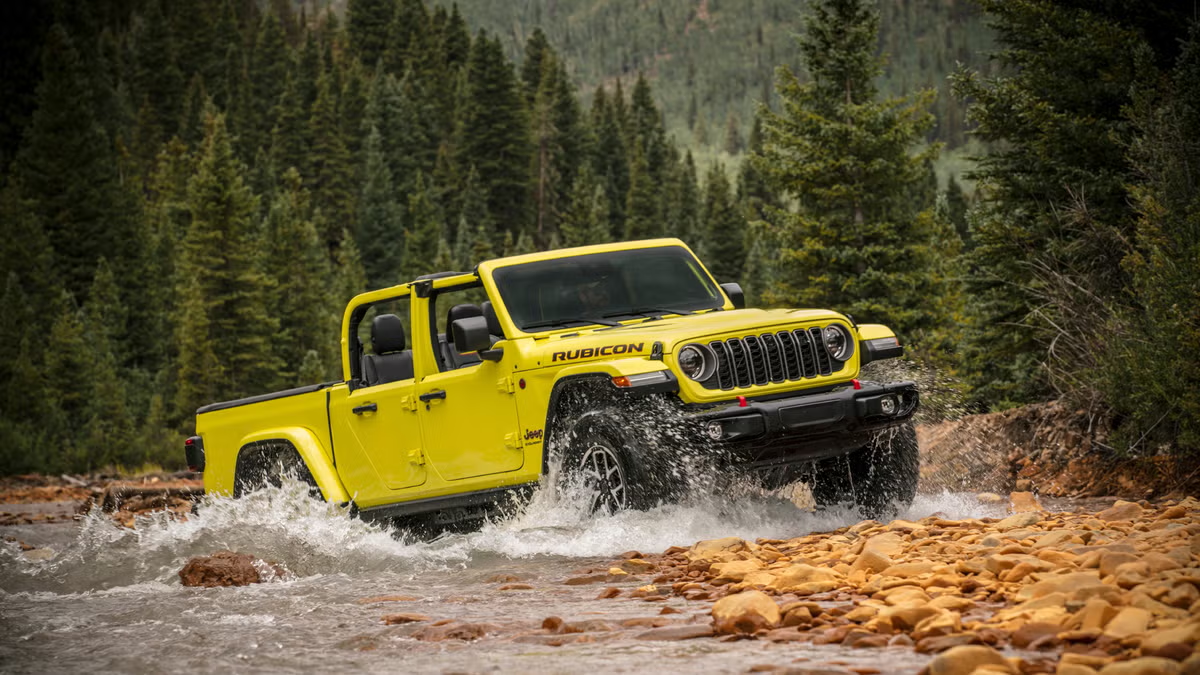
Years: On average, a well-maintained Jeep Wrangler can last between 15 to 20 years. That’s not just a ballpark figure—many Wranglers are still going strong well past the 15-year mark, especially if they’ve been taken care of. Some owners have even reported their Wranglers running well into their 20s with proper maintenance.
Mileage: When it comes to mileage, you’re looking at around 200,000 to 300,000 miles or more. That’s a pretty impressive range, considering the Wrangler’s off-road capabilities and the kind of wear it might see. With good care, it’s not unusual for a Wrangler to keep running strong well beyond this range.
What Affects the Lifespan of a Jeep Wrangler?
The longevity of your Wrangler isn’t just about its build quality; several factors play a role in how long it will last.
1. Maintenance and Care
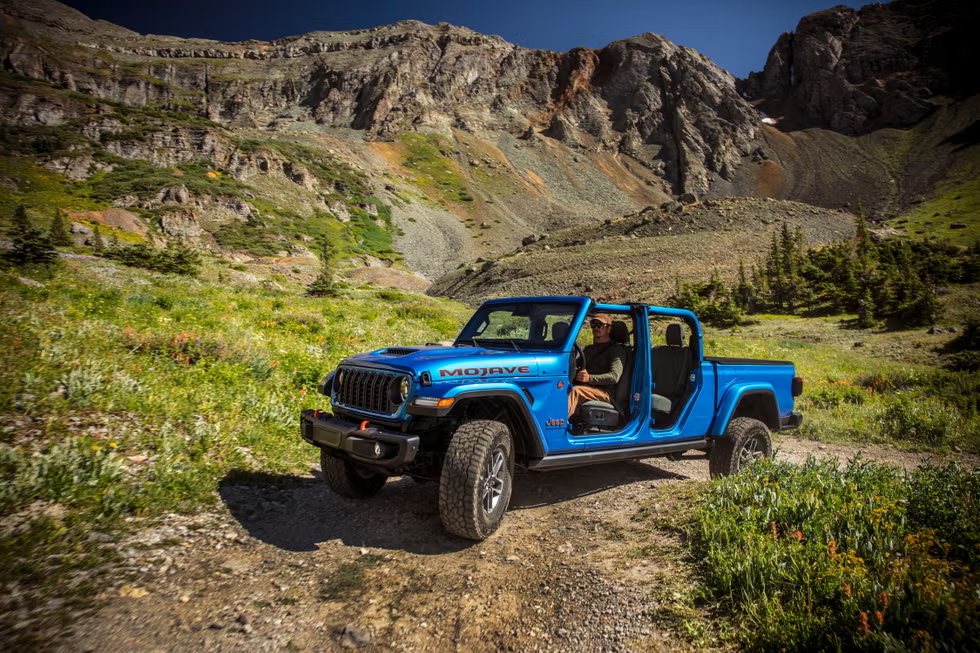
This is where you really have control over your Wrangler’s lifespan. Regular maintenance is crucial:
- Oil Changes: Stick to regular oil changes—typically every 3,000 to 5,000 miles. This keeps your engine in top shape.
- Fluid Checks: Don’t forget about transmission fluid, brake fluid, and coolant. Keeping these topped off helps prevent bigger problems down the road.
- Tire Care: Rotate your tires regularly and keep an eye on alignment. It’s a simple way to ensure even wear and longer tire life.
- Inspection: Regularly inspect for rust, especially if you’re often off-roading or live in a salt-heavy environment. Catching rust early can save you from more serious issues later.
2. Driving Conditions
The way you drive and where you drive can make a big difference:
- Off-Roading: If you’re regularly taking your Wrangler off the beaten path, you’re putting it through more stress. That said, the Wrangler is built for it, so it can handle more rugged use better than many other SUVs.
- Climate: Extreme temperatures, salt, and moisture can accelerate wear and tear. For example, if you’re driving in coastal areas, rust can become a concern, so keep an eye out for it and take preventive measures.
3. Model Year and Updates
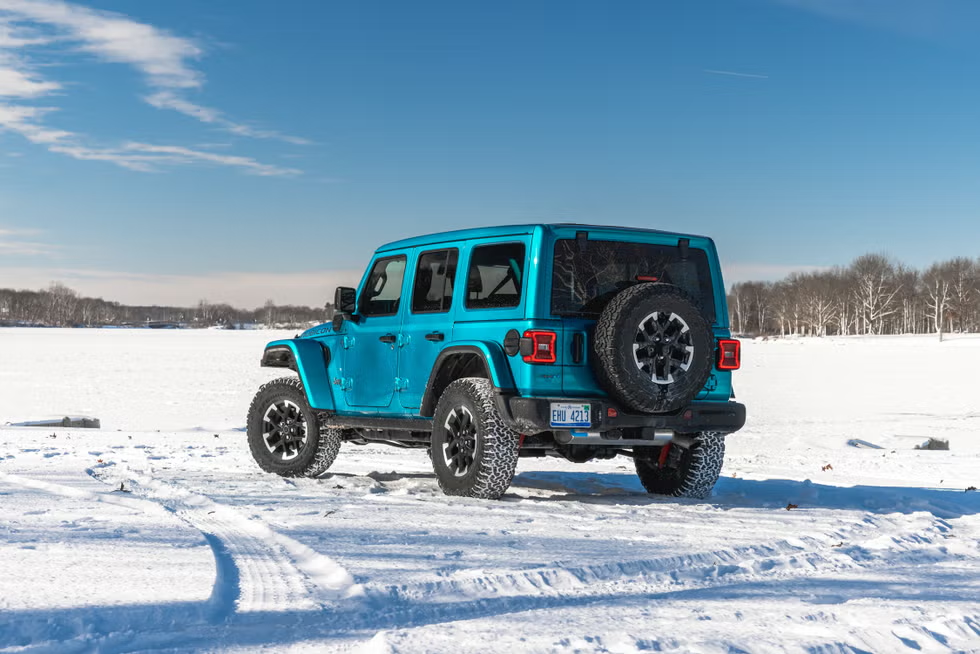
The Wrangler has evolved significantly over the years:
- Older Models (Pre-2007): Older models like the TJ and YJ are durable but might be more prone to issues like rust and outdated technology. With proper care, though, they can still serve you well.
- Newer Models (2007-Present): The JK, JL, and JLU models come with modern updates that improve durability and performance. These newer models have better technology and are generally more refined, which can contribute to a longer lifespan.
In Summary
If you’re thinking about buying a Jeep Wrangler, rest assured that it can be a long-lasting investment. With an average lifespan of 15 to 20 years and the potential to rack up 200,000 to 300,000 miles, the Wrangler is built to endure. Regular maintenance, mindful driving, and staying on top of model-specific issues will help you get the most out of your Wrangler. Whether you’re tackling tough trails or just cruising around town, with the right care, your Jeep Wrangler can be a reliable companion for many years to come.
- Comprehensive review including features, pricing, and performance details.
Kelley Blue Book: Jeep Wrangler
- Expert reviews, pricing, and detailed specifications for the Jeep Wrangler.
- In-depth review, including test drive results and pros and cons.
MotorTrend: Jeep Wrangler Review
- Detailed review, test drive impressions, and expert opinions on the Wrangler.
Autotrader: Jeep Wrangler Buying Guide
- Buying guide with tips, expert reviews, and available models.
How Much Is a Fully Loaded 2023 Jeep Wrangler?

How Much Is a Fully Loaded 2023 Jeep Wrangler?
The 2023 Jeep Wrangler stands out as a symbol of rugged off-road capability and versatile design. Known for its iconic look and robust performance, the Wrangler also offers various trims and options that can significantly influence its final price. If you’re considering a fully loaded 2023 Jeep Wrangler, it’s essential to understand the cost and what comes with the top-tier models.
Base Price of the 2023 Jeep Wrangler
The base price of the 2023 Jeep Wrangler starts around $33,000 for the entry-level Sport trim. However, as you move up through the trims and add options, the price increases substantially. To get a fully loaded Wrangler, you’ll need to look at the higher trims and add several premium features and packages.

Top Trims and Their Costs
For a fully loaded 2023 Jeep Wrangler, you’ll typically be looking at the higher trims. Here’s a breakdown of the top trims and their approximate costs:
- Rubicon 392: The Rubicon 392 is one of the highest trims available and starts at about $81,000. It features a powerful 6.4-liter V8 engine, unique off-road capabilities, and premium features. Adding extra options and packages can push the price even higher.
- High Altitude: The High Altitude trim, known for its luxury-oriented features, starts around $58,000. It includes high-end amenities, leather-trimmed seats, and advanced technology. Fully loading this trim with additional options can push the price up to $65,000 or more.
- Rubicon: The Rubicon trim, which balances off-road performance with luxury, starts at approximately $53,000. Fully loaded versions of this trim, with added options like premium audio systems, advanced safety features, and custom packages, can reach around $60,000.
Premium Packages and Add-Ons
To achieve a fully loaded Wrangler, consider adding these premium packages and features:
- Technology Group: This package includes advanced safety features like adaptive cruise control, blind-spot monitoring, and rear cross-traffic alert. It typically costs around $1,500.
- Cold Weather Group: For those in colder climates, this package offers features like heated seats, a heated steering wheel, and remote start. It’s priced at about $995.
- Luxury Group: This package enhances the interior with leather-trimmed seats, a premium audio system, and upgraded trim materials. It usually costs around $2,000.
- Advanced Safety Group: This package includes additional driver assistance technologies, such as automatic emergency braking and lane departure warning, and is priced around $1,200.
- Mopar Accessories: Adding Mopar accessories such as upgraded wheels, off-road lights, and custom exterior trim can add several thousand dollars to the final price.
Final Cost of a Fully Loaded 2023 Jeep Wrangler
When fully loaded with all the premium options and packages, the price of the 2023 Jeep Wrangler can vary depending on the chosen trim and additional features. Here’s a rough estimate for a fully loaded Wrangler:
- Rubicon 392: Up to $85,000 with all available options and accessories.
- High Altitude: Approximately $65,000 to $70,000 when fully equipped.
- Rubicon: Around $60,000 with added premium features and options.
Conclusion
A fully loaded 2023 Jeep Wrangler represents a significant investment, reflecting its premium features, top-tier performance, and customization options. Whether you opt for the powerful Rubicon 392, the luxurious High Altitude, or a well-equipped Rubicon, you’ll be getting a vehicle that combines off-road prowess with a range of high-end amenities. With a price range from about $60,000 to $85,000 depending on the trim and options, a fully loaded Wrangler is a substantial purchase that offers a unique blend of capability, comfort, and style.
- Edmunds: 2023 Jeep Wrangler Review
- Offers a comprehensive review including features, pricing, and performance details.
- Kelley Blue Book: 2023 Jeep Wrangler
- Features expert reviews, pricing, and detailed specifications.
- Car and Driver: 2023 Jeep Wrangler
- Provides an in-depth review, test drive results, and pros and cons.
- MotorTrend: 2023 Jeep Wrangler Review
- Includes a detailed review, test drive impressions, and expert opinions.
- Autotrader: Jeep Wrangler Buying Guide
- Offers a buying guide with tips, expert reviews, and available models.
These links will give you a thorough understanding of the 2023 Jeep Wrangler, including its features, pricing, and expert reviews.
Is a Dodge Charger Hellcat Fast?
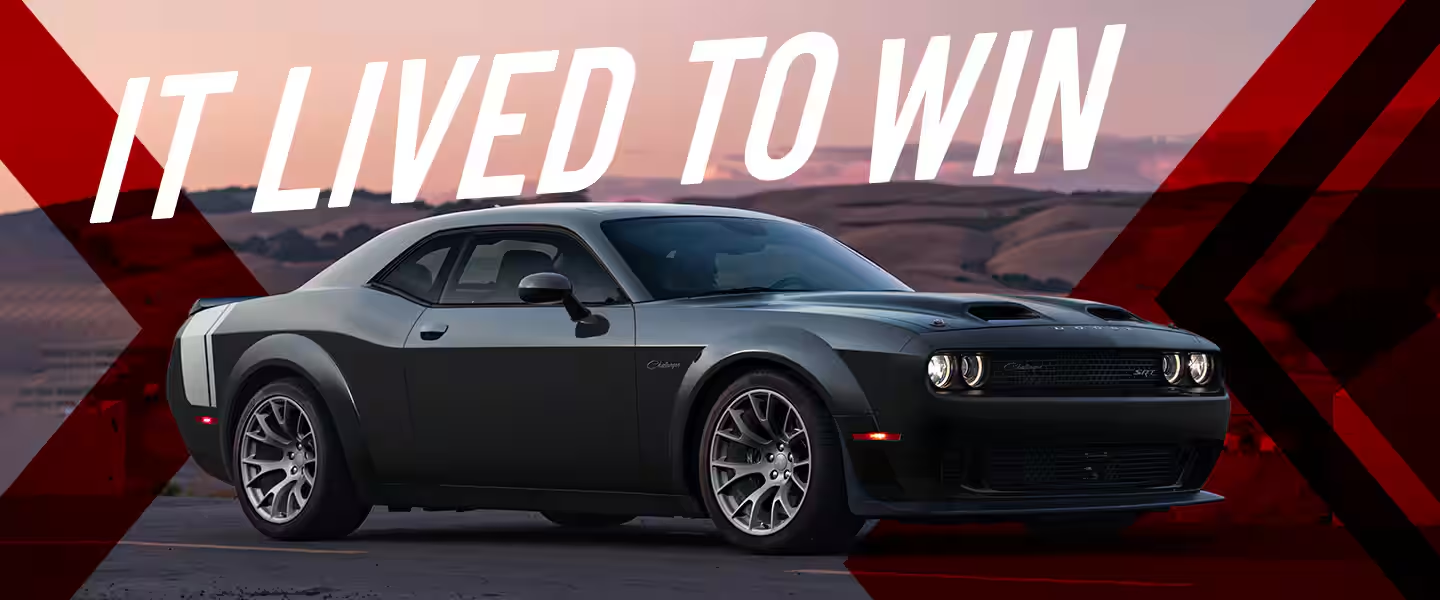
Is a Dodge Charger Hellcat Fast?
The Dodge Charger Hellcat has gained a reputation as one of the most formidable and thrilling performance sedans on the market. Known for its raw power and exhilarating speed, the Hellcat model stands out not only for its aggressive design but also for its impressive performance metrics. But just how fast is the Dodge Charger Hellcat? Let’s explore what makes this muscle car a speed demon on the road.
Powertrain and Engine Specifications
At the heart of the Dodge Charger Hellcat is its powerful engine. The 2023 Dodge Charger Hellcat comes equipped with a supercharged 6.2-liter HEMI V8 engine. This engine is capable of producing a staggering 717 horsepower and 656 lb-ft of torque in the standard Hellcat trim. For those seeking even more extreme performance, the Charger SRT Hellcat Redeye pushes the boundaries further with an incredible 797 horsepower and 707 lb-ft of torque.
The Hellcat’s engine features a supercharger that forces more air into the combustion chambers, allowing for increased power output. This setup is a key factor in the Hellcat’s remarkable acceleration and top speed.
Performance Metrics
To understand the true speed of the Dodge Charger Hellcat, consider the following performance metrics:
- 0-60 mph: The Charger Hellcat accelerates from 0 to 60 mph in just about 3.6 seconds. This rapid acceleration places it among the fastest production sedans available, demonstrating its prowess on the drag strip and in everyday driving.
- Quarter-Mile Time: The Hellcat completes a quarter-mile run in approximately 11.8 seconds. This impressive time highlights its strong acceleration capabilities and competitive drag racing performance.
- Top Speed: The top speed of the Charger Hellcat reaches around 200 mph. This high-speed capability makes it one of the fastest sedans in its class, capable of outpacing many sports cars.
Engineering and Performance Enhancements
Several key components contribute to the Hellcat’s extraordinary performance:
- Supercharger: The supercharged engine plays a critical role in achieving the Hellcat’s high horsepower. The supercharger forces additional air into the engine, enhancing combustion and power output.
- Performance Suspension: The Hellcat features a performance-tuned suspension system that helps manage its immense power. This system includes adaptive dampers and advanced components to improve handling and ride quality.
- High-Performance Brakes: To complement its speed, the Hellcat is equipped with large, high-performance brakes that provide reliable stopping power, even under extreme driving conditions.
- Aerodynamic Design: The Charger Hellcat’s aerodynamic features, such as a functional hood scoop and rear spoiler, help reduce drag and improve stability at high speeds.
Real-World Driving Experience
In everyday driving scenarios, the Dodge Charger Hellcat delivers an engaging and thrilling experience. Its powerful engine and responsive acceleration make it a joy to drive, whether on the highway or on twisty roads. The Hellcat’s aggressive exhaust note and acceleration provide a visceral driving experience that enthusiasts love.
Comparison with Competitors
When compared to other high-performance sedans, the Charger Hellcat stands out. While there are faster sports cars and exotic vehicles, the Hellcat offers a unique combination of speed, practicality, and affordability. Competing models like the Chevrolet Camaro ZL1 and Ford Mustang Shelby GT500 offer similar performance, but the Charger Hellcat’s four-door design provides added versatility and practicality.

Considerations for Potential Buyers
While the Charger Hellcat’s performance is impressive, there are a few considerations to keep in mind:
- Fuel Economy: Due to its high-powered engine, the Hellcat has lower fuel efficiency compared to less powerful vehicles. It’s important to be aware of the higher fuel costs associated with this level of performance.
- Insurance Costs: The Hellcat’s high performance can lead to higher insurance premiums. Buyers should consider the increased insurance costs when budgeting for the vehicle.
- Driving Dynamics: The Hellcat’s aggressive performance may not be ideal for all driving conditions. It’s best enjoyed in environments where its speed and power can be fully utilized.
Conclusion
The Dodge Charger Hellcat is undeniably fast, with acceleration and top speeds that place it among the top performance sedans available. Its supercharged V8 engine, advanced suspension system, and aerodynamic design contribute to its impressive performance metrics. For enthusiasts seeking a combination of power, speed, and practicality, the Hellcat offers an exhilarating driving experience that is hard to match. Whether on the drag strip or cruising on the highway, the Charger Hellcat’s performance ensures it remains a standout in the world of muscle cars.
Edmunds: 2023 Dodge Charger Hellcat Review
- Comprehensive review, including performance metrics and expert opinions.
Car and Driver: Dodge Charger Hellcat Specs and Review
- In-depth analysis of the Charger Hellcat’s performance and specifications.
MotorTrend: Dodge Charger Hellcat Performance
- Detailed performance review, including acceleration and top speed.
Kelley Blue Book: Dodge Charger Hellcat Overview
- Overview of features, pricing, and performance data.
Autotrader: Buying Guide for Dodge Charger Hellcat
- Buying guide and listings for the Dodge Charger Hellcat.
Top Gear: Dodge Charger Hellcat Review
- Review of the Hellcat’s driving dynamics and overall performance.
Jalopnik: Dodge Charger Hellcat Performance Analysis
- Insight into the Hellcat’s performance and driving experience.
Is a Dodge Charger Hellcat Fast?
The Dodge Charger Hellcat has gained a reputation as one of the most formidable and thrilling performance sedans on the market. Known for its raw power and exhilarating speed, the Hellcat model stands out not only for its aggressive design but also for its impressive performance metrics. But just how fast is the Dodge Charger Hellcat? Let’s explore what makes this muscle car a speed demon on the road.
Powertrain and Engine Specifications
At the heart of the Dodge Charger Hellcat is its powerful engine. The 2023 Dodge Charger Hellcat comes equipped with a supercharged 6.2-liter HEMI V8 engine. This engine is capable of producing a staggering 717 horsepower and 656 lb-ft of torque in the standard Hellcat trim. For those seeking even more extreme performance, the Charger SRT Hellcat Redeye pushes the boundaries further with an incredible 797 horsepower and 707 lb-ft of torque.
The Hellcat’s engine features a supercharger that forces more air into the combustion chambers, allowing for increased power output. This setup is a key factor in the Hellcat’s remarkable acceleration and top speed.
Performance Metrics
To understand the true speed of the Dodge Charger Hellcat, consider the following performance metrics:
- 0-60 mph: The Charger Hellcat accelerates from 0 to 60 mph in just about 3.6 seconds. This rapid acceleration places it among the fastest production sedans available, demonstrating its prowess on the drag strip and in everyday driving.
- Quarter-Mile Time: The Hellcat completes a quarter-mile run in approximately 11.8 seconds. This impressive time highlights its strong acceleration capabilities and competitive drag racing performance.
- Top Speed: The top speed of the Charger Hellcat reaches around 200 mph. This high-speed capability makes it one of the fastest sedans in its class, capable of outpacing many sports cars.
Engineering and Performance Enhancements
Several key components contribute to the Hellcat’s extraordinary performance:
- Supercharger: The supercharged engine plays a critical role in achieving the Hellcat’s high horsepower. The supercharger forces additional air into the engine, enhancing combustion and power output.
- Performance Suspension: The Hellcat features a performance-tuned suspension system that helps manage its immense power. This system includes adaptive dampers and advanced components to improve handling and ride quality.
- High-Performance Brakes: To complement its speed, the Hellcat is equipped with large, high-performance brakes that provide reliable stopping power, even under extreme driving conditions.
- Aerodynamic Design: The Charger Hellcat’s aerodynamic features, such as a functional hood scoop and rear spoiler, help reduce drag and improve stability at high speeds.
Real-World Driving Experience
In everyday driving scenarios, the Dodge Charger Hellcat delivers an engaging and thrilling experience. Its powerful engine and responsive acceleration make it a joy to drive, whether on the highway or on twisty roads. The Hellcat’s aggressive exhaust note and acceleration provide a visceral driving experience that enthusiasts love.
Comparison with Competitors
When compared to other high-performance sedans, the Charger Hellcat stands out. While there are faster sports cars and exotic vehicles, the Hellcat offers a unique combination of speed, practicality, and affordability. Competing models like the Chevrolet Camaro ZL1 and Ford Mustang Shelby GT500 offer similar performance, but the Charger Hellcat’s four-door design provides added versatility and practicality.
Considerations for Potential Buyers
While the Charger Hellcat’s performance is impressive, there are a few considerations to keep in mind:
- Fuel Economy: Due to its high-powered engine, the Hellcat has lower fuel efficiency compared to less powerful vehicles. It’s important to be aware of the higher fuel costs associated with this level of performance.
- Insurance Costs: The Hellcat’s high performance can lead to higher insurance premiums. Buyers should consider the increased insurance costs when budgeting for the vehicle.
- Driving Dynamics: The Hellcat’s aggressive performance may not be ideal for all driving conditions. It’s best enjoyed in environments where its speed and power can be fully utilized.
Conclusion
The Dodge Charger Hellcat is undeniably fast, with acceleration and top speeds that place it among the top performance sedans available. Its supercharged V8 engine, advanced suspension system, and aerodynamic design contribute to its impressive performance metrics. For enthusiasts seeking a combination of power, speed, and practicality, the Hellcat offers an exhilarating driving experience that is hard to match. Whether on the drag strip or cruising on the highway, the Charger Hellcat’s performance ensures it remains a standout in the world of muscle cars.

Short answer: For those seeking the pinnacle of power and performance, the Next-Gen Charger Daytona Scat Pack offers a staggering 670 horsepower, setting a new standard in high-performance muscle cars. Alternatively, the 496-horsepower Charger R/T provides a thrilling driving experience with a focus on both performance and innovation. Notably, the Charger Daytona Scat Pack is part of Dodge’s foray into electric vehicles, making it the world’s first and only electric muscle car.
The new lineup will feature two-door models available in late 2024, catering to enthusiasts who appreciate the classic coupe design. Four-door models, offering more practicality without compromising performance, are scheduled for release in early 2025. This updated range highlights Dodge’s commitment to blending cutting-edge technology with its storied muscle car heritage.
What is the life Expectancy of a Dodge Charger?
The life expectancy of a Dodge Charger typically ranges between 150,000 to 200,000 miles with proper maintenance and care. Like many modern vehicles, the Charger’s longevity depends significantly on factors such as driving habits, regular maintenance, and adherence to service schedules. Regular oil changes, timely repairs, and careful driving can help extend its lifespan. While the Charger is known for its durability and performance, ensuring that it receives consistent care is crucial to reaching or even surpassing the upper end of this mileage range. With good maintenance, it’s not uncommon for a well-cared-for Dodge Charger to continue performing reliably well into its second decade of use.
What car is equivalent to a Dodge Charger?
Several cars are considered equivalents to the Dodge Charger, especially in terms of performance, size, and style. Here are some notable alternatives:
- Ford Mustang: Known for its powerful engine options and muscle car heritage, the Mustang offers comparable performance with a range of trims and engines.
- Chevrolet Camaro: A direct competitor in the muscle car segment, the Camaro provides similar performance capabilities and aggressive styling.
- Chrysler 300: As a close relative to the Charger, the Chrysler 300 offers similar performance and features but with a more luxurious and refined approach.
- Nissan Maxima: Although not a muscle car, the Maxima provides strong performance, a stylish design, and a comfortable ride, appealing to those who might consider the Charger’s size and performance.
- Toyota Avalon: A full-size sedan offering a spacious interior, powerful engine options, and premium features, making it a strong competitor in the same segment.
These vehicles provide alternatives to the Dodge Charger with various strengths in performance, luxury, and style.
How much is the 2025 Dodge Charger Daytona?
As of now, the exact pricing for the 2025 Dodge Charger Daytona has not been officially released, as the vehicle is still in development and slated for release in the future. However, industry insiders and automotive experts estimate that the base model of the Charger Daytona could start around $40,000 to $50,000, with higher trims and performance versions potentially exceeding $70,000. The Charger Daytona is anticipated to be a groundbreaking model, combining classic muscle car aesthetics with modern electric vehicle technology, which may influence its final pricing. For the most accurate and up-to-date information, prospective buyers should keep an eye on official announcements from Dodge as the release date approaches.
The Dodge Charger is generally considered a reliable vehicle, but its reliability can vary depending on the model year, trim level, and how well the car has been maintained. Here’s a detailed overview of the Charger’s reliability:
General Reliability
- Durability: The Dodge Charger, known for its performance and robust build, tends to have good durability. Models with larger engines and higher trims often have strong performance records, reflecting well on their long-term reliability.
- Consumer Reviews: Many owners report high satisfaction with the Charger’s reliability, especially for models with regular maintenance. Issues are often related to specific components or electronics, but overall, the Charger has a solid reputation among performance sedans.
- Common Issues: Some owners have reported issues with electrical components and infotainment systems, as well as occasional transmission concerns. However, these problems are not universal and can often be managed with regular servicing.
- Maintenance and Care: Like any vehicle, the Charger’s reliability heavily depends on proper maintenance. Regular oil changes, timely repairs, and adherence to the manufacturer’s service recommendations contribute to a longer-lasting vehicle.
Reliability Ratings
- J.D. Power: The Dodge Charger typically receives average to above-average ratings in J.D. Power’s vehicle dependability studies, reflecting its overall reliability.
- Consumer Reports: Reliability ratings from Consumer Reports can vary by model year, with some years showing higher reliability than others. Generally, newer models tend to have better ratings due to improvements and updates.
Warranty and Support
Dodge offers a standard warranty on the Charger, including a 3-year/36,000-mile basic warranty and a 5-year/60,000-mile powertrain warranty. This warranty coverage supports the vehicle’s reliability and provides peace of mind for owners.
In summary, the Dodge Charger is considered a reliable vehicle overall, particularly when it is well-maintained. While there may be occasional issues reported by some owners, the Charger’s robust design and strong performance contribute to its reputation as a dependable sedan.
What is the Price of a Dodge Charger?
The price of a Dodge Charger varies based on the model year, trim level, and optional features. As of 2023, the starting price for a base model Dodge Charger SXT is around $34,000, while higher-performance trims like the Dodge Charger Scat Pack or Hellcat can range from $45,000 to over $80,000, depending on options and features.
If you’re looking at special editions or high-performance models like the Charger Hellcat Redeye, the price can exceed $90,000. These prices can also fluctuate depending on dealership location, added customizations, or promotions available at the time of purchase.
What is the price of a Dodge Charger?
The price of a Dodge Charger varies depending on the model, trim level, and added features. As of 2023, the base model Dodge Charger SXT starts at around $34,000, offering a solid entry-level option for those seeking a powerful sedan. For those interested in more performance-focused versions, the Charger R/T starts around $42,000, while the high-performance Scat Pack trim begins at about $50,000. If you’re looking for top-tier performance, the Charger Hellcat can reach upwards of $80,000 or more, with special editions like the Hellcat Redeye surpassing $90,000. Prices can vary based on location, available promotions, and optional features like upgraded engines, technology packages, and customizations.
Is Dodge making a 2024 Charger?
Yes, Dodge is making a 2024 Charger, continuing its legacy as a high-performance sedan. While Dodge has been transitioning toward electric vehicles, the 2024 Charger is expected to be one of the last gasoline-powered models in its lineup before moving fully into electric muscle cars. The 2024 Charger will maintain its iconic design, offering various trim levels, including powerful options like the Hellcat and Scat Pack, with impressive engine choices. Dodge enthusiasts can expect both two-door and four-door versions of the Charger to hit the market, with the possibility of advanced features and upgraded technology to complement its performance. The upcoming model year marks a pivotal moment for Dodge as they prepare for a new era in muscle cars
How much will the 2024 Charger Cost?
The cost of the 2024 Dodge Charger will vary depending on the trim level and options chosen. The base model, likely the Charger SXT, is expected to start around $35,000, offering an affordable entry into the iconic muscle car lineup. Mid-level trims such as the R/T and Scat Pack will likely range from $45,000 to $55,000, providing enhanced performance with larger engines and additional features. For those seeking top-tier power, the high-performance Charger Hellcat and potential Hellcat Redeye models could exceed $80,000, particularly with added customizations. The 2024 model is expected to carry on Dodge’s tradition of blending performance, style, and cutting-edge technology, with prices varying based on features like engine upgrades, interior packages, and new tech options.
Is the Dodge Charger coming to an end?
Yes, Dodge has announced that the current generation of gas-powered Dodge Chargers is coming to an end. The 2023 model year marks the final run for the gasoline-powered Charger as Dodge shifts focus toward electric vehicles. This transition is part of Dodge’s broader move to embrace electrification in its lineup, with plans to release electric muscle cars in the near future. However, this doesn’t mean the Charger name is going away entirely—future versions of the Charger are expected to be all-electric, continuing the legacy with a new era of performance focused on sustainability.
What does 345 mean on a Charger?
SRT stands for Street and Racing Technology, a high-performance division of Dodge, Chrysler, and Jeep. SRT focuses on enhancing the performance, handling, and power of select vehicles in the lineup. Originally created to design and build performance vehicles, SRT models are known for their powerful engines, aggressive styling, and track-ready capabilities. Cars like the Dodge Charger SRT Hellcat and the Jeep Grand Cherokee SRT showcase the division’s focus on maximizing horsepower, acceleration, and driving dynamics. Whether for daily driving or high-speed performance on the track, SRT vehicles are built for enthusiasts who crave both speed and precision.
Key highlights include the potential for three different powertrain options: a single-motor base model with 402 horsepower, a twin-motor version producing 670 hp, and a top-tier model expected to deliver up to 885 hp. In addition to these EV models, some rumors suggest that a Hurricane inline-six engine may be available in hybrid form(
Yahoo Autos) (Carscoops).
The Next-Gen Dodge Charger2025 Dodge Charger: Full DetailsMotor Authority – 2025 Dodge ChargerTop Speed – 2025 Charger Daytona EVAutoGuide – 2025 Dodge Charger Daytona SRT
Best Family Cars for 2024 and 2025

Best Family Cars for 2024 and 2025
Chrysler, Dodge, Jeep, and Ram (CDJR) have consistently produced vehicles known for their reliability, performance, and family-friendly features. Whether you’re looking for an SUV with off-road capability, a minivan for ultimate comfort, or a robust truck for weekend adventures, CDJR offers something for every type of family. Let’s explore some of the best CDJR family cars for 2024 and 2025.

1. 2024 Chrysler Pacifica
The Chrysler Pacifica has been a top contender for family vehicles for years, and the 2024 model keeps up that tradition. This minivan is packed with features designed to make family travel easy and enjoyable.
- Seating capacity: Up to 8 passengers
- Notable features: Stow ‘n Go seating, rear entertainment system, and available AWD for extra peace of mind in all weather.
- Why it’s great for families: The Pacifica’s spacious interior and easy-to-fold seats make it ideal for larger families or those who need plenty of cargo space. It’s also one of the few minivans offering an all-wheel-drive option, adding extra safety for those who live in areas with challenging weather.

2. 2024 Jeep Grand Cherokee
The 2024 Jeep Grand Cherokee offers a premium blend of ruggedness and luxury, making it a fantastic family SUV for those who love both the city and outdoor adventures.
- Seating capacity: 5 to 7 passengers (with the Grand Cherokee L model)
- Notable features: Advanced safety features like blind-spot monitoring and adaptive cruise control, plus luxurious interiors with premium materials.
- Why it’s great for families: The Grand Cherokee provides plenty of room for kids and adults alike, especially in the Grand Cherokee L model, which adds third-row seating. Its off-road capability also makes it perfect for family trips to national parks or camping.
3. 2024 Dodge Durango
The 2024 Dodge Durango blends muscle-car performance with family-friendly practicality. Known for its powerful engine options, the Durango is perfect for families who need a bit of speed and excitement in their daily drives.
- Seating capacity: 7 passengers
- Notable features: Available V8 engine, towing capacity of up to 8,700 pounds, and user-friendly infotainment system.
- Why it’s great for families: The Durango offers an impressive combination of power and versatility. Whether you’re hauling a boat for a family vacation or simply commuting, the Durango can handle it all while keeping your family comfortable.
4. 2024 Jeep Wagoneer
For those who want full-size luxury, the 2024 Jeep Wagoneer is an excellent choice. It combines premium features with an expansive interior, making it one of the most accommodating family vehicles.
- Seating capacity: 8 passengers
- Notable features: Top-tier interior finishes, a suite of driver-assistance features, and rear-seat entertainment options.
- Why it’s great for families: The Wagoneer offers ample space for large families, with its cavernous interior and advanced infotainment system. The powerful engine options also ensure a smooth and strong ride, even when fully loaded with passengers and gear.
5. 2025 Ram 1500
While trucks may not traditionally be considered family vehicles, the 2025 Ram 1500 breaks the mold by offering spacious interiors, comfortable seating, and impressive towing capabilities. It’s a great choice for families who need a versatile vehicle for both everyday life and weekend adventures.
- Seating capacity: 5 passengers
- Notable features: Available RamBox cargo management system, Uconnect infotainment, and luxurious interior options with the Laramie and Limited trims.
- Why it’s great for families: The Ram 1500’s spacious crew cab provides more than enough room for families, while its impressive towing and payload capacities make it perfect for road trips, camping, or even moving house. The rear seats are also notably comfortable, making long drives a breeze.
6. 2025 Jeep Grand Cherokee L
For families that need even more space than the standard Grand Cherokee, the 2025 Grand Cherokee L is a fantastic option. This three-row SUV is designed with large families in mind, offering premium comfort without sacrificing Jeep’s legendary off-road performance.
- Seating capacity: 6 to 7 passengers
- Notable features: Three-row seating, Quadra-Lift air suspension, and a full suite of safety features like lane-keeping assist and forward-collision warning.
- Why it’s great for families: The extra row of seating is a game-changer for larger families, and the advanced safety features provide peace of mind. Plus, it maintains Jeep’s ruggedness, so it’s ideal for families who enjoy outdoor adventures.
Final Thoughts
Whether you’re a family that needs a capable SUV for off-roading, a minivan with the latest tech, or even a powerful truck, CDJR offers a variety of options for 2024 and 2025. Each vehicle is designed to cater to modern family needs with spacious interiors, advanced safety features, and plenty of comfort to make every journey enjoyable. No matter your lifestyle, one of these CDJR models will likely be a perfect fit for your family’s next adventure.
Can a Jeep 4xe Charge at a Tesla Station?

With the rise of electric vehicles (EVs) and plug-in hybrids (PHEVs) like the Jeep Wrangler 4xe, the availability and accessibility of charging stations has become a key concern for drivers. One common question for Jeep 4xe owners is whether they can use Tesla’s extensive network of charging stations to power up their vehicle. Tesla has one of the largest EV charging networks in the world, so it’s natural to wonder if Jeep 4xe drivers can tap into this infrastructure.
In this article, we’ll break down how charging works for the Jeep Wrangler 4xe, whether it’s compatible with Tesla charging stations, and what other charging options are available.
Understanding the Jeep Wrangler 4xe’s Charging System
The Jeep Wrangler 4xe is a plug-in hybrid electric vehicle (PHEV), which means it runs on both gasoline and electric power. Unlike fully electric vehicles, which rely entirely on batteries, the 4xe uses a combination of electric motors and a gasoline engine to offer a blend of efficiency and performance. When charged, it can operate in all-electric mode for up to 22 miles, perfect for short commutes or urban driving.
The Jeep Wrangler 4xe comes with a Level 1 charger that can be plugged into a standard household outlet (120V) for overnight charging. For faster charging, owners can use a Level 2 charger, which requires a 240V outlet. These faster chargers can typically be installed at home or found at public charging stations.
Now, let’s explore the question of using a Tesla charging station.
Are Tesla Charging Stations Compatible with the Jeep 4xe?
The short answer is: no, the Jeep Wrangler 4xe cannot directly charge at a Tesla Supercharger or Destination Charger without an adapter. Tesla has developed its own proprietary charging connector, which differs from the standard connectors used by most other electric vehicles in North America.
There are two main types of Tesla charging stations:
- Tesla Superchargers: These are high-speed charging stations designed to rapidly charge Tesla vehicles. They are incompatible with non-Tesla vehicles, including the Jeep 4xe, due to their unique connector and software restrictions. Additionally, even if you could physically connect a Jeep 4xe to a Tesla Supercharger (with an adapter), the 4xe would not be able to take full advantage of the Supercharger’s speed, as it is not built for high-powered charging.
- Tesla Destination Chargers: These are Level 2 chargers typically found at hotels, restaurants, or shopping centers. Some of these chargers have been opened up for use by non-Tesla vehicles, but this is still relatively rare. Again, an adapter would be required to connect a Jeep 4xe to these chargers, but even with an adapter, charging speeds would be similar to other public Level 2 chargers.
Using Adapters for Charging at Tesla Stations
In theory, it is possible to use a Tesla to J1772 adapter for some Tesla Destination Chargers. This adapter allows non-Tesla EVs, including the Jeep Wrangler 4xe, to use certain Tesla charging stations. However, this only applies to Tesla Destination Chargers and not Superchargers, which are exclusive to Tesla vehicles.
It’s important to note that Tesla Destination Chargers are slower (Level 2), so they won’t provide the rapid charging that Superchargers offer to Tesla owners. Still, for Jeep 4xe owners who may find themselves near a Tesla Destination Charger with an adapter, it could be a convenient option for topping up their battery.
Alternatives to Tesla Charging Stations
Fortunately, Jeep Wrangler 4xe owners have access to a wide range of other charging networks that are fully compatible with their vehicle, without the need for any special adapters. Here are a few options:
- Public Charging Networks: Many public charging networks, like ChargePoint, EVgo, and Electrify America, offer Level 2 charging stations that are compatible with the Jeep Wrangler 4xe’s J1772 connector. These networks are widespread and can be found at shopping malls, grocery stores, and other public spaces.
- Home Charging Stations: Many Jeep 4xe owners choose to install a Level 2 charger at home, which can fully charge the 4xe’s battery in around 2 hours. This is the most convenient and cost-effective way to keep your vehicle charged and ready for both city and off-road adventures.
- Jeep Branded Charging Stations: Jeep has partnered with Electrify America to create the Jeep 4xe Charging Network, a series of charging stations located near popular off-road trails. These stations are strategically placed to give Jeep enthusiasts the ability to recharge their 4xe while exploring remote areas.
- Level 1 Charging: For those who don’t need to charge quickly, the Wrangler 4xe comes with a Level 1 charger that plugs into a standard household outlet. This is a slower option (around 12 hours for a full charge), but it’s a convenient way to charge overnight if faster charging options aren’t available.
Conclusion
While the Jeep Wrangler 4xe cannot charge at Tesla Superchargers, it is possible to use Tesla Destination Chargers with the right adapter. However, there are many other more accessible and convenient charging options available for 4xe owners, including public charging networks and home charging stations.
With its plug-in hybrid capabilities, the Jeep Wrangler 4xe offers drivers the flexibility to enjoy both electric and gasoline power, ensuring that you’re never left without options, whether you’re in the city or hitting the trails. Charging may require a bit of planning, but with the ever-expanding charging infrastructure, including Jeep’s own network near off-road trails, finding a compatible station is easier than ever.
So, while you may not be able to use Tesla’s Supercharger network, there are plenty of charging alternatives that will keep your Jeep 4xe ready for any adventure.
Charging a Jeep 4xe at a Tesla station is possible, but there are limitations. Tesla Superchargers, which offer fast charging, are generally not compatible with non-Tesla vehicles unless using a specific adapter, and even then, results can vary. However, Jeep 4xe owners can use Tesla Destination Chargers (typically Level 2) with a compatible adapter like the TeslaTap. These chargers are often found at hotels or other locations and can be set to allow non-Tesla vehicles to charge(
4XE Forums)(
For more consistent charging, you may need to ensure the Tesla charger is correctly configured, and some adapters work better than others(
4XE Forums). If you’re planning to use this regularly, an adapter like the TeslaTap is recommended for home or public use(
Connect with us


