





Are you thinking how long does Ram 1500 last? We will get to know about that today.
The Ram 1500 V6 is one of the most durable and reliable full-size trucks on the market. Known for its powerful performance and longevity, the V6 variant has become a popular choice for both work and daily driving. But how long can you realistically expect a Ram 1500 V6 to last?
With proper maintenance and care, a well-maintained Ram 1500 V6 can last for many years and hundreds of thousands of miles. In this article, we’ll dive into the expected lifespan of the Ram 1500 V6, factors that influence its longevity, maintenance costs, reliability considerations, and tips for maximizing its lifespan.
Expected Mileage of the Ram 1500 V6
A well-maintained Ram 1500 V6 can typically last between 200,000 and 300,000 miles. This impressive range is consistent with the durability of the Ram 1500 lineup as a whole, which is known for its solid construction and long-lasting performance. Some Ram 1500 owners have reported even higher mileage figures, surpassing the 300,000-mile mark, thanks to diligent care and regular maintenance.
While specific data on the V6 variant is limited, it’s helpful to look at the overall performance and lifespan of the Ram 1500 series to gauge expectations. The engine, transmission, and other key components of the Ram 1500 V6 are built to handle high-mileage driving when properly maintained, making it a long-term investment for many truck owners.
Factors Affecting Longevity of the Ram 1500 V6
The lifespan of any vehicle, including the Ram 1500 V6, is influenced by several key factors. Let’s take a look at the most important elements that can impact the longevity of your truck:
1. Maintenance
Regular maintenance is the single most crucial factor in determining how long your Ram 1500 V6 will last. Consistent oil changes, fluid checks, tire rotations, brake inspections, and following the manufacturer’s recommended maintenance schedule will keep your truck in top shape. Neglecting routine maintenance can lead to a series of issues that may reduce your truck’s lifespan.
For the Ram 1500, the Pentastar 3.6L V6 engine is generally very reliable when serviced regularly. It’s also important to use high-quality fluids and parts during servicing. If you stick to the recommended service intervals, you’ll be giving your V6 engine the best chance at a long lifespan.
2. Driving Habits
How you drive your truck plays a significant role in its longevity. Trucks that are used primarily for towing or heavy hauling may experience more wear and tear than those that are used for commuting or light-duty tasks. Aggressive driving, such as rapid acceleration, hard braking, or frequent high-speed driving, can strain the engine and transmission, reducing their overall lifespan. To maximize the life of your Ram 1500 V6, aim for smooth driving habits, avoiding unnecessary strain on the engine, transmission, and suspension systems.
3. Environmental Conditions
Exposure to harsh environmental conditions can also shorten the lifespan of any vehicle, including the Ram 1500 V6. Salt on the roads, common in colder climates, can cause corrosion on the undercarriage and other metal components. Extreme temperatures can also put additional stress on the engine and battery. If you live in an area prone to severe weather conditions, regular cleaning and undercoating to protect against rust will help preserve your truck’s longevity.
4. Build Quality
The overall quality of the vehicle’s construction has a big impact on how long it lasts. The Ram 1500 is known for its solid build and rugged design, making it a good choice for long-term durability. Additionally, the Pentastar V6 engine is widely regarded as a durable powerplant, known for its solid performance and reliability. The truck’s frame, suspension, and drivetrain are all engineered to endure years of tough use.
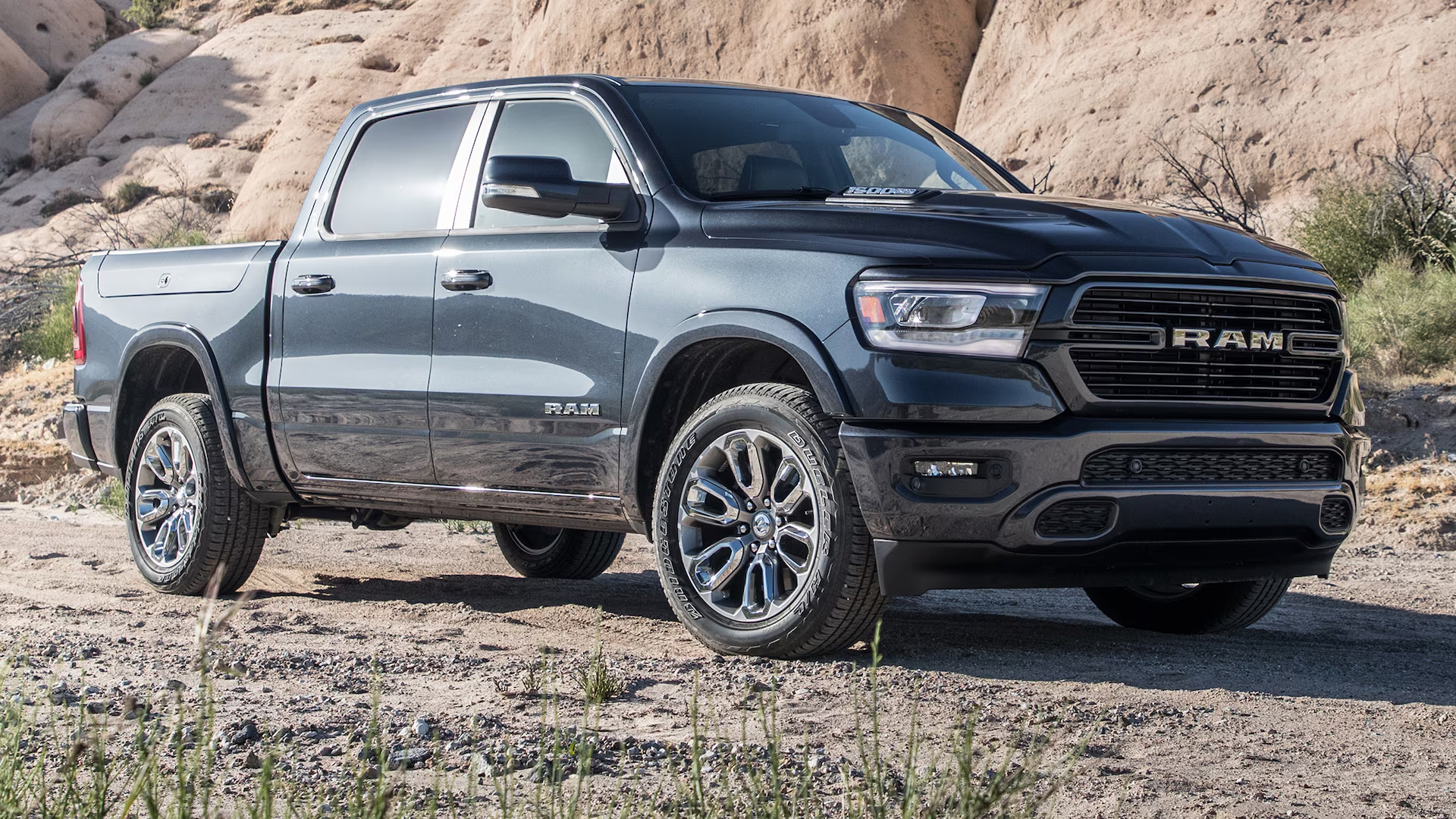
Maintenance Costs of the Ram 1500 V6
One of the major factors that influence the longevity of the Ram 1500 V6 is the maintenance costs. Fortunately, the Ram 1500 is relatively affordable to maintain compared to many other trucks in its class. The average annual repair cost for a Ram 1500 is approximately $691, which is lower than many competitors, especially those in the full-size truck category.
Regular maintenance costs, such as oil changes, tire rotations, brake pad replacement, and fluid checks, are generally manageable and contribute to the overall longevity of the vehicle. However, as the truck ages, certain components may require more expensive repairs, such as the transmission or suspension system. That being said, because the truck is built with durability in mind, it remains one of the more cost-effective options in terms of long-term maintenance.
Reliability Considerations for the Ram 1500 V6
The Ram 1500 is generally considered to be a reliable vehicle, but like any truck, there are occasional issues that can arise. For example, some owners have reported issues with lifter problems in the Hemi V8 engine, which resulted in a class-action lawsuit. However, this specific issue does not directly apply to the V6 model, which has a good reputation for reliability.
That said, early model years of the Ram 1500 may have had more issues compared to newer models. For example, some 2012-2013 Ram 1500 trucks experienced problems with the air suspension system, but these issues have been addressed in more recent models. As with any vehicle, it’s essential to stay on top of any potential recalls or service bulletins that may apply to your specific model year.
The Pentastar V6 engine, found in most recent Ram 1500 V6 models, has been praised for its reliability and strength. It’s not uncommon for these engines to last for well over 200,000 miles with the proper care.
Maximizing the Lifespan of Your Ram 1500 V6
To ensure that your Ram 1500 V6 lasts as long as possible, follow these expert tips:
1. Follow the Maintenance Schedule
Adhere strictly to the manufacturer’s maintenance schedule. Regular oil changes, fluid checks, and tire rotations are critical to the health of your truck.
2. Address Issues Promptly
If any problems arise, address them promptly. Ignoring small issues can cause them to escalate into larger, more expensive problems down the road.
3. Use Quality Parts
Always use high-quality replacement parts and fluids during service. Aftermarket parts might be cheaper, but they may not offer the same longevity as OEM (Original Equipment Manufacturer) parts.
4. Protect Against the Elements
Keep your truck clean and protect it from rust, especially if you live in an area with heavy snowfall or road salt. Regular washes and undercoating can help prevent corrosion.
5. Drive Responsibly
Drive responsibly, avoiding aggressive acceleration and sudden stops. Take care of the truck as if it were an investment, and it will reward you with years of reliable service.
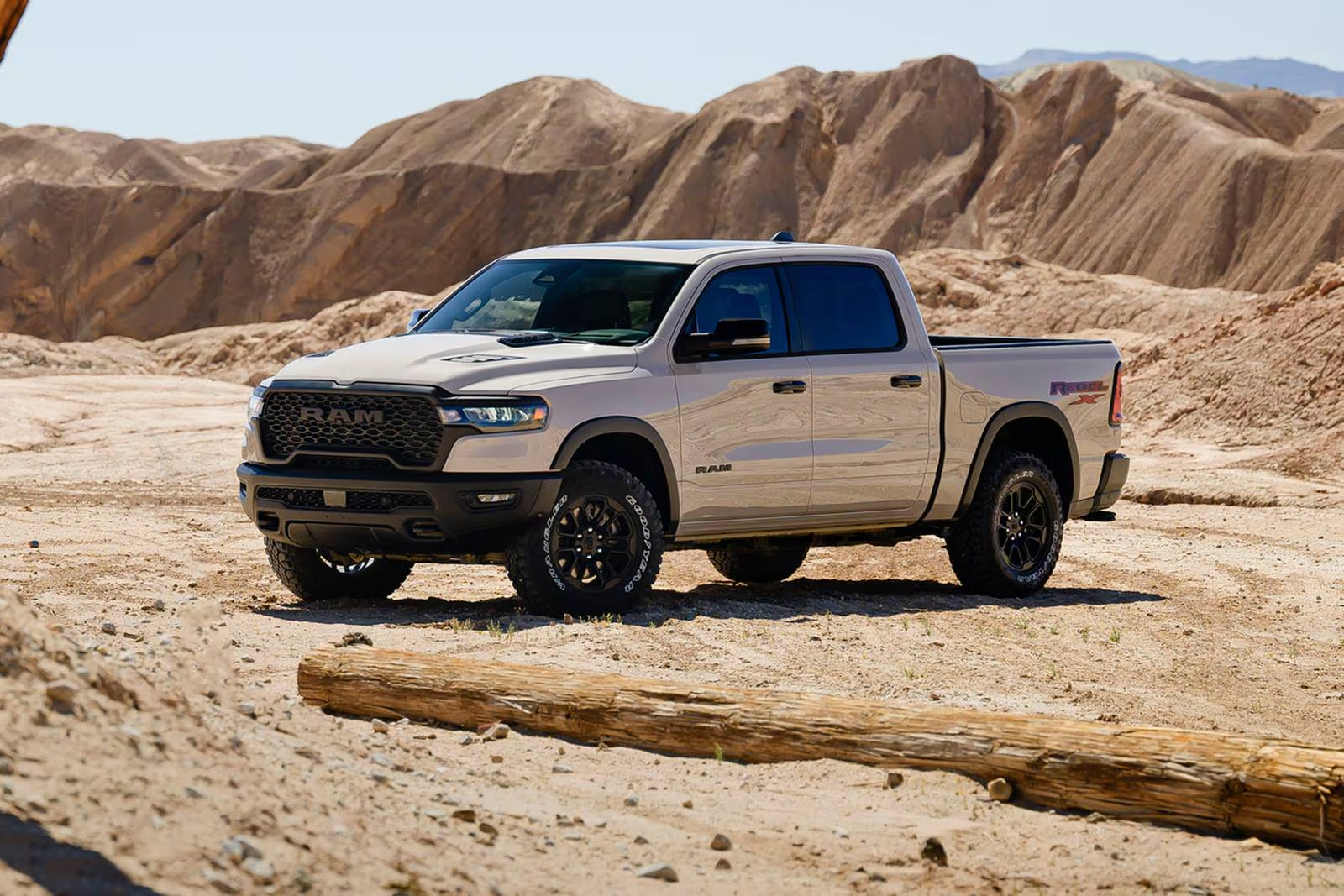
Conclusion: How Long Will Your Ram 1500 V6 Last?
The Ram 1500 V6 is a reliable, durable truck that can last well beyond 200,000 miles with proper care and maintenance. Some owners have even reported their trucks lasting as long as 300,000 miles or more. With lower-than-average repair costs and a strong reputation for quality, the Ram 1500 V6 stands out as one of the best full-size trucks in terms of longevity.
However, the actual lifespan of your vehicle will depend on factors like driving habits, maintenance, environmental conditions, and the overall build quality. By following the manufacturer’s maintenance schedule, addressing issues early, and using high-quality parts, you can ensure that your Ram 1500 V6 performs optimally for many years to come.
For more detailed information, check out Vehicle History, Ram Forum.
Can I Put Brighter Headlights In My RAM 1500 Warlock

Upgrading the headlights in your RAM 1500 Warlock can be an exciting way to enhance both the aesthetics and performance of your truck. Brighter, more efficient lighting can improve night driving visibility, making it easier to navigate dark roads and challenging weather conditions. However, before you go ahead and install brighter headlights, it’s essential to understand the different types of headlight options available, the compatibility with your RAM 1500 Warlock, and the legal, safety, and installation considerations that come with such an upgrade. This comprehensive guide will help you explore all these aspects so you can make an informed decision.
Why Upgrade to Brighter Headlights?
Brighter headlights are not just a cosmetic upgrade. There are several reasons why RAM 1500 Warlock owners opt to upgrade their headlights:
- Improved Visibility: Brighter headlights provide better illumination on the road, allowing you to see more clearly at night or in low-visibility conditions. This is especially important when driving in rural areas or on poorly lit roads.
- Enhanced Aesthetic Appeal: Modern headlights, especially LED and HID (High-Intensity Discharge) lights, give a sleek and contemporary look to your truck. With brighter, whiter light, your RAM 1500 Warlock will stand out on the road.
- Better Durability: LED and HID bulbs often have longer lifespans compared to traditional halogen bulbs, meaning you won’t have to replace them as frequently.
- Energy Efficiency: LED and HID bulbs are generally more energy-efficient, consuming less power than halogen bulbs while providing brighter light output.
What Types of Brighter Headlights Can You Install?
There are several options for upgrading your RAM 1500 Warlock’s headlights. Each type has its own set of advantages and considerations, and your choice will depend on your preferences and the type of performance you are looking for.
1. Halogen Bulbs
- What They Are: Halogen bulbs are the standard headlights that come with most vehicles, including the RAM 1500 Warlock in some configurations. These bulbs use a tungsten filament inside a halogen gas-filled bulb to produce light.
- Pros: Halogen bulbs are affordable and easy to replace. They are compatible with most vehicles and readily available.
- Cons: Halogen bulbs are not as bright as newer lighting technologies, and their lifespan is relatively short.
- Upgrade Potential: You can upgrade to a brighter halogen bulb by choosing higher wattage bulbs, such as 100W halogen replacements. However, keep in mind that using higher wattage bulbs may cause overheating or electrical issues if not installed correctly.
2. LED Headlights
- What They Are: LED (Light Emitting Diode) headlights are a newer and more advanced lighting option. They use semiconductor materials to produce light and are far more energy-efficient than halogen bulbs.
- Pros: LED headlights are bright, energy-efficient, and long-lasting. They offer a crisp, white light that enhances visibility without straining your eyes. Additionally, LEDs are available in a wide range of color temperatures, from warm to cool light.
- Cons: LED headlights can be more expensive than halogen bulbs, but the long lifespan and energy efficiency often offset the initial cost. Some LED kits may require additional components or adapters for proper installation in vehicles that were not originally designed for LED headlights.
- Upgrade Potential: The RAM 1500 Warlock is an excellent candidate for an LED upgrade. Many truck owners choose to replace their halogen bulbs with LED headlights because of their modern look and superior brightness. Popular options include the Fahren 9005/HB3 LED Headlight Bulbs, which provide a bright, cool white light for optimal night visibility.
3. HID Headlights
- What They Are: HID (High-Intensity Discharge) headlights use an electric arc to generate light. They are known for their intense brightness and are commonly used in luxury cars and high-performance vehicles.
- Pros: HID headlights are very bright and have a longer lifespan compared to halogen bulbs. They produce a bluish-white light that offers excellent visibility and can make night driving safer.
- Cons: HID headlights can be expensive to install and require a ballast to regulate the current. They also consume more power than LEDs, although they are still more energy-efficient than halogen bulbs.
- Upgrade Potential: HID kits can be installed in the RAM 1500 Warlock, but the process can be more involved than installing LED bulbs. The truck may require additional wiring or modification to fit the HID system.
4. Auxiliary Lighting (LED Light Bars)
- What They Are: LED light bars are not a direct replacement for the factory headlights but are often added to trucks like the RAM 1500 Warlock for off-road driving or additional nighttime visibility.
- Pros: These lights are incredibly bright and offer a wide field of illumination. LED light bars are commonly used in off-road applications and provide a significant performance boost.
- Cons: Light bars can be bulky and require a proper mounting system. They are also typically used in off-road or emergency situations rather than for everyday driving.
- Upgrade Potential: While not a replacement for factory headlights, adding an LED light bar can enhance your Warlock’s nighttime visibility, especially when venturing off the beaten path. Popular options include Rigid Industries LED Light Bars.
Is the RAM 1500 Warlock Compatible with Brighter Headlights?
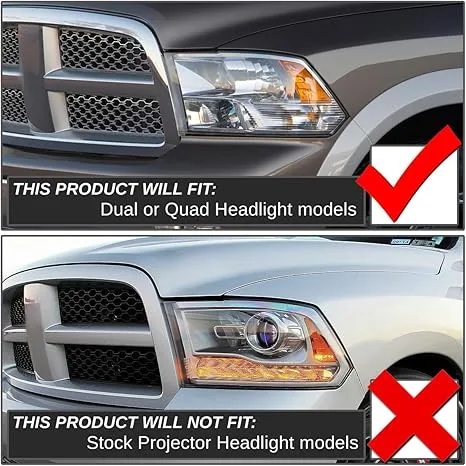
Yes, the RAM 1500 Warlock is compatible with a range of brighter headlight upgrades, such as LED and HID lighting. However, it’s important to ensure that any new headlights you install are the right size and fit for your truck’s existing headlight housing. The RAM 1500 Warlock typically uses 9005 bulbs for both high and low beams, so you’ll want to choose headlights that are compatible with this bulb type.
Common Headlight Upgrade Options for RAM 1500 Warlock:
- LED 9005/HB3 bulbs: These are among the most popular LED upgrades for the RAM 1500 Warlock, offering a significant brightness increase compared to halogen bulbs.
- HID 9005/HB3 kits: If you prefer HID over LED, look for 9005 HID conversion kits, which will give you the brighter light output you’re seeking, but be sure to include the necessary ballast for proper operation.
- Auxiliary LED Light Bars: For off-road visibility, a light bar mounted on the front bumper can give you enhanced illumination, although it’s not a replacement for the main headlights.
Legal Considerations: Can You Put Brighter Headlights on Your RAM 1500 Warlock?
While upgrading your headlights can improve visibility, it’s important to consider the legal implications of such modifications. In many regions, there are strict regulations regarding headlight brightness and beam patterns to ensure the safety of all drivers on the road.
- Headlight Brightness: Some states or countries have laws that limit the brightness of headlights. Installing overly bright headlights that exceed the legal limits could result in fines or penalties, and in some cases, you may be required to switch back to factory settings.
- Headlight Beam Pattern: Modifying the headlight beam pattern can lead to glare, which can impair the visibility of other drivers. It’s essential to install headlights that maintain a proper beam alignment to prevent accidents and stay compliant with the law.
- Vehicle Inspections: In some regions, vehicle inspections may check the legality of headlight upgrades. Be sure to research local laws to ensure that your new headlights meet the necessary requirements for street use.
How to Install Brighter Headlights in Your RAM 1500 Warlock
Installing brighter headlights in your RAM 1500 Warlock is generally a straightforward process, especially for LED upgrades. Follow these steps:
- Purchase the Right Bulbs: Make sure the bulbs you choose are compatible with your truck’s headlight assembly. Most Warlock models use 9005 bulbs for both high and low beams.
- Turn Off the Vehicle: Always ensure the truck is turned off and the keys are removed from the ignition before beginning any work on the electrical system.
- Remove the Old Bulbs: Open the hood and locate the back of the headlight assembly. You’ll typically need to remove a cover or access panel to reach the bulb. Disconnect the power connector from the old bulb and remove it.
- Install the New Bulbs: Insert the new LED or HID bulbs into the housing, making sure they are seated securely. Reconnect the power supply.
- Test the New Headlights: Before closing everything up, test the new headlights to ensure they are functioning properly and aligned correctly.
- Professional Installation: If you are unsure about installing the new headlights yourself, consider taking your RAM 1500 Warlock to a professional. They will ensure the bulbs are installed correctly and that the beam pattern is aligned to avoid glare.
Conclusion
Upgrading your RAM 1500 Warlock’s headlights can be an excellent way to improve nighttime visibility, enhance the truck’s aesthetic, and boost performance. There are several types of brighter headlights available, including LED, HID, and halogen options, with each offering its own set of advantages. However, always ensure that the headlights you choose are compatible with your truck and comply with local regulations to avoid safety risks and legal issues.
Whether you go for LED headlights, HID conversion kits, or auxiliary lighting for off-road driving, the key is selecting quality products and ensuring proper installation. With the right upgrades, your RAM 1500 Warlock will be ready to light up the road ahead with confidence.

If you’re experiencing issues with the cigarette lighter or power outlet in your RAM 1500, it’s often related to a blown fuse. Knowing the right fuse size and where to locate it can save you time and effort when troubleshooting the problem. In this article, we’ll explore the cigarette lighter fuse in the RAM 1500, its size, and how to identify and replace it.
What Is the RAM 1500 Cigarette Lighter Fuse?
The fuse responsible for your RAM 1500’s cigarette lighter (or 12V power outlet) is typically a 20-amp fuse. This fuse is designed to protect the electrical circuit that powers the lighter and other connected accessories, such as phone chargers and GPS devices. If there is a power surge or if an item is plugged in that draws too much current, the fuse will blow to prevent further damage to the electrical system.
Where Is the Cigarette Lighter Fuse Located?
The fuse for the cigarette lighter is located in the fuse box, which can typically be found either under the dashboard near the driver’s side or in the engine bay. The exact location and fuse number may vary depending on your RAM 1500’s model year and configuration.
In many RAM 1500 models, the cigarette lighter fuse is often labeled as F93 and is located in the interior fuse box. However, it’s always best to check your vehicle’s owner’s manual for the most accurate information, as fuse numbers can change depending on the year.
How to Identify the Correct Fuse?
- Check the Owner’s Manual: The manual will provide a detailed chart showing the fuse numbers and what each one powers. Look for the section that lists the power outlets, which might include the cigarette lighter, and verify the fuse number and location.
- Inspect the Fuse Box Cover: On the inside of the fuse box cover, there should be a diagram that shows the layout of all the fuses and their functions. Find the one labeled for the cigarette lighter or power outlets.
- Use the Right Fuse Size: The standard fuse size for the RAM 1500 cigarette lighter is 20 amps. It is crucial to replace the blown fuse with one that matches the correct amperage to avoid further electrical issues.
How to Replace the Cigarette Lighter Fuse?
- Turn Off the Vehicle: Before you start working on the electrical system, make sure your RAM 1500 is turned off and the key is removed from the ignition.
- Locate the Fuse Box: Depending on your vehicle’s model, you may need to remove a cover to access the fuse box. Refer to your owner’s manual for the exact location and instructions for accessing the fuse box.
- Find the Correct Fuse: Using the diagram on the fuse box or in your owner’s manual, locate the fuse responsible for the cigarette lighter. Remove it carefully using a fuse puller or a pair of tweezers.
- Check the Fuse: Visually inspect the fuse. If the metal strip inside the fuse is broken, then the fuse is blown and needs to be replaced.
- Replace with a New Fuse: Replace the blown fuse with a new 20-amp fuse. Make sure it’s properly seated in the slot to ensure a secure connection.
- Test the Lighter: After replacing the fuse, test the cigarette lighter to ensure it is working properly.
When to Seek Professional Help?
If the new fuse blows shortly after installation or if the cigarette lighter still isn’t working, there may be an underlying electrical issue, such as a short circuit. In this case, it’s a good idea to consult a professional mechanic or an automotive electrician to diagnose and fix the problem.
Conclusion
The RAM 1500’s cigarette lighter fuse is typically a 20-amp fuse located in the interior fuse box. Replacing a blown fuse is a simple task that can be done by following the steps outlined above. However, always ensure you’re using the correct fuse size to avoid damaging the electrical system. If issues persist after replacing the fuse, professional help may be needed to further investigate any underlying electrical problems.
Stellantis Brings Back Timothy Kuniskis to Lead Ram Brand and Boost Sales Amid Challenges
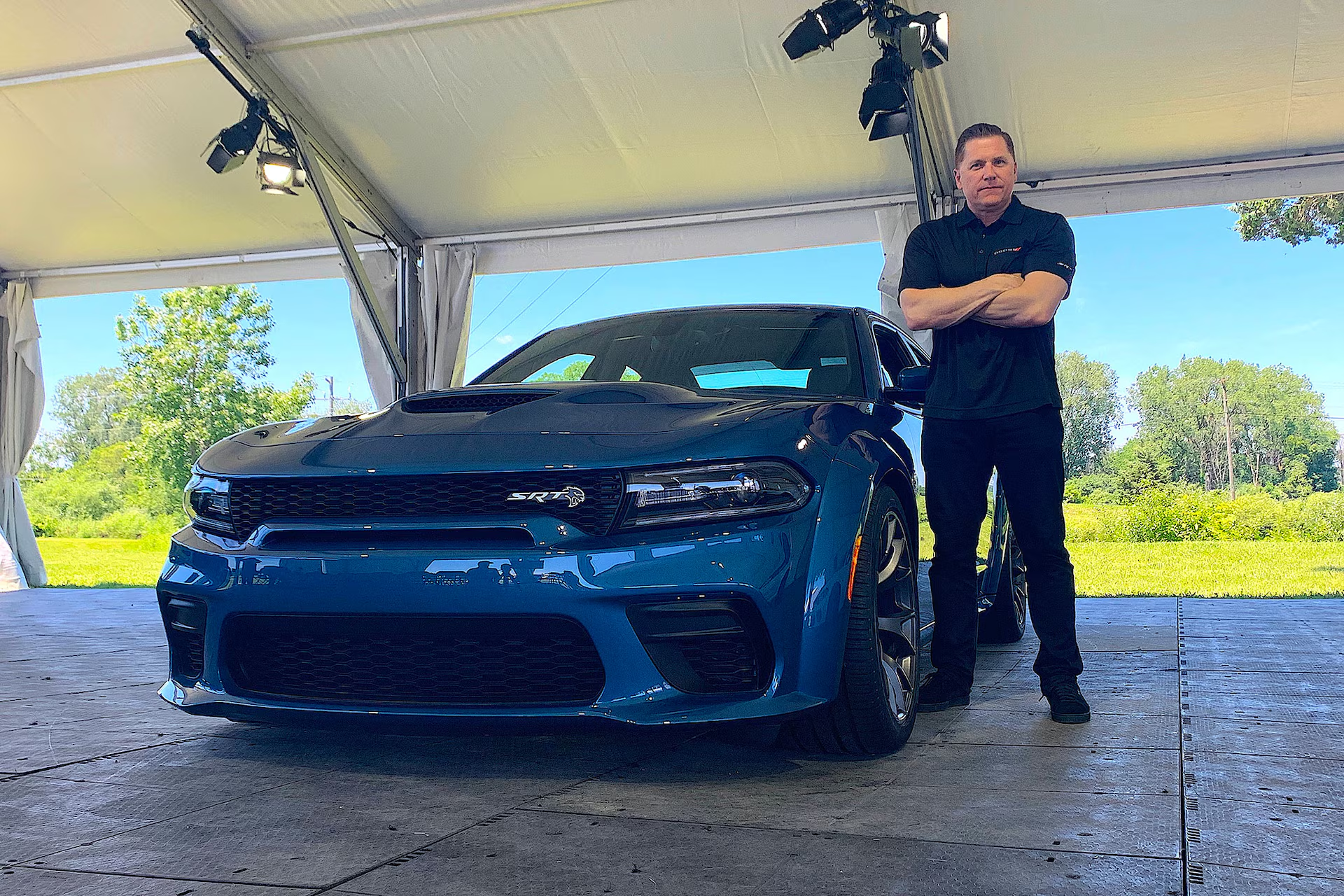
In a bold move to steer the Ram brand back to its prime, Stellantis has announced the return of Timothy Kuniskis as CEO of the iconic truck brand. Kuniskis, who had retired in June 2024 after a distinguished career with Stellantis, re-enters the company at a pivotal time when the automaker faces significant hurdles in the competitive North American market.
Kuniskis’s return to the helm of Ram is a strategic response to the brand’s declining sales and its battle to maintain its place among the top contenders in the highly competitive truck sector. After a drop in sales, particularly in the U.S. market, Stellantis has recognized the need for strong leadership to rejuvenate the brand, and Kuniskis, with his rich history of driving growth and innovation at Stellantis, is the perfect person to lead the charge.
The Context Behind Kuniskis’s Return
Timothy Kuniskis is no stranger to Ram’s success. Before his brief retirement, Kuniskis played a significant role in transforming Ram into one of the most competitive and sought-after truck brands in North America. His leadership was instrumental in the launch of the revolutionary 2019 Ram 1500, which became a benchmark for the industry in terms of design, performance, and customer appeal. Kuniskis oversaw the development of the truck’s luxury features, innovative technologies, and improved fuel efficiency, which positioned Ram as a serious competitor to Ford and Chevrolet in the full-size truck market.
However, despite the brand’s strong reputation, Ram has been grappling with a significant downturn in sales. Through the third quarter of 2024, Ram’s U.S. sales had plummeted by 24%, putting additional pressure on Stellantis to make strategic changes. The automaker’s overall sales numbers have also been on the decline, with a 27% dip in revenue. This led to the sudden resignation of CEO Carlos Tavares in December 2024, following internal conflicts and pressure from unionized auto workers.
With these challenges, Stellantis has made a decisive decision to rehire Kuniskis, aiming to restore Ram’s growth and solidify its competitive edge against rivals like Ford’s F-Series and General Motors’ Silverado. The hope is that Kuniskis’s leadership can reignite the Ram brand’s momentum and accelerate its recovery in the U.S. market.
A Legacy of Leadership and Innovation
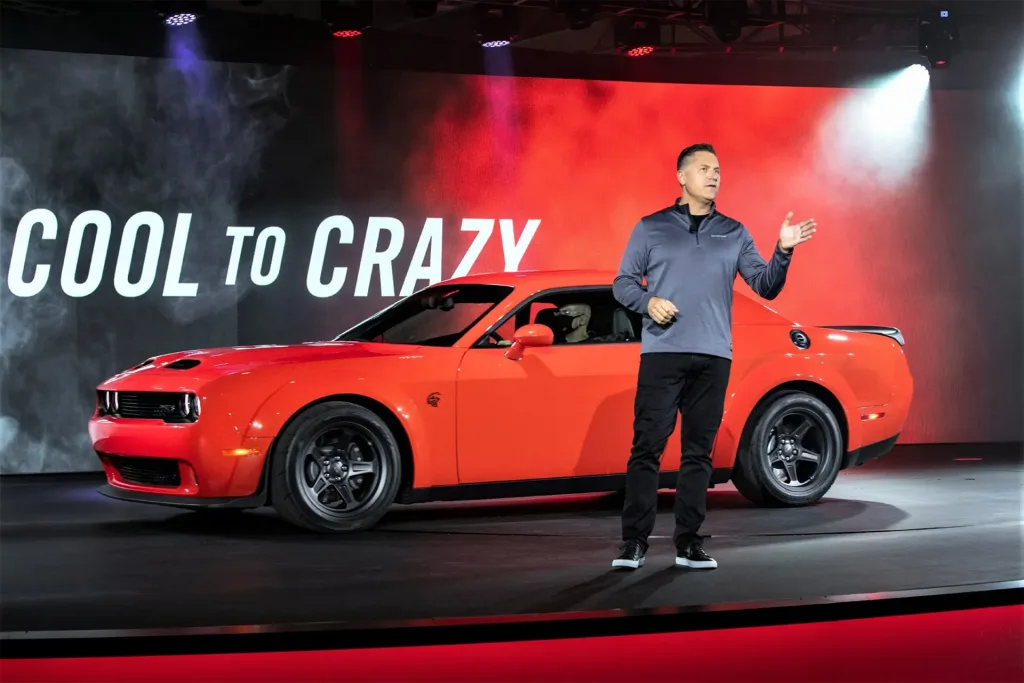
Kuniskis’s track record with Stellantis speaks for itself. He joined the company in 1992 and worked in various roles across marketing, sales, and operations before taking the helm of the Ram brand. Under his leadership, Ram’s focus on premium features, such as advanced infotainment systems, plush interiors, and towing capabilities, set the brand apart in a crowded truck market. The launch of the 2019 Ram 1500, which was named North American Truck of the Year, cemented his reputation as an industry leader capable of delivering both innovation and customer satisfaction.
Before his retirement, Kuniskis oversaw the introduction of new models, including the Ram 2500 and 3500, which featured heavy-duty performance enhancements, and the Ram TRX, a high-performance variant designed to take on the mighty Ford Raptor. His focus on luxury and performance helped redefine the truck market, appealing to a new generation of truck buyers who wanted more than just raw power—they wanted technology, comfort, and versatility.
But even as he retired, Kuniskis’s legacy remained firmly embedded within the Ram brand. His influence was clear in the designs and strategies that followed his departure, but the downturn in sales, coupled with Stellantis’s recent struggles, has shown that the brand needed more than just continuity—it needed a leader with a proven ability to innovate and take risks. Kuniskis’s return reflects Stellantis’s acknowledgment of this need.
The Road Ahead for Ram: What Kuniskis Must Tackle
The road ahead for Kuniskis and Ram is undoubtedly filled with challenges. The truck market has become increasingly competitive, with Ford and General Motors making major strides in electric truck production. Ford’s F-150 Lightning and the Chevrolet Silverado EV are pushing the envelope on electric truck technology, forcing Ram to play catch-up in the electric vehicle (EV) segment.
Kuniskis will need to spearhead Ram’s transition to electric trucks, as Stellantis has committed to producing a wide range of EVs in the coming years. Ram’s forthcoming electric truck, the 1500 REV, is set to debut in the coming years, and Kuniskis’s leadership will be critical to ensure that it meets customer expectations while also maintaining the brand’s legacy of performance, luxury, and durability.
In addition to EV development, Kuniskis will also need to address the brand’s current challenges. Sales have been slipping, and Ram must find ways to recapture lost ground. A focus on customer engagement, dealer relations, and introducing new features and capabilities could prove crucial to maintaining Ram’s position in the market.
Additionally, Kuniskis will have to rebuild Ram’s reputation in light of the management shakeups under Tavares’s leadership. Ram’s recent decline in market share could be a result of a failure to connect with consumers or a lapse in understanding what the modern truck buyer truly wants. Kuniskis’s history of developing consumer-centric products and delivering quality should serve as a strong foundation for rebuilding the brand’s credibility and appeal.
Stellantis’ Broader Strategy
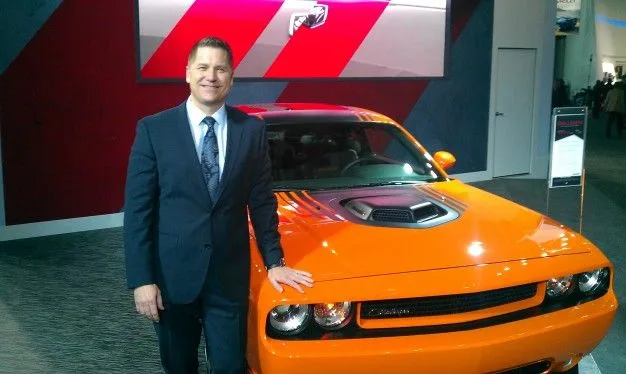
Kuniskis’s return comes as part of a broader strategy by Stellantis to realign its leadership and bolster its North American operations. With Jeffrey Kommor resuming his role as U.S. sales chief and Antonio Filosa, head of North America, pushing to increase Stellantis’s market share in the U.S. from its current 8% to double digits, the company is clearly putting emphasis on revitalizing its brands.
This restructuring effort also comes at a time when Stellantis is transitioning to electrification, with ambitious plans to meet net-zero emissions by 2038. The company is focusing on improving its lineup of electric vehicles, including the Ram 1500 REV, which is expected to be a key player in the brand’s future.
The reappointment of Kuniskis signals that Stellantis recognizes the need for strong leadership to guide its brands through a rapidly changing automotive landscape. Kuniskis’s experience with the brand, coupled with his deep understanding of the North American market, makes him an ideal candidate to steer Ram into the future.
What Does This Mean for the Future of Ram?
Ram’s future under Kuniskis will likely involve a fine balance between continuing its legacy of performance while adapting to the future of electrification. The Ram 1500 REV will be one of the most critical products for the brand in the coming years, and Kuniskis will need to make sure that it is not only competitive with electric rivals but also continues to cater to the needs of traditional truck buyers.
Beyond electric trucks, Ram will need to evolve its offerings to include more technology and innovation that resonates with both existing customers and new ones. The luxury truck market is a growing segment, and Ram’s success will depend on its ability to continue appealing to high-end buyers while also catering to those who prioritize utility and towing capacity.
Kuniskis will also have to oversee a revitalization of Ram’s dealership and customer service experience. A focus on enhancing the overall ownership experience and streamlining the sales process will be key to improving customer loyalty and driving future sales.
In short, the future of Ram looks bright, but the journey won’t be without its challenges. Kuniskis’s return marks a new chapter in the brand’s evolution, and all eyes will be on him as he leads the charge to restore Ram to its rightful place in the competitive North American truck market.
Conclusion: A New Chapter for Ram and Stellantis
Stellantis’s decision to bring back Timothy Kuniskis as CEO of Ram is a significant step in the company’s strategy to reinvigorate the brand and address the challenges it faces in the evolving truck market. With Kuniskis’s proven track record and leadership experience, Ram is poised for a strong comeback, ready to compete head-to-head with rivals while embracing the future of electric mobility.
As Stellantis positions itself for the next chapter, Kuniskis will play a crucial role in guiding Ram through the transition to a more sustainable and competitive future. His return is a signal that Stellantis is committed to securing Ram’s legacy and ensuring that it remains a dominant force in the truck market for years to come.
Stellantis Shakes Things Up After Tavares’ Resignation: Rejoining ACEA and Rethinking Strategy

In a bold move signaling a shift in strategy, Stellantis is making waves in the auto industry following the resignation of its long-time CEO, Carlos Tavares. The company, known for brands like Jeep, Chrysler, and Ram, is reversing its decision to leave the European Automobile Manufacturers Association (ACEA) and is now seeking to rejoin the influential lobby group, a decision that marks a significant departure from Tavares’ controversial leadership style.
A New Era for Stellantis: Joining Forces Again
Stellantis, Europe’s second-largest automaker, confirmed it intends to apply for membership in ACEA once more after leaving the group in 2022. At the time, Tavares had made the bold decision to pull Stellantis out of ACEA to champion a more independent approach through the creation of the Freedom of Mobility Forum. The forum was meant to focus on sustainable mobility without the constraints of traditional lobbying groups. But with Tavares stepping down amidst internal pressures, Stellantis seems ready to recalibrate its strategy.
The news marks a dramatic turnaround, as Stellantis’ decision to re-enter ACEA reflects its renewed commitment to working closely with European automakers to navigate the challenges of the automotive industry’s green transformation. The association plays a pivotal role in shaping Europe’s future auto policies, including the race toward zero-emission mobility.
ACEA Welcomes Stellantis Back with Open Arms
The ACEA, which represents some of the biggest car manufacturers globally, including BMW, Ford of Europe, Toyota, and Volkswagen Group, has expressed its excitement about Stellantis’ decision to reapply for membership. Luca de Meo, the ACEA President and CEO of Renault Group, extended a warm welcome, emphasizing that Europe’s auto industry must unite to tackle the mounting challenges of sustainable transportation.
“In the face of Europe’s competitiveness crisis and the pressing need to master the green transition, it is more important than ever to stand united,” de Meo stated. He added, “ACEA members may be competitors in the marketplace, but we all share the same goal: a competitive and sustainable transition to zero-emission mobility.”
This signals that Stellantis is not just about to play catch-up—it’s positioning itself to be a key player in shaping the future of mobility in Europe and beyond.
A Shift in Leadership and Direction
The decision to rejoin ACEA comes as Stellantis seeks to regain its footing following a period of internal turmoil. Under Tavares, the company had pursued a strategy of aggressive cost-cutting and expansion, often at the expense of collaboration with other automakers. His resignation followed growing tension with the board and union auto workers, compounded by his often “arrogant” leadership style.
Now, with the company under new leadership, Stellantis seems poised to embrace a more cooperative, collective approach to the evolving challenges of the automotive sector, especially in light of the green transition.
As Stellantis moves forward under the guidance of its new leadership team, it seems ready to balance the competitive edge that comes with being a global powerhouse while joining forces with rivals to create a sustainable and competitive auto industry in Europe. With ACEA backing Stellantis’ re-entry, the stage is set for the company to take a more active role in shaping European auto policies for the future.
Tavares’ Legacy: A Mixed Record
Carlos Tavares’ time at the helm of Stellantis was marked by major accomplishments and equally significant controversies. He steered the company through mergers, cost reductions, and a push for greater efficiency. However, his aggressive approach and resistance to unions, coupled with his decision to distance Stellantis from ACEA, left some questioning his vision.
While Tavares’ resignation certainly marks the end of an era, Stellantis’ shift in direction could signal a brighter future for the company—one where collaboration, sustainability, and a stronger presence in the green automotive space are top priorities.
With the ACEA partnership back on the table, Stellantis is ready to enter a new chapter, working alongside the biggest players in the industry to push for a future of zero-emission vehicles and sustainable growth.
What Does This Mean for North America?
For North America, Stellantis’ decision to rejoin ACEA could signal a shift in strategy that will affect the company’s operations across the continent. The move to collaborate more closely with European automakers could lead to stronger partnerships that benefit Stellantis’ North American lineup, particularly as the region’s automotive market also faces an accelerated transition to electric vehicles. This renewed cooperation might mean more advanced EV technology for Jeep, Chrysler, and Ram vehicles in the U.S. and Canada, as the company works to meet the growing demand for sustainable mobility.
Moreover, Stellantis’ new leadership is likely to bring a more collaborative approach to its dealings with regulators and environmental advocates in North America, as pressure mounts for automakers to meet stricter emissions standards and climate goals. Stellantis could potentially leverage its ACEA membership to influence policies in North America, ensuring its brands stay competitive while meeting zero-emission targets.
The shift away from Tavares’ more independent stance may also open the door for more cooperative efforts with U.S.-based automakers and suppliers, as Stellantis navigates the complex landscape of global electric vehicle production. The company will likely work more closely with other industry giants in shaping a future where electric vehicles dominate the roads. For North American consumers, this could translate into better EV options, improved infrastructure, and potentially lower prices as Stellantis works to scale production and reduce costs.
As Stellantis evolves, the potential impact on North America is immense. With stronger ties to European automakers, a renewed focus on collaboration, and an accelerated push toward electric mobility, Stellantis could soon be positioning itself to lead the charge on both sides of the Atlantic.
Stellantis and CATL Unveil $4.3 Billion EV Battery Plant: The Next Big Step for North American Electric Vehicles

Jeep, Ram, and Chrysler are going electric in a big way. Stellantis, the powerhouse behind some of the most iconic American car brands, has just revealed a groundbreaking partnership with CATL, the Chinese battery giant, to build a $4.3 billion electric vehicle (EV) battery plant. The new facility will make lithium-ion phosphate batteries, which are crucial for powering the automaker’s upcoming electric cars and SUVs.
This ambitious move is part of Stellantis’ strategy to ramp up its EV production and make these vehicles more affordable for consumers. With the company planning to invest up to $4.3 billion in the project, the battery plant promises to deliver a much-needed boost to Stellantis’ electric portfolio. And they’re not going it alone — CATL, the world’s largest battery manufacturer, is on board as a joint partner, each owning 50% of the venture.
What’s at Stake for Stellantis?
Stellantis isn’t just talking about electric cars; they’re putting their money where their mouth is. The $4.3 billion investment will be used to establish a cutting-edge battery plant in Zaragoza, Spain. The plant will primarily produce lithium-ion phosphate batteries, which are set to lower the cost of Stellantis’ electric vehicles. But it’s not just about cutting costs. The move will also create approximately 3,000 new jobs and contribute to the region’s clean energy ambitions.
Zaragoza’s already home to one of Stellantis’ car plants, where the electric Peugeot e-208, Opel Corsa-e, and Lancia Ypsilon are manufactured. With Spain’s backing, including a $146 million subsidy, the new plant is expected to be up and running soon, pending regulatory approval.
John Elkann, Stellantis’ chair, highlighted that this partnership with CATL takes the company’s approach to battery production and sustainable energy to a whole new level. He said, “This joint venture will bring innovative battery production to a manufacturing site that is already a leader in clean and renewable energy, helping drive a 360-degree sustainable approach.”
CATL and Stellantis: A Powerful Pair
For CATL, this partnership is a major leap forward, as the company continues to expand its global footprint. Already operating battery plants in Germany and Hungary, CATL’s entry into Spain with Stellantis will solidify its position in Europe, a region rapidly shifting towards electric mobility.
CATL’s CEO, Robin Zheng, called the joint venture “a significant step,” noting that it takes their collaboration with Stellantis to “new heights.” Together, the two companies aim to not only provide affordable EV batteries but to also enhance the sustainability of the entire manufacturing process.
The Road Ahead for Stellantis
This project is part of Stellantis’ larger goal to reach net-zero carbon emissions by 2038. But the company’s journey hasn’t been without its bumps. Despite Stellantis’ ambitious EV push, the automaker has faced some recent challenges, with its sales slowing in North America and Europe. The company’s net revenue dropped 27% last quarter, falling to $35.8 billion. The leadership of Stellantis also experienced turbulence with CEO Carlos Tavares stepping down amid board conflicts.
But Elkann, who has taken the reins after Tavares’ resignation, remains focused on the company’s long-term vision. The new battery plant and partnership with CATL may be just the shot in the arm Stellantis needs as it pushes to electrify its fleet and make waves in the EV market.
What Does This Mean for Jeep and Ram?
For Jeep lovers and Ram truck fans, this partnership could signal exciting things to come. As Stellantis builds a more affordable, sustainable EV lineup, expect the electric versions of these iconic brands to hit the market in force. The new battery plant will play a critical role in supporting the demand for these vehicles, ensuring they are both affordable and environmentally friendly.
As we move toward a future of cleaner, greener transportation, Stellantis is positioning itself as a key player in the electric revolution. The $4.3 billion investment in this cutting-edge battery plant is a bold step forward, and one that could change the automotive landscape for good.
Stay tuned—there’s no telling what’s next for Jeep, Ram, and the entire Stellantis lineup!