





Tuscadero Pink Jeep For Sale

If you’ve ever dreamed of driving a vehicle that stands out in a crowd, the Tuscadero Pink Jeep might just be your ultimate match. This striking and vibrant color option, available for a limited time, has turned heads and captured the hearts of Jeep enthusiasts everywhere. Whether you’re a seasoned off-roader or someone who loves a bold aesthetic, a Tuscadero Pink Jeep for sale is an opportunity you don’t want to miss.
What is Tuscadero Pink?
Tuscadero Pink is a limited-edition color Jeep introduced as part of its Wrangler and Gladiator lineup. Named after the iconic “Happy Days” character, Pinky Tuscadero, this hue is a perfect blend of retro charm and modern vibrance. Jeep enthusiasts and collectors alike have embraced Tuscadero Pink as a symbol of individuality and style.
Jeep Models Available in Tuscadero Pink
The Tuscadero Pink color is available on select Jeep models, including:
- Jeep Wrangler: From the base Sport trim to the rugged Rubicon, the Wrangler in Tuscadero Pink is an off-road beast with a flair for the dramatic.
- Jeep Gladiator: Combining truck utility with Jeep’s iconic design, the Gladiator looks stunning in this vibrant shade.
Features of a Tuscadero Pink Jeep
When you opt for a Tuscadero Pink Jeep, you’re not just getting a unique color—you’re also getting all the rugged features that make Jeep vehicles legendary:
- Off-Road Capability: Whether it’s the Trail Rated® Wrangler or the versatile Gladiator, you can expect superior off-road performance.
- Customization Options: Add a matching or contrasting top, custom wheels, or decals to make your Jeep truly one of a kind.
- Advanced Technology: Modern Jeep models come with features like Uconnect® infotainment, available navigation, and advanced safety systems.
Why Choose a Tuscadero Pink Jeep?
- Stand Out on the Road: This eye-catching color ensures your Jeep gets noticed wherever you go.
- Limited Edition: Tuscadero Pink was only offered for a short period, making it a rare find and a potential collector’s item.
- Durability Meets Style: Jeep’s legendary build quality combined with a bold color makes for a unique driving experience.

Where to Find a Tuscadero Pink Jeep for Sale
Due to its limited availability, finding a Tuscadero Pink Jeep might require some patience and effort. Start your search at Simi Valley Chrysler Dodge Jeep Ram, where our team can help you locate this rare and stunning vehicle. Our dealership specializes in connecting Jeep enthusiasts with their dream cars, and we’re here to assist you every step of the way.
Financing and Specials
Owning a Tuscadero Pink Jeep is more accessible than you think. At Simi Valley CDJR, we offer competitive financing options and exclusive deals to make your purchase seamless. Don’t miss out on the chance to own this limited-edition masterpiece.
Conclusion
A Tuscadero Pink Jeep is more than just a vehicle—it’s a statement of individuality, adventure, and style. Whether you’re hitting the trails or cruising through the city, this vibrant Jeep is sure to turn heads and spark conversations. Ready to make it yours? Visit Simi Valley Chrysler Dodge Jeep Ram today to explore our inventory and drive off in a Jeep that’s as bold as you are.
2024 Jeep Rubicon X Weight

The 2024 Jeep Rubicon X is a standout model in the Jeep Wrangler lineup, boasting off-road prowess and premium features. For enthusiasts and potential buyers, understanding its weight is crucial, as it directly impacts performance, fuel efficiency, and towing capacity. Let’s dive into the details of the Rubicon X’s weight and what it means for its overall capabilities.
Curb Weight of the 2024 Jeep Rubicon X
The 2024 Jeep Rubicon X’s curb weight varies depending on the specific configuration:
- 2-Door Rubicon X: Approximately 4,400 pounds.
- 4-Door Rubicon X (Unlimited): Approximately 4,900 pounds.
These figures are influenced by the model’s robust construction, heavy-duty axles, and off-road-ready components such as steel bumpers and skid plates.
Factors Affecting the Rubicon X’s Weight
Several factors contribute to the weight of the 2024 Jeep Rubicon X:
- Off-Road Components: The Rubicon X is equipped with features like rock sliders, reinforced axles, and larger tires, which add to its overall weight.
- Engine Options: The Rubicon X offers multiple powertrain options, including the standard 2.0L turbocharged engine and the available 3.6L V6. Each engine has slight variations in weight.
- Body Style: The 4-door Unlimited model is naturally heavier than the 2-door version due to its larger frame and additional seating capacity.
- Optional Packages: Adding accessories like a hardtop, tow package, or steel doors can increase the vehicle’s weight.
Weight and Performance
The weight of the 2024 Jeep Rubicon X enhances its off-road stability and durability but also impacts other performance metrics:
- Fuel Efficiency: Heavier vehicles tend to have slightly reduced fuel economy. However, the Rubicon X compensates with efficient powertrain options.
- Towing Capacity: The Rubicon X’s towing capacity is impressive, maxing out at 3,500 pounds for the 4-door model.
- Off-Road Capability: The added weight provides better traction and stability on rugged terrains, making the Rubicon X a top choice for adventure seekers.
How Does It Compare?
When compared to other models in the Jeep Wrangler lineup, the Rubicon X stands out for its blend of luxury and capability. It is slightly heavier than the standard Rubicon due to added premium features, such as leather-trimmed seating and advanced safety systems.
| Model | Curb Weight (2-Door) | Curb Weight (4-Door) |
|---|---|---|
| Wrangler Sport | ~4,000 lbs | ~4,500 lbs |
| Wrangler Sahara | ~4,200 lbs | ~4,700 lbs |
| Rubicon X | ~4,400 lbs | ~4,900 lbs |
Conclusion
The 2024 Jeep Rubicon X’s weight plays a significant role in its identity as a rugged yet luxurious off-road vehicle. While its curb weight is higher than some competitors, it’s a small trade-off for the unparalleled capability and comfort it offers. Whether you’re navigating mountain trails or cruising through the city, the Rubicon X delivers an exceptional experience.
Ready to explore the 2024 Jeep Rubicon X? Visit Simi Valley Chrysler Dodge Jeep Ram to test drive this off-road marvel and see why it’s a top choice for adventurers and Jeep enthusiasts alike.
Jeep Gladiator 4xe vs Wrangler 4xe
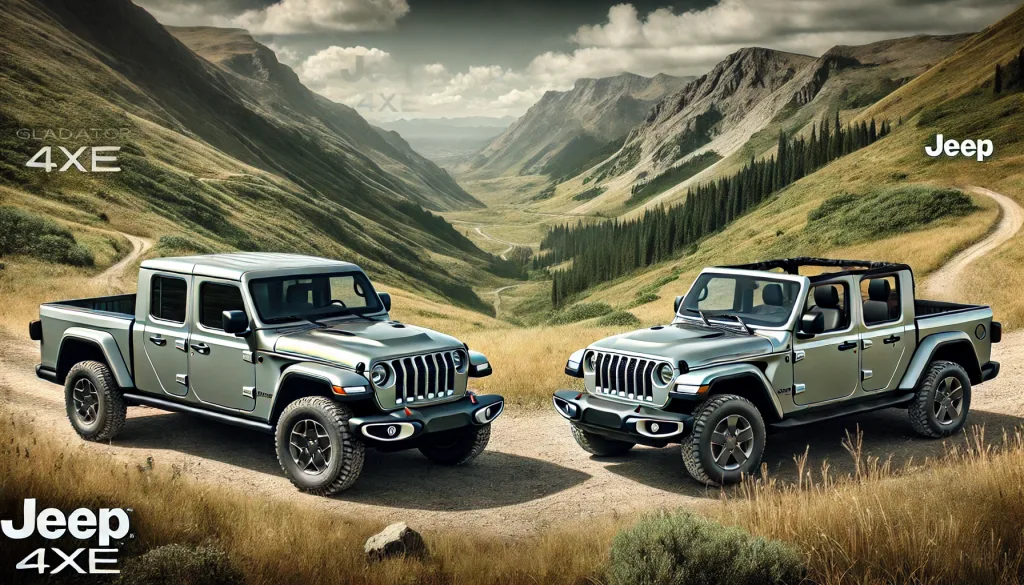
Jeep’s 4xe lineup has revolutionized the off-road market by combining legendary capability with plug-in hybrid efficiency. The Jeep Gladiator 4xe and Wrangler 4xe are two highly anticipated models, both offering unparalleled performance, eco-conscious driving, and advanced features. But how do these two iconic vehicles stack up against each other? Let’s dive into the key differences and help you decide which one fits your lifestyle.
Performance and Capability
Both the Gladiator 4xe and Wrangler 4xe are built with Jeep’s off-road DNA, but they cater to slightly different needs:
- Jeep Wrangler 4xe:
- Powertrain: 2.0L turbocharged inline-4 engine paired with two electric motors.
- Horsepower/Torque: 375 horsepower and 470 lb-ft of torque.
- Electric Range: Up to 21 miles on all-electric power.
- Trail-Rated: Equipped with Jeep’s Selec-Trac™ 4×4 system, locking differentials, and high ground clearance, making it an off-road powerhouse.
- Towing Capacity: 3,500 lbs.
- Jeep Gladiator 4xe:
- Powertrain: Similar hybrid setup to the Wrangler 4xe but tuned for utility.
- Horsepower/Torque: Expected to mirror the Wrangler’s output of 375 horsepower and 470 lb-ft of torque.
- Electric Range: Comparable all-electric range, though exact figures may vary slightly.
- Trail-Rated and Utility: Combines off-road prowess with the Gladiator’s legendary truck bed versatility.
- Towing Capacity: Up to 7,000 lbs, nearly double that of the Wrangler 4xe.
Verdict: If you need a vehicle purely for off-road adventures, the Wrangler 4xe shines. If towing and utility are priorities, the Gladiator 4xe takes the lead.
Design and Practicality
- Jeep Wrangler 4xe:
- Classic SUV Styling: Retains the iconic Wrangler look with removable doors, roof, and windshield for the ultimate open-air experience.
- Compact Size: Easier to maneuver in tight trails and urban settings.
- Interior Space: Comfortable seating for five with limited cargo capacity compared to the Gladiator.
- Jeep Gladiator 4xe:
- Pickup Truck Design: Features a versatile five-foot truck bed, perfect for hauling gear or outdoor equipment.
- Larger Footprint: Offers more utility but may be less maneuverable in tight spaces.
- Interior: Similar cabin design to the Wrangler, with added rear storage options due to the truck bed.
Verdict: Choose the Wrangler 4xe for compact agility and open-air fun. Opt for the Gladiator 4xe if you need truck-like practicality.
Technology and Features
Both models are equipped with cutting-edge technology to enhance your driving experience:
- Infotainment:
- Uconnect® 4C NAV system with an 8.4-inch touchscreen.
- Apple CarPlay® and Android Auto™ integration.
- Driver Assistance Features:
- Adaptive cruise control, blind-spot monitoring, and forward-collision warning available on both models.
- Hybrid-Specific Features:
- E-Selec modes, allowing you to toggle between Hybrid, Electric, and eSave modes for maximum efficiency.
Verdict: Both models offer identical tech features, making this category a tie.
Price and Value
- Jeep Wrangler 4xe:
- Starting MSRP: Approximately $54,735.
- Ideal for drivers prioritizing iconic design and off-road capability.
- Jeep Gladiator 4xe:
- Starting MSRP: Estimated to be higher than the Wrangler 4xe due to additional utility and towing capacity.
- Tailored for adventurers needing a hybrid that doubles as a workhorse.
Verdict: The Wrangler 4xe is the more affordable option, while the Gladiator 4xe provides additional functionality for a higher price.
Which One Is Right for You?
- Choose the Jeep Wrangler 4xe if you:
- Value classic Jeep styling and off-road capability.
- Prefer a compact SUV for urban and trail use.
- Want an affordable entry into Jeep’s hybrid lineup.
- Choose the Jeep Gladiator 4xe if you:
- Need a vehicle that blends off-road prowess with truck-like utility.
- Plan to tow heavy loads or haul equipment regularly.
- Desire the added versatility of a truck bed for outdoor adventures.
Conclusion
The Jeep Wrangler 4xe and Gladiator 4xe represent the best of both worlds: hybrid efficiency and legendary Jeep capability. Your choice comes down to your specific needs—whether you’re seeking the trail-ready Wrangler’s compact versatility or the Gladiator’s unmatched utility and towing power. Whichever you choose, both models deliver a greener way to explore the world without compromising the adventure Jeep is known for.
The Coolant Capacity of the 2017 Jeep Wrangler JK

The 2017 Jeep Wrangler JK is a versatile and iconic SUV designed for both adventure and daily driving. To keep its powerful engine running smoothly and efficiently, maintaining the cooling system is crucial. A key part of this is knowing the coolant capacity, ensuring you use the correct type and quantity during maintenance. Let’s explore everything you need to know about the coolant system for the 2017 Jeep JK.
Coolant Capacity by Engine Type
The 2017 Jeep Wrangler JK comes with two engine options, each with a specific coolant capacity:
- 3.6L Pentastar V6 Engine
- Coolant capacity: 14 quarts (13.25 liters)
- 2.8L Diesel Engine (if applicable)
- Coolant capacity: 10.2 quarts (9.7 liters)
Accurately refilling the coolant to the appropriate level is essential for optimal engine performance and to prevent overheating or damage.
The Importance of Coolant in Your Jeep Wrangler JK
Coolant, also known as antifreeze, plays a vital role in regulating your engine’s temperature. It prevents the engine from overheating in the summer and freezing in the winter. Additionally, coolant protects internal components from corrosion, ensuring the longevity of your Jeep’s engine and radiator.
Recommended Coolant Type
For the 2017 Jeep Wrangler JK, it is important to use the correct coolant type to maintain system efficiency. Jeep recommends using Mopar HOAT (Hybrid Organic Acid Technology) Coolant or equivalent, which is typically pink or orange in color. This type of coolant provides long-lasting protection for the cooling system and is designed to meet the specific needs of Jeep’s engine designs.
- Coolant Specification: Mopar 10-Year/150,000-Mile Coolant (OAT)
- Mixture: A 50/50 blend of coolant and distilled water is ideal for most climates. This ratio ensures effective temperature regulation and corrosion protection.
When to Check and Refill Coolant
Regular maintenance is key to keeping your 2017 Jeep Wrangler JK in top condition. Here are some tips:
- Routine Checks: Inspect the coolant level in the reservoir every 3,000 miles or as part of routine maintenance.
- Signs of Low Coolant: Look for warning signs such as the engine temperature gauge rising, coolant leaks under the vehicle, or visible low levels in the reservoir.
- Seasonal Maintenance: Perform a coolant check before extreme weather conditions, ensuring the mixture is adequate for the season.
- Flushing the System: Jeep recommends a coolant flush every 100,000 miles or 5 years, whichever comes first, to remove contaminants and maintain system efficiency.
Steps to Refill the Coolant
Refilling the coolant in your 2017 Jeep Wrangler JK is a straightforward process, but it requires care to avoid air pockets in the system:
- Cool Down: Ensure the engine is completely cool before opening the radiator cap to prevent burns.
- Drain Old Coolant: If flushing the system, drain the old coolant completely using the radiator drain plug.
- Mix Coolant: Prepare a 50/50 mixture of Mopar coolant and distilled water.
- Refill Slowly: Pour the coolant mixture into the radiator until full. Top off the reservoir to the “FULL” line.
- Bleed the System: Start the engine with the heater on high to circulate coolant and remove trapped air.
- Check Levels: After the engine cools again, recheck the levels and top off if necessary.
Common Coolant System Issues
Even with proper maintenance, issues can arise in your Jeep’s cooling system. Watch out for:
- Leaking Coolant: Puddles under the vehicle could indicate a leak in the radiator, hoses, or water pump.
- Overheating Engine: This could result from low coolant levels, trapped air, or a malfunctioning thermostat.
- Discolored Coolant: Rusty or murky coolant may indicate corrosion or contamination, requiring a system flush.
Addressing these problems early can save you from costly repairs and keep your Jeep running reliably.
Conclusion
Maintaining the cooling system of your 2017 Jeep Wrangler JK is essential for its performance and longevity. Understanding its coolant capacity, using the recommended Mopar HOAT coolant, and performing regular checks and flushes will ensure your Jeep is always ready for the road ahead. Whether you’re traversing trails or tackling the daily commute, a well-maintained cooling system keeps your Jeep cool and your adventures uninterrupted.
2024 Jeep Compass Latitude
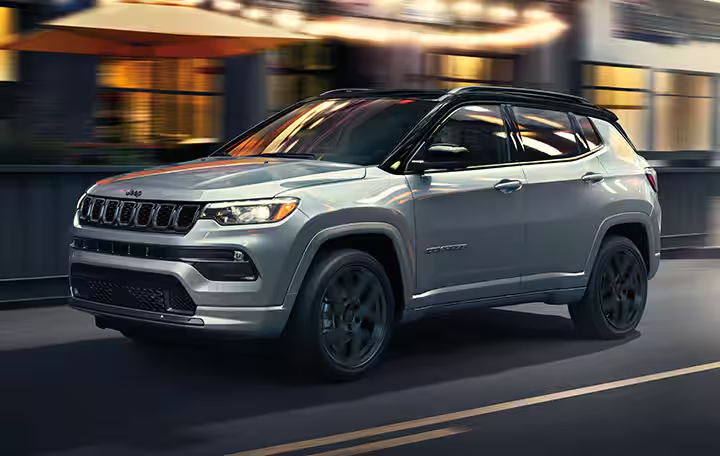
The 2024 Jeep Compass Latitude stands out in the competitive compact SUV market by blending off-road prowess with refined style and practicality. As a member of Jeep’s celebrated Compass lineup, the Latitude trim offers a versatile driving experience, advanced technology, and the rugged capability you’d expect from the iconic brand. Whether you’re navigating city streets or exploring off-the-grid trails, the 2024 Compass Latitude is your perfect companion.
Exterior Design: Sleek Yet Rugged
The 2024 Jeep Compass Latitude strikes a perfect balance between ruggedness and sophistication. With its signature seven-slot grille, sleek LED headlights, and athletic stance, it exudes confidence on the road. The Latitude trim features 17-inch alloy wheels, body-color door handles, and roof rails, making it both stylish and adventure-ready.
Distinctive design details like the available two-tone roof add a premium touch, while practical elements such as heated exterior mirrors ensure year-round convenience. The 2024 Compass Latitude is available in a range of striking colors, allowing you to personalize it to suit your style.
Interior: Comfort and Functionality
Inside the 2024 Jeep Compass Latitude, you’ll find a cabin designed for comfort and versatility. Premium materials, ergonomic seating, and thoughtful storage solutions make every drive enjoyable. The Latitude trim offers:
- Cloth/Vinyl Upholstery: A combination of durability and style.
- Dual-Zone Climate Control: Keeping everyone comfortable, no matter the weather.
- Leather-Wrapped Steering Wheel: A touch of luxury in your hands.
With a spacious rear seat and up to 59.8 cubic feet of cargo space with the rear seats folded, the Compass Latitude is built to accommodate your lifestyle—whether it’s groceries, gear, or weekend luggage.
Technology: Connected and Convenient
The 2024 Jeep Compass Latitude is equipped with modern technology to enhance your driving experience. The Uconnect® 5 system is at the heart of its infotainment setup, featuring an 8.4-inch touchscreen with:
- Apple CarPlay® and Android Auto™ Integration: Seamless smartphone connectivity.
- Bluetooth® Hands-Free Calling: Stay connected safely.
- Voice Command: Control navigation, music, and more without taking your hands off the wheel.
Additional tech features include a 6-speaker audio system and multiple USB ports to keep devices charged and passengers entertained on the go.
Performance: Adventure-Ready Capability
Under the hood, the 2024 Compass Latitude boasts a 2.0-liter turbocharged engine delivering 200 horsepower and 221 lb-ft of torque. Paired with an 8-speed automatic transmission, it ensures smooth and responsive performance on highways and trails alike.
Jeep’s legendary capability comes standard with:
- Available 4×4 Systems: Handle diverse terrains with ease.
- Selec-Terrain™ Traction Management: Adapt to snow, sand, mud, or rock with the twist of a dial.
- Trail-Rated Toughness: While not the most rugged Compass trim, the Latitude is more than capable of tackling challenging paths.
Safety: Confidence in Every Journey
Jeep prioritizes safety in the 2024 Compass Latitude, offering a comprehensive suite of standard and available features, including:
- Blind-Spot Monitoring and Rear Cross-Path Detection: Enhance awareness of your surroundings.
- Adaptive Cruise Control: Maintain a safe distance during highway drives.
- Full-Speed Forward Collision Warning: Alerts you to potential hazards ahead.
- Active Lane Management: Helps keep you centered on the road.
These advanced features ensure peace of mind, whether you’re navigating busy city streets or remote backroads.
Why Choose the 2024 Jeep Compass Latitude?
The 2024 Jeep Compass Latitude is a well-rounded compact SUV that combines Jeep’s off-road heritage with modern sophistication. It’s ideal for drivers seeking versatility, comfort, and capability without compromising style. Whether you’re commuting daily, embarking on weekend adventures, or simply enjoying the ride, the Compass Latitude is ready to elevate every journey.
Visit your local Jeep dealership today to experience the 2024 Compass Latitude firsthand and discover why it’s the perfect fit for your lifestyle.

When Jeep announced the limited-edition Tuscadero Pink color for the Wrangler, it turned heads, raised eyebrows, and captured hearts. This striking hue isn’t just a paint job; it’s a lifestyle statement. Bold, unapologetic, and impossible to ignore, Tuscadero Pink is for those who dare to be different.
A Color That Redefines Adventure
Jeep has always been synonymous with rugged exploration and all-terrain capability, but Tuscadero Pink brings a vibrant twist to the adventure game. It’s not every day you see a Jeep Wrangler decked out in a color so vivid it seems to defy the rugged terrain it’s built to conquer. Whether crawling over rocks, kicking up dust on desert trails, or cruising through the city streets, this color demands attention.
The Inspiration Behind Tuscadero Pink
Named after the unforgettable character Carol “Pinky” Tuscadero from the classic TV series Happy Days, this hue captures the sass, confidence, and charisma of its namesake. Much like Pinky, Tuscadero Pink is charmingly bold—a perfect match for Jeep enthusiasts who embrace individuality.
Limited Edition, Limitless Attitude
Tuscadero Pink was introduced as a limited-time option, making it an exclusive choice for Wrangler fans. Jeep enthusiasts didn’t hesitate; orders poured in, and Tuscadero Pink became a breakout star. The color’s scarcity only amplifies its allure, making it a must-have for collectors and adventurers who want to stand out in a sea of neutral tones.
Where Rugged Meets Glam
Despite its glamorous flair, the Tuscadero Pink Jeep Wrangler doesn’t compromise on the rugged features Jeep is known for. Whether equipped with the legendary Rubicon trim for off-road prowess or the Sahara trim for a perfect blend of luxury and capability, the Wrangler in Tuscadero Pink proves that beauty and brawn can coexist.
- Trail-Rated Tough: Water fording, rock climbing, and mud conquering—Tuscadero Pink Wranglers do it all.
- Customizable to Perfection: From hardtops to soft tops, half doors to full doors, you can personalize your Tuscadero Pink Jeep to match your adventurous spirit.
Turning Heads Everywhere

Tuscadero Pink isn’t just a color; it’s a conversation starter. Whether you’re pulling into a campsite or parking in a busy urban center, this Jeep guarantees double-takes and compliments. Social media has exploded with proud owners sharing their adventures in their Tuscadero Pink Wranglers, proving that this color is more than a trend—it’s a movement.
The Perfect Blend of Fun and Function
For drivers who live life in full color, the Tuscadero Pink Jeep offers an experience like no other. It’s a reminder that adventure doesn’t have to come in camouflage—sometimes, it’s better in pink.
So, whether you’re tackling trails or turning city streets into your personal runway, Tuscadero Pink is your ticket to standing out and making every journey unforgettable.

When you think of Jeep, rugged off-road performance, iconic design, and a sense of adventure likely come to mind. But did you know that Jeep vehicles are also filled with hidden surprises known as “Easter eggs”? These subtle, playful design features are scattered throughout various Jeep models, waiting to be discovered by keen-eyed owners. From nostalgic nods to Jeep’s heritage to fun symbols and unique patterns, Jeep Easter eggs add an extra layer of excitement and personality to your ride.
In this comprehensive guide, we’ll explore what Jeep Easter eggs are, why they exist, and where you can find them in different Jeep models. Whether you’re a Jeep owner or simply an enthusiast, this deep dive will uncover the magic behind these hidden gems.
What Are Jeep Easter Eggs?
Easter eggs in the automotive world refer to hidden design elements, symbols, or messages embedded within a vehicle. Jeep Easter eggs are famous for their creativity and the element of surprise they bring to owners. They can take the form of:
- Silhouettes of classic Jeep models.
- Iconic seven-slot grille designs.
- Playful symbols like animals, mythical creatures, or maps.
This tradition began with the 1997 Jeep Wrangler TJ, where a seven-slot grille design was molded into the cowl. Since then, Easter eggs have become a hallmark of Jeep’s design philosophy, delighting drivers and showcasing the brand’s rich history.
Why Does Jeep Include Easter Eggs?
The inclusion of Easter eggs serves several purposes:
- Paying Homage to Heritage: Jeep has a storied history dating back to World War II. Many Easter eggs honor this legacy by referencing the original Willys Jeep or other iconic models.
- Fostering Community Engagement: Discovering Easter eggs creates a sense of camaraderie among Jeep owners. Sharing these findings on forums and social media strengthens the bond within the Jeep community.
- Highlighting Creativity: Easter eggs showcase the designers’ attention to detail and inject an element of fun into the ownership experience.
Common Jeep Easter Eggs and Their Locations
Here are some popular Easter eggs and where you might find them:
1. Seven-Slot Grille
- The iconic seven-slot grille, a symbol of Jeep’s identity, can be found in unexpected places such as:
- Headlights
- Taillights
- Windshield corners
2. Animal Symbols
- Some Jeep models feature animals like:
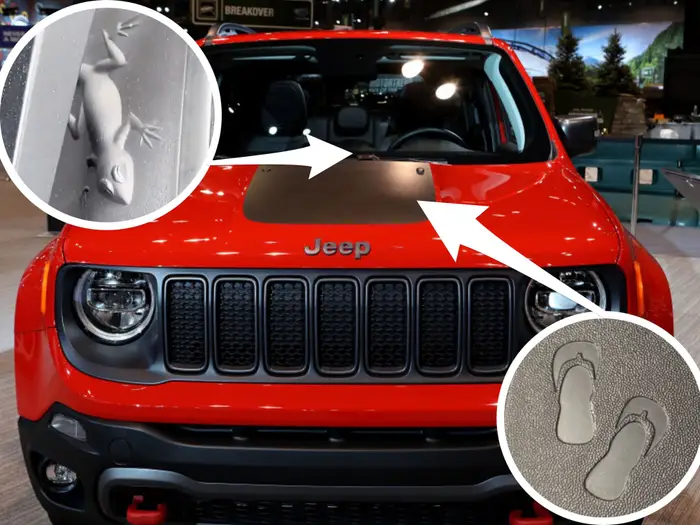
- Gecko: Found under the windshield wiper of the Jeep Compass.
- Spider: Located near the fuel cap with the phrase “Ciao Baby.”
- T-Rex or Sasquatch: Hidden in the rear windshield or interior panels.
3. Flip-Flops on the Cowl
- A tribute to automotive journalist Rick Péwé, known for wearing flip-flops during off-road adventures.
4. Maps and Coordinates
- Some models include topographical maps of famous off-road trails, like Moab, Utah, etched into the interior.
5. Mythical Creatures
- Easter eggs featuring Sasquatch, Loch Ness Monster, or other mythical beings can be found in subtle places like the rear windshield.
Model-Specific Easter Eggs
Let’s dive into some notable examples by Jeep model:
Jeep Wrangler
- Willys Jeep Silhouette: Found on the windshield corner as a nod to Jeep’s WWII origins.
- Morse Code: Hidden messages spelling out “JL” beneath the power outlet in the rear cargo area.
Jeep Renegade
- X-Taillights: Inspired by the design of jerry cans used during WWII.
- Spider: Inside the fuel door, with the playful phrase “Ciao Baby.”
- Bigfoot: A silhouette hidden in the rear windshield.
Jeep Compass
- Gecko Symbol: Positioned under the windshield wiper.
- Morse Code on Pedals: Messages like “Sand, Snow, Rivers, Rocks.”
Jeep Grand Cherokee
- Hidden Grilles: Miniature seven-slot grille patterns integrated into the headlights or interior trim.
How to Find Easter Eggs in Your Jeep
Discovering Easter eggs in your Jeep can be an adventure in itself. Here are some tips to help you:
- Inspect Thoroughly:
- Examine both the interior and exterior carefully. Pay attention to small details on surfaces like the windshield, fuel door, and cargo area.
- Use a Flashlight:
- Some Easter eggs are subtle and may require additional light to spot.
- Engage with the Community:
- Join Jeep forums or social media groups to learn about known Easter egg locations specific to your model.
- Consult Your Manual:
- While not all Easter eggs are documented, some may be hinted at in your vehicle’s manual.
Why Jeep Easter Eggs Matter
Beyond their playful nature, Easter eggs reflect Jeep’s commitment to its customers and community. These hidden gems:
- Reinforce Jeep’s adventurous brand identity.
- Create a sense of connection between Jeep owners and the brand.
- Offer a fun and unique ownership experience that goes beyond standard vehicle features.
Why Does Jeep Include Easter Eggs?
Jeep isn’t just an automaker — it’s a brand built on heritage, adventure, and a loyal community that spans decades. From the battlefields of World War II to modern highways and rugged off-road trails, Jeep’s vehicles carry a legacy that resonates with freedom and exploration. But if you’ve ever owned a Jeep or even sat in one, you may have noticed something peculiar — a tiny lizard hiding under the wipers, a silhouette of Bigfoot on the glass, or the outline of the original Willys Jeep etched into a corner.
These are Jeep Easter eggs — small, hidden design details intentionally placed by Jeep’s designers to surprise and delight owners. But why does Jeep include them in the first place?
The Real Purpose Behind Jeep Easter Eggs
The inclusion of Easter eggs isn’t just for fun; it serves a deeper purpose that aligns with Jeep’s DNA.
1. Paying Homage to Jeep’s Heritage
Every Easter egg tells a story. Jeep’s roots trace back to the original Willys MB military vehicle that helped Allied troops during World War II — a vehicle that symbolized dependability, strength, and adventure.
By embedding small nods to this history, like a Willys silhouette or grille outline, Jeep designers remind owners of the brand’s enduring legacy. These Easter eggs aren’t random; they’re Jeep’s way of saying, “We remember where we came from.”
2. Fostering Community and Connection
The Jeep community is one of the most passionate in the automotive world. From Jeep Jamborees to off-road meetups, owners share a unique bond built around exploration and authenticity.
Easter eggs act like a hidden handshake — an inside secret among Jeep enthusiasts. Finding one and posting it on forums or social media strengthens that sense of belonging. Every new discovery fuels conversations, photos, and videos that bring Jeep owners together from all over the world.
3. Highlighting Creativity and Personality
Unlike many automakers that stick to sterile, corporate design, Jeep allows its designers to have fun. The tradition of Easter eggs started in 2010 when designer Michael Santoro hid a tiny Jeep grille in the headlight of the Jeep Wrangler. It became an instant hit. Since then, Jeep’s design team has used Easter eggs as a creative outlet — a way to infuse playfulness and personality into every vehicle.
It’s proof that Jeep’s vehicles are designed by people who love the brand as much as the drivers who own them.
Common Jeep Easter Eggs and Their Hidden Locations
Jeep Easter eggs appear in dozens of forms, from engraved symbols to molded designs. Here are some of the most popular examples and where to find them:
1. The Seven-Slot Grille
The seven-slot grille is Jeep’s most recognizable feature — a design that traces back to the Willys MB. Designers have hidden miniature versions of this grille in unexpected areas like:
- Headlight housings
- Taillights
- Windshield corners
- Dashboard trim or cupholders
It’s Jeep’s subtle reminder of its brand identity, no matter how far modern design evolves.
2. Animal Symbols
Animals are a recurring theme in Jeep’s Easter eggs, often representing adventure and freedom.
- Gecko: Found under the windshield wiper of the Jeep Compass — a symbol of resilience and adaptability.
- Spider: Hidden near the fuel cap of the Renegade, accompanied by the phrase “Ciao Baby” — a wink to Jeep’s Italian design roots at the time.
- T-Rex or Sasquatch: Seen on some Wrangler and Gladiator models, often in the rear glass or under the hood, representing the spirit of exploration and mystery.
3. Flip-Flops on the Cowl
One of the most famous Easter eggs — a pair of tiny flip-flops on the cowl — pays tribute to Rick Péwé, a legendary off-road journalist who always wore flip-flops on Jeep adventures. It’s a small but heartfelt nod to a beloved figure in Jeep culture.
4. Maps and Coordinates
Jeep loves geography — after all, exploration is its essence.
Certain models feature topographical maps of iconic off-road destinations like Moab, Utah, or Rubicon Trail, California, engraved into interior panels, center consoles, or storage compartments. Some even include GPS coordinates pointing to famous trails — an invitation for owners to go find them.
5. Mythical Creatures and Legends
Because Jeep thrives on mystery and discovery, mythical beings often make cameos:
- Sasquatch or Bigfoot: Found etched into rear windows.
- Loch Ness Monster: Occasionally hidden in trim pieces or under the glass.
These fun touches encourage owners to look closer and embrace Jeep’s adventurous spirit.
Model-Specific Easter Eggs
Each Jeep model hides unique Easter eggs that reflect its identity and purpose.
Jeep Wrangler
- Willys Jeep silhouette on the windshield corner — honoring its WWII origin.
- Morse Code spelling “JL” beneath the rear cargo power outlet.
- Grille designs molded into seat stitching or headlight housings.
Jeep Renegade
- X-shaped taillights inspired by the jerry cans carried on military Jeeps.
- Spider and “Ciao Baby” inside the fuel door.
- Bigfoot silhouette hidden in the rear windshield — a fan favorite.
Jeep Compass
- Gecko symbol beneath the windshield wiper.
- Morse code engravings on pedals with messages like “Sand, Snow, Rivers, Rocks.”
Jeep Grand Cherokee
- Miniature seven-slot grilles integrated into headlights or cabin trim.
- Hidden Jeep logos on speaker grilles or door panels — subtle but elegant.
How to Find Easter Eggs in Your Jeep
Discovering Easter eggs is like going on a treasure hunt — part of the joy of owning a Jeep.
1. Inspect Every Corner
Look under wipers, inside fuel doors, on taillights, seats, floor mats, and even behind the steering wheel. Designers hide them in the most unexpected places.
2. Use a Flashlight
Some Easter eggs are engraved or molded into dark plastic, requiring good lighting to see clearly.
3. Join the Jeep Community
Online Jeep forums, Facebook groups, and Reddit threads are filled with posts about newly discovered Easter eggs. Joining these communities can help you uncover the ones you might have missed — and connect you with other passionate owners.
4. Check Your Manual
While most Easter eggs aren’t officially documented, some models subtly reference them in the owner’s manual or promotional materials.
Why Jeep Easter Eggs Matter
Easter eggs aren’t just cute details — they’re a reflection of Jeep’s soul.
- They reinforce Jeep’s heritage. Every small silhouette or symbol tells a piece of the brand’s 80-year story.
- They strengthen the Jeep community. Owners love sharing discoveries, fueling a sense of belonging that few brands can replicate.
- They make ownership personal. When you find an Easter egg, it feels like a secret between you and the brand — proof that Jeep builds vehicles with passion, not just assembly lines.
As Jeep Global Design Chief Mark Allen once said:
“We build Jeeps for people who live for the story. Every Easter egg is a way to say — there’s always more to discover.”
Conclusion
Jeep Easter eggs add a layer of mystery and excitement to owning a Jeep. These hidden design features not only honor the brand’s history but also foster a sense of community among Jeep enthusiasts. Whether you’re discovering your first Easter egg or hunting for the next, these surprises remind us that Jeep is more than just a vehicle—it’s an adventure.
So, grab your flashlight and start exploring. You never know what treasures you might find hidden in your Jeep!
Top 20 FAQs About Jeep Easter Eggs
1. What are Jeep Easter eggs?
Jeep Easter eggs are hidden design details or symbols placed throughout Jeep vehicles. These fun surprises include shapes, logos, or nods to Jeep’s heritage—often hidden on the windshield, fuel cap, or headlights.
2. Why does Jeep include Easter eggs in its vehicles?
Easter eggs are Jeep’s way of celebrating creativity and brand heritage. They connect modern models to Jeep’s World War II origins and encourage owners to explore every inch of their vehicle.
3. Which Jeep model introduced the first Easter egg?
The first Easter egg appeared on the 1997 Jeep Wrangler TJ, featuring a miniature seven-slot grille molded into the cowl—starting a tradition that continues across all Jeep models today.
4. Do all Jeep vehicles have Easter eggs?
Yes. Most modern Jeep models—including the Wrangler, Renegade, Compass, and Grand Cherokee—feature hidden Easter eggs. The number and style vary by model and trim.
5. Where can I find Easter eggs on my Jeep Wrangler?
Wranglers often hide Easter eggs near the windshield corners, on the taillights, and even inside the rear cargo area—look for the Willys silhouette or Morse-code messages.
6. What Easter eggs are found on the Jeep Renegade?
The Renegade is packed with playful details, including X-shaped taillights inspired by WWII jerry cans and a spider near the fuel door that says “Ciao Baby.”
7. Are there Easter eggs on the Jeep Compass?
Yes. The Compass includes a gecko under the windshield wiper and even Morse code on the pedals that reads “Sand, Snow, Rivers, Rocks.”
8. Does the Jeep Grand Cherokee have any Easter eggs?
The Grand Cherokee hides subtle seven-slot grilles in the headlights and interior trim—small reminders of Jeep’s timeless design DNA.
9. How many Easter eggs are on a Jeep?
The number varies by model. Some Jeeps have a handful, while others—like the Renegade—can have over 30 hidden details scattered throughout the cabin and exterior.
10. What is the meaning behind Jeep’s seven-slot grille Easter egg?
The seven-slot grille represents Jeep’s legacy as the first vehicle to be driven on all seven continents—symbolizing global adventure and freedom.
11. What animals appear in Jeep Easter eggs?
Common animal symbols include geckos, spiders, dinosaurs, and even Bigfoot. Each represents adventure, resilience, or a playful tribute to off-road culture.
12. What does the flip-flop Easter egg mean?
The flip-flop symbol pays tribute to Rick Péwé, an off-road journalist known for wearing flip-flops on Jeep adventures—a nod to the brand’s fun and laid-back spirit.
13. Are there maps or coordinates hidden in Jeeps?
Yes. Some Jeep interiors feature topographical maps of Moab, Utah, or other legendary off-road destinations etched into trim panels.
14. What are the rarest Jeep Easter eggs?
Rare Easter eggs include mythical creatures like Sasquatch or the Loch Ness Monster, often hidden in the rear glass or side panels of select models.
15. Can I find Jeep Easter eggs at night?
Some Easter eggs are easier to spot with a flashlight or phone light, especially etched designs inside windows or molded details in darker areas.
16. Are Jeep Easter eggs mentioned in the owner’s manual?
Not usually. Jeep intentionally keeps Easter eggs a secret so that owners can enjoy discovering them organically over time.
17. How can I join the Jeep Easter egg community?
Jeep enthusiasts share Easter egg finds on forums, Reddit, and social media using hashtags like #JeepEasterEggs. It’s a fun way to connect with other owners.
18. Do Jeep Easter eggs increase a vehicle’s value?
While Easter eggs don’t directly raise resale value, they enhance the Jeep’s appeal, character, and connection to the brand—often making ownership more enjoyable.
19. Which new Jeep models have the most Easter eggs?
The Jeep Renegade, Wrangler, and Compass are known for having the most hidden Easter eggs among the lineup sold at Simi Valley Chrysler Dodge Jeep Ram.
20. Where can I explore Jeep Easter eggs in person near Simi Valley?
Visit Simi Valley Chrysler Dodge Jeep Ram to test-drive new Jeep models and see these clever design details up close. Our team can even point out a few Easter eggs you might miss.
2025 Chrysler Pacifica Hybrid
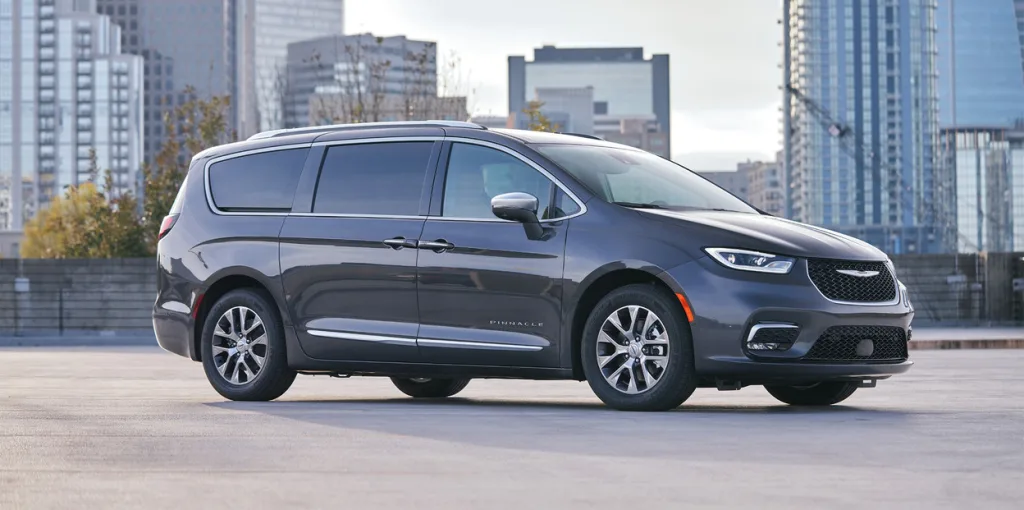
Everything You Need to Know About Miles Per Gallon, Real-World Fuel Economy, and Why It Matters
When it comes to family vehicles, few names inspire as much confidence as the Chrysler Pacifica. For 2025, Chrysler continues to refine its class-leading minivan, offering both a gasoline V6 version and a Plug-In Hybrid Electric Vehicle (PHEV) variant. Each brings its own strengths — but both deliver exceptional efficiency and comfort.
At Simi Valley Chrysler Dodge Jeep Ram, we break down the real-world miles per gallon numbers, MPGe ratings, and what they mean for California drivers.
Gasoline Model: Everyday Power with Solid Efficiency
The 2025 Chrysler Pacifica continues to use the dependable 3.6-liter Pentastar V6 engine — a proven powerplant known for balance, refinement, and reliability.
EPA Ratings (Front-Wheel Drive):
- 19 MPG City
- 28 MPG Highway
- 22 MPG Combined
For families that opt for All-Wheel Drive, expect slightly lower numbers at 17 MPG city / 25 MPG highway — a fair trade-off for added traction and confidence in all conditions.
Fuel Tank Size: 19 gallons
Range Between Fill-Ups: Up to 430 miles
The V6 engine is paired with a 9-speed automatic transmission that ensures smooth shifting and efficient cruising, making highway travel especially easy on fuel.
Hybrid Model: Plug-In Power for the Modern Family
The 2025 Chrysler Pacifica Plug-In Hybrid remains the only PHEV minivan in America, and it continues to set the benchmark for hybrid versatility.
EPA Ratings:
- 82 MPGe (miles per gallon equivalent) combined
- 32 miles of pure electric driving range
- ~30 MPG combined once the battery is depleted
Fuel Tank Size: 16.5 gallons
Total Range (Electric + Gas): Over 500 miles
This means short trips and school commutes around Simi Valley, Thousand Oaks, or Ventura can be done entirely on electric power — with no gasoline used at all. For longer journeys, the gas engine seamlessly takes over, giving you true “best of both worlds” flexibility.
Which Pacifica Is Right for You?
| Feature | Gas Pacifica | Pacifica Hybrid (PHEV) |
|---|---|---|
| Engine | 3.6L Pentastar V6 | 3.6L V6 + Electric Motors |
| Fuel Economy | 19/28/22 (FWD) | 82 MPGe / 30 MPG hybrid |
| Drivetrain | FWD or AWD | FWD only |
| Range | ~430 miles | ~500 miles total |
| Electric Range | N/A | 32 miles EV-only |
| Charging Time | N/A | 2 hours (Level 2) or 12–14 hours (Level 1) |
| Best For | Long highway trips, heavy loads, all-weather use | Daily commutes, short errands, lower fuel cost |
If you have access to a home charger and drive locally most days, the Pacifica Hybrid can drastically reduce fuel costs. On the other hand, if you prefer all-wheel drive or simpler refueling, the gas version remains a strong pick.
How Pacifica Compares to Rivals
| Vehicle | City MPG | Highway MPG | Combined |
|---|---|---|---|
| Chrysler Pacifica (Gas) | 19 | 28 | 22 |
| Chrysler Pacifica Hybrid | — | — | 82 MPGe / 30 MPG |
| Toyota Sienna Hybrid | 36 | 36 | 36 |
| Kia Carnival | 19 | 26 | 22 |
While the Sienna Hybrid achieves strong gas-only efficiency, it lacks a plug-in electric mode. The Pacifica PHEV remains unique for its electric driving capability and overall efficiency when charged regularly.
Real-World Efficiency Tips
- Plug in daily to maximize electric driving on the PHEV.
- Maintain proper tire pressure for lower rolling resistance.
- Use Eco Mode and smooth throttle inputs to improve MPG.
- Reduce idling and remove roof racks when not in use.
- Stay on top of maintenance — oil changes, air filters, and battery checks.
With mindful driving, many Simi Valley owners report real-world averages above 30 MPG even in mixed traffic.
Ownership Benefits at Simi Valley CDJR
When you choose Simi Valley Chrysler Dodge Jeep Ram, you get more than just great pricing:
- Certified technicians trained specifically on Chrysler hybrid systems.
- Fast, convenient financing options for both gas and hybrid models.
- Available test drives of both Pacifica trims.
- Competitive trade-in appraisals on your current vehicle.
We’re proud to serve drivers from San Fernando Valley, Thousand Oaks, Moorpark, and Ventura County, helping families choose the most efficient minivan for their lifestyle.
Frequently Asked Questions
What is the MPG of the 2025 Chrysler Pacifica?
The gasoline model achieves 19 city / 28 highway / 22 combined MPG, while the hybrid is rated at 82 MPGe combined with about 30 MPG after the battery is depleted.
How many miles can the Pacifica Hybrid travel on electricity alone?
Up to 32 miles per full charge — perfect for most daily commutes.
How long does it take to charge the Pacifica Hybrid?
Roughly 12–14 hours on a standard household outlet (Level 1), or about 2 hours using a Level 2 home or public charger.
How big is the fuel tank on the Pacifica?
The gas Pacifica holds 19 gallons, while the Hybrid holds 16.5 gallons.
Does the 2025 Pacifica Hybrid require premium gas?
No. Both the gas and hybrid versions use regular 87-octane unleaded fuel.
Can the Pacifica Hybrid tow?
The Hybrid is not rated for heavy towing. The gas Pacifica can tow up to 3,600 lbs when properly equipped.
Is the Chrysler Pacifica reliable?
Yes. Both variants feature the durable Pentastar V6 engine, a proven design used across Chrysler, Dodge, and Jeep vehicles for years. With proper maintenance, many Pacificas exceed 200,000 miles of service.
What’s the total driving range of the Pacifica Hybrid?
With a full charge and a full tank, the PHEV can travel over 500 miles before refueling.
Does the Pacifica Hybrid qualify for tax incentives?
Depending on state and federal programs, Plug-In Hybrid buyers may qualify for EV rebates or credits. Check current California Clean Vehicle Rebate Project (CVRP) and federal guidelines for eligibility.
Where can I test drive a 2025 Chrysler Pacifica near me?
Right here at Simi Valley Chrysler Dodge Jeep Ram, located at
📍 2350 First St, Simi Valley, CA 93065
📞 (805) 387-9755
🌐 View Chrysler Pacifica Inventory
Final Thoughts
The 2025 Chrysler Pacifica gives California families two outstanding efficiency options. Whether you prefer the convenience of a gas-powered minivan or the innovation of a plug-in hybrid, both deliver excellent MPG performance, family-friendly comfort, and signature Chrysler design.
Visit Simi Valley CDJR today to compare both models and discover firsthand why the Pacifica remains the most advanced minivan in America.
Dodge Hornet Reliability
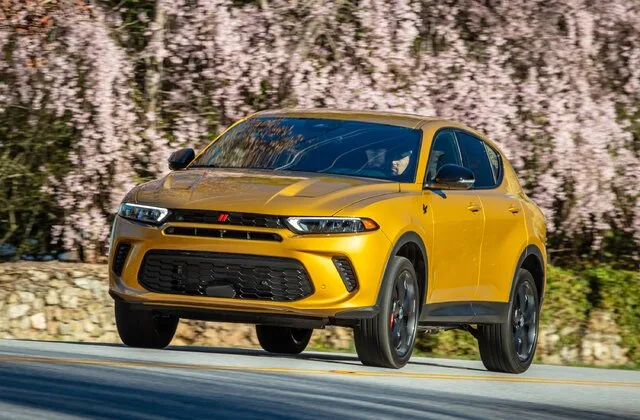
When it comes to compact SUVs, the market is brimming with options, each vying for attention with its unique blend of features, performance, and reliability. Among the contenders, the Dodge Hornet has emerged as a noteworthy player, promising a blend of style, power, and versatility. However, as with any vehicle, prospective buyers are keenly interested in understanding its reliability to make an informed decision. In this comprehensive analysis, we delve deep into the Dodge Hornet’s reliability, exploring its build quality, performance metrics, common issues, owner feedback, and how it stacks up against its competitors.
1. Introduction to the Dodge Hornet
Launched as Dodge’s entry into the highly competitive compact SUV segment, the Hornet aims to capture drivers seeking a balance between performance and practicality. With its bold design, advanced technology, and Dodge’s signature performance-oriented ethos, the Hornet is positioned to appeal to a diverse range of consumers.
Key Features:
- Engine Options: The Hornet offers a range of engines, including turbocharged four-cylinder options and performance-tuned variants.
- Interior Quality: High-quality materials, spacious seating, and modern infotainment systems define the interior.
- Technology: Advanced driver-assistance systems, connectivity features, and customizable displays enhance the driving experience.
- Design: A sporty and aggressive exterior design sets the Hornet apart in a crowded market.
2. Build Quality and Design
Exterior:
The Dodge Hornet boasts a striking exterior that blends ruggedness with sleek aesthetics. The bold grille, sharp lines, and aerodynamic profile not only contribute to its visual appeal but also enhance performance. High-quality materials and precise manufacturing processes ensure durability and a premium feel.
Interior:
Inside, the Hornet offers a well-appointed cabin with ample space for passengers and cargo. The use of soft-touch materials, comfortable seating, and intuitive layout reflects Dodge’s commitment to quality. The ergonomic design ensures that controls are easily accessible, reducing driver fatigue during long journeys.
Materials and Fit & Finish:
The Hornet’s interior materials are of commendable quality, with minimal rattles or squeaks reported in initial reviews. The fit and finish are tight, showcasing attention to detail in assembly. However, as with any new model, minor issues may surface over time, warranting close attention from manufacturers.
3. Performance and Engine Reliability
Engine Options:
The Dodge Hornet comes equipped with a variety of engine choices to cater to different driving preferences:
- 2.0L Turbocharged Inline-4: Offers a balance between performance and fuel efficiency, delivering around 250 horsepower.
- Performance Variants: Enhanced engines with higher horsepower for those seeking a more spirited driving experience.
Transmission:
Paired with a smooth-shifting automatic transmission, the Hornet ensures seamless power delivery and responsiveness. The transmission’s reliability is crucial for long-term ownership, and early reports suggest minimal issues.
Handling and Ride Quality:
The Hornet’s suspension is tuned to provide a comfortable ride without compromising on handling. Its agile maneuverability makes it suitable for both city driving and highway cruising. The vehicle’s stability and responsiveness are key indicators of its overall performance reliability.
Fuel Efficiency:
Fuel economy figures are competitive within the compact SUV segment. The Hornet’s engines are designed to optimize fuel consumption without sacrificing performance, making it a practical choice for daily commuting and long-distance travel.
4. Reliability Ratings and Consumer Reports
Manufacturer’s Reliability:
Dodge, as a brand, has had a mixed history with reliability. However, recent models have shown significant improvements, with a focus on quality control and customer satisfaction. The Hornet benefits from these advancements, aiming to establish Dodge as a dependable manufacturer in the compact SUV space.
Third-Party Reliability Ratings:
Organizations like J.D. Power and Consumer Reports provide invaluable insights into a vehicle’s reliability. As of the latest reports:
- J.D. Power: The Dodge Hornet receives above-average ratings in initial quality studies, indicating fewer problems reported by early owners.
- Consumer Reports: The Hornet scores well in reliability rankings, particularly in areas like engine performance and transmission smoothness.
Warranty and Support:
Dodge offers a competitive warranty package for the Hornet, typically including a 3-year/36,000-mile bumper-to-bumper warranty and a 5-year/60,000-mile powertrain warranty. Extended warranties and maintenance plans are also available, providing added peace of mind for buyers.
5. Common Issues and Recalls
Initial Release Concerns:
As with any new model, the Dodge Hornet may encounter teething problems during its initial release phase. Common issues to watch for include:
- Infotainment System Glitches: Early adopters may report occasional software bugs or connectivity issues with the infotainment system.
- Minor Electrical Problems: Instances of faulty sensors or minor electrical malfunctions have been noted, though these are generally addressed promptly by dealers.
- Interior Trim Issues: Some users have reported loose trim pieces or minor imperfections in the interior finish.
Recalls:
As of the latest information, there have been no major recalls for the Dodge Hornet. Manufacturers continuously monitor vehicle performance post-launch and issue recalls if significant safety or reliability issues arise. Prospective buyers should stay informed by regularly checking official recall notices.
6. Owner Feedback and Satisfaction
Positive Feedback:
Owners of the Dodge Hornet have expressed satisfaction with various aspects of the vehicle:
- Performance: The Hornet’s powerful engine options and responsive handling are frequently praised.
- Comfort: Spacious interiors and comfortable seating contribute to a positive ownership experience.
- Design: The bold and sporty design resonates well with buyers looking for a distinctive vehicle.
Areas for Improvement:
While the overall feedback is positive, some areas have been highlighted for potential improvement:
- Infotainment Interface: Some users find the infotainment system’s interface less intuitive compared to competitors.
- Cargo Space: While adequate for its class, a few owners wish for more cargo capacity.
- Ride Firmness: A minority of drivers prefer a softer ride, especially on rougher road surfaces.
Reliability Perception:
Overall, owner satisfaction regarding the Hornet’s reliability is high, with minimal reported issues. The brand’s commitment to addressing concerns and providing timely support reinforces confidence among owners.
7. Comparison with Competitors
Dodge Hornet vs. Honda HR-V:
- Performance: The Hornet offers more powerful engine options compared to the HR-V’s modest offerings.
- Interior Space: Both vehicles provide ample space, but the Hornet edges out slightly in cargo capacity.
- Reliability: Honda traditionally boasts strong reliability, but the Hornet is making significant strides in this area.
Dodge Hornet vs. Toyota C-HR:
- Design: The Hornet’s aggressive styling contrasts with the C-HR’s more subdued aesthetics.
- Technology: Both vehicles offer advanced infotainment systems, though user preferences may vary.
- Fuel Efficiency: Comparable fuel economy figures, with slight variations based on engine choices.
Dodge Hornet vs. Mazda CX-30:
- Performance: The Hornet’s performance-oriented design gives it an edge in engine power and handling.
- Interior Quality: Both vehicles feature high-quality interiors, with Mazda often praised for its luxurious feel.
- Reliability: Mazda has a longstanding reputation for reliability, which the Hornet is working to match.
Dodge Hornet vs. Subaru Crosstrek:
- All-Wheel Drive: Both offer all-wheel-drive options, enhancing versatility.
- Off-Road Capability: The Crosstrek is known for its off-road prowess, while the Hornet focuses more on urban and highway performance.
- Reliability: Subaru’s reliability is well-regarded, but the Hornet is emerging as a strong contender.
8. Maintenance and Long-Term Reliability
Routine Maintenance:
Proper maintenance is crucial for ensuring the long-term reliability of any vehicle. For the Dodge Hornet, regular oil changes, tire rotations, brake inspections, and timely replacement of filters and fluids are essential. Following the manufacturer’s recommended maintenance schedule helps prevent potential issues and extends the vehicle’s lifespan.
Common Repairs:
While the Hornet is generally reliable, some common repairs that may arise include:
- Brake System Maintenance: Replacement of brake pads and rotors as they wear out.
- Battery Replacement: Batteries typically last 3-5 years, depending on usage and climate conditions.
- Tire Replacement: Depending on driving habits and road conditions, tires may need replacement every 40,000 to 60,000 miles.
Availability of Parts and Service:
Dodge’s extensive dealership network ensures that parts and service are readily available. Genuine OEM parts are accessible, and certified technicians are trained to handle specific Hornet-related issues, ensuring quality repairs and maintenance.
Cost of Ownership:
The Dodge Hornet’s cost of ownership is competitive within its segment. Initial purchase prices are reasonable, and maintenance costs are manageable. Insurance premiums are on par with other compact SUVs, though they can vary based on individual factors like location, driving history, and coverage choices.
9. Safety and Reliability
Safety Features:
The Hornet is equipped with a suite of safety features aimed at protecting occupants and preventing accidents:
- Advanced Driver-Assistance Systems (ADAS): Includes adaptive cruise control, lane-keeping assist, blind-spot monitoring, and automatic emergency braking.
- Structural Integrity: High-strength steel frames and crumple zones enhance crash safety.
- Airbags: Comprehensive airbag coverage for front, side, and curtain protection.
Safety Ratings:
Safety ratings from organizations like NHTSA and IIHS are critical indicators of a vehicle’s safety performance. The Dodge Hornet has performed admirably in initial tests, earning favorable ratings for crashworthiness and safety features.
Reliability Impact on Safety:
A reliable vehicle is inherently safer, as consistent performance and minimal mechanical issues reduce the likelihood of accidents caused by vehicle malfunctions. The Hornet’s reliability contributes positively to its overall safety profile, ensuring that critical systems function as intended.
10. Future Outlook and Reliability Improvements
Manufacturer’s Commitment:
Dodge has demonstrated a commitment to continuous improvement, focusing on enhancing build quality, performance, and reliability in subsequent model years. Feedback from early adopters is being actively incorporated to address any shortcomings and refine the Hornet’s design and functionality.
Technological Advancements:
With advancements in automotive technology, the Hornet is expected to integrate more sophisticated systems that enhance reliability. Innovations in engine design, materials, and manufacturing processes contribute to a more robust and dependable vehicle.
Sustainability Efforts:
Dodge is also exploring eco-friendly technologies, such as hybrid and electric powertrains, which may be incorporated into future Hornet models. These advancements not only improve environmental sustainability but also offer enhanced performance and efficiency, contributing to overall reliability.
11. Conclusion: Is the Dodge Hornet a Reliable Choice?
After a thorough analysis, the Dodge Hornet emerges as a reliable and compelling option in the compact SUV segment. Its robust performance, stylish design, and advanced features make it an attractive choice for a wide range of drivers. While early models have shown minor issues typical of new vehicle releases, the overall reliability ratings and owner feedback are positive, indicating that the Hornet is poised to establish itself as a dependable contender in the market.
Pros:
- Powerful Engine Options: Delivering impressive performance and responsiveness.
- Stylish Design: Bold aesthetics that stand out in a crowded market.
- Advanced Technology: Comprehensive infotainment and safety features.
- Competitive Pricing: Offering good value for the features and performance provided.
Cons:
- Infotainment System: May require further refinement for enhanced user experience.
- Cargo Space: While adequate, it may fall short for some users compared to competitors.
- Ride Firmness: Some drivers may prefer a softer suspension setup.
Final Verdict:
The Dodge Hornet is a reliable and versatile compact SUV that caters to drivers seeking a blend of performance, style, and practicality. Its strong initial reliability ratings, coupled with Dodge’s ongoing improvements, make it a worthwhile consideration for anyone in the market for a new SUV. Prospective buyers should, however, evaluate their specific needs and preferences, test drive the vehicle, and consult multiple sources of reviews to ensure it aligns with their expectations.
12. Additional Resources
For those interested in learning more about the Dodge Hornet’s reliability and overall performance, the following resources are invaluable:
is 2017 jeep wrangler a jk or jl

The 2017 Jeep Wrangler is part of the JK generation. The JK generation of the Jeep Wrangler ran from 2007 to 2018.
The JL generation, which is the next generation, debuted in 2018. It brought several updates, including improved technology, a more refined interior, and better overall performance.
So, to clarify:
- 2017 Jeep Wrangler = JK
- 2018 Jeep Wrangler and newer = JL
The 2017 model will have the characteristics typical of the JK generation, such as a 3.6-liter V6 engine, solid front and rear axles, and a design that closely resembles previous Wranglers with a few modern updates.
What Makes the 2017 Jeep Wrangler JK Stand Out?
1. Legendary Off-Road Capabilities
The 2017 Jeep Wrangler JK is designed for off-road dominance. With the Command-Trac 4WD system, this vehicle can handle any terrain, from rocky trails to muddy paths. For more serious off-roaders, the Rock-Trac 4WD system in the Rubicon trim offers even more capability, including locking differentials and a sway bar disconnect. This system ensures that the Jeep Wrangler JK excels in rock crawling and challenging environments. Its solid axles, high ground clearance, and rugged suspension make it a true off-road warrior.
2. Engine Power and Performance
Under the hood, the 2017 Jeep Wrangler JK is powered by a 3.6-liter V6 engine that delivers 285 horsepower and 260 lb-ft of torque, providing ample power for off-road challenges and highway cruising. For those seeking a more efficient engine, there’s also a 2.8-liter diesel engine available in certain markets. Combined with either a 6-speed manual or 5-speed automatic transmission, this engine provides the perfect balance of power, reliability, and fuel efficiency for off-road enthusiasts.
3. Iconic Jeep Design
The 2017 Jeep Wrangler JK maintains the signature Jeep look, with its iconic seven-slot grille, round headlights, and boxy frame. The design has been updated slightly over the years, but it still carries the rugged and adventurous spirit Jeep is known for. The JK generation is also available in both two-door and four-door (Unlimited) variants, providing flexibility depending on your space and seating needs. Plus, it offers the classic Jeep feature of a removable top and doors, allowing you to enjoy the open-air driving experience whenever you wish.
4. Comfort and Interior Features
While the 2017 Wrangler JK is built for off-road adventures, it also delivers comfort and modern technology for everyday driving. The interior features high-quality materials, with durable upholstery and easy-to-clean surfaces, perfect for muddy adventures. The cabin is spacious, especially in the Unlimited model, which provides ample space for passengers and cargo. Standard features include Uconnect infotainment, Bluetooth connectivity, Apple CarPlay, Android Auto, and a 7-inch touchscreen, ensuring you have all the connectivity and entertainment options you need on your journey.
5. Safety Features
Safety is a priority in the 2017 Wrangler JK. It comes equipped with standard multiple airbags, traction control, stability control, and a reinforced roll cage that enhances occupant safety in the event of a rollover. While the Wrangler is primarily designed for off-road adventures, these safety features provide peace of mind when driving on highways or in more urban environments. The Rubicon model also includes features like hill-start assist and trailer-sway control, making it even more equipped for off-road driving and towing.
6. Fuel Efficiency
The 2017 Jeep Wrangler JK offers reasonable fuel efficiency for a rugged off-roading vehicle. With an average of 17 mpg in the city and 21 mpg on the highway, it balances fuel economy with the need for power and off-road performance. While these numbers aren’t as high as some non-off-road vehicles, they are competitive for a 4×4 vehicle of this caliber, especially when considering its performance capabilities.
Why Choose the 2017 Jeep Wrangler JK?
The 2017 Jeep Wrangler JK remains a top choice for anyone seeking a rugged, off-road-capable vehicle with a classic design and modern technology. Its unmatched 4×4 performance, dependable engine options, and iconic design make it ideal for both off-road enthusiasts and those looking for a fun, versatile vehicle. Additionally, the affordable pricing on the used market makes it a great value, especially for those who want the ultimate adventure vehicle without paying the premium for a brand-new model.
Whether you’re a seasoned off-roader, a weekend adventurer, or someone who just loves the classic Jeep style, the 2017 Wrangler JK is an excellent choice that continues to deliver thrills and reliability.
Conclusion: The 2017 Jeep Wrangler JK Remains a Top Off-Road Icon
When it comes to off-road vehicles, the 2017 Jeep Wrangler JK stands tall as one of the best options available. Its performance, legendary 4×4 capabilities, and durability make it perfect for tackling tough terrain. With a design that has stood the test of time, modern tech features, and a comfortable ride, the 2017 Wrangler JK continues to be a favorite among Jeep lovers and off-road enthusiasts. Whether you’re planning your next adventure or simply want a versatile vehicle for everyday use, the 2017 Jeep Wrangler JK remains an iconic choice that delivers on all fronts.
Visit your local Jeep dealership today to experience the 2017 Jeep Wrangler JK in person, and discover why it remains one of the most beloved off-road vehicles in the world.
Connect with us


