






The History Behind the Brand Divorce of Dodge & Ram
Dodge and Ram split because Chrysler wanted each brand to do a clearer job. Dodge would focus on cars, performance, and SUVs, while Ram would become a standalone truck brand focused on pickups, commercial vans, towing, hauling, and work customers.
The simple answer is this: Ram separated from Dodge in 2009, shortly after Fiat took control of Chrysler, so Ram trucks could become their own dedicated truck division instead of living under the Dodge name. Stellantis now identifies Ram as its own brand, while Dodge operates separately with its own performance-focused identity.
That is why today you hear people say “Ram 1500” instead of “Dodge Ram 1500.” The truck DNA is still connected to Dodge history, but the brand structure changed.
Before the Split, It Was Dodge Ram
For decades, Ram trucks were sold under the Dodge name.
The phrase “Dodge Ram” became famous because Ram pickups were part of the Dodge lineup. Trucks like the Dodge Ram 1500, 2500, and 3500 built a loyal following with bold styling, V8 engines, Cummins diesel power, and a strong work-truck identity.
The Ram name itself became especially powerful after the 1994 redesign. That generation brought the big-rig front end, tall grille, and aggressive truck styling that helped Dodge stand out against Ford and Chevrolet. Car and Driver looked back at that era and noted how the 1994 Ram helped Dodge’s pickup sales surge dramatically.
By the 2000s, “Ram” was already strong enough to stand on its own.
Why Chrysler Split Dodge and Ram
The split happened because Chrysler wanted more focused brands.
Dodge had performance cars, sedans, minivans, SUVs, and trucks all under one roof. That made the brand broad, but also messy. Ram trucks had a different customer than Dodge performance cars.
A Ram buyer might be shopping for towing capacity, payload, diesel torque, commercial use, fleet work, farm duty, or a heavy-duty truck. A Dodge buyer might be looking at Charger, Challenger, Durango, or performance styling.
Separating Ram allowed the truck side to speak directly to truck buyers without being tied to Dodge’s car identity.
When Did Dodge and Ram Split?
Dodge and Ram officially split for the 2010 model year.
In 2009, Chrysler reorganized its brands after bankruptcy and Fiat’s involvement. The Ram truck lineup became its own brand, while Dodge continued separately.
That is why a 2009 truck may still be called a Dodge Ram, while a 2010 and newer truck is officially a Ram. The change was not because the truck suddenly became unrelated. It was a branding and business decision.
Did Dodge Stop Making Trucks?
Not exactly.
Dodge stopped being the brand name on the trucks, but the trucks continued under the Ram name. The factories, engineering heritage, engines, and customer base did not vanish overnight.
So when people ask, “Did Dodge stop making Ram trucks?” the accurate answer is: Dodge stopped branding the trucks as Dodge, and Ram became the truck brand.
The Ram 1500, Ram 2500, Ram 3500, Chassis Cab models, and commercial vans continued under the Ram badge.
Why Ram Became Its Own Brand
Ram became its own brand because trucks had become too important to be treated as just one category inside Dodge.
Pickup buyers are loyal. They compare capability numbers carefully. They care about towing, payload, torque, bed length, cab style, diesel options, axle ratios, work features, and durability.
A standalone Ram brand gave Chrysler a way to compete more directly with Ford F-Series, Chevrolet Silverado, GMC Sierra, and heavy-duty truck buyers.
That focus helped Ram build a stronger identity around capability, comfort, and truck innovation.
What Happened to Dodge After the Split?
Dodge moved harder into performance.
After Ram became separate, Dodge leaned into vehicles like the Charger, Challenger, Durango, and performance branding. The brand became more associated with muscle, aggressive styling, HEMI engines, Hellcat power, and enthusiast culture.
That separation actually made both brands clearer.
Ram became the truck brand.
Dodge became the performance brand.
That is why the split made sense from a marketing perspective.
Did the Trucks Change Right Away?
The badge changed faster than the trucks themselves.
Early Ram-branded trucks still had plenty of Dodge-era engineering and design DNA. The customer experience did not suddenly become completely different. But over time, Ram developed more of its own identity.
The Ram 1500 became known for comfort, especially with its coil-spring rear suspension and refined interiors. Heavy-duty Ram trucks continued building their reputation around Cummins diesel power and serious towing capability.
The brand separation gave Ram room to grow beyond simply being “Dodge’s truck lineup.”
Why People Still Say Dodge Ram
People still say “Dodge Ram” because the name was used for decades.
If someone grew up around older trucks, it feels natural. A 1998 Ram 1500, 2003 Ram HEMI, or 2006 Cummins truck was officially a Dodge Ram. That name has real history.
But for newer trucks, “Dodge Ram” is technically incorrect. A 2019 Ram 1500, 2022 Ram 2500, or 2025 Ram 1500 is officially a Ram, not a Dodge.
Still, the old name is so familiar that many owners, shoppers, and even casual listings continue using it.
Is Ram Still Owned by Dodge?
No. Ram is not owned by Dodge.
Both Dodge and Ram are sister brands under Stellantis. They share corporate ownership, but one does not own the other.
Stellantis lists Dodge and Ram as separate brands in its portfolio, along with Chrysler, Jeep, Fiat, Alfa Romeo, Peugeot, Citroën, and others.
So the family connection is still there, but Dodge and Ram are separate brand divisions.
Is Ram Better Off Without Dodge?
From a branding standpoint, yes.
Ram has built a clearer identity as a truck-focused brand. It can market the Ram 1500, heavy-duty trucks, commercial vans, and work-focused models without trying to fit into Dodge’s performance-car personality.
The separation also lets Dodge focus on its own brand story. Dodge does not have to balance minivans, trucks, muscle cars, and SUVs under one message the way it once did.
For shoppers, it makes the lineup easier to understand.
If you want a truck, look at Ram.
If you want performance-focused Dodge models, look at Dodge.
Did the Split Hurt Ram?
The split did not kill Ram. It helped define it.
Ram trucks continued to compete strongly in the full-size pickup market. The Ram 1500 became known for its cabin quality, ride comfort, technology, and towing capability. The heavy-duty Ram 2500 and 3500 continued to attract buyers who wanted Cummins diesel power.
The split also made Ram feel more like a serious truck brand rather than just a Dodge subcategory.
For local truck shoppers, comparing used Ram inventory can show how the Dodge Ram era and modern Ram era overlap in the used market. Buyers looking for newer trucks can also browse new Ram inventory to compare current Ram 1500, 2500, and 3500 models.
Dodge Ram vs Ram: What Should You Call It?
Use Dodge Ram for trucks built before the split.
Use Ram for 2010 and newer trucks.
That is the cleanest rule.
A 2008 Dodge Ram 1500 is a Dodge Ram.
A 2012 Ram 1500 is a Ram.
A 2025 Ram 2500 is a Ram.
Saying “Dodge Ram” for a newer truck is common, but technically outdated.
FAQs About Dodge and Ram Splitting
When did Dodge and Ram split?
Dodge and Ram split for the 2010 model year, after Chrysler reorganized its brands in 2009.
Why did Ram split from Dodge?
Ram split from Dodge so Chrysler could create a dedicated truck brand focused on pickups, commercial vehicles, towing, hauling, and work customers.
Is Ram still Dodge?
No. Ram is a separate brand from Dodge, though both are owned by Stellantis.
Why do people still say Dodge Ram?
People still say Dodge Ram because the trucks were sold under the Dodge name for decades. The name is still familiar, especially for older trucks.
Are Ram trucks made by Dodge?
New Ram trucks are not branded as Dodge. They are built and sold under the Ram brand.
What was the last Dodge Ram?
The final Dodge Ram trucks were from the 2009 model year. Starting with 2010 models, the trucks became Ram-branded vehicles.
Is a 2012 Ram 1500 a Dodge?
No. A 2012 Ram 1500 is officially a Ram, not a Dodge.
Final Thoughts: It Was a Divorce, But Not a Breakup
The Dodge and Ram split was not a messy breakup. It was a strategic brand divorce.
Ram had become strong enough to stand alone. Dodge needed a sharper identity. Chrysler separated the two so Ram could focus on trucks and Dodge could focus on performance.
That decision is why today’s lineup makes more sense. Ram owns the truck side. Dodge owns the muscle side. The old Dodge Ram name still carries history, but modern Ram trucks have built their own identity.
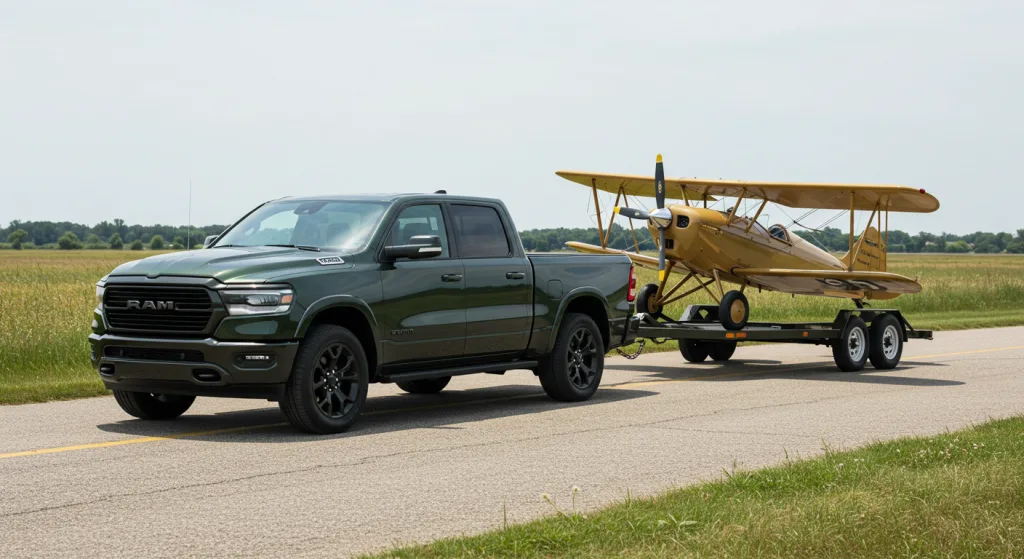
The Ram 1500 is a versatile truck celebrated for towing boats, campers, and horse trailers—but what about an airplane? From tiny Cessnas to vintage warbirds, the idea of towing an aircraft with a half-ton pickup sounds outrageous… until you crunch the numbers. In this deep dive, we reveal whether the Ram 1500 can handle aviation-grade loads, the legal hurdles involved, and the jaw-dropping stories of owners who’ve actually done it.
1. Airplane Weights: From Tiny Trainers to Massive Jets
Not all planes are created equal. Let’s break down the weight classes:
| Aircraft Type | Empty Weight | Fuel/Loaded Weight |
|---|---|---|
| Cessna 172 Skyhawk | 1,600–1,800 lbs | 2,400–2,800 lbs |
| Piper PA-28 Cherokee | 1,500–1,700 lbs | 2,200–2,600 lbs |
| Vans RV-12 (Light Sport) | 700–900 lbs | 1,300–1,500 lbs |
| T-6 Texan (Vintage) | 4,200–4,500 lbs | 5,500–6,000 lbs |
| Boeing 737 | 90,000–100,000 lbs | Don’t even think about it. |
Sources:
Key Takeaway: Small training planes and light sport aircraft weigh less than a horse trailer. Vintage warbirds and larger planes? That’s where things get tricky.
2. Ram 1500 Towing Capacity: The Official Numbers
The Ram 1500’s max towing capacity depends on its engine, drivetrain, and configuration:
- 3.6L Pentastar V6 (eTorque): 7,730 lbs (4×2, 3.92 axle ratio).
- 5.7L HEMI V8 (eTorque): 12,750 lbs (4×2, 3.92 axle ratio).
- 3.0L EcoDiesel V6: 12,560 lbs (4×2, 3.92 axle ratio).
Source: 2024 Ram 1500 Towing Guide
Verdict:
- Light Sport Planes (1,500 lbs): Easily towable by even the base V6.
- T-6 Texan (6,000 lbs): Requires a HEMI V8 or EcoDiesel.
- Cessna Caravan (8,000+ lbs): Beyond the Ram 1500’s limits (step up to a Ram 2500).
3. Payload: The Hidden Hurdle
Payload capacity is the total weight your truck can carry, including passengers, cargo, and tongue weight (10–15% of the trailer/plane weight). Exceeding payload risks suspension damage and legal penalties.
- Ram 1500 Payload:
- V6 Models: 1,300–1,900 lbs.
- HEMI V8 Models: 1,800–2,300 lbs.
- EcoDiesel Models: 1,500–1,800 lbs.
Example: Towing a 6,000-lb T-6 Texan on a trailer:
- Tongue Weight: 900 lbs (15%).
- Passengers & Gear: 500 lbs (driver + tools).
- Total Payload: 1,400 lbs.
- HEMI V8: Safe (if payload ≥ 1,800 lbs).
- EcoDiesel: Risky (if payload ≤ 1,800 lbs).
Pro Tip: Check your door jamb sticker for exact payload.
4. How Do You Even Tow a Plane? Trailers vs. Towbars
Towing an airplane isn’t like hauling a boat. Here’s how it works:
A. On a Trailer
- Flatbed Trailer: The plane is loaded onto a trailer, wheels secured.
- Pros: Stable for highway towing.
- Cons: Adds trailer weight (1,000–3,000 lbs).
- Best For: Long-distance transport.
B. Towbar Only
- Towbar Hookup: Attach a towbar directly to the plane’s nose gear.
- Pros: Lightweight, no trailer needed.
- Cons: Only for ground movement (taxiing, hangar storage). Illegal on public roads.
- Best For: Moving planes around an airfield.
Source: AOPA Towing Guide
5. Legal and Safety Minefields
A. CDL Requirements
- Commercial Driver’s License (CDL): Required if the combined weight (truck + trailer + plane) exceeds 26,000 lbs.
- Example: Ram 1500 (5,500 lbs) + 6,000-lb plane + 2,000-lb trailer = 13,500 lbs total (no CDL needed).
B. State Laws
- Wide Load Permits: Required if the plane/trailer exceeds 8.5 feet in width (most small planes are 8–10 feet wide).
- Escort Vehicles: Mandatory in some states for oversize loads.
Source: FMCSA State Laws
C. Insurance
- Commercial Coverage: Personal auto insurance won’t cover towing aircraft for hire.
- Liability Risks: A crashed plane could mean million-dollar lawsuits.
6. Real-World Cases: When the Ram 1500 Tows Wings
Case 1: Cessna 172 Rescue
- Owner: John M., Arizona.
- Setup: 2022 Ram 1500 HEMI + 1,800-lb flatbed trailer.
- Story: Towed a disassembled Cessna 172 300 miles to a restoration shop.
- Quote: “The truck didn’t even break a sweat—it felt like towing a U-Haul.” – Ram Forum
Case 2: T-6 Texan Mishap
- Owner: Vintage Wings Museum, Canada.
- Setup: Ram 1500 EcoDiesel + towbar.
- Story: Used the truck to tow a T-6 Texan across an airfield after engine failure.
- Caution: “Never try this on roads—the brakes aren’t designed for it.” – Aviation Safety Network
7. Equipment You’ll Need
A. For Trailers
- Heavy-Duty Trailer: PJ Aircraft Trailers (rated for 10,000+ lbs).
- Wheel Chocks & Straps: Tie-Down Engineering aircraft-grade restraints.
- LED Lighting: DOT-compliant trailer lights.
B. For Towbars
- Aircraft Towbar: Tronair models ($1,500+).
- Nose Gear Adapter: Plane-specific (Cessna, Piper, etc.).
8. Ram 1500 vs. Competitors
| Truck | Max Towing | Can Tow a Plane? | Pros | Cons |
|---|---|---|---|---|
| Ram 1500 HEMI | 12,750 lbs | Yes (up to 6,000 lbs) | Best-in-class ride, air suspension | Lower payload than rivals |
| Ford F-150 3.5L EcoBoost | 14,000 lbs | Yes (heavier planes) | Higher max towing | Stiffer suspension |
| Chevy Silverado 1500 | 13,300 lbs | Yes | Advanced trailering cameras | Less luxurious interior |
9. When to Use a Bigger Truck
- Planes Over 7,000 lbs: Opt for a Ram 2500/3500 (up to 37,100 lbs towing).
- Commercial Operations: Use an F-450 Super Duty or Isuzu NPR for liability and durability.
10. Safety Tips from Pilots
- Center of Gravity: Load the plane so its weight is slightly forward on the trailer.
- Brake Testing: Perform emergency stops in an empty lot before hitting highways.
- Wing Protectors: Use foam padding to prevent damage from straps.
- Weather Check: Never tow in high winds—planes act like sails.
Source: AOPA Towing Safety
11. Frequently Asked Questions
Q: Can I tow a plane without a trailer?
A: Only on private property (e.g., airfields). Public roads require a trailer.
Q: Does towing a plane void my warranty?
A: No, if you stay within payload/towing limits – Ram Warranty FAQ.
Q: How much does an aircraft trailer cost?
A: 10,000–10,000–30,000+ for custom builds – Aircraft Spruce.
12. The Verdict: Yes, But…
The Ram 1500 can tow small airplanes—if you respect payload limits, use the right equipment, and stay within the law. For light sport planes and vintage trainers, it’s a thrillingly capable rig. But for anything over 6,000 lbs or commercial use, upgrade to a heavy-duty truck.
Ready to Tow?
- Build Your Ram 1500: Ram Configurator.
- Find Aircraft Trailers: Aircraft Spruce Marketplace.
Final Word: Towing an airplane with a Ram 1500 isn’t just possible—it’s a wild testament to modern truck engineering. Just remember: Aviation dreams require terrestrial caution.

The Ram 1500 is a popular choice for drivers seeking a blend of comfort and capability, but can it handle the demands of towing a horse trailer? We dive into the specs, real-world performance, and legal considerations to answer this critical question—and reveal whether the Ram 1500 is the right truck for your equine adventures.
1. Ram 1500 Towing Capacity: Breaking Down the Numbers
The Ram 1500’s towing capacity varies by engine, drivetrain, and configuration. Here’s what you need to know:
- 3.6L Pentastar V6 (eTorque):
- Max Towing: 7,730 lbs (4×2, 3.92 axle ratio) – Ram 1500 Towing Guide.
- 5.7L HEMI V8 (eTorque):
- Max Towing: 12,750 lbs (4×2, 3.92 axle ratio).
- 3.0L EcoDiesel V6:
- Max Towing: 12,560 lbs (4×2, 3.92 axle ratio).
Key Takeaway: The HEMI V8 and EcoDiesel models can handle most horse trailers, but payload and hitch weight are critical.
2. Horse Trailer Weights: What Are You Towing?
Horse trailers range from lightweight two-horse models to massive living quarters rigs.
| Trailer Type | Empty Weight | Loaded Weight |
|---|---|---|
| 2-Horse Bumper Pull | 2,500–3,500 lbs | 5,000–7,000 lbs |
| 3-Horse Gooseneck | 4,000–6,000 lbs | 8,000–12,000 lbs |
| Living Quarters | 7,000–10,000 lbs | 12,000–16,000 lbs |
Sources:
Verdict: The Ram 1500’s 12,750-lb max towing can handle most 2–3 horse trailers but struggles with large living quarters models.
3. Payload Capacity: The Overlooked Limitation
Payload is the total weight your truck can carry (passengers, gear, and tongue weight). Exceeding it risks damage and voids warranties.
- Ram 1500 Payload:
- V6 Models: Up to 1,900 lbs.
- HEMI V8 Models: Up to 2,300 lbs.
- EcoDiesel Models: Up to 1,800 lbs.
Example:
- Towing a 7,000-lb trailer = 1,050 lbs tongue weight (15%).
- Add 3 passengers (600 lbs) and tack (200 lbs): 1,850 lbs total payload.
- HEMI V8: Safe (1,850 lbs ≤ 2,300 lbs).
- EcoDiesel: Risky (1,850 lbs > 1,800 lbs).
Tip: Check your door jamb sticker for exact payload.
4. Required Equipment for Safe Towing
- Hitch:
- Bumper Pull: Class IV hitch (up to 10,000 lbs) – Curt Manufacturing.
- Gooseneck: Requires factory-installed prep package ($1,295) – Ram Towing Packages.
- Brakes: Electric trailer brakes (mandatory for >1,500 lbs in most states).
- Weight Distribution Hitch: Reduces sway for trailers over 5,000 lbs – Equal-i-zer.
5. Ram 1500 vs. Competitors
| Truck | Max Towing | Horse Trailer Fit? | Pros | Cons |
|---|---|---|---|---|
| Ram 1500 HEMI | 12,750 lbs | Yes (2–3 horses) | Best-in-class ride quality | Lower payload than rivals |
| Ford F-150 3.5L EcoBoost | 14,000 lbs | Yes (larger trailers) | Higher max towing | Harsher ride |
| Chevy Silverado 1500 | 13,300 lbs | Yes | Advanced trailering tech | Less refined interior |
Sources:
6. Real-World Towing Experiences
- Success Story:
- “My Ram 1500 HEMI tows a 2-horse trailer effortlessly. The air suspension levels the load perfectly.” – Ram Forum.
- Cautionary Tale:
- “Towing a 3-horse gooseneck (9,000 lbs) strained the brakes on mountain roads.” – Horse Trailer World.
7. Safety and Legal Considerations
- CDL Requirements:
- Required if combined weight (truck + trailer) exceeds 26,000 lbs.
- Example: Ram 1500 (5,500 lbs) + 12,000-lb trailer = 17,500 lbs (no CDL needed).
- FMCSA Guidelines.
- State Laws:
- Some states require permits for trailers over 10,000 lbs – RVIA State Guide.
8. Upgrades to Improve Towing
- Air Suspension: Levels the truck under load ($1,795 option) – Ram Air Ride.
- Transmission Cooler: Essential for frequent towing (included in Trailer Tow Group).
- LT Tires: Upgrade to load-range E tires for stability – Goodyear Tires.
9. FAQs
Q: Do I need a brake controller?
A: Yes, for trailers over 1,500 lbs. The Ram 1500’s Integrated Trailer Brake Controller is a $295 option.
Q: Can I flat-tow a horse trailer?
A: Never. Use a gooseneck or bumper-pull trailer with proper hitch setup.
Q: Does towing affect my warranty?
A: No, if you stay within payload/towing limits – Ram Warranty.
10. The Verdict: Is the Ram 1500 Right for You?
- Yes, if:
- You’re towing 1–3 horses (under 12,750 lbs).
- You prioritize ride comfort and tech.
- No, if:
- You need to tow large living quarters trailers.
- Payload limits are too restrictive (opt for a Ram 2500).
Ready to Tow?
- Build Your Ram 1500: Ram Configurator.
- Find a Trailer: Horse Trailer Marketplace.
Final Word: The Ram 1500 is a capable hauler for most horse owners, but always prioritize safety. Double-check weights, invest in the right equipment, and when in doubt, go bigger. Your horses—and your truck—will thank you. 🐎🚛
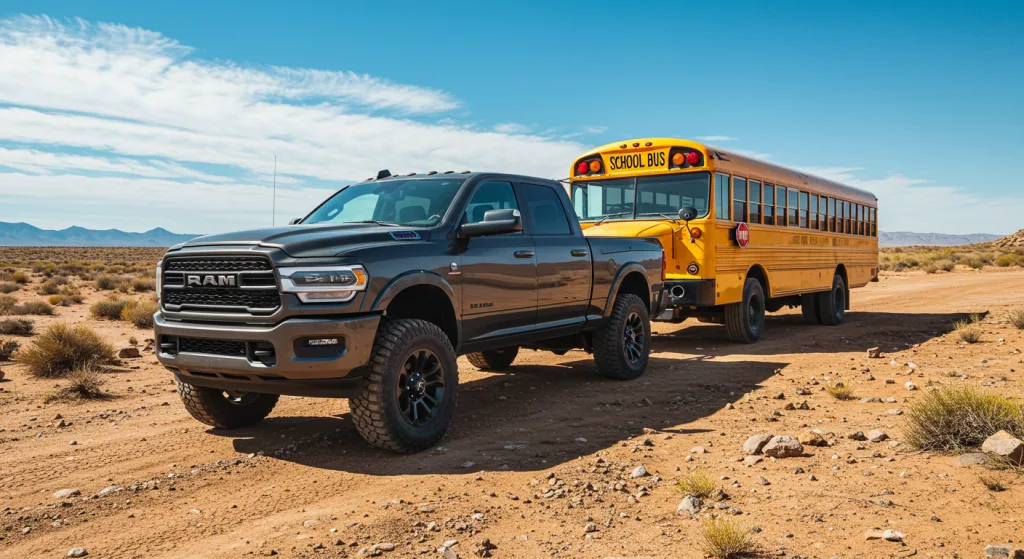
The Ram 2500 is a heavy-duty powerhouse, but towing a school bus isn’t a simple “yes or no” question. Let’s break down the numbers, legal requirements, and real-world practicality to see if this truck is up to the task.
1. School Bus Weight: Know Your Numbers
School buses come in different sizes, but here’s the average breakdown:
- Type A (Short Bus): 10,000–14,000 lbs (empty).
- Type C (Conventional): 14,000–17,000 lbs (empty).
- Loaded with Passengers: Add 6,000–9,000 lbs for students, fuel, and gear.
Example: A loaded Type C bus can weigh 20,000–26,000 lbs.
2. Ram 2500 Towing Capacity: Can It Handle a Bus?
The Ram 2500’s towing capacity depends on its engine and configuration:
- 6.4L HEMI V8 (Gas): 17,540 lbs (gooseneck/5th-wheel).
- 6.7L Cummins Turbo Diesel: 20,000 lbs (gooseneck/5th-wheel).
Verdict:
- Empty Type A/C Bus: Yes (14,000–17,000 lbs ≤ 20,000 lbs).
- Loaded Type C Bus: No (26,000 lbs > 20,000 lbs).
3. Payload Capacity: The Hidden Limitation
Even if the bus is within towing limits, payload capacity matters. Payload includes:
- Passengers
- Cargo
- Hitch weight (10–15% of trailer weight).
Ram 2500 Payload:
- Gas Models: Up to 4,010 lbs.
- Diesel Models: Up to 3,160 lbs.
Example:
- Towing a 17,000-lb bus = 2,550 lbs hitch weight (15%).
- Add 3 passengers (600 lbs) and tools (200 lbs): 3,350 lbs total payload.
- Gas Ram 2500: Safe (3,350 lbs ≤ 4,010 lbs).
- Diesel Ram 2500: Overloaded (3,350 lbs > 3,160 lbs).
4. Legal Requirements: CDL, Licenses, and Permits
- CDL (Commercial Driver’s License): Required if the combined weight (truck + bus) exceeds 26,000 lbs.
- Ram 2500 (~7,000 lbs) + 17,000-lb bus = 24,000 lbs (no CDL needed).
- Ram 2500 + 26,000-lb bus = 33,000 lbs (CDL required).
- State Laws: Some states require special permits for oversized loads.
5. Equipment Needed to Tow Safely
- Hitch: Class V receiver hitch (rated for 17,500–20,000 lbs).
- Brakes: Electric or hydraulic trailer brakes (mandatory for >1,000 lbs in most states).
- Lighting: DOT-approved trailer lights.
- Safety Chains: Rated for 1.5x the trailer’s weight.
6. Real-World Testing: What Owners Say
- Towing Empty Buses:
- “My Cummins-powered Ram 2500 handled a 15,000-lb bus easily on flat roads.” – PowerWagonForum.com.
- Towing Loaded Buses:
- “The truck struggled on steep grades, and braking felt unsafe.” – Ram2500OwnersGroup.
7. Ram 2500 vs. Competitors
| Truck | Max Towing | Can Tow a School Bus? |
|---|---|---|
| Ram 2500 Cummins | 20,000 lbs | Yes (empty or small bus) |
| Ford F-250 Power Stroke | 22,000 lbs | Yes (larger buses) |
| Chevy Silverado 2500HD | 18,510 lbs | No (most buses too heavy) |
8. Safety Risks of Towing a School Bus
- Sway Control: Buses are tall and prone to trailer sway. Use a weight distribution hitch.
- Braking Distance: Increases by 2–3x. Test brakes on empty roads first.
- Tire Blowouts: Heavy loads strain tires. Inspect them before towing.
9. When to Use a Bigger Truck
For loaded buses or frequent towing, upgrade to:
- Ram 3500: Tows 37,100 lbs (dually Cummins).
- Semi-Truck: Required for buses over 26,000 lbs.
10. Frequently Asked Questions
Q: Can I flat-tow a school bus with a Ram 2500?
A: No—flat-towing (with wheels on the ground) isn’t safe for vehicles over 5,000 lbs. Use a trailer.
Q: What’s the best Ram 2500 setup for towing buses?
A: Crew Cab 4×2 Cummins, 4.10 axle ratio, Trailer Tow Group, and dual rear wheels.
Q: Does towing a bus void my Ram’s warranty?
A: No, as long as you stay within payload/towing limits.
Conclusion: Yes, But With Caveats
The Ram 2500 can tow an empty or small school bus (under 20,000 lbs) if properly equipped. However, towing a loaded bus exceeds its limits and poses serious safety risks. For heavy-duty towing, step up to a Ram 3500 or commercial vehicle.
Need to tow a bus?
- Calculate Your Load: Use Ram’s Towing Calculator.
- Find a Heavy-Duty Trailer: PJ Trailers.
- Check State Laws: FMCSA Licensing Guide.
Final Word: The Ram 2500 is a beast, but even beasts have limits. Tow smart, stay safe, and know when to call in the big rigs.
The Ram 2500 is a heavy-duty workhorse engineered to tackle extreme towing challenges, from hauling fifth-wheel RVs to transporting construction equipment. Its towing capacity varies by engine, configuration, and optional equipment, but one thing remains constant: this truck is built to dominate. Below, we break down everything you need to know about the Ram 2500’s towing prowess, including key specs, competitor comparisons, and expert tips.
1. Ram 2500 Towing Capacity by Engine & Configuration
The Ram 2500’s towing capacity depends heavily on its engine, drivetrain, and cab/bed setup. Here’s a detailed breakdown for recent models:
A. 6.4L HEMI V8 Gas Engine
- Horsepower/Torque: 410 HP / 429 lb-ft
- Max Towing Capacity:
- Conventional Towing: Up to 16,320 lbs (2024 Crew Cab 4×2, 6’4″ bed, 3.73 axle ratio).
- Gooseneck/5th-Wheel: Up to 17,540 lbs (requires Trailer Tow Group).
- Payload: Up to 4,010 lbs.
B. 6.7L Cummins Turbo Diesel I6
- Horsepower/Torque: 370–420 HP / 850–1,075 lb-ft (varies by year).
- Max Towing Capacity:
- Conventional Towing: Up to 19,680 lbs (2024 Crew Cab 4×2, 3.73 axle ratio).
- Gooseneck/5th-Wheel: Up to 20,000 lbs (with High-Output Cummins and 4.10 axle ratio).
- Payload: Up to 3,160 lbs.
2. Key Factors Affecting Towing Capacity
A. Axle Ratio
- 3.73 Ratio: Ideal for balanced towing and fuel efficiency.
- 4.10 Ratio: Maximizes torque for heavy towing (recommended for 20,000-lb loads).
B. Cab & Bed Configuration
- Crew Cab vs. Regular Cab: Crew Cab models sacrifice ~500 lbs of payload for passenger space.
- Bed Length: 6’4″ beds offer better weight distribution than 8′ beds for gooseneck towing.
C. Drivetrain
- 4×2 vs. 4×4: 4×2 models typically tow ~1,000 lbs more due to reduced drivetrain weight.
D. Packages
- Trailer Tow Group: Adds trailer brake controller, 360-degree cameras, and upgraded cooling ($1,695).
- 5th-Wheel/Gooseneck Prep: Includes hitch receiver, wiring harness, and bed-mounted pucks ($1,295).
3. Ram 2500 vs. Competitors
| Truck | Max Towing Capacity | Pros | Cons |
|---|---|---|---|
| Ram 2500 Cummins | 20,000 lbs | Best-in-class torque, refined ride | Lower payload than gas models |
| Ford F-250 Power Stroke | 22,000 lbs | Higher max towing | Harsher ride, less tech |
| Chevy Silverado 2500HD | 18,510 lbs | Smooth Duramax diesel | Inferior infotainment, fewer features |
4. Towing Features That Set the Ram 2500 Apart
- Integrated Trailer Brake Controller: Adjust trailer brakes on the fly via the 12″ Uconnect screen.
- Trailer Tire Pressure Monitoring: Alerts you to flats mid-haul (part of Trailer Tow Group).
- 360-Degree Camera System: Simplifies hitching and maneuvering in tight spaces.
- Exhaust Brake (Diesel): Manages speed on steep descents without overheating brakes.
5. Payload Capacity: Don’t Overlook It!
Payload is the maximum weight your truck can carry (passengers, cargo, and tongue weight). Exceeding it voids warranties and risks damage.
- Gas Models: Up to 4,010 lbs (Tradesman Regular Cab 4×2).
- Diesel Models: Up to 3,160 lbs (due to heavier engine).
Example: Towing a 15,000-lb trailer with a 15% tongue weight (2,250 lbs) leaves just 1,760 lbs for passengers/cargo on a diesel model.
6. Real-World Towing Scenarios
- Travel Trailer: A 10,000-lb RV is a breeze for the HEMI V8 (14 MPG while towing).
- Horse Trailer: The Cummins diesel handles 16,000 lbs with stability.
- Construction Equipment: Max out at 20,000 lbs with the High-Output Cummins.
7. Safety Tips for Max Towing
- Weigh Your Setup: Use CAT scales to ensure you’re under GCWR (Gross Combined Weight Rating).
- Upgrade Tires: Swap to LT-rated tires (e.g., Michelin Defender LTX) for heavy loads.
- Maintenance: Change transmission fluid every 60,000 miles and inspect brakes annually.
8. Where to Find Your Ram 2500’s Exact Towing Capacity
- Door Jamb Sticker: Lists payload and axle ratio.
- Owner’s Manual: Detailed towing charts for your configuration.
- Ram Towing Guide: Download the 2024 Ram Towing Guide.
9. Frequently Asked Questions
Q: Can I tow 20,000 lbs with a gas engine?
A: No – the HEMI V8 maxes at 17,540 lbs. Opt for the Cummins diesel with 4.10 gears.
Q: Does the Ram 2500 require a CDL to tow 20,000 lbs?
A: No – CDL requirements apply to commercial use, not recreational (check state laws).
Q: What’s the best trim for towing?
A: Tradesman (value) or Laramie (luxury + tech). Both support max towing packages.
10. The Verdict: Why the Ram 2500 Dominates
With up to 20,000 lbs of towing capacity, class-exclusive tech like Trailer Tire Pressure Monitoring, and the torque-rich Cummins diesel, the Ram 2500 outmuscles competitors while offering a refined ride. Whether you’re a contractor, RV enthusiast, or heavy-hauler, this truck is engineered to work harder, smarter, and longer.
Ready to tow?
- Build Your Ram 2500: Ram Trucks Configurator.
- Find Inventory: Ram 2500 Listings.
Ram Power Wagon for Sale Near Me
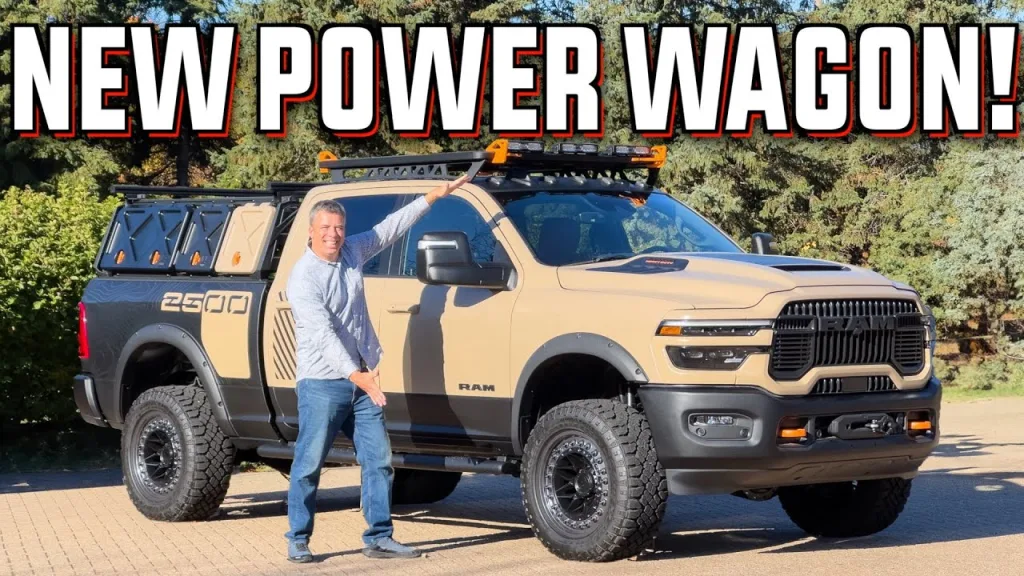
The Ram Power Wagon isn’t just a truck—it’s a statement. Since its modern revival in 2005, this heavy-duty legend has dominated the off-road pickup market with unmatched capability, factory-installed ruggedness, and a cult following. Whether you’re crawling boulders, hauling gear to remote job sites, or simply want the toughest truck on the block, the Power Wagon delivers. In this guide, we’ll break down why the Ram Power Wagon is worth every penny, where to find one for sale, and how it humiliates competitors like the Ford F-250 Tremor and Chevy Silverado ZR2.
1. What Makes the Ram Power Wagon Unique?
The Power Wagon is a factory-built off-roader based on the Ram 2500 platform. Unlike aftermarket-modified trucks, it’s engineered from the ground up for extreme terrain.
Key Features (2024 Model)
- Engine: 6.4L HEMI V8 – 410 HP, 429 lb-ft of torque.
- Drivetrain: Full-time 4×4 with electronic locking front/rear differentials, a disconnecting front sway bar, and a 4.10:1 axle ratio.
- Winch: Factory-installed 12,000-lb Warn® Zeon winch (standard).
- Suspension: 2.5-inch Bilstein® shocks and a 1.5-inch lift over standard Ram 2500 models.
- Tires: 33-inch LT285/70R17D Goodyear Wrangler DuraTrac® (mud-terrain).
- Payload/Towing: 1,510 lbs payload / 10,910 lbs towing (less than non-Power Wagon 2500s due to off-road gear).
2. Why Buy a Ram Power Wagon?
A. Unmatched Off-Road Prowess
The Power Wagon is the only heavy-duty truck with factory lockers, a winch, and disconnecting sway bars. Competitors like the Ford Tremor and Chevy ZR2 are light-duty posers by comparison.
- Articulation: 22.5 inches of wheel travel (front) / 25.5 inches (rear).
- Crawl Ratio: 44.1:1 in 4LO – ideal for rock crawling.
- Water Fording: 32 inches (with snorkel kits available).
B. Daily-Drivable Comfort
Unlike modified rigs, the Power Wagon doesn’t punish you on pavement:
- Interior: Available 12-inch Uconnect 5 touchscreen, leather-trimmed seats, and 19-speaker Harman Kardon® audio.
- Safety: Adaptive cruise control, blind-spot monitoring, and 360-degree cameras.
C. Legendary Durability
- Frame: Reinforced high-strength steel with a 5-year/100,000-mile powertrain warranty.
- Axles: Heavy-duty Dana 60 front and Dana 70 rear.
3. Ram Power Wagon vs. Competitors
A. Ford F-250 Tremor
- Pros: Higher towing (15,000 lbs), 6.7L Power Stroke diesel option.
- Cons: No factory winch, rear locker only, and a $5,000+ premium over the Power Wagon.
- Verdict: Better for towing, worse for off-roading.
B. Chevrolet Silverado 1500 ZR2
- Pros: Lighter, better fuel economy (17 MPG combined).
- Cons: Half the payload (1,200 lbs), no heavy-duty diesel option.
- Verdict: A mid-size pretender.
C. Toyota Tundra TRD Pro
- Pros: Reliable twin-turbo V6 (389 HP).
- Cons: No low-range gearing, plastic skid plates, and a 11,000-lb tow cap.
- Verdict: Not in the same league.
4. Pricing: What to Expect (2024 Models)
- Base Tradesman: $62,000 – Vinyl seats, basic infotainment.
- Laramie: $75,000 – Luxury interior, 12-inch screen, heated/ventilated seats.
- Limited 75th Anniversary Edition: $85,000+ – Exclusive badging, advanced safety tech.
Used Market (2018–2023 Models):
- 2018–2020: 45,000–45,000–55,000 (30,000–60,000 miles).
- 2021–2023: 55,000–55,000–70,000 (low mileage).
5. Where to Find a Ram Power Wagon for Sale
A. Dealerships
- New: Use Ram’s inventory tool to locate Power Wagons near you.
- Certified Pre-Owned (CPO): Comes with a 7-year/100,000-mile warranty.
B. Online Marketplaces
- Cars.com: 250+ Power Wagons listed nationwide.
- AutoTrader: Filter by “Power Wagon” and trim.
- Bring a Trailer: Rare vintage models (2005–2010).
C. Auctions
- Manheim: Check Manheim Express for dealer-only auctions.
- Copart: Salvage titles for DIY rebuilders (Copart Power Wagons).
6. What to Look for When Buying
A. New Models
- Markups: Some dealers charge $5,000+ over MSRP. Use Ram’s Build & Price to lock in rates.
- Incentives: Look for 0% APR financing or $1,500 bonus cash (varies monthly).
B. Used Models
- Common Issues:
- Exhaust Manifold Bolts: Prone to cracking (2014–2018 models).
- Winch Maintenance: Check for frayed cables or motor issues.
- Rust: Inspect frame and undercarriage (common in salt-belt states).
- Mods: Avoid trucks with aftermarket lifts >3 inches (strains drivetrain).
7. Customization: Build Your Ultimate Power Wagon
The Power Wagon is a blank canvas for upgrades:
- Performance:
- Supercharger Kits: Hennessey offers a 707 HP HEMI upgrade.
- 37-inch Tires: Requires a $1,500 suspension lift (e.g., Carli Dominator System).
- Overlanding:
- Bed Racks: Yakima OverHaul HD.
- Snorkel: ARB Safari for deep-water crossings.
- Aesthetic:
- Retro Graphics: 75th Anniversary stripes or classic Power Wagon decals.
8. Owner Reviews: Real-World Feedback
Pros:
- “The factory winch saved me three times on Moab’s Hell’s Revenge.” – Overland Journal.
- “Rides smoother than my old Ford Raptor.” – PowerWagonForum.com.
Cons:
- “Fuel economy is brutal – 11 MPG average.” – Edmunds.
- “Wish it had a diesel option.” – Reddit /r/Trucks.
9. Frequently Asked Questions
Q: Does the Power Wagon come with a diesel engine?
A: No – the 6.4L gas V8 is the only option. Ram reserves diesel for non-Power Wagon 2500/3500 models.
Q: Can I tow 15,000 lbs with a Power Wagon?
A: No – max towing is 10,910 lbs due to softer suspension. Opt for a Ram 2500 Cummins for heavy towing.
Q: Is the Power Wagon worth the price?
A: If you need extreme off-road capability without aftermarket hassles, yes.
10. The Verdict: Who Should Buy a Ram Power Wagon?
- Off-Road Enthusiasts: Best factory-ready rock crawler.
- Ranchers/Outdoorsmen: Haul feed, tow equipment, and rescue stuck ATVs.
- Luxury Buyers: High-trim models rival Cadillac Escalades in comfort.
Conclusion: The Power Wagon is a Modern Legend
The Ram Power Wagon isn’t for everyone – it’s for those who refuse to compromise. With its unmatched off-road specs, rugged durability, and surprising daily-driver comfort, it’s the ultimate heavy-duty truck for adventurers who demand the best.
Ready to join the Power Wagon cult?
- Search New Inventory: Ram Trucks Locator.
- Browse Used Listings: Cars.com Power Wagons.
Jeep Scrambler: The Ultimate Guide to Jeep’s Iconic Pickup
The Jeep Scrambler is one of the most interesting pickups Jeep ever built. Officially known as the Jeep CJ-8 Scrambler, it combined the trail-ready personality of a CJ Jeep with the usefulness of a small pickup bed.
The simple answer is this: the Jeep Scrambler was a longer-wheelbase CJ-based 4×4 pickup produced from 1981 to 1986, and it has become collectible because it was unusual, practical, rare, and unmistakably Jeep. MotorTrend describes the CJ-8 Scrambler as a pickup-style version of the CJ-7 produced by AMC between 1981 and 1986, while Car and Driver tested the original 1981 Scrambler when it was new.
What Was the Jeep Scrambler?
The Jeep Scrambler was Jeep’s early-1980s answer to buyers who wanted CJ off-road capability with more utility.
Instead of being a traditional separate-bed pickup, the Scrambler used a stretched CJ-style body with a longer wheelbase, half-cab design, and pickup-style rear cargo area. It looked like a Jeep first and a truck second, which is exactly why enthusiasts love it today.
The Scrambler was never a mass-market pickup like a Ford F-Series or Chevy C/K. It was more niche, more rugged, and more personality-driven.
CJ-8 Scrambler vs CJ-7
The CJ-8 Scrambler was based on the CJ-7, but it was longer.
The CJ-7 was the shorter, classic open-body Jeep. The CJ-8 stretched that formula to create more cargo room behind the seats. Many Scramblers used a removable half-cab, giving the vehicle a small pickup look.
A CJ-8 enthusiast production reference lists the CJ-8 as a long-wheelbase version of the CJ-7 with a 103-inch wheelbase and a removable half-cab. CJ-8.com That longer wheelbase is one of the biggest differences between the Scrambler and the regular CJ-7.
Why the Scrambler Was Special
The Scrambler was special because it did not fit neatly into one category.
It was part Jeep, part pickup, part farm tool, part trail rig, and part lifestyle vehicle before that term became common. It could carry gear, handle trails, remove roof sections, and still feel like an old-school CJ.
That made it different from normal compact pickups of the era. A Toyota pickup or Ford Ranger was more truck-like. A Scrambler was more Jeep-like.
For enthusiasts, that difference matters.
Production Years and Rarity
The Jeep Scrambler was produced from 1981 to 1986.
Production was limited compared with other Jeep models, which is a big reason clean Scramblers are collectible today. JeepDatabase lists CJ-8 Scrambler production at about 27,500 units and identifies Toledo, Ohio, as the assembly location.
That low production number helps explain why nice CJ-8s are harder to find than regular CJ-7s. Many were used as work vehicles, trail rigs, farm Jeeps, or heavily modified off-road builds, so original-condition examples are especially desirable.
Engine Options
The Scrambler came with different engine options depending on model year and market.
Common engines included AMC four-cylinder and six-cylinder options, with the inline-six being the one many enthusiasts prefer. The six-cylinder gave the Scrambler better torque and a more traditional Jeep feel.
Car and Driver’s archived 1981 Jeep Scrambler review covered an early Scrambler with a four-cylinder engine, showing how basic and utilitarian the original formula was.
Today, many restored or modified Scramblers may no longer have their original engine, so buyers should verify what is actually under the hood.
Transmission and 4×4 Hardware
Most Scramblers were equipped with manual transmissions, though automatic versions existed.
The CJ-8 used traditional four-wheel-drive hardware for its era. Many models used manual front locking hubs and a transfer case setup that gave the Scrambler real off-road credibility.
This is part of why the Scrambler still feels authentic. It was not an appearance package. It was a true Jeep 4×4 with useful cargo space.
The Scrambler’s Pickup Bed
The Scrambler’s pickup area was one of its defining features.
It gave owners space for tools, camping gear, farm supplies, hunting equipment, recovery gear, or weekend cargo. It was not a full-size truck bed, but it was far more useful than the back of a standard CJ.
That cargo area is one reason the Scrambler has become a favorite among vintage Jeep fans. It gives you classic Jeep character with a little more practicality.
Why Collectors Love the Jeep Scrambler
Collectors love the Scrambler because it is rare, useful, and visually unique.
A CJ-7 is iconic, but a CJ-8 Scrambler has extra presence. The stretched body, half-cab, side graphics, and pickup-style rear section make it stand out even at Jeep events.
Clean examples also appeal because they represent a short-lived experiment in Jeep history. The Scrambler was not around long, but the idea behind it never really died. The later Jeep Gladiator proved that Jeep pickup demand was still real.
Jeep Scrambler vs Jeep Gladiator
The modern Jeep Gladiator is the spiritual successor to the Scrambler.
Both mix Wrangler/CJ-style Jeep character with pickup utility. The big difference is that the Gladiator is much larger, more refined, safer, more powerful, and more daily-drivable.
The Scrambler feels vintage, mechanical, and simple. The Gladiator feels modern, usable, and much more comfortable.
If you want a collectible classic, the Scrambler is the one. If you want a Jeep pickup you can daily drive, tow with, finance, and use under warranty, the Gladiator is the practical answer.
Is Jeep Bringing Back the Scrambler Name?
The Scrambler name still has power.
Recent reporting suggests Jeep plans to revive the Scrambler idea in the future as part of a new enthusiast-focused Wrangler-based pickup concept. Car and Driver reported that a future Wrangler Scrambler is expected as a two-door pickup with retro Jeep inspiration and an SRT version.
That matters because it proves Jeep fans still care about the Scrambler formula: short-ish Jeep proportions, pickup utility, open-air character, and serious off-road attitude.
What Makes a Scrambler Valuable?
Condition matters most.
A clean, rust-free, mostly original Scrambler is worth far more than a rough one with missing parts, poor wiring, bad rust repair, or questionable modifications. Original half-cabs, correct trim, clean frames, factory-style details, and documented history all help value.
Hagerty’s CJ-8 Scrambler valuation page tracks collector-market values for the 1981 CJ-8 Scrambler, which shows how the model has moved beyond ordinary used-truck status.
Common Problems to Watch
Rust is the biggest issue.
Check the frame, floors, body mounts, rocker areas, rear cargo section, windshield frame, tailgate, suspension mounting points, and underbody. Old Jeeps can hide rust under paint, undercoating, and previous repairs.
Also inspect steering play, axle leaks, transmission condition, transfer case operation, wiring, brake lines, fuel system, carburetor or fuel delivery, cooling system, and suspension.
A Scrambler may look simple, but restoring one correctly can get expensive.
Modified vs Original Scrambler
Many Scramblers have been modified.
Some modifications are useful, such as better brakes, improved suspension, upgraded tires, modern ignition, or careful drivetrain improvements. Others can hurt value, especially poor lifts, hacked wiring, bad engine swaps, cut bodies, or unfinished projects.
Collectors usually prefer original or period-correct examples. Off-road buyers may prefer tasteful upgrades. The key is quality.
A well-built Scrambler can be excellent. A badly modified one can become a nightmare.
Is the Jeep Scrambler Good Off-Road?
Yes, the Scrambler can be very capable off-road.
It has classic Jeep size, 4×4 hardware, simple mechanical systems, and a practical cargo area. The longer wheelbase gives it more stability than a short CJ-7 in some situations, though it can reduce breakover angle compared with shorter Jeeps.
For trail use, the Scrambler is excellent when built properly. But because clean CJ-8 values have risen, some owners now treat them more like collectibles than hardcore trail rigs.
Is the Jeep Scrambler Good for Daily Driving?
By modern standards, not really.
A Scrambler can be driven regularly if it is well maintained, but it is still an old Jeep. Expect noise, basic safety, simple heating and ventilation, older steering feel, slower acceleration, and more maintenance than a modern vehicle.
It is better as a weekend vehicle, collector Jeep, beach cruiser, farm rig, or vintage trail machine.
If you want Scrambler personality with modern comfort, the Jeep Gladiator is easier to live with.
Best Scrambler to Buy
The best Scrambler to buy is the cleanest, most rust-free example you can afford.
Engine and trim matter, but body and frame condition matter more. Mechanical parts can often be repaired. Severe rust and poor bodywork are harder and more expensive to fix.
Look for documented ownership, clean title, solid frame, correct body panels, functioning 4×4, good wiring, and minimal hack-job modifications.
Should You Buy a Jeep Scrambler?
Yes, buy a Jeep Scrambler if you want a rare classic Jeep pickup with real character.
Do not buy one expecting modern comfort, low maintenance, or cheap restoration costs. Buy one because you appreciate the CJ era, the Scrambler’s oddball utility, and the historical importance of Jeep’s early pickup-style 4×4.
For shoppers who want a modern Jeep truck instead, compare current new Jeep inventory. If you are looking for used Jeep models with truck or off-road capability, browse used Jeep inventory.
FAQs About the Jeep Scrambler
What is a Jeep Scrambler?
The Jeep Scrambler is the nickname for the Jeep CJ-8, a longer-wheelbase CJ-based 4×4 pickup-style Jeep produced in the 1980s.
What years was the Jeep Scrambler made?
The Jeep Scrambler was produced from 1981 to 1986.
Is the Jeep Scrambler rare?
Yes. Production was limited compared with other CJ models, and many Scramblers were used hard or modified, making clean examples more desirable.
Is the Scrambler the same as the Gladiator?
No. The Scrambler is the vintage CJ-8 pickup-style Jeep. The Gladiator is the modern Jeep pickup. The Gladiator is the spiritual successor, not the same vehicle.
Where was the Jeep Scrambler built?
The CJ-8 Scrambler was assembled in Toledo, Ohio, according to JeepDatabase.
Why is the Jeep Scrambler collectible?
It is collectible because it was produced in limited numbers, has a unique pickup-style CJ body, carries Jeep heritage, and offers a rare mix of vintage off-road character and utility.
Final Thoughts: The Scrambler Was Ahead of Its Time
The Jeep Scrambler was not a sales giant, but it was one of Jeep’s coolest ideas.
It gave buyers CJ capability with pickup utility, a removable half-cab, longer wheelbase, and unmistakable Jeep character. Decades later, that formula feels more interesting than ever because modern Jeep fans still want open-air trucks, off-road hardware, and vehicles with personality.
The Scrambler’s legacy is simple: it proved that a Jeep pickup could be more than a work vehicle. It could be an icon.
Ram 2500 Diesel Review: is it WORTH IT in 2025?
When it comes to heavy-duty trucks, the Ram 2500 Diesel isn’t just a contender—it’s the benchmark. For the Ram 2500 Diesel review, combining brute strength, cutting-edge technology, and shockingly refined comfort, this truck redefines what a workhorse can be. Whether you’re hauling a fifth-wheel trailer, navigating job sites, or cruising cross-country, the Ram 2500 Diesel stands tall against rivals like the Ford Super Duty and Chevrolet Silverado 2500. In this deeply researched review, we’ll break down why the Ram 2500 Diesel dominates its class, backed by data, expert analysis, and cold, hard facts.
1. Engine & Performance: Cummins Fury Meets Precision Engineering
At the heart of the Ram 2500 Diesel is the legendary 6.7L Cummins Turbo Diesel I6, an engine that’s become synonymous with unstoppable torque and bulletproof reliability.
- Power Specs:
- Horsepower: 370 HP @ 2,800 RPM (2024 model)
- Torque: A class-leading 850 lb-ft @ 1,700 RPM—enough to yank a house off its foundation.
- Comparison: Ford’s 6.7L Power Stroke? A respectable 475 HP and 1,050 lb-ft, but only in the $90,000+ Super Duty Limited. The Ram’s torque curve is smoother, and its Cummins engine is renowned for million-mile durability, as highlighted in Diesel Power Magazine’s long-term study.
- Transmission:
Paired with a 6-speed 68RFE automatic transmission (or optional Aisin AS69RC HD), the Ram 2500 delivers buttery shifts even under maximum load. Ford’s 10-speed can feel jerky in comparison, per TFL Truck’s towing test, and Chevy’s Allison 10-speed lacks the Ram’s seamless integration, as noted in Edmunds’ head-to-head. - Fuel Economy:
Diesel isn’t cheap, but the Ram sips fuel wisely: - 14 MPG city / 19 MPG highway (4×2 models) (EPA).
- Outshines the gas-powered Silverado 2500 (13 MPG combined) and matches Ford’s Power Stroke, according to Consumer Reports’ 2024 truck analysis.
2. Towing & Payload: Where the Ram 2500 Diesel Humiliates the Competition
This isn’t a truck—it’s a freight train with a luxury interior.
- Max Towing Capacity:
- Up to 20,000 lbs with the Gooseneck/5th-Wheel Prep Package (Ram Towing Guide).
- Ford Super Duty? Also 20,000 lbs, but requires a $5,695 High-Capacity Trailer Tow Package. Chevy? A paltry 18,510 lbs (Chevrolet Silverado Specs).
- Payload:
- Up to 4,010 lbs (depending on configuration) vs. Ford’s 3,937 lbs and Chevy’s 3,979 lbs (Pickup Truck + SUV Talk).
- Towing Tech:
- Trailer Tire Pressure Monitoring: Alerts you to flats mid-haul (Ram Trailer Tech).
- 360-Degree Camera System: Hitch alignment is a breeze, praised by MotorTrend for its precision.
- Trailer Light Check: Confirms all lights work before departure. Ford’s Pro Trailer Backup Assist? Called “gimmicky” by Car and Driver.
3. Interior: A Limo Disguised as a Work Truck
The Ram 2500 Diesel’s cabin isn’t just best-in-class—it’s better than most luxury SUVs, according to Kelley Blue Book’s 2024 Interior Awards.
- Materials & Comfort:
- Available 12-inch Uconnect 5 Touchscreen: Dwarfs Ford’s 8-inch standard display, rated “best infotainment” by CNET.
- Ventilated Leather Seats: Standard on Laramie and Limited trims. Ford’s Platinum trim charges extra (Ford Build & Price).
- Ram’s Multifunction Tailgate: Opens like a door or a traditional gate, while Chevy’s MultiPro tailgate was criticized for complexity in AutoBlog.
- Noise Levels:
- Active Noise Cancellation: The Cummins diesel purrs quietly, even at highway speeds. Ford’s Power Stroke? *Decibel tests by * show it’s 5dB louder at 70 mph.
- Space:
- Crew Cab legroom: 40.9 inches (rear) vs. Ford’s 34.4 inches (Cars.com).
4. Technology: Smarter Than the Competition
Ram doesn’t just throw tech at the dashboard—it makes it work for you.
- Uconnect 5 Infotainment:
- Wireless Apple CarPlay/Android Auto: Ford’s Sync 4 still requires cables for most functions (Ford Authority).
- Connected Navigation: Real-time traffic updates without a subscription (Ram Uconnect).
- Safety Suite:
- Adaptive Cruise Control: Works even when towing, unlike Chevy’s system (TFL Truck).
- Blind-Spot Monitoring with Trailer Detection: Ford’s system struggles with long trailers (Consumer Reports).
- Digital Rearview Mirror:
See around your trailer with a camera feed. Ram’s resolution is crisper than Ford’s, per AutoGuide.
5. Ride Quality & Off-Road Prowess
Heavy-duty trucks aren’t supposed to ride this smoothly.
- Rear Suspension:
- Link-Coil Suspension: Standard on Ram. Provides a car-like ride unloaded, as lauded by Edmunds.
- Ford’s Leaf Springs: Called “bouncy and harsh” in JD Power’s 2024 Ride Comfort Report.
- Off-Road Packages:
- Rebel 2500 Diesel: Offers Electronic Locking Differentials, 33-Inch Tires, and a 1.5-Inch Lift (Ram Rebel Specs).
- Ford’s Tremor Package? Less ground clearance and no diesel option (Off-Road.com).
6. Reliability & Cost of Ownership
- Durability:
- The Cummins engine is legendary for 500,000+ mile lifespans, as documented in Hot Shot’s Secret.
- Ford’s Power Stroke has had turbo issues, and Chevy’s Duramax struggles with CP4 fuel pump failures.
- Resale Value:
- Ram 2500 Diesel retains 65% of its value after 3 years vs. Ford’s 60% (iSeeCars 2024 Study).
- Warranty:
- 3-Year/36,000-Mile Basic, 5-Year/100,000-Mile Powertrain: Matches Ford and Chevy (Ram Warranty).
7. Competitors: Why They Fall Short
- Ford Super Duty:
- Pros: Higher max torque (1,050 lb-ft).
- Cons: Aluminum body dents easily, per IIHS Repair Cost Data. Cabin materials feel “cheap” (Car and Driver).
- Chevrolet Silverado 2500HD:
- Pros: Smooth Duramax engine.
- Cons: Infotainment lag (GM-Trucks.com), cramped back seat (AutoTrader).
- GMC Sierra 2500HD:
- Pros: MultiPro Tailgate.
- Cons: Overpriced, same flaws as Chevy (Forbes).
8. The Verdict: Who Should Buy the Ram 2500 Diesel?
- Contractors: Haul equipment all day, then impress clients with a polished interior.
- RV Owners: Tow 20,000 lbs without breaking a sweat.
- Luxury Seekers: Yes, a diesel truck can have massaging seats and a 19-speaker Harman Kardon stereo.
Frequently Asked Questions
Q: Is the Ram 2500 Diesel worth the premium over gas models?
A: If you tow over 15,000 lbs or want longevity, absolutely (Truck Trend).
Q: How does the HO (High-Output) Cummins compare?
A: 1,000 lb-ft torque, but only available in 3500 models (Ram 3500 Specs).
Q: What’s the best trim?
A: Laramie for value, Limited for luxury (U.S. News).
Conclusion: The Ram 2500 Diesel is a Titan Without Compromise
Ford and Chevy fans can keep their excuses. The Ram 2500 Diesel delivers unmatched towing, a lavish cabin, and a ride that shames the competition. It’s not just the best heavy-duty truck—it’s a statement that power and refinement can coexist.
Visit Your Local Ram Dealership today to test-drive the king. Your Silverado and Super Duty trade-ins are welcome (we’ll forgive you).
Dodge Charger vs. Ford Mustang: Why Muscle Car Royalty Wears Four Doors (and a Hellcat Badge)

At SIMI CDJR, we don’t just sell cars—we sell American muscle with a brain. While the Ford Mustang clings to its pony-car past, the Dodge Charger redefines what a modern performance machine should be: raw power meets practicality, wrapped in a snarling V8 soundtrack. Let’s break down why the Charger outmuscles, outsmarts, and outright humiliates the Mustang at every turn.
1. Power Wars: Hellcat Fury vs. Pony Car Pretenders
The Mustang’s engineers must’ve cried themselves to sleep when Dodge dropped the Charger Hellcat. Let’s compare:
- Hellcat Dominance: The Charger SRT Hellcat Redeye churns out a bone-crushing 807 horsepower (2023 model)—enough to vaporize the Mustang Shelby GT500’s 760 HP while carrying four adults and their luggage. The Mustang’s “track-ready” claims? Cute, but irrelevant when you’re staring at the Charger’s taillights.
- Real-World Speed: The Charger Hellcat hits 0-60 mph in 3.5 seconds—same as a Porsche 911 Carrera, but with back seats your kids won’t hate. The Mustang GT’s 4.2-second sprint feels glacial by comparison.
- AWD Advantage: Want to launch like a rocket in the rain? The Charger GT’s available AWD laughs at the Mustang’s rear-wheel-drive skid-fests. Ford’s solution? A $50,000 Mach-E SUV. Yawn.
2. Practical Muscle: Four Doors vs. Fossilized Nostalgia
The Mustang is stuck in 1964, clinging to its two-door coupe design like a toddler to a security blanket. The Charger? It’s a family-friendly beast that doesn’t sacrifice performance for practicality.
- Space to Dominate: The Charger’s rear seats offer 40.1 inches of legroom—enough for NBA players. The Mustang? Its back seats are a punishment zone for anyone over 5’5”.
- Trunk Wars: Charger’s 16.5-cubic-foot trunk swallows strollers, golf bags, or a weekend’s worth of track tires. The Mustang’s 13.5 cubic feet fits a gym bag… if you fold the yoga mat.
- Daily Driver Cred: The Charger’s adaptive suspension and optional Harmon Kardon sound system make commutes feel like VIP lounges. The Mustang’s cabin? It’s like riding in a plastic-coated time capsule.
3. Design: Menace vs. Retro Regret
The Charger looks like it’s auditioning for Fast & Furious 12. The Mustang? It’s cosplaying as its own grandpa.
- Aggressor Aesthetics: The Charger’s widebody stance, snarling grille, and racetrack LED taillights scream “get out of my way.” The Mustang’s tri-bar taillights scream “I peaked in high school.”
- Customization: Dodge offers the Charger in 13 trims, from the fuel-sipping SXT to the apocalyptic Hellcat. Ford’s Mustang lineup? Choose between “slow” (EcoBoost), “kinda fast” (GT), or “overpriced” (Dark Horse).
- Exclusivity: Dodge is killing the Charger after 2023—making it an instant classic. The Mustang? They’ll still be churning them out when we’re colonizing Mars.
4. Tech & Smarts: Innovation vs. “Hey, We Added a Screen!”
The Charger treats tech as a performance enhancer, not an afterthought.
- Uconnect 5: Dodge’s 10.1-inch touchscreen is faster, smarter, and more intuitive than Ford’s laggy SYNC 4. Want to adjust launch control while navigating? The Charger lets you multitask; the Mustang makes you pray to the infotainment gods.
- Driver Aids: The Charger’s Adaptive Cruise Control with stop-and-go actually works in traffic. The Mustang’s Co-Pilot360? It’s like a nervous student driver—overcautious and underwhelming.
- Performance Pages: Track your 0-60 times, G-forces, and lap stats on the Charger’s built-in Performance Pages. The Mustang’s track apps? Buried in menus older than its V8 engine.
5. The Mustang’s “Advantages”? Let’s Debunk.
Ford fans will whine about “handling” or “heritage.” Let’s dismantle their delusions:
- “The Mustang Handles Better!”
Sure, the Mustang is lighter—by about 500 lbs. But the Charger’s Brembo brakes and torque-vectoring differential make it a corner-carving heavyweight. Plus, who cares about Nürburgring times when you’ve got Hellcat power melting tires? - “But the Mustang Has a Manual!”
The Charger’s 8-speed automatic shifts faster than any human ever could. Ford’s manual? It’s a nostalgia trap for drivers who think heel-toe shifting impresses TikTokers. - “The Mustang Is Cheaper!”
The base Mustang starts at under $30K, but you’re getting a turbocharged sewing machine (EcoBoost). A base Charger SXT starts at $34,995 with twice the space and available AWD. Pay peanuts, get clowns.
6. The Charger Community: Brotherhood of Horsepower
Owning a Charger means joining a cult of speed, not a suburban carpool.
- Hellcat Brotherhood: Charger Hellcat owners share a bond tighter than Ford’s lug nuts. You think Mustang owners have cars and coffee meetups? Charger owners have HPDE track days.
- Resale Royalty: The Charger Hellcat holds 90% of its value after 3 years. The Mustang GT? 72%. Math doesn’t lie.
- American Muscle, Period: The Charger’s Made-in-Detroit pedigree beats the Mustang’s Mexican-assembled models. ‘Nuff said.
Conclusion: The Charger Is Muscle Car Evolution
The Mustang is a relic, clinging to its pony-car past while the Charger redefines modern performance. Four doors, apocalyptic power, and tech that doesn’t quit—this is what happens when you prioritize progress over nostalgia.
Visit Dodge Simi Valley CDJR to test-drive a Charger today. Trade in that Mustang, and we’ll throw in a free “Sorry For Your Loss” card for Ford.
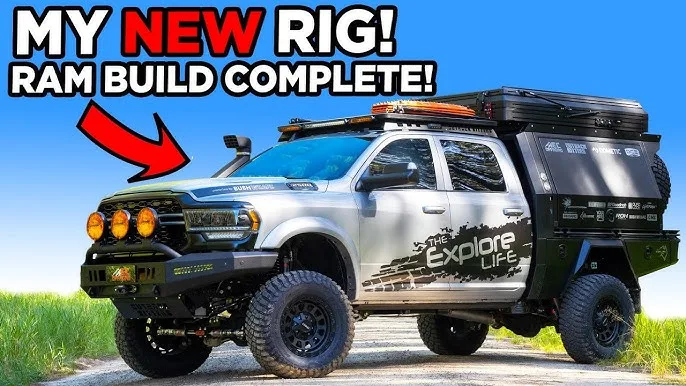
The Ram 2500 is often celebrated for its raw power, towing capacity, and rugged dependability. But what if we reimagined it as a platform for radical creativity, social change, or even time travel? Buckle up—here are 10 truly unconventional ideas that push the Ram 2500 far beyond its pickup truck roots.
1. The Ram 2500 as a Time Machine (Sort Of)
Turn your truck into a mobile historical reenactment hub. Load the bed with vintage props, a projector for archival footage, and a sound system blasting era-specific music. Park at schools or community centers to host immersive history lessons—imagine a Civil War campfire setup or a 1960s Apollo mission control simulation. The Ram’s durability ensures your “time machine” survives even the bumpiest journeys through the past.
Inspiration: Smithsonian Mobile Exhibits
2. A Rolling Wildlife Rescue Unit
Transform your Ram 2500 into an emergency animal ambulance. Install climate-controlled kennels, medical supplies, and a fold-out exam table. Partner with wildlife rehab centers to respond to injured animals in remote areas. The truck’s off-road capability lets you reach stranded bears, eagles, or even wayward moose. Bonus: Add a drone for scouting!
Inspiration: International Fund for Animal Welfare
3. A Mobile Silent Disco Party Bus
Forget boring tailgates. Turn your Ram into a roving silent disco. Install a massive battery bank to power wireless headphones, LED light strips, and a DJ booth in the bed. Host dance parties in parking lots, beaches, or even deserts—wherever the Ram can go, the party follows. The truck’s beefy alternator keeps the beats pumping all night.
Inspiration: Silent Disco Guides
4. A Pop-Up Grief Counseling Retreat
Mental health meets mobility. Convert the Ram 2500 into a traveling safe space for grief support. Soundproof the cabin, add cozy seating, and stock it with resources like journals, meditation apps, and hot tea. Park outside hospitals, disaster zones, or community centers to offer free, private counseling sessions. The truck’s imposing presence paradoxically creates a sense of security.
Inspiration: The Dinner Party (Grief Support)
5. A Guerrilla Gardening Arsenal
Fight urban blight with a Ram 2500 “seed bombing” rig. Modify the bed to hold soil, native plant seedlings, and a compost cannon (yes, that’s a thing). Drive through neglected neighborhoods, vacant lots, or wildfire-ravaged areas to launch eco-friendly “attacks” of greenery. The Ram’s payload capacity handles heavy loads of dirt and hope.
Inspiration: Guerrilla Gardening Movement
6. A Mobile AI Training Lab
Tech meets torque. Use the Ram 2500 as a roving data collection vehicle for AI projects. Mount LiDAR sensors, 360-degree cameras, and weather stations to gather real-world data for autonomous vehicle training, climate research, or urban planning. Drive it through extreme environments—glaciers, deserts, megacities—to teach AI about Earth’s diversity.
Inspiration: Waymo’s Self-Driving Research
7. A Tiny Home for Digital Nomads… With a Twist
Live in your Ram 2500, but make it steampunk. Install a brass-and-wood interior with a fold-out desk, antique typewriter, and a telescope for stargazing. Use solar panels and Starlink for off-grid internet. Document your “Victorian vanlife” adventures on TikTok—#Steamram could go viral.
Inspiration: Tiny Home Tours
8. A Mobile Voting Booth for Democracy
Address voter suppression with a nonpartisan voting hub. Partner with local governments to equip the Ram 2500 with secure voting machines, registration tablets, and ADA-compliant ramps. Park in underserved rural or urban areas during elections, using the truck’s ruggedness to reach marginalized communities.
Inspiration: Rock the Vote
9. A Pop-Up Crime Scene Investigator Unit
For true crime fanatics: Turn the Ram into a forensics lab on wheels. Store UV lights, fingerprint kits, and evidence bags to host interactive “murder mystery” events. Partner with libraries or museums for educational whodunits. Bonus: Add a projector to screen CSI episodes under the stars.
Inspiration: Crime Museum Interactive
10. A Mobile “Unplugged” Arcade
Fight screen addiction with retro gaming. Fill the Ram 2500 with 1980s arcade cabinets, pinball machines, and a popcorn maker. Tour schools or festivals to teach Gen Z about Pac-Man and joysticks—no Wi-Fi required. The truck’s payload handles the weight of those bulky CRT monitors!
Inspiration: Museum of Play
Conclusion: The Ram 2500 Is a Blank Canvas
The only limit is your imagination. Whether you’re resurrecting disco in the desert, hacking AI in the Arctic, or planting forests in food deserts, the Ram 2500’s brute strength and adaptability make it the ultimate tool for radical ideas. So, ditch the mundane—your truck isn’t just for hauling lumber. It’s a catalyst for chaos, creativity, and maybe even a better world.
What’s your wild idea?
Connect with us


