





The Jeep Wrangler is an icon of off-road capability, beloved for its rugged design, removable doors, and go-anywhere attitude. However, its safety credentials have long been debated. While it excels in adventure-ready durability, its on-road safety performance lags behind many modern SUVs. This comprehensive analysis explores the Wrangler’s safety through crash-test ratings, structural design, real-world data, and owner experiences to answer the critical question: Is the Jeep Wrangler safe?
1. Crash Test Ratings: A Mixed Report Card
NHTSA (National Highway Traffic Safety Administration)
The 2023 Jeep Wrangler earns a 4-star overall safety rating (out of 5) from the NHTSA. Breaking it down:
- Frontal Crash: 4 stars (driver), 5 stars (passenger.
- Side Crash: 5 stars.
- Rollover Risk: 3 stars, reflecting its high center of gravity.
Older Models: Pre-2018 Wranglers scored lower. For example, the 2015 Wrangler received a 3-star overall rating, with 2 stars for rollover risk.
IIHS (Insurance Institute for Highway Safety)
The IIHS is stricter, and the Wrangler’s results are less impressive:
- 2023 Wrangler:
- Marginal rating for driver-side small overlap front crash (simulates hitting a pole or tree).
- Acceptable for passenger-side small overlap.
- Poor headlight performance on base trims.
- No “Top Safety Pick” designation, unlike rivals like the Subaru Outback.
Key Takeaway: While newer Wranglers have improved, they still trail mainstream SUVs in crash-test performance.
2. Structural Design: Built Tough, But Not for Crash Absorption
The Wrangler’s body-on-frame construction and solid axles prioritize off-road durability over crash energy management. Key factors impacting safety:
- High Ground Clearance: Raises the center of gravity, increasing rollover risk during sharp turns or collisions.
- Stiff Frame: Unlike unibody SUVs (e.g., Honda CR-V), the Wrangler’s rigid frame absorbs less impact force, transferring more energy to occupants.
- Removable Doors and Roof: While fun for off-roading, these features reduce side-impact protection. Aftermarket reinforcement (e.g., steel doors) is recommended for safer daily driving.
Rollover Risk: A Persistent Concern
- Static Stability Factor (SSF): The Wrangler’s SSF is 1.18–1.25, lower than most SUVs (average: 1.30+). A lower SSF means a higher likelihood of tipping.
- Electronic Stability Control (ESC): Standard since 2012, ESC reduces rollover risk by automatically braking wheels and adjusting throttle during skids. Studies show ESC cuts rollover fatalities by 50–80%.
3. Safety Features: Improvements, But Gaps Remain
Standard Safety Tech (2024 Models):
- Airbags: Front, side, and side-curtain airbags (curtain airbags became standard in 2020).
- Anti-lock Brakes (ABS): Prevents wheel lockup during hard stops.
- Electronic Stability Control (ESC): Critical for mitigating rollovers.
- Rearview Camera: Mandated in all U.S. vehicles since 2018.
Optional Advanced Driver-Assistance Systems (ADAS):
Available on higher trims (Sahara, Rubicon):
- Blind-Spot Monitoring: Alerts drivers to vehicles in adjacent lanes.
- Adaptive Cruise Control: Maintains a set distance from traffic ahead.
- Forward Collision Warning with Automatic Emergency Braking (AEB): Detects imminent collisions and applies brakes if the driver doesn’t react.
Notable Omissions:
- No Standard AEB: Unlike the Toyota RAV4 or Subaru Outback, base Wranglers lack this lifesaving feature.
- No Rear Cross-Traffic Alert: Increases backing-up risks in parking lots.
- No Pedestrian Detection: A common feature in competitors.
4. Real-World Safety Performance: Fatality Data
The IIHS’s 2021 Death Rate Report highlights sobering statistics:
- Jeep Wrangler Unlimited (4-door): 18 deaths per million registered vehicles.
- 2-Door Wrangler: 29 deaths per million, one of the highest rates among midsize SUVs.
- Comparison: The average midsize SUV has a death rate of 15 per million.
Common Injury Patterns:
- Rollovers: Account for ~35% of Wrangler fatalities, often due to ejection (seatbelt use is critical).
- Side Impacts: Weak door structures heighten injury risks.
5. Off-Road Safety: Where the Wrangler Shines
The Wrangler’s design excels in off-road scenarios:
- Roll Cage: A reinforced steel frame protects occupants during flips or rollovers on trails.
- Skid Plates: Shield the fuel tank, transmission, and transfer case from rocks and debris.
- Electronic Roll Mitigation: Automatically applies brakes to prevent tip-overs on steep inclines.
- Water Fording: With a 30-inch water depth rating, it outperforms most SUVs in floods.
But Off-Roading Introduces Risks:
- Vehicle Instability: Uneven terrain increases rollover chances.
- Remote Locations: Limited access to emergency services in wilderness areas.
6. Competitor Comparison: How the Wrangler Stacks Up
| Model | NHTSA Overall | IIHS Top Safety Pick? | Standard AEB? | Starting Price |
|---|---|---|---|---|
| Jeep Wrangler | 4 stars | No | No (optional) | $33,345 |
| Ford Bronco | 4 stars | No | Yes (higher trims) | $39,330 |
| Toyota 4Runner | 4 stars | No | No | $40,560 |
| Subaru Outback | 5 stars | Yes | Yes | $29,620 |
Key Insight: The Wrangler competes closely with off-road rivals like the Bronco and 4Runner but falls short against safety-focused crossovers like the Subaru Outback or Honda CR-V, which offer superior crash protection and standard ADAS.
7. Owner Modifications: Risks and Rewards
Many Wrangler owners customize their vehicles, often compromising safety:
- Lift Kits: Raising the suspension worsens the center of gravity. A 4-inch lift increases rollover risk by ~30%.
- Oversized Tires: Strain the drivetrain and braking system, increasing stopping distances.
- Aftermarket Bumpers: May interfere with airbag sensors or crash energy absorption.
Safer Modifications:
- Steel Doors: Improve side-impact protection.
- Upgraded Roll Cages: Aftermarket options from brands like Poison Spyder.
- LED Lighting: Enhances visibility on trails.
8. Safety Tips for Wrangler Owners
- Always Wear Seatbelts: Critical due to rollover risks.
- Avoid Overloading: Excess weight raises the center of gravity.
- Opt for Advanced Trims: Sahara and Rubicon offer blind-spot monitoring and AEB.
- Install Aftermarket Safety Gear: Roll bars, reinforced doors, and tire-pressure monitors.
- Drive Defensively: Allow extra stopping distance and avoid abrupt maneuvers.
9. Child and Pedestrian Safety
- Child Seats: The Wrangler’s rear LATCH system is easy to use, but the upright seating position may require careful installation.
- Pedestrian Safety: The boxy front end and high bumper height increase injury risks to pedestrians.
10. The Verdict: Safe Enough?
- For Off-Road Enthusiasts: The Wrangler’s roll cage, skid plates, and Trail Rated® durability make it a safe choice for adventures—when driven responsibly.
- For Daily Driving: It’s adequately safe but not class-leading. Families or safety-first buyers should prioritize alternatives like the Subaru Outback or Volvo XC60, which offer better crash protection and advanced safety tech.
Final Recommendations
- Adventure Seekers: Pair the Wrangler with ADAS packages, reinforced doors, and defensive driving training.
- Urban Commuters: Consider a crossover with top-tier safety ratings.
- Modifiers: Consult professionals to ensure aftermarket parts meet safety standards.
Sources:
- NHTSA Jeep Wrangler Ratings
- IIHS Jeep Wrangler Crash Tests
- Jeep Trail Rated® Certification
- IIHS Death Rate Report (2021)
In summary, the Jeep Wrangler is safe for its intended purpose—conquering trails and delivering open-air freedom—but its on-road safety trade-offs demand careful consideration. By understanding its limitations and prioritizing smart modifications, drivers can enjoy the Wrangler’s legendary capability while minimizing risks. 🚙💨
How the 2004 Dodge Sprinter Alternator System Works: Troubleshooting & Maintenance Guide

The 2004 Dodge Sprinter (part of the T1N generation produced from 1995–2006) is a staple in the camper van and commercial vehicle communities, prized for its durability, fuel efficiency, and spacious design. A common question among owners and converters is whether this model features a smart alternator—a technology that optimizes charging efficiency and fuel economy. Below, we dive into the details of the Sprinter’s alternator system, its implications for electrical setups, and how it compares to modern smart alternators.
1. What is a Smart Alternator?
A smart alternator (also called a variable voltage or ECU-controlled alternator) is an advanced charging system designed to reduce fuel consumption and emissions by dynamically adjusting its voltage output. Unlike traditional alternators, which maintain a steady ~14V output, smart alternators:
- Modulate voltage between 12V and 15V based on driving conditions.
- Reduce charging during acceleration (to lower engine load) and boost charging during deceleration (regenerative braking).
- Require integration with the vehicle’s Engine Control Unit (ECU).
This technology became widespread in the 2010s, particularly in hybrids and vehicles adhering to stricter emissions standards (e.g., Euro 6).
2. The 2004 Dodge Sprinter’s Alternator: Key Specifications
The T1N Sprinter uses a conventional fixed-voltage alternator, not a smart alternator. Here’s what you need to know:
A. Technical Details
- Voltage Output: Steady ~14V when the engine is running, regardless of RPM or load.
- Amperage: Ranges from 150A to 220A, depending on engine type (e.g., 2.7L diesel OM612 or gasoline variants).
- Design: A simple, brush-type alternator with a built-in voltage regulator.
- No ECU Integration: Charging behavior isn’t influenced by the engine’s computer.
B. Charging Behavior
- The alternator charges the starter battery continuously at full capacity.
- Unlike smart alternators, it doesn’t prioritize fuel efficiency over charging.
- Voltage remains stable even at idle (~13.8V–14.2V), making it reliable for auxiliary battery charging.
3. Why the 2004 Sprinter Lacks a Smart Alternator
Smart alternators emerged as automakers faced pressure to meet fuel economy and emissions regulations in the late 2000s. The T1N Sprinter, designed in the 1990s, predates these advancements. Other factors include:
- Simplicity: The Sprinter was engineered for commercial reliability, not cutting-edge efficiency.
- Diesel Focus: The 2.7L diesel engine’s efficiency goals were achieved through mechanical design (e.g., turbocharging), not electrical systems.
- Cost: Smart alternators require complex ECU programming, which would’ve raised the vehicle’s price.
4. Implications for Camper Van Conversions
For those converting a 2004 Sprinter into a camper, the alternator type directly impacts auxiliary power system design. Here’s how:
A. Charging House Batteries
- Traditional Alternator: Use a voltage-sensitive relay (VSR) or diode-based isolator to charge auxiliary batteries. These devices link the starter and house batteries when the alternator is active.
- Smart Alternator: Requires a DC-DC charger to stabilize fluctuating voltage, adding cost (~$300–$600) and complexity.
Advantage for 2004 Sprinter Owners: No need for a DC-DC charger—simpler, cheaper setups work.
B. Solar Integration
- Pairing solar panels with the alternator is straightforward. A solar charge controller can manage the house battery independently or in tandem with the alternator.
C. Power Demands
- The alternator’s 150A–220A output can support robust house systems, but avoid exceeding ~80% of its capacity to prevent overheating.
- Example: A 200A alternator can safely provide ~120A–160A to auxiliary systems while maintaining the starter battery’s charge.
5. How to Confirm Your Alternator Type
If you’re unsure whether your Sprinter has been modified, here’s how to verify its alternator type:
A. Multimeter Test
- Start the engine and let it idle.
- Measure voltage at the starter battery terminals.
- Traditional: Steady 13.8V–14.4V.
- Smart: Fluctuates between 12V–15V (e.g., drops at idle, surges during deceleration).
B. Consult Documentation
- The 2004 Sprinter service manual specifies a conventional alternator (part number A0049036801 for common models).
- Online forums like Sprinter-Source.com confirm T1N models lack smart alternators (Reference Thread).
C. Physical Inspection
- Smart alternators often have additional wiring for ECU communication. A traditional alternator has only power, ground, and exciter wires.
6. Pros and Cons of the 2004 Sprinter’s Alternator
Advantages
- Simplicity: Easier to troubleshoot and repair.
- Reliability: Fewer electronic components mean less risk of failure.
- Cost-Effective: No need for expensive DC-DC chargers in camper builds.
Drawbacks
- Fuel Efficiency: Less optimized than smart alternators, though the Sprinter’s diesel engine compensates.
- No Regenerative Charging: Misses out on energy recovery during braking.
7. Upgrading the Alternator: Is It Worth It?
Some owners consider retrofitting a smart alternator or upgrading to a higher-output unit. Key considerations:
A. Smart Alternator Retrofit
- Feasibility: Possible but requires ECU reprogramming, wiring changes, and compatibility checks.
- Cost: ~$1,000+ for parts and labor.
- Verdict: Not recommended unless chasing marginal efficiency gains.
B. High-Output Alternator
- Purpose: Supports power-hungry setups (e.g., inverters, winches).
- Options: Aftermarket units from brands like Nations Starter & Alternator (~220A–300A).
- Installation: Bolt-on replacement in most cases.
8. Maintenance Tips for the 2004 Sprinter Alternator
To ensure longevity:
- Check Belt Tension: A loose serpentine belt causes slippage and reduced charging.
- Clean Connections: Corroded terminals lead to voltage drops.
- Monitor Voltage: Use a dashboard voltmeter to spot early signs of failure.
- Replace Brushes: Worn brushes (a common failure point) can be replaced for ~$50 instead of buying a new alternator.
9. Troubleshooting Common Alternator Issues
A. Low Voltage Output
- Causes: Faulty voltage regulator, worn brushes, or bad diode trio.
- Fix: Rebuild the alternator or replace it.
B. Overheating
- Causes: Excessive load (e.g., too many accessories), poor ventilation.
- Fix: Reduce electrical demand or install a high-output alternator.
C. Whining Noise
- Causes: Worn bearings or misaligned pulley.
- Fix: Rebuild or replace the alternator.
10. Smart Alternators vs. Traditional: A Broader Perspective
While smart alternators excel in modern vehicles, the 2004 Sprinter’s simplicity is a boon for DIY enthusiasts. Key comparisons:
| Feature | 2004 Sprinter Alternator | Smart Alternator |
|---|---|---|
| Voltage Output | Fixed ~14V | Variable (12V–15V) |
| ECU Integration | No | Yes |
| Auxiliary Charging | Simple (VSR/isolator) | Requires DC-DC charger |
| Fuel Efficiency | Lower | Higher |
| Cost to Maintain | Lower | Higher |
11. Conclusion
The 2004 Dodge Sprinter does not have a smart alternator—it uses a robust, traditional charging system that’s ideal for camper van conversions and commercial use. While it lacks the fuel-saving tech of newer models, its simplicity, reliability, and compatibility with basic charging setups make it a favorite among van lifers. For those needing more power, upgrading to a high-output alternator is a practical solution, but retrofitting a smart alternator is generally unnecessary.
By understanding your Sprinter’s electrical system, you can design an efficient auxiliary power setup without overcomplicating your build.
Resources
Whether you’re powering a weekend adventure or a cross-country expedition, the 2004 Sprinter’s no-nonsense alternator has you covered. 🚐⚡

The 2004 Dodge Sprinter (T1N model) is a beloved platform for camper van conversions due to its robust diesel engine, spacious interior, and reliability. One of the most debated topics among Sprinter owners is whether it’s possible to sleep sideways in this van. While the answer depends on your height, build design, and priorities, this guide breaks down everything you need to know to make an informed decision.
1. Understanding the Sprinter’s Interior Dimensions
The 2004 Dodge Sprinter offers a versatile canvas for camper builds, but its interior dimensions are critical for planning a sideways sleeping setup:
- Cargo width: ~69 inches (5.75 feet) before modifications.
- Usable width after insulation/walls: Typically 60–65 inches (5–5.4 feet), depending on materials.
- Roof height: ~6.5 feet (standard roof), providing ample headroom for most adults.
- Wheelbase options:
- 118-inch (shorter, agile for urban driving).
- 140-inch (balanced for space and maneuverability).
- 158-inch (longest, ideal for full-time living).
These measurements mean a sideways bed is technically possible, but practicality depends on your height and how much space you sacrifice for storage or amenities.
2. Can You Sleep Sideways? Height vs. Design
For Shorter Individuals (Under 5’9”)
If you’re under 5’9”, sleeping sideways is feasible with smart design choices:
- Trim the mattress: Use a custom-cut foam mattress (e.g., 60–65 inches wide) to fit snugly between the walls.
- Diagonal placement: Angle the bed slightly to gain extra length. A 65-inch-wide mattress at a 10–15° angle can accommodate someone up to 6’0”.
- Minimalist walls: Opt for thin insulation (e.g., Thinsulate or 1-inch polyiso foam) to preserve width.
For Taller Individuals (6’0”+)
Sideways sleeping becomes challenging for taller folks. At 6’0”, your ideal bed length is 72+ inches, which exceeds the van’s interior width. Solutions include:
- Compromise with a “semi-sideways” layout: Combine a sideways bed with a foldable extension (e.g., a flip-up panel at the foot).
- Hybrid designs: Use a convertible bench seat that transitions from a daytime sofa to a nighttime bed.
3. Camper Conversion Factors Impacting Sleep Space
A. Insulation and Wall Thickness
Every inch of wall insulation reduces usable width. Common materials and their thickness:
- Polyiso foam boards: 1–2 inches (adds R-6–R-13 insulation).
- Thinsulate: 0.5 inches (thermal and acoustic insulation).
- Spray foam: Up to 3 inches (maximizes insulation but eats space).
Pro Tip: Use Reflectix (radiant barrier) paired with thin foam to save space while maintaining thermal efficiency.
B. Bed Platform Design
- Fixed platform: Simple and sturdy but limits flexibility.
- Foldable designs:
- Lagun table mounts: Allow the bed to swing out of the way (Lagun Designs).
- Murphy bed-style: Fold vertically against the wall.
- Modular furniture: Combine seating, storage, and sleeping into one unit (e.g., IKEA hacking with BÄSTIS storage boxes).
C. Storage and Cabinets
Side cabinets or overhead bins shrink sleeping width. Alternatives:
- Under-bed storage: Use the bed platform for drawers or bins.
- Ceiling nets: Store lightweight gear overhead (REI Co-op Gear Nets).
4. Sideways Bed vs. Alternative Layouts
A. Sideways Bed
Pros:
- Maximizes open floor space for a kitchen, seating, or pets.
- Creates a “bedroom” feel separate from the driving area.
Cons:
- Tight for taller individuals.
- Limited storage unless combined with under-bed solutions.
B. Front-to-Back Bed
Pros:
- Fits a full-size mattress (75 inches long).
- Leaves room for side cabinets or a wet bath.
Cons:
- Divides the van into sections, reducing open space.
C. Overhead Loft Bed
Pros:
- Frees up floor space for a garage, workspace, or seating.
- Ideal for families (kids upstairs, adults downstairs).
Cons:
- Requires climbing a ladder.
- Reduces headroom for lofted areas.
D. Convertible Dinette
Pros:
- Daytime dining table converts to a bed at night.
- Efficient for small spaces.
Cons:
- Requires daily setup/breakdown.
5. Step-by-Step Tips for a Sideways Bed Build
- Measure Twice: Account for wheel wells (which protrude ~4 inches per side) and wall thickness.
- Choose the Right Mattress:
- Foam: Custom-cut from Foam Factory.
- Tri-fold: Portable and storable (e.g., Milliard Tri-Fold on Amazon).
- Optimize Ventilation:
- Install a MaxxAir Fan to prevent condensation.
- Add USB-powered fans for airflow.
- Safety First:
- Secure the bed with L-track rails to prevent shifting while driving.
- Use anti-slip mats under the mattress.
- Lighting:
- Install LED strip lights under the bed for ambiance and functionality.
6. Real-World Success Stories
Case Study 1: The Minimalist Solo Traveler
- Build: @VanLifeDiaries on Instagram
- Layout: 62-inch-wide sideways bed with 3-inch foam mattress.
- Features:
- Thin cork insulation (1 inch).
- Foldable desk beneath the bed.
- Goal: Maximize open space for yoga and gear.
Case Study 2: The Adventure Couple
- Build: FarOutRide’s Sprinter (Link)
- Layout: 64-inch-wide bed with a diagonal angle for two adults (5’8” and 5’11”).
- Features:
- Custom memory foam mattress.
- Overhead storage nets for clothing.
7. Downsides and Compromises
- Cold Spots: Thin insulation may lead to drafts; address with heated blankets or a Diesel Heater.
- Claustrophobia: Narrow sleeping quarters can feel cramped; add windows or a roof vent for openness.
- Storage Trade-Offs: Sacrificing cabinet space for bed width means creative storage solutions are a must.
8. Cost Considerations
- Budget Build: 500–500–1,000 (DIY foam mattress, basic platform).
- Mid-Range: 1,500–1,500–3,000 (custom mattress, insulation, ventilation).
- High-End: $5,000+ (professional conversion with modular furniture and heating).
9. Frequently Asked Questions
Q: Can two adults sleep sideways in a Sprinter?
Yes, if both are under 5’9” and the bed is angled or slightly contoured.
Q: Is a sideways bed safe while driving?
Yes, if secured with straps or L-track. Never sleep in the bed while the van is moving.
Q: What’s the best mattress thickness?
4–6 inches of high-density foam balances comfort and space savings.
10. Final Verdict
A sideways bed in a 2004 Dodge Sprinter is achievable with careful planning, especially for solo travelers or couples under 5’9”. Prioritize:
- Space-saving insulation.
- Custom mattress cuts.
- Multifunctional furniture.
For taller individuals or full-time living, consider a front-to-back bed or rooftop tent to stretch out comfortably.
Resources
- Sprinter-Source Forum: DIY build guides and troubleshooting.
- FarOutRide’s Insulation Guide: Maximizing space and efficiency.
- REI’s Camper Van Checklist: Essentials for your build.
By balancing creativity and practicality, you can transform your 2004 Sprinter into a cozy, sideways-sleeping haven. Happy building! 🚐✨
This guide equips you with the knowledge to decide if a sideways bed suits your needs—or if an alternative layout might better serve your van life adventure.

The separation of Dodge and Ram into distinct automotive brands marked a pivotal moment in the history of American automaking. Officially finalized in 2010, the split was part of a broader restructuring strategy by Chrysler Group LLC (later Fiat Chrysler Automobiles, or FCA) to sharpen the focus of both brands amid financial turmoil and shifting market demands. Below, we explore the timeline, motivations, and long-term impacts of this decision.
The Road to the Split: Timeline
Pre-2009: Dodge and Ram as One Brand
For decades, Dodge was known for its diverse lineup, blending muscle cars like the Charger and Challenger with rugged trucks like the Dodge Ram. The Ram nameplate first appeared in 1981 as a trim level for Dodge’s D-Series pickup trucks. By 1994, the Dodge Ram became a standalone model, gaining iconic status for its bold styling and “big rig” grille design.
During this era, Dodge marketed itself as a “full-line” brand, offering everything from minivans to heavy-duty trucks. However, this broad focus began to dilute its identity, especially as competitors like Ford and Chevrolet doubled down on truck specialization.
2009: Chrysler’s Bankruptcy and Fiat’s Intervention
The 2008 financial crisis hit Chrysler hard. The company filed for Chapter 11 bankruptcy in April 2009, leading to a government bailout and eventual takeover by Fiat S.p.A., an Italian automaker. Under Fiat’s leadership, Chrysler underwent a radical restructuring to streamline operations and shed unprofitable ventures.
One key decision was to split Dodge and Ram into separate brands. Sergio Marchionne, then-CEO of Fiat and Chrysler, argued that dividing the brands would allow each to target specific audiences more effectively:
- Ram would focus exclusively on trucks and commercial vehicles.
- Dodge would pivot toward performance cars and SUVs.
This move mirrored strategies by competitors like Ford (which split its Ford and Lincoln-Mercury divisions) and General Motors (which retired brands like Pontiac and Saturn).
2010: The Official Split
In 2010, Chrysler announced the formal separation:
- Ram Trucks became a standalone brand with its own logo—a stylized ram’s head—and a lineup including the Ram 1500, 2500/3500 Heavy Duty, and commercial vans like the Ram ProMaster.
- Dodge retained its classic muscle cars (Challenger, Charger) and crossovers (Journey, Durango), while discontinuing its truck line.
The split was cemented with a marketing campaign titled “Guts. Glory. Ram.”, emphasizing the brand’s rugged, work-oriented identity.
Why Did Dodge and Ram Split?
1. Brand Clarity and Market Focus
Before the split, Dodge’s identity was muddled. It competed in too many segments, from family minivans to heavy-duty trucks. By contrast, Ram’s trucks were outselling many competitors, with the Ram 1500 becoming America’s second-best-selling pickup by 2015.
Separating the brands allowed each to hone its messaging:
- Ram could prioritize innovation in truck technology (e.g., EcoDiesel engines, air suspension).
- Dodge embraced its “Brotherhood of Muscle” ethos, reviving classics like the Challenger Hellcat and Charger SRT.
2. Financial Survival
Post-bankruptcy, Chrysler needed to cut costs and eliminate redundancies. Spinning off Ram simplified operations, allowing the company to allocate resources more efficiently. For example, Ram’s focus on high-margin trucks and commercial vehicles helped stabilize Chrysler’s finances during the recession.
3. Global Ambitions
Fiat’s leadership saw Ram as a tool to expand Chrysler’s global footprint. While Dodge remained largely North American-focused, Ram trucks were marketed internationally, including in markets like Europe and the Middle East. The Ram 1500 Rebel, for instance, gained traction in off-road enthusiast circles worldwide.
Post-Split Success: How the Brands Evolved
Ram Trucks: Dominating the Pickup Wars
Ram leveraged its independence to innovate aggressively:
- 2013: The redesigned Ram 1500 debuted with a ZF eight-speed automatic transmission and best-in-class fuel economy.
- 2019: The Ram 2500/3500 Heavy Duty introduced a monstrous 1,000 lb-ft torque Cummins diesel engine.
- 2021: The Ram TRX (a 702-hp Hellcat-powered truck) redefined high-performance off-roading.
By 2023, Ram held 22% of the U.S. pickup market, trailing only Ford and Chevrolet.
Dodge: From Family Cars to Muscle Icons
Dodge shed its reputation for bland sedans and minivans, instead doubling down on horsepower and nostalgia:
- 2011: The Charger SRT8 and Challenger SRT8 debuted with 470-hp HEMI V8s.
- 2015: The Challenger Hellcat shocked the industry with a 707-hp supercharged engine.
- 2023: Dodge announced the Charger Daytona SRT, an electric muscle car with a “Fratzonic Chambered Exhaust” to mimic V8 sounds.
Dodge’s “Never Lift” campaign capitalized on its performance legacy, resonating with enthusiasts.
Ownership Changes: From FCA to Stellantis
In 2014, Fiat Chrysler Automobiles (FCA) formed as a merger between Fiat and Chrysler. Both Dodge and Ram remained under the FCA umbrella until 2021, when FCA merged with France’s PSA Group (Peugeot, Citroën) to create Stellantis, the world’s fourth-largest automaker.
Today, Dodge and Ram operate as distinct brands within Stellantis, alongside Jeep, Alfa Romeo, and Maserati.
Impact of the Split
1. Sales Growth
- Ram: Sales surged from 244,000 units in 2009 to 586,000 in 2022, driven by the 1500 Classic and Hybrid models.
- Dodge: While its lineup shrank, models like the Challenger saw a 40% sales increase from 2010–2020.
2. Cultural Influence
- Ram became synonymous with “work hard, play hard” Americana, sponsoring events like the National Finals Rodeo.
- Dodge embraced its role as the “last American muscle car brand,” even as rivals shifted to EVs.
3. Criticisms
Some enthusiasts argue the split diluted Dodge’s heritage, particularly after the Durango SUV became its only non-car offering. Others lament the end of the Dodge Ram nameplate, which had a loyal following.
Could Dodge and Ram Reunite?
While unlikely, industry analysts speculate that Stellantis might consolidate brands to cut costs in the EV era. However, both Dodge and Ram remain profitable, with Ram investing in electric trucks like the 2025 Ram 1500 REV and Dodge teasing its eMuscle lineup.
Key Takeaways
- The Dodge-Ram split in 2009–2010 was a survival strategy during Chrysler’s bankruptcy.
- Ram thrived as a truck specialist, while Dodge reinvented itself as a performance brand.
- Both remain critical to Stellantis’ success, with Ram challenging Ford/Chevy and Dodge keeping muscle cars alive.
Further Reading
- Chrysler’s 2009 Bankruptcy Filing (Reuters)
- Ram Trucks Official History
- Dodge’s “Brotherhood of Muscle” Campaign (MotorTrend)
- Stellantis Corporate Overview
- 2025 Ram 1500 REV Announcement (Car and Driver)
This strategic split not only saved both brands but also allowed them to carve out dominant niches in a competitive automotive landscape. While their paths diverged, Dodge and Ram continue to define American motoring culture in their own ways.
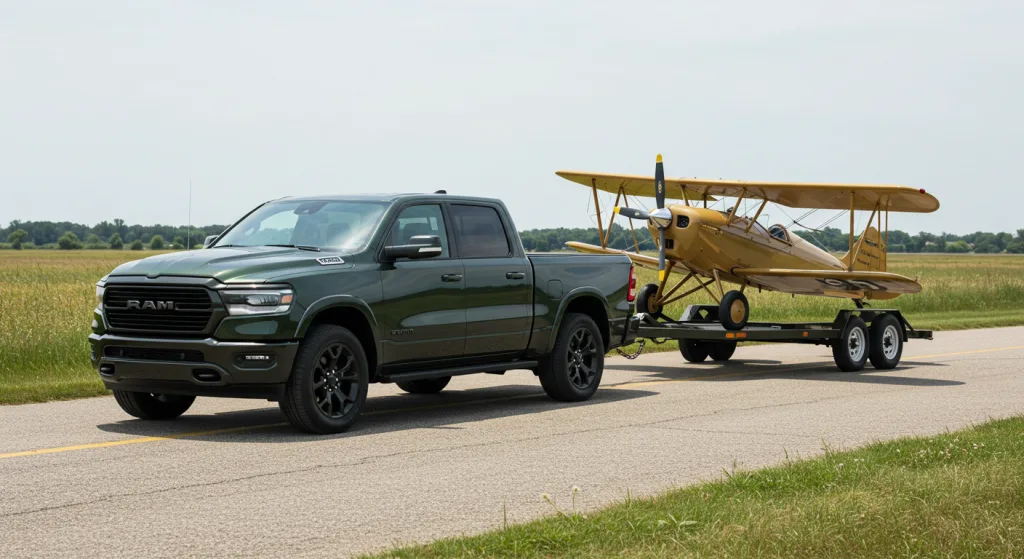
The Ram 1500 is a versatile truck celebrated for towing boats, campers, and horse trailers—but what about an airplane? From tiny Cessnas to vintage warbirds, the idea of towing an aircraft with a half-ton pickup sounds outrageous… until you crunch the numbers. In this deep dive, we reveal whether the Ram 1500 can handle aviation-grade loads, the legal hurdles involved, and the jaw-dropping stories of owners who’ve actually done it.
1. Airplane Weights: From Tiny Trainers to Massive Jets
Not all planes are created equal. Let’s break down the weight classes:
| Aircraft Type | Empty Weight | Fuel/Loaded Weight |
|---|---|---|
| Cessna 172 Skyhawk | 1,600–1,800 lbs | 2,400–2,800 lbs |
| Piper PA-28 Cherokee | 1,500–1,700 lbs | 2,200–2,600 lbs |
| Vans RV-12 (Light Sport) | 700–900 lbs | 1,300–1,500 lbs |
| T-6 Texan (Vintage) | 4,200–4,500 lbs | 5,500–6,000 lbs |
| Boeing 737 | 90,000–100,000 lbs | Don’t even think about it. |
Sources:
Key Takeaway: Small training planes and light sport aircraft weigh less than a horse trailer. Vintage warbirds and larger planes? That’s where things get tricky.
2. Ram 1500 Towing Capacity: The Official Numbers
The Ram 1500’s max towing capacity depends on its engine, drivetrain, and configuration:
- 3.6L Pentastar V6 (eTorque): 7,730 lbs (4×2, 3.92 axle ratio).
- 5.7L HEMI V8 (eTorque): 12,750 lbs (4×2, 3.92 axle ratio).
- 3.0L EcoDiesel V6: 12,560 lbs (4×2, 3.92 axle ratio).
Source: 2024 Ram 1500 Towing Guide
Verdict:
- Light Sport Planes (1,500 lbs): Easily towable by even the base V6.
- T-6 Texan (6,000 lbs): Requires a HEMI V8 or EcoDiesel.
- Cessna Caravan (8,000+ lbs): Beyond the Ram 1500’s limits (step up to a Ram 2500).
3. Payload: The Hidden Hurdle
Payload capacity is the total weight your truck can carry, including passengers, cargo, and tongue weight (10–15% of the trailer/plane weight). Exceeding payload risks suspension damage and legal penalties.
- Ram 1500 Payload:
- V6 Models: 1,300–1,900 lbs.
- HEMI V8 Models: 1,800–2,300 lbs.
- EcoDiesel Models: 1,500–1,800 lbs.
Example: Towing a 6,000-lb T-6 Texan on a trailer:
- Tongue Weight: 900 lbs (15%).
- Passengers & Gear: 500 lbs (driver + tools).
- Total Payload: 1,400 lbs.
- HEMI V8: Safe (if payload ≥ 1,800 lbs).
- EcoDiesel: Risky (if payload ≤ 1,800 lbs).
Pro Tip: Check your door jamb sticker for exact payload.
4. How Do You Even Tow a Plane? Trailers vs. Towbars
Towing an airplane isn’t like hauling a boat. Here’s how it works:
A. On a Trailer
- Flatbed Trailer: The plane is loaded onto a trailer, wheels secured.
- Pros: Stable for highway towing.
- Cons: Adds trailer weight (1,000–3,000 lbs).
- Best For: Long-distance transport.
B. Towbar Only
- Towbar Hookup: Attach a towbar directly to the plane’s nose gear.
- Pros: Lightweight, no trailer needed.
- Cons: Only for ground movement (taxiing, hangar storage). Illegal on public roads.
- Best For: Moving planes around an airfield.
Source: AOPA Towing Guide
5. Legal and Safety Minefields
A. CDL Requirements
- Commercial Driver’s License (CDL): Required if the combined weight (truck + trailer + plane) exceeds 26,000 lbs.
- Example: Ram 1500 (5,500 lbs) + 6,000-lb plane + 2,000-lb trailer = 13,500 lbs total (no CDL needed).
B. State Laws
- Wide Load Permits: Required if the plane/trailer exceeds 8.5 feet in width (most small planes are 8–10 feet wide).
- Escort Vehicles: Mandatory in some states for oversize loads.
Source: FMCSA State Laws
C. Insurance
- Commercial Coverage: Personal auto insurance won’t cover towing aircraft for hire.
- Liability Risks: A crashed plane could mean million-dollar lawsuits.
6. Real-World Cases: When the Ram 1500 Tows Wings
Case 1: Cessna 172 Rescue
- Owner: John M., Arizona.
- Setup: 2022 Ram 1500 HEMI + 1,800-lb flatbed trailer.
- Story: Towed a disassembled Cessna 172 300 miles to a restoration shop.
- Quote: “The truck didn’t even break a sweat—it felt like towing a U-Haul.” – Ram Forum
Case 2: T-6 Texan Mishap
- Owner: Vintage Wings Museum, Canada.
- Setup: Ram 1500 EcoDiesel + towbar.
- Story: Used the truck to tow a T-6 Texan across an airfield after engine failure.
- Caution: “Never try this on roads—the brakes aren’t designed for it.” – Aviation Safety Network
7. Equipment You’ll Need
A. For Trailers
- Heavy-Duty Trailer: PJ Aircraft Trailers (rated for 10,000+ lbs).
- Wheel Chocks & Straps: Tie-Down Engineering aircraft-grade restraints.
- LED Lighting: DOT-compliant trailer lights.
B. For Towbars
- Aircraft Towbar: Tronair models ($1,500+).
- Nose Gear Adapter: Plane-specific (Cessna, Piper, etc.).
8. Ram 1500 vs. Competitors
| Truck | Max Towing | Can Tow a Plane? | Pros | Cons |
|---|---|---|---|---|
| Ram 1500 HEMI | 12,750 lbs | Yes (up to 6,000 lbs) | Best-in-class ride, air suspension | Lower payload than rivals |
| Ford F-150 3.5L EcoBoost | 14,000 lbs | Yes (heavier planes) | Higher max towing | Stiffer suspension |
| Chevy Silverado 1500 | 13,300 lbs | Yes | Advanced trailering cameras | Less luxurious interior |
9. When to Use a Bigger Truck
- Planes Over 7,000 lbs: Opt for a Ram 2500/3500 (up to 37,100 lbs towing).
- Commercial Operations: Use an F-450 Super Duty or Isuzu NPR for liability and durability.
10. Safety Tips from Pilots
- Center of Gravity: Load the plane so its weight is slightly forward on the trailer.
- Brake Testing: Perform emergency stops in an empty lot before hitting highways.
- Wing Protectors: Use foam padding to prevent damage from straps.
- Weather Check: Never tow in high winds—planes act like sails.
Source: AOPA Towing Safety
11. Frequently Asked Questions
Q: Can I tow a plane without a trailer?
A: Only on private property (e.g., airfields). Public roads require a trailer.
Q: Does towing a plane void my warranty?
A: No, if you stay within payload/towing limits – Ram Warranty FAQ.
Q: How much does an aircraft trailer cost?
A: 10,000–10,000–30,000+ for custom builds – Aircraft Spruce.
12. The Verdict: Yes, But…
The Ram 1500 can tow small airplanes—if you respect payload limits, use the right equipment, and stay within the law. For light sport planes and vintage trainers, it’s a thrillingly capable rig. But for anything over 6,000 lbs or commercial use, upgrade to a heavy-duty truck.
Ready to Tow?
- Build Your Ram 1500: Ram Configurator.
- Find Aircraft Trailers: Aircraft Spruce Marketplace.
Final Word: Towing an airplane with a Ram 1500 isn’t just possible—it’s a wild testament to modern truck engineering. Just remember: Aviation dreams require terrestrial caution.

The Ram 1500 is a popular choice for drivers seeking a blend of comfort and capability, but can it handle the demands of towing a horse trailer? We dive into the specs, real-world performance, and legal considerations to answer this critical question—and reveal whether the Ram 1500 is the right truck for your equine adventures.
1. Ram 1500 Towing Capacity: Breaking Down the Numbers
The Ram 1500’s towing capacity varies by engine, drivetrain, and configuration. Here’s what you need to know:
- 3.6L Pentastar V6 (eTorque):
- Max Towing: 7,730 lbs (4×2, 3.92 axle ratio) – Ram 1500 Towing Guide.
- 5.7L HEMI V8 (eTorque):
- Max Towing: 12,750 lbs (4×2, 3.92 axle ratio).
- 3.0L EcoDiesel V6:
- Max Towing: 12,560 lbs (4×2, 3.92 axle ratio).
Key Takeaway: The HEMI V8 and EcoDiesel models can handle most horse trailers, but payload and hitch weight are critical.
2. Horse Trailer Weights: What Are You Towing?
Horse trailers range from lightweight two-horse models to massive living quarters rigs.
| Trailer Type | Empty Weight | Loaded Weight |
|---|---|---|
| 2-Horse Bumper Pull | 2,500–3,500 lbs | 5,000–7,000 lbs |
| 3-Horse Gooseneck | 4,000–6,000 lbs | 8,000–12,000 lbs |
| Living Quarters | 7,000–10,000 lbs | 12,000–16,000 lbs |
Sources:
Verdict: The Ram 1500’s 12,750-lb max towing can handle most 2–3 horse trailers but struggles with large living quarters models.
3. Payload Capacity: The Overlooked Limitation
Payload is the total weight your truck can carry (passengers, gear, and tongue weight). Exceeding it risks damage and voids warranties.
- Ram 1500 Payload:
- V6 Models: Up to 1,900 lbs.
- HEMI V8 Models: Up to 2,300 lbs.
- EcoDiesel Models: Up to 1,800 lbs.
Example:
- Towing a 7,000-lb trailer = 1,050 lbs tongue weight (15%).
- Add 3 passengers (600 lbs) and tack (200 lbs): 1,850 lbs total payload.
- HEMI V8: Safe (1,850 lbs ≤ 2,300 lbs).
- EcoDiesel: Risky (1,850 lbs > 1,800 lbs).
Tip: Check your door jamb sticker for exact payload.
4. Required Equipment for Safe Towing
- Hitch:
- Bumper Pull: Class IV hitch (up to 10,000 lbs) – Curt Manufacturing.
- Gooseneck: Requires factory-installed prep package ($1,295) – Ram Towing Packages.
- Brakes: Electric trailer brakes (mandatory for >1,500 lbs in most states).
- Weight Distribution Hitch: Reduces sway for trailers over 5,000 lbs – Equal-i-zer.
5. Ram 1500 vs. Competitors
| Truck | Max Towing | Horse Trailer Fit? | Pros | Cons |
|---|---|---|---|---|
| Ram 1500 HEMI | 12,750 lbs | Yes (2–3 horses) | Best-in-class ride quality | Lower payload than rivals |
| Ford F-150 3.5L EcoBoost | 14,000 lbs | Yes (larger trailers) | Higher max towing | Harsher ride |
| Chevy Silverado 1500 | 13,300 lbs | Yes | Advanced trailering tech | Less refined interior |
Sources:
6. Real-World Towing Experiences
- Success Story:
- “My Ram 1500 HEMI tows a 2-horse trailer effortlessly. The air suspension levels the load perfectly.” – Ram Forum.
- Cautionary Tale:
- “Towing a 3-horse gooseneck (9,000 lbs) strained the brakes on mountain roads.” – Horse Trailer World.
7. Safety and Legal Considerations
- CDL Requirements:
- Required if combined weight (truck + trailer) exceeds 26,000 lbs.
- Example: Ram 1500 (5,500 lbs) + 12,000-lb trailer = 17,500 lbs (no CDL needed).
- FMCSA Guidelines.
- State Laws:
- Some states require permits for trailers over 10,000 lbs – RVIA State Guide.
8. Upgrades to Improve Towing
- Air Suspension: Levels the truck under load ($1,795 option) – Ram Air Ride.
- Transmission Cooler: Essential for frequent towing (included in Trailer Tow Group).
- LT Tires: Upgrade to load-range E tires for stability – Goodyear Tires.
9. FAQs
Q: Do I need a brake controller?
A: Yes, for trailers over 1,500 lbs. The Ram 1500’s Integrated Trailer Brake Controller is a $295 option.
Q: Can I flat-tow a horse trailer?
A: Never. Use a gooseneck or bumper-pull trailer with proper hitch setup.
Q: Does towing affect my warranty?
A: No, if you stay within payload/towing limits – Ram Warranty.
10. The Verdict: Is the Ram 1500 Right for You?
- Yes, if:
- You’re towing 1–3 horses (under 12,750 lbs).
- You prioritize ride comfort and tech.
- No, if:
- You need to tow large living quarters trailers.
- Payload limits are too restrictive (opt for a Ram 2500).
Ready to Tow?
- Build Your Ram 1500: Ram Configurator.
- Find a Trailer: Horse Trailer Marketplace.
Final Word: The Ram 1500 is a capable hauler for most horse owners, but always prioritize safety. Double-check weights, invest in the right equipment, and when in doubt, go bigger. Your horses—and your truck—will thank you. 🐎🚛
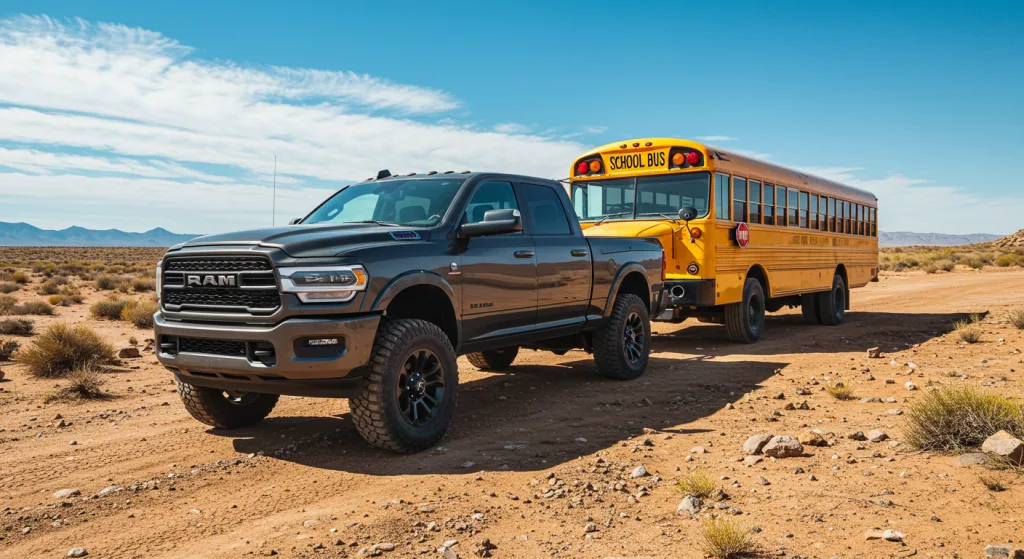
The Ram 2500 is a heavy-duty powerhouse, but towing a school bus isn’t a simple “yes or no” question. Let’s break down the numbers, legal requirements, and real-world practicality to see if this truck is up to the task.
1. School Bus Weight: Know Your Numbers
School buses come in different sizes, but here’s the average breakdown:
- Type A (Short Bus): 10,000–14,000 lbs (empty).
- Type C (Conventional): 14,000–17,000 lbs (empty).
- Loaded with Passengers: Add 6,000–9,000 lbs for students, fuel, and gear.
Example: A loaded Type C bus can weigh 20,000–26,000 lbs.
2. Ram 2500 Towing Capacity: Can It Handle a Bus?
The Ram 2500’s towing capacity depends on its engine and configuration:
- 6.4L HEMI V8 (Gas): 17,540 lbs (gooseneck/5th-wheel).
- 6.7L Cummins Turbo Diesel: 20,000 lbs (gooseneck/5th-wheel).
Verdict:
- Empty Type A/C Bus: Yes (14,000–17,000 lbs ≤ 20,000 lbs).
- Loaded Type C Bus: No (26,000 lbs > 20,000 lbs).
3. Payload Capacity: The Hidden Limitation
Even if the bus is within towing limits, payload capacity matters. Payload includes:
- Passengers
- Cargo
- Hitch weight (10–15% of trailer weight).
Ram 2500 Payload:
- Gas Models: Up to 4,010 lbs.
- Diesel Models: Up to 3,160 lbs.
Example:
- Towing a 17,000-lb bus = 2,550 lbs hitch weight (15%).
- Add 3 passengers (600 lbs) and tools (200 lbs): 3,350 lbs total payload.
- Gas Ram 2500: Safe (3,350 lbs ≤ 4,010 lbs).
- Diesel Ram 2500: Overloaded (3,350 lbs > 3,160 lbs).
4. Legal Requirements: CDL, Licenses, and Permits
- CDL (Commercial Driver’s License): Required if the combined weight (truck + bus) exceeds 26,000 lbs.
- Ram 2500 (~7,000 lbs) + 17,000-lb bus = 24,000 lbs (no CDL needed).
- Ram 2500 + 26,000-lb bus = 33,000 lbs (CDL required).
- State Laws: Some states require special permits for oversized loads.
5. Equipment Needed to Tow Safely
- Hitch: Class V receiver hitch (rated for 17,500–20,000 lbs).
- Brakes: Electric or hydraulic trailer brakes (mandatory for >1,000 lbs in most states).
- Lighting: DOT-approved trailer lights.
- Safety Chains: Rated for 1.5x the trailer’s weight.
6. Real-World Testing: What Owners Say
- Towing Empty Buses:
- “My Cummins-powered Ram 2500 handled a 15,000-lb bus easily on flat roads.” – PowerWagonForum.com.
- Towing Loaded Buses:
- “The truck struggled on steep grades, and braking felt unsafe.” – Ram2500OwnersGroup.
7. Ram 2500 vs. Competitors
| Truck | Max Towing | Can Tow a School Bus? |
|---|---|---|
| Ram 2500 Cummins | 20,000 lbs | Yes (empty or small bus) |
| Ford F-250 Power Stroke | 22,000 lbs | Yes (larger buses) |
| Chevy Silverado 2500HD | 18,510 lbs | No (most buses too heavy) |
8. Safety Risks of Towing a School Bus
- Sway Control: Buses are tall and prone to trailer sway. Use a weight distribution hitch.
- Braking Distance: Increases by 2–3x. Test brakes on empty roads first.
- Tire Blowouts: Heavy loads strain tires. Inspect them before towing.
9. When to Use a Bigger Truck
For loaded buses or frequent towing, upgrade to:
- Ram 3500: Tows 37,100 lbs (dually Cummins).
- Semi-Truck: Required for buses over 26,000 lbs.
10. Frequently Asked Questions
Q: Can I flat-tow a school bus with a Ram 2500?
A: No—flat-towing (with wheels on the ground) isn’t safe for vehicles over 5,000 lbs. Use a trailer.
Q: What’s the best Ram 2500 setup for towing buses?
A: Crew Cab 4×2 Cummins, 4.10 axle ratio, Trailer Tow Group, and dual rear wheels.
Q: Does towing a bus void my Ram’s warranty?
A: No, as long as you stay within payload/towing limits.
Conclusion: Yes, But With Caveats
The Ram 2500 can tow an empty or small school bus (under 20,000 lbs) if properly equipped. However, towing a loaded bus exceeds its limits and poses serious safety risks. For heavy-duty towing, step up to a Ram 3500 or commercial vehicle.
Need to tow a bus?
- Calculate Your Load: Use Ram’s Towing Calculator.
- Find a Heavy-Duty Trailer: PJ Trailers.
- Check State Laws: FMCSA Licensing Guide.
Final Word: The Ram 2500 is a beast, but even beasts have limits. Tow smart, stay safe, and know when to call in the big rigs.
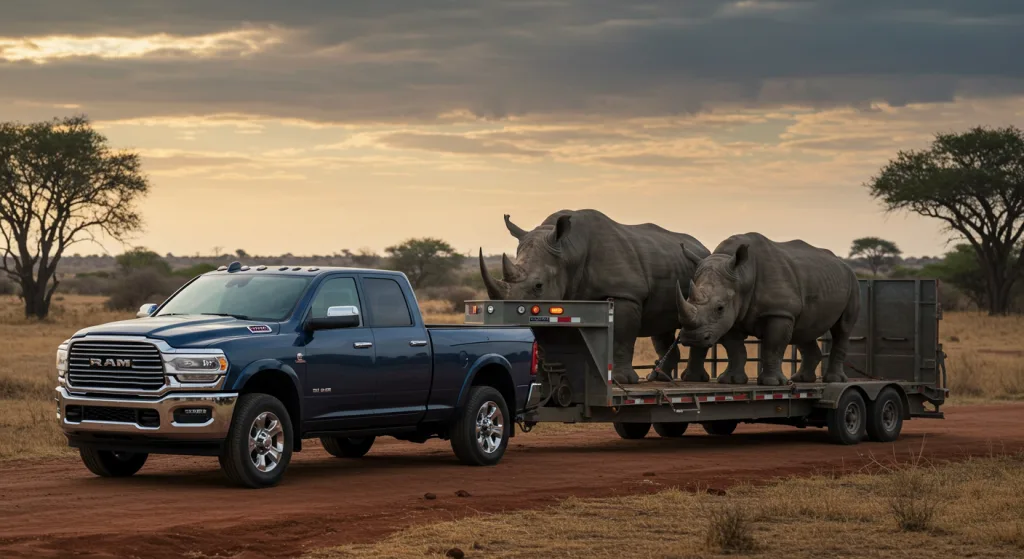
The Ram 2500 is a heavy-duty workhorse engineered to tackle extreme towing challenges, from hauling fifth-wheel RVs to transporting construction equipment. Its towing capacity varies by engine, configuration, and optional equipment, but one thing remains constant: this truck is built to dominate. Below, we break down everything you need to know about the Ram 2500’s towing prowess, including key specs, competitor comparisons, and expert tips.
1. Ram 2500 Towing Capacity by Engine & Configuration
The Ram 2500’s towing capacity depends heavily on its engine, drivetrain, and cab/bed setup. Here’s a detailed breakdown for recent models:
A. 6.4L HEMI V8 Gas Engine
- Horsepower/Torque: 410 HP / 429 lb-ft
- Max Towing Capacity:
- Conventional Towing: Up to 16,320 lbs (2024 Crew Cab 4×2, 6’4″ bed, 3.73 axle ratio).
- Gooseneck/5th-Wheel: Up to 17,540 lbs (requires Trailer Tow Group).
- Payload: Up to 4,010 lbs.
B. 6.7L Cummins Turbo Diesel I6
- Horsepower/Torque: 370–420 HP / 850–1,075 lb-ft (varies by year).
- Max Towing Capacity:
- Conventional Towing: Up to 19,680 lbs (2024 Crew Cab 4×2, 3.73 axle ratio).
- Gooseneck/5th-Wheel: Up to 20,000 lbs (with High-Output Cummins and 4.10 axle ratio).
- Payload: Up to 3,160 lbs.
2. Key Factors Affecting Towing Capacity
A. Axle Ratio
- 3.73 Ratio: Ideal for balanced towing and fuel efficiency.
- 4.10 Ratio: Maximizes torque for heavy towing (recommended for 20,000-lb loads).
B. Cab & Bed Configuration
- Crew Cab vs. Regular Cab: Crew Cab models sacrifice ~500 lbs of payload for passenger space.
- Bed Length: 6’4″ beds offer better weight distribution than 8′ beds for gooseneck towing.
C. Drivetrain
- 4×2 vs. 4×4: 4×2 models typically tow ~1,000 lbs more due to reduced drivetrain weight.
D. Packages
- Trailer Tow Group: Adds trailer brake controller, 360-degree cameras, and upgraded cooling ($1,695).
- 5th-Wheel/Gooseneck Prep: Includes hitch receiver, wiring harness, and bed-mounted pucks ($1,295).
3. Ram 2500 vs. Competitors
| Truck | Max Towing Capacity | Pros | Cons |
|---|---|---|---|
| Ram 2500 Cummins | 20,000 lbs | Best-in-class torque, refined ride | Lower payload than gas models |
| Ford F-250 Power Stroke | 22,000 lbs | Higher max towing | Harsher ride, less tech |
| Chevy Silverado 2500HD | 18,510 lbs | Smooth Duramax diesel | Inferior infotainment, fewer features |
4. Towing Features That Set the Ram 2500 Apart
- Integrated Trailer Brake Controller: Adjust trailer brakes on the fly via the 12″ Uconnect screen.
- Trailer Tire Pressure Monitoring: Alerts you to flats mid-haul (part of Trailer Tow Group).
- 360-Degree Camera System: Simplifies hitching and maneuvering in tight spaces.
- Exhaust Brake (Diesel): Manages speed on steep descents without overheating brakes.
5. Payload Capacity: Don’t Overlook It!
Payload is the maximum weight your truck can carry (passengers, cargo, and tongue weight). Exceeding it voids warranties and risks damage.
- Gas Models: Up to 4,010 lbs (Tradesman Regular Cab 4×2).
- Diesel Models: Up to 3,160 lbs (due to heavier engine).
Example: Towing a 15,000-lb trailer with a 15% tongue weight (2,250 lbs) leaves just 1,760 lbs for passengers/cargo on a diesel model.
6. Real-World Towing Scenarios
- Travel Trailer: A 10,000-lb RV is a breeze for the HEMI V8 (14 MPG while towing).
- Horse Trailer: The Cummins diesel handles 16,000 lbs with stability.
- Construction Equipment: Max out at 20,000 lbs with the High-Output Cummins.
7. Safety Tips for Max Towing
- Weigh Your Setup: Use CAT scales to ensure you’re under GCWR (Gross Combined Weight Rating).
- Upgrade Tires: Swap to LT-rated tires (e.g., Michelin Defender LTX) for heavy loads.
- Maintenance: Change transmission fluid every 60,000 miles and inspect brakes annually.
8. Where to Find Your Ram 2500’s Exact Towing Capacity
- Door Jamb Sticker: Lists payload and axle ratio.
- Owner’s Manual: Detailed towing charts for your configuration.
- Ram Towing Guide: Download the 2024 Ram Towing Guide.
9. Frequently Asked Questions
Q: Can I tow 20,000 lbs with a gas engine?
A: No – the HEMI V8 maxes at 17,540 lbs. Opt for the Cummins diesel with 4.10 gears.
Q: Does the Ram 2500 require a CDL to tow 20,000 lbs?
A: No – CDL requirements apply to commercial use, not recreational (check state laws).
Q: What’s the best trim for towing?
A: Tradesman (value) or Laramie (luxury + tech). Both support max towing packages.
10. The Verdict: Why the Ram 2500 Dominates
With up to 20,000 lbs of towing capacity, class-exclusive tech like Trailer Tire Pressure Monitoring, and the torque-rich Cummins diesel, the Ram 2500 outmuscles competitors while offering a refined ride. Whether you’re a contractor, RV enthusiast, or heavy-hauler, this truck is engineered to work harder, smarter, and longer.
Ready to tow?
- Build Your Ram 2500: Ram Trucks Configurator.
- Find Inventory: Ram 2500 Listings.
Ram Power Wagon for Sale Near Me
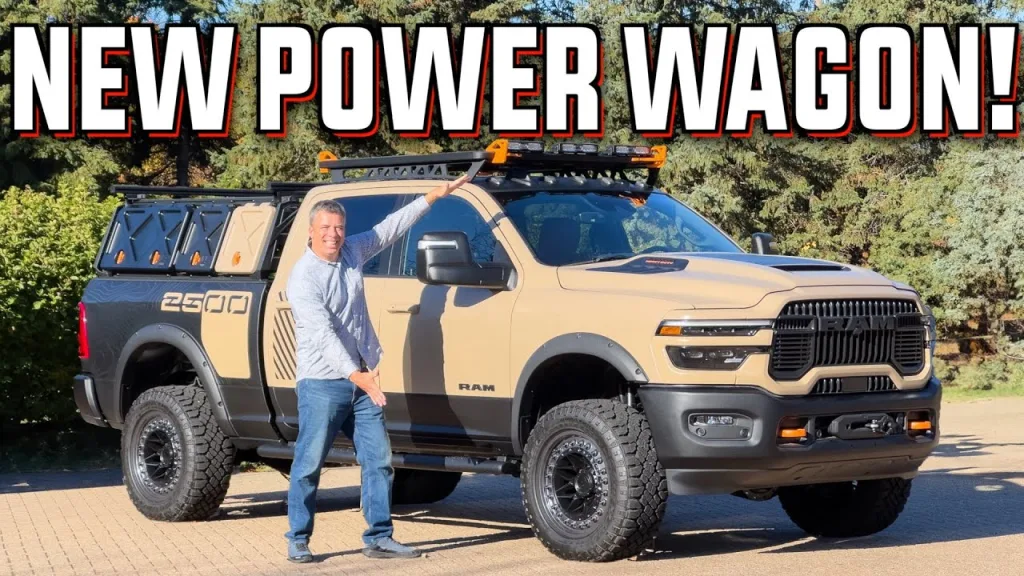
The Ram Power Wagon isn’t just a truck—it’s a statement. Since its modern revival in 2005, this heavy-duty legend has dominated the off-road pickup market with unmatched capability, factory-installed ruggedness, and a cult following. Whether you’re crawling boulders, hauling gear to remote job sites, or simply want the toughest truck on the block, the Power Wagon delivers. In this guide, we’ll break down why the Ram Power Wagon is worth every penny, where to find one for sale, and how it humiliates competitors like the Ford F-250 Tremor and Chevy Silverado ZR2.
1. What Makes the Ram Power Wagon Unique?
The Power Wagon is a factory-built off-roader based on the Ram 2500 platform. Unlike aftermarket-modified trucks, it’s engineered from the ground up for extreme terrain.
Key Features (2024 Model)
- Engine: 6.4L HEMI V8 – 410 HP, 429 lb-ft of torque.
- Drivetrain: Full-time 4×4 with electronic locking front/rear differentials, a disconnecting front sway bar, and a 4.10:1 axle ratio.
- Winch: Factory-installed 12,000-lb Warn® Zeon winch (standard).
- Suspension: 2.5-inch Bilstein® shocks and a 1.5-inch lift over standard Ram 2500 models.
- Tires: 33-inch LT285/70R17D Goodyear Wrangler DuraTrac® (mud-terrain).
- Payload/Towing: 1,510 lbs payload / 10,910 lbs towing (less than non-Power Wagon 2500s due to off-road gear).
2. Why Buy a Ram Power Wagon?
A. Unmatched Off-Road Prowess
The Power Wagon is the only heavy-duty truck with factory lockers, a winch, and disconnecting sway bars. Competitors like the Ford Tremor and Chevy ZR2 are light-duty posers by comparison.
- Articulation: 22.5 inches of wheel travel (front) / 25.5 inches (rear).
- Crawl Ratio: 44.1:1 in 4LO – ideal for rock crawling.
- Water Fording: 32 inches (with snorkel kits available).
B. Daily-Drivable Comfort
Unlike modified rigs, the Power Wagon doesn’t punish you on pavement:
- Interior: Available 12-inch Uconnect 5 touchscreen, leather-trimmed seats, and 19-speaker Harman Kardon® audio.
- Safety: Adaptive cruise control, blind-spot monitoring, and 360-degree cameras.
C. Legendary Durability
- Frame: Reinforced high-strength steel with a 5-year/100,000-mile powertrain warranty.
- Axles: Heavy-duty Dana 60 front and Dana 70 rear.
3. Ram Power Wagon vs. Competitors
A. Ford F-250 Tremor
- Pros: Higher towing (15,000 lbs), 6.7L Power Stroke diesel option.
- Cons: No factory winch, rear locker only, and a $5,000+ premium over the Power Wagon.
- Verdict: Better for towing, worse for off-roading.
B. Chevrolet Silverado 1500 ZR2
- Pros: Lighter, better fuel economy (17 MPG combined).
- Cons: Half the payload (1,200 lbs), no heavy-duty diesel option.
- Verdict: A mid-size pretender.
C. Toyota Tundra TRD Pro
- Pros: Reliable twin-turbo V6 (389 HP).
- Cons: No low-range gearing, plastic skid plates, and a 11,000-lb tow cap.
- Verdict: Not in the same league.
4. Pricing: What to Expect (2024 Models)
- Base Tradesman: $62,000 – Vinyl seats, basic infotainment.
- Laramie: $75,000 – Luxury interior, 12-inch screen, heated/ventilated seats.
- Limited 75th Anniversary Edition: $85,000+ – Exclusive badging, advanced safety tech.
Used Market (2018–2023 Models):
- 2018–2020: 45,000–45,000–55,000 (30,000–60,000 miles).
- 2021–2023: 55,000–55,000–70,000 (low mileage).
5. Where to Find a Ram Power Wagon for Sale
A. Dealerships
- New: Use Ram’s inventory tool to locate Power Wagons near you.
- Certified Pre-Owned (CPO): Comes with a 7-year/100,000-mile warranty.
B. Online Marketplaces
- Cars.com: 250+ Power Wagons listed nationwide.
- AutoTrader: Filter by “Power Wagon” and trim.
- Bring a Trailer: Rare vintage models (2005–2010).
C. Auctions
- Manheim: Check Manheim Express for dealer-only auctions.
- Copart: Salvage titles for DIY rebuilders (Copart Power Wagons).
6. What to Look for When Buying
A. New Models
- Markups: Some dealers charge $5,000+ over MSRP. Use Ram’s Build & Price to lock in rates.
- Incentives: Look for 0% APR financing or $1,500 bonus cash (varies monthly).
B. Used Models
- Common Issues:
- Exhaust Manifold Bolts: Prone to cracking (2014–2018 models).
- Winch Maintenance: Check for frayed cables or motor issues.
- Rust: Inspect frame and undercarriage (common in salt-belt states).
- Mods: Avoid trucks with aftermarket lifts >3 inches (strains drivetrain).
7. Customization: Build Your Ultimate Power Wagon
The Power Wagon is a blank canvas for upgrades:
- Performance:
- Supercharger Kits: Hennessey offers a 707 HP HEMI upgrade.
- 37-inch Tires: Requires a $1,500 suspension lift (e.g., Carli Dominator System).
- Overlanding:
- Bed Racks: Yakima OverHaul HD.
- Snorkel: ARB Safari for deep-water crossings.
- Aesthetic:
- Retro Graphics: 75th Anniversary stripes or classic Power Wagon decals.
8. Owner Reviews: Real-World Feedback
Pros:
- “The factory winch saved me three times on Moab’s Hell’s Revenge.” – Overland Journal.
- “Rides smoother than my old Ford Raptor.” – PowerWagonForum.com.
Cons:
- “Fuel economy is brutal – 11 MPG average.” – Edmunds.
- “Wish it had a diesel option.” – Reddit /r/Trucks.
9. Frequently Asked Questions
Q: Does the Power Wagon come with a diesel engine?
A: No – the 6.4L gas V8 is the only option. Ram reserves diesel for non-Power Wagon 2500/3500 models.
Q: Can I tow 15,000 lbs with a Power Wagon?
A: No – max towing is 10,910 lbs due to softer suspension. Opt for a Ram 2500 Cummins for heavy towing.
Q: Is the Power Wagon worth the price?
A: If you need extreme off-road capability without aftermarket hassles, yes.
10. The Verdict: Who Should Buy a Ram Power Wagon?
- Off-Road Enthusiasts: Best factory-ready rock crawler.
- Ranchers/Outdoorsmen: Haul feed, tow equipment, and rescue stuck ATVs.
- Luxury Buyers: High-trim models rival Cadillac Escalades in comfort.
Conclusion: The Power Wagon is a Modern Legend
The Ram Power Wagon isn’t for everyone – it’s for those who refuse to compromise. With its unmatched off-road specs, rugged durability, and surprising daily-driver comfort, it’s the ultimate heavy-duty truck for adventurers who demand the best.
Ready to join the Power Wagon cult?
- Search New Inventory: Ram Trucks Locator.
- Browse Used Listings: Cars.com Power Wagons.
The term “Jeep Scrambler” has been used for two distinct vehicles: the classic CJ-8 Scrambler (1981–1986) and the modern Jeep Gladiator (JT), which some enthusiasts unofficially call the “Scrambler.” Let’s dive into both eras.
1. The Original Jeep Scrambler (CJ-8, 1981–1986)
The CJ-8 Scrambler was Jeep’s answer to the growing demand for a compact, rugged pickup truck.
Key Features
- Design: A stretched version of the CJ-7 with a 103.5-inch wheelbase and a 6-foot bed.
- Engine Options:
- 2.5L AMC I4 (1981–1982) – 82 HP.
- 4.2L AMC I6 (1981–1986) – 112 HP.
- 2.4L Renault diesel (1982–1985) – 62 HP (rare).
- Off-Road Prowess: Part-time 4×4, Dana axles, and up to 10.5 inches of ground clearance.
- Production Numbers: Only ~27,000 made, making it a collector’s item today.
Why It’s Legendary
- Versatility: Half pickup, half SUV, perfect for farmers, ranchers, and adventurers.
- Pop Culture: Appeared in films like Raiders of the Lost Ark and Twister.
- Aftermarket Love: Still prized for custom builds (e.g., LS swaps, overland rigs).
2. The Modern “Scrambler”: Jeep Gladiator (JT, 2019–Present)
While Jeep hasn’t officially revived the “Scrambler” name, the Gladiator (JT) fills the niche. Many fans call it the “Scrambler” as a nod to the CJ-8.
Key Features
- Design: Based on the Jeep Wrangler JL platform with a 5-foot bed and 137.3-inch wheelbase.
- Engine Options:
- 3.6L Pentastar V6 (285 HP, 260 lb-ft).
- 3.0L EcoDiesel V6 (260 HP, 442 lb-ft) (2020–2023).
- 4xe Plug-In Hybrid (2025 model expected).
- Towing & Payload:
- Max Towing: 7,700 lbs (gas) / 6,500 lbs (diesel).
- Payload: 1,700 lbs.
- Off-Road Specs:
- Rubicon Trim: Rock-Trac 4×4, front/rear lockers, 33-inch tires.
- Mojave Trim: Desert-rated with Fox shocks and reinforced frame.
Competitors
- Ford Ranger: Less off-road-focused, but cheaper.
- Toyota Tacoma: Better resale but trails in tech and power.
- Chevy Colorado ZR2: Comparable specs but lacks the Jeep’s open-air freedom.
3. Rumors & Future Models: Will Jeep Revive the “Scrambler” Name?
Jeep has trademarked “Scrambler” multiple times (2018, 2023), sparking speculation:
- 2025 Jeep Scrambler EV: Rumored as an electric pickup to rival the Ford F-150 Lightning.
- Hybrid Variant: A 4xe Scrambler/Gladiator could merge efficiency with torque.
- Design Clues: Jeep’s 2022 Scrambler Concept (based on the Gladiator) featured retro graphics and a safari roof.
4. Why Buy a Jeep Scrambler/Gladiator?
- Open-Air Freedom: Removable doors, fold-down windshield, and retractable roof.
- Off-Road Mastery: Best-in-class articulation and trail-rated hardware.
- Customization: Over 200 factory-backed Mopar accessories (winches, racks, bed liners).
- Community: Join the cult of Jeep owners who live by the mantra: “Go Anywhere, Do Anything.”
5. Criticisms
- Price: Gladiators start at 40,000∗∗andsoarpast∗∗40,000∗∗andsoarpast∗∗70,000 for Rubicon models.
- Ride Quality: Stiff suspension (a trade-off for off-road capability).
- Fuel Economy: 17 MPG city / 22 MPG highway (V6 gas).
Verdict
Whether you’re hunting for a vintage CJ-8 Scrambler or a modern Gladiator, Jeep’s pickup legacy is unmatched. The Scrambler name embodies rugged individualism, and the Gladiator carries that torch today. For die-hard Jeep fans, it’s not just a truck—it’s a lifestyle.
Looking for one?
- Classic CJ-8: Check auctions like Bring a Trailer.
- New Gladiator: Visit Jeep’s Build & Price.
Connect with us


