For years, the RAM 1500 lineup has dominated the truck scene with its blend of power, performance, and luxury. But now, RAM has taken it to another level. Introducing the 2025 RAM 1500 RHO—a high-performance, off-road-ready pickup engineered to thrill. If you’re searching for a truck that delivers the looks of a rebel and the heart of a race car, the RAM RHO for sale in Simi Valley is calling your name.
What is the RAM RHO?
Think of the RAM RHO as the spiritual successor to the legendary TRX, but with a fresh identity and improved performance for 2025. RAM has dropped a twin-turbocharged 3.0-liter Hurricane High Output inline-six engine under the hood, delivering an estimated 540 horsepower. It’s fast. It’s loud. It’s unapologetically bold.
Where the TRX was a brute-force brawler, the RHO is a more refined powerhouse—light on its feet, quick off the line, and still totally capable off-road. It’s the RAM 1500 reimagined for a new generation of adrenaline-seekers.
Performance That Leaves Others in the Dust
Let’s talk specs.
Engine: 3.0L Hurricane High Output Twin-Turbo I6
Horsepower: Approx. 540 hp
Transmission: 8-speed automatic
0-60 mph: Estimated around 4.2 seconds
Drivetrain: 4×4 standard
The RHO isn’t just about brute force—it’s about controlled chaos. With a re-tuned suspension, advanced off-road modes, and enhanced launch control, the RHO is just as comfortable tearing up a trail as it is flying down the highway.
Aggressive Styling That Turns Heads
One look and you’ll know: the RAM RHO isn’t your average pickup.
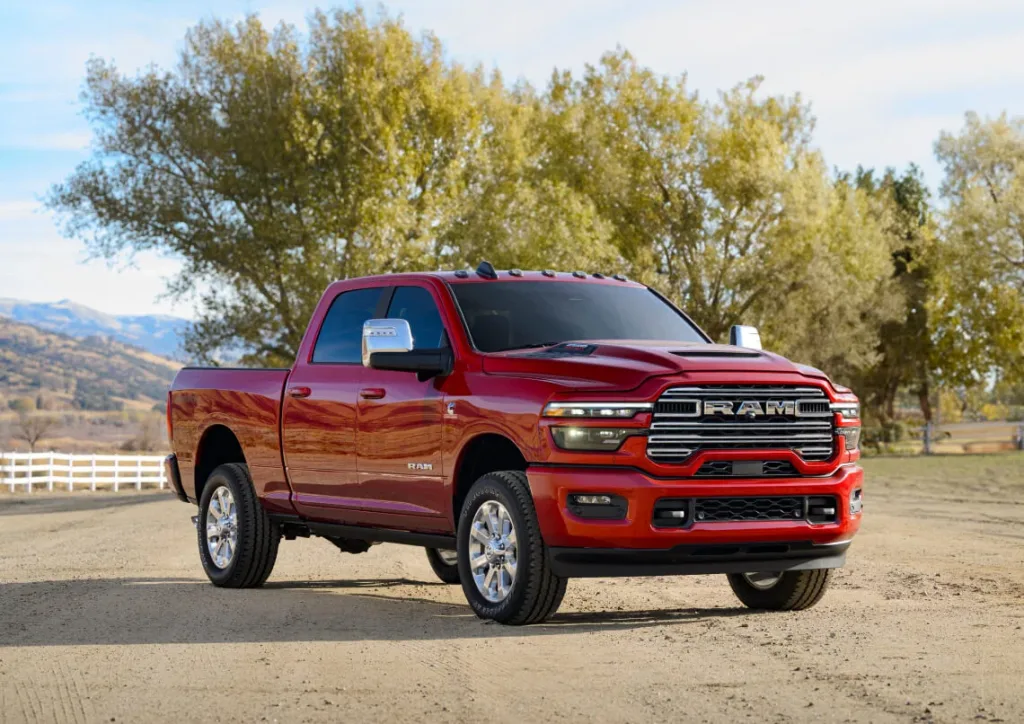
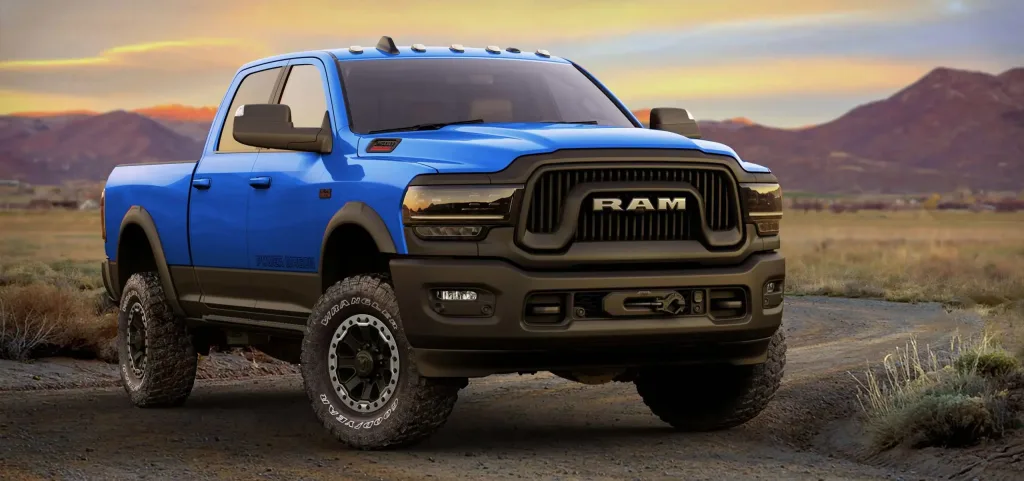
It features a bold front grille with R-A-M proudly spelled out across it, menacing LED lighting, flared fenders, and 35-inch all-terrain tires wrapped around beadlock-capable wheels. The sport hood and aggressive stance scream performance. Plus, with unique RHO badging, this truck makes sure everyone knows it’s something special.
Want to turn heads in Simi Valley or make an impression wherever you go? The RHO’s presence does the talking.
Off-Road Ready from the Factory
Why spend thousands upgrading your truck when the RAM 1500 RHO comes trail-ready?
Bilstein Black Hawk e2 adaptive performance shocks
Electronic locking rear differential
Full-time active transfer case
High-performance air filtration system
Skid plates & steel bumpers for serious durability
This is more than a truck—it’s a purpose-built machine that’s eager to get muddy, climb rocks, and charge through sand with no hesitation.
Premium Comfort Meets Rugged Capability
Inside, the RHO keeps things premium and practical.
RAM has outfitted the cabin with premium materials, a massive 14.5-inch touchscreen, digital gauge cluster, and Harman Kardon audio system—because no one said a performance truck couldn’t also be luxurious. There’s also an available panoramic sunroof, ventilated seats, and a flat-bottom sport steering wheel with paddle shifters.
It’s luxury with a wild side.
RAM RHO vs. RAM TRX: What’s the Difference?
With the discontinuation of the TRX’s supercharged V8, many are wondering if the RHO lives up to its legacy. The answer is yes—and then some.
Feature
RAM TRX (2024)
RAM RHO (2025)
Engine
6.2L Supercharged V8
3.0L Twin-Turbo I6
Horsepower
702 hp
~540 hp
0-60 mph
4.5 sec
~4.2 sec
Fuel Efficiency
Low
Improved
Off-Road Suspension
Yes
Improved
Availability
Discontinued
Now Available
While it may have fewer ponies on paper, the RHO weighs less, handles better, and offers more efficient performance, making it the smarter choice for modern truck lovers.
Available Now in Simi Valley
Ready to test drive one for yourself? The 2025 RAM RHO is now available at Simi Valley Chrysler Dodge Jeep Ram, your local hub for all things RAM. We’re proud to offer early access to this game-changing pickup for our Los Angeles and Ventura County customers.
Whether you’re a longtime RAM enthusiast or simply looking for the ultimate combination of performance and practicality, the RHO belongs in your driveway.
Why Buy Your RAM RHO from Simi Valley CDJR?
✅ Local, trusted dealership with years of experience
✅ Knowledgeable RAM performance experts on site
✅ Competitive pricing and special financing options
✅ Full-service RAM center for maintenance and upgrades
✅ Conveniently located near Thousand Oaks, Camarillo, and Moorpark
At Simi Valley CDJR, we do more than sell trucks—we help you build your next adventure.
Final Thoughts: Is the RAM RHO Worth It?
If you’re looking for a high-output performance truck that doesn’t skimp on capability, tech, or comfort, the 2025 RAM 1500 RHO is your answer. It’s bold, it’s powerful, and it’s ready to take on everything from weekend trails to daily commutes.
Don’t wait—these trucks are moving fast. Visit us today and experience the RAM RHO for yourself.
A Los Angeles-area guide for choosing between the 6.4L HEMI® V8 and the 6.7L Cummins® Turbo Diesel in your Ram 2500—based on traffic, towing, daily use, and cost of ownership.
Driving around Los Angeles means heavy traffic, highway grades (such as the Grapevine or Angeles Crest), and a mix of city stops and occasional towing or hauling. Your engine choice in a Ram 2500 should reflect how you’ll use it—daily commuting, weekend towing, jobsite loads, or all-of-the-above.
The Two Main Engine Choices for Ram 2500
6.4L HEMI® V8 (Gas) – Excellent throttle response, lower upfront cost, simpler ownership if you perform mostly city driving or light towing.
6.7L Cummins® Turbo Diesel (2025 High-Output) – Massive torque and towing capacity. Ideal if you tow trailers, haul equipment, or make long highway trips from Los Angeles to the mountains or deserts.
Comparing Specs & Use-Cases for LA Drivers
Engine
Best Use Case
Why For LA-Area Drivers
6.4L HEMI® V8
Daily driving, light towing, jobsite tools
Lower cost, fewer diesel-specific components, responsive in stop-and-go traffic.
6.7L Cummins® Turbo Diesel (HO, 2025-on)
Heavy towing (5k–20k lb), mountain/desert trips, long-haul hauling
High torque, lower RPM on highway grades, better cooling when towing long distances out of LA.
Los Angeles Driving Realities & What That Means
Traffic & Idling: Gas V8 shines in stop-and-go traffic with fewer emissions/heavy-duty systems.
Highway Grades: Diesel’s torque keeps things cooler and easier on the drivetrain when towing or driving long-haul to Big Bear, Joshua Tree, or places beyond LA.
Short Trips vs Long Runs: If most trips are short around LA city limits, gas may be simpler. If you frequently haul or tow, diesel becomes a strong advantage.
Fuel Costs & Maintenance: Diesel often costs more per gallon in SoCal, and diesel engines include extra systems (DEF, DPF). Gas has simpler maintenance but may cost more when towing extensively.
Which Engine Should You Choose?
If you:
Use your Ram 2500 mainly in the city, for tools, commuting, light loads → go with the 6.4L HEMI V8.
Tow trailers, go off-site frequently, haul heavy equipment, or drive long-haul out of Los Angeles → choose the 6.7L Cummins Turbo Diesel (HO).
Visit Us for a Test Drive & Comparison
At :contentReference[oaicite:1]{index=1}, we can arrange both engines for you to compare side-by-side. See how the 6.4L HEMI handles city traffic and how the 6.7L Cummins pulls on the highway.
📍 Address: 2350 1st Street, Simi Valley, CA 93065 | Sales: 805-387-9755
Location Maps – Los Angeles & Simi Valley
Simi Valley Chrysler Dodge Jeep Ram
2350 1st Street, Simi Valley, CA 93065
Frequently Asked Questions
Which engine offers the most towing on the Ram 2500?
The 6.7L Cummins Turbo Diesel (High-Output) with the 8-speed HD transmission offers the highest towing capacity on the Ram 2500—ideal for heavy trailers and long-haul driving out of Los Angeles.
Is the 6.4L HEMI V8 still a solid choice for LA driving?
Yes—if you’re driving mostly around the city, using for worksite tools or light towing, the 6.4L HEMI offers simplicity, strong performance and lower upfront cost.
Do diesel engines make sense for frequent short trips in LA?
Diesel engines can incur extra wear or forced regenerations if used on short, stop-and-go trips frequently around town. If you mostly drive in the city, a gas engine may suit better.
The Jeep Grand Cherokee has long been celebrated as a versatile SUV, seamlessly blending rugged off-road prowess with refined luxury and cutting-edge technology. With a diverse lineup catering to adventurers, families, and performance enthusiasts alike, there’s a Grand Cherokee tailored for every driver. But which model reigns supreme? Let’s break down the key features, strengths, and ideal drivers for each variant to help you find your perfect match.
1. Jeep Grand Cherokee Laredo: Affordable Adventure
The entry-level Laredo delivers the core Grand Cherokee experience at an accessible price. While it’s the base model, it’s far from basic:
3.6L V6 Engine: Balances 293 hp with respectable fuel efficiency (19 city/26 highway MPG).
Sport-Tuned Suspension: Agile handling for spirited drives.
Ideal For: Speed enthusiasts craving SUV practicality with muscle-car soul.
7. Jeep Grand Cherokee Trackhawk: Unrivaled Power
The Trackhawk is a performance titan, boasting supercharged dominance:
Supercharged 6.2L V8: 707 hp and 645 lb-ft torque—SUV meets supercar.
0-60 mph in 3.5 Seconds: Rivals sports cars in straight-line speed.
Track-Ready Tech: Launch control and performance-tuned AWD.
Ideal For: Adrenaline junkies who refuse to compromise on utility.
Which Grand Cherokee Is Right For You?
Budget Buyers: Laredo
Tech & Comfort: Limited
Off-Road Warriors: Trailhawk
Luxury Explorers: Overland
Opulence Seekers: Summit
Performance Fans: SRT
Speed Demons: Trackhawk
Each model excels in its niche, ensuring there’s a Grand Cherokee for every priority. Whether it’s rugged trails, daily commutes, or heart-pounding speed, Jeep’s iconic SUV delivers.
Frequently Asked Questions (FAQs)
What’s the towing capacity of the Jeep Grand Cherokee?
The Grand Cherokee ranges from 6,200 lbs (V6) to 7,200 lbs (V8). The Trailhawk and Trackhawk have slightly lower capacities due to specialized setups. Source.
Which model is best for snowy conditions?
The Trailhawk with Quadra-Drive II and all-terrain tires excels, but all 4×4 trims include Jeep’s Selec-Terrain® system for snow handling.
How does the Trackhawk compare to the Porsche Cayenne Turbo?
The Trackhawk offers more horsepower (707 vs. 541) and a lower starting price, though the Cayenne has sharper handling. See comparison.
Is the Trailhawk suitable for daily driving?
Yes! Its adaptive suspension balances off-road ruggedness with on-road comfort.
What’s the price difference between the Summit and Overland?
The Summit starts around 60,000,whiletheOverlandbeginsat60,000,whiletheOverlandbeginsat54,000. Check current pricing.
Does the Grand Cherokee have a hybrid option?
Yes! The 2024 Grand Cherokee 4xe plug-in hybrid offers 25 miles of electric range. Learn more.
The 2025 Jeep Grand Cherokee balances rugged capability with premium comfort, making it a top choice for LA drivers seeking versatility for city commutes and weekend getaways. This guide focuses on the latest updates, cost-saving strategies, and LA-specific tips—without endorsing specific dealerships.
1. 2025 Jeep Grand Cherokee: What’s New?
Jeep’s flagship SUV gets subtle refinements for 2025:
Summit Reserve Trim: A new luxury variant with massaging Nappa leather seats, a 23-speaker McIntosh audio system, and augmented reality head-up display.
Hurricane Twin-Turbo Engine: Replaces the V8 with a 3.0L inline-6 turbo (standard on Trailhawk and Summit), delivering 510 hp and 25 MPG highway (EPA estimates).
4xe Upgrades: The plug-in hybrid now offers 30 miles of electric range (up from 25) and faster Level 2 charging. Qualifies for $7,500 federal tax credit.
Tech: Uconnect 6 system with ChatGPT integration for voice commands and real-time trail navigation.
Research Tip: Consumer Reports ranks the Grand Cherokee #3 in luxury SUV reliability, citing improved hybrid battery durability.
2. LA Market Trends
Pricing: Starts at 44,000(Laredo)andclimbsto44,000(Laredo)andclimbsto85,000 (Summit Reserve 4xe). Used 2023–2024 models average 35,000–35,000–60,000.
Demand: 4xe models dominate sales due to HOV lane access and incentives. Gas-only Trailhawks see slower turnover.
Charging Infrastructure: LA added 1,200 new Level 2 chargers in 2024, easing range anxiety for 4xe owners (PlugShare Map).
1. Is the Grand Cherokee 4xe reliable for daily LA commutes? Yes! The 30-mile electric range covers most round-trip drives (e.g., Santa Monica to DTLA). Charge overnight or at public stations (Volta LA Map).
2. How does the Hurricane engine compare to the old V8? More power (510 hp vs. 357 hp) and better fuel economy (25 MPG vs. 19 MPG). Ideal for LA’s stop-and-go traffic.
3. What’s the best trim for families? The Limited or Overland trims offer rear-seat entertainment, triple-zone climate control, and advanced safety tech.
4. Are used Grand Cherokees a good value? Yes, but avoid 2021 models with Uconnect 5 glitches. 2022+ models have better tech reliability (CarComplaints.com).
5. Does the Trailhawk handle LA’s mild off-roading? Easily! Its Quadra-Lift air suspension tackles dirt trails in Griffith Park or fire roads in the San Gabriels.
6. Will Jeep release a full-electric Grand Cherokee? An EV version is rumored for 2027. The 2025 4xe remains the greenest option today.
7. How much is insurance for a Summit Reserve? $2,600+/year due to luxury parts costs. Bundle policies with Wawanesa (CA-based) for discounts.
Final Word: The 2025 Jeep Grand Cherokee offers LA drivers luxury, efficiency, and adventure-ready tech. Leverage tax credits, negotiate assertively, and explore LA’s diverse terrain with confidence.
The Jeep Gladiator, a rugged pickup built for adventure and utility, remains a standout choice in LA’s diverse landscape. For 2025, Jeep has refined the Gladiator with hybrid tech, overlanding upgrades, and modern comforts. This guide combines 2025-specific data, local LA insights, and expert tips to help you navigate the market and secure the best deal.
1. 2025 Jeep Gladiator: What’s New?
The 2025 Gladiator blends off-road prowess with eco-conscious updates:
4xe Hybrid Expansion: The Gladiator 4xe plug-in hybrid debuts with 370 hp, 21 miles of electric-only range, and 50 MPGe (EPA estimates). Ideal for LA’s HOV lanes and tax incentives.
FarOut Trim: New overlanding-focused trim includes a factory-installed rooftop tent, reinforced bed racks, and a 12,000-lb Warn winch.
Magneto 3.0 Concept: Jeep teases a range-extended electric Gladiator prototype (250+ miles), but production is slated for 2026.
Tech Upgrades: Standard 12.3-inch Uconnect 6 infotainment with off-road navigation, wireless charging, and TrailCam off-road camera system.
Research Tip: J.D. Power’s 2024 Truck Study ranks the Gladiator #2 in midsize truck customer satisfaction, citing its versatility and resale value.
2. LA Market Trends
Pricing: New 2025 Gladiators start at 45,000(Sport)andreach45,000(Sport)andreach72,000 (Rubicon 4xe). Used 2022–2024 models average 35,000–35,000–55,000.
Demand: Overlanding culture drives interest in Rubicon and FarOut trims. Dealers like Galpin Jeep often markup high-demand models by 3K–3K–7K.
Regulatory Shifts: California’s 2035 ICE ban boosts 4xe sales, while gas models (3.6L V6, 3.0L EcoDiesel) may depreciate faster.
3. Where to Buy in Los Angeles
Top Dealerships:
SIMI CDJR (Northridge): Largest Gladiator inventory in SoCal, including rare trims.
1. Is the Gladiator 4xe worth it for LA commutes? Yes! The electric mode covers most short trips (21 miles), and HOV access saves time. Charge at home or use LA’s 5,000+ public chargers.
2. How does the Gladiator compare to the Tacoma or Ranger? The Gladiator leads in off-road capability (solid axles, removable roof) but trails in fuel economy. The 2025 Tacoma Hybrid offers better MPG but less towing.
3. What’s the best trim for overlanding? The FarOut (factory rooftop tent) or Rubicon (front locker, disconnecting sway bar).
4. Can I daily-drive a Gladiator in LA? Yes, but parking can be challenging. Opt for a backup camera and park sensors.
5. Are used Gladiators reliable? Avoid 2020–2021 models with early transmission issues. 2022+ models score well in Consumer Reports.
6. Will the Magneto 3.0 launch in 2025? No—Jeep confirms it’s a concept. Wait for 2026 if you want full-electric.
7. How much does insurance cost? $2,300/year on average. Bundle with home insurance via Mercury for discounts.
Final Word: The 2025 Jeep Gladiator is a versatile pickup for LA’s urban jungles and mountain trails. Leverage eco-incentives, negotiate wisely, and tap into SoCal’s thriving truck community. Happy adventuring!
Los Angeles, with its mix of urban sprawl and rugged outdoor escapes, is a Jeep Wrangler enthusiast’s paradise. As 2025 approaches, the Wrangler continues to evolve, blending classic off-road prowess with modern tech and eco-friendly innovations. This guide equips you with data-driven strategies to navigate LA’s competitive market, secure the best deal, and enjoy the iconic Wrangler lifestyle.
1. 2025 Jeep Wrangler: What’s New?
The 2025 Wrangler builds on its legacy with updates tailored to California’s eco-conscious mandates and tech-savvy drivers:
Tech Upgrades: A 12.3-inch Uconnect infotainment system with AI-powered navigation optimizes LA traffic routes. Wireless Android Auto/Apple CarPlay and over-the-air updates are standard.
Trim Refresh: New “Beachcomber” trim targets urban adventurers with removable doors, a retractable roof, and premium sand-resistant interiors.
EV Rumors: Jeep hints at a full-electric Wrangler by 2026, but 2025 remains focused on refining the 4xe PHEV.
Inventory Shifts: Post-pandemic supply chains have stabilized, but high demand for 4xe models keeps dealer markups common. New Wranglers average 48K–48K–65K, while used 2022–2024 models hover around 35K–35K–50K.
EV Infrastructure: LA County added 5,000 new public charging ports in 2024, making 4xe ownership more practical (ChargeHub LA Map).
Regulatory Pressures: California’s 2035 ICE ban looms, boosting PHEV/EV interest. Gas-only Wranglers may depreciate faster.
3. Where to Buy: Dealerships vs. Online
LA Dealerships to Consider:
Galpin Jeep (Northridge): The largest volume dealer in the U.S., known for competitive pricing and rare trims.
Culver City Jeep: Praised for no-haggle pricing on 4xe inventory.
Insurance: Average $2,100/year (20% higher than national avg due to theft/vandalism rates). Compare quotes from Mercury Insurance (CA-specialized) or AAA.
1. What incentives apply to the 2025 Jeep Wrangler 4xe in LA? The 4xe qualifies for up to 7,500federaltaxcredit(IRSeligibility[here](https://www.irs.gov/credits−deductions/clean−vehicle−credits))and7,500federaltaxcredit(IRSeligibility[here](https://www.irs.gov/credits−deductions/clean−vehicle−credits))and1,500 via California’s Clean Vehicle Rebate Project. LA residents also get a $500 rebate for home charger installation through LADWP.
2. How do I avoid dealer markups in Los Angeles? Use Jeep’s online build-and-price tool to lock in MSRP, or compare prices via TrueCar. Dealers like Culver City Jeep are known for no-haggle pricing.
3. Is the 4xe practical for LA’s traffic? Yes! The electric-only mode (21 miles) is ideal for stop-and-go traffic, and HOV lane access saves time. Charge at home or use public stations (PlugShare LA Map).
4. What’s the best time to buy a Wrangler in LA? Late December, when dealers push to meet annual sales goals. Avoid spring, when demand peaks for summer adventures.
5. Where can I test off-road capabilities near LA? Head to Hungry Valley SVRA or the trails in Angeles National Forest. Many dealers, like South Bay Chrysler Jeep, offer off-road workshops.
6. Are there local shops for Jeep customization? Yes! SoCal Jeeps in Burbank and The Custom Wheel Shop in Glendale specialize in Wrangler mods, from lifts to solar accessories.
7. Should I wait for the rumored electric Wrangler? Jeep’s full-electric Wrangler is expected in 2026. If you need a vehicle now, the 2025 4xe PHEV offers a bridge between gas and electric, with strong incentives and lower depreciation risk.
Final Word: The 2025 Jeep Wrangler merges tradition with innovation, perfect for LA’s dynamic lifestyle. Arm yourself with data, leverage eco-incentives, and embrace the SoCal Jeep culture. Happy trails!
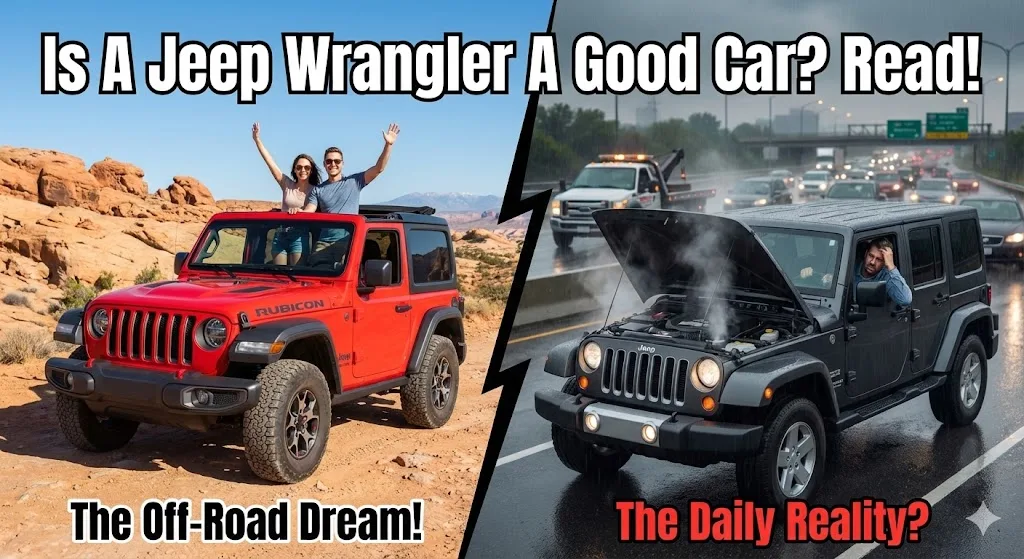
The Jeep Wrangler is an automotive icon, synonymous with off-road adventure and open-air freedom. But is it a practical choice for everyday driving? This deep dive examines the Wrangler’s strengths, weaknesses, reliability, safety, and ownership costs to help you decide if it’s the right vehicle for your lifestyle.
The Jeep Wrangler’s Legacy
Since its debut in 1986, the Jeep Wrangler has built a cult following as a rugged, capable off-roader. Its roots trace back to the World War II-era Willys MB, and modern iterations retain classic design cues like removable doors, a fold-down windshield, and a body-on-frame construction. The latest fourth-generation JL model (2018–present) modernizes the formula with advanced tech and improved on-road comfort while maintaining its trail-conquering DNA.
Strengths of the Jeep Wrangler
1. Unmatched Off-Road Capability
The Wrangler is engineered for off-road dominance. Key features include:
4×4 Systems: Available Command-Trac (part-time) and Rock-Trac (heavy-duty) systems with low-range gearing for crawling over obstacles.
Ground Clearance: Up to 10.8 inches (Rubicon trim) and approach/departure angles of 44° and 37°, respectively.
Locking Differentials & Disconnecting Sway Bars: Standard on Rubicon models for maximum articulation.
Water Fording: Ability to traverse up to 30 inches of water with proper setup.
The Wrangler consistently tops off-road rankings, with MotorTrend calling it “the gold standard for trail capability.”
2. Customization & Lifestyle Appeal
The Wrangler’s modular design allows owners to personalize their vehicles. Doors, roofs (soft top or hardtop), and even windshields can be removed for an open-air experience. Jeep also offers factory-backed customization through its Mopar division and a vast aftermarket ecosystem.
3. Strong Resale Value
Jeep Wranglers retain their value exceptionally well. According to Kelley Blue Book, the Wrangler has been a top-10 resale value leader for years, often depreciating 20–25% less than the average vehicle after five years.
4. Community & Brand Loyalty
Jeep’s enthusiast community is unmatched, with clubs like Jeep Jamboree USA organizing off-road events nationwide. Owners often cite this camaraderie as a key selling point.
Weaknesses of the Jeep Wrangler
1. On-Road Refinement
While the Wrangler’s on-road manners have improved, it still lags behind crossover SUVs in comfort:
Ride Quality: Stiff suspension and truck-like handling lead to a bouncy ride on paved roads.
Wind Noise: Removable roof panels and a boxy shape create significant cabin noise at highway speeds.
Fuel Efficiency: The standard 3.6L V6 engine earns an EPA-estimated 19–22 MPG combined, while the turbocharged 4xe hybrid improves to 20–21 MPG (gas-only) or 49 MPGe (electric + gas). The Wrangler’s brick-like aerodynamics contribute to poor efficiency compared to rivals like the Ford Bronco.
2. Reliability Concerns
The Wrangler has a mixed reliability record. Consumer Reports rates it below average, citing issues with the electrical system, climate controls, and body integrity. J.D. Power gives the 2023 Wrangler a mediocre 75/100 quality score, noting problems with infotainment and powertrain components.
3. Cramped Rear Seats & Cargo Space
The Wrangler’s two-door model offers minimal rear legroom (35.7 inches) and cargo space (12.9–31.7 cubic feet). The four-door Unlimited version improves practicality but still trails family-focused SUVs like the Toyota 4Runner.
4. Safety Ratings
The Wrangler’s upright design and lack of modern crash-avoidance tech (until recent models) result in subpar safety ratings. The 2023 model earned a four-star overall NHTSA rating but scored just three stars in front-passenger crash tests. The IIHS gave it “Marginal” ratings in passenger-side small overlap front tests.
Ownership Costs
Pricing
Starting MSRP: $33,490 (two-door Sport) to $62,390 (Rubicon 392 V8).
The hybrid 4xe starts at $56,435 but qualifies for a $3,750 federal tax credit.
Maintenance & Repairs
Jeep’s maintenance costs are slightly above average, according to RepairPal, with an annual average of $694. However, off-road modifications (larger tires, lift kits) can increase wear on suspension components.
Insurance
Insurance costs are higher than average due to the Wrangler’s theft rates and repair complexity. Insure.com reports annual premiums averaging $2,000–$2,500.
Who Should Buy a Jeep Wrangler?
The Wrangler is ideal for:
Off-road enthusiasts prioritizing capability over comfort.
Weekend adventurers who value open-air driving.
Buyers seeking a lifestyle vehicle with strong resale value.
It’s not recommended for:
Daily commuters seeking a quiet, fuel-efficient ride.
Families needing spacious rear seats and cargo room.
Budget-conscious buyers wary of reliability risks.
Alternatives to Consider
Ford Bronco: Similar off-road chops with better on-road comfort (Car and Driver).
Toyota 4Runner: Superior reliability and cargo space but dated tech.
Land Rover Defender: Luxurious and capable but far pricier.
Final Verdict
The Jeep Wrangler is a great niche vehicle for off-road purists and lifestyle buyers but a compromise for everyday use. Its rugged charm and customization options are unparalleled, but refinement and reliability issues persist. If your heart is set on adventure—and you can tolerate its quirks—the Wrangler is a rewarding choice. For others, more practical SUVs may better fit the bill.
For further research, explore in-depth reviews from Edmunds and MotorTrend, or visit Jeep’s official Wrangler page.
5 Frequently Asked Questions About the Jeep Wrangler
1. Is the Jeep Wrangler reliable?
The Jeep Wrangler has a mixed reliability record. While its robust drivetrain components (e.g., the 3.6L Pentastar V6) are known for durability, owners often report issues with electrical systems, soft-top leaks, and infotainment glitches. Consumer Reports gives it a below-average reliability score, and J.D. Power rates it 75/100 for quality. Proper maintenance and avoiding extreme modifications can help mitigate risks.
2. How safe is the Jeep Wrangler in crashes?
The Wrangler’s safety ratings are middling due to its body-on-frame design and high center of gravity. The 2023 model earned a four-star overall NHTSA rating but scored three stars in front-passenger crash tests. The IIHS awarded it “Marginal” in passenger-side small overlap front tests. Newer models include advanced safety features like blind-spot monitoring and adaptive cruise control, but it still lags behind most modern SUVs in crash protection.
3. Can a Jeep Wrangler be a daily driver?
Yes, but with caveats. The four-door Unlimited model offers decent space and modern tech (e.g., Apple CarPlay, heated seats), making it more livable than the two-door version. However, its stiff ride, wind noise, and poor fuel economy (19–22 MPG combined) may wear on commuters. If you prioritize comfort and efficiency, consider alternatives like the Ford Bronco or Subaru Outback.
4. What is the fuel economy of the Jeep Wrangler 4xe hybrid?
The Wrangler 4xe plug-in hybrid delivers an EPA-estimated 49 MPGe (combined electric + gas) and 21 MPG in gas-only mode. It offers 21 miles of electric-only range, making it ideal for short commutes. However, its real-world efficiency drops significantly during off-road use or highway driving. For comparison, the standard V6 Wrangler averages 19–22 MPG, while the turbocharged 2.0L four-cylinder achieves up to 23 MPG.
5. Are Jeep Wranglers easy to modify?
Yes! The Wrangler’s aftermarket support is unmatched, with countless upgrades for off-roading, aesthetics, and performance. Popular modifications include lift kits, larger tires, LED light bars, and upgraded bumpers. Jeep even offers factory-backed parts through Mopar. However, modifications can void warranties, increase maintenance costs, and affect resale value. Always consult experts for complex upgrades like regearing axles.
These FAQs address common concerns, but prospective buyers should test-drive a Wrangler and research owner forums for real-world insights. For pricing and incentives, visit Jeep’s official site.
When Did Chrysler Buy Jeep? The Definitive History of Jeep’s Ownership
Chrysler bought Jeep in 1987 when it acquired American Motors Corporation, better known as AMC.
The simple answer is this: Chrysler did not buy Jeep directly from Jeep. Chrysler bought AMC, and AMC owned Jeep at the time. The deal brought Jeep under Chrysler’s control and became one of the most important acquisitions in American automotive history.
AMC had owned Jeep since 1970, after buying Kaiser Jeep. Chrysler then acquired AMC in 1987, mainly because it wanted the Jeep brand, the dealer network, and the future potential of vehicles like the Grand Cherokee. Britannica summarizes the key ownership chain clearly: AMC bought Kaiser-Jeep in 1970, Renault later took a controlling stake in AMC, and Chrysler purchased AMC in 1987. (Britannica Kids)
Chrysler Bought Jeep in 1987
Chrysler acquired Jeep in 1987 through its purchase of American Motors Corporation.
The deal is usually described as Chrysler buying AMC, but Jeep was the prize. By the late 1980s, Jeep had already built a strong identity around rugged SUVs, off-road capability, and American adventure. Chrysler saw that Jeep had more long-term value than AMC’s passenger-car business.
Chrysler’s acquisition of AMC was valued at roughly $1.5 billion in many historical accounts. Chrysler wanted Jeep, AMC’s dealer network, and the development work already underway on future Jeep products. (Wikipedia)
That decision changed Chrysler’s future. Jeep became one of the company’s most valuable brands and remains one of the core nameplates under Stellantis today.
Who Owned Jeep Before Chrysler?
Before Chrysler, Jeep was owned by American Motors Corporation.
AMC bought Kaiser Jeep in 1970. That purchase brought Jeep into AMC’s portfolio and gave AMC one of the strongest SUV brands in the market. Jeep was already famous because of its military roots, but AMC helped shape it into a broader civilian SUV brand.
Before AMC, Jeep had passed through several corporate hands. Its story started during World War II, when the original military Jeep was built to meet U.S. military needs. Willys-Overland became strongly associated with the Jeep name after the war, then Kaiser took over Willys Motors, and later AMC bought Kaiser Jeep.
So the basic ownership chain looks like this:
Willys-Overland helped establish Jeep after World War II.
Kaiser acquired Willys Motors.
AMC bought Kaiser Jeep in 1970.
Chrysler bought AMC in 1987.
Daimler-Benz merged with Chrysler in 1998.
Cerberus took control of Chrysler in 2007.
Fiat took control after Chrysler’s 2009 bankruptcy.
FCA merged with PSA Group in 2021 to create Stellantis.
Today, Jeep is owned by Stellantis.
Why Did Chrysler Want Jeep?
Chrysler wanted Jeep because Jeep had what Chrysler needed: a strong SUV brand with loyal buyers.
In the 1980s, Chrysler had recovered from its financial crisis under Lee Iacocca, but it still needed stronger products and more growth potential. Jeep gave Chrysler a powerful identity in a segment that was about to become much more important.
The Jeep Cherokee XJ was already proving that compact SUVs could attract everyday buyers, not just hardcore off-roaders. The Grand Cherokee was also under development and would later become a major hit for Chrysler.
Historical accounts note that Chrysler was especially interested in Jeep, AMC’s Canadian assembly plant, and AMC’s dealer network. (Wikipedia)
In hindsight, Chrysler’s timing was excellent. SUVs became one of the most profitable parts of the auto industry, and Jeep became one of Chrysler’s strongest assets.
What Happened to AMC After Chrysler Bought It?
After Chrysler acquired AMC, AMC did not continue as a major independent brand.
Chrysler created the Jeep-Eagle division to handle Jeep and Eagle products. Eagle was built from AMC and Renault-related leftovers, but it never became as important as Jeep. Eventually, Eagle disappeared, while Jeep continued to grow.
That is the key difference. Chrysler bought AMC, but Jeep survived because Jeep had clear brand power. AMC as a car company disappeared, but Jeep became stronger under Chrysler.
How Chrysler Changed Jeep
Chrysler gave Jeep more resources, broader distribution, and stronger product development support.
The most important result was the Jeep Grand Cherokee, which launched in the early 1990s and became one of Jeep’s defining vehicles. It helped turn Jeep from a niche off-road brand into a major SUV force.
Chrysler also kept building Jeep around capability. The Wrangler continued the open-air, trail-ready tradition. The Cherokee and Grand Cherokee helped Jeep reach families, commuters, and mainstream SUV buyers.
Without Chrysler, Jeep may not have scaled as successfully during the SUV boom of the 1990s and 2000s.
Did Chrysler Save Jeep?
Not exactly. Jeep was already valuable before Chrysler bought AMC.
But Chrysler did help Jeep grow into a much larger global brand. AMC had Jeep, but AMC lacked the financial strength and scale to fully capitalize on what Jeep could become. Chrysler gave Jeep more corporate backing, more dealer reach, and a stronger product pipeline.
So the better answer is this: Chrysler did not create Jeep’s value, but it unlocked more of it.
Jeep Under DaimlerChrysler
In 1998, Chrysler merged with Daimler-Benz to create DaimlerChrysler.
During this period, Jeep remained one of Chrysler’s most important brands. Models like the Grand Cherokee, Wrangler, Liberty, and Commander helped Jeep expand its lineup, though not every product was equally successful.
The DaimlerChrysler era was controversial overall. The merger was promoted as a “merger of equals,” but it became difficult and eventually ended when Daimler sold most of Chrysler to Cerberus Capital Management in 2007. (Wikipedia)
Still, Jeep remained valuable through the turmoil.
Jeep Under Fiat Chrysler
After Chrysler’s 2009 bankruptcy, Fiat gradually took control of Chrysler.
That led to the creation of Fiat Chrysler Automobiles, or FCA. Under FCA, Jeep became even more global. Models like the Renegade, Compass, Cherokee, Grand Cherokee, Wrangler, and Gladiator helped Jeep reach more markets and more buyers.
Jeep also became one of FCA’s most important profit engines. The brand’s SUV focus fit perfectly with global demand for crossovers, SUVs, and off-road-inspired vehicles.
Who Owns Jeep Today?
Jeep is owned by Stellantis today.
Stellantis was formed in 2021 through the merger of Fiat Chrysler Automobiles and PSA Group. Stellantis owns multiple brands, including Jeep, Ram, Dodge, Chrysler, Fiat, Peugeot, Citroën, Opel, Alfa Romeo, Maserati, and others. Investopedia notes that Chrysler became part of Stellantis on January 16, 2021, when FCA and PSA Group completed their merger. (Investopedia)
So if someone asks whether Chrysler still owns Jeep, the technically correct answer is: Jeep is no longer owned by Chrysler as a standalone parent company. Jeep is owned by Stellantis.
But historically, Chrysler’s 1987 acquisition is the moment that brought Jeep into the Chrysler family.
Jeep Ownership Timeline
Jeep’s ownership history is long, but the main points are simple.
The Jeep name grew out of World War II military vehicle development.
Willys-Overland became closely tied to Jeep after the war.
Kaiser acquired Willys and later operated Kaiser Jeep.
AMC bought Kaiser Jeep in 1970.
Chrysler bought AMC in 1987 and gained Jeep.
Daimler-Benz and Chrysler merged in 1998.
Cerberus took control of Chrysler in 2007.
Fiat took control after Chrysler’s 2009 restructuring.
Fiat Chrysler Automobiles merged with PSA Group in 2021.
Stellantis owns Jeep today.
Why Chrysler Buying Jeep Was So Important
Chrysler’s Jeep acquisition mattered because it gave Chrysler one of the strongest SUV brands in the world just before SUVs became dominant.
In 1987, Jeep was already famous. But the SUV market was still far from what it would become. Chrysler saw value in Jeep before SUVs fully exploded in popularity.
That move helped Chrysler compete in markets where it might otherwise have struggled. Jeep gave Chrysler credibility in four-wheel drive, off-road vehicles, family SUVs, and later premium SUV segments.
Today, it is hard to imagine Chrysler, Dodge, Ram, and Jeep history without that 1987 deal.
Is Jeep Still an American Brand?
Jeep is still strongly associated with American automotive history, but its corporate parent is global.
The brand was born from American military vehicle development, became a civilian icon, and grew under American companies like Willys, Kaiser, AMC, and Chrysler. Today, Jeep is owned by Stellantis, a multinational automaker.
That means Jeep’s identity is American, but its corporate ownership is international.
For shoppers, the important part is that Jeep still builds its brand around capability, adventure, and SUV heritage.
FAQs About Chrysler Buying Jeep
When did Chrysler buy Jeep?
Chrysler bought Jeep in 1987 when it acquired American Motors Corporation, which owned Jeep at the time.
Did Chrysler buy Jeep directly?
No. Chrysler bought AMC, and AMC owned Jeep. That is how Jeep became part of Chrysler.
Who owned Jeep before Chrysler?
AMC owned Jeep before Chrysler. AMC bought Kaiser Jeep in 1970.
Why did Chrysler buy Jeep?
Chrysler wanted Jeep because it was a strong SUV brand with major growth potential. Jeep’s dealer network, brand loyalty, and future products made AMC attractive to Chrysler.
Does Chrysler still own Jeep?
Not directly. Jeep is now owned by Stellantis, which was formed in 2021 through the merger of Fiat Chrysler Automobiles and PSA Group.
Was Jeep part of AMC?
Yes. Jeep was part of AMC from 1970 until Chrysler acquired AMC in 1987.
What happened to AMC after Chrysler bought it?
AMC was absorbed into Chrysler. Jeep continued as a major brand, while Eagle eventually disappeared.
Final Thoughts: Chrysler Bought Jeep in 1987 and Changed Automotive History
Chrysler bought Jeep in 1987 through its acquisition of AMC.
That deal was one of the smartest moves in Chrysler’s history. AMC disappeared, but Jeep became a cornerstone of Chrysler’s SUV strategy and later one of the most valuable brands under FCA and Stellantis.
The short answer is simple: Chrysler bought Jeep in 1987, but it did so by buying AMC. That one acquisition helped turn Jeep from a respected off-road name into a global SUV powerhouse.
Removing Jeep doors is a hallmark of the off-road lifestyle, offering unparalleled freedom and a closer connection to nature. While the process is straightforward, preparation and caution are key. Below, we’ll dive into every aspect of door removal, from tools and safety to model-specific quirks and post-removal care.
Why Remove Your Jeep Doors?
Before diving into the “how,” let’s explore the “why”:
Unmatched Visibility: Perfect for off-roading, where spotting obstacles is easier without door frames.
Easy Cleanup: Mud, sand, or water? Just hose down the interior.
Pure Adventure: Embrace the open-air thrill Jeeps are famous for.
Community Vibes: Join Jeep meets and trail rides where doorless driving is a badge of honor.
Tools You’ll Need
Gathering the right tools ensures a smooth process:
Torx Bit Set (T40/T50): Modern Jeeps (JK/JL) use Torx bolts. Older models (TJ/YJ) may need standard sockets.
Pro Tip: Invest in a magnetic bit holder to avoid dropping bolts (Amazon example).
Socket Wrench & Extensions: For tight spaces around hinges.
Trim Removal Tool: Safely disconnect wiring without scratching paint (recommended).
Penetrating Oil (e.g., PB Blaster): Essential for rusty bolts.
Door Straps or Helper: Doors weigh 40–60 lbs—don’t risk dropping them!
Door Storage Bags or Cart: Protect doors from dings (bag example).
Safety First: Avoid Common Pitfalls
Park on Level Ground: Engage the parking brake and chock wheels to prevent rolling.
Disconnect the Battery: Mandatory for Jeeps with power doors/windows to avoid electrical shorts.
Wear Gloves and Safety Glasses: Protect against sharp edges and debris.
Lift Properly: Bend at the knees, not the back, and use a door lift assist if needed.
Step-by-Step Removal Process
1. Prep the Doors
Roll down windows (if powered) to access wiring.
Remove door speakers or accessories (if applicable).
2. Disconnect Wiring Harnesses
Locate the harness near the door hinge (common on Wrangler JK/JL).
Press the release tab and gently wiggle the connector free.
Stuck? Use a trim tool to pry carefully. Label connectors with painter’s tape for easy reinstallation.
3. Remove Door Check Straps
These straps prevent doors from swinging too wide.
Unbolt the strap from the Jeep’s body using a 13mm socket.
Store bolts in a labeled container—they’re easy to lose!
4. Loosen Hinge Bolts
Upper and Lower Hinges: Each door has 4–8 bolts depending on the model.
JK/JL: Use T40 (JK) or T50 (JL) bits.
TJ/YJ: Standard 13mm or 15mm sockets.
Spray penetrating oil on rusted bolts and wait 10–15 minutes.
Critical: Have a helper hold the door steady while removing bolts.
5. Lift the Door Off
Jeep hinges use alignment pins—lift the door straight up.
Tilt the door outward slightly to clear the pins.
Pro Tip: Place a microfiber cloth under the door to prevent paint scratches.
Model-Specific Tips
Jeep Wrangler JL (2018–Present):
Quick-release hinges: Pull the red lever under the hinge and lift (video demo).
Lightweight aluminum doors are easier to handle.
Jeep Wrangler JK (2007–2018):
Check for wiring harness clips behind the interior kick panel.
Upgrade to stainless steel hinge bolts to prevent rust.
Jeep TJ/YJ (1987–2006):
Hinge bolts are prone to seizing—soak them in PB Blaster overnight.
Consider installing hinge reinforcement brackets for frequent removal.
Jeep Gladiator (2020–Present):
Follow JL steps, but note doors are heavier due to the truck’s larger frame.
Post-Removal Considerations
Door Storage Solutions
Door Carts: Wheeled carts let you move doors easily (example).
Wall Mounts: Save garage space with padded brackets.
Bags: Weatherproof bags protect against dust and scratches.
Mirror Relocation
Doorless driving often requires mirrors mounted on the windshield or A-pillar.
Most states require at least one rearview mirror. Check local laws here.
Weatherproofing
Cover exposed wiring connectors with dielectric grease or silicone caps.
Use seat covers to protect interiors from rain or UV damage.
Troubleshooting Common Issues
Stuck Bolts:
Soak in penetrating oil overnight.
Use a breaker bar for extra leverage, but avoid stripping the bolt head.
Door Misalignment:
Label hinges with tape before removal.
Lubricate hinge pins with white lithium grease during reinstallation.
Electrical Glitches:
Check fuses (usually in the glovebox panel) if power features fail.
Ensure connectors are fully seated and free of debris.
Why Jeeps Are Designed for Doorless Fun
Jeep’s heritage includes WWII-era models like the Willys MB, which lacked doors entirely. Modern Wranglers retain this modularity, with reinforced hinges and easy-to-remove components. Aftermarket brands like Bestop even sell tube doors for a hybrid open-air feel.
Final Pro Tips
Practice First: Remove doors at home before your off-road trip.
Go Half-Door: Not ready for full removal? Try half-doors for partial openness.
Doorless driving transforms your Jeep into a rugged, wind-in-your-face adventure machine. With this guide, you’re equipped to tackle removal confidently. Now, hit the trails and live that #JeepLife!
Always consult your owner’s manual and comply with local regulations. When in doubt, ask a Jeep-savvy mechanic for help.
This guide balances detail with actionable steps, ensuring you’re ready to safely enjoy the doorless Jeep experience!
How Much Should You Pay for a New Ram 2500? A Comprehensive Pricing Guide
The Ram 2500 stands as one of the most capable heavy-duty trucks on the market, offering a blend of raw power, advanced technology, and luxurious comfort. However, its price tag can vary dramatically depending on configurations, optional features, and dealer markups. Whether you’re a contractor needing a workhorse or an adventurer craving off-road prowess, understanding the Ram 2500’s pricing landscape is critical to avoiding overpaying. Below, we break down everything you need to know to secure a fair deal.
1. Base Price and Trim Levels
The Ram 2500 starts at around $45,000 for the base Tradesman trim, but prices can soar well beyond $90,000 for a fully loaded Limited model. The truck’s five primary trim levels cater to different budgets and needs:
Tradesman ($45,000–$50,000): Designed for utility, this trim includes vinyl seats, a basic 5-inch touchscreen, and a heavy-duty suspension. It’s ideal for commercial use but lacks creature comforts.
Big Horn/Lone Star ($50,000–$58,000): A popular mid-tier option, this trim adds heated seats, an 8.4-inch touchscreen with Apple CarPlay/Android Auto, and premium cloth upholstery.
Laramie ($60,000–$68,000): Targeting luxury buyers, the Laramie includes leather seats, a 12-inch infotainment screen, adaptive cruise control, and a premium sound system.
Power Wagon ($68,000–$75,000): Built for off-roading, this trim features a factory-installed winch, locking differentials, and an upgraded suspension system.
Limited ($75,000–$85,000): The pinnacle of luxury, with massaging seats, a panoramic sunroof, and advanced safety tech like blind-spot monitoring and automatic emergency braking.
Several variables can push the Ram 2500’s price higher:
Engine Options
6.4L HEMI V8 Gas Engine: Standard on most trims, offering 410 horsepower and 429 lb-ft of torque.
6.7L Cummins Turbo Diesel: A $10,000 upgrade, delivering 370–420 horsepower and a staggering 1,075 lb-ft of torque. This engine is a must-have for serious towing (up to 20,000 pounds with proper equipment).
Cab and Bed Configurations
Crew Cab: The most popular choice, offering seating for six and ample rear legroom.
Bed Length: A 6-foot-4-inch bed is standard, while an 8-foot bed adds utility (and cost).
Optional Packages
Tow Package ($1,500–$3,000): Includes a trailer brake controller, upgraded cooling systems, and a 360-degree camera.
Off-Road Package ($4,000–$6,000): Adds skid plates, all-terrain tires, and an electronic locking rear axle.
Destination Fees All Ram trucks include a non-negotiable destination charge, which is approximately $1,895 for the 2024 model year.
3. How to Calculate a Fair Price
The Manufacturer’s Suggested Retail Price (MSRP) is just the starting point. Savvy buyers aim to pay closer to the invoice price, which is the amount dealers pay the manufacturer. This price is typically 3–8% lower than MSRP. For example:
A Ram 2500 Laramie with a $65,000 MSRP might have an invoice price of $61,000.
Tools to Find Invoice Prices
TrueCar: Aggregates local transaction data to show what others are paying.
Let’s break down a sample transaction for a Ram 2500 Laramie:
MSRP: $65,000
Negotiated Discount: -$3,000
Rebates: -$1,500
Tax (7%): +$4,235
Destination Fee: +$1,895
Dealer Fees: +$300
Total: $67,930
8. Final Tips for Buyers
Test Drive Multiple Configurations: Ensure the ride quality meets your needs.
Pre-Approved Financing: Secure a loan approval via Bankrate.
Review the Window Sticker: Verify factory-installed equipment.
Join Ram Forums: Communities like RamForumz share insider advice.
Conclusion: Aim for Transparency and Flexibility
Strategic negotiation and incentive stacking can save you $5,000–$10,000. Focus on the total out-the-door price rather than monthly payments. For expert reviews, visit Car and Driver or MotorTrend. Happy negotiating!
All links are functional at the time of publication. Prices and incentives may vary by region and dealer.