





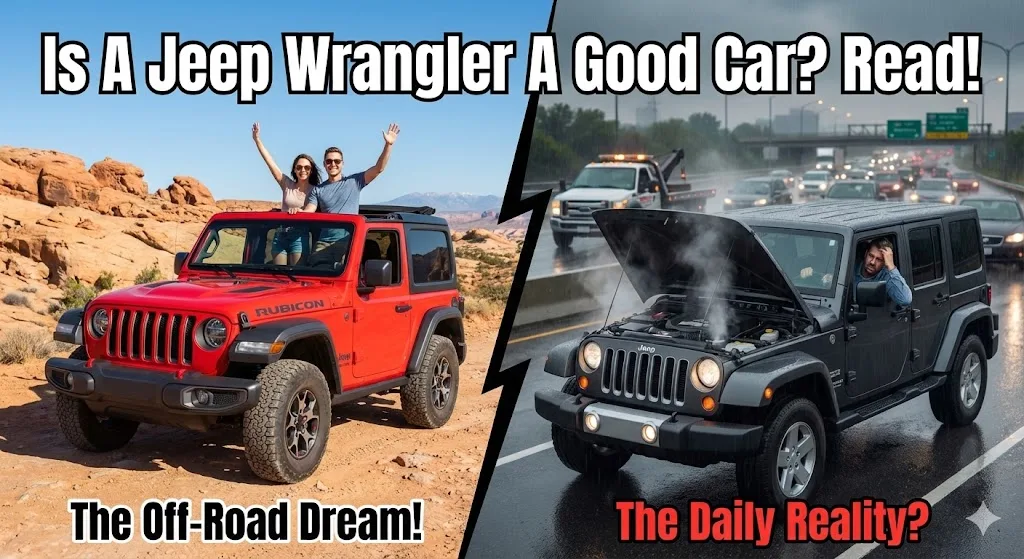
The Jeep Wrangler is an automotive icon, synonymous with off-road adventure and open-air freedom. But is it a practical choice for everyday driving? This deep dive examines the Wrangler’s strengths, weaknesses, reliability, safety, and ownership costs to help you decide if it’s the right vehicle for your lifestyle.
The Jeep Wrangler’s Legacy
Since its debut in 1986, the Jeep Wrangler has built a cult following as a rugged, capable off-roader. Its roots trace back to the World War II-era Willys MB, and modern iterations retain classic design cues like removable doors, a fold-down windshield, and a body-on-frame construction. The latest fourth-generation JL model (2018–present) modernizes the formula with advanced tech and improved on-road comfort while maintaining its trail-conquering DNA.
Strengths of the Jeep Wrangler
1. Unmatched Off-Road Capability
The Wrangler is engineered for off-road dominance. Key features include:
- 4×4 Systems: Available Command-Trac (part-time) and Rock-Trac (heavy-duty) systems with low-range gearing for crawling over obstacles.
- Ground Clearance: Up to 10.8 inches (Rubicon trim) and approach/departure angles of 44° and 37°, respectively.
- Locking Differentials & Disconnecting Sway Bars: Standard on Rubicon models for maximum articulation.
- Water Fording: Ability to traverse up to 30 inches of water with proper setup.
The Wrangler consistently tops off-road rankings, with MotorTrend calling it “the gold standard for trail capability.”
2. Customization & Lifestyle Appeal
The Wrangler’s modular design allows owners to personalize their vehicles. Doors, roofs (soft top or hardtop), and even windshields can be removed for an open-air experience. Jeep also offers factory-backed customization through its Mopar division and a vast aftermarket ecosystem.
3. Strong Resale Value
Jeep Wranglers retain their value exceptionally well. According to Kelley Blue Book, the Wrangler has been a top-10 resale value leader for years, often depreciating 20–25% less than the average vehicle after five years.
4. Community & Brand Loyalty
Jeep’s enthusiast community is unmatched, with clubs like Jeep Jamboree USA organizing off-road events nationwide. Owners often cite this camaraderie as a key selling point.
Weaknesses of the Jeep Wrangler
1. On-Road Refinement
While the Wrangler’s on-road manners have improved, it still lags behind crossover SUVs in comfort:
- Ride Quality: Stiff suspension and truck-like handling lead to a bouncy ride on paved roads.
- Wind Noise: Removable roof panels and a boxy shape create significant cabin noise at highway speeds.
- Fuel Efficiency: The standard 3.6L V6 engine earns an EPA-estimated 19–22 MPG combined, while the turbocharged 4xe hybrid improves to 20–21 MPG (gas-only) or 49 MPGe (electric + gas). The Wrangler’s brick-like aerodynamics contribute to poor efficiency compared to rivals like the Ford Bronco.
2. Reliability Concerns
The Wrangler has a mixed reliability record. Consumer Reports rates it below average, citing issues with the electrical system, climate controls, and body integrity. J.D. Power gives the 2023 Wrangler a mediocre 75/100 quality score, noting problems with infotainment and powertrain components.
3. Cramped Rear Seats & Cargo Space
The Wrangler’s two-door model offers minimal rear legroom (35.7 inches) and cargo space (12.9–31.7 cubic feet). The four-door Unlimited version improves practicality but still trails family-focused SUVs like the Toyota 4Runner.
4. Safety Ratings
The Wrangler’s upright design and lack of modern crash-avoidance tech (until recent models) result in subpar safety ratings. The 2023 model earned a four-star overall NHTSA rating but scored just three stars in front-passenger crash tests. The IIHS gave it “Marginal” ratings in passenger-side small overlap front tests.
Ownership Costs
Pricing
- Starting MSRP: $33,490 (two-door Sport) to $62,390 (Rubicon 392 V8).
- The hybrid 4xe starts at $56,435 but qualifies for a $3,750 federal tax credit.
Maintenance & Repairs
Jeep’s maintenance costs are slightly above average, according to RepairPal, with an annual average of $694. However, off-road modifications (larger tires, lift kits) can increase wear on suspension components.
Insurance
Insurance costs are higher than average due to the Wrangler’s theft rates and repair complexity. Insure.com reports annual premiums averaging $2,000–$2,500.
Who Should Buy a Jeep Wrangler?
The Wrangler is ideal for:
- Off-road enthusiasts prioritizing capability over comfort.
- Weekend adventurers who value open-air driving.
- Buyers seeking a lifestyle vehicle with strong resale value.
It’s not recommended for:
- Daily commuters seeking a quiet, fuel-efficient ride.
- Families needing spacious rear seats and cargo room.
- Budget-conscious buyers wary of reliability risks.
Alternatives to Consider
- Ford Bronco: Similar off-road chops with better on-road comfort (Car and Driver).
- Toyota 4Runner: Superior reliability and cargo space but dated tech.
- Land Rover Defender: Luxurious and capable but far pricier.
Final Verdict
The Jeep Wrangler is a great niche vehicle for off-road purists and lifestyle buyers but a compromise for everyday use. Its rugged charm and customization options are unparalleled, but refinement and reliability issues persist. If your heart is set on adventure—and you can tolerate its quirks—the Wrangler is a rewarding choice. For others, more practical SUVs may better fit the bill.
For further research, explore in-depth reviews from Edmunds and MotorTrend, or visit Jeep’s official Wrangler page.
5 Frequently Asked Questions About the Jeep Wrangler
1. Is the Jeep Wrangler reliable?
The Jeep Wrangler has a mixed reliability record. While its robust drivetrain components (e.g., the 3.6L Pentastar V6) are known for durability, owners often report issues with electrical systems, soft-top leaks, and infotainment glitches. Consumer Reports gives it a below-average reliability score, and J.D. Power rates it 75/100 for quality. Proper maintenance and avoiding extreme modifications can help mitigate risks.
2. How safe is the Jeep Wrangler in crashes?
The Wrangler’s safety ratings are middling due to its body-on-frame design and high center of gravity. The 2023 model earned a four-star overall NHTSA rating but scored three stars in front-passenger crash tests. The IIHS awarded it “Marginal” in passenger-side small overlap front tests. Newer models include advanced safety features like blind-spot monitoring and adaptive cruise control, but it still lags behind most modern SUVs in crash protection.
3. Can a Jeep Wrangler be a daily driver?
Yes, but with caveats. The four-door Unlimited model offers decent space and modern tech (e.g., Apple CarPlay, heated seats), making it more livable than the two-door version. However, its stiff ride, wind noise, and poor fuel economy (19–22 MPG combined) may wear on commuters. If you prioritize comfort and efficiency, consider alternatives like the Ford Bronco or Subaru Outback.
4. What is the fuel economy of the Jeep Wrangler 4xe hybrid?
The Wrangler 4xe plug-in hybrid delivers an EPA-estimated 49 MPGe (combined electric + gas) and 21 MPG in gas-only mode. It offers 21 miles of electric-only range, making it ideal for short commutes. However, its real-world efficiency drops significantly during off-road use or highway driving. For comparison, the standard V6 Wrangler averages 19–22 MPG, while the turbocharged 2.0L four-cylinder achieves up to 23 MPG.
5. Are Jeep Wranglers easy to modify?
Yes! The Wrangler’s aftermarket support is unmatched, with countless upgrades for off-roading, aesthetics, and performance. Popular modifications include lift kits, larger tires, LED light bars, and upgraded bumpers. Jeep even offers factory-backed parts through Mopar. However, modifications can void warranties, increase maintenance costs, and affect resale value. Always consult experts for complex upgrades like regearing axles.
These FAQs address common concerns, but prospective buyers should test-drive a Wrangler and research owner forums for real-world insights. For pricing and incentives, visit Jeep’s official site.
Connect with us


