




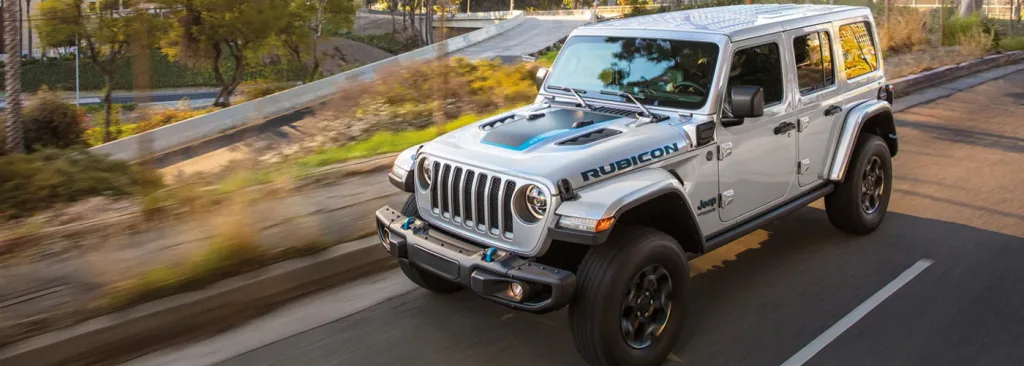
When people talk about off-road capability, the Jeep Wrangler is almost always the first vehicle mentioned. It’s the benchmark for off-road performance — rugged, iconic, and built to go where others can’t. But one factor that often gets overlooked is vehicle weight.
So how much does weight really affect a Wrangler’s off-road performance? The answer is a mix of physics, engineering, and smart design. In this article, we’ll break down how weight influences traction, handling, and durability — and why Jeep engineers strike such a delicate balance between strength and agility.
The Basics: How Much Does a Jeep Wrangler Weigh?
The Jeep Wrangler’s weight depends on its trim, configuration, and engine. Generally:
| Model | Drivetrain | Approx. Curb Weight |
|---|---|---|
| Wrangler Sport 2-Door | 4×4 | ~3,950 lbs |
| Wrangler Rubicon 2-Door | 4×4 | ~4,300 lbs |
| Wrangler Unlimited Sport 4-Door | 4×4 | ~4,400 lbs |
| Wrangler Unlimited Rubicon 4-Door | 4×4 | ~4,700 lbs |
| Wrangler 4xe Plug-In Hybrid | 4×4 | ~5,200 lbs |
| Wrangler Rubicon 392 (V8) | 4×4 | ~5,200–5,400 lbs |
While that’s significantly heavier than compact SUVs, it’s relatively light compared to full-size trucks. Jeep’s engineering keeps weight in check while maintaining a rigid body-on-frame construction — crucial for tackling rugged trails.
Why Weight Matters Off-Road
Off-roading involves physics as much as torque and traction. Weight affects how a Wrangler climbs, crawls, and corners on challenging terrain.
Here’s how it plays a role in different scenarios:
1. Traction and Stability
Heavier vehicles press their tires more firmly into the ground, which can improve traction on rock and hard surfaces. The Jeep Wrangler benefits from this — especially models like the Rubicon that have larger tires and locking differentials to capitalize on that grip.
However, there’s a limit. Too much weight increases the likelihood of tires sinking in sand or mud. That’s why the Wrangler balances its weight carefully: it’s heavy enough to hold traction on rocks but not so heavy that it bogs down in soft soil.
In short:
- On rocky, dry terrain → More weight = better grip.
- On mud, sand, or snow → More weight = greater chance of sinking.
2. Climbing and Approach Angles
When climbing steep grades, a heavier vehicle requires more power and traction to ascend. That’s where weight distribution comes into play.
Jeep engineers designed the Wrangler with balanced front-to-rear weight and short overhangs, giving it outstanding approach, breakover, and departure angles. Even though it’s heavier than older CJ models, the Wrangler’s geometry and low-range gearing allow it to climb without excessive wheelspin.
For example, the 2025 Wrangler Rubicon offers:
- Approach Angle: Up to 47.4°
- Breakover Angle: 27.8°
- Departure Angle: 40.4°
Those numbers remain strong partly because the Wrangler’s weight sits low in the chassis, keeping the center of gravity stable on uneven terrain.
3. Center of Gravity and Body Roll
A vehicle’s center of gravity (CG) plays a big role in off-road stability. Too high, and you risk rolling over on steep trails. Too low, and you lose ground clearance.
The Wrangler finds a sweet spot: its solid axles, wide stance, and balanced weight make it stable on slopes and rocky climbs. While heavier models like the Wrangler 4xe or Rubicon 392 do carry more mass higher in the chassis, Jeep compensates with upgraded suspensions, wider tracks, and tuned shock absorbers.
Result: Heavier Wranglers remain impressively stable even on demanding trails.
4. Acceleration and Braking
Extra weight naturally impacts how fast a vehicle can accelerate or stop. Off-road, acceleration isn’t the goal — control is. However, a lighter Wrangler (like the 2-door Sport) will feel more nimble and responsive when changing direction or climbing tight switchbacks.
Heavier trims, particularly hybrid and V8 models, take longer to stop and require beefier brakes and tires. Jeep upgrades braking systems accordingly, ensuring that even the heaviest Wranglers maintain safe stopping power.
5. Fuel Economy and Efficiency
More weight means more energy required to move — simple physics. That’s why lighter two-door Wranglers tend to post slightly better fuel economy than the heavier four-door or 392 models.
| Model | Approx. Fuel Economy (Combined) |
|---|---|
| Wrangler Sport 2-Door (2.0L Turbo) | ~22 mpg |
| Wrangler Unlimited 4-Door (V6) | ~20 mpg |
| Wrangler 4xe Plug-In Hybrid | ~49 MPGe (combined gas + electric) |
| Wrangler Rubicon 392 (V8) | ~14 mpg |
Still, Jeep offsets weight-related fuel losses with advanced powertrains, including turbocharged engines, plug-in hybrids, and efficient transmissions.
6. Durability and Component Stress
Heavier vehicles put more stress on suspension, drivetrain, and tires — especially during impacts or uneven terrain. Jeep’s solution is overengineering: solid Dana axles, heavy-duty control arms, and off-road-tuned shocks that can handle the abuse.
Lighter doesn’t always mean better durability. In fact, part of the Wrangler’s off-road strength comes from its reinforced steel frame and underbody protection, which add weight but drastically improve longevity.
Wrangler Weight vs. Competitors
| Vehicle | Curb Weight | Off-Road Focus | Comments |
|---|---|---|---|
| Jeep Wrangler Rubicon (4-Door) | ~4,700 lbs | Trail-rated | Balanced strength-to-weight ratio |
| Ford Bronco Badlands | ~4,800 lbs | Off-road oriented | Slightly heavier, similar capability |
| Toyota 4Runner TRD Off-Road | ~4,600 lbs | Mid-size SUV | Heavier body, lower approach angle |
| Land Rover Defender 110 | ~5,000 lbs | Luxury off-roader | More weight, less crawl control precision |
The Wrangler remains one of the lightest true 4×4 SUVs, which directly contributes to its agility and crawl performance. In tight trails or rock gardens, less weight means fewer hang-ups and easier recovery if you get stuck.
How Jeep Balances Weight and Capability
Jeep engineers have refined Wrangler’s design for decades, using materials and layouts that maximize strength while minimizing unnecessary mass:
- Aluminum Doors and Hood – Reduces body weight
- High-Strength Steel Frame – Adds rigidity without massive bulk
- Compact Engines with Turbocharging – Delivers power with less mass
- Optimized Suspension Geometry – Keeps weight low and stable
This balance ensures every Wrangler — from the entry-level Sport to the trail-dominating Rubicon 392 — delivers predictable handling and traction no matter how much it weighs.
The 4xe Factor: Weight with a Purpose
The Wrangler 4xe plug-in hybrid is heavier than any gasoline Wrangler, thanks to its lithium-ion battery pack. But that weight isn’t a drawback — it’s strategically placed low in the chassis, lowering the center of gravity and improving traction.
Even though it tips the scales around 5,200 lbs, the 4xe often feels more planted off-road. The instant electric torque helps overcome obstacles at low speed without revving the engine, and its weight distribution adds confidence on climbs.
So, in the 4xe’s case, added weight actually enhances stability and traction.
Tips for Managing Weight When Off-Roading
- Don’t overload your Wrangler. Extra gear, water, and tools can add hundreds of pounds, affecting suspension articulation.
- Distribute cargo evenly. Keep heavy items low and centered to maintain balance.
- Upgrade wisely. Larger tires, bumpers, and winches add functionality—but also weight. Balance upgrades with suspension improvements.
- Check your tire pressure. Heavier setups may require slightly lower off-road pressures for optimal traction.
- Know your limits. Your Wrangler’s Gross Vehicle Weight Rating (GVWR) includes passengers and gear—stay within that range to protect your drivetrain.
Final Thoughts: Weight Is a Tool, Not a Weakness
The weight of a Jeep Wrangler isn’t a flaw — it’s part of what makes it capable. It gives the Wrangler traction, stability, and toughness, yet it’s carefully managed to prevent the sluggishness or sinkage heavier SUVs suffer from off-road.
Jeep’s decades of off-road experience have taught engineers how to make every pound count. Whether you choose a nimble 2-door or a fully equipped Rubicon 392, you’re driving one of the most perfectly balanced off-road vehicles ever built.
Explore Jeep Wrangler Capability at Simi Valley CDJR
Ready to experience real off-road balance in person? Visit Simi Valley Chrysler Dodge Jeep Ram to test-drive the latest Wrangler lineup — from lightweight 2-door Sport models to the powerful Rubicon 392 and efficient 4xe hybrid.
👉 View New Jeep Wrangler Inventory
👉 Value Your Trade
👉 Apply for Financing
👉 See Current Jeep Offers
Connect with us


