





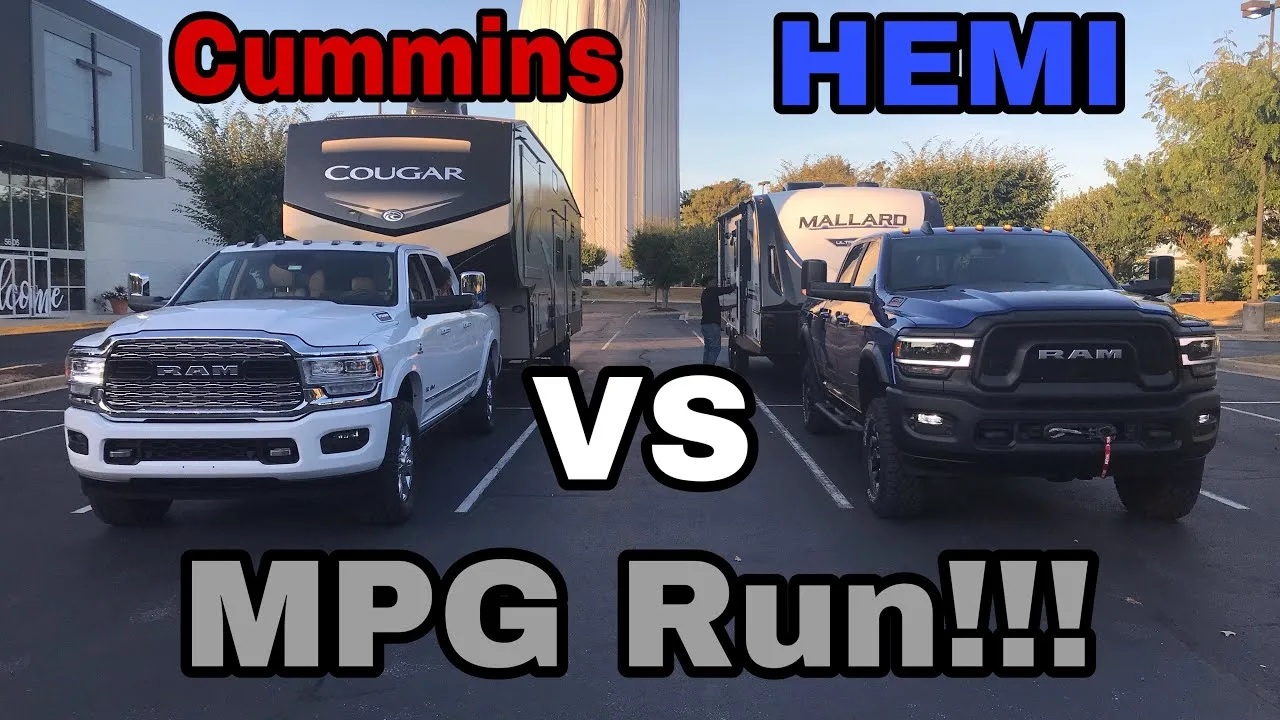
When it comes to Ram trucks, few debates are as legendary as Hemi vs. Cummins. Both engines are icons in their own right—each representing a different philosophy of power, performance, and purpose. The Hemi stands for raw gasoline muscle and reliability, while the Cummins diesel embodies industrial-grade torque and long-haul toughness.
If you’re choosing between them for your next Ram 2500 or 3500, understanding how these engines differ can save you thousands and help you get the truck that actually fits your lifestyle.
At Simi Valley Chrysler Dodge Jeep Ram, we’ve broken down every key factor: power, towing, fuel economy, cost, and long-term ownership.
What Is a HEMI Engine?
The Hemi V8 is one of the most famous engines in American history. Its name comes from the hemispherical shape of its combustion chambers—an engineering design that improves airflow, combustion efficiency, and power output.
In Ram heavy-duty trucks, the modern 6.4-liter Hemi delivers:
- 410 horsepower
- 429 lb-ft of torque
- 8-speed automatic transmission
This engine powers the Ram 2500 Tradesman, Big Horn, Laramie, and Power Wagon, offering impressive performance for drivers who want strength and simplicity without stepping into diesel territory.
Key Advantages:
- Gasoline fuel (widely available and affordable)
- Quick throttle response
- Lower maintenance costs than diesel
- Ideal for daily driving and moderate towing
What Is a Cummins Engine?
The Cummins Turbo Diesel is an entirely different breed of powerplant. Built by Cummins, a legendary name in heavy-duty engines, it’s designed for durability, torque, and efficiency under extreme loads. Ram offers the 6.7-liter Cummins I6 Turbo Diesel in several versions depending on the truck:
- Standard Output: 370 hp / 850 lb-ft of torque (Ram 2500)
- High Output: 420–430 hp / up to 1,075 lb-ft of torque (Ram 3500)
The Cummins engine uses a cast-iron block, forged steel crankshaft, and high-pressure fuel system built to handle massive torque loads. In short—it’s built for work, not play.
Key Advantages:
- Exceptional towing power (up to 37,000 lbs with the Ram 3500)
- Long engine life under heavy use
- Better fuel economy when towing
- High resale value for diesel trucks
Side-by-Side: Hemi vs. Cummins
| Feature | 6.4L HEMI® V8 | 6.7L Cummins® Turbo Diesel I6 |
|---|---|---|
| Horsepower | 410 hp | 370–430 hp |
| Torque | 429 lb-ft | 850–1,075 lb-ft |
| Fuel Type | Gasoline | Diesel |
| Transmission | 8-Speed Auto | 6-Speed or 8-Speed Auto |
| Max Towing Capacity | ~17,500 lbs | Up to 37,090 lbs |
| Payload Capacity | ~4,000 lbs | ~7,680 lbs |
| Engine Block | Cast Iron/Aluminum | Cast Iron |
| Fuel Economy | 13–18 mpg (approx.) | 14–22 mpg (approx.) |
| Starting MSRP Difference | Lower | Higher (~$9,000–$11,000 more) |
| Maintenance Cost | Lower | Higher (DEF, fuel filters, oil capacity) |
| Best For | Daily drivers, moderate towing | Heavy-duty towing, work fleets, long hauls |
Performance and Driving Feel
HEMI: Punchy Power, Instant Response
The Hemi’s naturally aspirated design gives it instant throttle response. Step on the gas, and it roars to life with a familiar, muscular tone. It’s the perfect match for drivers who want to feel connected to the truck—no turbo lag, no hesitation, just raw acceleration.
For daily driving around Ventura County or Simi Valley, it feels smooth, quick, and predictable. It also starts easily in cold weather, uses widely available gasoline, and doesn’t require diesel exhaust fluid (DEF).
Cummins: Relentless Low-End Torque
By contrast, the Cummins diesel is all about pulling power. Its turbocharged design produces most of its torque below 2,000 rpm, which means it moves heavy trailers effortlessly. Whether you’re hauling construction equipment, RVs, or livestock, that torque makes every climb and start smoother and safer.
Diesel engines naturally operate at lower rpm, meaning less strain and better efficiency under load. It’s quieter than older diesels and built to run hundreds of thousands of miles with proper care.
Towing and Payload Comparison
If towing capacity is your number-one priority, the Cummins is the clear winner. The diesel torque advantage makes an enormous difference once you’re over 10,000 lbs of trailer weight.
- Hemi V8: Up to 17,500 lbs towing
- Cummins Diesel: Up to 37,090 lbs towing (Ram 3500 High Output)
For occasional towing—boats, small campers, or utility trailers—the Hemi is more than enough. But if you tow professionally or regularly haul heavy equipment, the Cummins pays for itself in performance and longevity.
Fuel Economy and Range
Diesel engines are inherently more fuel-efficient than gasoline ones, especially when loaded. The Cummins 6.7L uses roughly 20–25% less fuel under heavy towing than the 6.4L Hemi.
However, diesel fuel itself often costs more per gallon. So the savings depend on how much you tow and drive. For light daily use, the fuel advantage may not offset the higher upfront diesel cost. For long-distance or heavy towing, the Cummins easily wins.
| Scenario | Hemi V8 MPG | Cummins Diesel MPG |
|---|---|---|
| City Driving | 12–14 | 14–17 |
| Highway (empty) | 17–19 | 20–23 |
| Towing Heavy Loads | 8–10 | 12–14 |
| Range on Full Tank | ~400 miles | 600–700 miles |
Ownership Costs and Maintenance
HEMI: Simple, Familiar, Affordable
The Hemi’s maintenance schedule is similar to most gasoline vehicles—oil changes, filters, and spark plugs. There’s no diesel exhaust fluid (DEF) to top off, and repair costs are generally lower.
Typical service intervals:
- Oil Change: Every 6,000–8,000 miles
- Spark Plugs: Every 100,000 miles
- Fuel Filter: Standard gasoline type
Overall, Hemi owners enjoy lower maintenance and operating costs.
Cummins: Built for the Long Haul
Diesel maintenance is more involved but designed for endurance:
- Oil Capacity: ~12 quarts (vs. 7 for Hemi)
- Fuel Filters: Typically replaced every 15k–20k miles
- DEF Fluid: Refilled every few thousand miles
- Turbo and emissions components require proper service intervals
The trade-off? These engines can last 400,000+ miles when properly maintained—far beyond most gasoline engines.
Reliability and Durability
- Hemi Reliability: Proven track record in Ram trucks, Chargers, and Challengers. Excellent when maintained and not overloaded.
- Cummins Reliability: Industrial-grade design, often used in commercial and agricultural settings. Known for running reliably in extreme conditions.
If your truck will live its life pulling loads, the Cummins has a reputation for outlasting almost everything else on the road. If your Ram is mostly commuting and weekend hauling, the Hemi’s simplicity might be the better fit.
Sound and Driving Experience
For many enthusiasts, this one’s emotional.
- Hemi V8: Classic muscle sound—deep rumble, instant throttle, old-school charm.
- Cummins Diesel: Quieter than before, but still gives that steady diesel clatter under load with a strong exhaust brake note.
If you love that V8 growl when pulling away from a stoplight, the Hemi will make you smile. If you appreciate the calm authority of a diesel engine working under stress-free low RPMs, the Cummins will win you over.
Pricing and Resale Value
Upgrading from the Hemi to the Cummins usually adds $9,000–$11,000 to the truck’s price. That’s a big jump, but diesel trucks tend to retain more resale value—especially if maintained properly and sold in areas where heavy towing is common.
Resale Snapshot (5 years / good condition):
- Hemi: ~55–60% of original value
- Cummins: ~65–70% of original value
So while diesel costs more up front, it can pay you back later at trade-in time.
Which One Fits Your Lifestyle?
| Usage Type | Recommended Engine | Reason |
|---|---|---|
| Daily Driving / Light Commuting | Hemi | Lower cost, simple maintenance |
| Occasional Towing (boats, campers) | Hemi | Enough torque for moderate loads |
| Frequent Towing / Heavy Equipment | Cummins | Massive torque and endurance |
| Commercial / Fleet Use | Cummins | Longevity, efficiency under load |
| Performance & Street Feel | Hemi | Sportier response, classic sound |
| Long-Distance Highway Use | Cummins | Fuel efficiency and range |
Environmental Impact and Regulations
Diesel technology has evolved dramatically. The Cummins meets stringent EPA standards using selective catalytic reduction (SCR) and diesel exhaust fluid (DEF). Modern diesels are cleaner than ever—but they do require these emissions systems to work properly.
The Hemi, on the other hand, uses gasoline particulate filters and variable valve timing to reduce emissions while delivering strong performance. It’s simpler for those who prefer less aftertreatment complexity.
Expert Insight from Simi Valley CDJR
At Simi Valley Chrysler Dodge Jeep Ram, we see both engine types serving completely different buyers:
- Contractors, haulers, and long-distance drivers usually choose Cummins for its unmatched torque and efficiency.
- Commuters, families, and recreational owners often go with the Hemi for its smoothness, responsiveness, and affordability.
Both engines benefit from Ram’s reputation for durability and craftsmanship, so it’s hard to make a wrong choice—it’s about choosing the right fit for your daily life.
Ready to Test Drive Both?
Whether you’re comparing the 6.4L HEMI V8 or the 6.7L Cummins Turbo Diesel, the best way to decide is to feel the difference behind the wheel. You’ll immediately notice the Hemi’s crisp response versus the Cummins’ effortless torque.
Visit us at Simi Valley Chrysler Dodge Jeep Ram to explore the latest Ram 2500 and Ram 3500 inventory, side-by-side with real lease and finance options.
👉 Shop New Ram Trucks
👉 Apply for Financing
👉 Value Your Trade
👉 View Current Offers
Final Verdict
Both the Hemi V8 and the Cummins Diesel engines are legends for a reason:
- Choose the Hemi if you want lower upfront cost, responsive performance, and simple upkeep.
- Choose the Cummins if you need uncompromising power, heavy-duty towing, and unmatched longevity.
No matter which you choose, both are backed by Ram’s robust engineering and Simi Valley CDJR’s expert service—ensuring your truck works as hard as you do.
Connect with us


