





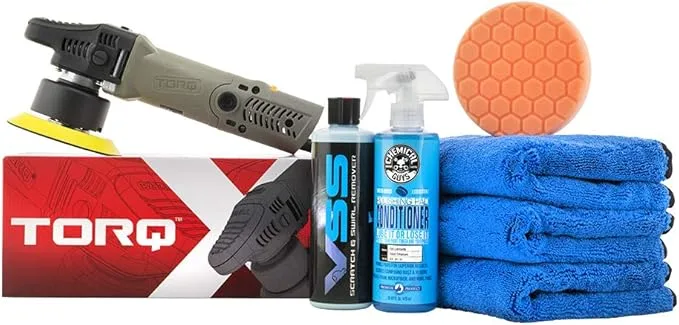
A random orbital polisher is an essential tool for car enthusiasts and professional detailers alike. It helps achieve a flawless, swirl-free finish while reducing the risk of damaging the paint. Whether you’re looking to remove light scratches, restore shine, or apply wax efficiently, investing in a high-quality polisher can make all the difference.
This guide covers everything you need to know about random orbital polishers, including how they work, their benefits, key features to consider, step-by-step usage, and recommendations for the best models available today.
What Is a Random Orbital Polisher?
A random orbital polisher is a dual-action (DA) tool that moves in an elliptical pattern while spinning. This combination of movement prevents excessive heat buildup, reducing the chances of burning the paint or leaving swirl marks.
Unlike rotary polishers, which spin in a single direction and require greater skill to use, random orbital polishers are beginner-friendly and much safer. They are commonly used for:
- Paint correction – Removing oxidation, swirl marks, and light scratches
- Polishing – Enhancing gloss and clarity
- Waxing and sealing – Evenly applying waxes, sealants, or ceramic coatings
How Does a Random Orbital Polisher Work?
A random orbital polisher has two primary motions:
- Rotation – The polishing pad spins on a central axis.
- Oscillation – The pad simultaneously moves in a random, orbital pattern.
These dual movements allow the polisher to distribute pressure evenly, reducing the risk of over-polishing or burning the paint. This makes it an excellent tool for both beginners and professionals.
Benefits of Using a Random Orbital Polisher
1. Safe for All Skill Levels
Traditional rotary polishers require experience to avoid damaging the paint. In contrast, random orbital polishers provide an extra layer of safety due to their oscillating motion, which prevents excessive heat buildup.
2. Reduces the Risk of Swirl Marks and Holograms
Since random orbital polishers move unpredictably, they don’t leave behind circular swirl marks or holograms, which are common with rotary polishers.
3. Versatile for Multiple Applications
A random orbital polisher can be used for:
- Paint correction – Removing oxidation, swirl marks, and fine scratches
- Waxing and sealing – Ensuring even application without streaks
- Headlight restoration – Eliminating haze and improving clarity
- Polishing glass and metal – Enhancing surfaces beyond just automotive paint
4. Adjustable Speed for Precision Work
Most random orbital polishers offer variable speed settings, allowing you to:
- Use low speeds (2,000–3,000 OPM) for wax or sealant application
- Increase to medium speeds (4,000–5,000 OPM) for light polishing
- Use high speeds (6,000–7,500 OPM) for paint correction
Key Features to Look for in a Random Orbital Polisher
When purchasing a random orbital polisher, consider the following factors to ensure you get the best performance:
1. Motor Power & Performance
- A 700W–1000W motor is ideal for consistent power and torque.
- Look for a low-vibration motor to reduce hand fatigue.
2. Pad Size & Compatibility
- 5-inch and 6-inch pads are standard for car detailing.
- Make sure the polisher supports foam, microfiber, and wool pads.
3. Variable Speed Control
- A six-speed control dial allows you to fine-tune the machine based on the task.
4. Ergonomic Design & Weight
- Lighter polishers (4–6 lbs) reduce strain during extended use.
- A rubberized grip enhances control and comfort.
5. Durability & Heat Management
- Venting systems prevent overheating.
- A long power cord (10–15 feet) improves maneuverability.
How to Use a Random Orbital Polisher (Step-by-Step Guide)
Step 1: Wash & Prep the Car
Before using a random orbital polisher, the surface must be completely clean to avoid grinding dirt into the paint.
- Wash the car using a pH-neutral shampoo.
- Clay bar the surface to remove contaminants.
- Dry the car thoroughly with a microfiber towel.
Step 2: Select the Right Pad & Product
- Cutting pad – Removes oxidation and deep scratches (use with compound).
- Polishing pad – Corrects minor imperfections (use with polish).
- Finishing pad – Applies wax or sealant.
Step 3: Apply Product to the Pad
- Use 3–4 pea-sized drops of polish or compound.
- Spread the product onto the surface before turning on the machine.
Step 4: Start Polishing
- Set the polisher to low speed (2,000–3,000 OPM) to spread the product.
- Gradually increase speed to 4,000–6,000 OPM for correction.
- Work in small 2×2 ft sections, applying light pressure.
Step 5: Buff & Protect
- Wipe off excess polish with a clean microfiber towel.
- Apply a wax or ceramic coating for long-lasting shine.
Frequently Asked Questions
Can I use a random orbital sander as a polisher?
While possible, it is not recommended. Sanders operate at higher speeds and lack the proper torque control for polishing, increasing the risk of paint damage.
Can a random orbital polisher be used to sand surfaces?
Some polishers can handle light sanding, but they are primarily designed for detailing.
What’s the difference between a DA polisher and a rotary polisher?
- Rotary polishers spin in one direction, generating more heat and requiring experience.
- Dual-action (DA) polishers oscillate randomly, making them much safer.
Top 5 Best Random Orbital Polishers in 2024
Here are some of the best random orbital polishers available today:
- Chemical Guys TORQX Random Orbital Polisher – Best for beginners
- Meguiar’s MT300 Dual Action Polisher – Professional-grade performance
- Milwaukee M18 FUEL Cordless Polisher – Best cordless option
- Griot’s Garage G9 Polisher – High torque with low vibration
- DeWalt DWP849X Variable Speed Polisher – Durable and reliable
Final Thoughts
A random orbital polisher is an essential tool for achieving a flawless finish on your car. Whether you’re removing scratches, applying wax, or restoring your vehicle’s shine, a high-quality polisher makes the process efficient and safe.
When selecting a polisher, consider motor power, variable speed settings, ergonomic design, and pad compatibility. With the right technique and products, you can achieve professional-grade results without the risk of damaging your car’s paint.
If you’re looking to invest in a random orbital polisher, be sure to check out trusted brands and models that suit your detailing needs. A great polisher, combined with proper technique, can transform your car’s appearance and protect its paint for years to come.
Connect with us


