





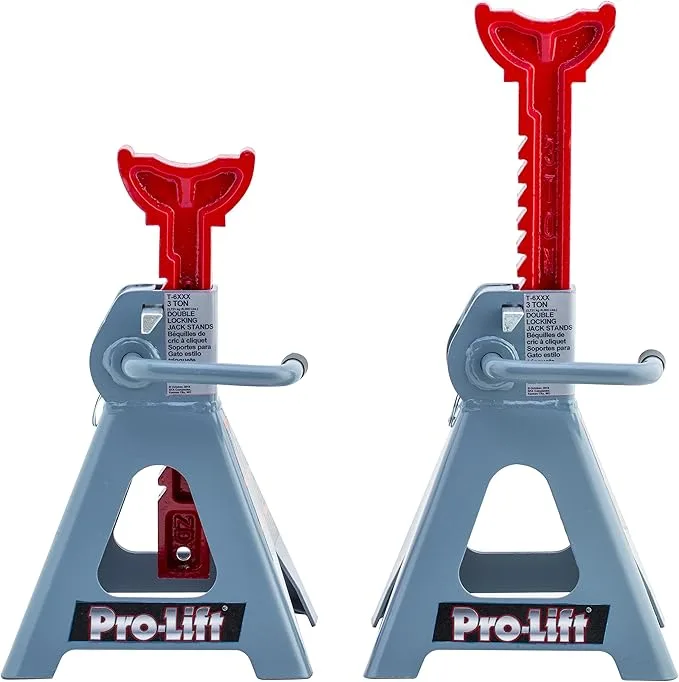
When working under a vehicle, the margin for error is razor-thin. A single mechanical failure can lead to catastrophic consequences, making the choice of jack stands a critical decision for DIY mechanics and professionals alike. Among the most trusted options are 3-ton car jack stands, designed to support up to 6,000 pounds collectively. This in-depth guide explores their engineering, safety protocols, top models, and best practices, empowering you to make informed decisions that prioritize safety and reliability.
Why Jack Stands Matter: Beyond Basic Lifting
Hydraulic jacks lift vehicles, but jack stands bear the weight. Their design ensures stability during repairs, from oil changes to transmission work. The 3-ton capacity strikes a balance for most vehicles:
- Typical Use Cases: Cars (2,000–4,500 lbs), SUVs (4,000–6,000 lbs), and light trucks.
- Safety Failures: The NHTSA reports hundreds of injuries annually due to improper vehicle support, underscoring the need for robust stands.
Anatomy of a Jack Stand: Engineering Insights
Understanding the components ensures you recognize quality:
- Base Plate
- Function: Distributes weight to prevent tipping.
- Ideal Design: Wide, ribbed, or serrated edges for grip on concrete or asphalt.
- Vertical Post & Adjustable Height Mechanism
- Materials: High-grade steel (e.g., ASTM A36) with a minimum yield strength of 36,000 psi.
- Height Range: Look for 13–21 inches to accommodate lifted trucks or low-profile cars.
- Locking Mechanism
- Pin vs. Ratchet:
- Pin-Type: Uses a steel pin through pre-drilled holes (e.g., Pro-LifT T-6903D). Simple but less adjustable.
- Ratchet-Type: Offers incremental height adjustments (common in newer models).
- Pin vs. Ratchet:
- Weight Capacity
- Testing Standards: ANSI/PASMA or ASME PASE-2019 certification ensures rigorous load testing.
- Safety Margin: Reputable brands exceed rated capacity (e.g., 3-ton stands tested to 4.5 tons).
Top 3-Ton Jack Stands: In-Depth Analysis
We dissect three leading models, highlighting engineering and real-world performance.
1. Jack Boss 3-Ton Heavy-Duty Service Jack Stands

- Key Specs:
- Capacity: 3 tons per stand (6,000 lbs total).
- Height Range: 15.75″–23.6″ (ideal for trucks).
- Construction: Reinforced steel with double-locking pins.
- Safety Features:
- Wide Base: 10.2″ x 7.8″ footprint resists lateral shifts.
- Welds: Robotic MIG welding for uniform strength.
- User Feedback:
- Pros: Praised for stability under heavy loads.
- Cons: Bulkier than competitors (28 lbs per stand).
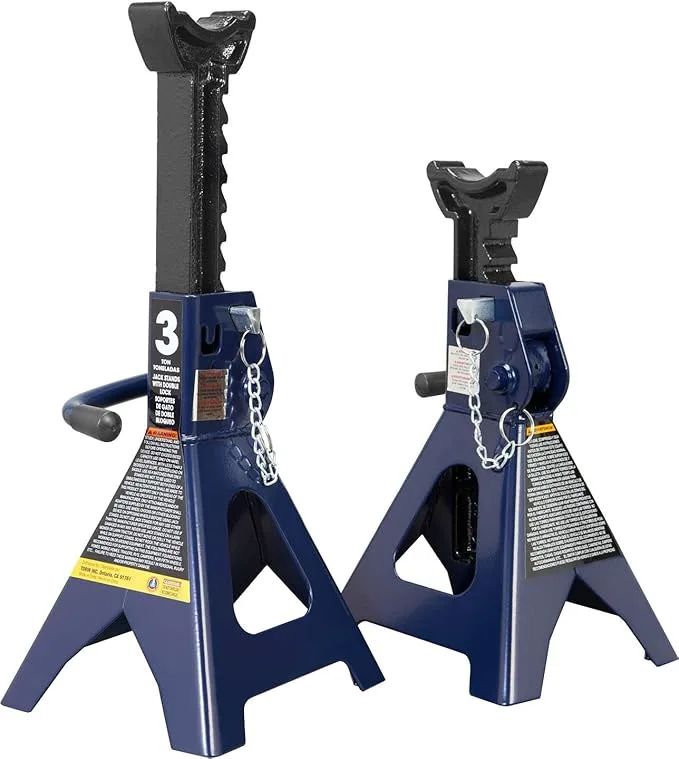
2. Pro-LifT T-6903D Double Pin Jack Stands
- Key Specs:
- Locking Mechanism: Dual steel pins for redundancy.
- Height Adjustments: 13.4″–18.5″ (6 positions).
- Weight: 19.4 lbs per stand.
- Innovation:
- Pinch-Free Design: Angled slots prevent finger injuries during adjustments.
- User Feedback:
- Pros: Lightweight yet durable; no reports of bending under load.
- Cons: Limited height for lifted vehicles.
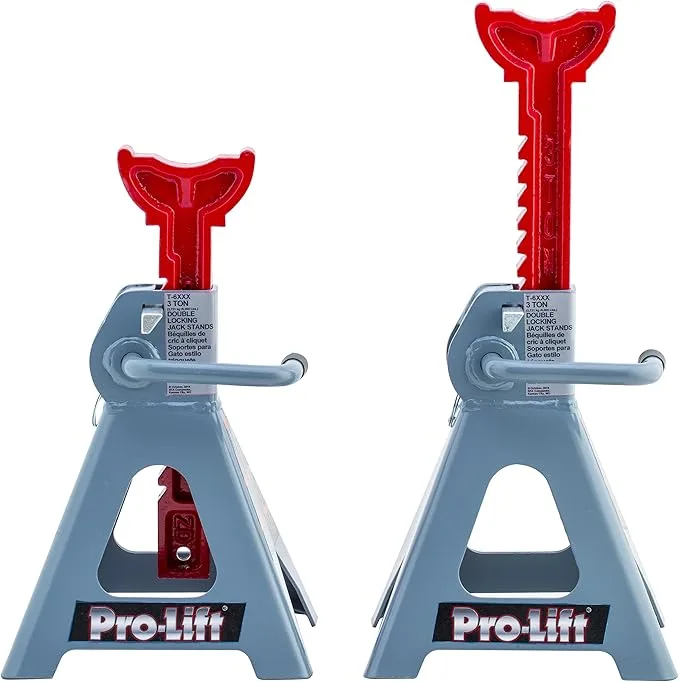
3. TCE AT43002AU Double Locking Steel Jack Stands
- Key Specs:
- Finish: Powder-coated blue for corrosion resistance.
- Locking System: Dual safety locks (primary pin + secondary latch).
- Height: 12.6″–18.1″.
- Testing:
- Load Tested: 6,600 lbs (10% over capacity).
- User Feedback:
- Pros: Compact storage; ideal for garages with space constraints.
- Cons: Latch requires periodic lubrication.
Safety Protocols: Beyond the Manual
Even premium stands can fail if misused. Follow these expert-level guidelines:
- Surface Preparation
- Concrete/Garage Floors: Optimal for grip. Avoid gravel or dirt.
- Slope Mitigation: Never exceed a 5° incline. Use wheel chocks.
- Lift Points
- Factory Jack Points: Consult your vehicle manual. Never rest stands on exhaust or suspension parts.
- Adaptors: Use rubber pads to protect frame edges.
- Redundancy Measures
- Secondary Supports: Place wheel chocks or backup stands nearby.
- Shake Test: After positioning, gently rock the vehicle to test stability.
- Environmental Factors
- Temperature: Avoid plastic-coated stands in high-heat environments (risk of coating degradation).
- Corrosion: Rinse salt or chemicals off stands after winter use.
Jack Stand Maintenance: Extending Lifespan
Routine care prevents catastrophic failures:
- Monthly Inspections
- Cracks/Deformation: Use a flashlight to check welds and joints.
- Rust: Surface rust can be sanded; deep pitting warrants replacement.
- Lubrication
- Moving Parts: Apply silicone spray (not grease) to pins and ratchets.
- Storage
- Dry Environment: Moisture accelerates steel corrosion.
- Vertical Position: Avoid stacking to prevent warping.
Industry Warnings & Recalls
Stay informed about defective models:
- 2021 Recall: Certain Pittsburgh Automotive stands (Harbor Freight) were recalled due to collapsed welds.
- Red Flags: Avoid stands with thin gauge steel (<3 mm) or spotty welding.
Alternatives to Jack Stands: Pros and Cons
- Hydraulic Jacks with Integrated Stands
- Example: Arcan XL2T.
- Risk: Hydraulic failure still possible; not a substitute for standalone stands.
- Vehicle Ramps
- Best For: Oil changes.
- Limitation: No height adjustment; unsuitable for suspension work.
- DIY Solutions (Wood Blocks, etc.)
- Danger: Wood splits under load; never recommended.
Legal & Warranty Considerations
- Liability: Using non-certified stands may void insurance claims in case of accidents.
- Professional Use: Commercial garages often require OSHA-compliant stands (e.g., ANSI-certified).
Frequently Asked Questions (FAQs)
Q1: Can I use 3-ton stands for a 4,000-lb SUV?
- Yes, but ensure the load is distributed evenly. For example, placing both stands on the rear axle of a 4,000-lb SUV applies ~2,000 lbs total (1,000 lbs per stand), well within capacity.
Q2: How often should I replace jack stands?
- Inspect annually. Replace after 5–7 years of regular use, or sooner if damage is detected.
Q3: Are ratchet-style stands safer than pin-type?
- Debate: Ratchet stands offer finer adjustments but have more moving parts. Pin-type are simpler but less flexible. Choose based on your use case.
Q4: Can I weld cracked jack stands?
- No: DIY welding alters heat treatment and compromises integrity.
Final Recommendations
- For Heavy-Duty Use: Jack Boss 3-Ton (23.6″ height; industrial-grade welds).
- Budget Pick: TCE AT43002AU (compact, double-locking).
- Balanced Performance: Pro-LifT T-6903D (lightweight, dual-pin safety).
Connect with us


