





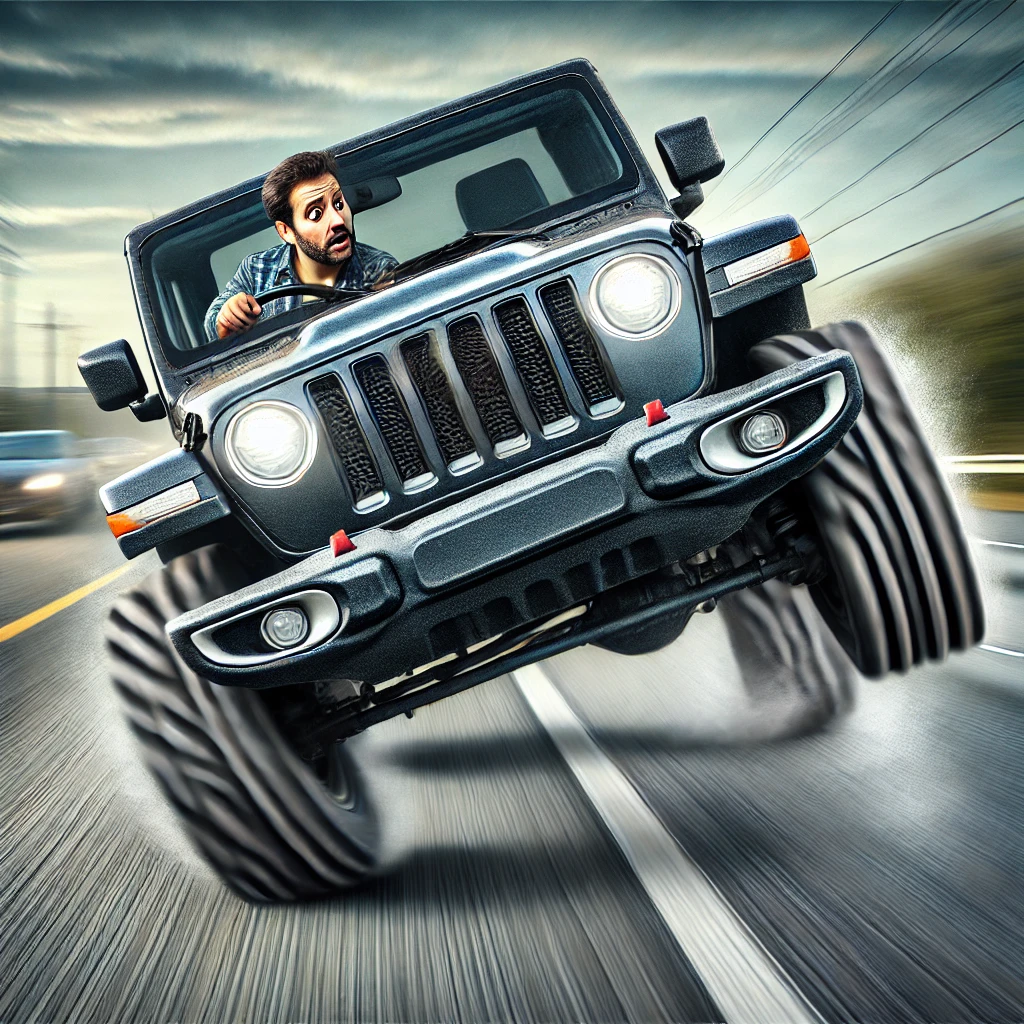
You’re cruising down the highway in your Jeep Wrangler, wind in your hair, when suddenly—BAM! The steering wheel jerks violently in your hands. The front end shakes like a jackhammer. Your heart races as you white-knuckle the wheel, praying for control. Welcome to the infamous Jeep Wrangler Death Wobble, a terrifying phenomenon that’s haunted owners for decades. But what causes it? Can it be fixed? And why does it still plague even the $60,000 JL Rubicons? Buckle up—we’re diving deep into the engineering flaws, repair secrets, and survival strategies every Wrangler owner needs to know.
What Is Death Wobble? (And Why It’s Not Just “Vibration”)
Death wobble is a violent, self-perpetuating oscillation in the steering system that occurs when a Wrangler’s front wheels hit a bump, pothole, or expansion joint at speeds between 45–65 mph. Unlike normal vibrations, it’s characterized by:
- Uncontrollable shaking in the steering wheel, dashboard, and entire front axle.
- A feedback loop where the suspension’s natural frequency amplifies the motion.
- Noise: Clunking, rattling, or grinding from the front end.
Why It’s Dangerous:
- Loss of steering control, increasing crash risk.
- Accelerated wear on tires, ball joints, and steering components.
- Psychological dread of highway driving (a real issue reported in NHTSA complaints).
The Root Causes: Engineering Flaws in the Wrangler’s DNA
The Wrangler’s solid front axle—a staple of its off-road prowess—is also its Achilles’ heel. Unlike independent front suspensions, solid axles lack isolation from road imperfections. Combine this with high unsprung weight and a short wheelbase, and you have a recipe for oscillation.
Key Culprits
- Track Bar Failures
- The track bar (panhard rod) stabilizes the axle laterally. Worn bushings or loose mounting points allow excess movement.
- Critical Data: 72% of death wobble cases in JK models (2007–2018) trace to track bar issues (Jeep Forum Survey).
- Steering Linkage Wear
- Loose tie rod ends, drag links, or ball joints create play in the steering system.
- The Wrangler’s inverted Y steering design (used until 2018) is prone to deflection.
- Tire/Wheel Imbalance
- Oversized tires (>35”) or poor balancing magnify harmonic vibrations.
- Pro Tip: Death wobble often starts after tire rotations or new wheels.
- Worn Ball Joints
- The Wrangler’s ball joints endure extreme stress. Play allows the axle to “walk” under load.
- Poor Alignment
- Incorrect caster angles (ideally 4–6 degrees for JK/JL models) reduce stability.
The Shocking Truth: Newer Wranglers Aren’t Immune
While Jeep claims to have “solved” death wobble in the JL (2018–present), forums and NHTSA complaints tell a different story:
- NHTSA Investigation (2019): Over 450 complaints for JL models, including 2019–2021 Rubicons.
- Main Culprit: Factory-installed steering stabilizers masking underlying issues.
- Jeep’s “Fix”: A Technical Service Bulletin (TSB 08-092-20) replacing stabilizers but ignoring core causes.
Diagnosis: How to Find the Source (Step-by-Step)
1. The “Bounce Test”
- Park on level ground. Have a helper violently shake the steering wheel left-right.
- Watch for play in the track bar, tie rods, and ball joints.
2. Track Bar Inspection
- Check for:
- Loose frame or axle-side bolts (torque specs: 55–65 ft-lbs for JLs).
- Cracked or collapsed bushings (replace with OEM or Steer Smarts Yeti).
3. Ball Joint Test
- Jack up the front axle. Grip the tire at 6/12 o’clock and rock it. Play indicates bad ball joints.
4. Steering Linkage Check
- Manually shake tie rods and drag links. Replace if there’s visible slack.
5. Alignment Audit
- Verify caster angle (critical for stability). JLs need 4.2–5.7 degrees (Jeep Service Manual).
The Fix: Permanent Solutions vs. Band-Aids
Band-Aids (What Doesn’t Work)
- Steering Stabilizers: Mask vibrations but don’t address root causes.
- Tire Balancing: Helps but won’t stop wobble from mechanical wear.
Real Fixes
- Upgrade the Track Bar
- Aftermarket Options: Synergy HD Track Bar or MetalCloak) with solid bushings.
- Torque bolts to spec and use thread locker.
- Replace Steering Components
- Swap the inverted Y linkage with a tie rod drag link kit (e.g., PSC Steering).
- Install Heavy-Duty Ball Joints
- Dynatrac’s PR44 Ball Joints ($400) outlast OEM parts.
- Adjust Caster Angle
- Install adjustable control arms (e.g., Rock Krawler) to optimize caster.
- Tire/Wheel Precautions
- Stick to tires under 37” unless you’ve upgraded steering.
- Use road-force balancing at a specialty shop.
Case Study: How a JLUR Owner Beat Death Wobble
A 2020 Jeep Wrangler Rubicon owner experienced death wobble at 15,000 miles. Dealers replaced the stabilizer twice under warranty with no fix. The solution:
- Replaced the factory track bar with a Steer Smarts Yeti HD.
- Installed Teraflex Ball Joints.
- Adjusted caster to 5.5 degrees.
Total Cost: $1,200 (DIY) | Result: Wobble eliminated.
Prevention: How to Avoid Death Wobble
- Torque Checks Every 3,000 Miles: Focus on track bar and control arm bolts.
- Upgrade Before Off-Roading: Don’t wait for wobble—preemptively reinforce weak points.
- Alignment After Mods: Lift kits? New tires? Get a precision alignment.
- Avoid Cheap Parts: OEM or premium aftermarket only.
The Legal Battlefield: NHTSA Investigations & Recalls
- 2012–2013 JK Models: A class-action lawsuit alleged FCA ignored known defects. Settled for $3,000 per owner.
- 2018–2020 JL Models: Ongoing NHTSA probes (as of 2023) but no recalls.
- Your Rights: Document all wobble incidents and demand repairs under warranty.
Final Verdict: Can You Truly Conquer Death Wobble?
Yes—if you:
- Target the root causes (track bar, ball joints, steering links).
- Invest in quality upgrades, not quick fixes.
- Stay vigilant with maintenance.
Death wobble isn’t a death sentence. With this guide, you’re armed to reclaim your Wrangler’s stability and confidence. Now hit those trails—or highways—without fear. 🔧🚙
Need More Help?
- Join the discussion: Jeep Wrangler Death Wobble Forum
- Watch a DIY fix: YouTube: Death Wobble Repair Walkthrough
Connect with us


