





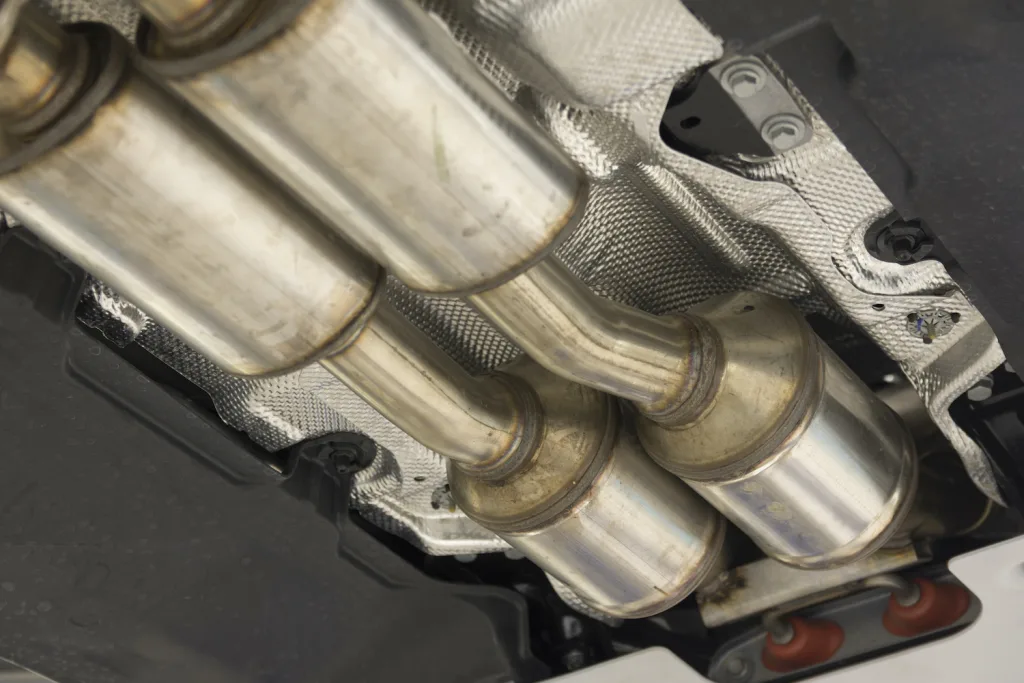
Can You Drive Without a Catalytic Converter?
Yes, a car can physically drive without a catalytic converter, but you should not drive it that way unless it is only to get it repaired.
The simple answer is this: driving without a catalytic converter is usually illegal on public roads, will make the vehicle louder, can trigger a check engine light, can cause exhaust fumes and bad smells, and will almost always make the vehicle fail emissions inspection. The EPA treats catalytic converters as required emissions-control equipment, and federal rules prohibit tampering with or removing emissions devices on street vehicles.
So if your catalytic converter was stolen, damaged, or cut out, the car may still start and move. But it is not road-legal in the normal sense, and you should repair it as soon as possible.
What Happens If You Drive Without a Catalytic Converter?
A missing catalytic converter changes the exhaust system immediately.
The car will usually be much louder because part of the exhaust system has been removed. You may hear a harsh, raspy, metallic exhaust sound, especially during acceleration.
You may also smell strong exhaust fumes because the converter is no longer reducing harmful emissions. If the converter was stolen, there may be open exhaust piping under the vehicle, which can allow fumes to enter the cabin.
The check engine light will likely come on because the oxygen sensors detect abnormal emissions readings. The engine computer expects the catalytic converter to be there and working. Without it, the readings before and after the converter may not make sense.
Is It Illegal to Drive Without a Catalytic Converter?
Yes, in most normal street-driving situations, driving without a catalytic converter is illegal.
Federal emissions law prohibits removing or disabling required emissions equipment. The EPA has stated clearly that catalytic converters may not be removed and replaced with straight pipes or converter replacement pipes on vehicles used on public roads.
States can also enforce their own emissions and inspection rules. If your state requires emissions testing, a missing catalytic converter can cause an automatic failure. In strict emissions states like California, replacement converters must also meet specific approval rules. The California Bureau of Automotive Repair explains that catalytic converter theft can cost vehicle owners thousands to repair and can affect the vehicle’s next Smog Check.
Will a Car Run Without a Catalytic Converter?
Yes, many cars will still run without a catalytic converter.
The catalytic converter is not what makes the engine start. It sits in the exhaust system and cleans exhaust gases after combustion. If it is removed, the engine may still run, accelerate, and drive.
But “runs” does not mean “runs correctly” or “legal to drive.” Depending on the vehicle, a missing converter can cause engine codes, rough running, reduced performance, poor fuel economy, exhaust leaks, and drivability issues.
Some vehicles may go into a reduced-performance mode if the emissions system detects major faults.
Can Driving Without a Catalytic Converter Damage the Engine?
Driving briefly without a catalytic converter may not instantly destroy the engine, but it can create problems.
If the converter was cleanly removed and the exhaust is otherwise intact, the engine may run. But if the converter was stolen and pipes or oxygen sensor wiring were cut, the vehicle may have exhaust leaks, dangling sensors, damaged wiring, and incorrect air-fuel readings.
That can affect how the engine runs. It can also allow hot exhaust gases to blow near parts that were not designed for that heat.
If the missing converter leaves an open exhaust under the cabin, the bigger immediate danger is fumes and carbon monoxide exposure.
Will It Fail Emissions or Inspection?
Yes. A vehicle without a catalytic converter will usually fail emissions testing or safety inspection.
Most emissions inspections check for proper emissions equipment and scan for onboard diagnostic trouble codes. A missing catalytic converter, check engine light, or catalyst-efficiency code can cause a failure.
In California, a vehicle also needs the correct approved catalytic converter for that specific application. The California Air Resources Board explains that aftermarket catalytic converters sold or installed in California must be CARB-compliant and approved for the vehicle.
That means you cannot just install any cheap universal converter in every state and expect it to pass.
Why Do People Remove Catalytic Converters?
Some people remove catalytic converters to make the exhaust louder or chase performance gains.
That is a bad idea for a street vehicle. It can create legal trouble, emissions failure, bad smells, check engine lights, and resale issues.
The other common reason is theft. Catalytic converters contain precious metals like platinum, palladium, and rhodium, which makes them valuable to thieves. Allstate explains that converters are targeted because those metals can be resold.
If your converter was stolen, do not keep driving around like it is just a loud exhaust problem. Get the exhaust inspected and repaired.
What Should You Do If Your Catalytic Converter Was Stolen?
First, do not drive more than necessary.
If the vehicle is extremely loud, smells like exhaust, has hanging parts, or has damaged wiring, it may be safer to tow it. Driving with an open exhaust can expose you to fumes and may damage nearby components.
Second, file a police report. Insurance may require it.
Third, contact your insurance company. Comprehensive coverage may help pay for catalytic converter theft, minus your deductible.
Fourth, take the vehicle to a reputable repair shop. Ask them to inspect the exhaust pipes, oxygen sensors, wiring, heat shields, and surrounding parts.
Fifth, make sure the replacement converter is legal for your state and vehicle.
How Much Does It Cost to Replace a Catalytic Converter?
Catalytic converter replacement can cost anywhere from a few hundred dollars to several thousand dollars.
The price depends on the vehicle, converter type, emissions rules, labor, oxygen sensor damage, pipe damage, and whether the vehicle requires a CARB-compliant converter.
A basic aftermarket converter in a state with less strict rules may be cheaper. A California-compliant converter for a hybrid, truck, luxury car, or SUV can be much more expensive.
The California Bureau of Automotive Repair notes that catalytic converter theft can cost owners thousands of dollars to replace, depending on make and model.
Can You Replace It With a Straight Pipe?
No, not legally for normal street use.
A straight pipe may physically connect the exhaust, but it removes required emissions equipment. That can violate federal law, fail inspection, trigger a check engine light, and make the vehicle illegal for public roads.
A straight pipe is not a proper catalytic converter repair.
How Long Can You Drive Without a Catalytic Converter?
You should drive only as far as needed to get the vehicle inspected or repaired.
A short trip to a repair shop may be possible if the vehicle is safe to drive, but long-term driving without a catalytic converter is not smart. It creates legal, safety, emissions, and mechanical risks.
If the exhaust is open under the cabin, wiring is damaged, or fumes are entering the vehicle, tow it instead.
How to Prevent Catalytic Converter Theft
You can reduce theft risk, but you cannot eliminate it completely.
Park in well-lit areas. Park in a garage when possible. Use security cameras. Install a catalytic converter shield or cage. Etch the VIN onto the converter. Ask a shop about anti-theft hardware.
Vehicles with higher ground clearance, like trucks and SUVs, can be easier targets because thieves can get underneath faster. Hybrids can also be targeted because their converters may contain valuable metals and may experience less wear.
FAQs About Driving Without a Catalytic Converter
Can you drive a car without a catalytic converter?
Yes, many cars can physically drive without one, but it is usually illegal on public roads and should only be done briefly to get the vehicle repaired.
Is it illegal to drive without a catalytic converter?
Yes, removing or disabling a catalytic converter on a street vehicle is illegal under federal emissions law, and many states also enforce emissions inspection rules.
Will my car be louder without a catalytic converter?
Yes. A missing catalytic converter usually makes the exhaust much louder, harsher, and more raspy.
Will a car pass emissions without a catalytic converter?
No. A car without a catalytic converter will usually fail emissions inspection or smog testing.
Can no catalytic converter cause a check engine light?
Yes. The oxygen sensors and engine computer can detect catalyst-efficiency problems, which usually triggers a check engine light.
Can driving without a catalytic converter be dangerous?
Yes. The main danger is exhaust fumes, especially if the converter was stolen and the exhaust is open under the vehicle. Carbon monoxide exposure can be serious.
Final Thoughts: Repair It As Soon As Possible
You can physically drive without a catalytic converter, but you should not treat it as normal.
A missing converter makes the car louder, dirtier, illegal for street use, and likely to fail emissions testing. It can also create exhaust-fume risks and check engine lights.
If your catalytic converter was stolen or damaged, drive only if the vehicle is safe and only long enough to get it repaired. The proper fix is to install the correct legal catalytic converter for your vehicle and state.
Connect with us


