





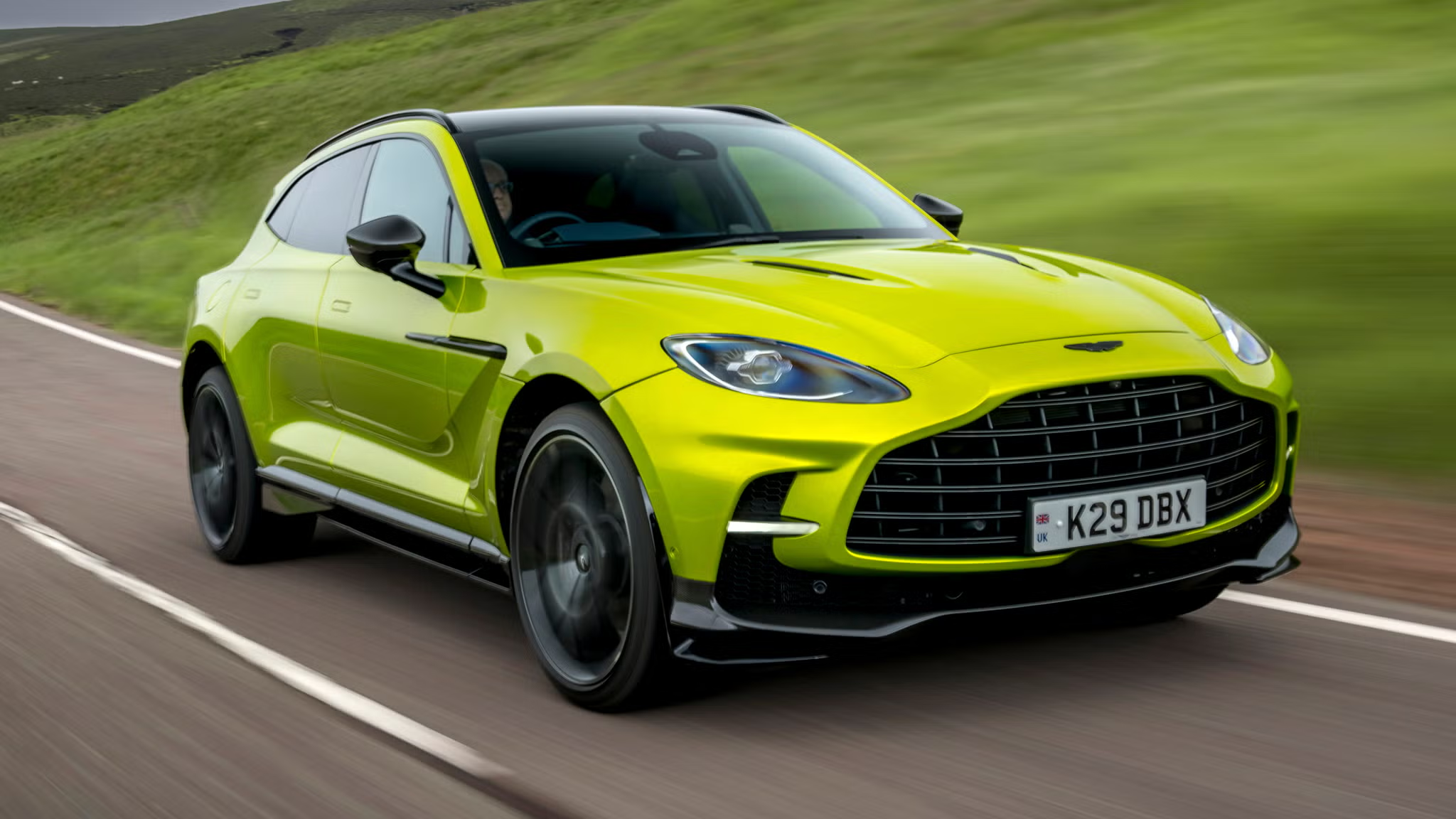
Luxury British automaker Aston Martin Lagonda has announced significant staff reductions and a delay in its electric vehicle (EV) rollout plans as it grapples with mounting financial losses and a challenging transition to electrification. The company, famed for its association with James Bond and high-performance sports cars, is restructuring to stabilize its finances amid supply chain hurdles, rising costs, and weaker-than-expected demand for its current lineup.
Staff Cuts and Restructuring
Aston Martin confirmed it will cut up to 10% of its workforce—approximately 200 employees—primarily in management and manufacturing roles. The move follows a strategic review aimed at reducing operational costs by £18 million ($23 million) annually. CEO Amedeo Felisa stated, “We must streamline operations and focus on profitability to ensure the long-term success of our brand,” during a press briefing covered by Reuters.
This marks the latest in a series of workforce reductions for the brand, which has struggled financially since its 2018 IPO. In 2020, Aston Martin cut 500 jobs amid pandemic-related disruptions. Union representatives, including those from Unite the Union, expressed concerns over the impact on workers, emphasizing the need for retraining programs to transition employees into emerging EV roles.
Financial Struggles Deepen
The layoffs come as Aston Martin reported a pre-tax loss of £285 million ($360 million) for 2023, up from £264 million ($334 million) in 2022. Key factors include:
- Sluggish Sales: Deliveries fell 9% year-over-year to 6,620 vehicles in 2023, despite new models like the DB12 coupe. The DBX SUV, which accounted for 50% of sales, saw a 15% decline in demand, as noted in the company’s 2023 Annual Report.
- Mounting Debt: Net debt rose to £1.04 billion ($1.32 billion) due to high-interest loans and R&D costs. Aston Martin’s debt-to-equity ratio now stands at 1.8, far exceeding rivals like Ferrari (0.5), per Bloomberg.
- Supply Chain Costs: Persistent semiconductor shortages and logistics delays inflated expenses by £45 million ($57 million), according to Automotive News Europe.
While revenue grew 18% to £1.6 billion ($2 billion), driven by higher average selling prices, the company’s margins remain under pressure. Shareholders, including Saudi Arabia’s Public Investment Fund (PIF) and China’s Geely, have pushed for urgent cost-cutting measures. Geely, which owns a 17% stake, has advocated leveraging its EV expertise from brands like Lynk & Co and Zeekr, as reported by Financial Times.
EV Plans Postponed Until 2027
Aston Martin’s electrification strategy has hit a roadblock. Initially, the company pledged to launch its first battery-electric vehicle (BEV) by 2025, but it now says the debut will be delayed until at least 2027.
Reasons for the Delay:
- Partnership Challenges: Aston Martin relies on Mercedes-Benz for EV architecture and Lucid Motors for battery tech. Supply agreements have slipped, with Mercedes prioritizing its own EQ lineup and Lucid focusing on its Air sedan.
- Regulatory Uncertainty: The UK’s delayed 2030 ICE ban (now 2035) reduced urgency. The revised policy, detailed on the UK Government website, allows legacy automakers more time to transition.
- Consumer Demand: CEO Felisa noted that Aston Martin’s clientele still prefers hybrid and internal combustion engine (ICE) models, citing a survey where 70% of buyers prioritized “engine sound and performance” over sustainability.
Revised Roadmap:
- Hybrid Focus: The Valhalla plug-in hybrid supercar (1,000+ hp) remains on track for a 2024 launch, with pre-orders exceeding 500 units.
- BEV Pushed Back: The first electric Aston Martin, likely an SUV, is now slated for 2027. The company plans to utilize Lucid’s SpaceX-derived battery tech for faster charging and higher energy density.
Industry Context: Luxury Brands Struggle with EV Shift
Aston Martin’s woes mirror broader challenges in the luxury automotive sector:
- Ferrari: Prioritizing hybrids, with its first BEV due in 2025. The Italian marque’s SF90 Stradale PHEV accounts for 25% of sales, as reported by Motor1.
- Bentley: Committed to full electrification by 2030 but faces similar cost hurdles. Its Beyond100 strategy relies on parent company Volkswagen’s EV platforms.
- Lotus: Leaning on Chinese parent Geely for EV tech amid losses. The Eletre SUV, built on Geely’s SEA platform, aims to capture 10% of the luxury EV market by 2026.
Analysts argue that smaller luxury brands lack the scale to absorb EV development costs, which can exceed $2 billion per platform. “Aston Martin’s delay reflects the brutal economics of electrification for niche players,” said Bloomberg Intelligence analyst Michael Dean in a recent interview.
Investor Reactions and Stock Performance
Aston Martin’s shares fell 12% following the announcements, hitting a 2024 low of £1.50 ($1.90) on the London Stock Exchange (LSE: AML). The stock has plummeted over 95% since its 2018 IPO price of £19 ($24), underperforming the STOXX Europe 600 Automobiles & Parts Index by 40% year-to-date.
However, some investors see long-term potential:
- Geely’s Influence: The Chinese automaker may integrate Aston Martin into its EV portfolio, sharing platforms with brands like Polestar and Smart.
- Formula 1 Boost: The Aston Martin Aramco F1 team’s success, including Fernando Alonso’s podium finishes, has boosted brand visibility. Sponsorship revenue rose 30% in 2023, per RaceFans.
What’s Next for Aston Martin?
The company aims to achieve positive free cash flow by 2025 through:
- Core Model Updates: Refreshing the DBX SUV and Vantage sports car, with a focus on lightweight materials from the Valkyrie hypercar.
- Cost Reductions: Trimming manufacturing complexity by 20% and reducing overheads via automation.
- Hybrid Sales: Banking on high-margin PHEVs like the Valhalla to bridge the EV gap.
Yet, challenges persist. Rising interest rates, geopolitical tensions, and competition from rivals like Porsche’s electric Macan (2024) threaten to derail progress.
Employee and Market Reactions
Employees facing layoffs have voiced frustration over the lack of transparency. “We were told electrification was the future, but now we’re paying the price for mismanagement,” shared one anonymous worker in an interview with Autocar. Meanwhile, luxury analysts like Bernstein’s Daniel Roeska suggest Aston Martin must “double down on exclusivity” to justify premium pricing, as noted in a research report.
The Bottom Line
Aston Martin’s latest cuts underscore the steep cost of evolving a legacy automaker in the EV era. While its heritage and loyal customer base provide a lifeline, the path to profitability remains fraught with risks. As Felisa stated, “We must balance our racing spirit with financial discipline.”
For now, the roar of Aston Martin’s V12 engines will continue—but the silence of its delayed EVs leaves investors and enthusiasts wondering if the brand can electrify its future in time.
Related Links:
- Aston Martin’s 2023 Financial Report
- UK’s Revised 2035 ICE Ban
- Lucid Motors’ EV Technology
- Geely’s Global EV Strategy
- Porsche Electric Macan Details
Connect with us


