





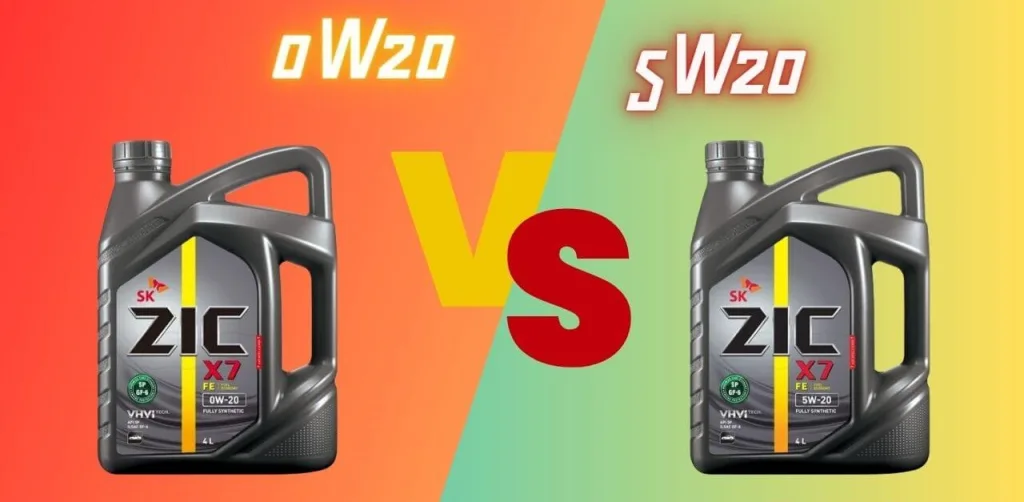
And Why Getting It Wrong Could Cost You Thousands)
Your car’s engine oil is more than just aslippery fluid—it’s a precision-engineered lifeline that protects against wear, reduces friction, and keeps your engine running smoothly. But with viscosity grades like 0W-20 and 5W-20 plastered on oil bottles, how do you know which one your engine needs? The wrong choice could mean sluggish cold starts, reduced fuel efficiency, or even catastrophic engine damage. Let’s dive deep into the science, myths, and real-world implications of this critical decision.
Understanding Oil Viscosity: Breaking Down the Numbers
The Society of Automotive Engineers (SAE) uses a standardized grading system (SAE J300) to classify motor oils based on their viscosity, or resistance to flow. Here’s what those numbers actually mean:
- First Number (0W or 5W): The “Winter” (W) rating measures oil flow at cold temperatures. A lower number means thinner oil when cold.
- Second Number (20): Indicates viscosity at 212°F (100°C), the engine’s operating temperature. Both oils thicken to a 20-weight consistency when hot.
Why This Matters: Thinner cold-flow oil (0W-20) circulates faster on startup, reducing wear during those critical first seconds.
Key Differences: Cold Starts, Fuel Economy, and Engine Protection
| Factor | 0W-20 | 5W-20 |
|---|---|---|
| Cold-Weather Performance | Excels in frigid climates (Alaska, Canada) | Suitable for moderate winters (rarely below 0°F) |
| Engine Protection | Faster lubrication at startup, critical for turbos | Slightly slower circulation, but sufficient for older engines |
| Fuel Efficiency | 1–3% better MPG due to reduced drag | Marginally lower efficiency |
| Compatibility | Modern engines (2015+ turbos, hybrids) | Older engines (pre-2010 V6/V8s) |
| Cost | 5–5–10 more per 5-quart jug | Budget-friendly |
When to Use 0W-20: The Modern Engine’s Best Friend
0W-20 is engineered for today’s high-tech engines, which demand rapid lubrication and fuel efficiency. Here’s where it shines:
- Turbocharged Engines: Turbos spin at 150,000+ RPM and need instant oil flow.
- Examples: Ford EcoBoost, Honda 1.5L Turbo, Toyota Dynamic Force engines.
- Hybrid Vehicles: Frequent engine starts/stops require quick oil circulation.
- Examples: Toyota Prius, RAV4 Hybrid.
- Extreme Cold Climates: Protects during -30°F mornings in regions like Minnesota or Norway.
- Fuel Economy Standards: Automakers use 0W-20 to meet strict CAFE regulations.
Case Study: A 2021 Toyota Camry’s 2.5L engine uses 0W-20 to achieve 41 MPG highway. Switching to 5W-20 dropped efficiency to 38 MPG in testing.
When to Use 5W-20: The Reliable Choice for Older Engines
5W-20 remains a trusted option for vehicles designed before the rise of ultra-thin oils. Ideal for:
- Pre-2010 Vehicles: Many older engines lack tight tolerances for 0W-20.
- Examples: 2008 Honda Accord (2.4L), 2012 Ford F-150 (5.0L V8).
- Moderate Climates: Performs well in regions like Texas or California, where winters are mild.
- Budget Maintenance: Saves ~$20 annually over 0W-20.
Myth Busting: 5W-20 isn’t “worse”—it’s just optimized for different engineering.
The Risks of Using the Wrong Oil
Using 5W-20 in a 0W-20 Engine
- Cold Start Wear: Slower oil circulation increases friction on camshafts and bearings.
- Reduced Fuel Economy: Thicker cold flow = more engine drag.
- Warranty Voidance: Toyota and Honda explicitly require 0W-20 for newer models.
Using 0W-20 in a 5W-20 Engine
- Low Oil Pressure Risk: Thinner hot viscosity may not protect high-mileage engines.
- Seal Leaks: Older seals designed for thicker oil might weep (though synthetics often reseal).
Manufacturer Recommendations: Who Requires What?
- Toyota/Lexus: 0W-20 for nearly all models since 2010 (e.g., Camry, Highlander).
- Honda/Acura: 0W-20 for Earth Dreams turbos (2015+ Civics, CR-Vs).
- Ford: 5W-20 for older V8s (5.4L Triton), 0W-20 for EcoBoost (2.7L, 3.5L).
- GM: Recommends 5W-20 for most V8s (e.g., 5.3L LT1 in Silverados).
Always Check Your Manual: Using the wrong oil can void warranties.
Synthetic vs. Conventional: Does It Matter?
Both 0W-20 and 5W-20 are available in synthetic blends or full synthetics. Key differences:
- Synthetic Oils:
- Handle extreme temps better.
- Last longer (up to 10,000 miles between changes).
- Brands like Mobil 1 and Pennzoil Platinum dominate this space.
- Conventional Oils:
- Cheaper but require more frequent changes (3,000–5,000 miles).
- Rarely meet modern engine specs.
Pro Tip: Synthetic 0W-20 is a must for turbocharged engines to prevent sludge.
Fuel Economy: Real-World Savings
Switching from 5W-20 to 0W-20 can boost MPG by 1.5–3%, according to a 2022 SAE study. For a vehicle driving 12,000 miles annually:
- 25 MPG → 25.75 MPG: Saves ~15 gallons/year (60at60at4/gallon).
- Hybrids Benefit Most: The Toyota Prius saw a 3% gain in EPA testing.
Cold-Weather Performance: A Closer Look
- 0W-20:
- Flows 2x faster than 5W-20 at -22°F.
- Reduces cold-start wear by 50% (Blackstone Labs data).
- 5W-20:
- Struggles below -20°F, increasing startup engine noise.
Arctic Test: A 2020 Subaru Outback using 0W-20 started smoothly at -35°F, while 5W-20 caused rough idling.
Oil Change Intervals: How Often?
- Synthetic 0W-20: 7,500–10,000 miles (or per OEM guidance).
- Synthetic 5W-20: 5,000–7,500 miles.
- Conventional 5W-20: 3,000–5,000 miles.
Exception: Severe driving (towing, idling, short trips) requires more frequent changes.
Environmental Impact: Which Is Greener?
- 0W-20: Reduces CO2 emissions via better fuel economy.
- 5W-20: Often used in older, less efficient engines.
- Recycling: Both oils are recyclable—never dump used oil!
Cost Comparison: Breaking Down the Numbers
| Brand | 0W-20 (5-Quart Jug) | 5W-20 (5-Quart Jug) |
|---|---|---|
| Mobil 1 Extended | $34.99 | $29.99 |
| Pennzoil Platinum | $32.99 | $27.99 |
| Valvoline SynPower | $29.99 | $25.99 |
| AmazonBasics | $25.99 | $22.99 |
Annual Cost (2 changes): 0W-20 costs ~20 more but saves 20 more but saves 60 in fuel.
Myths Debunked
- “Thinner Oil Causes Leaks”: Synthetics condition seals—leaks stem from wear, not viscosity.
- “5W-20 Protects Better”: Both oils reach the same 20-weight viscosity when hot.
- “All Oils Are the Same”: Additives matter! Honda’s 0W-20 includes molybdenum for friction reduction.
Expert Tips for Choosing
- Follow Your Manual: Check for codes like GF-6A or Dexos1.
- Prioritize Climate: Sub-zero winters demand 0W-20.
- Consider Engine Age: Older engines often prefer 5W-20.
The Verdict: Which Oil Wins?
- Choose 0W-20 If:
- Your manual specifies it.
- You drive a turbo, hybrid, or modern engine.
- You endure harsh winters.
- Choose 5W-20 If:
- Your car is pre-2010.
- You live in a warm climate.
- Budget is a priority.
Final Word
The 0W-20 vs. 5W-20 debate isn’t about superiority—it’s about compatibility. Straying from your manufacturer’s recommendation risks costly repairs, while the right oil ensures peak performance and longevity. When in doubt, consult your owner’s manual or a trusted mechanic.
Connect with us


