Simi Valley Chrysler Dodge Jeep Ram

Blog

All Jeep General Ram Dodge Questions Car Buying Guides Chrysler Simi Valley Chrysler Dealer Simi Valley Used Cars
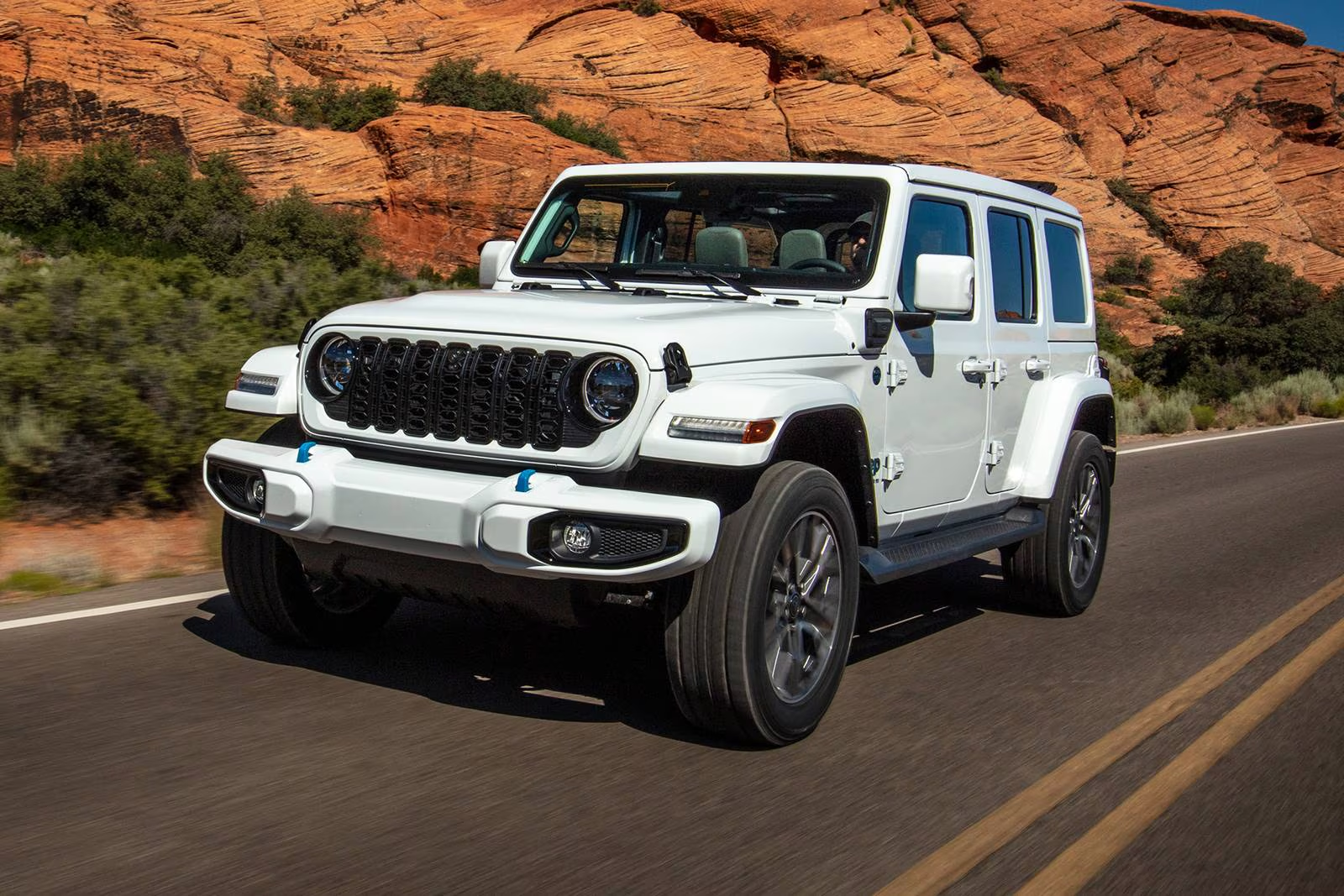
Jeep Wrangler 4xe

Can I charge my Jeep 4xe at Tesla?

As the popularity of electric vehicles (EVs) continues to grow, the need for accessible and efficient charging stations becomes increasingly important. Jeep’s 4xe lineup, including models like the Wrangler 4xe and the Grand Cherokee 4xe, is a significant player in the plug-in hybrid market. Owners of these vehicles often wonder if they can utilize Tesla's extensive Supercharger network for their charging needs. This article will explore whether Jeep 4xe owners can charge their vehicles at Tesla stations and what alternatives are available. ad testing 2 Understanding the Jeep 4xe Charging System The Jeep 4xe is a plug-in hybrid vehicle, which means it has both a gasoline engine and an electric motor powered by a rechargeable battery. This setup allows the 4xe to offer improved fuel efficiency and the ability to drive on electric power alone for a limited range. Charging the battery is crucial for maximizing the vehicle's electric-only range and overall efficiency. The Jeep 4xe can be charged using two main types of charging equipment: Level 1 Charging (120V): This uses a standard household outlet and is the slowest method, typically taking overnight or longer to fully charge the battery. Level 2 Charging (240V): This requires a dedicated charging station and is significantly faster, usually taking a few hours to charge the battery fully. Tesla Superchargers: Compatibility and Challenges Tesla Superchargers are known for their widespread availability and rapid charging capabilities. However, they are designed specifically for Tesla vehicles, which poses compatibility issues for other brands. Here are the main challenges for charging a Jeep 4xe at a Tesla Supercharger: Connector Differences Tesla Superchargers use a proprietary connector that is not compatible with the charging port on Jeep 4xe models. Jeep 4xe vehicles typically use the J1772 connector for Level 1 and Level 2 charging. This difference in connectors means that, without an adapter, Jeep 4xe owners cannot directly plug into a Tesla Supercharger. Charging Protocols Even if a physical connection were possible, Tesla Superchargers and Jeep 4xe vehicles use different charging protocols. Tesla vehicles communicate with Superchargers using a proprietary system that ensures safe and efficient charging. Non-Tesla vehicles, including the Jeep 4xe, do not support this communication protocol, which prevents them from using the Supercharger network. ad testing 2 Adapters and Workarounds While there are adapters available that allow non-Tesla EVs to use Tesla Destination Chargers (typically found at hotels and restaurants), these are not compatible with Tesla Superchargers. Destination Chargers use the same J1772 protocol as many other EVs, making them accessible to a broader range of vehicles with the proper adapter. However, this does not solve the issue for Superchargers, which remain exclusive to Tesla vehicles. Alternative Charging Solutions for Jeep 4xe Owners Although Tesla Superchargers are not an option, Jeep 4xe owners have several other reliable and accessible charging solutions: Public Charging Networks Numerous public charging networks are compatible with Jeep 4xe vehicles, including ChargePoint, EVgo, and Electrify America. These networks offer Level 2 and DC fast charging stations that can quickly recharge the 4xe’s battery. Home Charging Stations Installing a Level 2 home charging station is one of the most convenient options for Jeep 4xe owners. This setup allows for fast charging overnight or during the day, ensuring the vehicle is always ready for use. Workplace Charging Many employers are now offering EV charging stations at the workplace. Jeep 4xe owners should check with their employers to see if this option is available, providing an additional convenient charging location. Jeep’s Dealership Network Jeep dealerships often have charging stations available for customer use. This can be a useful resource for 4xe owners who need a quick charge while out and about. ad testing 2 Conclusion While Jeep 4xe owners cannot currently use Tesla Superchargers due to connector and protocol incompatibilities, there are plenty of alternative charging solutions available. Public charging networks, home charging stations, workplace chargers, and Jeep dealerships provide reliable and accessible options for keeping the 4xe charged and ready to go. As the EV infrastructure continues to expand, Jeep 4xe owners can look forward to even more convenient and efficient charging opportunities in the future.

Is the Dodge Hornet a V8?

Is the Dodge Hornet a V8? The Dodge Hornet is not a V8. In fact, it’s quite different from the muscle cars Dodge is traditionally known for, like the Challenger and Charger, which often feature powerful V8 engines. The Dodge Hornet is a compact SUV that represents a new direction for the brand, focusing on efficiency, modern technology, and practicality while still offering a dash of performance that Dodge fans expect. Unlock Car Discounts For Free Is the Dodge Hornet a V8? A New Kind of Dodge The Dodge Hornet made its debut as a compact crossover SUV, targeting a different segment of the automotive market compared to the high-performance muscle cars Dodge is famous for. Instead of a roaring V8 engine, the Hornet offers a more efficient and environmentally friendly powertrain, catering to consumers looking for a balance between performance and practicality. Is the Dodge Hornet a V8? Powertrain Options The Dodge Hornet comes with a choice of engines, but neither is a V8. The standard engine is a 2.0-liter turbocharged inline-four that delivers around 268 horsepower and 295 lb-ft of torque. This engine is paired with a 9-speed automatic transmission, providing a smooth and responsive driving experience. This powertrain is designed to offer a blend of performance and fuel efficiency, making it suitable for both city driving and longer road trips. For those looking for something a bit more eco-friendly, Dodge also offers a plug-in hybrid version of the Hornet. This version combines a 1.3-liter turbocharged four-cylinder engine with an electric motor, delivering a total output of 288 horsepower. The hybrid system allows for short distances to be driven on electric power alone, making it an excellent option for those who want to reduce their carbon footprint without sacrificing too much power. Performance and Driving Dynamics Even without a V8, the Dodge Hornet offers an engaging driving experience. The turbocharged engines provide plenty of power for quick acceleration, and the handling is sharp and responsive, thanks to the well-tuned suspension system. The available all-wheel-drive system further enhances the Hornet’s performance, offering better traction and stability in various driving conditions. Unlock Car Discounts For Free While it may not have the raw power of a V8 muscle car, the Hornet still manages to embody some of the spirit of Dodge’s performance heritage. It’s a vehicle that feels nimble and fun to drive, especially when compared to other compact SUVs in its class. Is the Dodge Hornet a V8? Interior and Features Inside, the Dodge Hornet offers a modern and comfortable cabin with plenty of technology features. The infotainment system is user-friendly, featuring a large touchscreen, Apple CarPlay, Android Auto, and a variety of connectivity options. The Hornet also comes with a suite of advanced driver-assistance features, including adaptive cruise control, lane-keeping assist, and automatic emergency braking, which enhance both safety and convenience. Unlock Car Discounts For Free The interior space is generous for a compact SUV, with comfortable seating for up to five passengers. The cargo area is also spacious, making the Hornet a practical choice for families and individuals who need a versatile vehicle for everyday use. Is the Dodge Hornet a V8? A New Chapter for Dodge The Dodge Hornet represents a significant shift in Dodge’s lineup, showcasing the brand’s ability to adapt to the evolving automotive landscape. While it may not feature the V8 engine that Dodge enthusiasts might expect, it offers a compelling package that combines performance, efficiency, and practicality. The Hornet is an example of how Dodge is expanding its horizons, appealing to a broader audience while still maintaining the performance-oriented DNA that has made the brand so popular. Whether you’re looking for a sporty compact SUV or a plug-in hybrid with some muscle, the Dodge Hornet offers a modern alternative in the world of Dodge vehicles. 1. "Why Dodge Opted for a Turbocharged Inline-Four Over a V8 in the Hornet" Unlock Car Discounts For Free Dodge's decision to equip the Hornet with a turbocharged inline-four engine instead of a V8 reflects the changing dynamics of the automotive industry. In recent years, fuel efficiency and environmental regulations have become increasingly important, pushing automakers to prioritize smaller, more efficient engines. The 2.0-liter turbocharged inline-four in the Hornet offers a balance of power and efficiency, delivering a respectable 268 horsepower while also helping drivers save on fuel costs. Additionally, the market for compact SUVs has grown rapidly, with consumers seeking vehicles that offer practicality and lower running costs without sacrificing performance. By choosing a turbocharged four-cylinder engine, Dodge positions the Hornet as a versatile option that appeals to a broader audience, including those who might not be drawn to the brand’s traditional V8 muscle cars. 2. "Comparing the Dodge Hornet's Performance to Traditional V8-Powered Muscle Cars" While the Dodge Hornet may not have the same raw power as the brand’s legendary V8-powered muscle cars, it still delivers an engaging driving experience. The turbocharged inline-four engine provides brisk acceleration and a lively feel, especially when paired with the responsive 9-speed automatic transmission. When compared to traditional V8 muscle cars like the Challenger, the Hornet’s performance is more focused on agility and efficiency rather than sheer horsepower. The compact SUV’s lighter weight and advanced suspension tuning allow for sharper handling, making it fun to drive on twisty roads. While the Hornet might not roar down the highway with the same intensity as a V8 muscle car, it offers a more practical and modern take on performance that aligns with today’s automotive trends. 3. "The Evolution of Dodge: From V8 Muscle Cars to Modern Compact SUVs" Unlock Car Discounts For Free Dodge has long been synonymous with powerful V8 engines and muscle cars that embody the spirit of American automotive culture. However, the introduction of the Dodge Hornet marks a significant evolution in the brand’s lineup. As consumer preferences shift toward more versatile and fuel-efficient vehicles, Dodge has expanded its offerings to include modern compact SUVs like the Hornet. This shift reflects the broader changes in the automotive market, where SUVs and crossovers have become the dominant choice for many buyers. The Hornet represents Dodge’s ability to adapt to these changes while still incorporating the performance DNA that has defined the brand for decades. By embracing new technologies and engine options, Dodge is evolving to meet the needs of a new generation of drivers without abandoning its roots. 4. "The Future of Dodge: Will We See a V8-Powered SUV?" Unlock Car Discounts For Free As Dodge continues to diversify its lineup, the question arises: could we see a V8-powered SUV from the brand in the future? While the Hornet currently features smaller, more efficient engines, there is certainly a market for high-performance SUVs that offer the power and thrill of a V8 engine. Dodge has a history of pushing the boundaries of performance, and a V8-powered SUV could be the next step in this evolution. Such a vehicle would appeal to enthusiasts who crave the muscle car experience but need the practicality of an SUV. With competitors offering powerful V8 options in their SUVs, it wouldn’t be surprising if Dodge decided to enter this space with a model that combines the best of both worlds: the brute force of a V8 with the versatility of an SUV. 5. "Hybrid Powertrain: The Hornet’s Answer to Balancing Performance and Efficiency" The Dodge Hornet’s hybrid powertrain option is a testament to the brand’s commitment to balancing performance with efficiency. The plug-in hybrid version of the Hornet combines a 1.3-liter turbocharged four-cylinder engine with an electric motor, resulting in a total output of 288 horsepower. This setup allows drivers to enjoy the benefits of electric driving for short trips, reducing emissions and fuel consumption, while still providing the power needed for longer journeys or spirited driving. The hybrid system also offers the flexibility to switch between electric and gasoline power, depending on the driving conditions. For Dodge, the Hornet’s hybrid option represents a strategic move to appeal to environmentally conscious consumers without sacrificing the performance edge that the brand is known for. It’s a forward-thinking approach that positions Dodge as a brand that’s ready to meet the challenges of the future while staying true to its performance heritage. Dodge Hornet FAQs Q: Is the Dodge Hornet a V8? A: No, the Dodge Hornet is not equipped with a V8 engine. It comes with either a 2.0-liter turbocharged inline-four engine or a plug-in hybrid powertrain. Q: What type of vehicle is the Dodge Hornet? A: The Dodge Hornet is a compact crossover SUV, representing a new direction for the Dodge brand. Q: What are the engine options for the Dodge Hornet? A: The Dodge Hornet offers two engine options: a 2.0-liter turbocharged inline-four and a plug-in hybrid combining a 1.3-liter turbocharged four-cylinder with an electric motor. Q: How much horsepower does the standard Dodge Hornet engine produce? A: The standard 2.0-liter turbocharged engine delivers around 268 horsepower and 295 lb-ft of torque. Q: Is there a hybrid version of the Dodge Hornet? A: Yes, Dodge offers a plug-in hybrid version of the Hornet, which combines a gasoline engine with an electric motor. Q: What's the total power output of the Dodge Hornet hybrid? A: The plug-in hybrid version of the Dodge Hornet delivers a total output of 288 horsepower. Q: What transmission does the Dodge Hornet use? A: The standard Dodge Hornet comes with a 9-speed automatic transmission. Q: Does the Dodge Hornet offer all-wheel drive? A: Yes, the Dodge Hornet is available with an all-wheel-drive system for better traction and stability. Q: How does the Dodge Hornet compare to traditional Dodge muscle cars in terms of performance? A: While not as powerful as V8 muscle cars, the Hornet offers quick acceleration and responsive handling, focusing on agility and efficiency rather than raw power. Q: What are some key features of the Dodge Hornet's interior? A: The Hornet features a modern cabin with a user-friendly infotainment system, large touchscreen, Apple CarPlay, Android Auto, and various connectivity options. Q: Does the Dodge Hornet come with advanced driver-assistance features? A: Yes, the Hornet is equipped with a suite of advanced driver-assistance features, including adaptive cruise control, lane-keeping assist, and automatic emergency braking. Q: How many passengers can the Dodge Hornet accommodate? A: The Dodge Hornet can comfortably seat up to five passengers. Q: Is the Dodge Hornet suitable for family use? A: Yes, with its spacious interior, comfortable seating for five, and generous cargo area, the Hornet is a practical choice for families. Q: Can the plug-in hybrid Dodge Hornet drive on electric power alone? A: Yes, the plug-in hybrid version allows for short distances to be driven on electric power alone. Q: Why did Dodge choose a turbocharged inline-four engine for the Hornet instead of a V8? A: Dodge opted for the turbocharged inline-four to balance performance with fuel efficiency, meeting modern environmental regulations and consumer demands for lower running costs. Q: How does the Dodge Hornet represent a shift in Dodge's lineup? A: The Hornet represents Dodge's adaptation to changing market trends, offering a compact SUV that combines efficiency and practicality with the brand's performance-oriented DNA. Q: Is the Dodge Hornet as fuel-efficient as other compact SUVs? A: While specific fuel economy figures aren't provided, the Hornet's engine options are designed to offer a balance of performance and efficiency competitive with other compact SUVs. Q: Does the Dodge Hornet still maintain some of Dodge's performance heritage? A: Yes, while different from traditional muscle cars, the Hornet still offers engaging performance with quick acceleration and responsive handling. Q: Is there a possibility of a V8-powered Dodge SUV in the future? A: While not confirmed, the article speculates that Dodge might consider a V8-powered SUV in the future to cater to enthusiasts who want both power and practicality. Q: How does the Dodge Hornet appeal to environmentally conscious consumers? A: The Hornet's plug-in hybrid option allows for reduced emissions and fuel consumption on short trips, appealing to environmentally conscious consumers without sacrificing performance.

Where can I buy a Jeep Wrangler near me in California?

Where can I buy a Jeep Wrangler near me in California? If you're in the market for a Jeep Wrangler and find yourself in California, there's one dealership that stands out for its exceptional service, extensive inventory, and commitment to customer satisfaction: Simi Valley Chrysler Dodge Jeep Ram (CDJR). Located conveniently in Simi Valley, this dealership has built a reputation as a go-to destination for Jeep enthusiasts and car buyers alike. Why Choose Simi Valley CDJR? Simi Valley CDJR is more than just a car dealership; it's a hub for automotive excellence. Whether you're a seasoned Jeep owner or a first-time buyer, the team at Simi Valley CDJR ensures that your experience is nothing short of exceptional. Extensive Inventory of Jeep Wranglers Simi Valley CDJR boasts one of the largest selections of Jeep Wranglers in the region. Whether you're looking for a new model with the latest features or a certified pre-owned Wrangler that offers value and reliability, you'll find what you're looking for. Their inventory includes various trims, colors, and customization options, so you can find a Wrangler that fits your lifestyle perfectly. Expert Staff and Personalized Service The team at Simi Valley CDJR is comprised of knowledgeable professionals who are passionate about Jeep vehicles. They take the time to understand your needs, preferences, and budget to help you find the perfect Wrangler. Their no-pressure approach ensures that you can make an informed decision without feeling rushed or overwhelmed. Competitive Financing Options Financing a Jeep Wrangler at Simi Valley CDJR is a seamless process. The dealership offers competitive financing rates and works with a variety of lenders to secure the best possible terms for your loan or lease. Whether you have stellar credit or are working to rebuild it, their finance team is dedicated to finding a solution that works for you. Comprehensive After-Sales Support Owning a Jeep Wrangler is just the beginning of your adventure, and Simi Valley CDJR is committed to supporting you every step of the way. Their state-of-the-art service center is staffed with certified technicians who are experts in Jeep maintenance and repairs. Whether you need routine maintenance, genuine Jeep parts, or a major repair, you can trust that your vehicle is in good hands. Community Involvement Simi Valley CDJR is not just a business; it's a proud member of the Simi Valley community. The dealership regularly participates in local events and supports various charities and organizations. When you buy a Jeep Wrangler from Simi Valley CDJR, you're supporting a business that gives back to the community. The Jeep Wrangler: A Perfect Fit for California California is known for its diverse landscapes, from sandy beaches to rugged mountains, and the Jeep Wrangler is the perfect vehicle to explore it all. With its legendary off-road capabilities, robust design, and customizable features, the Wrangler is built for adventure. Whether you're navigating the urban streets of Los Angeles or tackling the trails in Big Bear, the Jeep Wrangler offers a driving experience like no other. At Simi Valley CDJR, you'll find a variety of Wrangler models to choose from, including the Wrangler Sport, Wrangler Rubicon, and Wrangler Sahara. Each model offers unique features, so whether you prioritize off-road performance, luxury, or a balance of both, there's a Wrangler for you. Visit Simi Valley CDJR Today If you're ready to take the next step in your Jeep adventure, visit Simi Valley Chrysler Dodge Jeep Ram. The dealership is located at 2350 First St, Simi Valley, CA 93065. You can also browse their inventory online, schedule a test drive, or speak with a member of their team by calling (805) 526-7500. At Simi Valley CDJR, your dream of owning a Jeep Wrangler is just a visit away. Discover the difference of shopping at a dealership that truly cares about your satisfaction and find the perfect vehicle to accompany you on all your California adventures.

Is the Dodge Hornet a plug-in hybrid?

Is the Dodge Hornet a plug-in hybrid? The Dodge Hornet has garnered significant attention as Dodge's first venture into the compact SUV market in years, and a key feature that sets it apart is its availability as a plug-in hybrid. This marks a significant step for Dodge, a brand traditionally associated with muscle cars and high-performance vehicles, as it embraces more environmentally friendly technologies. In this article, we’ll explore whether the Dodge Hornet is a plug-in hybrid, what that means for potential buyers, and how it fits into the broader landscape of electrified vehicles. Is the Dodge Hornet a plug-in hybrid? What is a Plug-In Hybrid? Before diving into the specifics of the Dodge Hornet, it’s essential to understand what a plug-in hybrid vehicle (PHEV) is. A plug-in hybrid combines a traditional internal combustion engine with an electric motor and a battery pack. The key difference between a PHEV and a conventional hybrid is that the battery in a plug-in hybrid can be recharged by plugging the vehicle into an external power source, such as a home charger or public charging station. This allows the vehicle to operate in an all-electric mode for a certain distance before the gasoline engine kicks in, offering a balance between electric efficiency and the range of a gas-powered car. Is the Dodge Hornet a plug-in hybrid? Dodge Hornet R/T: The Plug-In Hybrid Variant Yes, the Dodge Hornet is indeed available as a plug-in hybrid, specifically in the R/T trim. The Hornet R/T is Dodge’s first plug-in hybrid vehicle, and it represents a significant milestone for the brand as it begins to explore electrified powertrains. This model is designed to appeal to drivers who want the performance and practicality of a compact SUV, but with the added benefits of reduced fuel consumption and lower emissions. Powertrain and Performance The Dodge Hornet R/T is powered by a 1.3-liter turbocharged inline-four engine combined with an electric motor. Together, this powertrain delivers a total output of 288 horsepower and 383 lb-ft of torque. This setup is paired with a six-speed automatic transmission and comes standard with all-wheel drive, ensuring that the Hornet R/T maintains the sporty and responsive driving experience that Dodge is known for. One of the standout features of the Hornet R/T is the PowerShot mode, which provides an additional 25 horsepower for short bursts of acceleration. This feature allows the Hornet R/T to accelerate from 0 to 60 mph in just 6.1 seconds, making it one of the quickest vehicles in its class. The combination of electric and gasoline power ensures that the Hornet R/T delivers strong performance while also offering the efficiency benefits of a plug-in hybrid. Is the Dodge Hornet a plug-in hybrid? Electric-Only Driving and Efficiency One of the primary advantages of the plug-in hybrid Dodge Hornet R/T is its ability to operate in an all-electric mode. When fully charged, the Hornet R/T can travel up to 30 miles on electric power alone. This range is ideal for short commutes, running errands around town, or simply enjoying a quiet, emissions-free drive. For many drivers, this electric range is sufficient for daily driving needs, meaning they can significantly reduce their reliance on gasoline and lower their overall fuel costs. When the battery is depleted, the Hornet R/T seamlessly switches to hybrid mode, where the gasoline engine and electric motor work together to optimize fuel efficiency. This hybrid mode ensures that the vehicle can continue to operate efficiently even on longer trips, where charging opportunities may be limited. Is the Dodge Hornet a plug-in hybrid? Charging Options and Convenience The Dodge Hornet R/T offers flexible charging options to suit different lifestyles. Owners can charge the vehicle at home using a standard 120-volt household outlet, although this method is slower and may take several hours to fully recharge the battery. For faster charging, the Hornet R/T can be plugged into a 240-volt Level 2 charger, which can fully recharge the battery in a few hours. Public charging stations are also an option, especially for drivers who need to top up the battery while on the go. The convenience of charging, combined with the ability to use gasoline when necessary, makes the Hornet R/T a versatile choice for those who want to reduce their carbon footprint without the range anxiety often associated with fully electric vehicles. Practicality and Everyday Use The plug-in hybrid powertrain in the Dodge Hornet R/T doesn’t compromise the practicality that buyers expect from a compact SUV. The vehicle offers ample interior space, with comfortable seating for five passengers and a generous cargo area. The hybrid system’s components are cleverly integrated to minimize their impact on passenger and cargo space, ensuring that the Hornet remains a practical choice for families and individuals alike. In addition to its practical interior, the Hornet R/T also comes equipped with a range of modern features and technologies. This includes an intuitive infotainment system with a large touchscreen, smartphone connectivity, and advanced driver assistance systems. These features enhance the overall driving experience, making the Hornet R/T a well-rounded vehicle that caters to both performance enthusiasts and environmentally conscious drivers. Is the Dodge Hornet a plug-in hybrid? The Broader Impact of the Hornet R/T The introduction of the plug-in hybrid Hornet R/T signals Dodge’s commitment to embracing more sustainable technologies. As the automotive industry continues to shift towards electrification, Dodge’s move to offer a plug-in hybrid option demonstrates its willingness to adapt and meet the evolving demands of consumers. The Hornet R/T provides a glimpse into the future of Dodge’s lineup, where electrified powertrains could become more commonplace across different models. Furthermore, the success of the Hornet R/T could pave the way for the development of fully electric vehicles within Dodge’s portfolio. By starting with a plug-in hybrid, Dodge can gather valuable insights into consumer preferences and the challenges of electrification, allowing the brand to refine its approach as it continues to innovate. Conclusion: A Bold Step Forward for Dodge The Dodge Hornet R/T, with its plug-in hybrid powertrain, represents a bold step forward for a brand traditionally associated with powerful gasoline engines. By offering a vehicle that combines the performance and practicality of a compact SUV with the efficiency and environmental benefits of electrification, Dodge is positioning itself to compete in a rapidly changing automotive landscape. The Hornet R/T not only meets the needs of today’s drivers but also sets the stage for a more sustainable future, where electrification plays a central role in the brand’s identity. Whether you’re drawn to the Hornet R/T for its performance, its eco-friendly credentials, or its practicality, it’s clear that this plug-in hybrid SUV is a significant milestone for Dodge and a compelling option in the compact SUV market. Dodge Hornet Official Website - For official details on the Dodge Hornet lineup, including the R/T plug-in hybrid model. U.S. Department of Energy: Plug-in Hybrid Electric Vehicles (PHEVs) - Learn more about plug-in hybrid electric vehicles and how they work. Car and Driver: Dodge Hornet R/T Review - A detailed review of the Dodge Hornet R/T, including performance and hybrid features. Edmunds: Plug-in Hybrid Vehicles - Information on various plug-in hybrid vehicles and their benefits. InsideEVs: Dodge Hornet R/T Plug-in Hybrid Review - An in-depth look at the Dodge Hornet R/T's plug-in hybrid system.

How many miles per gallon does a 2024 Dodge Hornet hybrid get?

How many miles per gallon does a 2024 Dodge Hornet hybrid get? The 2024 Dodge Hornet R/T represents a significant shift for Dodge, integrating a plug-in hybrid powertrain into its lineup. For many prospective buyers, one of the crucial aspects to consider is the vehicle's fuel efficiency, particularly in terms of miles per gallon (MPG). Understanding the fuel efficiency of the Hornet R/T can help potential buyers assess its practicality and cost-effectiveness in everyday use. In this article, we’ll explore how many miles per gallon the 2024 Dodge Hornet hybrid achieves and what factors influence its efficiency. The 2024 Dodge Hornet R/T: An Overview The 2024 Dodge Hornet R/T is the brand’s first plug-in hybrid vehicle (PHEV), combining a 1.3-liter turbocharged inline-four engine with an electric motor. This powertrain setup produces a combined output of 288 horsepower and 383 lb-ft of torque. The Hornet R/T’s hybrid system is designed to deliver a blend of performance and efficiency, making it an attractive option for those looking to balance power with environmental considerations. How many miles per gallon does a 2024 Dodge Hornet hybrid get? Fuel Efficiency Metrics The fuel efficiency of the Dodge Hornet R/T is evaluated in two key ways: electric-only range and overall hybrid fuel economy. These metrics offer a comprehensive view of how the vehicle performs in different driving conditions. Electric-Only Range The Hornet R/T's plug-in hybrid system allows it to operate in an all-electric mode for short distances. When fully charged, the Hornet R/T can travel approximately 30 miles on electric power alone. This range is ideal for daily commutes, short trips, and urban driving where the vehicle can operate without consuming gasoline. Hybrid Mode Fuel Economy When the battery is depleted, the Hornet R/T seamlessly switches to hybrid mode, where both the gasoline engine and electric motor work together to optimize fuel efficiency. In this mode, the 2024 Dodge Hornet R/T achieves an estimated combined fuel economy of approximately 30 miles per gallon (MPG). This figure combines city and highway driving conditions, providing a useful benchmark for how the vehicle performs over a range of driving scenarios. Comparing with Competitors To understand the significance of the Hornet R/T’s fuel efficiency, it’s helpful to compare it with other vehicles in the plug-in hybrid and compact SUV segments. Many competitors in this category offer varying levels of efficiency, but the Hornet R/T's combined MPG stands out for several reasons. Fuel Efficiency in the PHEV Segment: In the plug-in hybrid market, the Hornet R/T’s combined MPG is competitive. For comparison, the Toyota RAV4 Prime, another popular plug-in hybrid, achieves around 38 MPG in hybrid mode. While the Hornet R/T’s MPG is slightly lower, it still provides strong performance and efficiency relative to many traditional gas-powered SUVs. Electric Range Comparison: The electric-only range of 30 miles for the Hornet R/T is comparable to other plug-in hybrids in its class. For instance, the Ford Escape Plug-In Hybrid offers a similar electric range. This electric range allows drivers to complete short trips without using gasoline, contributing to overall fuel savings. Factors Influencing Fuel Efficiency Several factors can impact the fuel efficiency of the Dodge Hornet R/T: Driving Habits: Aggressive driving, frequent acceleration, and high speeds can reduce fuel economy. Conversely, smooth and steady driving helps maintain optimal efficiency. Driving Conditions: City driving, with frequent stops and starts, can affect fuel efficiency. On the other hand, highway driving typically offers better fuel economy due to steady speeds. Weather and Terrain: Extreme temperatures and hilly terrain can impact fuel consumption. Cold weather may reduce battery efficiency, while hilly terrain requires more power from the engine, affecting overall MPG. Battery Charge: The efficiency of the Hornet R/T improves with a full battery. Regular charging ensures that the vehicle can operate in electric mode as much as possible, reducing reliance on gasoline. Practical Implications for Drivers For drivers considering the 2024 Dodge Hornet R/T, the vehicle’s fuel efficiency offers several practical benefits: Cost Savings: With a combined MPG of 30 and the ability to drive short distances on electric power alone, the Hornet R/T can help reduce fuel costs over time. The hybrid system allows drivers to take advantage of electric driving when possible, leading to lower overall gasoline consumption. Environmental Impact: The Hornet R/T’s hybrid powertrain contributes to reduced emissions compared to traditional gasoline-powered SUVs. By utilizing electric power for short trips, drivers can decrease their carbon footprint and support more sustainable driving practices. Versatility: The Hornet R/T offers a balance between electric efficiency and traditional performance. With the flexibility to operate in electric-only mode or hybrid mode, the vehicle caters to a range of driving needs and preferences. Conclusion The 2024 Dodge Hornet R/T's fuel efficiency, with an estimated 30 miles per gallon in hybrid mode and a 30-mile electric-only range, positions it as a competitive option in the compact SUV segment. The integration of a plug-in hybrid powertrain allows drivers to enjoy a blend of performance, efficiency, and environmental benefits. As a result, the Hornet R/T is an appealing choice for those seeking a versatile and cost-effective vehicle that embraces modern hybrid technology. Whether for daily commutes or longer journeys, the Hornet R/T provides a well-rounded solution that aligns with the evolving landscape of automotive efficiency and sustainability.

How Good is the 2025 Jeep Wrangler for offroad?

How good is the 2025 jeep wrangler off road? The 2025 Jeep Wrangler: A New Era of Off-Road Prowess The Jeep Wrangler has always been synonymous with off-road capability, and the 2025 model year takes this reputation to new heights. With significant updates aimed at enhancing its legendary off-road performance, the 2025 Jeep Wrangler continues to set the standard for adventure-ready vehicles. Whether you’re a seasoned off-roader or new to the trail, the latest updates to the Wrangler ensure that it remains the ultimate vehicle for exploring the great outdoors. Enhanced Terrain Management System One of the standout features of the 2025 Jeep Wrangler is its updated terrain management system. This advanced system has been fine-tuned to provide even more control and adaptability across a variety of off-road conditions. With multiple drive modes tailored to different terrains—such as mud, sand, rock, and snow—the Wrangler allows drivers to optimize traction and stability with the push of a button. The system’s enhanced algorithms now respond faster to changing conditions, ensuring that the Wrangler remains sure-footed even in the most challenging environments. Improved Suspension for Superior Comfort and Control Jeep has also focused on improving the Wrangler’s suspension system for 2025. The new setup is designed to offer a perfect balance between off-road capability and on-road comfort. The suspension has been re-tuned to provide better articulation and smoother handling over rough terrain, making it easier for drivers to navigate obstacles like rocks, deep ruts, and steep inclines. This improvement not only enhances the vehicle’s off-road performance but also makes it more comfortable for everyday driving. Advanced Four-Wheel-Drive Systems The 2025 Jeep Wrangler continues to offer advanced four-wheel-drive systems that are designed to conquer the toughest trails. The Rock-Trac and Selec-Trac systems, known for their durability and reliability, have been further refined for the new model year. The updated systems feature improved low-range gearing and enhanced torque distribution, providing better control when tackling extreme off-road conditions. Whether you’re crawling over boulders or navigating through deep mud, these systems ensure that the Wrangler has the traction it needs to get you through. Increased Ground Clearance and Approach Angles To further boost its off-road credentials, the 2025 Jeep Wrangler offers increased ground clearance and improved approach, breakover, and departure angles. These enhancements allow the Wrangler to handle steeper inclines and more aggressive terrain without bottoming out or getting stuck. The increased ground clearance also makes it easier to clear obstacles like rocks and fallen trees, giving drivers the confidence to tackle even the most remote trails. Advanced Off-Road Technology In addition to mechanical upgrades, the 2025 Wrangler is packed with advanced off-road technology that makes it easier than ever to explore the outdoors. The Off-Road Pages feature, accessible through the updated infotainment system, provides real-time data on the vehicle’s performance, including pitch and roll angles, power distribution, and more. This information helps drivers make informed decisions when navigating difficult terrain, ensuring that they can safely push the Wrangler to its limits. Durability and Ruggedness True to its heritage, the 2025 Jeep Wrangler is built to withstand the rigors of off-road driving. The body-on-frame construction, skid plates, and heavy-duty axles are all designed to endure the toughest conditions. The updated frame is even more resistant to twisting and flexing, providing a stable platform for off-road adventures. Whether you’re exploring rocky trails or sandy dunes, the Wrangler’s durable construction ensures that it can handle whatever the wilderness throws at it. The 2025 Jeep Wrangler is built for off-road excellence, offering an array of features that make it a top choice for adventure enthusiasts. Its advanced four-wheel-drive systems, including the refined Rock-Trac and Selec-Trac options, deliver exceptional traction on challenging terrains. The increased ground clearance and optimized approach, breakover, and departure angles allow the Wrangler to conquer steep inclines and navigate over obstacles with ease. The updated terrain management system offers multiple drive modes tailored for specific conditions like mud, sand, and rocks, ensuring that the Wrangler adapts effortlessly to the environment. Additionally, the re-tuned suspension system provides improved articulation and comfort, making it easier to handle rough trails without sacrificing on-road drivability. The 2025 Wrangler also features Off-Road Pages, a digital tool that offers real-time data on pitch and roll angles, power distribution, and more, empowering drivers to make informed decisions while tackling tough trails. Its body-on-frame construction, reinforced skid plates, and heavy-duty axles ensure durability, allowing the Wrangler to withstand the rigors of off-road adventures. Whether you're climbing rocky paths, wading through water, or navigating through dense forests, the 2025 Jeep Wrangler is engineered to handle it all with confidence. Conclusion The 2025 Jeep Wrangler solidifies its position as the ultimate off-road vehicle with a host of updates that enhance its already legendary capabilities. From an improved terrain management system to advanced four-wheel-drive options and increased ground clearance, every aspect of the Wrangler has been fine-tuned to provide an unparalleled off-road experience. For those who crave adventure and the thrill of exploring uncharted territory, the 2025 Wrangler is ready to take you there—and beyond.

Advanced Technology and Infotainment in the 2025 Jeep Wrangler. Everything you need to know.

Technology and Infotainment 2025 Jeep Wrangler Advanced Technology and Infotainment in the 2025 Jeep Wrangler The 2025 Jeep Wrangler is a remarkable blend of rugged capability and modern sophistication, and nowhere is this more evident than in its advanced technology and infotainment features. Jeep has gone beyond merely equipping the Wrangler with off-road prowess; the latest model also comes packed with cutting-edge technology designed to enhance both the driving experience and passenger comfort. From the intuitive Uconnect system to advanced driver-assistance features, the 2025 Wrangler ensures that drivers are as connected and informed as they are adventurous. Uconnect Infotainment System: The Heart of Connectivity The 2025 Jeep Wrangler features the latest version of Jeep's Uconnect infotainment system, which has been upgraded for improved responsiveness, user experience, and functionality. The system is centered around a large, high-resolution touchscreen, available in both 8.4-inch and 12-inch sizes, depending on the trim level. This screen serves as the control hub for a range of functions, including navigation, entertainment, and vehicle settings. The Uconnect system offers seamless smartphone integration with both Apple CarPlay and Android Auto, allowing drivers to easily access their favorite apps, music, and contacts. Voice command functionality has been enhanced, enabling drivers to control various features without taking their hands off the wheel or their eyes off the road. This level of integration ensures that staying connected while driving is both easy and safe. Advanced Navigation and Off-Road Pages For those who take their Jeep Wrangler off the beaten path, the advanced navigation system in the 2025 model is a game-changer. The navigation system provides real-time updates and detailed maps, making it easier to explore new territories with confidence. Additionally, the system includes Off-Road Pages, a unique feature that provides real-time data on the vehicle's performance metrics, such as pitch and roll angles, drivetrain status, and wheel articulation. This information is crucial for off-road enthusiasts who want to monitor their Wrangler's behavior in challenging environments, helping them make informed decisions while navigating tough terrain. Premium Audio and Entertainment Options The 2025 Jeep Wrangler offers an array of entertainment options to keep passengers engaged during every journey. The available premium Alpine audio system delivers crisp, powerful sound through nine strategically placed speakers, including an all-weather subwoofer. Whether you're streaming your favorite playlist or listening to satellite radio, the Wrangler's audio system ensures a top-notch listening experience, even in the midst of a rugged off-road adventure. For those who prioritize connectivity, the Wrangler also comes equipped with multiple USB ports, wireless charging capabilities, and available 4G LTE Wi-Fi hotspot functionality. These features make it easy to stay connected, no matter how remote your location. Driver Assistance and Safety Technologies The 2025 Jeep Wrangler is not just about entertainment; it also prioritizes safety with a suite of advanced driver-assistance technologies. These features are designed to enhance situational awareness, reduce the likelihood of accidents, and provide peace of mind whether you're navigating city streets or off-road trails. Key safety features include Adaptive Cruise Control, which automatically adjusts the Wrangler's speed to maintain a safe distance from the vehicle ahead, and Blind Spot Monitoring, which alerts drivers to vehicles in their blind spots during lane changes. The Forward Collision Warning system, with Active Braking, helps prevent potential collisions by warning the driver of an impending impact and applying the brakes if necessary. The Wrangler also includes a rearview camera with dynamic gridlines and an available 360-degree Surround View Camera, which provides a comprehensive view of the vehicle's surroundings. These features are particularly useful when maneuvering in tight spaces or navigating obstacles on the trail. Digital Instrument Cluster and Customization In addition to the central touchscreen, the 2025 Jeep Wrangler features a customizable digital instrument cluster. This high-definition display allows drivers to access vital information, such as speed, fuel economy, and vehicle diagnostics, in a format that can be tailored to their preferences. The display can also show turn-by-turn navigation, media information, and Off-Road Pages data, ensuring that drivers have all the information they need at a glance. Customization is a key theme in the 2025 Wrangler's technology suite. The Uconnect system allows drivers to personalize the home screen with their most-used apps and features, making it easier to access essential functions quickly. This level of personalization extends to the vehicle settings, where drivers can adjust everything from climate controls to drive modes according to their specific preferences. Conclusion: A Perfect Blend of Tradition and Innovation The 2025 Jeep Wrangler exemplifies how a vehicle can stay true to its rugged roots while embracing the latest technology. With its advanced infotainment system, premium audio options, comprehensive driver-assistance features, and customizable digital displays, the Wrangler is equipped to meet the demands of modern drivers without compromising its legendary off-road capabilities. Whether you're embarking on an off-road adventure or simply navigating daily commutes, the 2025 Jeep Wrangler ensures that you're connected, entertained, and safe every step of the way. Jeep Uconnect System Jeep Off-Road Pages Jeep Advanced Safety & Security Features Jeep 4x4 Systems Jeep Infotainment & Connectivity Jeep Performance Parts & Accessories Jeep Navigation and GPS Jeep Drive Modes Jeep Vehicle Tech Overview Jeep Remote Start & Connectivity

Does the Dodge Hornet Have AWD?

Does Dodge Hornet have awd Does the Dodge Hornet Have AWD? The Dodge Hornet is a compact SUV that has quickly gained attention for its sporty design, advanced technology, and dynamic performance. One of the key features that potential buyers often consider when looking at SUVs is whether they come with an all-wheel-drive (AWD) system. This article will explore the AWD capabilities of the Dodge Hornet, detailing how it enhances the vehicle's performance, safety, and overall driving experience. Overview of the Dodge Hornet Before diving into the specifics of the AWD system, it’s important to provide a brief overview of the Dodge Hornet. The Hornet is Dodge’s entry into the highly competitive compact SUV segment. Designed to offer a blend of performance and practicality, the Hornet is equipped with modern features and technology that appeal to a wide range of drivers. Whether you’re navigating city streets or exploring off-the-beaten-path trails, the Dodge Hornet is designed to handle various driving conditions. Does the Dodge Hornet Have AWD? All-Wheel Drive in the Dodge Hornet Yes, the Dodge Hornet does offer an all-wheel-drive (AWD) system. This system is available across different trims, ensuring that drivers who prioritize enhanced traction and stability can find an option that suits their needs. The AWD system in the Dodge Hornet is designed to provide optimal performance in various driving conditions, from wet or icy roads to light off-road adventures. Benefits of AWD in the Dodge Hornet Improved Traction and Stability The AWD system in the Dodge Hornet enhances traction by automatically distributing power between the front and rear wheels. This helps maintain grip on slippery surfaces, such as rain-soaked roads or snowy terrain. By adjusting power delivery based on real-time conditions, the Hornet ensures a stable and controlled drive, reducing the likelihood of wheel slippage. Enhanced Performance For drivers who enjoy a spirited driving experience, the AWD system in the Dodge Hornet adds a layer of performance by improving cornering and handling. AWD provides better weight distribution during acceleration, which translates to more precise control and quicker response when navigating curves or making sharp turns. Safety in Various Conditions Safety is a top priority for many SUV buyers, and the Dodge Hornet’s AWD system contributes significantly to this aspect. By providing extra grip and stability, AWD helps prevent loss of control in adverse weather conditions. Whether you're dealing with rain, snow, or gravel roads, the AWD system works to keep you and your passengers safe. Off-Road Capability While the Dodge Hornet is primarily a city and highway vehicle, the AWD system does offer some off-road capability. It allows drivers to venture onto dirt paths, gravel roads, or lightly rugged terrain with confidence. While it’s not a full-fledged off-road vehicle like a Jeep, the Hornet’s AWD system can handle moderate off-road challenges, making it a versatile option for those who occasionally enjoy outdoor adventures. Does the Dodge Hornet Have AWD? Dodge Hornet Trim Levels with AWD The AWD system is available on multiple trim levels of the Dodge Hornet, ensuring that there is an option for various budgets and preferences. Typically, AWD is standard or available on higher trims, while base models might offer it as an optional upgrade. Each trim level offers a unique combination of features, allowing buyers to choose the one that best meets their needs. Examples of Trims with AWD: Dodge Hornet GT: The GT trim typically includes AWD as standard, providing a balanced mix of performance and luxury features. This trim is ideal for those who want a powerful engine paired with the confidence of AWD. Dodge Hornet R/T: The R/T trim is often geared toward performance enthusiasts, offering enhanced power and sport-tuned suspension. AWD in this trim ensures that the additional power is effectively harnessed for a thrilling driving experience. Dodge Hornet Citadel: For those who prioritize luxury and comfort, the Citadel trim with AWD delivers a premium driving experience. It combines upscale materials and advanced technology with the practicality of AWD. Dodge Hornet AWD vs. FWD: Which is Right for You? When considering a vehicle like the Dodge Hornet, one of the key decisions you'll need to make is whether to opt for an all-wheel-drive (AWD) or front-wheel-drive (FWD) model. Both drivetrain options offer distinct advantages, but the best choice depends on your driving habits, environment, and personal preferences. In this article, we’ll explore the differences between AWD and FWD in the Dodge Hornet to help you determine which is the right fit for your needs. Understanding AWD and FWD Before diving into the specifics of the Dodge Hornet, it’s important to understand the fundamental differences between AWD and FWD: All-Wheel Drive (AWD): AWD systems distribute power to all four wheels of the vehicle, either automatically or manually. This system provides better traction, especially in challenging conditions like snow, rain, or off-road terrains. AWD is often chosen by drivers who live in regions with harsh weather or who enjoy outdoor adventures that take them off the beaten path. Front-Wheel Drive (FWD): In FWD vehicles, the engine powers only the front wheels. This setup is simpler, lighter, and typically more fuel-efficient. FWD is ideal for everyday driving, particularly in urban or suburban settings where roads are well-maintained. It’s also more cost-effective, making it a popular choice for budget-conscious buyers. Advantages of AWD in the Dodge Hornet For drivers who prioritize traction and stability, especially in unpredictable weather or rough terrain, the AWD-equipped Dodge Hornet offers several benefits: Enhanced Traction: The AWD system in the Dodge Hornet automatically adjusts power distribution between the front and rear wheels, ensuring optimal grip on slippery surfaces. This feature is particularly valuable in regions that experience heavy rainfall, snow, or icy conditions, where maintaining control is crucial. Better Handling: AWD provides improved handling, especially during cornering and acceleration. By distributing power to all four wheels, the Hornet delivers a more balanced driving experience, which can be especially noticeable on winding roads or when navigating sharp turns. Off-Road Capability: While the Dodge Hornet isn’t a dedicated off-road vehicle, the AWD system does provide some off-road capability, allowing you to tackle dirt roads, gravel paths, and mild off-road conditions with greater confidence. Advantages of FWD in the Dodge Hornet For drivers who primarily stick to city and highway driving, the FWD version of the Dodge Hornet offers its own set of advantages: Fuel Efficiency: FWD vehicles generally weigh less than their AWD counterparts, resulting in better fuel efficiency. This makes the FWD Dodge Hornet an attractive option for those looking to save on fuel costs, especially if most of your driving is done on paved roads. Lower Cost: FWD systems are less complex and therefore less expensive to manufacture and maintain. Choosing a FWD Dodge Hornet can save you money not only on the initial purchase price but also on ongoing maintenance. Smooth Ride: FWD vehicles tend to offer a smoother, more predictable ride on well-maintained roads. If you live in an area with mild weather and well-paved streets, the FWD Hornet may provide all the performance you need without the extra cost of AWD. Which Should You Choose? The decision between AWD and FWD for your Dodge Hornet ultimately comes down to your driving environment and priorities: Choose AWD if: You live in an area with harsh weather conditions, such as heavy snow or rain, or if you frequently drive on unpaved or poorly maintained roads. AWD will give you the extra traction and stability needed to navigate these conditions safely. Choose FWD if: You primarily drive in urban or suburban areas with good road conditions and want to maximize fuel efficiency and minimize costs. FWD is also a great choice if you don’t need the additional traction that AWD provides. Conclusion Both AWD and FWD versions of the Dodge Hornet offer compelling benefits, and the right choice depends on your specific needs. If you prioritize all-weather capability and occasional off-road adventures, the AWD Hornet is the way to go. However, if you’re looking for a more budget-friendly option that excels in fuel efficiency and is perfect for everyday driving, the FWD Hornet is a strong contender. By carefully considering your driving habits and environment, you can select the Dodge Hornet drivetrain that best suits your lifestyle, ensuring you get the most out of this versatile and stylish SUV. Does the Dodge Hornet Have AWD? Conclusion The Dodge Hornet does indeed offer an all-wheel-drive (AWD) system, making it a strong contender in the compact SUV market. The AWD system enhances the vehicle’s traction, stability, performance, and safety, making it suitable for various driving conditions and environments. Whether you’re navigating city streets, tackling adverse weather, or venturing off the beaten path, the Dodge Hornet with AWD provides the confidence and capability you need. For buyers looking for a compact SUV that combines style, performance, and practicality, the Dodge Hornet with AWD is an excellent choice. With multiple trims offering this feature, there’s a Hornet model to fit a range of preferences and driving needs. MotorTrend Overview - A comprehensive review of the Dodge Hornet’s performance, design, and features. Car and Driver Review - Offers insights into the driving experience, pricing, and specifications of the Dodge Hornet. Autoblog Review - Discusses the Hornet’s driving dynamics, pricing, and available packages. Edmunds Review - Detailed information on the Hornet's performance, interior, and key specs.

What is the gas mileage on a Dodge Hornet?

What is the gas milage on a Dodge Hornet? Unveiling the Gas Mileage of the Dodge Hornet: A Comprehensive Guide The 2024 Dodge Hornet, Dodge's foray into the compact SUV segment, has quickly become a topic of interest among automotive enthusiasts and potential buyers. This sporty, tech-savvy vehicle blends the brand's signature performance with practicality, but one of the most critical factors for many consumers is its fuel efficiency. In this article, we will dive into the gas mileage of the Dodge Hornet, exploring its performance across different trims, driving conditions, and what it means for your wallet. Overview of the Dodge Hornet Before we delve into the specifics of the gas mileage, let's briefly touch on what makes the Dodge Hornet an appealing choice in the competitive compact SUV market. The Hornet offers a blend of bold styling, advanced technology, and a performance-oriented driving experience. With its turbocharged engine options, the Hornet is designed to offer spirited driving dynamics while still providing the practicality expected from an SUV. Engine Options and Their Impact on Fuel Efficiency The 2024 Dodge Hornet comes with two primary engine options: 2.0L Turbocharged Inline-4: This is the standard engine for the Hornet, delivering robust power while aiming to balance performance with fuel economy. The turbocharged engine offers plenty of punch for city driving and highway cruising. 1.3L Turbocharged Plug-in Hybrid (PHEV): Available on the higher trims, this engine pairs a smaller turbocharged engine with an electric motor, offering improved fuel efficiency and the option for all-electric driving for short distances. Gas Mileage Estimates Fuel efficiency is one of the key selling points for any vehicle in the compact SUV segment. The Dodge Hornet is no exception, and its gas mileage is competitive within its class. 2.0L Turbocharged Inline-4: For the standard turbocharged engine, the Dodge Hornet delivers an estimated 22 MPG in the city and 28 MPG on the highway. This puts it in line with other compact SUVs that prioritize performance without severely sacrificing fuel efficiency. 1.3L Turbocharged Plug-in Hybrid (PHEV): The plug-in hybrid version offers a significant boost in fuel efficiency. In hybrid mode, the Hornet PHEV delivers an estimated 30 MPG combined (city and highway). When using the electric-only mode, the Hornet can achieve up to 30 miles of all-electric range, depending on driving conditions. Factors Affecting Real-World Gas Mileage While the EPA estimates provide a solid benchmark, real-world fuel economy can vary based on several factors: Driving Habits: Aggressive driving, rapid acceleration, and frequent braking can negatively impact fuel efficiency. On the other hand, smooth, consistent driving can help maximize gas mileage. Load and Cargo: Carrying heavy loads or frequently driving with a full vehicle can reduce gas mileage, as the engine has to work harder to move the additional weight. Weather Conditions: Extreme temperatures, whether hot or cold, can affect fuel efficiency. Cold weather, in particular, can lead to lower gas mileage due to the increased use of the heater and reduced engine efficiency. Terrain: Driving in hilly or mountainous areas typically results in lower fuel efficiency compared to flat terrain, as the engine expends more energy to climb inclines. Comparing the Dodge Hornet's Gas Mileage to Competitors When comparing the Dodge Hornet's fuel efficiency to other vehicles in the compact SUV category, it holds its own quite well. Competitors like the Honda CR-V, Toyota RAV4, and Mazda CX-5 offer similar gas mileage, though each has its own strengths and weaknesses. For instance, the Honda CR-V Hybrid boasts slightly better fuel efficiency, with an estimated 40 MPG in combined driving. However, it lacks the same level of performance and sporty handling that the Dodge Hornet offers. On the other hand, the Toyota RAV4, particularly the RAV4 Prime (a plug-in hybrid), offers even better fuel efficiency and a longer all-electric range, but it comes at a higher price point. Conclusion: Is the Dodge Hornet Fuel-Efficient? In summary, the Dodge Hornet offers a respectable gas mileage that balances performance with efficiency. The standard 2.0L turbocharged engine provides decent fuel economy for those who prioritize power and driving dynamics, while the 1.3L PHEV option is ideal for those seeking better fuel efficiency and the flexibility of electric driving. The Hornet's gas mileage is competitive within its segment, making it a strong contender for buyers who want a compact SUV that doesn't compromise on performance or practicality. Whether you're a daily commuter looking for a reliable ride with good fuel efficiency or an adventurer seeking a spirited drive, the Dodge Hornet's fuel economy is likely to meet your needs without breaking the bank at the pump.

Does a Dodge Hornet Need Premium Gas?

Does the Dodge Hornet Require Premium Gas? An In-Depth Look The Dodge Hornet, Dodge’s bold entry into the compact SUV market, has captured the attention of drivers with its dynamic design, advanced technology, and powerful engine options. With performance-oriented vehicles like the Hornet, a common question arises: does it require premium gasoline? In this article, we will explore whether the Dodge Hornet needs premium gas, the benefits of using it, and how it might impact the vehicle's performance and fuel efficiency. Understanding Fuel Types: Regular vs. Premium Gasoline Before diving into the specifics of the Dodge Hornet, it’s essential to understand the difference between regular and premium gasoline: Regular Gasoline: Typically has an octane rating of 87. It’s the most commonly used type of fuel and is suitable for most vehicles designed for everyday driving. Premium Gasoline: Has a higher octane rating, usually 91 or 93. This type of fuel is often recommended for high-performance engines or vehicles with turbocharged or supercharged engines because it can withstand higher compression without causing knocking. Engine Options in the Dodge Hornet The 2024 Dodge Hornet offers two engine options, each with its own fuel requirements: 2.0L Turbocharged Inline-4: This is the standard engine for the Hornet, designed to deliver a balance of power and efficiency. Turbocharged engines like this one often benefit from higher-octane fuel because of the increased pressure in the engine’s cylinders. 1.3L Turbocharged Plug-in Hybrid (PHEV): This engine combines a smaller turbocharged gasoline engine with an electric motor to provide improved fuel efficiency and performance. Like the 2.0L turbo engine, this one may also benefit from premium fuel, especially under heavy load or when maximizing performance. Does the Dodge Hornet Need Premium Gasoline? According to Dodge, the Dodge Hornet does not require premium gasoline. The vehicle is designed to run efficiently on regular 87-octane fuel. However, while regular gasoline is sufficient, using premium fuel can offer some advantages, especially in specific driving conditions or if you’re looking to optimize performance. Hornet towing capacity? The 2024 Dodge Hornet is primarily designed as a compact SUV with a focus on sporty driving dynamics and efficiency rather than heavy towing capabilities. As such, the Dodge Hornet does not come with a high towing capacity. Typically, vehicles in the compact SUV category, like the Hornet, are not equipped to tow heavy loads and are more suited for light-duty tasks. While Dodge hasn't specified a formal towing capacity for the Hornet in the way it might for larger SUVs or trucks, it's important to note that most compact SUVs in this segment, including the Hornet, are generally capable of towing between 1,000 to 2,000 pounds, assuming the vehicle is properly equipped. This is typically sufficient for small trailers, lightweight boats, or camping gear. For those who need a vehicle with significant towing capacity, a larger SUV or a dedicated towing vehicle might be a better choice. The Dodge Hornet, however, excels in other areas, such as performance, fuel efficiency, and technology, making it a great option for daily driving and light-duty activities.

2025 jeep grand chereokee

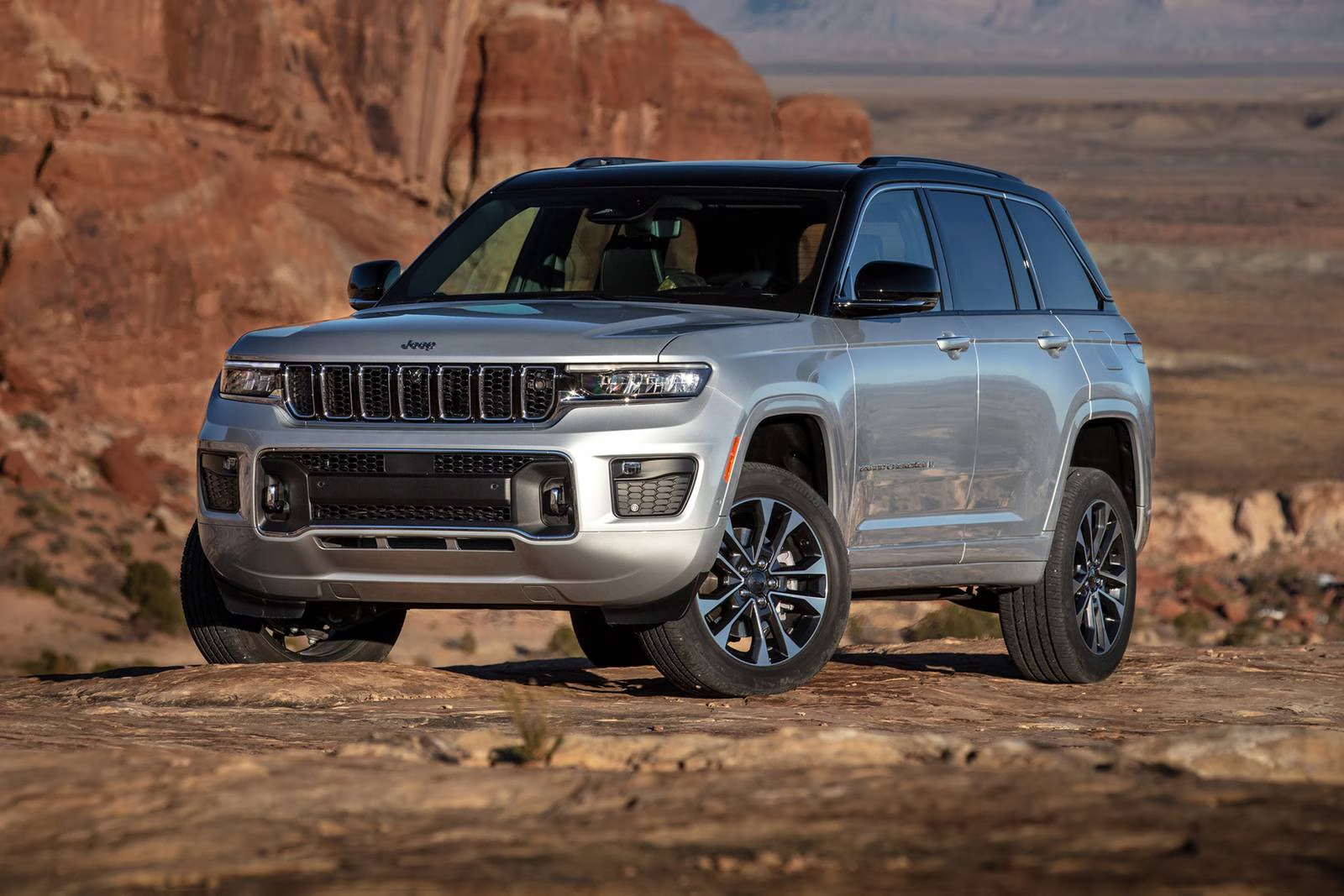
Will There Be A Grand Cherokee 2025?

As we approach 2025, the anticipation surrounding the Jeep Grand Cherokee continues to build. Known for its rugged reliability and luxurious features, the Grand Cherokee has been a staple in the SUV market for decades. With Jeep’s commitment to innovation, the 2025 Grand Cherokee promises to push the boundaries of what a full-size SUV can offer. This article delves deep into what enthusiasts and prospective buyers can expect from this new iteration. Special California Discounts – Claim Yours Now! A Legacy of Excellence The Jeep Grand Cherokee has always stood at the crossroads of rugged off-road capability and refined luxury. Since its debut in 1992, it has evolved from a simple, utilitarian SUV into a sophisticated vehicle that caters to a diverse range of needs. The 2025 model is set to continue this legacy, offering enhanced features that address both adventure seekers and luxury aficionados. Jeep Grand Cherokee Trim Selector Select a Jeep Grand Cherokee Trim Level: Choose a trim Laredo Limited Trailhawk Overland Summit Shop New Grand Cherokees Disclaimer: These prices are based on estimates. Actual prices may vary. Please contact Simi Valley Chrysler Dodge Jeep Ram for the most current pricing. Design Evolution: A Fusion of Modernity and Heritage The 2025 Grand Cherokee will likely build on the design language established by its predecessors while incorporating fresh, contemporary elements. Expect a sleek, aerodynamic profile that enhances both performance and fuel efficiency. The front fascia may showcase an updated grille design, integrating Jeep’s iconic seven-slot grille with modern LED headlights for a distinctive look. Interior Innovations: Comfort Meets Technology Inside the 2025 Grand Cherokee, luxury and technology will converge to create an unparalleled driving experience. The cabin is expected to feature premium materials such as leather upholstery, real wood trim, and high-quality metals. The dashboard will likely host a state-of-the-art infotainment system, possibly featuring a large touchscreen with advanced connectivity options including Apple CarPlay, Android Auto, and an integrated navigation system. Special California Discounts – Claim Yours Now! A significant upgrade in the 2025 model could be the inclusion of a new driver-assistance suite, featuring advanced safety technologies such as adaptive cruise control, lane-keeping assist, and automated emergency braking. Additionally, customizable ambient lighting and an advanced climate control system are anticipated to enhance overall comfort. Performance Enhancements: Power Meets Precision Under the hood, the 2025 Jeep Grand Cherokee is expected to offer a range of powertrains designed to cater to various driving needs. While specific engine options are not yet confirmed, the lineup could include a more powerful V6 engine, a hybrid powertrain for those seeking better fuel efficiency, and possibly even a high-performance V8 variant for enthusiasts craving exhilarating acceleration. Special California Discounts – Claim Yours Now! Jeep’s renowned Quadra-Lift® air suspension system might be further refined, allowing for superior off-road capability and on-road comfort. Enhanced four-wheel-drive systems and advanced traction control technologies are likely to ensure that the Grand Cherokee remains a leader in off-road performance. Off-Road Prowess: Redefining Adventure The 2025 Grand Cherokee is expected to push the envelope in off-road capability. Building on Jeep’s legendary 4x4 systems, the new model may include advanced features such as improved electronic locking differentials, enhanced skid plates, and upgraded terrain management systems. These upgrades are designed to tackle the most challenging terrains, from rocky trails to sandy dunes. A potential new Trailhawk® variant could offer even greater off-road enhancements, including additional ground clearance, specialized off-road tires, and exclusive suspension upgrades. This variant would cater to the most hardcore off-road enthusiasts, ensuring that the Grand Cherokee remains at the forefront of off-road innovation. Special California Discounts – Claim Yours Now! Sustainability and Efficiency: Embracing the Future As part of Jeep’s commitment to sustainability, the 2025 Grand Cherokee might feature hybrid and possibly even plug-in hybrid options. These powertrains are designed to reduce emissions and improve fuel efficiency without compromising performance. The inclusion of a hybrid model would align with broader industry trends towards more environmentally friendly vehicles while offering the same rugged capability that Jeep is known for. Market Position and Competition In the competitive landscape of full-size SUVs, the 2025 Jeep Grand Cherokee will face rivals such as the Ford Explorer, Toyota Land Cruiser, and the Chevrolet Tahoe. However, its unique blend of luxury, technology, and off-road prowess positions it as a standout option. Jeep’s ability to offer a vehicle that seamlessly transitions from urban commutes to rugged adventures will likely continue to attract a diverse customer base. Conclusion Special California Discounts – Claim Yours Now! The 2025 Jeep Grand Cherokee is poised to be a significant advancement in the evolution of luxury SUVs. With its blend of refined interior features, advanced technology, powerful performance options, and unmatched off-road capabilities, the new Grand Cherokee is set to redefine what a full-size SUV can be. As the release date approaches, enthusiasts and prospective buyers alike can look forward to a vehicle that honors Jeep’s rich heritage while embracing the future of automotive innovation. FAQs: 2025 Jeep Grand Cherokee 1. What new features can we expect in the 2025 Jeep Grand Cherokee? The 2025 Jeep Grand Cherokee is expected to introduce advanced technology features such as a new driver-assistance suite, enhanced safety technologies like adaptive cruise control and lane-keeping assist, and an updated infotainment system with Apple CarPlay and Android Auto integration. Additionally, Jeep may include a hybrid powertrain option and upgraded off-road features, further enhancing the vehicle's versatility. 2. Will there be a hybrid or electric version of the 2025 Grand Cherokee? Yes, as part of Jeep's commitment to sustainability, the 2025 Grand Cherokee is anticipated to feature hybrid options, possibly even plug-in hybrid variants. These models will offer improved fuel efficiency and reduced emissions while maintaining the performance and capability Jeep is known for. 3. How much will the 2025 Jeep Grand Cherokee cost? While official pricing for the 2025 model has not been released, the starting price is expected to be similar to previous models. Pricing will vary based on trim level and customization options, with higher-end trims like the Overland or Trailhawk® likely to command premium pricing. 4. Will the 2025 Grand Cherokee still offer off-road capabilities? Absolutely. The 2025 Grand Cherokee is expected to push the envelope in off-road performance, with advanced 4x4 systems, improved terrain management, and possibly an upgraded Quadra-Lift® air suspension. A new Trailhawk® variant could offer even more robust off-road enhancements, making it a top choice for adventure enthusiasts. 5. How does the 2025 Grand Cherokee compare to its competitors? The 2025 Grand Cherokee will compete with other full-size SUVs like the Ford Explorer, Toyota Land Cruiser, and Chevrolet Tahoe. Its unique combination of luxury, technology, and off-road prowess, coupled with potential hybrid options, will likely make it a standout choice for buyers seeking both urban comfort and rugged adventure capabilities.

Is the Dodge Hornet faster than the Hellcat

Is the Dodge Hornet faster than the Hellcat?

The Dodge Hornet and the Dodge Hellcat represent two distinct sides of the automotive spectrum. The Hornet, a compact crossover, is designed with everyday practicality and sporty styling in mind. The Hellcat, on the other hand, is a high-performance muscle car known for its blistering speed and raw power. The question of whether the Dodge Hornet is faster than the Hellcat invites an in-depth comparison of these two vehicles. Amazon Offers(Limited Stock) Performance Metrics Dodge Hornet The Dodge Hornet is available in several trims, but the focus here will be on the most performance-oriented versions: the Hornet GT and the Hornet R/T. Hornet GT: This model is powered by a turbocharged 2.0-liter inline-four engine that produces 268 horsepower and 295 lb-ft of torque. With a 0-60 mph time of approximately 6.5 seconds, the Hornet GT offers brisk acceleration and a spirited driving experience, especially for a compact SUV. Hornet R/T: The R/T variant adds a plug-in hybrid system that combines the 2.0-liter engine with an electric motor, resulting in a total output of 288 horsepower. This setup enhances performance and provides an electric-only driving mode for short distances. Despite these improvements, the R/T still doesn’t approach the speed of the Hellcat. Dodge Hellcat The Dodge Hellcat is a performance icon, available in the Challenger and Charger models, and is known for its extraordinary speed and power. Engine: The Hellcat is equipped with a supercharged 6.2-liter HEMI V8 engine, producing 717 horsepower and 656 lb-ft of torque in standard models. In the Hellcat Redeye, this output increases to 797 horsepower and 707 lb-ft of torque. Acceleration: The Hellcat can accelerate from 0 to 60 mph in around 3.4 seconds, making it one of the fastest production cars available. Top speeds can reach close to 200 mph, depending on the model. Speed and Acceleration When it comes to raw speed, the Hellcat clearly outpaces the Hornet. The Hellcat’s supercharged V8 engine delivers explosive acceleration and top-end speed that the Hornet, with its turbocharged four-cylinder and hybrid powertrain, cannot match. Hellcat: 0-60 mph in approximately 3.4 seconds, top speed close to 200 mph. Hornet GT: 0-60 mph in around 6.5 seconds, with a top speed significantly lower than the Hellcat’s. Driving Experience The Hellcat offers an exhilarating driving experience characterized by its high power output and aggressive acceleration. It is designed for enthusiasts who seek extreme performance and enjoy the thrill of high-speed driving. The Hellcat’s handling is tuned for high-performance driving, making it a dominant force on the drag strip and race track. In contrast, the Hornet is engineered to be a practical, everyday vehicle with a sporty flair. It provides a comfortable ride and decent handling for a compact SUV but does not deliver the same level of raw performance as the Hellcat. The Hornet excels in urban and suburban environments, offering a more practical solution for daily commuting with a touch of performance. Practicality and Usability The Hornet is designed with practicality in mind. It offers ample cargo space, a comfortable interior, and modern technology, making it a versatile choice for families and daily drivers. Its fuel efficiency, especially in the hybrid R/T variant, is also a significant advantage over the Hellcat’s fuel-guzzling nature. The Hellcat, while immensely powerful and exciting, is less practical for everyday use. Its high fuel consumption and aggressive driving dynamics make it less suitable for regular commuting. The Hellcat is better suited for enthusiasts who can afford its higher operating costs and who prioritize performance over practicality. Price Comparison There is a substantial difference in the pricing of the Hornet and the Hellcat. Hornet GT: Starting in the low $30,000 range, the Hornet offers a more affordable entry into the world of sporty SUVs. Hellcat: With a starting price around $70,000, the Hellcat’s cost reflects its high-performance capabilities and luxury features. Prices can increase significantly with added options and performance upgrades. Conclusion In conclusion, while the Dodge Hornet is a commendable vehicle within its segment, it is not faster than the Dodge Hellcat. The Hellcat's supercharged V8 engine delivers extraordinary speed and acceleration that the Hornet, with its turbocharged four-cylinder and hybrid powertrain, simply cannot match. The Hornet is designed to be a practical, sporty crossover, offering a fun driving experience in a more everyday package. In contrast, the Hellcat is a performance powerhouse, built for enthusiasts who crave unparalleled speed and power. For those seeking the ultimate in performance, the Hellcat is the clear choice. However, for drivers who prioritize practicality and a more balanced approach to sporty driving, the Dodge Hornet stands out as a versatile and capable option.

Contact Us

Fill out this form below and we'll contact you shortly
*Required Fields