




Simi Valley Chrysler Dodge Jeep Ram

Blog

All Jeep General Ram Dodge Questions Car Buying Guides Chrysler Simi Valley Chrysler Dealer Simi Valley Used Cars
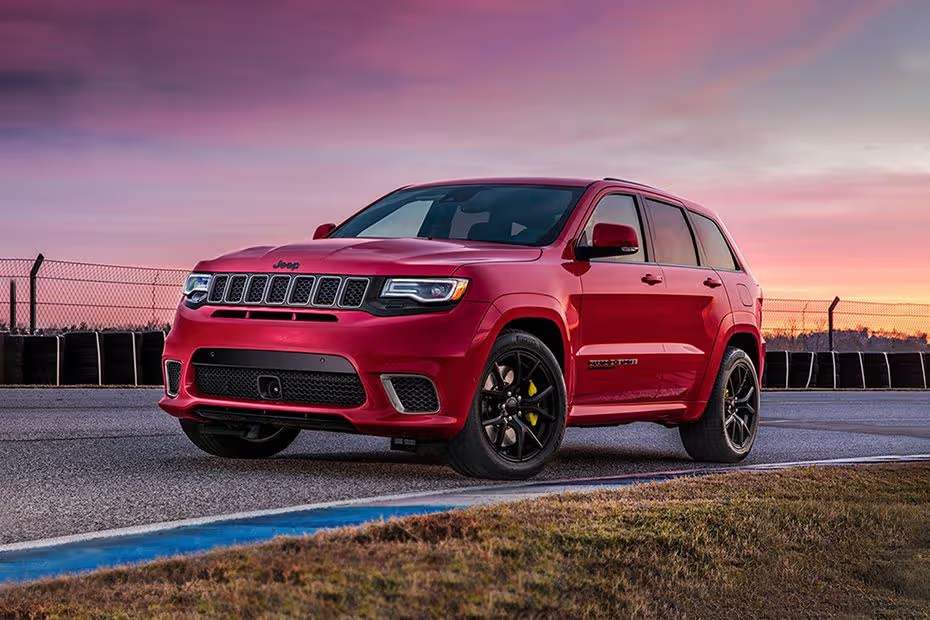
Jeep Grand Cherokee 2025 Trackhawk 4x4

Is Jeep Making a 2026 Trackhawk? Everything You Need to Know

Is Jeep Making a 2026 Trackhawk? Everything You Need to Know The short answer is no, Jeep has not officially confirmed a 2026 Grand Cherokee Trackhawk. For now, the 2026 Jeep Grand Cherokee lineup is focused on a refreshed design, updated technology, and a new turbocharged 2.0L Hurricane 4 engine. Jeep’s official 2026 Grand Cherokee information highlights the new powertrain, available 12.3-inch touchscreen, available Hands-Free Active Driving Assist, and towing capability of up to 6,200 pounds, but it does not list a Trackhawk trim. You can see the current official details on the 2026 Grand Cherokee page. That does not mean performance Jeep fans are imagining things. There are real signs that Jeep and Stellantis are thinking seriously about high-performance SUVs again. But as of now, a 2026 Trackhawk has not been announced. What Was the Jeep Trackhawk? The Jeep Grand Cherokee Trackhawk was one of the wildest performance SUVs ever sold. It used a supercharged 6.2L HEMI Hellcat V8, the same basic engine family that powered some of Dodge’s most famous Hellcat models. In the Grand Cherokee Trackhawk, that engine made 707 horsepower and turned a practical SUV into a legitimate performance machine. The Trackhawk was based on the previous WK2-generation Grand Cherokee. When that generation ended, the Trackhawk disappeared with it. The newer WL-generation Grand Cherokee arrived with more refinement, more technology, and a plug-in hybrid 4xe option, but no direct Trackhawk replacement. That is why so many shoppers keep asking the same question: is Jeep making a 2026 Trackhawk? Is There a 2026 Jeep Grand Cherokee Trackhawk? No confirmed 2026 Jeep Grand Cherokee Trackhawk exists right now. Jeep’s official 2026 Grand Cherokee lineup does not include a Trackhawk, SRT, Hellcat, or supercharged V8 version. The current lineup is built around mainstream luxury, capability, off-road confidence, and efficiency rather than extreme muscle-SUV performance. For 2026, Jeep is talking more about its new Hurricane 4 Turbo engine than a HEMI V8. Stellantis Fleet lists the new 2.0L Hurricane 4 Turbo at 324 horsepower and 332 lb-ft of torque, paired with a new Gen IV transmission. That engine also helps the Grand Cherokee reach a claimed maximum towing capacity of 6,200 pounds. You can view those specs on the Stellantis Fleet Grand Cherokee page. That makes the 2026 Grand Cherokee more powerful than many shoppers may expect from a four-cylinder engine, but it is not a Trackhawk successor. Why People Think the Trackhawk Could Return The rumors are not coming from nowhere. In early 2026, several automotive outlets reported that Jeep may be reconsidering high-performance Grand Cherokee variants. Autoblog reported that Jeep leadership suggested “everything is on the table” when discussing future high-performance models, including possible V8-powered Grand Cherokee variants. That is not the same as confirmation, but it is enough to keep the Trackhawk conversation alive. There have also been spy-photo discussions around unusual Grand Cherokee test vehicles. TFLcar reported on a Grand Cherokee mule that raised questions about whether Jeep could be testing a future SRT or Trackhawk-style model. The outlet noted that the prototype’s appearance and exhaust setup created speculation around a performance version. You can read that report from TFLcar. Again, this is not official confirmation. It is speculation based on testing activity and industry reporting. Trackhawk vs SRT: What Might Come Back First? If Jeep brings back a performance Grand Cherokee, it may not start with the Trackhawk name. The more likely first step could be an SRT model. A Grand Cherokee SRT would probably sit below a full Trackhawk-style Hellcat model, using a powerful naturally aspirated V8 or another high-output performance engine. That matters because the original Trackhawk was the top of the mountain. It was not just a sporty Grand Cherokee. It was the supercharged Hellcat version. A new SRT could return before a full Trackhawk. That would give Jeep a performance halo model without immediately jumping back to a 700-plus-horsepower SUV. Car and Driver has already created future-facing coverage around a possible Grand Cherokee SRT, but that reporting points further ahead, not to a confirmed 2026 Trackhawk. Why a 2026 Trackhawk Is Unlikely There are a few reasons a 2026 Trackhawk is unlikely. First, Jeep has already revealed the direction of the 2026 Grand Cherokee. The official model information focuses on the refreshed design, new interior technology, driver-assistance features, towing, and the Hurricane 4 Turbo engine. A Trackhawk would be a major performance announcement, and Jeep has not made that announcement. Second, the old Trackhawk’s supercharged Hellcat V8 was tied to an era of Stellantis performance that has been changing quickly. Dodge ended production of the traditional Charger and Challenger Hellcat models, and Stellantis has been moving toward new Hurricane engines, hybrids, and electric performance vehicles. Third, a Trackhawk is not a minor trim. It would require major powertrain, cooling, braking, suspension, drivetrain, emissions, and durability work. Jeep would likely promote that heavily before launch. So while a future performance Grand Cherokee is possible, a 2026 Trackhawk specifically looks unlikely based on current official information. Could Jeep Use a Hurricane Engine Instead? Yes, and this may be the more realistic path. Instead of bringing back the old supercharged Hellcat V8, Jeep could use a high-output Hurricane inline-six or another modern performance powertrain in a future Grand Cherokee SRT-style model. Stellantis already has the Hurricane engine family in production, and it fits the company’s move toward smaller-displacement, turbocharged performance. A high-output Hurricane six-cylinder could give Jeep strong performance without relying on the old Hellcat formula. That would not be the same emotional recipe as the original Trackhawk, but it could make more business sense. What About an Electric Trackhawk? An electric or hybrid performance Jeep is also possible in the long term. Jeep already sells electrified models, including 4xe plug-in hybrids, and Stellantis has been developing EV platforms for future performance vehicles. Electric motors can deliver instant torque, which makes them a natural fit for quick SUVs. However, there is no confirmed 2026 electric Trackhawk either. If Jeep does build a new performance flagship, it could use a V8, a Hurricane engine, a plug-in hybrid setup, or a fully electric performance system. Right now, Jeep has not confirmed which direction it will take for a future Trackhawk-style Grand Cherokee. Should You Wait for a 2026 Trackhawk? If you specifically want a new 2026 Jeep Grand Cherokee Trackhawk, waiting may not be the best move because Jeep has not confirmed one. If you want a Grand Cherokee now, the 2026 model still brings meaningful updates. Jeep Canada lists the 2026 Grand Cherokee with available towing of up to 2,812 kg, or 6,200 lb, along with a refreshed design and available 31.2 cm, or 12.3-inch, touchscreen. You can review the Canadian model details on the Jeep Canada site. If you want Trackhawk-level performance, your better options may be: A used Grand Cherokee Trackhawk. A used Grand Cherokee SRT. A Dodge Durango SRT or Hellcat, depending on availability. Waiting for Jeep to confirm a future SRT or Trackhawk replacement. For shoppers who care more about capability, comfort, towing, and everyday usability, the 2026 Grand Cherokee still makes sense. For shoppers who want 700-horsepower madness, the used market is still where the Trackhawk lives. FAQs About the 2026 Jeep Trackhawk Is Jeep making a 2026 Trackhawk? Jeep has not officially confirmed a 2026 Grand Cherokee Trackhawk. The current 2026 Grand Cherokee information does not list a Trackhawk trim. Will the Jeep Trackhawk come back? It could come back in the future, but nothing is confirmed. Industry reports suggest Jeep may be considering high-performance Grand Cherokee models again, but that does not guarantee the Trackhawk name will return. What engine would a new Trackhawk use? A future Trackhawk could use a V8, a high-output Hurricane engine, a hybrid system, or an electric performance setup. Jeep has not confirmed the engine for any future Trackhawk model. Is there a 2026 Jeep Grand Cherokee SRT? Jeep has not confirmed a 2026 Grand Cherokee SRT. Some reports suggest an SRT-style Grand Cherokee could return later, but not as a confirmed 2026 model. What replaced the Jeep Trackhawk? There is no direct replacement for the Jeep Grand Cherokee Trackhawk right now. The current Grand Cherokee lineup focuses on luxury, capability, technology, towing, and available 4xe electrification rather than Hellcat-level performance. Final Thoughts: The 2026 Trackhawk Is Not Confirmed Yet So, is Jeep making a 2026 Trackhawk? As of now, no official 2026 Jeep Grand Cherokee Trackhawk has been confirmed. The 2026 Grand Cherokee is real, and it brings important updates, including a refreshed design, new technology, and the new Hurricane 4 Turbo engine. But if you are looking for a direct successor to the 707-horsepower Trackhawk, Jeep has not announced one yet. The good news is that performance Jeep rumors are getting louder. Jeep leadership has left the door open, spy reports have fueled speculation, and enthusiast demand is still strong. But until Jeep officially reveals a new Trackhawk or SRT model, the safest answer is simple: the 2026 Trackhawk is not here yet, but the story may not be over.

ram 2500 hd (1)

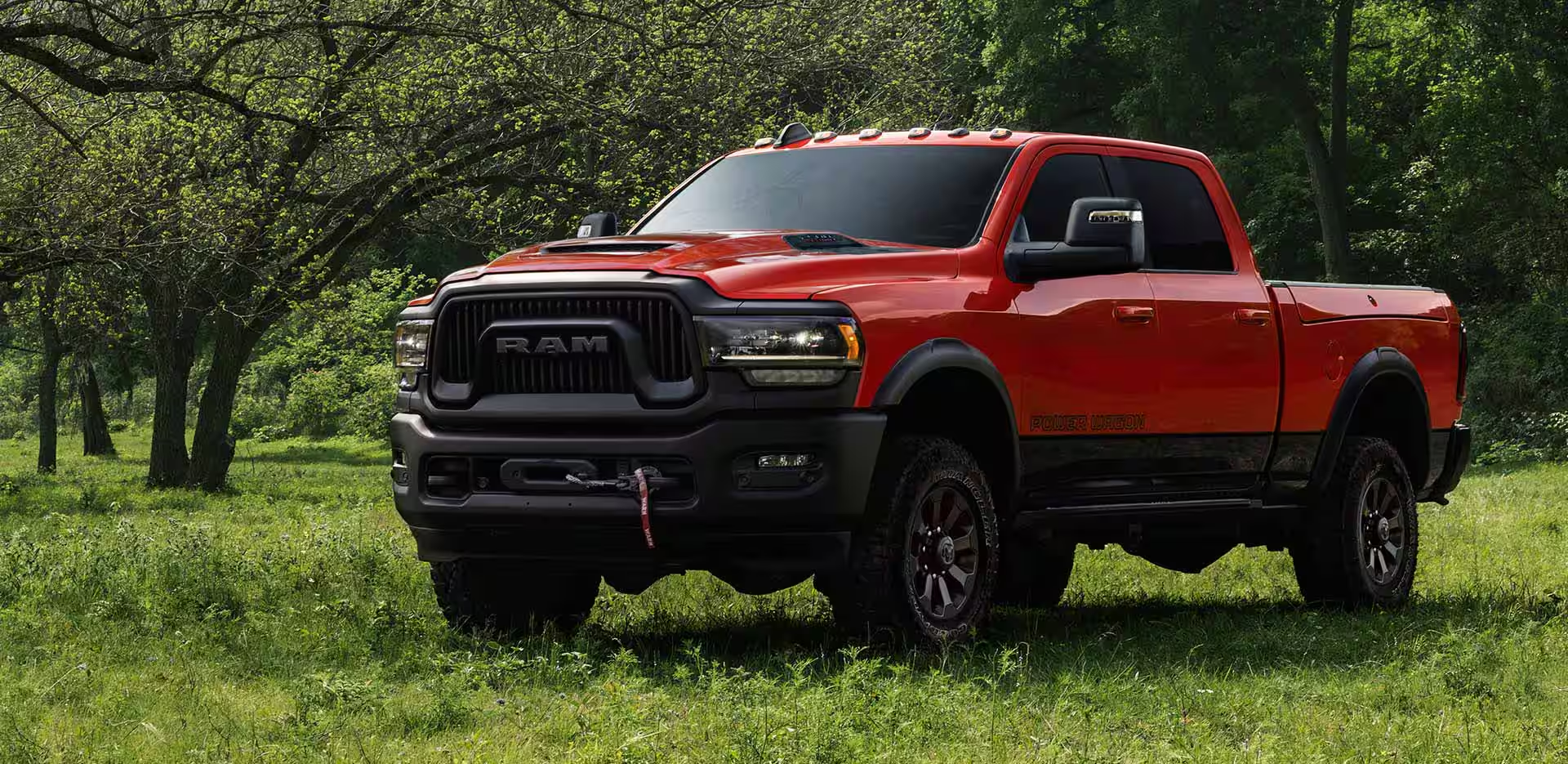
2026 Ram 2500: Official Comprehensive Guide

2026 Ram 2500: Official Comprehensive Guide The 2026 Ram 2500 is built for drivers who need more truck than a half-ton pickup can offer. It is made for towing heavy trailers, carrying serious payload, handling jobsite work, and giving drivers the confidence to take on demanding jobs without moving all the way into a one-ton truck. Ram positions the 2500 as a heavy-duty pickup with big power, strong diesel torque, useful towing technology, and a more comfortable cabin than many older work trucks. The available High-Output 6.7L Cummins Turbo Diesel I6 gives the 2026 Ram 2500 up to 1,075 lb-ft of torque, while official Ram capability specs list maximum diesel towing at 20,000 pounds when properly equipped. What Is the 2026 Ram 2500? The 2026 Ram 2500 is a heavy-duty pickup that sits above the Ram 1500 and below the Ram 3500. It is designed for drivers who need stronger towing and payload ratings than a regular full-size truck can provide. That makes it a strong fit for contractors, RV owners, farmers, fleet buyers, landscapers, equipment haulers, and anyone who regularly pulls trailers or carries heavy cargo. It is also popular with private buyers who want a powerful truck for both weekday work and weekend travel. The Ram 2500 is not just about strength. It also gives buyers modern technology, comfortable seating, available premium trims, and a smoother daily driving experience than many people expect from a heavy-duty pickup. 2026 Ram 2500 Engine Options The 2026 Ram 2500 gives buyers two main engine choices. The standard engine is the 6.4L HEMI V8, while the available upgrade is the High-Output 6.7L Cummins Turbo Diesel I6. The gas engine is the more straightforward choice. It is strong, capable, and usually less expensive to buy and maintain than the diesel. It works well for drivers who need heavy-duty capability but do not tow maximum loads every day. The available Cummins diesel is the serious towing engine. Ram says the High-Output Cummins delivers 430 horsepower and 1,075 lb-ft of torque, giving the truck the low-end pulling strength heavy-duty buyers want. Those official Ram truck specs make the diesel the better choice for frequent towing, long-distance hauling, and heavier trailers. Gas Towing Capacity The 6.4L HEMI V8 is not just a basic engine. It gives the 2026 Ram 2500 enough strength for many real-world towing jobs. Ram lists maximum gas towing capacity at 17,750 pounds when properly equipped. That is more than enough for many utility trailers, boats, smaller equipment trailers, horse trailers, and travel trailers. For many buyers, the gas engine gives the right mix of power, price, and ownership simplicity. The gas model also offers strong payload capability. Ram lists maximum gas payload at 3,930 pounds, which makes it useful for tools, materials, equipment, and jobsite loads. Diesel Towing Capacity The diesel Ram 2500 is the one to choose if towing is the main reason you are buying the truck. With the available High-Output Cummins engine, the 2026 Ram 2500 can tow up to 20,000 pounds when properly equipped. That number matters for RV owners, commercial users, and drivers pulling larger enclosed trailers or heavy equipment. Diesel torque helps the truck feel more confident under load, especially when climbing hills, merging onto highways, or towing over long distances. The diesel also gives the Ram 2500 a maximum payload rating of 3,600 pounds, according to official Ram capability information. That makes it a strong choice for buyers who need both towing strength and practical bed capacity. Payload Capacity Payload is one of the most important numbers for heavy-duty truck buyers. Towing tells you what the truck can pull. Payload tells you what the truck can carry in the bed and cabin. The 2026 Ram 2500 can carry up to 3,930 pounds with the gas engine and up to 3,600 pounds with the diesel engine when properly equipped. This includes the weight of passengers, tools, bed cargo, trailer tongue weight, and accessories. Payload is especially important for contractors and RV owners. Toolboxes, supplies, generators, compressors, hitch equipment, and passengers all count. Before buying, make sure the truck’s payload rating fits your real-world use. Gas vs. Diesel: Which One Should You Buy? The gas Ram 2500 is usually the better choice if you want lower upfront cost, simpler maintenance, and strong capability for occasional towing. It is a smart pick for drivers who use the truck for work, daily driving, and moderate towing. The diesel Ram 2500 is better if you tow heavy trailers often. The Cummins engine gives the truck more torque, stronger pulling confidence, and better performance under heavy load. If your truck spends most of its time unloaded, the gas engine may make more sense. If your truck regularly pulls a camper, equipment trailer, horse trailer, or heavy commercial load, the diesel is worth considering. Transmission and Drivability The 2026 Ram 2500 uses an eight-speed automatic transmission. The available Cummins diesel is paired with a TorqueFlite HD eight-speed automatic transmission designed to handle heavy torque. This matters because towing is not only about engine power. A good transmission helps the truck stay controlled and responsive when pulling weight. It also helps keep the engine in the right power range when climbing grades, passing, or maintaining highway speed. The result is a truck that feels more composed than older heavy-duty pickups, especially when equipped properly for towing. Heavy-Duty Braking A strong heavy-duty truck needs serious stopping power. Ram equips the 2026 Ram 2500 with heavy-duty four-wheel disc antilock brakes. It also offers an available automatic smart exhaust brake. The exhaust brake is especially useful for diesel buyers. It helps slow the truck and trailer on downhill grades without relying only on the service brakes. For drivers towing campers, equipment, or enclosed trailers through hills or mountains, that feature can add confidence and reduce brake wear. That kind of control is one reason heavy-duty truck buyers step up from a half-ton pickup. Interior Comfort The Ram 2500 is built for work, but it does not feel stripped-down unless you choose a basic work configuration. Depending on trim, it can offer a comfortable cabin, large screens, premium materials, advanced camera views, and useful storage. Ram has made interior comfort one of its biggest selling points. The 2026 Ram Heavy Duty lineup is described by Ram as its most advanced heavy-duty truck lineup yet, with modern technology and comfort features available across the range. That matters for people who spend long hours in their truck. If you drive to jobsites, tow campers, travel long distances, or use your truck as both a work vehicle and family vehicle, cabin comfort is not a luxury. It is part of daily usability. Technology and Towing Features The 2026 Ram 2500 offers available technology designed to make towing easier. Depending on configuration, shoppers can find trailer-focused camera systems, towing assistance, trailer monitoring features, and driver-assistance technology. These systems are helpful because towing a large trailer can be stressful. Better visibility makes it easier to line up a hitch, reverse into a campsite, back a trailer into a jobsite, or monitor what is happening behind the truck. For buyers who tow often, these features should not be treated as extras. They can make the truck easier and safer to use every day. 2026 Ram 2500 Trim Levels The Ram 2500 lineup gives buyers several choices, from basic work trucks to premium luxury-style pickups. Ram’s official Build & Price page shows trims such as Tradesman, Lone Star, Big Horn, Laramie, Rebel, Power Wagon, Limited, and Limited Longhorn, depending on configuration. The Tradesman is the practical work-truck choice. It is best for buyers who care about capability, durability, and price. The Big Horn and Lone Star trims add more comfort and appearance features while keeping the truck practical. The Laramie is a strong middle-ground choice for drivers who want a better interior, more technology, and a more refined daily experience. The Rebel and Power Wagon are better for off-road-focused buyers. The Power Wagon is especially known for serious off-road hardware. The Limited and Limited Longhorn are for buyers who want heavy-duty strength with premium comfort and a more upscale interior. Is the 2026 Ram 2500 Good for Work? Yes, the 2026 Ram 2500 is a strong work truck. It has the towing, payload, braking, and power needed for many commercial and jobsite uses. The gas engine works well for buyers who need payload, tools, and moderate towing. The diesel engine is better for frequent heavy towing and long-distance hauling. Business buyers should think carefully about cab size, bed length, drivetrain, axle ratio, hitch needs, payload rating, and trailer weight before choosing a truck. The right configuration matters more than just picking the highest trim. Is the 2026 Ram 2500 Good for RV Towing? The Ram 2500 is a strong choice for RV owners. With up to 20,000 pounds of diesel towing capacity, it can handle many travel trailers and fifth-wheel setups when properly equipped. The key is matching the truck to the camper. Do not shop by maximum towing capacity alone. Trailer weight, tongue weight, hitch weight, passengers, cargo, water tanks, and accessories all affect the real number. For serious RV towing, the Cummins diesel is usually the better choice because of its torque and confidence under load. Ram 2500 vs. Ram 3500 The Ram 2500 is extremely capable, but some buyers may need the Ram 3500 instead. The 3500 is built for even heavier towing and payload needs. If you regularly tow very large fifth-wheel trailers, commercial equipment, or heavy gooseneck trailers, the Ram 3500 may be the better fit. If you want heavy-duty capability but do not need maximum one-ton capacity, the Ram 2500 often gives a better balance. For many RV owners, contractors, and personal-use heavy-duty truck buyers, the Ram 2500 is the sweet spot. Ram 2500 vs. Ford Super Duty and Silverado HD The 2026 Ram 2500 competes with the Ford F-250 Super Duty, Chevrolet Silverado 2500HD, and GMC Sierra 2500HD. Each truck has its own strengths. The Ford Super Duty is known for high towing numbers and a broad engine lineup. The Silverado HD and Sierra HD are strong choices for diesel power, work use, and proven truck capability. The Ram 2500 stands out with available Cummins torque, a comfortable cabin, and a strong mix of towing strength and everyday refinement. The best truck depends on how you use it. If you value diesel torque, interior comfort, and heavy-duty capability, the Ram 2500 deserves serious attention. 2026 Ram 2500 Pricing Pricing depends on cab size, bed length, drivetrain, trim, engine, options, and market conditions. Ram’s U.S. Build & Price page shows the 2026 Ram 2500 starting in the upper $40,000 range before destination, taxes, title, registration, options, and dealer fees. A gas work truck will cost much less than a diesel Limited Longhorn or Power Wagon. The diesel engine, 4x4 system, larger cab, premium trim, towing packages, and technology options can all raise the final price. Shoppers should compare actual inventory, not just starting MSRP. Two Ram 2500 trucks can have very different prices depending on how they are built. Who Should Buy the 2026 Ram 2500? The 2026 Ram 2500 is a strong choice for drivers who need real heavy-duty capability. It makes sense if you tow trailers, carry heavy payload, work in construction, run a business, own an RV, or simply want a truck that can do more than a half-ton pickup. It may be more truck than necessary if you rarely tow, mostly commute, or do not need the added payload. In that case, a Ram 1500 may be easier to drive and more affordable. But if you need power, durability, towing confidence, and a comfortable cabin, the Ram 2500 is one of the strongest heavy-duty pickups available. Find the Right 2026 Ram 2500 The 2026 Ram 2500 gives buyers serious capability without giving up modern comfort. With a standard HEMI V8, available High-Output Cummins diesel, up to 20,000 pounds of towing capacity, strong payload ratings, heavy-duty braking, and useful towing technology, it is built for drivers who need a truck that can work hard. The right model depends on your trailer, payload needs, budget, trim preference, and daily driving habits. Gas models are practical and capable, while diesel models are better for frequent heavy towing. Visit Simi Valley Chrysler Dodge Jeep Ram to browse new inventory, compare used inventory, get your trade-in value, or apply for financing before choosing your next heavy-duty truck.

car axle

How Many Axles Does a Car Have? The Hidden Engineering That Keeps You Rolling

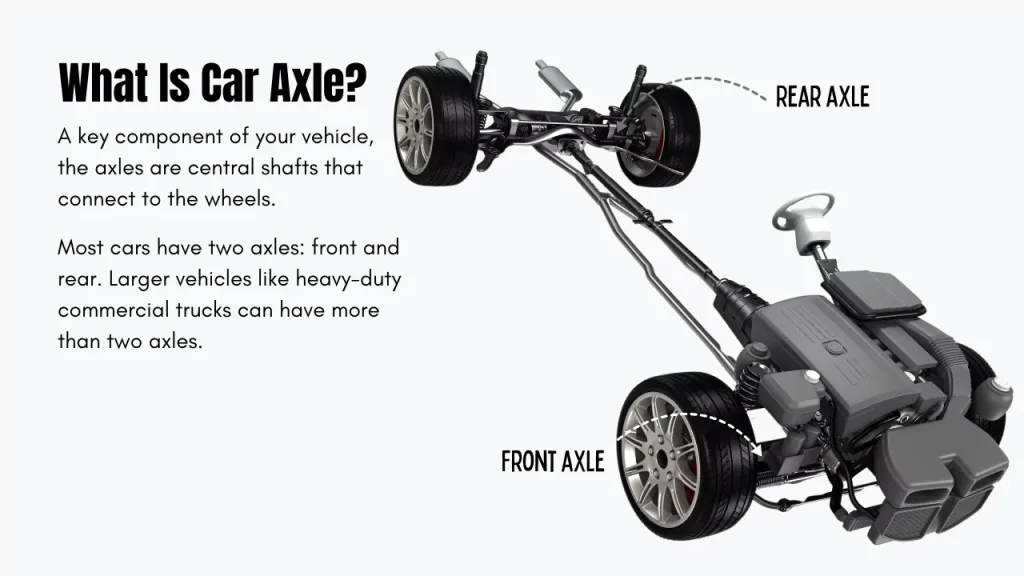
How Many Axles Does a Car Have? Most cars have two axles: one axle for the front wheels and one axle for the rear wheels. That means a standard sedan, hatchback, coupe, crossover, or SUV usually rides on two axles and four wheels. The front axle supports or drives the front wheels, while the rear axle supports or drives the rear wheels depending on whether the vehicle is front-wheel drive, rear-wheel drive, all-wheel drive, or four-wheel drive. The answer can change for larger vehicles, commercial trucks, buses, trailers, and specialty off-road machines, but for everyday passenger vehicles, the simple answer is this: a car usually has two axles. Edmunds gives the same basic answer in its guide to how many axles a car has, while noting that axle design can vary depending on the vehicle. What Is an Axle? An axle is a shaft, rod, or axle assembly that connects wheels and helps support the vehicle’s weight. In many vehicles, axles also transfer power from the engine or electric motor to the wheels. Axles are important because they help your vehicle: Support the weight of the car, passengers, and cargo Send power to the wheels when the vehicle accelerates Work with the steering and suspension systems Keep the wheels positioned correctly as the car moves In older or heavier vehicles, an axle may look like a solid bar connecting the wheels. In many modern cars, especially front-wheel-drive and all-wheel-drive vehicles, the axle system may use half-shafts, CV joints, bearings, and independent suspension components instead of one simple solid beam. How Many Axles Are on a Standard Car? A standard passenger car usually has two axles. One axle is at the front of the vehicle. One axle is at the rear of the vehicle. Each axle position is connected to a pair of wheels, which is why a normal four-wheel car has two axles. For example, a Toyota Camry, Honda Accord, Dodge Charger, Mazda3, Kia Forte, Jeep Compass, and most regular SUVs all use a two-axle layout. Even many electric vehicles, such as a Tesla Model 3 or Ford Mustang Mach-E, are still considered two-axle vehicles because they have one front axle position and one rear axle position. Do AWD and 4WD Vehicles Have More Axles? No, all-wheel-drive and four-wheel-drive vehicles do not automatically have more axles. A Jeep Wrangler, Subaru Outback, Ram 1500 4x4, or Dodge Durango AWD still usually has two axles. The difference is not the number of axles. The difference is how power is sent to them. In a front-wheel-drive car, the front axle does the driving. In a rear-wheel-drive car, the rear axle does the driving. In an all-wheel-drive or four-wheel-drive vehicle, both the front and rear axle positions can receive power. Consumer Reports explains that all-wheel drive can send power to each corner of the vehicle depending on the system design. That does not mean the vehicle has extra axles. It simply means the drivetrain can distribute power to more wheels. Can a Vehicle Have More Than Two Axles? Yes. Larger vehicles can have three, four, five, or even more axles. Heavy-duty trucks, semi-trucks, buses, dump trucks, and large trailers often use extra axles to spread weight across more tires. This improves load capacity, stability, braking support, and road safety. A dually pickup can confuse people because it has six wheels, but many dually trucks still have only two axles. The rear axle has two wheels on each side, but it is still one rear axle assembly. A semi-truck is different. A tractor-trailer combination may have several axles because it needs to carry much more weight than a passenger car. This is where axle count matters for commercial regulations, towing, and load limits. Common Types of Car Axles Different vehicles use different axle designs. Here are the main ones shoppers and drivers should know. Live Axle A live axle sends power to the wheels. It is common in trucks, rear-wheel-drive vehicles, and some off-road SUVs. Live axles are strong and durable, which is why they are useful for towing, hauling, and off-road driving. The tradeoff is that they may not ride as smoothly as independent suspension setups. Dead Axle A dead axle supports weight but does not send power to the wheels. For example, in many front-wheel-drive cars, the rear axle area supports the back of the vehicle but does not drive the rear wheels. It is still part of the vehicle’s structure and suspension system, but it is not responsible for propulsion. CV Axle A CV axle, or constant velocity axle, is common in front-wheel-drive, all-wheel-drive, and many modern vehicles. CV axles allow power to move to the wheels while still letting the wheels turn and move with the suspension. This is why they are important for steering, ride comfort, and smooth acceleration. A common sign of CV axle trouble is a clicking or popping sound when turning. AutoZone notes that clicking or popping during low-speed sharp turns can point to a worn outer CV joint. Stub Axle A stub axle is usually found at the wheel end of the suspension and steering system. It helps connect the wheel hub to the suspension components. Most drivers will never need to think about stub axles unless they are dealing with steering, wheel bearing, or suspension repairs. Why Axle Count Matters For most drivers, knowing the number of axles on a car is useful because it helps explain how the vehicle carries weight, sends power, and handles different driving conditions. Axle count can affect: Towing capability Payload capacity Traction Repair costs Tire wear Commercial vehicle rules For passenger cars, the number of axles is usually simple. For trucks, trailers, and commercial vehicles, it becomes more important because each axle has a weight rating. The term GAWR, or Gross Axle Weight Rating, refers to the maximum load-carrying capacity of a single axle system as specified by the manufacturer. NHTSA defines Gross Axle Weight Rating as the load-carrying capacity of a single axle system measured at the tire-ground interfaces. That means overloading a vehicle is not just about total weight. It is also about how much weight sits on each axle. How to Tell How Many Axles Your Car Has For most regular cars, you can count the axle positions by counting the wheel pairs. One pair of front wheels equals one front axle. One pair of rear wheels equals one rear axle. That gives most cars two axles total. You can also check your owner’s manual, vehicle specification sheet, door-jamb certification label, or manufacturer towing guide. If you drive a truck, commercial vehicle, or trailer, checking the axle rating is especially important before loading or towing. Signs Your Axle May Need Repair Axles are built to last, but they can wear out or get damaged. The warning signs depend on the vehicle and axle type, but common symptoms include: Clicking when turning Clunking when shifting from drive to reverse Vibration while accelerating Grease around the inside of the wheel Shaking at certain speeds A vehicle that revs but does not move properly Uneven tire wear If you hear clicking while turning, especially in a front-wheel-drive or all-wheel-drive vehicle, the CV axle or CV joint should be inspected. If there is vibration under acceleration, the axle shaft, joints, wheel bearings, or related drivetrain parts may need attention. How Much Does Axle Repair Cost? Axle repair costs vary by vehicle type, drivetrain, and damage. A basic CV axle replacement on a common passenger car may cost a few hundred dollars per side. A more complex axle repair on a truck, performance vehicle, or four-wheel-drive SUV can cost much more. Costs can increase if the problem involves the differential, bearings, seals, suspension parts, or a damaged axle housing. The best move is to inspect the issue early. A torn CV boot, for example, may start as a small grease leak. If ignored, it can lead to joint failure and a more expensive repair. FAQs About Car Axles How many axles does a normal car have? A normal car usually has two axles: one in the front and one in the rear. Does a four-wheel-drive car have four axles? No. Most four-wheel-drive vehicles still have two axles. Four-wheel drive means power can be sent to all four wheels, not that the vehicle has four axles. Does a dually truck have more axles? Not always. A dually truck has extra rear wheels, but many dually pickups still have two axles. The rear axle simply has two wheels on each side. Do electric cars have axles? Yes. Electric cars still have axle positions that support the wheels and help transfer power. Some EVs use electric motors at one or both axle positions, but most regular EVs are still considered two-axle vehicles. Can a car have three axles? A regular passenger car usually does not have three axles. Three-axle layouts are more common on heavy-duty trucks, buses, large trailers, and specialty vehicles. Final Thoughts: Most Cars Have Two Axles So, how many axles does a car have? For most passenger vehicles, the answer is two. One axle is at the front, and one axle is at the rear. The exact design can vary depending on whether the vehicle is front-wheel drive, rear-wheel drive, all-wheel drive, four-wheel drive, gas-powered, hybrid, or electric. But the basic layout is the same for most cars, crossovers, and SUVs. If you are shopping for a vehicle, towing with a truck, or noticing clicking, clunking, or vibration while driving, understanding axles can help you ask better questions and avoid expensive surprises. For most everyday drivers, the key takeaway is simple: axle count affects how a vehicle supports weight, sends power, and stays stable on the road.

WBC All-Wrangler-SportS4xe-Lease-JUL

Top Websites to Sell Your Car in 2026 – Get the Best Offer Fast

Whether you're upgrading to a new ride or simply ready to part ways with your current vehicle, selling your car in 2026 is easier than ever— if you choose the right platform. From major online marketplaces to local dealerships like Simi Valley Chrysler Dodge Jeep Ram, this guide covers the best websites to sell your car, depending on your goals: fast cash, highest value, or a convenient, no-hassle process. 1. Simi Valley Chrysler Dodge Jeep Ram – Local & Trusted Option in California Best For: Fast, fair appraisals from a reputable local dealer If you're in Southern California, selling your vehicle to a trusted dealership like Simi Valley Chrysler Dodge Jeep Ram can be the smartest move. You’ll get a real cash offer, often within 24 hours, and avoid the stress of private buyers or online auctions. Why Sell to Simi CDJR? Transparent trade-in appraisals Instant quotes—online or in-person Ability to apply your car’s value toward a new or used vehicle No obligation to buy if you just want to sell Convenient location at 2350 First St, Simi Valley, CA Pro Tip: You can start the process online by using Simi CDJR's trade-in tool for a quick appraisal, then finalize in-store. 2. CarGurus – Reach Millions of Private Buyers Best For: Private sales and high resale value CarGurus gives you access to a massive audience actively looking to buy. Its pricing transparency helps sellers understand what their car is worth—and whether it's a “Great Deal,” “Fair Deal,” or “Overpriced.” Features: National exposure Free and paid listings Price analysis tools VIN lookup for easy listing setup Drawback: You’ll need to manage communication and meet with buyers yourself. 3. Carvana – Instant Offers and Free Pickup Best For: Selling your car quickly without leaving your home Carvana revolutionized the car-selling experience by offering instant quotes and free vehicle pickup. Simply enter your VIN or license plate, answer a few questions, and get an offer within minutes. Pros: Contactless experience No haggling Great for newer vehicles in good condition Cons: May offer less than private sale value, especially for older models. 4. Vroom – Competitive Offers for Used Cars Best For: Selling newer vehicles with clean history Vroom offers a similar model to Carvana, focusing on convenience. They specialize in buying 2015+ model year cars and offer free at-home pickup after you accept the quote. Pros: Quick offers No dealership visit Easy document handling Cons: May offer lower values than private marketplaces. Limited appeal for high-mileage or older vehicles. 5. Facebook Marketplace – Free Listings, Local Reach Best For: Fast, local transactions With Facebook Marketplace, you can list your vehicle for free and reach thousands of local buyers. Since there are no seller fees and communication is instant, it's ideal for quick, informal sales. Pros: Free to use Built-in messaging Wide visibility Cons: No buyer protection. You’ll need to vet buyers and manage paperwork. 6. Autotrader – Time-Tested Automotive Platform Best For: Serious car sellers targeting a national audience Autotrader is a classic name in the automotive world. You can create detailed listings with up to 30 photos, a detailed VIN report, and pricing tools that show how your listing compares to similar models. Pros: Trusted platform Paid plans with more visibility Dealer and private buyer reach Cons: Listing fees apply; requires more seller effort. 7. Kelley Blue Book Instant Cash Offer – Partnered With Dealerships Best For: Fast appraisal from KBB’s dealer network Kelley Blue Book’s Instant Cash Offer tool lets you input vehicle details and get a real-time offer redeemable at participating dealerships—including many Chrysler Dodge Jeep Ram stores. Pros: Fast online process Partnered with reputable dealers No obligation to accept offer Cons: Final offer may change after in-person inspection. 8. Bring a Trailer – Ideal for Classic, Rare, or Modified Vehicles Best For: Specialty cars and automotive enthusiasts If you’re selling a collector’s Jeep or a modified off-road build, Bring a Trailer offers curated auctions with highly engaged buyers. It’s ideal for Wrangler Rubicons, Willys editions, or older Grand Cherokees in pristine condition. Pros: Enthusiast audience Strong final sale prices Auction-style excitement Cons: Requires seller effort to prep listing; not ideal for average daily drivers. 9. eBay Motors – Global Reach, Auction or Buy It Now Best For: Sellers looking to reach buyers across the U.S. and beyond eBay Motors gives you the flexibility to run auctions or set fixed prices. It’s great for unique cars, lifted Jeeps, or off-road builds with nationwide appeal. Pros: Wide audience Detailed vehicle listing options Buyer rating system for trust Cons: Fees apply; must coordinate shipping or pickup Final Thoughts: Where Should You Sell? The best website to sell your car depends on your priorities: Goal Best Platform Fast cash, no hassle Simi Valley Chrysler Dodge Jeep Ram Private sale, top dollar CarGurus or Facebook Marketplace Convenience Carvana or Vroom Classic/rare vehicle Bring a Trailer Nationwide exposure Autotrader or eBay Motors Selling in California? Start With Simi CDJR If you're located in or near Simi Valley, CA, skip the uncertainty of online listings and start with a real offer from Simi Valley Chrysler Dodge Jeep Ram. Their expert appraisers will give you a competitive, no-obligation offer whether you're trading in or just selling outright. 📍 Address: 2350 First St, Simi Valley, CA 93065 📞 Phone: +1 (805) 387-9755 🌐 Website: simivalleychryslerdodgejeepram.com

hq720 (6)

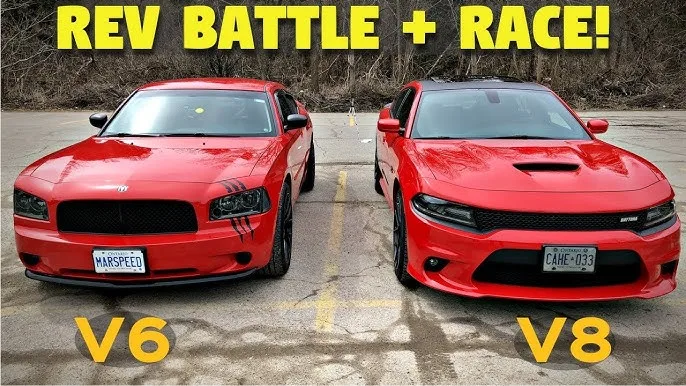
Dodge Charger GT: V6 or V8? The Answer Might Surprise You!

Dodge Charger GT: V6 or V8? The Answer Might Surprise You The Dodge Charger GT is a V6, not a V8. The simple answer is this: the Dodge Charger GT uses a 3.6L Pentastar V6 engine, while the V8 Charger models were trims like the R/T, Scat Pack, SRT, and Hellcat. So if you see “Charger GT” on the badge, you are looking at the sportier V6 version of the previous-generation Charger, not a HEMI V8. Edmunds lists the 2023 Dodge Charger GT AWD with a 3.6L V6, 300 horsepower, 264 lb-ft of torque, and an 8-speed automatic transmission. The Car Guide also lists the 2023 Charger GT AWD with the same 3.6L V6, 300 horsepower, and 264 lb-ft of torque. Why People Think the Charger GT Has a V8 The confusion makes sense. The Dodge Charger looks like a muscle car, even in V6 form. The GT trim adds sportier styling, a performance hood, aggressive front fascia, larger wheels, and a more athletic appearance than the base SXT. That makes many shoppers assume the GT has a V8. But Dodge separated appearance and engine performance across the Charger lineup. The GT looked more aggressive than the SXT, but it still used the V6. The actual V8 models started with the Charger R/T. What Engine Is in the Dodge Charger GT? The Dodge Charger GT uses the 3.6L Pentastar V6. In many model years, the GT made 300 horsepower and 264 lb-ft of torque. It came with an 8-speed automatic transmission and was available with rear-wheel drive or all-wheel drive depending on model year and configuration. That engine is not a HEMI, but it is still a useful powertrain. It gives the Charger decent acceleration, lower fuel costs than the V8 trims, and better everyday practicality. For many used shoppers, the Charger GT is the trim that gives you the Charger look without the fuel bill of a HEMI. Charger GT vs Charger R/T The Charger GT is the sporty V6 model. The Charger R/T is the entry-level V8 model. The R/T used the 5.7L HEMI V8, which made the Charger feel more like a traditional American muscle sedan. Dodge promoted the Charger lineup around HEMI V8 performance, with V8 models ranging from the 5.7L HEMI to supercharged Hellcat engines. If you want the sound, torque, and feel of a V8, the GT is not the trim to buy. You want the R/T or higher. If you want the appearance, space, and personality of a Charger without the higher fuel and maintenance cost, the GT makes more sense. Charger GT vs Charger SXT The SXT and GT both used the 3.6L V6, but the GT was the sportier version. The SXT was the more basic Charger. It was usually the value trim, built for buyers who wanted the size and look of the Charger at a lower price. The GT added more aggressive styling and often came with more equipment. It looked closer to the V8 models, which is why many buyers liked it. In plain English: SXT is the basic V6 Charger. GT is the sportier-looking V6 Charger. Is the Charger GT Fast? The Charger GT is quick enough for daily driving, but it is not a true V8 muscle car. With around 300 horsepower, the V6 Charger GT has solid passing power, good highway manners, and enough performance for most drivers. But it does not have the low-end torque, sound, or acceleration of the HEMI trims. A Charger GT is more of a sporty full-size sedan than a serious muscle car. That is not a bad thing. It depends on what you want. Is the Charger GT AWD? Some Charger GT models are available with all-wheel drive. That is one of the biggest advantages of the GT. Many V8 Charger trims were rear-wheel drive, while the GT could be found with AWD. For buyers in snow, rain, mountains, or colder climates, that can make the V6 GT more practical than a V8 R/T. If you want a Charger that looks aggressive but handles bad weather better, the GT AWD is one of the smartest versions to consider. Is the Charger GT Good on Gas? The Charger GT is better on gas than the V8 models, but it is still a large sedan. Edmunds lists the 2023 Charger GT AWD at 18 mpg city, 27 mpg highway, and 21 mpg combined. That is not economy-car fuel efficiency, but it is more reasonable than the HEMI V8 models. If fuel cost matters, the GT is easier to live with than an R/T, Scat Pack, or Hellcat. Is the Charger GT Worth Buying Used? Yes, the Dodge Charger GT can be worth buying used if you understand what it is. It is not the V8 version. It is the sportier V6 version. That makes it a good fit for drivers who want Charger styling, a roomy cabin, available AWD, and lower running costs than the HEMI trims. It is especially smart if you want the look of a Charger but do not need the extra cost of a V8. Before buying, check the service history, tires, brakes, suspension, transmission behavior, accident history, and whether the vehicle was modified. If you are shopping locally, compare available used Dodge inventory by mileage, trim, drivetrain, and condition. You can also check current new inventory if you are comparing the older Charger to newer Dodge models. What About the New Dodge Charger? The newer Dodge Charger is different from the older gas V6 and V8 sedan lineup. The latest Charger generation moved away from the old GT, R/T, Scat Pack, and Hellcat structure. Dodge now offers electric Charger Daytona models and gas-powered Charger Sixpack models with the twin-turbo 3.0L Hurricane inline-six. Dodge says the Standard Output Sixpack makes 420 horsepower and 468 lb-ft of torque, while Dodge’s Charger performance page lists the Scat Pack with a 3.0L Sixpack High Output twin-turbo straight-six. So if you are asking about the older Dodge Charger GT, it is a V6. If you are asking about the newest Charger lineup, the gas version is no longer a V6 or a traditional HEMI V8. It is a twin-turbo inline-six. FAQs About the Dodge Charger GT Is the Dodge Charger GT a V6 or V8? The Dodge Charger GT is a V6. It uses the 3.6L Pentastar V6 engine. Does the Dodge Charger GT have a HEMI? No. The Charger GT does not have a HEMI. HEMI V8 engines were found in trims like the R/T, Scat Pack, SRT, and Hellcat. How much horsepower does a Charger GT have? Many Charger GT models make 300 horsepower and 264 lb-ft of torque from the 3.6L V6. Is the Charger GT faster than the R/T? No. The R/T is faster because it uses the 5.7L HEMI V8 with more torque and stronger muscle-car performance. Is the Charger GT AWD? Some Charger GT models are available with AWD. That makes the GT a practical choice for buyers who want Charger styling with better bad-weather traction. Is the Charger GT worth it? Yes, the Charger GT is worth it if you want the Charger look, V6 running costs, available AWD, and a roomy full-size sedan. It is not worth it if you specifically want V8 sound and HEMI performance. Final Thoughts: The Charger GT Is the Sporty V6 Charger The Dodge Charger GT is a V6, not a V8. That may surprise some buyers because the GT looks aggressive and carries the Charger’s muscle-sedan personality. But the V8 models were the R/T, Scat Pack, SRT, and Hellcat. The GT gave buyers a different kind of value: Charger style, 300-horsepower V6 performance, available AWD, and lower ownership costs than the HEMI trims. If you want the sound and punch of a V8, shop for an R/T or higher. If you want the Charger look with better daily practicality, the GT is one of the smartest used Charger trims to consider.

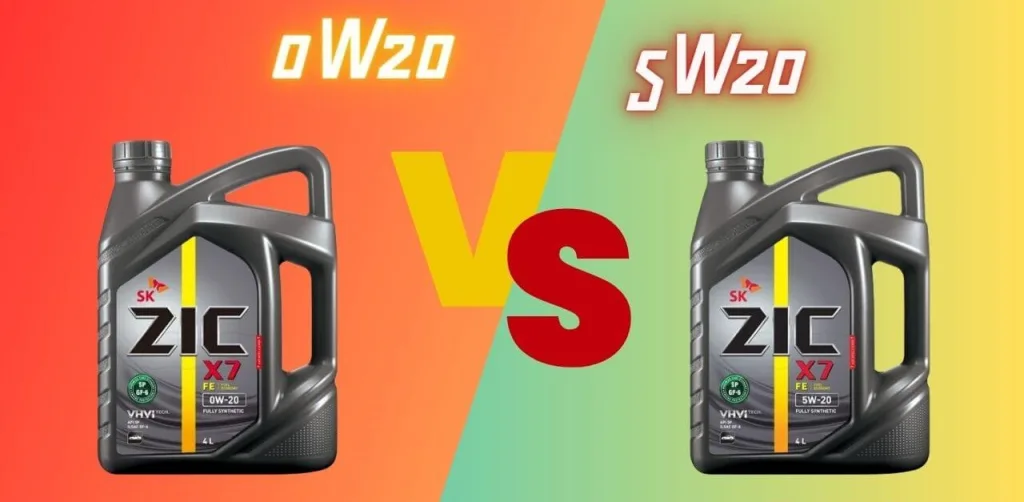
0W-20 vs. 5W-20

0W-20 vs. 5W-20 Motor Oil: Which One Does Your Engine Need?

And Why Getting It Wrong Could Cost You Thousands) 0W-20 vs. 5W-20 Motor Oil: Which One Does Your Engine Need? The right choice is the oil listed in your owner’s manual. If your engine calls for 0W-20, use 0W-20. If it calls for 5W-20, use 5W-20 unless the manual or manufacturer allows 0W-20 as an alternative. The simple answer is this: 0W-20 and 5W-20 behave similarly once the engine is fully warm, but 0W-20 flows better during cold starts. That makes 0W-20 the better choice for many newer engines and colder climates, while 5W-20 is still correct for many older engines designed around that grade. Mobil 1 also gives the most practical rule: always check your owner’s manual for the manufacturer’s recommended oil viscosity grade, API service classification, and any required builder approval. What Does 0W-20 Mean? 0W-20 is a multi-grade motor oil. The 0W means the oil is designed to flow very well in cold temperatures. The 20 means it behaves like a 20-weight oil at normal engine operating temperature. In plain English, 0W-20 is thin during cold starts and still provides the required 20-weight protection once the engine is hot. That cold-start flow is the main reason many modern engines use 0W-20. Oil has to reach critical engine parts quickly after startup. In cold weather, thinner cold-flow oil can reduce startup wear and help the engine operate more efficiently. Pennzoil explains that 0W oils are designed for modern engines and can help with fuel economy and extreme-temperature performance. What Does 5W-20 Mean? 5W-20 is also a multi-grade motor oil. The 5W means it flows well in cold temperatures, but not as easily as 0W-20 in extreme cold. The 20 means it has the same hot operating viscosity grade as 0W-20. So the biggest difference is not what happens when the engine is fully warm. The biggest difference is cold-start behavior. Both oils are 20-weight oils at operating temperature. But 0W-20 is designed to move more easily when cold. 0W-20 vs. 5W-20: The Main Difference The main difference is cold-temperature flow. 0W-20 flows better at low temperatures than 5W-20. That means it can reach engine components faster when you start the vehicle in cold weather. This can matter in winter climates, short-trip driving, and engines designed for low-viscosity oil. Once the engine is warm, both oils operate as a 20-weight oil. That is why people sometimes think they are interchangeable. But “similar when hot” does not mean “always interchangeable.” Modern engines are designed around specific oil viscosity, oil pressure, variable valve timing behavior, fuel economy targets, and emissions requirements. Can You Use 0W-20 Instead of 5W-20? Sometimes, yes, but only if the oil meets your vehicle’s requirements. Mobil 1 says that if a car manufacturer recommends SAE 5W-20 ILSAC oil, Mobil recommends either Mobil 1 5W-20 or Mobil 1 0W-20 Advanced Fuel Economy. Mobil also states that Mobil 1 0W-20 Advanced Fuel Economy will not void new-car warranties where SAE 5W-20 is recommended. That does not mean every 0W-20 can replace every 5W-20 in every engine. It means some 0W-20 oils are formulated and approved for engines that call for 5W-20. The safe rule: if the bottle and oil maker say it meets the requirement, and your manual allows it, 0W-20 may be acceptable in a 5W-20 engine. Can You Use 5W-20 Instead of 0W-20? Usually, you should not use 5W-20 instead of 0W-20 unless your owner’s manual allows it. Many newer engines specify 0W-20 for a reason. The engine may be designed around faster cold-flow performance, fuel economy requirements, oil pump behavior, and tighter tolerances. Using 5W-20 in an engine that requires 0W-20 may not instantly destroy the engine, but it may reduce cold-start performance and could affect warranty compliance if the manufacturer does not allow it. If the oil cap says 0W-20 and the manual says 0W-20 only, use 0W-20. Which Oil Is Better for Cold Weather? 0W-20 is better for cold weather. That is the whole point of the lower winter rating. It flows more easily at startup when temperatures are low. If you live somewhere with freezing winters, mountain driving, cold mornings, short commutes, or long outdoor parking, 0W-20 has the advantage. 5W-20 is still a good cold-weather oil compared with heavier grades, but 0W-20 is better in very cold starts. Which Oil Is Better for Hot Weather? For normal engines that require a 20-weight oil, both 0W-20 and 5W-20 are similar once hot. The second number is 20 in both oils, so both are designed to provide a 20-weight viscosity at operating temperature. Do not assume 5W-20 is better for hot weather just because the first number is higher. The first number mainly refers to cold-start performance. If your engine needs more high-temperature viscosity, the manual would usually specify something like 5W-30, 0W-30, 5W-40, or another grade. Which Oil Gives Better Fuel Economy? 0W-20 may offer a small fuel economy advantage, especially during cold starts. Because 0W-20 flows more easily when cold, the engine may use slightly less energy moving oil during startup and warm-up. That is one reason automakers moved toward lower-viscosity oils in modern engines. The difference may not be huge for every driver, but it can matter across millions of vehicles and regulatory fuel-economy testing. Which Oil Protects Better? The oil that protects better is the one your engine was designed to use. Some people assume thicker oil always protects better. That is not always true. Modern engines need the correct oil flow, pressure, additive package, and specification. A correct 0W-20 synthetic oil can protect a modern engine extremely well. A correct 5W-20 synthetic oil can also protect an engine designed for 5W-20 very well. The real mistake is using the wrong spec, not choosing between two quality oils correctly matched to the engine. What About API SQ and ILSAC GF-7? For 2026, API SQ and ILSAC GF-7 are important standards to know. These newer standards started entering the market in 2025 and are designed for modern gasoline engines. Petro-Canada Lubricants explains that API SQ is the newest API engine oil performance standard and is backward compatible with previous API service categories. Mobil says the GF-7 category became effective on March 31, 2025, and that new ILSAC standard levels are backward compatible with previous generations. That means a properly approved API SQ or ILSAC GF-7 oil can be a strong choice if it matches your required viscosity and manufacturer approval. 0W-20 vs. 5W-20 for Older Cars Older cars should follow the owner’s manual. If your older vehicle was designed for 5W-20, 5W-20 is usually the safest choice. Some oil brands may allow 0W-20 as a substitute, but you should verify the exact product and requirement. If the engine has high mileage, oil consumption, leaks, or worn seals, do not randomly switch viscosity without understanding the issue. A high-mileage oil in the correct grade may be smarter than changing grades. 0W-20 vs. 5W-20 for Newer Cars Newer cars often call for 0W-20. That is especially common in modern Toyota, Honda, Mazda, Subaru, Ford, Chrysler, Hyundai, Kia, and GM engines, depending on the model and year. If your newer vehicle requires 0W-20, use 0W-20. It is not just about cold weather. It may be tied to the engine’s design, fuel economy, emissions calibration, and warranty requirements. 0W-20 vs. 5W-20 for Trucks and SUVs Many trucks and SUVs have used 5W-20, while newer ones may use 0W-20. For example, some older Ford, Chrysler, Dodge, Jeep, and Ram gas engines may call for 5W-20. Some newer engines may require 0W-20 or even lower-viscosity oils. If you tow, idle often, drive in extreme heat, or do severe-duty driving, do not guess. Check the severe service section of the manual. Some manufacturers allow different oils under certain conditions, while others do not. The right answer depends on the exact engine, not the vehicle size. Is Synthetic Better for 0W-20 and 5W-20? Yes, full synthetic is usually the smarter choice for both 0W-20 and 5W-20. Low-viscosity oils are often used in modern engines with tighter tolerances, turbocharging, direct injection, stop-start systems, and advanced emissions controls. Synthetic oil generally handles heat, oxidation, cold starts, and deposit control better than conventional oil. If your engine calls for 0W-20, it is very likely that synthetic oil is the correct choice. If your engine calls for 5W-20, synthetic is still a strong upgrade when it meets the required specification. What If You Accidentally Used the Wrong One? If you accidentally used 0W-20 in a 5W-20 engine, it may be fine if the oil meets the required specification. Some oil brands explicitly allow that substitution for certain 5W-20 applications. If you accidentally used 5W-20 in a 0W-20 engine, check the manual. If the manual does not allow 5W-20, replace it with the correct 0W-20 at the next reasonable opportunity, especially if the vehicle is under warranty or you drive in cold weather. If the engine sounds abnormal, oil pressure warning appears, or the vehicle is under warranty, do not wait. Correct it. How Often Should You Change 0W-20 or 5W-20 Oil? Follow the owner’s manual or oil-life monitor. Many modern vehicles using synthetic oil fall somewhere around 5,000 to 10,000 miles, but the correct interval depends on the engine, oil spec, driving conditions, climate, and warranty requirements. Shorten the interval if you do frequent short trips, towing, stop-and-go driving, long idling, dusty roads, extreme heat, or extreme cold. A good oil changed too late is worse than a slightly cheaper approved oil changed on time. Best Rule for Choosing Between 0W-20 and 5W-20 Use this simple rule: If the oil cap or owner’s manual says 0W-20, use 0W-20. If it says 5W-20, use 5W-20 unless the manual or oil manufacturer clearly allows 0W-20. If both are allowed, use 0W-20 for colder weather and better cold-start flow, and use whichever approved option best matches your driving conditions, budget, and warranty requirements. If your vehicle is still under warranty, do not experiment. Use the exact recommended oil grade and specification. FAQs About 0W-20 vs. 5W-20 Is 0W-20 better than 5W-20? 0W-20 is better for cold starts because it flows more easily in low temperatures. Once the engine is warm, both oils operate as 20-weight oils. The better oil is the one your engine requires. Can I use 0W-20 instead of 5W-20? Sometimes. Some oil manufacturers allow 0W-20 as a replacement for certain 5W-20 applications if the oil meets the required ILSAC and API specs. Always check your owner’s manual first. Can I use 5W-20 instead of 0W-20? Usually not unless your owner’s manual allows it. If your engine requires 0W-20, use 0W-20. Is 0W-20 good for hot weather? Yes, if your engine requires 0W-20. The “20” rating means it is designed to provide 20-weight viscosity at operating temperature. Is 5W-20 better for older engines? Not automatically. Older engines should use the oil grade listed in the owner’s manual. If the engine has leaks or oil consumption, consider a high-mileage oil in the correct viscosity. Do 0W-20 and 5W-20 protect the same when hot? They are both 20-weight oils at operating temperature, but protection also depends on the oil’s additive package, API/ILSAC rating, and manufacturer approvals. What happens if I mix 0W-20 and 5W-20? Mixing small amounts in an emergency is usually not a disaster if both oils meet the required specification, but it is better to use one correct oil consistently. Final Thoughts: Use the Oil Your Engine Was Built For 0W-20 and 5W-20 are close, but they are not always interchangeable. 0W-20 flows better in cold weather and is common in newer engines. 5W-20 is still correct for many engines designed around it. Once hot, both behave as 20-weight oils, but the owner’s manual still decides what your engine needs. The safest answer is simple: use the viscosity and specification your manufacturer recommends, choose a quality synthetic oil, and change it on time.

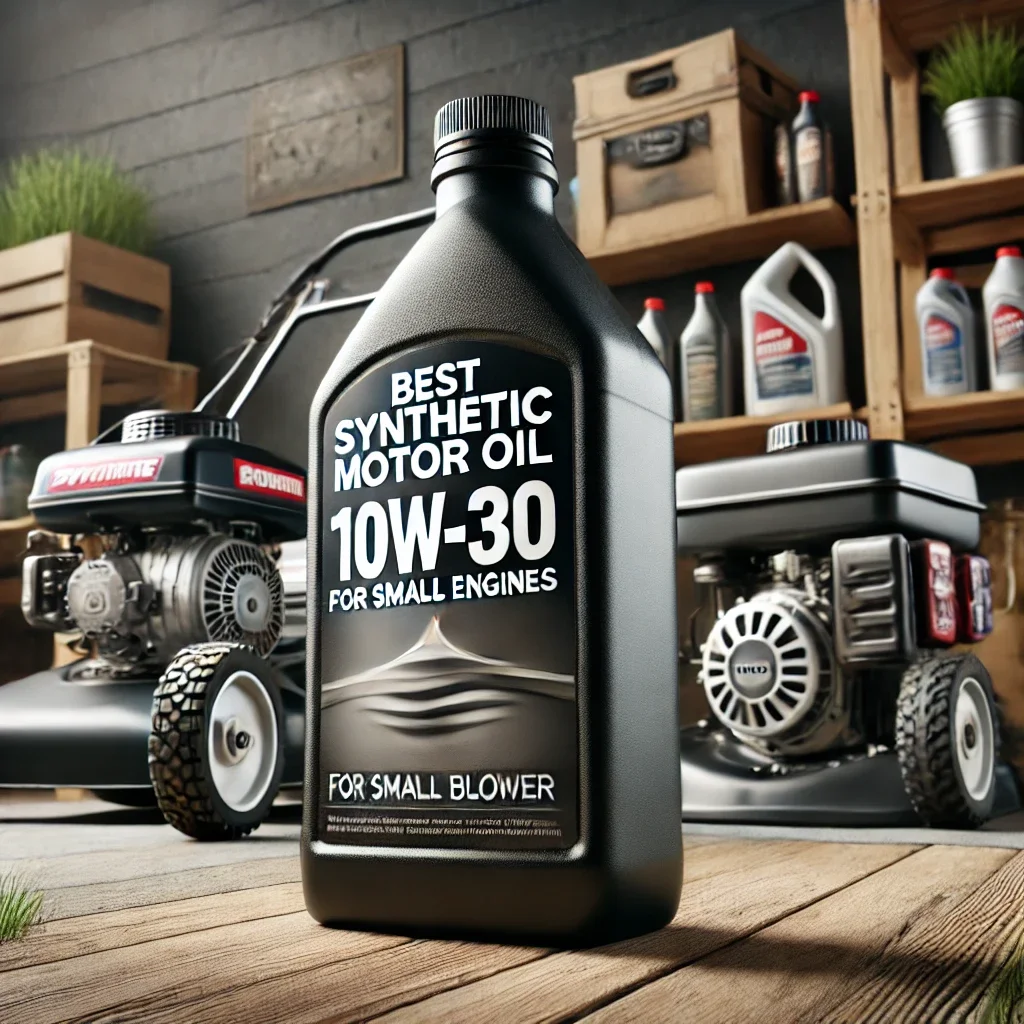
Best Synthetic Motor Oil 10w-30 Small Engine

Best Synthetic Motor Oil 10w-30 Small Engine

Choosing the right motor oil for your small engine can make a significant difference in its performance, longevity, and efficiency. Whether you are maintaining a lawn mower, a generator, a snow blower, or any other small engine-powered equipment, using high-quality synthetic oil like 10W-30 can ensure your machine runs smoothly and stays in top shape. This comprehensive guide will walk you through everything you need to know about 10W-30 synthetic motor oils for small engines—from what they are, their benefits, the best options available, and how to choose the one that’s right for your needs. Why 10W-30 Synthetic Oil Is Ideal for Small Engines Understanding Viscosity Grades: 10W-30 Explained Before we dive into the top products, let’s understand why 10W-30 is recommended for small engines. The "10W" in 10W-30 stands for the viscosity of the oil at cold temperatures, while the "30" represents the viscosity when the engine reaches operating temperature. This makes 10W-30 a versatile choice that performs well in both cold starts and at higher operating temperatures—something that is particularly important for small engines that may experience varying workloads and conditions. The multi-grade nature of 10W-30 oil means that it flows smoothly when the engine is cold, making it easier to start and preventing unnecessary wear on parts during the warm-up phase. At the same time, it provides consistent protection at higher temperatures, making sure the engine components stay lubricated even when under heavy use. Why Choose Synthetic Motor Oil? Synthetic motor oils are engineered for better performance compared to conventional oils. They offer enhanced lubrication, greater stability in extreme temperatures, and longer oil change intervals. For small engines that often face harsh conditions or frequent usage, synthetic oil is an optimal choice. Here’s why synthetic 10W-30 is ideal for your small engine: Superior Temperature Performance: Synthetic oils maintain viscosity better in extreme temperatures, which is particularly beneficial for small engines that operate at high RPMs or face extreme environmental conditions. Reduced Wear and Tear: The advanced formulation of synthetic oil offers better resistance against wear and tear, keeping your engine components working like new. Cleaner Operation: Synthetic oils are less prone to sludge and deposit formation, which keeps the engine cleaner and contributes to its long-term reliability. Best Synthetic 10W-30 Motor Oils for Small Engines 1. Mobil 1 Extended Performance Full Synthetic 10W-30 Motor Oil Mobil 1 is a trusted name in motor oil, and their Extended Performance Full Synthetic 10W-30 stands out for several reasons. It’s known for its incredible wear protection and long oil change intervals, meaning you’ll spend less time worrying about maintenance. Mobil 1’s synthetic formula delivers outstanding high-temperature stability, perfect for small engines that may be used in lawn mowers or generators running for extended periods. Features: Guaranteed protection for up to 10,000 miles between oil changes. Enhanced wear protection that prolongs engine life. Excellent viscosity stability for consistent performance. Why It’s Great for Small Engines: This oil’s formulation helps reduce deposits and keep your engine clean, allowing small engines to operate more smoothly and efficiently even after long use. 2. Royal Purple High-Performance Synthetic 10W-30 Motor Oil Royal Purple is another popular choice that delivers superior protection, especially for high-performance small engines. Its synthetic formula is known for reducing friction, which can lead to improved fuel efficiency and reduced heat buildup. Features: Unique Synerlec additive technology for enhanced wear protection. Improved fuel efficiency due to reduced friction. Exceptional oxidation stability, preventing oil degradation. Why It’s Great for Small Engines: Royal Purple’s ability to reduce heat and friction makes it an ideal choice for small engines that are often pushed to their limits. Lawn mowers, pressure washers, and other equipment can benefit from the reduced wear. 3. Castrol GTX Magnatec Full Synthetic 10W-30 Motor Oil Castrol GTX Magnatec offers an innovative approach to engine protection with its magnetic molecules that cling to engine parts, offering continuous protection even during startup. Small engines, which often face frequent starts and stops, benefit significantly from this feature. Features: Magnetic molecules provide instant protection from the moment you start the engine. Helps reduce wear during critical warm-up periods. Excellent temperature protection to keep your engine performing well. Why It’s Great for Small Engines: Castrol GTX Magnatec is particularly useful for small engines that have numerous start-stop cycles, as it provides the extra protection needed during the vulnerable warm-up period. 4. Valvoline Advanced Full Synthetic SAE 10W-30 Motor Oil Valvoline offers a full synthetic oil with advanced additives that help fight the four major causes of engine breakdown: wear, friction, heat, and deposits. This makes it a great option for small engines that may be used in tough conditions. Features: Superior anti-wear additives for better engine protection. Enhanced detergents that keep the engine clean and reduce sludge. Excellent high-temperature protection. Why It’s Great for Small Engines: Valvoline’s advanced synthetic formulation is ideal for small engines that require consistent protection, particularly in hot or heavy-use situations. 5. Amsoil Signature Series Synthetic 10W-30 Motor Oil Amsoil is known for its top-of-the-line synthetic oils, and their Signature Series Synthetic 10W-30 is no exception. It provides maximum wear protection and helps small engines operate at peak efficiency. Features: Outstanding viscosity control across a wide temperature range. Formulated to reduce oil consumption and maintain engine cleanliness. Excellent wear control for enhanced engine durability. Why It’s Great for Small Engines: Amsoil’s Signature Series is perfect for small engines that endure heavy use, as it offers long-lasting lubrication and protects against the wear that comes with frequent, intensive operation. How to Choose the Best 10W-30 Synthetic Oil for Your Small Engine Choosing the right oil can depend on several factors, such as the type of equipment you are using, operating conditions, and your budget. Here are some key considerations: 1. Operating Conditions Consider where and how you will be using your small engine. If you operate in extreme temperatures—either very hot or very cold—an oil with superior viscosity stability like Mobil 1 or Amsoil is ideal. For equipment that experiences frequent stop-and-start operation, consider Castrol GTX Magnatec for its excellent startup protection. 2. Engine Load and Usage If your small engine is used heavily—for example, a generator running continuously during camping trips or a lawn mower for a large yard—choose an oil that provides enhanced protection against wear, such as Royal Purple or Valvoline Advanced Synthetic. 3. Maintenance Preferences Some synthetic oils, like Mobil 1 Extended Performance, allow for longer intervals between oil changes, which can be convenient for those who want less frequent maintenance. However, always refer to your small engine manufacturer’s guidelines for recommended oil change intervals. 4. Budget While synthetic oils can be more expensive than conventional oils, their long-term benefits often justify the price. Royal Purple and Amsoil are premium options that offer top-tier performance, while Valvoline provides excellent value for those looking for a budget-friendly option that doesn’t compromise on quality. Benefits of Using 10W-30 Synthetic Oil in Small Engines 1. Better Engine Protection Synthetic oils are engineered to reduce engine wear significantly. They contain fewer impurities compared to conventional oils and are less likely to form deposits that can clog the engine, ensuring that your equipment stays in good working order for longer. 2. Improved Fuel Efficiency Using a high-quality synthetic oil like 10W-30 can improve the fuel efficiency of your small engine. The reduced friction provided by synthetic formulations means that less energy is wasted, and your engine operates more efficiently. 3. Longer Oil Change Intervals One of the standout benefits of synthetic oil is the extended interval between oil changes. High-performance oils like those from Mobil 1 or Amsoil can go much longer without breaking down, saving time and reducing the hassle of frequent oil changes. 4. Enhanced Performance in Extreme Conditions Small engines often face extreme working conditions, including high temperatures and heavy workloads. Synthetic 10W-30 oil is designed to handle these stresses far better than conventional oil, maintaining its protective qualities under conditions where other oils might fail. Frequently Asked Questions (FAQs) 1. Can I use synthetic 10W-30 oil in all small engines? Yes, synthetic 10W-30 oil is suitable for most small engines, but always check the manufacturer's recommendations. Some older engines might have specific oil requirements. 2. How often should I change the synthetic oil in my small engine? The interval can vary based on the engine type and usage, but generally, synthetic oils like Mobil 1 or Amsoil allow for longer intervals compared to conventional oils. Refer to your engine manual for the recommended schedule. 3. What is the difference between 10W-30 and other grades like 5W-30? The main difference lies in viscosity. 10W-30 has a slightly thicker viscosity at lower temperatures compared to 5W-30. For small engines that don’t operate in extremely cold environments, 10W-30 is typically suitable. 4. Is synthetic oil better for my lawn mower engine? Yes, synthetic oil is generally better for lawn mower engines as it offers superior wear protection, better performance in extreme temperatures, and helps keep the engine cleaner. 5. Can I mix synthetic oil with conventional oil in my small engine? While it is technically possible to mix synthetic and conventional oils, it is not recommended. Mixing oils can dilute the performance benefits of synthetic oil and may affect engine protection. Conclusion: Choosing the Best Synthetic 10W-30 for Your Needs Selecting the right synthetic 10W-30 motor oil for your small engine is about balancing your specific needs, budget, and the type of equipment you have. From the longevity and reliability of Mobil 1 Extended Performance to the cutting-edge protection offered by Royal Purple and Amsoil, each oil on this list provides unique benefits to suit different scenarios. Whether you’re maintaining a lawn mower, powering up a generator, or keeping a snow blower in top condition, choosing a high-quality synthetic motor oil is one of the best investments you can make in your small engine’s health and longevity. Always remember to follow your engine manufacturer’s recommendations and consider your typical operating conditions to get the best performance out of your machine. For a smoother, more reliable performance and peace of mind, upgrading to a premium synthetic 10W-30 oil is a smart choice that pays off in the long run—keeping your small engine running like a dream, no matter the challenge.

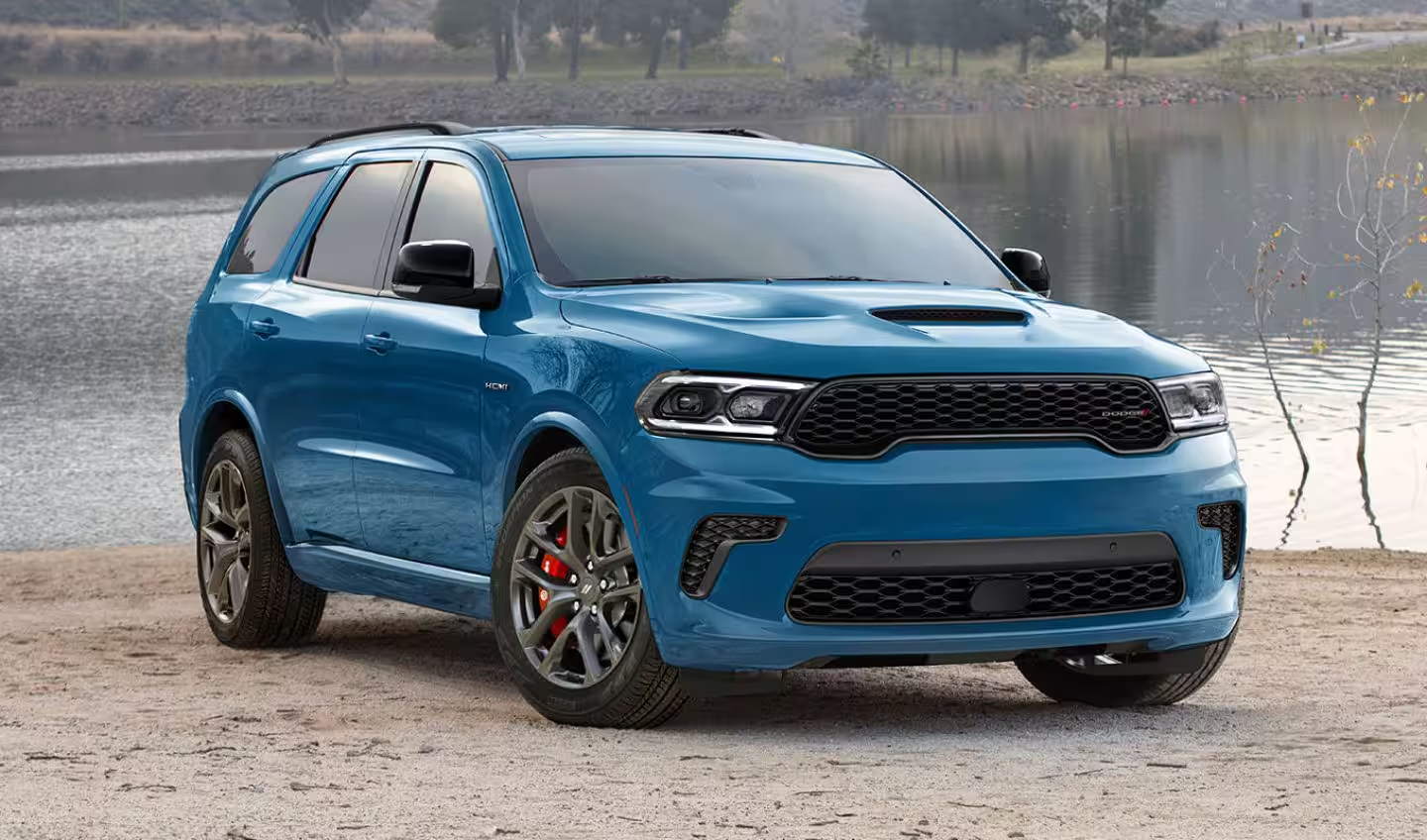
my24-dodge-durango-vlp-design-exterior-promotile-desktop.jpg.image.1440

Dodge Durango Reliability - Experts Answer

Dodge Durango Reliability - Experts Answer The Dodge Durango is more reliable than many shoppers expect, especially if you buy the right engine and avoid neglected used examples. The expert answer is simple: the Dodge Durango can be a dependable, long-lasting SUV, but it needs proper maintenance because it is a large, heavy, powerful three-row vehicle. RepairPal gives the Dodge Durango a 3.5 out of 5.0 reliability rating, ranking it 3rd out of 14 full-size SUVs. It also lists the Durango’s average annual repair cost at $675, which is lower than the full-size SUV average of $784. That makes the Durango a solid choice if you want a three-row SUV with available V8 power, available all-wheel drive, strong towing capability, and more personality than a typical family crossover. Is the Dodge Durango Reliable? Yes, the Dodge Durango is generally reliable for its class. It is not a small economy SUV, and it is not going to be as cheap to run as a Toyota RAV4 or Honda CR-V. But for a full-size SUV with available HEMI V8 power and real towing strength, the Durango’s reliability record is respectable. J.D. Power gives the 2020 Dodge Durango a Quality & Reliability score of 80 out of 100, which places it in the average range. That score measures owner-reported defects, malfunctions, and design issues across the whole vehicle, from engine to infotainment. So the honest answer is this: a Durango is reliable if you maintain it properly, but it is not a vehicle you should buy blindly with no service records. Why the Durango Can Be a Smart Used SUV The Dodge Durango has one major advantage: it has been around long enough for its strengths and weaknesses to be well understood. That matters in the used SUV market. A long-running platform usually means mechanics know the vehicle, parts are easier to find, and common issues are easier to diagnose. The Durango also uses familiar Stellantis engines, including the 3.6L Pentastar V6 and 5.7L HEMI V8. For families, the Durango makes sense because it offers three rows, useful cargo space, available AWD, and stronger towing capability than many softer crossovers. For buyers who want power, the HEMI models deliver the kind of feel most family SUVs do not offer. The tradeoff is that size and power bring higher running costs. Tires, brakes, fuel, suspension parts, and drivetrain service can cost more than they would on a smaller SUV. Best Dodge Durango Engine for Reliability For most buyers, the 3.6L Pentastar V6 is the safest long-term engine choice. It is common, widely serviced, and used across many Dodge, Jeep, Chrysler, and Ram vehicles. That helps with parts availability and mechanic familiarity. It also gives the Durango enough power for daily driving, family use, commuting, road trips, and light towing. The 5.7L HEMI V8 can also be reliable, but it usually costs more to own. It uses more fuel, can wear tires and brakes faster, and is often bought by owners who tow or drive harder. That does not make it a bad engine. It just means you need stronger maintenance records before buying used. The 6.4L SRT V8 and Hellcat Durango models are performance SUVs. They are exciting, but they are not the low-cost reliability picks. Tires, brakes, fuel, insurance, and repairs can all cost much more. Dodge Durango V6 Reliability The V6 Durango is the best fit for most shoppers who want reliability and lower ownership cost. The 3.6L Pentastar V6 is not the most exciting engine in the lineup, but it is practical. It gives the Durango reasonable power without the extra fuel and maintenance cost of a V8. If you are buying used, look for regular oil-change records, no coolant leaks, no check-engine light, smooth transmission shifts, clean idle, and no signs of overheating. A clean V6 Durango with maintenance records is usually the safest used Durango to buy. Dodge Durango HEMI Reliability The HEMI Durango can be reliable, but it needs proper care. The 5.7L HEMI V8 is a strong engine for buyers who tow, carry passengers often, or simply want a more powerful SUV. It gives the Durango a muscular feel that many three-row SUVs cannot match. Before buying a used HEMI Durango, check for ticking noises, exhaust manifold issues, oil leaks, cooling system problems, rough idle, transmission behavior, and signs of heavy towing use. If the previous owner kept up with maintenance, a HEMI Durango can be a great long-term SUV. If it was neglected, repairs can get expensive quickly. Common Dodge Durango Problems The Durango’s common problem areas are mostly what you would expect from a large SUV. Buyers should check for oil leaks, coolant leaks, transmission shifting issues, worn suspension parts, brake wear, tire wear, infotainment glitches, electrical issues, air conditioning problems, AWD system concerns, and open recalls. Because the Durango is heavy, tires and brakes can wear faster than on smaller SUVs. If the vehicle was used for towing, pay extra attention to transmission service, cooling system condition, rear suspension wear, hitch equipment, and maintenance records. Before buying any used Durango, run the VIN through the official NHTSA recall lookup. Open recalls are not always dealbreakers, but they need to be addressed. Is the Dodge Durango Expensive to Maintain? The Dodge Durango is not cheap like a compact crossover, but it is reasonable for a full-size SUV. RepairPal lists the Durango’s average annual repair cost at $675. That is slightly above the average for all vehicles, but below the average for full-size SUVs. RepairPal also notes that major repairs are uncommon for the Durango because repair frequency is relatively low. That means the Durango is not a maintenance nightmare by default. But ownership costs can rise quickly if you buy a high-mileage V8 model, skip maintenance, tow heavily, or choose an SRT or Hellcat model. How Long Will a Dodge Durango Last? A properly maintained Dodge Durango can last 150,000 to 200,000 miles, and some can go beyond that. The engine is only part of the story. To reach high mileage, the transmission, cooling system, brakes, tires, suspension, AWD system, electrical system, and body condition all matter. A 100,000-mile Durango with complete records can still be a smart buy. A 60,000-mile Durango with no records, warning lights, rough shifting, or overheating history can be a bad one. Best Dodge Durango Years to Buy Used For most used buyers, a well-maintained 2018 to 2021 Dodge Durango is a strong place to start. Those years give you modern features, strong engine choices, good availability, and a platform that was already familiar by then. The 2020 Durango is a useful benchmark because J.D. Power gives it an 80 out of 100 Quality & Reliability score. Newer models can also be good if you want warranty coverage and updated technology. Older models can still be worth buying, but condition and service history become more important as mileage climbs. Dodge Durango vs Other SUVs The Dodge Durango is different from most family SUVs. A Toyota Highlander, Honda Pilot, Mazda CX-9, or Kia Telluride may make more sense if your top priorities are fuel economy, lower ownership costs, and softer family comfort. The Durango makes more sense if you want stronger towing, available V8 power, a rear-drive-based feel, available AWD, and a more muscular SUV personality. It is not the most efficient SUV in the class. It is not the newest design. But it has character, space, and capability that many newer crossovers do not offer. Should You Buy a Dodge Durango? Yes, the Dodge Durango is worth buying if it matches your needs. Buy the Durango if you want a three-row SUV with power, towing ability, available AWD, and a stronger road presence than a typical crossover. Choose the V6 if you want the most practical ownership experience. Choose the HEMI if you tow or want more power. Choose the SRT or Hellcat only if you are ready for performance-SUV ownership costs. If you are shopping locally, compare available used SUV inventory by year, engine, mileage, trim, service history, and condition. For newer models, check current new Dodge inventory before deciding. FAQs About Dodge Durango Reliability Is the Dodge Durango reliable? Yes, the Dodge Durango is generally reliable for a full-size SUV. RepairPal gives it a 3.5 out of 5.0 reliability rating and ranks it 3rd out of 14 full-size SUVs. Is the Dodge Durango expensive to maintain? The Durango has average ownership costs for its class. RepairPal lists the average annual repair cost at $675, which is lower than the full-size SUV average. What is the most reliable Dodge Durango engine? The 3.6L Pentastar V6 is usually the safest long-term choice because it is common, widely serviced, and less expensive to own than the V8 options. Is the Dodge Durango HEMI reliable? Yes, the 5.7L HEMI can be reliable with proper maintenance. It offers more power and towing ability, but it usually costs more in fuel, brakes, tires, and potential repairs. How long will a Dodge Durango last? A properly maintained Dodge Durango can last 150,000 to 200,000 miles or more. Maintenance history is the biggest factor. Is a used Dodge Durango a good buy? Yes, a used Durango can be a good buy if it has clean service records, no major accident history, no warning lights, smooth shifting, no overheating history, and no open recalls. Final Thoughts: The Durango Is Solid If You Buy the Right One The Dodge Durango is a solid SUV when maintained properly. It has better reliability data than many people expect, strong engine choices, useful towing ability, and real three-row practicality. The V6 is the safest choice for most buyers. The HEMI is better for towing and power. The SRT and Hellcat are performance machines and should be budgeted accordingly. The smart move is simple: buy the cleanest Durango you can find, check the service history, inspect the engine and transmission, verify recalls, and avoid neglected examples. Do that, and a Dodge Durango can be a dependable, capable SUV for years.

mobil-1-synthetic-5w30-4-73l-39a23bc8-6401-45a5-90e7-bb021e879ba0-jpgrendition

What Is the Best Synthetic Motor Oil? Top Brands Reviewed

What Is the Best Synthetic Motor Oil? Top Brands Reviewed The best synthetic motor oil is the one that matches your vehicle’s required viscosity, API/ILSAC rating, and manufacturer approval. For most drivers, the best all-around synthetic motor oil brand is Mobil 1, especially Mobil 1 Extended Performance. But Pennzoil, Valvoline, Castrol, Royal Purple, Amsoil, Quaker State, and OEM-branded oils can also be excellent choices when they meet the correct specification for your engine. The honest answer is simple: there is no single best synthetic oil for every vehicle. The best oil for a Toyota Camry, Ram 1500, Jeep Wrangler, BMW 3 Series, Honda CR-V, or high-mileage Ford F-150 may not be the same. The right oil is the one your owner’s manual calls for, changed at the right interval. What Makes a Synthetic Motor Oil “The Best”? A good synthetic motor oil should do more than just lubricate the engine. It should protect against wear, resist heat breakdown, control deposits, flow quickly during cold starts, support fuel economy, and meet the latest oil specifications for modern engines. For gasoline engines, important standards include API SP, API SQ, ILSAC GF-6, and newer ILSAC GF-7 oils. API explains that API SP and ILSAC GF-6 were developed to address modern engine needs such as low-speed pre-ignition protection, timing-chain wear, fuel economy, and deposit control. API Newer API SQ and ILSAC GF-7 standards started entering the market in 2025 and are designed to be backward compatible for vehicles that used GF-6 and API SP oils when the correct viscosity is used. Chevron Lubricants That means the label matters. Before choosing a brand, check the bottle for the exact viscosity and specification your vehicle requires. Best Overall: Mobil 1 Mobil 1 is the safest all-around answer for most drivers. It has strong brand trust, wide availability, good performance history, and many formulas for different needs, including Extended Performance, High Mileage, Truck & SUV, European Car Formula, ESP, and Advanced Fuel Economy. Mobil says its Extended Performance synthetic motor oil protects for up to 20,000 miles or one year, whichever comes first, when used as directed and when it meets the vehicle manufacturer’s required performance level. Mobil 1 That does not mean every driver should run 20,000-mile oil changes. If you tow, idle, drive short trips, sit in traffic, or plan to keep the vehicle long-term, shorter intervals can still be smarter. But as a product line, Mobil 1 Extended Performance is one of the best synthetic oils on the shelf. Best for Engine Cleanliness: Pennzoil Pennzoil is one of the strongest choices if you care about engine cleanliness. Pennzoil Ultra Platinum is the brand’s top full synthetic oil. Pennzoil says Ultra Platinum keeps pistons up to 65% cleaner than required by the industry standard, and the company notes that specifications can vary by viscosity grade. Pennzoil Pennzoil Platinum and Ultra Platinum are both strong choices for daily drivers, newer cars, turbocharged engines, and people who want a major-brand synthetic with strong deposit-control positioning. Pennzoil is also usually easy to find at major retailers, which matters because the best oil is one you can buy consistently and change on time. Best for Older Engines: Valvoline Valvoline is one of the best choices for older engines and high-mileage vehicles. The brand has a long history, strong full synthetic options, and excellent high-mileage formulas. Valvoline Restore & Protect is especially interesting because Valvoline says it can remove up to 100% of deposits from pistons with continuous use over four or more consecutive oil changes at standard maintenance intervals. Valvoline That does not mean it will rebuild a worn-out engine. Oil cannot fix low compression, bad bearings, heavy sludge, or a failing head gasket. But for drivers who want a cleaning-focused synthetic oil from a reputable brand, Valvoline Restore & Protect is one of the most compelling newer options. Valvoline Advanced Full Synthetic and Valvoline High Mileage Full Synthetic are also strong everyday choices. Best for Performance Feel: Castrol EDGE Castrol EDGE is one of the best synthetic oils for drivers who want a premium, performance-oriented oil from a major global brand. Castrol markets EDGE around strength under pressure, wear protection, and performance under engine stress. It is widely used by drivers who want a premium synthetic but do not necessarily want to pay boutique-oil prices. Castrol EDGE Extended Performance is also a strong competitor to Mobil 1 Extended Performance. Castrol says EDGE Extended Performance is designed to maintain protection for up to 20,000 miles, though drivers should still follow their owner’s manual and oil-life monitor. Castrol Castrol is a smart pick for modern gas engines, European vehicles when the proper approval is listed, turbocharged cars, and drivers who want a proven premium brand. Best Enthusiast Option: Royal Purple Royal Purple is a good synthetic oil brand for enthusiasts, performance drivers, and people who like premium specialty lubricants. It is usually more expensive than mainstream synthetic oils, so it may not be the best value for a basic commuter car. But it has a loyal following and is often used by drivers who care about performance branding, additive technology, and premium oil positioning. Royal Purple says its High Performance Motor Oil meets or exceeds API SQ Resource Conserving, ILSAC GF-7A, and GM dexos1 requirements for 0W-20 and 5W-30 viscosity grades. Royal Purple For a normal daily driver, Mobil 1, Pennzoil, Castrol, or Valvoline may be the more practical choice. For enthusiasts, Royal Purple remains a credible option. Best for Long Oil Change Intervals: Amsoil Amsoil is one of the best-known synthetic oil brands for extended drain intervals. Many enthusiasts respect Amsoil because the brand focuses heavily on synthetic lubrication, long service intervals, oil analysis, and premium formulations. It is often used by drivers who want to stretch oil intervals safely, maintain vehicles long-term, or run severe-duty setups. The downside is availability and price. Amsoil is not always as easy to grab off the shelf as Mobil 1, Pennzoil, Castrol, or Valvoline. For most drivers, that matters. Amsoil can be excellent, but it makes the most sense for people who understand their maintenance schedule, driving conditions, and warranty requirements. Best Budget Synthetic Oil: Quaker State Quaker State is one of the best value synthetic oil brands. It may not have the same premium image as Mobil 1 or Castrol EDGE, but Quaker State full synthetic oils can be a smart buy when they meet the correct specification for your vehicle. Many shoppers overthink motor oil. If a reputable oil meets the required API, ILSAC, dexos, Ford, Chrysler, Honda, Toyota, or European approval, and you change it on time, it will usually protect your engine well. Quaker State also explains that GF-7 oils are designed to be backward compatible and that the updated standard applies across common gasoline-engine viscosities. Quaker State For practical drivers, Quaker State is a good budget-friendly synthetic option. Are OEM Synthetic Oils Worth It? OEM-branded synthetic oils can be worth it, especially if you want zero confusion. Toyota Genuine Motor Oil, Honda Genuine Motor Oil, Mopar MaxPro, Motorcraft, ACDelco, Mazda Genuine Oil, BMW TwinPower Turbo, Mercedes-Benz approved oils, and Volkswagen/Audi approved oils are designed to match manufacturer requirements. OEM oil is not always made by the automaker itself. Many are produced by major lubricant companies. But the advantage is that the specification match is usually clear. For a new car under warranty, OEM oil or a clearly approved equivalent is a safe choice. For European vehicles, approval matters even more. A BMW, Mercedes-Benz, Audi, Porsche, or Volkswagen may require a very specific oil standard, not just “full synthetic 5W-30.” Synthetic Oil vs Conventional Oil Synthetic oil is usually better than conventional oil for modern engines. It handles heat better, flows better in cold weather, resists oxidation, helps control deposits, and usually supports longer drain intervals. Modern turbocharged engines, direct-injection engines, hybrid systems, and stop-start systems can be hard on oil, which makes synthetic oil a smart choice. Conventional oil can still work in some older vehicles if the owner’s manual allows it, but for most newer cars, full synthetic or synthetic blend is the safer bet. What Viscosity Should You Choose? Use the viscosity listed in your owner’s manual or on your oil cap. Common grades include 0W-20, 5W-20, 5W-30, 0W-30, 0W-40, 5W-40, and 10W-30. The first number tells you how the oil behaves in cold starts. The second number tells you its viscosity at operating temperature. Do not switch to thicker oil just because you think it protects better. Modern engines are designed around specific oil flow, pressure, variable valve timing, fuel economy, and emissions requirements. A good synthetic oil in the wrong viscosity is still the wrong oil. What About High-Mileage Synthetic Oil? High-mileage synthetic oil is a good choice for vehicles with around 75,000 miles or more, especially if the engine has minor seepage, aging seals, or light oil consumption. High-mileage oils usually include additives designed to condition seals and support older engines. They can help, but they are not a mechanic in a bottle. Use high-mileage synthetic oil if your engine is aging but still healthy. Do not expect it to fix serious mechanical problems. What About Diesel Engines? Diesel engines need diesel-rated oil. Do not use regular gasoline-engine synthetic oil in a diesel truck unless your owner’s manual specifically allows it. Diesel oil must handle soot, high loads, turbocharger heat, emissions equipment, and diesel-specific wear demands. A Ram Cummins, Ford Power Stroke, Chevrolet Duramax, or commercial diesel may require a specific API diesel category and manufacturer approval. Always check the manual. Best Synthetic Oil by Situation For most drivers, choose Mobil 1 Extended Performance. For engine cleanliness, choose Pennzoil Ultra Platinum. For older engines, choose Valvoline Restore & Protect or Valvoline High Mileage Full Synthetic. For premium performance feel, choose Castrol EDGE. For enthusiast use, choose Royal Purple. For extended drain intervals, choose Amsoil. For budget-friendly protection, choose Quaker State Full Synthetic. For warranty simplicity, choose the OEM-branded oil or an oil with the exact OEM approval. How Often Should You Change Synthetic Oil? Most drivers should change synthetic oil according to the owner’s manual or oil-life monitor. Many modern vehicles fall somewhere around 5,000 to 10,000 miles, but the correct interval depends on the vehicle, oil, driving conditions, climate, mileage, and warranty requirements. Shorten the interval if you do a lot of short trips, stop-and-go traffic, towing, idling, dusty driving, extreme heat, extreme cold, or performance driving. Even great oil eventually becomes contaminated. Changing oil on time matters more than chasing the most expensive brand. FAQs About Synthetic Motor Oil What is the best synthetic motor oil overall? Mobil 1 Extended Performance is the best overall synthetic motor oil for many drivers because it is widely available, trusted, and built for strong extended-interval protection when used correctly. Is Pennzoil better than Mobil 1? Pennzoil Ultra Platinum is excellent for cleanliness, while Mobil 1 Extended Performance is excellent for all-around protection and extended intervals. Both are strong oils. The better choice depends on your engine requirements and maintenance habits. Is Valvoline good synthetic oil? Yes, Valvoline makes good synthetic oil. Valvoline Advanced Full Synthetic, High Mileage, and Restore & Protect are all credible options when they meet your vehicle’s required specification. Is Castrol EDGE good oil? Yes, Castrol EDGE is a strong premium synthetic oil. It is a good choice for drivers who want a major-brand oil positioned around performance and protection under engine stress. Is Royal Purple worth it? Royal Purple can be worth it for enthusiasts, but it may be overkill for a basic commuter car. If it meets your vehicle’s required specifications and you do not mind the price, it is a credible synthetic oil. Is synthetic oil worth it? Yes, synthetic oil is worth it for most modern vehicles. It offers better heat resistance, cold-start flow, deposit control, and oxidation resistance than conventional oil. Can I mix synthetic oil brands? In an emergency, oils of the same viscosity and specification can usually be mixed, but it is better to use one consistent oil when possible. Always keep the correct viscosity and approval as the priority. Final Thoughts: The Best Synthetic Oil Is the Right Spec, Changed on Time The best synthetic motor oil is not just the most expensive bottle on the shelf. For most drivers, Mobil 1 Extended Performance is the best all-around pick. Pennzoil Ultra Platinum is excellent for cleanliness. Valvoline Restore & Protect is one of the most interesting choices for older or deposit-prone engines. Castrol EDGE is a strong premium option. Royal Purple is a good enthusiast oil. Amsoil is strong for extended-drain users. Quaker State is a smart budget pick. But the real rule is simple: use the viscosity and specification your owner’s manual requires, then change it on time. That matters more than brand loyalty.

Vehicle Registration In California

How Much is Vehicle Registration in California?

Vehicle registration is a fundamental aspect of vehicle ownership in California, impacting every driver in the state. Whether you are a first-time car owner navigating the registration process for the first time or a seasoned driver renewing your registration, understanding the associated costs is crucial for effective budgeting and compliance with state regulations. The vehicle registration process not only involves financial considerations but also ensures that your vehicle meets safety and environmental standards. Limited Automotive Deals( Limited Stock ) In California, the Department of Motor Vehicles (DMV) oversees the registration process, which is designed to provide legal recognition of ownership while maintaining an accurate record of vehicles operating on the roads. This comprehensive guide will explore the various components of vehicle registration fees in California, including the base registration fee, Vehicle License Fee (VLF), and additional charges that may apply based on specific circumstances. We will delve into the processes involved in registering a vehicle, from gathering necessary documentation to completing the application and making payments. Moreover, the implications of vehicle registration extend beyond mere compliance; they encompass factors such as safety, environmental impact, and the economic burden on vehicle owners. Understanding these nuances can help you make informed decisions regarding your vehicle ownership. To further assist you, we will also address frequently asked questions that clarify any uncertainties you may have about vehicle registration in California. By the end of this guide, you will have a comprehensive understanding of vehicle registration in California, equipping you with the knowledge needed to navigate the process efficiently and confidently. What is Vehicle Registration? Vehicle registration is the process by which a vehicle is officially recorded with the state. It involves submitting specific documentation and paying associated fees to obtain a registration certificate and license plates. In California, the Department of Motor Vehicles (DMV) oversees vehicle registration. This process is essential for various reasons, including: Legal Ownership: Registering your vehicle provides legal proof of ownership. Road Safety: Registration helps authorities keep track of vehicles on the road, contributing to safety and regulatory compliance. Tax Revenue: Registration fees contribute to state and local revenue, which supports infrastructure, public safety, and transportation projects. Key Components of Vehicle Registration Fees The costs associated with vehicle registration in California are not uniform; they depend on several factors. Below are the primary components that make up the registration fees: 1. Base Registration Fee The base registration fee is a standard charge applied to most vehicles registered in California. As of 2023, this fee is typically around $60. However, it can vary depending on the type of vehicle and other specific criteria. This fee must be paid during both initial registration and subsequent renewals. 2. California Highway Patrol (CHP) Fee In addition to the base registration fee, all registered vehicles are subject to a California Highway Patrol (CHP) fee. This fee helps fund the operations of the CHP, which is responsible for enforcing traffic laws, responding to accidents, and ensuring public safety on California's highways. The CHP fee is currently set at $27. 3. Vehicle License Fee (VLF) The Vehicle License Fee (VLF) is calculated based on the current market value of the vehicle. In California, the VLF is set at 0.65% of the vehicle’s market value. This fee is designed to reflect the depreciation of the vehicle over time, meaning it typically decreases as the vehicle ages. For example, if your vehicle is valued at $20,000, the VLF would be approximately $130. 4. Transportation Improvement Fee (TIF) The Transportation Improvement Fee is an additional charge based on the value of the vehicle, intended to fund transportation projects and improvements across the state. This fee varies based on the vehicle’s value, ranging from $27 for vehicles valued under $5,000 to $192 for vehicles valued at $60,000 or more. 5. County and District Fees Depending on where you live in California, you may incur additional county or district fees. These fees can include charges for local air quality management, freeways, and other regional services. Each county may have its own specific fees, which can add to the overall registration cost. For example, some counties impose additional fees to support local transportation projects or environmental initiatives. How to Estimate Your Vehicle Registration Fees To obtain an accurate estimate of your vehicle registration fees, you can use the California DMV's online Vehicle Registration Fee Calculator. This tool allows you to input specific details about your vehicle to determine the exact fees applicable. Here's how to use it: Visit the DMV website: Go to the California DMV’s official website. Access the calculator: Navigate to the registration fee calculator. Input your vehicle information: Enter details such as the vehicle type, value, and county of residence. Review the estimated fees: The calculator will generate an estimate of your total registration costs. Additional Considerations 1. Renewing Your Registration When renewing your vehicle registration, it is essential to understand that renewal fees are typically lower than those for initial registration. The renewal fee includes the same components as the initial registration but may be adjusted based on the vehicle's current value and age. 2. Late Fees Failing to renew your registration on time can result in late fees. These fees increase the longer you delay the renewal process. It is advisable to set reminders for renewal dates to avoid penalties. The California DMV usually sends renewal notices a few weeks before the expiration date, but it is good practice to keep track of your registration status. 3. Special License Plates If you opt for personalized or special license plates, additional fees will apply. These plates can add a unique touch to your vehicle, but they often come with their own cost considerations. Some specialty plates support various causes and organizations, which may also contribute to charitable initiatives. 4. Military Exemptions Active-duty military members may qualify for exemptions or reductions in vehicle registration fees. California offers certain benefits for military personnel, including the ability to register vehicles without paying the vehicle license fee during deployment. For more information, military members should consult the California DMV. 5. Out-of-State Vehicles If you are moving to California from another state, you will need to register your vehicle within 20 days of establishing residency. The fees for registering an out-of-state vehicle will follow the same structure as mentioned above. However, you may need to provide additional documentation, such as your previous registration, proof of ownership, and a smog certification, depending on your vehicle’s age and type. The Registration Process Registering your vehicle in California involves several steps. Here’s a breakdown of the process: Step 1: Gather Necessary Documents Before heading to the DMV, ensure you have the following documents: Proof of ownership: This could be a title or bill of sale. California insurance: You must have valid insurance that meets California's minimum coverage requirements. Smog certification: Most vehicles over four years old require a smog inspection unless exempt. Identification: A valid driver’s license or ID. Step 2: Complete the Application Fill out the application for vehicle registration. This form can be completed online or in person at the DMV. Ensure that all information is accurate and complete to avoid delays. Step 3: Pay Fees Once you’ve completed the application, you will need to pay the applicable registration fees. The DMV accepts various payment methods, including credit cards, cash, and checks. Be sure to check if there are any additional fees for the payment method you choose. Step 4: Receive Your Registration After processing your application and payment, the DMV will issue your registration certificate and license plates (if applicable). You may also receive a sticker to place on your license plate, indicating the registration's validity period. Step 5: Keep Records It’s essential to keep a copy of your registration documents for your records. This documentation may be necessary for future reference, such as when selling your vehicle or verifying ownership. Conclusion Understanding the costs associated with vehicle registration in California is essential for all vehicle owners. By familiarizing yourself with the various components of registration fees, you can better prepare for the financial implications of owning and operating a vehicle in the state. Whether you're registering a new vehicle or renewing an existing registration, being informed about the costs can help you navigate the process smoothly and avoid any surprises. For the most current information and to ensure you have the latest fee structure, it’s advisable to consult the California DMV's official website or visit your local DMV office.

most reliable

What Year is the Most Reliable Jeep Gladiator?

What Year Is the Most Reliable Jeep Gladiator? The 2023 Jeep Gladiator is the safest answer for the most reliable Jeep Gladiator year. The simple answer is this: 2023 is likely the best used Jeep Gladiator year because it came after the early launch problems, still used the proven 3.6L V6, had several years of production refinement behind it, and earned a strong J.D. Power consumer rating of 85 out of 100. J.D. Power lists the 2023 Gladiator with a consumer rating of 85/100, while CarComplaints lists 2020 as the worst Gladiator model year, mainly because of steering complaints. Best Jeep Gladiator Year: 2023 The 2023 Jeep Gladiator is the best year to target if you want a used Gladiator with the lowest risk. By 2023, Jeep had several years to work through early Gladiator issues. The truck was no longer brand new, and buyers could still get the familiar Wrangler-based platform, removable roof and doors, real 4x4 capability, and the 3.6L Pentastar V6. It is not perfect. No Gladiator year is. But 2023 is the best balance of age, features, reliability confidence, and used-market value. Why Not the 2020 Jeep Gladiator? The 2020 Gladiator was the first model year, and first-year vehicles often carry more risk. That does not mean every 2020 Gladiator is bad. Many owners love them. But if you are shopping purely for reliability, 2020 is the year to inspect most carefully. Consumer Reports says the 2020 Gladiator is less reliable than other cars from the same model year. CarComplaints also identifies 2020 as the worst Gladiator model year, with steering being the worst problem category. If you find a clean 2020 with service records, no steering issues, no unresolved recalls, and a good price, it can still be worth considering. But it should not be your first pick. What About the 2021 Jeep Gladiator? The 2021 Gladiator is better than the 2020 in the sense that it was no longer the launch year. It can be a good buy if the price is right and the truck has clean history. But it still sits early in the Gladiator production run, so you should inspect steering feel, suspension condition, tires, recalls, and drivetrain operation carefully. A 2021 Gladiator can make sense if you want lower pricing than 2023 or 2024 and you find one in excellent condition. What About the 2022 Jeep Gladiator? The 2022 Gladiator is a mixed year. It is not as early as 2020, but it has enough reported owner concerns that I would rank it below 2023. CarComplaints lists 2022 Gladiator complaints involving engine, clutch, and steering problems, including reports of front-end wobble and clutch-related issues. That does not automatically make 2022 a bad year. It means a pre-purchase inspection matters. If buying a 2022 manual-transmission Gladiator, pay extra attention to clutch recall history and clutch feel. What About the 2024 Jeep Gladiator? The 2024 Gladiator is also a good choice, especially if you want newer tech and updated styling. The issue is that 2024 can cost more on the used market, and newer model years have less long-term reliability history. It may be a better buy if you want newer features, but 2023 is the cleaner “most reliable used year” pick because it has more real-world history while still being relatively new. Kelley Blue Book reported a 2024 recall affecting some 2018 to 2024 Wrangler and 2020 to 2024 Gladiator models because instrument panels could go dark while driving. That is exactly why checking recalls by VIN matters, even on newer trucks. Best Years to Buy The best Jeep Gladiator years to consider are: 2023 if you want the best reliability balance. 2024 if you want newer updates and do not mind paying more. 2021 if you want a lower price and the truck checks out mechanically. 2020 only if the price is strong and the inspection is clean. 2022 only if service history, recalls, steering, clutch, and engine behavior check out. Most Reliable Engine: 3.6L Pentastar V6 The 3.6L Pentastar V6 is the safest Gladiator engine choice for most used buyers. It is widely used across Jeep, Dodge, Chrysler, and Ram products, which helps with parts availability and mechanic familiarity. It is not the most fuel-efficient engine, and the Gladiator is not a lightweight truck, but the V6 is generally the lower-risk choice compared with more complex or less common setups. The 3.0L EcoDiesel has torque appeal, but diesel repairs, emissions systems, fuel system concerns, and higher maintenance costs can make it riskier for used buyers. There was also a recall involving certain 2021 to 2023 Wrangler, Gladiator, and Ram 1500 diesel vehicles for high-pressure fuel pump failure, according to a recall summary indexed by Auto Lemon Lawyer. Manual vs Automatic Gladiator Reliability For reliability, the automatic is usually the safer pick. The Gladiator’s manual transmission has had clutch-related recall attention. Consumer Reports covered a recall affecting certain Wrangler and Gladiator models with manual transmissions because the clutch pressure plate could overheat and create a fire risk. That does not mean every manual Gladiator is bad. But if you are buying used and want the lowest risk, the automatic transmission is usually easier to recommend. Best Gladiator Trim for Reliability The Sport S and Overland trims are usually the best reliability-focused choices. They give you the Gladiator experience without some of the extra off-road hardware, larger tires, or heavier trail use that may come with Rubicon and Mojave models. That does not mean Rubicon or Mojave are unreliable. They are excellent trims. But they are more likely to have been used off-road, modified, or driven harder by enthusiast owners. If reliability is your top priority, buy the cleanest stock truck you can find. Used Gladiator Buying Checklist Before buying a used Jeep Gladiator, check: Steering feel. Front-end wobble. Suspension wear. Tire wear. 4x4 operation. Clutch behavior if manual. Recall completion by VIN. Service records. Accident history. Frame and underbody condition. Water leaks. Roof panel seals. Modification quality. Trailer hitch and towing history. A clean stock Gladiator with records is usually better than a lifted one with cheap parts and no documentation. Final Answer The 2023 Jeep Gladiator is the most reliable year to buy. It is newer without being too new, avoids the first-year 2020 risk, has several years of production refinement behind it, and receives a strong J.D. Power consumer rating. The 2024 Gladiator is also worth considering if you want newer features, but it may cost more and has less long-term data. For the safest used Gladiator setup, look for a 2023 Gladiator with the 3.6L V6, automatic transmission, clean service history, no major modifications, and completed recalls.

Jeep Wrangler Reliability

Jeep Wrangler Reliability by Year

Select a Jeep Model and Generation Choose a model and generation Wrangler (JK: 2007-2018) Wrangler (JL: 2018-present) Grand Cherokee (WK2: 2011-2021) Grand Cherokee (WL: 2022-present) Cherokee (KL: 2014-present) Compass (MP: 2017-present) Renegade (2015-present) Gladiator (2020-present) Overall Reliability Score: /100 Common Issues: Pros: Cons: Best Years: Years to Avoid: Note: Reliability scores are based on aggregated data from various sources and owner feedback. Individual experiences may vary. Jeep Wrangler Reliability by Year The best Jeep Wrangler years for reliability are usually 2015, 2016, 2017, 2019, 2020, 2021, and 2023, with the cleanest used buys often coming from late JK-generation Wranglers and well-maintained JL-generation models. The years to be more careful with are usually 2007, 2008, 2012, 2018, and some Wrangler 4xe model years, especially if the Jeep has been modified, used hard off-road, or poorly maintained. The simple answer is this: if you want a reliable used Jeep Wrangler, start with a stock 2015 to 2017 Wrangler JK or a clean 2019 to 2021 Wrangler JL with service records. If you want newer tech and better road manners, look at a newer JL. If you want a simpler used Jeep with fewer electronics, a late JK is usually the safer bet. Is the Jeep Wrangler Reliable? The Jeep Wrangler is not the most reliable compact SUV on paper, but it can still be dependable when maintained properly. RepairPal gives the Jeep Wrangler a reliability rating of 3.5 out of 5.0, ranking it 25th out of 26 compact SUVs. RepairPal also lists the Wrangler’s average annual repair cost at $694, which is higher than the compact SUV average of $521 but close to the all-vehicle average of $652. RepairPal That ranking looks harsh, but it needs context. The Wrangler is not a normal compact SUV. It is a body-on-frame, off-road-focused 4x4 with removable roof panels, removable doors, solid axles, transfer cases, big tires, and a huge aftermarket modification culture. A stock Wrangler that gets regular oil changes, tire rotations, fluid service, and suspension inspections can last a long time. A lifted Wrangler with oversized tires, poor steering geometry, cheap aftermarket parts, and unknown maintenance can become a headache quickly. Best Jeep Wrangler Years to Buy The best used Jeep Wrangler years are usually 2015, 2016, 2017, 2019, 2020, 2021, and 2023. The 2015 to 2017 Wrangler JK models are popular because they came late in the JK generation. By that point, many early issues had been improved, the 3.6L Pentastar V6 was well established, and the platform was familiar to mechanics and owners. The 2019 to 2021 Wrangler JL models are newer, more refined, and better on the road than the JK. They also offer better interior technology, improved ride quality, and stronger everyday usability. J.D. Power gives the 2020 Jeep Wrangler a Quality & Reliability score of 73 out of 100, which it labels average. J.D. Power The 2023 Wrangler is also worth considering because J.D. Power gives it a Quality & Reliability score of 84 out of 100, which falls into its “Great” range. J.D. Power For most used shoppers, the best value is still a clean 2016 or 2017 Wrangler JK, or a 2020 to 2021 Wrangler JL with low mileage and no bad modifications. Jeep Wrangler Years to Avoid The Wrangler years to be more cautious with are 2007, 2008, 2012, 2018, and some 4xe model years. The 2007 model year was the first year of the JK generation. First-year redesigns can bring more problems because the platform is new. Early JK models may have more age-related issues now too, including leaks, worn suspension parts, electrical problems, rust, and drivetrain wear. The 2008 Wrangler is also older and often discussed as a weaker JK year. At this age, condition matters more than the year alone, but early JK models need careful inspection. The 2012 Wrangler is complicated. It introduced the 3.6L Pentastar V6 to the Wrangler, which was a major improvement over the older 3.8L V6 in power and drivability. But early Pentastar years are often treated more cautiously than later JK years. If you want the 3.6L engine, 2015 to 2017 is usually a safer range. The 2018 model year can also be tricky because it was a transition year. The outgoing JK and incoming JL overlapped, and early JL models may have more first-year issues than later JL models. Wrangler 4xe plug-in hybrid models deserve extra attention because they are more complex. AP reported that Stellantis recalled more than 320,000 plug-in hybrid Jeep vehicles in the U.S., including 2020 to 2025 Wrangler 4xe models, due to a battery defect with fire risk. AP News That does not mean every Wrangler 4xe is bad. It means buyers should check recall status, battery-related campaigns, charging behavior, warranty coverage, and service records before buying one. Jeep Wrangler Reliability: 2007 to 2011 JK The 2007 to 2011 Wrangler JK years are older now and should be inspected carefully. These years used the 3.8L V6 engine. It is not usually loved for power or refinement, and many owners prefer the later 3.6L Pentastar V6 that arrived for 2012. These early JK models can still be good trail rigs, but they are not usually the first choice for someone looking for the best Wrangler reliability by year. Common concerns on older JK models can include oil consumption, leaks, worn suspension parts, steering components, rust, electrical issues, and general age-related maintenance. If you buy one, buy based on condition, not price alone. A clean, stock 2010 Wrangler with records can be better than a cheaper 2008 Wrangler with rust and poor modifications. Jeep Wrangler Reliability: 2012 to 2014 JK The 2012 to 2014 Wrangler JK years improved performance because Jeep added the 3.6L Pentastar V6. This engine made the Wrangler feel much better on the road. Acceleration improved, highway driving became easier, and the Wrangler became more livable as a daily driver. Still, early Pentastar Wrangler years are not always the safest reliability picks. Some shoppers prefer 2015 to 2017 because they are later in the JK cycle and generally feel more sorted. A clean 2013 or 2014 Wrangler can still be a good buy, but it should have maintenance records and a proper inspection. Jeep Wrangler Reliability: 2015 to 2017 JK The 2015 to 2017 Wrangler JK models are some of the best used Wrangler years to consider. These are late-generation JK models with the 3.6L Pentastar V6, broad parts availability, strong aftermarket support, and fewer early-generation concerns. They still have old-school Wrangler character, but they are modern enough for many buyers. If you want a Wrangler that feels simple, proven, and easier to service than newer tech-heavy models, this is one of the best ranges to shop. Look for a stock Jeep if possible. Lift kits, oversized tires, cheap suspension parts, poor alignment, and off-road abuse can hurt reliability more than the model year itself. Jeep Wrangler Reliability: 2018 JL The 2018 Wrangler is a year to inspect carefully. This was the transition into the JL generation. The JL improved comfort, technology, safety features, and overall refinement, but first-year redesigns can be riskier than later years. A 2018 Wrangler can still be a good vehicle if maintained well, but if you want the safest JL pick, you may prefer 2019, 2020, or 2021 instead. Also make sure you know whether the 2018 Wrangler you are looking at is a JK or JL, because both existed during the changeover period. Jeep Wrangler Reliability: 2019 to 2021 JL The 2019 to 2021 Wrangler JL models are good choices if you want a newer Wrangler with better daily usability. The JL is more refined than the JK. It has a nicer cabin, better technology, improved ride quality, and a more modern feel. It is still a Wrangler, so it will not ride like a Toyota RAV4 or Honda CR-V, but it is easier to live with than older models. For reliability, the safest choice is usually the gas 3.6L V6 with good maintenance records. The 2.0L turbo can also be fine, but turbo engines are more sensitive to oil-change discipline and heat management. If you want a newer used Wrangler, this is a strong range to shop. Jeep Wrangler Reliability: 2022 to 2024 JL The 2022 to 2024 Wrangler models are newer and more feature-rich, but buyers should check recalls and service history carefully. These years can include gas engines, turbo engines, diesel in some earlier JL years, and plug-in hybrid 4xe versions. The more complex the powertrain, the more important it is to verify service records, software updates, and recall completion. Consumer Reports remains critical of the Wrangler overall, noting poor fuel economy, wind noise, uncomfortable interior traits, and reliability scores near the bottom of its rankings. Consumer Reports That criticism is partly because the Wrangler is not built like a regular SUV. It is louder, rougher, and more specialized. But if your goal is fewest problems, it is still worth taking those owner-survey results seriously. Jeep Wrangler 4xe Reliability The Wrangler 4xe is powerful, efficient for short electric-assisted trips, and very popular, but it is more complex than a gas Wrangler. It adds a battery pack, electric motor system, charging equipment, hybrid controls, cooling systems, and extra software. That added complexity can be worth it for the right owner, but it also creates more potential repair points. AP reported a major recall involving 2020 to 2025 Wrangler 4xe models because of a battery defect that could pose a fire risk. Owners were advised to park outdoors and avoid charging affected vehicles until repairs were available. AP News Car and Driver also reported a recall for 2023 to 2025 Wrangler 4xe models after an over-the-air software update caused communication issues that could lead to loss of drive power. Car and Driver The Wrangler 4xe can still be a good choice, but do not buy one without checking recall completion, warranty coverage, charging behavior, and battery-related service history. Best Wrangler Engine for Reliability The 3.6L Pentastar V6 is usually the safest engine choice for most used Wrangler buyers. It is common, widely serviced, and used across many Jeep, Dodge, Chrysler, and Ram vehicles. Parts and mechanic familiarity are strong. It is not perfect, but it is usually the best balance of reliability, simplicity, and performance. The older 3.8L V6 can work, but it is less powerful and found in older JK models that may now have more age-related wear. The 2.0L turbo can be a good engine, but it adds turbo complexity. Oil changes matter more. Heat and driving habits matter more. The 4xe is strong and quick, but it is the most complex. For fewer problems, a stock 3.6L gas Wrangler is usually the safest path. What Makes a Wrangler More Reliable? The most reliable Wrangler is usually the one that has been maintained well and kept close to stock. A stock Wrangler with regular oil changes, good tires, clean fluids, no rust, no warning lights, and no cheap modifications is a much better buy than a heavily lifted Wrangler with unknown work. Before buying, check: Frame and underbody rust. Oil leaks. Coolant leaks. Transmission behavior. Transfer case operation. 4x4 engagement. Steering feel. Suspension wear. Tire wear. Brake condition. Water leaks around roof and doors. Electrical issues. Open recalls. Modification quality. Wranglers are often modified, and not all modifications are good. A poorly installed lift kit can create steering wander, vibration, uneven tire wear, and premature suspension wear. Is a Jeep Wrangler Good After 100,000 Miles? A Jeep Wrangler can still be good after 100,000 miles if it has been maintained properly. At that mileage, condition matters more than the odometer. You should expect more wear on suspension parts, steering components, tires, brakes, fluids, seals, and drivetrain parts. A 100,000-mile Wrangler with service records and stock suspension can be a better buy than a 60,000-mile Wrangler with cheap modifications and no records. If you are buying above 100,000 miles, get a pre-purchase inspection. This is not optional if you want to avoid expensive surprises. Which Jeep Wrangler Year Should You Buy? If you want the simplest safe pick, buy a 2016 or 2017 Wrangler JK with the 3.6L V6. If you want a newer daily driver, buy a 2020 or 2021 Wrangler JL with the 3.6L V6. If you want better ratings from newer owner data, look at a 2023 Wrangler, but still verify recalls and maintenance. If you want a 4xe, buy carefully and confirm all recall work is complete. If you want to avoid risk, be cautious with 2007, 2008, 2012, 2018, and any modified Wrangler with unknown history. For local shoppers, compare available used Jeep inventory by year, mileage, engine, trim, drivetrain, modifications, and service history. If you want a newer Wrangler with warranty coverage, browse current new Jeep inventory. FAQs About Jeep Wrangler Reliability by Year What is the most reliable Jeep Wrangler year? The most reliable used Jeep Wrangler years are usually 2015, 2016, 2017, 2020, 2021, and 2023. For most used buyers, a clean 2016 or 2017 Wrangler JK with the 3.6L V6 is one of the safest picks. What Jeep Wrangler years should I avoid? Be more cautious with 2007, 2008, 2012, 2018, and some Wrangler 4xe years. These are not all bad, but they need more inspection because of age, redesign timing, early powertrain concerns, or hybrid-related recalls. Is the 2017 Jeep Wrangler reliable? Yes, the 2017 Wrangler is one of the better JK years to consider. It has the 3.6L Pentastar V6 and came late in the JK generation, which makes it a strong used option if it has been maintained well. Is the 2020 Jeep Wrangler reliable? The 2020 Wrangler can be a good JL-generation choice. J.D. Power gives it a 73 out of 100 Quality & Reliability score, which is average, so condition and maintenance history still matter. Is the Jeep Wrangler 4xe reliable? The Wrangler 4xe is more complex than a gas Wrangler and has been affected by major recalls. It can still be a good vehicle, but buyers should verify recall completion, battery warranty, charging behavior, and service history. What is the best Wrangler engine for reliability? The 3.6L Pentastar V6 is usually the best Wrangler engine for reliability. It is common, widely serviced, and simpler than the 4xe plug-in hybrid system. Are Jeep Wranglers expensive to maintain? Wranglers are not the cheapest compact SUVs to maintain. RepairPal lists the average annual repair cost at $694, which is higher than the compact SUV average. Final Thoughts: The Best Wrangler Years Are Late JK and Sorted JL Models The best Jeep Wrangler reliability years are usually late JK models and well-maintained JL models. For a used Wrangler, start with 2015 to 2017 if you want a proven JK. Look at 2019 to 2021 if you want a newer JL. Consider 2023 if you want newer features and stronger J.D. Power reliability scoring. The most important rule is simple: buy condition over year. A clean, stock, well-maintained Wrangler is usually the right answer. A cheap, modified, rusty, poorly serviced Wrangler is usually not.

Contact Us

Fill out this form below and we'll contact you shortly
*Required Fields