A comprehensive journey through three decades of the vehicle that revolutionized the SUV market and continues to dominate trails from Moab to Manhattan
The Legend That Crashed Through Glass
icture this: January 1992, Detroit’s North American International Auto Show. The crowd buzzes with anticipation. Then, in a moment that would become automotive folklore, Chrysler president Robert Lutz does something nobody expected he drives a bright Poppy Red 1993 Jeep Grand Cherokee up the steps of the Cobo Center and crashes it straight through a massive pane of glass onto the show floor.
The crowd erupts. The automotive world takes notice. And the SUV segment would never be the same.
That wasn’t just marketing theatrics. It was a declaration of war. The Grand Cherokee had arrived, and it was about to teach every other automaker what a luxury SUV should be. Unlike the truck-based behemoths of the era your Explorers, Blazers, and Broncos—this Jeep rode on a unibody platform. Translation? It drove like a car but conquered like a Jeep. Mind. Blown.

That glass-shattering entrance wasn’t just symbolic of breaking barriers; it represented Jeep’s willingness to shatter conventions about what an SUV could be. The Grand Cherokee wasn’t just transportation it was a lifestyle statement, a capability promise, and a luxury experience wrapped in those iconic seven slots.
Now, over 30 years and seven million units sold worldwide later, the Grand Cherokee stands as one of the most awarded SUVs ever created. But here’s the thing about legends—not every chapter is equally glorious. Some years of the Grand Cherokee shine brighter than others, and if you’re looking to join the tribe, you need to know which ones will take you anywhere you want to go, and which ones might leave you stranded.
Let’s dive deep into the soul of the Grand Cherokee and discover which model years deserve a spot in your driveway.
Why the Grand Cherokee Isn’t Just Another SUV (It’s THE SUV)
Before we talk reliability ratings and model years, let’s get something straight: criticizing a Grand Cherokee is like criticizing your favorite uncle who’s been on every adventure imaginable. Sure, maybe he’s got a few scars and tells stories that occasionally stretch the truth, but damn if he isn’t the most interesting person at the family reunion.
The Grand Cherokee has DNA that traces directly back to the 1941 Willys MB—the original Jeep that won World War II. You don’t inherit that kind of legendary capability by accident. Every Grand Cherokee, from the 1993 ZJ to the latest 2026 WL, carries that battle-tested heritage in its bones.

What Sets the Grand Cherokee Apart
1. Uncompromising Capability
Other SUVs talk about off-road ability. Grand Cherokees prove it. With available Quadra-Drive II (featuring an electronic limited-slip differential), Quadra-Lift air suspension, and Selec-Terrain traction management, this isn’t a vehicle that accidentally handles rough terrain—it’s engineered to dominate it. Trail Rated isn’t just a badge you slap on the fender; it’s a promise that your Grand Cherokee has been tested in five critical off-road categories: traction, ground clearance, maneuverability, articulation, and water fording.
I’ve talked to owners who’ve taken their Grand Cherokees through Colorado’s San Juan mountains, across Death Valley sand dunes, through Michigan winter whiteouts, and on family road trips to Disney World—all in the same year. Try that with your Lexus.
2. Luxury That Doesn’t Apologize
Here’s where the Grand Cherokee performs magic: it seamlessly transitions from rock-crawling beast to boardroom transportation without missing a beat. We’re talking Nappa leather seats (with heating, cooling, AND massage functions), McIntosh audio systems that’ll make your favorite album sound like the band is playing in your back seat, and enough technology to make a Tesla owner jealous.
The 2022+ models feature three separate 10.1-inch screens—one for the driver, one for the front passenger, and dedicated screens for rear passengers. The passenger can watch Netflix on Amazon Fire while the driver navigates using the Uconnect 5 system. It’s like having a luxury theater that can ford 24 inches of water.

3. Power Options That’ll Pin You to Your Seat
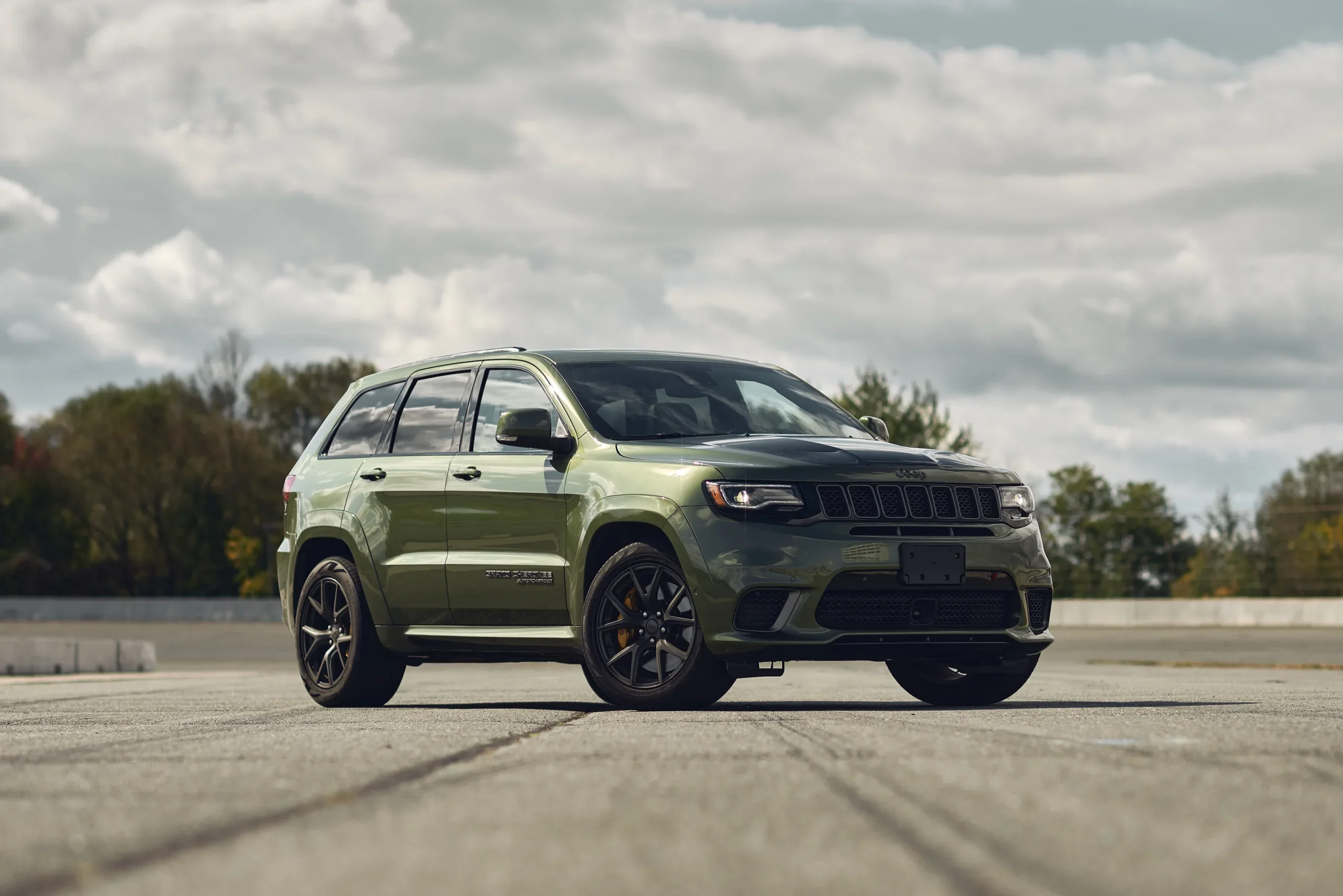
From the reliable 3.6L Pentastar V6 producing 293 horsepower to the absolutely bonkers 6.2L supercharged HEMI V8 in the Trackhawk pumping out 707 horsepower, the Grand Cherokee offers power for every personality. Want to tow 7,200 pounds? Done. Want to smoke a Porsche Cayenne from a stoplight? The Trackhawk says hi. Prefer fuel-efficient plug-in hybrid power? The 4xe delivers 375 horses and 470 lb-ft of torque while sipping fuel on your daily commute.
The 5.9 Limited from 1998 held the title as “world’s fastest SUV” with its 245-hp 5.9L V8. Jeep has always understood that Grand Cherokee owners don’t just want capable—they want CAPABLE.
4. A Community Unlike Any Other
Buy a Grand Cherokee and you’re not just buying a vehicle—you’re joining a tribe. From the hardcore overlanders building out WK2s for transcontinental expeditions to the family haulers taking kids to soccer practice, there’s a passionate community ready to welcome you. Forums, clubs, trail runs, and meetups create a network of people who understand that a Grand Cherokee isn’t just transportation; it’s an adventure enabler.
The Hall of Fame: Most Reliable Grand Cherokee Years
Let’s talk about the Grand Cherokees that got it right—the ones that’ll faithfully serve you whether you’re conquering the Rubicon Trail or the Costco parking lot.
2021 Jeep Grand Cherokee: The Pinnacle

J.D. Power Reliability Score: 85/100 (Highest Ever)
If the Grand Cherokee were a wine, 2021 would be the vintage everyone fights over at auction. This is the year Jeep finally got everything right. After years of refining the fourth-generation WK2 platform, the 2021 model represents the sweet spot where reliability meets capability meets technology.
Why 2021 Stands Above the Rest:
The 2021 Grand Cherokee is what happens when engineers are given time to perfect something rather than rush it to market. After debuting the fourth generation in 2011 (more on that disaster later), Jeep spent a decade addressing every issue, refining every system, and perfecting every component. By 2021, the platform had matured like a fine bourbon.
Real-World Excellence:
- Proven Pentastar Power: The 3.6L V6 has been running in Grand Cherokees since 2011, but by 2021, all the early head gasket gremlins were exorcised. Owners regularly see 200,000+ miles with nothing more than regular maintenance.
- Tech That Actually Works: The Uconnect system in 2021 is fast, intuitive, and reliable—unlike the glitchy mess in earlier years. Wireless Apple CarPlay and Android Auto work seamlessly.
- Quadra-Lift Perfection: The air suspension in earlier models sometimes threw tantrums. By 2021? Rock solid. Owners report minimal issues even after 100,000 miles of abuse.
- Build Quality You Can Feel: Open the door of a 2021 Grand Cherokee and there’s a solid thunk that says “quality.” The interior materials feel substantial, switches operate with satisfying precision, and nothing rattles or squeaks.
Owner Testimonials Worth Noting:
Across forums, you’ll find 2021 owners who’ve put 150,000 miles on their Grand Cherokees without any major issues. Daily driving, towing boats, overlanding adventures—this thing just works. One owner on the Jeep Garage forum claimed their 2021 Overland with Quadra-Drive II has been “absolutely bulletproof” through three Colorado winters and countless camping trips.
What You Get:
- Advanced safety features (adaptive cruise, blind-spot monitoring, rear cross-traffic alert)
- Comprehensive luxury options (heated/cooled/massage seats in higher trims)
- Multiple capable 4WD systems
- Refined ride quality that balances comfort and capability
- Strong resale value due to reputation
The Bottom Line: If you want a used Grand Cherokee that combines modern technology, proven reliability, and legitimate capability, 2021 is your answer. Expect to pay a premium, but you’re buying peace of mind.
2020 Grand Cherokee: The Value Champion

J.D. Power Reliability Score: 82/100
Think of 2020 as 2021’s equally capable older sibling who costs less because nobody’s fighting over them yet. This model delivers nearly identical reliability with a lower price tag in the used market.
Why 2020 Deserves Your Attention:
The 2020 model benefits from the same years of refinement as 2021 but comes before some of the final tech upgrades. If you don’t need the absolute latest Uconnect features, you save thousands without sacrificing capability or reliability.
Standout Features:
- Wireless smartphone integration (huge quality-of-life upgrade from earlier years)
- Mature drivetrain components with few reported failures
- Top Safety Pick from IIHS with five-star NHTSA crash ratings
- Well-integrated luxury features across all trims
- Lower maintenance costs than early 2010s models
The Sweet Spot Argument:
In 2024-2026, 2020 Grand Cherokees hit that perfect age where depreciation has worked its magic but the vehicle hasn’t accumulated enough miles to worry about major repairs. You can find pristine examples with 50,000-70,000 miles for $10,000-$15,000 less than comparable 2021 models.
Real Talk on Resale:
The 2020 Grand Cherokee holds its value exceptionally well thanks to its reputation for reliability. When you eventually sell or trade, you’ll recover more of your investment than you would with most competitors. That’s the Jeep difference—these things are built to last, and the market knows it.
2019 Grand Cherokee: The Goldilocks Year

Industry Consensus: “Just Right”
Ask any Jeep dealer which used Grand Cherokee they’d put their own family in, and many will point to 2019. This year represents the culmination of fourth-generation development before the fifth-gen redesign. It’s refined, reliable, and packed with features.
Why Experts Love 2019:
This model offers comprehensive modern safety tech without the first-year redesign concerns that came with the 2022 fifth-generation. You get adaptive cruise control, blind-spot monitoring, rear cross-traffic alert, and forward collision warning with automatic emergency braking—features that were optional or unavailable in earlier years.
Performance and Capability:
By 2019, Jeep had perfected the 8-speed automatic transmission that caused headaches in 2014-2016. Shifts are smooth, response is quick, and longevity is proven. Combined with the refined Pentastar V6 or optional HEMI V8, you get a powertrain that’ll serve you reliably for 200,000+ miles.
The Quadra-Drive II system in 2019 Overland and Trailhawk models is sublime. On Colorado mountain passes during winter, it inspires confidence that two-wheel-drive competitors simply can’t match. One owner described their Quadra-Drive II as “laughing and passing lifted pickup trucks that were spinning tires on snowy hills.”
Tech That Enhances Life:
The 8.4-inch Uconnect touchscreen (or available 10.1-inch in higher trims) is user-friendly and responsive. Unlike some competitors’ systems that require a PhD to operate, Uconnect makes sense. Your parents can figure it out in five minutes.
The Versatility Factor:
The 2019 Grand Cherokee serves equally well as:
- A daily commuter through city traffic
- A weekend adventure vehicle on backcountry trails
- A comfortable highway road-tripper with the family
- A capable tow vehicle for boats or camping trailers
- A confidence-inspiring snow performer
Find another vehicle that checks all those boxes. I’ll wait.
Value Proposition:
In today’s market, 2019 Grand Cherokees with 60,000-80,000 miles typically sell for $8,000-$12,000 less than 2020-2021 models. You get 90% of the capability and refinement for significantly less money. That’s smart shopping.
2016-2018 Grand Cherokee: The Reliability Revolution

J.D. Power 2016 Score: 81/100
If you’re familiar with Grand Cherokee history, you know the early 2010s were… challenging. The 2016 model year marks the turning point where Jeep finally vanquished the demons that plagued 2011-2015. These years represent solid, dependable transportation with strong capability.
What Changed in 2016:
After the transmission nightmares of 2014-2015, Jeep engineers went back to the drawing board. The 2016 model received a redesigned shifter (goodbye, confusing electronic monostable shifter that caused rollaway incidents) and refined transmission tuning. The result? Smooth, predictable shifts and dramatically fewer complaints.
The 8-Speed Automatic Success:
By 2016, the ZF 8-speed automatic transmission had been thoroughly debugged. This gearbox, when properly calibrated, is one of the best in the business—quick to respond, intelligent about gear selection, and efficient at maximizing fuel economy. Combined with refined engine management, 2016-2018 Grand Cherokees deliver noticeably better fuel economy than earlier WK2 models.
Interior Quality Leap:
The 2016 refresh brought upscale interior materials that elevated the Grand Cherokee’s luxury quotient. Soft-touch surfaces replaced hard plastics in key areas, stitching quality improved, and overall fit and finish reached levels that made German competitors nervous. The Limited and Overland trims, in particular, showcase interiors that punch well above their price point.
Advanced Safety Arrives:
Forward collision warning, adaptive cruise control, and lane departure warning became available in 2016, bringing Grand Cherokee safety tech into the modern era. These aren’t just checkboxes—they’re genuinely useful systems that reduce driver fatigue on long trips and provide crucial extra safety layers.
Off-Road Prowess:
The Trailhawk trim, introduced in 2017, brings serious off-road credentials with the Quadra-Drive II system, Selec-Terrain traction management, skid plates, hill descent control, and an electronic rear limited-slip differential. With Quadra-Lift air suspension providing up to 10.8 inches of ground clearance, this is a Grand Cherokee that earns its Trail Rated badge through actual capability.
Why These Years Matter:
The 2016-2018 Grand Cherokees represent that sweet spot for budget-conscious buyers who want reliability without paying premium prices for the newest models. You can find well-maintained examples with 70,000-90,000 miles in the $18,000-$25,000 range—impressive value for a vehicle with this much capability and luxury.
Real-World Durability:
Check out any Jeep forum and you’ll find owners with 150,000+ miles on their 2016-2018 Grand Cherokees reporting nothing more than routine maintenance. The engines are proven, transmissions are reliable, and electrical systems are stable. This is exactly what you want in a used vehicle purchase.
2010 Grand Cherokee: The Third-Gen Swan Song

Why Old-School Sometimes Wins
While everyone obsesses over the latest technology, don’t sleep on the 2010 Grand Cherokee—the final year of the third-generation WK platform. This might be the most reliable Grand Cherokee ever built, and here’s why: simplicity.
The Simplicity Advantage:
The 2010 model doesn’t have TIPM (Totally Integrated Power Module) electrical nightmares because it uses older, simpler electrical architecture. No complex nine-speed transmission? No problem. It uses proven 4-speed and 5-speed automatics that have demonstrated decades of reliability.
Proven Powertrains:
Choose from three legendary engines:
- 3.7L V6 (210 hp): Basic but bulletproof, this engine will run forever with regular oil changes
- 4.7L V8 (305 hp): The PowerTech V8 offers strong power with proven durability
- 5.7L HEMI V8 (357 hp): The legend itself, known for lasting 300,000+ miles
These engines are so well-proven that mechanics can diagnose and repair them blindfolded. Parts are plentiful and affordable. There are no experimental technologies or first-year designs—just solid, time-tested components.
Off-Road Credibility:
The 2010 Grand Cherokee, especially in Overland trim with Quadra-Drive II, remains a highly capable off-road machine. The solid rear axle setup provides excellent articulation, and the simpler 4WD systems are virtually indestructible. Overlanding enthusiasts love these for long-distance backcountry travel because there’s less to go wrong.
Budget-Friendly Excellence:
You can find clean, well-maintained 2010 Grand Cherokees for $8,000-$12,000 with reasonable mileage. At that price point, you’re getting genuine Jeep capability and surprising luxury for less than most people spend on a Camry. The value proposition is extraordinary.
The Catch:
You sacrifice modern safety tech, smartphone integration, and fuel economy compared to newer models. But if you prioritize reliability over the latest gadgets, 2010 delivers. Think of it as the Grand Cherokee for people who actually use their vehicle for adventures rather than Instagram posts.
2024-2025 Grand Cherokee: The Future is Now

J.D. Power 2024 Score: 80/100 | IIHS Top Safety Pick
The latest fifth-generation Grand Cherokees showcase Jeep’s vision for the future while honoring the past. Built on the Giorgio platform shared with the Alfa Romeo Stelvio (yes, Italian sportiness meets American capability), these Grand Cherokees deliver cutting-edge technology without abandoning their legendary capability.
What’s New and Noteworthy:
Electrification Done Right:
The Grand Cherokee 4xe plug-in hybrid represents Jeep’s smartest move in decades. With 375 horsepower, 470 lb-ft of torque, and 25 miles of electric-only range, it combines efficiency with capability. One 4xe recently completed the Rubicon Trail on electric power alone—proving this isn’t a compromise but an enhancement.
Hurricane Engine Technology:
The 2026 model introduces Jeep’s new 2.0L Hurricane turbocharged four-cylinder, producing more power and torque than the outgoing naturally aspirated V6 while delivering significantly better fuel economy. This is forced induction done right—responsive, powerful, and efficient.
Tech That Wows:
- Uconnect 5 with over-the-air updates
- Available passenger-side 10.25-inch entertainment screen
- 19-speaker McIntosh audio system (absolute audio nirvana)
- Digital rearview mirror
- Head-up display
- Night vision with pedestrian and animal detection
Safety Leadership:
The 2024-2025 Grand Cherokee earns IIHS Top Safety Pick designation and five-star NHTSA overall ratings. This is a vehicle engineered to protect its occupants in any situation, combining passive safety with active prevention technologies.
The Enthusiast’s Perspective:
Early reliability data looks promising. While it’s too soon for long-term reliability ratings, Jeep’s investment in quality control and testing is evident. The Giorgio platform has proven itself in Alfa Romeo applications, and Jeep’s adaptation brings additional robustness required for off-road abuse.
Should You Buy New?
If you want the latest technology, best fuel economy, and cutting-edge safety features, the 2024-2026 Grand Cherokee delivers. Starting at $36,495 for 2025 (down from 2024’s $39,535), these represent strong value in the luxury SUV segment. Plus, you get the full factory warranty—crucial peace of mind if you plan to actually use your Grand Cherokee for adventures.
The Classic Legends: 1998 ZJ 5.9 Limited & 2003 WJ
For the Old-School Enthusiasts
Before we move on, let’s pour one out for the OG legends that off-road purists still worship.
1998 Jeep Grand Cherokee 5.9 Limited:

Called “the world’s fastest SUV” when new, the 5.9 Limited packed a 245-hp 5.9L V8 into a vehicle that weighed less than modern Grand Cherokees. Zero to 60 in 7.0 seconds might seem quaint now, but in 1998, this thing embarrassed sports cars. With special 16-inch Ultra-Star wheels, functional hood louvers, and the low-restriction exhaust barking through a 3-inch chrome tip, this was Jeep’s muscle car moment.
Today, clean examples command premium prices from collectors who understand what makes this year special. The 5.9 Limited represents pure, unfiltered Grand Cherokee greatness before computers and complexity took over.
2003 Jeep Grand Cherokee WJ with 4.7L V8:

The second-generation WJ (1999-2004) remains beloved by overlanders and off-road enthusiasts who prize capability over comfort. The 4.7L V8 is nearly unkillable, the Quadra-Drive system provides genuine diff locks, and the solid rear axle setup delivers articulation that independent suspension can’t match.
With 175,000+ miles, these things are just getting warmed up. Parts are cheap, modifications are endless, and the community support is massive. If you want a Grand Cherokee for serious off-road adventures on a budget, hunt down a well-maintained 2003 WJ. You won’t regret it.
The Hall of Shame: Grand Cherokee Years to Avoid
Now comes the painful part. Even legends have bad chapters, and the Grand Cherokee’s early fourth-generation years represent one of the darkest periods in Jeep history. But here’s the thing—understanding these failures makes appreciating the successes even sweeter. Jeep learned from these mistakes and built better vehicles because of them.
2011 Grand Cherokee: The TIPM Catastrophe

Total Complaints: 741 | J.D. Power Score: 74/100
Let’s not sugarcoat this: the 2011 Grand Cherokee is the worst year ever produced. This hurts to admit as a Jeep enthusiast, but facts are facts. As the first year of the completely redesigned fourth generation, the 2011 model suffered from first-year growing pains that turned into full-blown nightmares.
The TIPM Disaster:
The Totally Integrated Power Module—TIPM—was supposed to be Jeep’s innovative approach to electrical management. Instead, it became the stuff of owner nightmares. Over 200 owners reported the same terrifying issue: driving down the highway when suddenly the engine dies. No warning. Just dead. Power steering gone. Brakes become extremely hard. Dangerous doesn’t begin to describe it.
The TIPM failures manifested in various ways:
- Engine won’t start or delayed starting
- Fuel pump cutting out while driving
- Random electrical failures (windows, locks, lights)
- Complete system shutdowns
- Warning lights illuminating like a Christmas tree
Replacement cost? Over $1,000 for the part alone, plus labor. And even after replacement, many owners reported the problem returning. Jeep issued recalls and software updates, but they couldn’t fully solve the underlying design flaw. The issue was severe enough that it sparked a class-action lawsuit.
Alternator Fires:
Multiple owners reported alternators literally catching fire while driving. Imagine this: you’re cruising at 70 mph on the interstate when you smell burning. You pop the hood and your alternator is glowing red-hot and smoking. This isn’t hyperbole—it actually happened. Some owners pulled photos of alternators that looked like they’d been in a foundry.
Brake System Failures:
The central brake booster in many 2011 Grand Cherokees experienced severe rusting that caused the brakes to freeze or operate poorly. For an SUV marketed for all-weather capability, having brakes that fail in the elements they’re supposed to conquer is… problematic.
The Sad Reality:
The 2011 Grand Cherokee is a heartbreaker because it promised so much. The redesign looked fantastic, offered incredible luxury, and showcased modern technology. But the execution was rushed, quality control was inadequate, and owners paid the price.
Bottom Line: Unless you find a heavily discounted 2011 with complete service records proving every recall was addressed and all problematic components were replaced, walk away. Life’s too short for TIPM headaches.
2014 Grand Cherokee: The Transmission Nightmare

Total Complaints: 499 | Recalls: 19 | NHTSA Complaints: 2,300+
If 2011 proved that Jeep could screw up electrical systems, 2014 proved they could also ruin transmissions. This year holds the dubious distinction of having the highest number of complaints on the NHTSA website of any Grand Cherokee model year.
The Nine-Speed Automatic Disaster:
Jeep partnered with ZF to develop a sophisticated nine-speed automatic transmission that would deliver better fuel economy and smoother power delivery. On paper, it looked great. In reality, it was automotive purgatory.
Owners reported:
- Unpredictable shifts into neutral while driving at highway speeds (imagine the terror)
- Transmission refusing to engage drive or reverse
- Complete transmission lockup requiring towing
- Hard shifts that felt like the vehicle was being rear-ended
- Shuddering during acceleration
- Transmission locking into 4th gear (limp mode)
The most terrifying issue? Multiple owners reported their Grand Cherokee shifting into neutral at 70+ mph on the highway without warning. You’re cruising along, everything’s fine, then suddenly you’re coasting with no power. In highway traffic. With a family in the car.
The E-Shift Rollaway Scandal:
The 2014 model featured an electronic monostable shifter that returned to center after each shift. The problem? Drivers couldn’t easily tell what gear they were in. Multiple owners reported putting the vehicle in “park,” exiting, and watching their Grand Cherokee roll away—sometimes into obstacles or other vehicles.
This design flaw affected several Stellantis vehicles and tragically claimed the life of actor Anton Yelchin when his 2015 Grand Cherokee rolled down his driveway and pinned him against a gate. Jeep eventually recalled over 1 million vehicles to address this issue, but the damage was done.
Engine Problems:
As if transmission issues weren’t enough, the 3.6L Pentastar V6 in 2014 models experienced premature head gasket failures. Owners reported:
- Engine overheating
- Oil mixing with coolant
- Thermostat failures
- EGR cooler problems (especially on the 3.0L EcoDiesel)
- Cracked engine blocks
These aren’t minor annoyances—these are catastrophic engine failures requiring complete rebuilds or replacement.
Electrical Gremlins Continue:
TIPM issues from 2011 persisted into 2014. Add to that:
- Liftgate opening and closing randomly (especially after rain—because Jeep)
- Total electrical system failures while driving
- Power steering failure
- Infotainment system crashes and freezing
- Lighting failures
The Cost:
Major transmission repairs or replacements on 2014 Grand Cherokees can easily exceed $5,000-$8,000. Engine failures? $7,000-$15,000. And these failures often occurred at relatively low mileage—50,000 to 80,000 miles.
Why This Hurts:
The 2014 Grand Cherokee looked amazing. It offered incredible luxury, modern technology, and all the capability you’d expect from Jeep. But reliability issues turned dream vehicles into money pits and nightmare ownership experiences.
Verdict: Avoid 2014 Grand Cherokees entirely. The money you save on purchase price will be spent ten times over in repairs, towing bills, and frustration. Trust me on this.
2015 Grand Cherokee: Slightly Better, Still Bad

NHTSA Complaints: 1,270 | Recalls: 10
Jeep made improvements for 2015, but many of the 2014 problems persisted. Think of 2015 as “2014 Lite”—fewer catastrophic issues but still plenty of headaches.
Transmission Issues Continue:
While Jeep made software updates to improve nine-speed transmission behavior, fundamental problems remained:
- Shuddering during acceleration
- Hard shifts
- Premature transmission failures
- Hesitation and rough performance
The nine-speed simply wasn’t ready for prime time. Jeep continued debugging it throughout 2015-2017, but early adopters paid the price.
Engine Reliability Problems:
Both major engine options had issues:
- 3.6L Pentastar V6: Lifter ticking, coolant intrusion, throttle body defects, continued head gasket concerns
- 3.0L EcoDiesel: EGR cooler failures, DPF problems, complex emissions system failures
The EcoDiesel, while promising on paper with excellent fuel economy, proved particularly problematic. The complex emissions system required for diesel regulations created multiple failure points. Repairs were expensive, and the issues were recurring.
Active Headrest Malfunction:
In what might be the most Jeep problem ever, the active safety headrests in 2015 models would spontaneously deploy without any impact. You’re driving along, and suddenly—THWACK—the headrest punches you in the back of the head. The safety system became a safety hazard. You can’t make this stuff up.
The TIPM Saga Continues:
Yes, TIPM problems persisted into 2015. At this point, Jeep should have just called it a feature: “Exciting electrical unpredictability—keeps you on your toes!”
Why 2015 Gets a Pass (Sort Of):
Some owners report good experiences with 2015 models, particularly those purchased later in the model year after additional updates. If you find a 2015 with complete service records showing all recalls completed and no history of major repairs, it might be acceptable—but tread carefully.
Recommendation: Unless you’re getting a screaming deal and have money set aside for potential repairs, keep looking. The 2016+ models are significantly more reliable and worth the extra investment.
2012 Grand Cherokee: The Year of Electrical Chaos

NHTSA Complaints: 1,600+ | Recalls: 11
The 2012 model year proved that Jeep’s 2011 problems weren’t just first-year flukes—they were systemic design issues that would plague the entire early fourth generation.
Stalling Without Warning:
The most dangerous issue: engines cutting off without warning, both at idle and highway speeds. Owners reported pulling into intersections when the engine died, leaving them stranded in traffic. Others experienced complete power loss while driving 70 mph on the interstate.
When the engine dies at speed, you lose:
- Power steering (wheel becomes extremely heavy)
- Power brakes (brake pedal becomes rock-hard, requiring massive force)
- Engine power (obviously)
This creates genuinely dangerous situations where crashes become likely. Jeep issued recall 15V115000 attempting to fix the problem, but many owners reported the stalling continued even after the recall repairs.
Electrical System Failures:
Over 800 complaints related specifically to electrical problems. This included:
- Complete electrical shutdowns while driving
- Fuel pump relay failures causing sudden engine death
- Alternator failures (some resulting in fires)
- Dashboard display malfunctions
- Wiring short circuits
- TIPM failures (the gift that kept giving)
The Frustration Factor:
What made 2012 particularly frustrating was the intermittent nature of problems. Your Grand Cherokee might run perfectly for weeks, then suddenly die in the middle of nowhere. Dealers often couldn’t replicate issues, leaving owners in automotive purgatory—they knew something was wrong, but couldn’t prove it.
J.D. Power’s Verdict:
With a score of 71/100, the 2012 Grand Cherokee earned the lowest J.D. Power rating of any fourth-generation model. That’s not a typo—lowest. Even worse than 2011.
Should You Ever Buy a 2012?
Only if:
- It’s extremely cheap
- All recalls are completed
- It has detailed service records
- You have a good relationship with a Jeep mechanic
- You enjoy living dangerously
Otherwise, hard pass.
2005-2009: The Third-Gen Troubles
While not catastrophically bad like 2011-2015, the late third-generation Grand Cherokees had their share of problems:
Common Issues:
- Transmission failures (slipping, hard shifts, premature wear)
- Electrical problems (faulty wiring, dashboard glitches, power window failures)
- Front suspension component wear (ball joints, control arms, bushings)
- Transfer case failures
- Cooling system issues
These years aren’t “avoid at all costs” territory, but they require careful inspection and complete maintenance records. A well-maintained 2009 Grand Cherokee with 100,000 miles might be a great buy. A neglected one? Nightmare fuel.
What Makes a Grand Cherokee Reliable: The Engineering Truth
Understanding why some years excel while others fail requires looking at what makes Grand Cherokees tick. Spoiler alert: when Jeep gets it right, these are nearly bulletproof vehicles. When they rush development or experiment with unproven technology, things go sideways.
The Unibody Advantage
Since 1993, every Grand Cherokee has used unibody construction rather than body-on-frame. This wasn’t following trends—Jeep pioneered this in the SUV segment. The benefits:
Superior Ride Quality: Unibody construction provides better NVH (noise, vibration, harshness) isolation than body-on-frame. Grand Cherokees ride more like premium sedans than trucks.
Better Handling: The increased rigidity of unibody construction delivers more precise handling and control, especially in emergency maneuvers.
Enhanced Safety: Modern unibody structures with high-strength steel create incredibly strong safety cages. The 2024-2025 Grand Cherokee’s body is over 70% high-strength steel.
Weight Efficiency: Unibody construction saves 200-300 pounds versus comparable body-on-frame SUVs, improving fuel economy and performance.
Yet unibody doesn’t sacrifice capability. Jeep engineers designed the UniFrame structure to withstand serious off-road abuse. It’s the best of both worlds.
Powertrain Excellence (When Done Right)
The Pentastar V6 Evolution:
Introduced in 2011, the 3.6L Pentastar V6 had early growing pains (head gasket issues in 2011-2015) but evolved into one of the best engines in its class. By 2016+, the Pentastar delivers:
- 293 horsepower and 260 lb-ft of torque
- Excellent fuel economy (19 city / 26 highway)
- Proven 200,000+ mile durability
- Strong low-end torque for off-roading
- Responsive power delivery
- Easy maintenance
The aluminum block with aluminum cylinder heads reduces weight while maintaining strength. The 60-degree V6 configuration provides smooth operation. And with proper maintenance (oil changes every 5,000-7,500 miles), these engines run forever.
The HEMI V8 Legend:
Chrysler’s HEMI V8 engine family represents American engineering at its finest. In Grand Cherokee applications:
- 5.7L HEMI: 360 hp, 390 lb-ft—torque for days
- 6.4L HEMI (SRT): 475 hp, 470 lb-ft—pure excitement
- 6.2L Supercharged HEMI (Trackhawk): 707 hp, 645 lb-ft—insanity
These engines are legendary for durability. Properly maintained HEMIs regularly exceed 300,000 miles. Yes, fuel economy suffers (13-17 mpg combined), but that’s the price of V8 power. And let’s be honest—if you’re buying a HEMI, fuel economy isn’t your priority. Freedom and horsepower are.
The EcoDiesel Caveat:
The 3.0L V6 EcoDiesel offers incredible fuel economy (22 city / 30 highway) and massive torque (442 lb-ft), making it ideal for towing. However, modern diesel emissions systems (DPF, EGR, DEF) create complexity and potential failure points. If you want a diesel Grand Cherokee, budget for emissions system maintenance and potential repairs.
4WD Systems That Actually Work
Other manufacturers bolt together 4WD systems from off-the-shelf components. Jeep engineers 4WD systems that define the segment.
Quadra-Trac I:
Full-time all-wheel drive with single-speed transfer case. Constantly sends power to all four wheels, automatically varying distribution as needed. Perfect for everyday driving in all weather conditions.
Quadra-Trac II:
Two-speed transfer case with low-range gearing for serious off-road work. Adds Selec-Terrain system with five driving modes: Auto, Sport, Snow, Sand/Mud, and Rock. Hill Descent Control provides precise speed management on steep descents.
Quadra-Drive II:
The ultimate system, featuring Electronic Limited-Slip Differential (ELSD) on both axles. This effectively provides four-wheel limited-slip capability, meaning power goes to the wheels with traction. Combined with low-range gearing, Quadra-Drive II makes Grand Cherokees virtually unstoppable off-road.
Real-world example: In Colorado winter conditions, Grand Cherokees with Quadra-Drive II laugh at hills that stop lifted pickups. The system is THAT good.
Quadra-Lift Air Suspension:
Available on Overland, Summit, and Trailhawk trims, this electronically controlled air suspension provides:
- Normal ride height for everyday driving
- Highway mode (lowers vehicle for aerodynamics and efficiency)
- Off-Road I (raises 1 inch for moderate trails)
- Off-Road II (raises 2.6 inches for maximum clearance—10.8 inches total)
- Park mode (lowers for easy entry/exit)
The system automatically adjusts damping rates for optimal control, essentially giving you five different suspensions in one vehicle. It’s genuine magic.
Real-World Grand Cherokee Adventures: Owner Stories
Let’s hear from people who actually USE their Grand Cherokees rather than just park them at Whole Foods.
The Overland Builder: Converting a WK2 for Transcontinental Adventure
Story from Flatwater Overland, Colorado
“Here in Colorado, you can’t swing a dead cat without hitting a modified Wrangler or Toyota. That’s exactly why I chose a WK2 Grand Cherokee for my overland build—nobody else is doing it, and these things are seriously capable.
I picked up a 2012 Grand Cherokee Overland with Quadra-Drive II and spent two years building it into a transcontinental adventure vehicle. Heavy-duty bumpers, winch, rock sliders, roof rack, auxiliary lighting, recovery gear, communication systems—the works.
The platform is phenomenal. The Quadra-Drive II system provides incredible traction in challenging terrain. The air suspension gives me ground clearance when I need it, then drops back down for comfortable highway cruising. And here’s the thing nobody talks about: at the end of a 10-hour day on rough trails, I’m not exhausted like I would be in a Wrangler. The air conditioning works, the seats are comfortable, and the ride quality doesn’t beat you to death.
I’ve taken this Grand Cherokee on week-long expeditions through Utah, Colorado, and New Mexico. Desert sand, mountain trails, river crossings—it handles everything while hauling all my camping gear, food, and equipment. Total peace of mind.
The best part? I paid less than $15,000 for the base vehicle. Try building a comparable Wrangler for under $50,000. Can’t be done.”
The Family Adventurer: 200,000 Miles of Memories
Story from a 2019 Grand Cherokee Limited Owner, Michigan
“We bought our 2019 Grand Cherokee Limited brand new in November 2018. As I write this in early 2026, we just crossed 200,000 miles. Every single one of those miles represents an adventure with our family.
We’ve driven this Jeep from Michigan to Yellowstone (twice), down to the Florida Keys, up to Maine for fall foliage, and countless trips to national parks across the Midwest. We’ve taken it off-road through Michigan’s Upper Peninsula forests, across Death Valley sand, and through Colorado mountain passes in winter.
You know what major repairs we’ve needed? NONE. Oil changes, tire rotations, brake pads, wiper blades—that’s it. The Pentastar V6 runs like the day we bought it. The transmission shifts smoothly. Nothing rattles or squeaks. The leather seats have held up beautifully despite kids, dogs, and camping gear.
Our Grand Cherokee has hauled our travel trailer on weekend camping trips, towed our boat to the lake, and served as our daily driver through brutal Michigan winters. It’s never left us stranded. Never had a breakdown. Never created a single emergency.
When people ask me about reliability, I point to 200,000 miles of evidence. This Grand Cherokee has been the single best vehicle purchase I’ve ever made.”
The Trackhawk: Supercar Performance Meets SUV Practicality
Story from a 2019 Trackhawk Owner, Texas
“Let me be clear: I didn’t buy a Trackhawk because I needed an SUV. I bought it because I wanted 707 horsepower in something I could drive every day.
The supercharged 6.2L HEMI sounds like Thor clearing his throat. Zero to 60 in 3.5 seconds. Quarter-mile in 11.6 seconds at 116 mph. These aren’t SUV numbers—these are supercar numbers. I’ve embarrassed Porsche Cayenne Turbos, BMW X5 Ms, and even some actual sports cars at stoplights.
But here’s what makes the Trackhawk special: when I’m not terrorizing sports car owners, I’m hauling kids to school, loading groceries, and using it as my daily driver. The interior is beautiful—Nappa leather, Alcantara headliner, premium everything. The Brembo brakes are enormous. The Quadra-Trac Active On-Demand 4WD system means I have all-wheel-drive security.
And you know what? It’s been completely reliable. 50,000 miles of hard driving—including multiple track days—and zero mechanical issues. Regular maintenance, that’s it. The HEMI engine is bulletproof, the transmission handles the power effortlessly, and the build quality is solid.
This is peak Jeep—legitimate capability wrapped in luxury and topped with absurd performance. Only in America, folks.”
The Trim Level Guide: Finding Your Perfect Grand Cherokee Personality
Grand Cherokee offers a dizzying array of trim levels across different model years. Let’s break down which ones matter and why.
Base/Laredo: The Value Play
Who It’s For: Budget-conscious buyers who want Grand Cherokee capability without luxury costs
Key Features:
- Solid Pentastar V6 power
- Basic 4WD systems (Quadra-Trac I or II depending on year)
- Cloth or basic leather seats
- Smaller infotainment screens
- Standard safety features
The Reality: You’re not getting massage seats or McIntosh audio, but you’re getting genuine Jeep capability for the lowest price. Perfect for people who actually use their Grand Cherokee for work or outdoor adventures rather than status symbols.
Best Years: 2019-2021 models offer incredible value in today’s used market
Limited: The Sweet Spot
Who It’s For: Buyers who want luxury and capability without extreme costs
Key Features:
- Leather upholstery
- Heated front seats
- Larger infotainment screens (8.4-inch standard)
- Premium audio systems
- Power liftgate
- Advanced safety tech (newer years)
- Quadra-Trac II 4WD available
The Reality: This is where most buyers should land. You get 90% of the luxury at 70% of the cost of Summit models. The Limited trim delivers genuine premium feel without absurd depreciation.
Pro Tip: 2016-2018 Limited models with the Off-Road Adventure package provide serious capability at reasonable prices.
Overland: The Luxury Adventurer
Who It’s For: Buyers who want maximum luxury with legitimate off-road capability
Key Features:
- Quadra-Lift air suspension
- Quadra-Drive II 4WD (usually)
- Premium leather throughout
- Real wood trim (varies by year)
- Heated/cooled front seats
- Heated rear seats
- Panoramic sunroof
- Advanced audio systems
The Reality: This is THE trim for people who want the complete Grand Cherokee experience. You get luxury appointments that rival German SUVs combined with Trail Rated capability. It’s expensive, but you’re getting what you pay for.
Best Use Case: Weekend warriors who split time between country clubs and off-road trails
Trailhawk: The Off-Road Champion
Who It’s For: Serious off-road enthusiasts who occasionally attend civilized events
Key Features:
- Quadra-Drive II with rear electronic LSD
- Quadra-Lift air suspension
- Skid plate protection
- Hill descent control
- Selec-Terrain traction management
- Off-road-tuned suspension
- Unique styling (red tow hooks, Trailhawk badges)
The Reality: This is a Trail Rated badge that means business. With 10.8 inches of ground clearance (air suspension raised), aggressive approach/departure angles, and sophisticated traction management, the Trailhawk tackles trails that stop most SUVs.
Important Note: Despite off-road focus, you still get leather seats, premium audio, and modern tech. It’s not a stripper model—it’s a capable luxury SUV.
Best For: Colorado, Utah, Arizona, and Pacific Northwest buyers who actually use their vehicles off-road
Summit/Summit Reserve: The Luxury Flagship
Who It’s For: Buyers who want the absolute pinnacle of Grand Cherokee luxury
Key Features:
- Nappa leather everywhere
- Heated/cooled/massage front seats
- Premium wood and metal trim
- McIntosh audio systems (19 speakers, 950 watts)
- Every available luxury feature
- Quadra-Lift air suspension
- Advanced safety suite
The Reality: This competes directly with Range Rovers, BMW X5s, and Mercedes GLE-Class SUVs—at $15,000-$25,000 less. The interior quality is stunning, materials are premium, and attention to detail rivals luxury brands.
The Catch: Depreciation hits hard. Buy used Summit models 2-3 years old to save thousands.
SRT/Trackhawk: The Performance Monsters
Who It’s For: Enthusiasts who want supercar performance in SUV form
SRT Features:
- 6.4L HEMI V8 (475 hp)
- 0-60 in 4.4 seconds
- Sport-tuned suspension
- Brembo brakes
- Performance upgrades throughout
Trackhawk Features:
- 6.2L Supercharged HEMI (707 hp)
- 0-60 in 3.5 seconds
- Quarter-mile in 11.6 seconds
- Track-focused engineering
- All-wheel drive that handles the power
The Reality: These aren’t rational purchases—they’re emotional ones. And that’s perfectly fine. The Trackhawk is objectively absurd (707 horsepower in a three-row SUV?) and absolutely glorious.
Fuel Economy: Forget it. You’re getting 12-15 mpg combined. But that’s not why you’re here.
Reliability: Surprisingly solid. HEMI engines are bulletproof, and these vehicles receive extra attention during assembly.
The Smart Buyer’s Checklist: What to Inspect Before Buying
Whether buying new or used, here’s your comprehensive inspection guide:
Documentation Review
- ✓ Complete service records showing regular maintenance
- ✓ All recalls completed (check NHTSA database)
- ✓ No history of frame damage or major accidents (Carfax/AutoCheck)
- ✓ Title is clear with no liens
- ✓ Original window sticker or documentation showing factory options
Mechanical Inspection
- ✓ Engine starts immediately without hesitation
- ✓ No smoke from exhaust (white = coolant, blue = oil, black = rich fuel mixture)
- ✓ Engine idles smoothly at approximately 600-700 RPM
- ✓ No unusual noises (knocking, ticking beyond normal Pentastar tick, grinding)
- ✓ Transmission shifts smoothly through all gears during test drive
- ✓ No transmission shuddering, hesitation, or delayed engagement
- ✓ Four-wheel drive engages properly (test different modes)
- ✓ Transfer case operates without grinding or binding
- ✓ Brakes provide strong, consistent stopping power
- ✓ No brake pedal pulsation or squealing
- ✓ Steering responds smoothly without play or binding
- ✓ Suspension absorbs bumps without excessive bouncing or bottoming
- ✓ No clunking from suspension during turns or bumps
Electrical Systems
- ✓ All lights function properly (headlights, taillights, turn signals, brake lights)
- ✓ Power windows operate smoothly (critical TIPM test)
- ✓ Power locks function on all doors
- ✓ Infotainment system responds quickly without freezing
- ✓ Climate control operates properly (heat and A/C)
- ✓ No warning lights on dashboard except during startup test
- ✓ Backup camera displays clear image
- ✓ All safety systems function (if equipped)
Interior Quality
- ✓ Seats show minimal wear appropriate for mileage
- ✓ No rips or tears in leather/cloth
- ✓ All seat adjustments work (power seats, heating, cooling)
- ✓ Dashboard and door panels intact without cracks
- ✓ Headliner in good condition without sagging
- ✓ All interior trim pieces securely attached
- ✓ Carpet clean without excessive staining or wear
Exterior Condition
- ✓ Paint in good condition without major scratches or rust
- ✓ Body panels aligned properly
- ✓ Doors open/close smoothly with solid feel
- ✓ Windshield and windows without cracks
- ✓ Tires have adequate tread depth (6/32″ minimum, prefer 8/32″+)
- ✓ Tires match and show even wear
- ✓ Wheels undamaged without major curb rash
- ✓ Undercarriage inspection shows no major damage or excessive rust
Test Drive Essentials
- ✓ Drive at least 30 minutes including highway speeds
- ✓ Test acceleration (smooth power delivery)
- ✓ Test braking from various speeds
- ✓ Test handling through turns at different speeds
- ✓ Listen for ANY unusual noises
- ✓ Test 4WD engagement if safe to do so
- ✓ Try all driving modes (if equipped)
- ✓ Confirm all technology works as expected
Red Flags to Walk Away From
- ❌ Seller refuses comprehensive inspection
- ❌ Major service items overdue (timing belt, transmission service, etc.)
- ❌ Evidence of flood damage
- ❌ Excessive rust on frame or suspension components
- ❌ Transmission issues (slipping, harsh shifts, grinding)
- ❌ Engine problems (smoking, knocking, overheating)
- ❌ Multiple warning lights illuminated
- ❌ Signs of major accident damage
- ❌ Salvage title
- ❌ Missing service records on higher-mileage vehicles
Pre-Purchase Inspection Recommendation
ALWAYS get a pre-purchase inspection from an independent mechanic—ideally one specializing in Jeep/Chrysler vehicles. Spending $150-$200 on an inspection can save you $5,000-$10,000 in repairs.
Ask the mechanic to specifically check:
- TIPM functionality (2011-2015 especially)
- Transmission operation
- Head gasket condition
- Cooling system integrity
- Electrical system stability
- Suspension component wear
- Transfer case condition
- Differential operation
Maintenance Secrets: Making Your Grand Cherokee Last 300,000 Miles
Grand Cherokees that receive proper maintenance regularly exceed 200,000 miles. Here’s how to maximize longevity:
Oil Change Intervals
DO NOT follow the oil life monitor blindly. While modern synthetic oils can go 10,000 miles, that’s under ideal conditions. Real-world driving—especially severe use like towing, off-roading, or extreme temperatures—requires more frequent changes.
Recommended Schedule:
- Normal driving: Every 5,000-7,500 miles
- Severe use: Every 3,000-5,000 miles
- Use quality synthetic oil (Mobil 1, Pennzoil Ultra Platinum, etc.)
- Always use correct viscosity (typically 5W-20)
The Pentastar V6 is known for a slight lifter tick—this is normal. But excessive ticking can indicate oil-related issues. Keep your oil fresh.
Transmission Service
This is critical and often neglected. Despite “lifetime fluid” marketing, transmission fluid degrades and should be serviced.
Recommended Schedule:
- First service: 60,000 miles
- Subsequent services: Every 60,000-80,000 miles
- Use only specified Mopar ATF+4 or equivalent
- Replace filter during service
Transmission failures often result from neglected fluid changes. Don’t be that owner.
Cooling System Maintenance
Prevents catastrophic engine damage from overheating.
Recommended Actions:
- Coolant flush: Every 100,000 miles or 5 years
- Use only correct Mopar OAT coolant (usually pink/magenta)
- Check coolant level monthly
- Inspect hoses for cracks or leaks
- Replace thermostat if engine runs too cool or too hot
- Clean radiator fins annually
Brake System
Essential for safety, especially if towing or mountain driving.
Maintenance Schedule:
- Brake fluid flush: Every 2-3 years
- Inspect pads/rotors: Every 15,000 miles
- Replace pads when 3mm thickness remains
- Machine or replace rotors as needed
Grand Cherokees are heavy vehicles—brake maintenance is not optional.
Four-Wheel Drive System
Keep your 4WD ready for action:
- Differential fluid service: Every 50,000-60,000 miles
- Transfer case fluid service: Every 50,000-60,000 miles
- Use Mopar-specified fluids only
- Engage 4WD monthly even if not needed (keeps system lubricated)
- Quadra-Lift air suspension: No specific fluid changes, but have system inspected annually
Spark Plugs and Ignition
Pentastar V6:
- Replace spark plugs: Every 100,000 miles
- Use specified NGK or Champion platinum plugs
- Replace ignition coils if misfires occur
HEMI V8:
- Replace spark plugs: Every 100,000 miles
- HEMI engines can develop “HEMI tick”—usually lifter related, monitor but not always critical
Fuel System
- Use Top Tier gasoline (brands with better detergents)
- Add fuel system cleaner every 10,000 miles
- Replace fuel filter per schedule (if equipped with replaceable filter)
Tires and Alignment
- Rotate tires: Every 5,000-7,500 miles
- Alignment check: Annually or after hitting major potholes
- Replace tires when tread depth reaches 4/32″
- Maintain proper tire pressure (door placard specification)
The $50,000-Mile Super Service
Around 50,000-60,000 miles, perform comprehensive service:
- Transmission fluid and filter
- Differential fluids (front and rear if 4WD)
- Transfer case fluid
- Brake fluid flush
- Coolant system inspection
- Complete suspension inspection
- All filters (engine, cabin air)
- Spark plug inspection
Yes, this costs $800-$1,200. But it prevents $5,000-$10,000 failures later.
The Cost of Ownership: Real Numbers
Let’s talk money. What does Grand Cherokee ownership actually cost?
Purchase Price (2026 Market)

New Grand Cherokee:
- Base Laredo: $36,495
- Limited: $44,000-$50,000
- Overland: $52,000-$58,000
- Summit: $60,000-$68,000
- Trackhawk: $90,000-$100,000 (if you can find one)
Used Grand Cherokee (Well-Maintained Examples):
- 2021 Limited (50K miles): $32,000-$38,000
- 2020 Overland (60K miles): $30,000-$36,000
- 2019 Limited (70K miles): $25,000-$30,000
- 2016-2018 Limited (90K miles): $18,000-$25,000
- 2010 (120K miles): $8,000-$12,000
Fuel Costs
Pentastar V6: 19 city / 26 highway (22 combined)
- Annual fuel cost: $2,200-$2,800 (15,000 miles, $3.50/gallon)
HEMI V8: 14 city / 22 highway (17 combined)
- Annual fuel cost: $3,000-$3,800
EcoDiesel: 22 city / 30 highway (25 combined)
- Annual fuel cost: $1,900-$2,400 (diesel prices)
4xe Plug-In Hybrid: 56 MPGe (electric), 23 MPG (gas)
- Annual fuel cost: $1,200-$2,000 (depends on charging habits)
Maintenance and Repairs
Annual Maintenance (Reliable Years 2016+):
- Year 1-3: $500-$800 (oil changes, tire rotations, minor service)
- Year 4-6: $800-$1,200 (above plus brake service, major service intervals)
- Year 7-10: $1,200-$2,000 (above plus potential wear items)
Problem Years (2011-2015):
- Could easily exceed $3,000-$5,000 annually in repairs
Insurance:
- $1,200-$2,200 annually (varies by location, driving record, coverage)
Total Cost of Ownership Example
2019 Grand Cherokee Limited 4WD (5-Year Ownership, 15,000 miles/year):
| Expense | Cost |
|---|---|
| Purchase Price (used, 70K miles) | $28,000 |
| Fuel (5 years @ $2,500/year) | $12,500 |
| Maintenance (avg $1,000/year) | $5,000 |
| Insurance (avg $1,600/year) | $8,000 |
| Tires (one set during ownership) | $1,200 |
| Total 5-Year Cost | $54,700 |
| Estimated Resale (145K miles) | $12,000 |
| Net Cost of Ownership | $42,700 |
| Cost Per Mile | $0.57 |
For comparison, a Toyota 4Runner might cost $0.50/mile but delivers less luxury and worse on-road manners. A Range Rover? $0.80+/mile with worse reliability.
The Verdict: Your Grand Cherokee Buying Strategy
After this deep dive into three decades of Grand Cherokee history, here’s your action plan:
For New Car Buyers
Best Choice: 2025-2026 Grand Cherokee
- Start at $36,495
- Modern technology and safety
- Excellent reliability projections
- Full factory warranty
- Consider 4xe for best efficiency and performance
For Used Car Buyers on Any Budget
Premium Choice: 2021 Grand Cherokee ($32K-$38K)
- Highest reliability rating ever
- Modern tech and safety
- Still under powertrain warranty in many cases
- Will serve faithfully for 200,000+ miles
Best Value: 2019-2020 Grand Cherokee ($25K-$35K)
- Excellent reliability
- Modern features
- Significant depreciation savings
- Strong resale value retention
Budget Champion: 2016-2018 Grand Cherokee ($18K-$25K)
- Post-problem-years reliability
- Proven durability
- Still plenty of life left
- Great capability at affordable price
Extreme Budget: 2010 Grand Cherokee ($8K-$12K)
- Simple, proven platform
- Reliable powertrains
- Minimal electronics to fail
- Strong off-road capability
What to Absolutely Avoid
Do Not Buy Under Any Circumstances:
- 2011 Grand Cherokee (TIPM nightmare)
- 2014 Grand Cherokee (transmission disaster)
- 2012 Grand Cherokee (electrical chaos)
Approach with Extreme Caution:
- 2013 Grand Cherokee (mixed bag)
- 2015 Grand Cherokee (improved but still problematic)
The Sweet Spot Matrix
| Priority | Best Years | Price Range | Why |
|---|---|---|---|
| Maximum Reliability | 2021 | $32K-$38K | Highest JD Power score, proven platform |
| Best Value | 2019-2020 | $25K-$35K | Modern features, strong reliability, good prices |
| Budget Performance | 2016-2018 | $18K-$25K | Post-fix reliability at affordable cost |
| Off-Road Focus | 2017-2021 Trailhawk | $22K-$35K | Trail Rated capability with reliability |
| Pure Performance | 2018-2021 Trackhawk | $60K-$80K | 707 hp, surprisingly reliable |
| Ultimate Budget | 2010 | $8K-$12K | Simple, proven, reliable |
The Final Word: Why Grand Cherokee Remains King
After 30+ years, seven million sales worldwide, and countless awards, the Grand Cherokee endures because it delivers what other SUVs merely promise: genuine capability combined with real luxury at accessible prices.
Yes, the 2011-2015 years were rough. Jeep rushed development, experimented with unproven technology, and quality control faltered. Those years damaged the brand’s reputation and cost owners thousands in repairs. But here’s what matters: Jeep learned from those mistakes. The 2016+ Grand Cherokees represent redemption—vehicles engineered with care, tested thoroughly, and built to last.
When you buy a Grand Cherokee—especially from the recommended years—you’re getting:
✓ Trail Rated capability that can take you anywhere
✓ Luxury appointments that rival German competitors at $20,000 less
✓ Proven powertrains that regularly exceed 200,000 miles
✓ Strong community support from passionate owners worldwide
✓ Excellent resale value that protects your investment
✓ Versatility that handles daily commutes and weekend adventures equally well
The Grand Cherokee isn’t perfect—no vehicle is. But when you compare it against alternatives like the Toyota 4Runner (less luxurious, worse on-road manners), Honda Passport (less capable off-road), or German luxury SUVs (twice the price, worse reliability), the Grand Cherokee emerges as the intelligent choice for people who actually drive their vehicles rather than just pose in them.
So whether you’re conquering the Rubicon Trail, navigating Michigan winter highways, towing your boat to the lake, or simply commuting to work with more style and capability than necessary—there’s a Grand Cherokee year waiting to serve you faithfully for the next 200,000 miles.
Choose wisely. Buy from the recommended years. Maintain it properly. And join the tribe of owners who understand that the Grand Cherokee isn’t just transportation—it’s freedom on four wheels wrapped in luxury, powered by heritage, and proven over three decades of adventures.
Welcome to the family. Now get out there and make some stories worth telling.
The Grand Cherokee: Because life’s too short to drive boring vehicles.
Appendix: Quick Reference Guide
Best Years Summary
- 2021 – Most reliable ever (85/100 JD Power)
- 2020 – Value champion (82/100)
- 2019 – Sweet spot for features and reliability
- 2016-2018 – Post-fix reliability revolution
- 2010 – Simple, proven, affordable
- 2024-2026 – Modern excellence (early data promising)
Years to Avoid
- 2011 – Worst ever (TIPM disaster)
- 2014 – Transmission nightmare
- 2012 – Electrical chaos
- 2015 – Still problematic
- 2005-2009 – Proceed with extreme caution
Best Trims by Purpose
- Daily Driver: Limited (best luxury/cost balance)
- Off-Road: Trailhawk (Trail Rated champion)
- Luxury: Summit/Summit Reserve (flagship materials)
- Performance: Trackhawk (707 hp insanity)
- Value: Base/Laredo (capability on budget)
- Towing: Overland with V8 (7,200 lb capacity)
Maintenance Quick Reference
- Oil changes: 5,000-7,500 miles
- Transmission service: 60,000 miles
- Coolant flush: 100,000 miles
- Differential/transfer case: 50,000-60,000 miles
- Spark plugs: 100,000 miles
- Tires: Rotate every 5,000-7,500 miles
Common Problems by Era
2011-2015:
- TIPM electrical failures
- Nine-speed transmission issues
- Head gasket failures (Pentastar)
- Active headrest malfunctions
2005-2010:
- Transmission wear
- Front suspension components
- Electrical gremlins
- Cooling system issues
2016+:
- Generally excellent reliability
- Normal wear items only
- Proper maintenance = 200K+ miles