





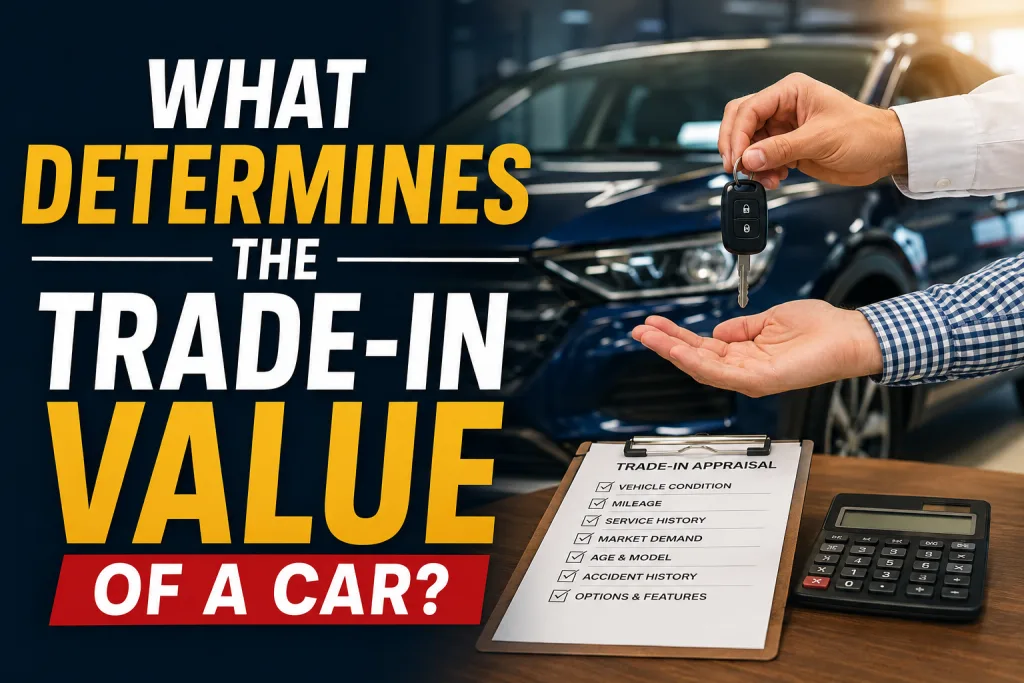
What Determines the Trade-In Value of a Car?
When you are ready to upgrade your vehicle, your trade-in can make the process much easier. A strong trade-in value can lower the amount you need to finance, reduce your monthly payment, or give you more flexibility when choosing your next car, truck, or SUV. But many drivers are surprised to learn that trade-in value is not based on one simple number.
Dealerships look at several factors before making an offer, including mileage, age, condition, accident history, service records, trim level, market demand, and reconditioning costs. Online pricing tools work in a similar way. Edmunds explains that used car values are affected by mileage, location, condition, supply, demand, options, incentives, and recent nearby transactions. Understanding these details can help you know what to expect before your vehicle is appraised.
What Is Trade-In Value?
Trade-in value is the amount a dealership offers for your current vehicle when you use it toward the purchase of another vehicle. Instead of selling your car privately, you trade it to the dealer and apply the value to your next purchase.
Trading in is usually faster and easier than selling privately. You do not have to create listings, answer messages, meet strangers for test drives, negotiate payment, or manage paperwork by yourself. The dealership inspects the vehicle, gives you an offer, handles the documents, and can often help with your loan payoff if you still owe money on the car.
Vehicle Age and Model Year
Age is one of the first things that affects trade-in value. Newer vehicles usually bring stronger offers because they often have updated safety features, newer technology, lower mileage, and more remaining life.
A three-year-old SUV will usually be worth more than a ten-year-old SUV in similar condition. However, age alone does not decide everything. Some older vehicles still hold value well because they have strong reliability, steady demand, and a good reputation in the used market.
Model year also matters when a vehicle has been redesigned. If the newer version has better styling, more technology, improved fuel economy, or updated safety features, the older version may lose value faster.
Mileage
Mileage is one of the biggest factors in any trade-in appraisal. The more a vehicle has been driven, the more wear it may have on the engine, transmission, suspension, brakes, tires, and interior.
A lower-mileage vehicle usually receives a stronger offer than the same vehicle with higher mileage. Kelley Blue Book says vehicle values are based on current marketplace conditions and trends, and mileage plays a major role in price and value. That is why two vehicles with the same year, make, and model can have very different trade-in values.
Mileage should also be judged with condition. A higher-mileage vehicle with complete maintenance records may still be attractive, while a low-mileage vehicle with poor service history or accident damage may be worth less than expected.
Overall Condition
Condition can make or break a trade-in offer. A clean, well-kept vehicle is easier for a dealership to resell and usually needs less money spent before it can be listed for sale.
Dealers will usually check the paint, body panels, tires, brakes, windshield, interior, dashboard warning lights, engine performance, transmission shifting, suspension noise, and fluid leaks. Small problems can add up quickly. Worn tires, brake issues, cracked glass, dents, rust, stains, odours, and warning lights can all lower the offer.
This is why two cars with the same mileage can receive different numbers. One may be almost ready for resale, while the other may need repairs, detailing, tires, or safety work.
Accident and Vehicle History
A vehicle’s history can also affect its trade-in value. A clean history report can help, while major accidents, structural damage, odometer issues, theft records, rebuilt status, or open liens can reduce the offer.
CARFAX Canada says its vehicle history reports can include accident history, frame or structural damage, service history, unfixed safety recalls, lien information, theft records, rebuilt or salvage title status, and odometer readings. These details matter because the next buyer will likely want to know the same information before purchasing the vehicle.
A minor accident does not always ruin a car’s value, especially if the repair was done properly. But major collision damage, airbag deployment, frame repair, or poor bodywork can make the vehicle harder to resell.
Service and Maintenance Records
Good maintenance records can support a stronger trade-in value. If a vehicle has proof of regular oil changes, brake service, tire replacements, fluid changes, inspections, and warranty repairs, it gives the dealership more confidence.
This is especially important for older or higher-mileage vehicles. A car with 120,000 miles and a strong service history may be more appealing than a car with 80,000 miles and no records.
Bring oil change receipts, tire invoices, brake repair records, battery replacement receipts, inspection reports, warranty paperwork, and dealership service history if you have them. These records show that the vehicle was cared for properly.
Make, Model, and Demand
Some vehicles naturally hold their value better than others. Popular SUVs, pickup trucks, hybrids, fuel-efficient cars, and reliable family vehicles often perform well because buyers actively look for them.
Market demand is a major part of trade-in value. AutoTrader Canada explains that vehicle values are estimated using make, model, year, mileage, condition, features, and market comparisons from regional and national data. That means your vehicle’s value can change depending on what buyers are searching for in your area.
An AWD SUV may be worth more in a snowy region. A pickup truck may be more desirable where drivers need towing or work capability. A fuel-efficient car may become more appealing when gas prices are high.
Trim Level and Features
Trim level can make a noticeable difference. Two vehicles may share the same name, but one may have far more equipment than the other.
Features that can help trade-in value include all-wheel drive, four-wheel drive, heated seats, leather seating, sunroof, navigation, backup camera, blind-spot monitoring, adaptive cruise control, Apple CarPlay, Android Auto, remote start, third-row seating, towing package, premium audio, and hybrid technology.
A well-equipped vehicle is often easier to sell because buyers like comfort, safety, and convenience features. However, not every option adds the same value. Rare colours, outdated technology, or unusual packages may not matter much if most buyers are not searching for them.
Reconditioning Costs
Before a dealership resells your trade-in, it usually has to inspect and prepare it. This is called reconditioning.
Reconditioning may include detailing, safety inspection, oil service, brake work, tire replacement, windshield repair, dent removal, paint correction, warning light diagnosis, and mechanical repairs. If your vehicle needs a lot of work, that cost is usually factored into the offer.
This is one reason an online estimate can be different from an in-person appraisal. A pricing tool cannot always see worn tires, brake noise, fluid leaks, smoke smell, interior damage, rust, or poor previous repairs.
Depreciation
Depreciation is the loss of value over time. Every vehicle depreciates, but some lose value faster than others.
Vehicles with strong reliability, low ownership costs, and consistent used-market demand usually hold value better. Vehicles with expensive repairs, weak demand, poor reliability reputation, or large discounts on new models may lose value faster.
This is why brand reputation and model popularity matter. A vehicle that buyers trust will usually perform better as a trade-in than one shoppers are hesitant to buy used.
Local Market Conditions
Trade-in values change with the market. If used vehicle supply is low and demand is strong, values may rise. If a dealership already has several similar vehicles in stock, the offer may be more conservative.
Local conditions also matter. A convertible may sell better in a warm market. An AWD SUV may be more valuable before winter. A truck may bring stronger money in an area where people need towing, hauling, or jobsite capability.
Your vehicle’s value can change from month to month based on inventory, demand, fuel prices, interest rates, and seasonality.
Loan Payoff and Equity
Your trade-in value is not the same thing as your loan payoff. If your vehicle is worth more than what you owe, you have positive equity. That equity can usually be applied toward your next purchase.
If you owe more than the vehicle is worth, you have negative equity. That does not change the actual trade-in value, but it does affect your next deal.
For example, if your vehicle is worth $18,000 and you owe $12,000, you may have $6,000 in equity. If your vehicle is worth $18,000 and you owe $22,000, you may have $4,000 in negative equity.
How to Get the Best Trade-In Value
Getting a better trade-in offer starts with preparation. Clean the vehicle inside and out, remove personal items, vacuum the interior, wash the exterior, and make sure the car presents well.
Fix small problems if they are inexpensive. Replacing wiper blades, burnt bulbs, missing floor mats, or low fluids can help the vehicle look better during appraisal.
Bring your service records, extra keys, owner’s manuals, winter tires, accessories, and warranty documents. Missing keys or missing equipment can reduce the offer because the dealer may have to replace them before resale.
Be honest about the condition. Dealerships will usually find accident history, warning lights, leaks, and mechanical problems during inspection. Being upfront helps the process move smoothly.
Should You Trade In or Sell Privately?
Selling privately may bring more money, but it usually takes more effort. You have to take photos, write listings, respond to buyers, schedule test drives, negotiate the price, handle payment, and complete the paperwork.
Trading in is usually faster and easier. The dealership handles the appraisal, documents, and loan payoff process. For many drivers, the convenience is worth it.
If you want the highest possible selling price and have time to manage the process, private sale may make sense. If you want a simple upgrade process, trading in is often the better choice.
Find Out What Your Car Is Worth
Your car’s trade-in value depends on its age, mileage, condition, accident history, service records, features, market demand, depreciation, and reconditioning costs. A clean, well-maintained vehicle with desirable features and strong local demand will usually perform better than one with damage, missing records, or major repair needs.
If you are thinking about upgrading, getting your trade-in value is the best first step. Once you know what your current vehicle is worth, you can shop with a clearer budget and better understand how much buying power you have toward your next car.
Visit your local dealership to get a professional trade-in appraisal, compare your options, and see how much your current vehicle can help toward your next purchase.
Connect with us


