





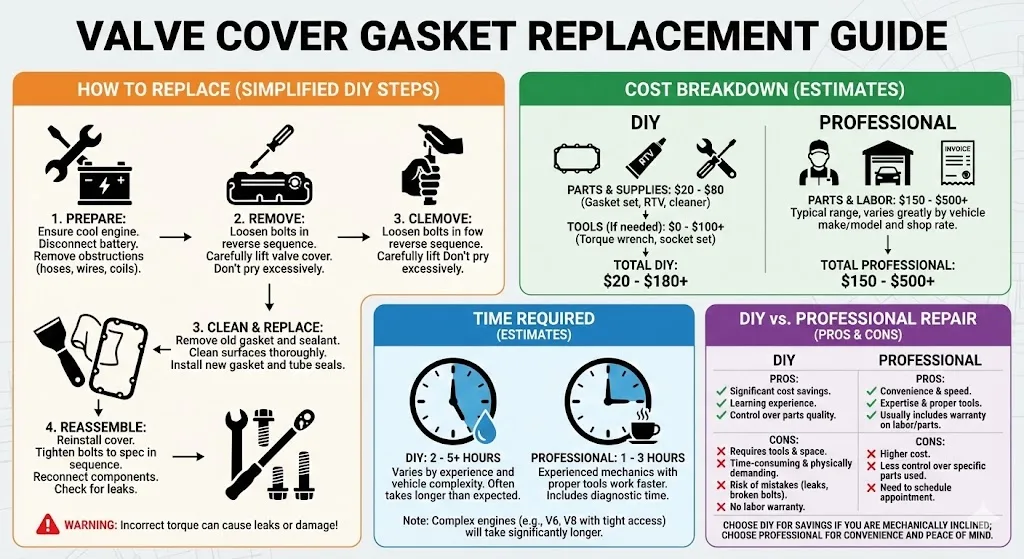
How to Replace a Valve Cover Gasket, Cost Breakdown, Time Required, and DIY vs Professional Repair
A leaking valve cover gasket is one of the most common engine oil leaks drivers encounter. While it may start as a minor seep, ignoring it can lead to oil loss, engine misfires, burning oil smells, and even damage to surrounding components. Many drivers ask how to replace a valve cover gasket, how much does it cost to replace a valve cover gasket, and whether you can replace a valve cover gasket yourself.
This in-depth guide explains what a valve cover gasket does, when to replace it, how hard a valve cover gasket replacement really is, how long it takes, and whether DIY replacement is a good idea. All guidance aligns with service standards used at Simi Valley Chrysler Dodge Jeep Ram.
For professional diagnosis and engine oil leak repair, visit:
https://www.simivalleychryslerdodgejeepram.com/service.aspx
What Is a Valve Cover Gasket?
The valve cover gasket is a rubber, silicone, or composite seal that sits between the valve cover and the cylinder head. Its job is to keep engine oil contained while allowing access to internal valve train components.
Over time, exposure to heat cycles causes the gasket to:
- Harden
- Shrink
- Crack
- Lose elasticity
Once this happens, oil begins to seep or leak from the top of the engine.
When to Replace a Valve Cover Gasket
Drivers often ask when to replace valve cover gasket or do you need to replace valve cover gasket.
Common signs include:
- Oil leaking onto the engine block
- Burning oil smell
- Oil pooling around spark plugs
- Engine misfires
- Low oil levels without visible drips
Even small leaks should not be ignored, as oil can damage ignition components and rubber hoses.
Simi CDJR technicians routinely identify valve cover gasket leaks during routine inspections.
https://www.simivalleychryslerdodgejeepram.com/service.aspx
What Happens If You Don’t Replace a Valve Cover Gasket?
Failing to replace a leaking gasket can lead to:
- Oil-soaked ignition coils
- Spark plug fouling
- Engine bay contamination
- Increased fire risk
- Premature engine wear
What starts as a minor repair can escalate into a more expensive service if left unresolved.
How Hard Is a Valve Cover Gasket Replacement?
One of the most common questions is how hard is it to replace a valve cover gasket.
The difficulty varies based on:
- Engine layout (inline vs V-engine)
- Accessibility
- Number of components blocking the valve cover
- Vehicle age
General difficulty:
- Inline 4-cylinder engines: moderate
- V6 engines: moderate to difficult
- V8 engines: moderate to complex
Some vehicles require removal of intake components, wiring harnesses, or ignition coils.
Can You Replace a Valve Cover Gasket Yourself?
Many people ask:
- Can you replace a valve cover gasket yourself?
- Can I replace a valve cover gasket myself?
The answer: Yes, but with conditions.
DIY replacement is possible if:
- You have mechanical experience
- You have the correct tools
- You can follow torque specifications
- You understand gasket seating procedures
DIY risks include:
- Over-torquing bolts
- Pinching the gasket
- Improper sealing
- Creating new leaks
Professional installation reduces these risks significantly.
How to Replace a Valve Cover Gasket (General Overview)
Searches like how to replace valve cover gasket or how to replace the valve cover gasket are extremely common. Below is a high-level overview.
Step 1: Disconnect Battery
Prevent accidental electrical damage.
Step 2: Remove Obstructions
Remove ignition coils, hoses, and wiring as required.
Step 3: Remove Valve Cover
Unbolt evenly and carefully lift the cover.
Step 4: Clean Surfaces
Old gasket material and oil residue must be removed completely.
Step 5: Install New Gasket
Seat the gasket properly into the valve cover groove.
Step 6: Reinstall Valve Cover
Torque bolts in sequence using manufacturer specifications.
Step 7: Reassemble Components
Reconnect all removed components and battery.
Improper torque is one of the most common causes of repeat leaks.
How Long Does It Take to Replace a Valve Cover Gasket?
Drivers frequently ask:
- How long does it take to replace valve cover gasket?
- How many hours to replace valve cover gasket?
Typical time estimates:
- Inline engines: 1 to 2 hours
- V6 engines: 2 to 4 hours
- V8 engines: 3 to 6 hours
Time varies based on accessibility and engine design.
At Simi CDJR, labor time is based on manufacturer flat-rate guidelines.
https://www.simivalleychryslerdodgejeepram.com/service.aspx
How Much Does It Cost to Replace a Valve Cover Gasket?
Cost is one of the most searched topics:
- How much to replace valve cover gasket
- How much does valve cover gasket replacement cost
- How much is labor for valve cover gasket replacement
Typical cost factors:
- Engine type
- Labor hours
- Gasket material
- Number of valve covers
General cost range:
- Parts: relatively affordable
- Labor: primary cost driver
Complex engines or multiple valve covers increase labor time and cost.
Professional service includes proper sealing, torque procedures, and leak verification.
How Much Should a Valve Cover Gasket Replacement Cost?
When drivers ask how much should a valve cover gasket replacement cost, they are often comparing quotes.
A proper replacement includes:
- New gasket
- Surface cleaning
- Correct torque sequence
- Leak inspection
Lower prices may indicate shortcuts, such as reusing old seals or skipping surface prep.
Where to Get Valve Cover Gasket Replaced
Another common query is where to get valve cover gasket replaced.
Dealership service offers:
- Manufacturer-trained technicians
- Factory torque specs
- OEM or approved gaskets
- Warranty-backed labor
Simi Valley Chrysler Dodge Jeep Ram performs valve cover gasket replacements following manufacturer standards.
https://www.simivalleychryslerdodgejeepram.com/service.aspx
Is Valve Cover Gasket Replacement Easy?
Drivers often ask:
- Is valve cover gasket easy to replace?
- Are valve cover gaskets easy to replace?
For experienced technicians, yes. For DIY beginners, it can be challenging due to:
- Tight spaces
- Torque sensitivity
- Risk of leaks
What seems simple can quickly become frustrating without proper tools.
Valve Cover Gasket Replacement vs Ignoring the Leak
Replacing the gasket:
- Prevents oil loss
- Protects engine components
- Restores cleanliness
- Prevents misfires
Ignoring the leak:
- Causes oil contamination
- Leads to secondary repairs
- Increases total repair cost
Preventative repair is always cheaper than reactive repair.
Why Professional Valve Cover Gasket Replacement Makes Sense
At Simi Valley Chrysler Dodge Jeep Ram, valve cover gasket service includes:
- Leak confirmation
- Proper gasket selection
- Torque-controlled installation
- Post-repair inspection
- Oil contamination cleanup
This ensures the repair is done correctly the first time.
https://www.simivalleychryslerdodgejeepram.com/service.aspx
Final Thoughts
A leaking valve cover gasket may seem minor, but it should never be ignored. Understanding how to replace a valve cover gasket, how long it takes, and how much it costs helps you make an informed decision about DIY versus professional service.
If you notice oil leaks, burning smells, or engine misfires, schedule an inspection at Simi Valley Chrysler Dodge Jeep Ram Service Center to prevent further damage and restore engine reliability.
https://www.simivalleychryslerdodgejeepram.com/service.aspx
Connect with us


