





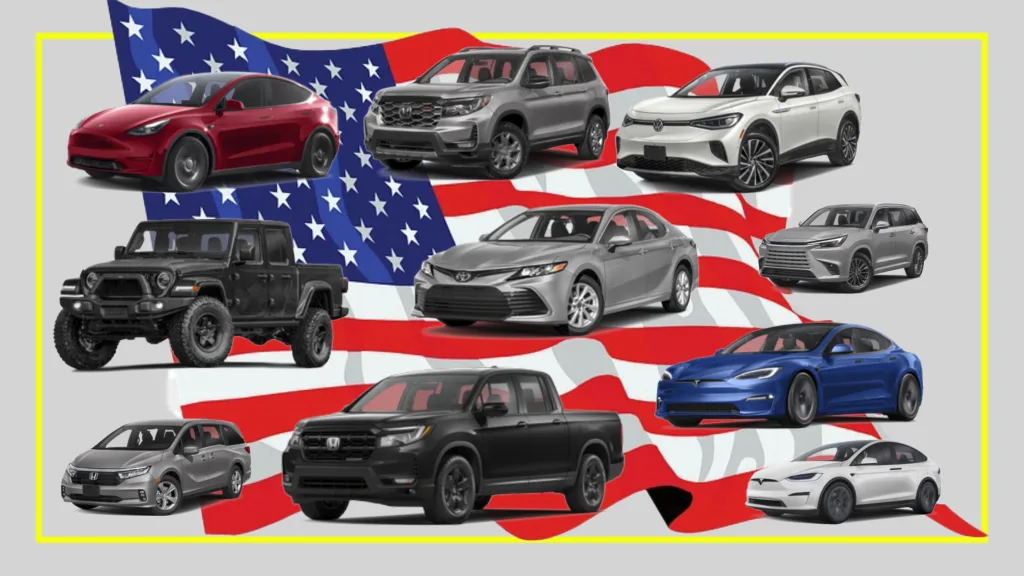
If you search what cars are made in America, you are probably expecting a simple list. But this is one of those automotive questions where the short answer is usually incomplete. Do you mean cars built by American brands? Cars assembled in the United States? Cars with the most U.S. and Canadian parts content? Or cars that contribute the most to the American economy through assembly, sourcing, and manufacturing jobs?
Those are not all the same thing.
That is exactly why this topic gets confusing so fast. A car can wear an American badge and still be built outside the United States. A foreign-branded car can be assembled in Alabama, Ohio, Indiana, Kentucky, South Carolina, or Texas. And a “made in America” label in the legal sense often depends on federal disclosure rules that do not match the casual way most shoppers talk about the subject.
The smartest answer starts here: cars made in America are generally cars assembled in the United States, but the full picture also includes parts sourcing, engine and transmission origin, and the jobs created by the vehicle’s production. The federal framework for this comes from the National Highway Traffic Safety Administration’s American Automobile Labeling Act reports, while Cars.com’s annual American-Made Index looks at several factors together to estimate which vehicles contribute most to the U.S. economy.
Why this question is more complicated than people expect
A lot of people assume the answer is just a brand list: Ford, Chevrolet, Cadillac, GMC, Dodge, Jeep, Ram, Tesla, Lincoln, Chrysler, and so on. But that is only one layer of the story.
For example, a vehicle can be sold by an American brand but assembled abroad. At the same time, a vehicle sold by Honda, Acura, Toyota, BMW, Mercedes-Benz, Volkswagen, Subaru, Kia, Hyundai, Nissan, or Lexus may be built in the United States depending on the model. That is why the phrase made in America needs a little more discipline than most casual discussions give it.
The U.S. government requires certain passenger vehicles to carry origin disclosures under the American Automobile Labeling Act. Those reports identify U.S./Canadian parts content, major foreign sources of parts, final assembly country, and engine and transmission origin. That means the official answer is not just about badge nationality. It is about where and how the vehicle is built.
What “made in America” usually means in the real world
In normal conversation, most people use “made in America” to mean assembled in the United States. That is the easiest version of the answer and often the most useful one.
But if you want a more serious answer, there are really three ways to think about it:
- American brands: brands headquartered in the United States or historically identified as American.
- Vehicles assembled in the U.S.: cars, trucks, SUVs, and EVs built at U.S. plants.
- Vehicles with high American economic contribution: those that combine U.S. assembly with strong domestic parts content and manufacturing employment.
Cars.com’s 2025 American-Made Index explicitly says it evaluates vehicles on five factors to determine how “American” a vehicle is, which is a much more useful consumer lens than just asking whether the badge is domestic.
American brands do not always build their cars in America
This is the first big misconception buyers need to drop.
Being an American brand does not automatically mean every model is built in the United States. Global manufacturing is too complex for that. Ford, General Motors, Stellantis, and Tesla all operate international production networks. That means some vehicles from American brands are built in the U.S., while others are assembled in Canada, Mexico, or elsewhere depending on the product and supply strategy.
So if your goal is specifically to buy a car built in America, you should not stop at the badge. You need to check where the vehicle is actually assembled.
That is exactly why the NHTSA AALA reports are useful. They list individual carlines along with final assembly country and related sourcing information.
Foreign brands build a lot of cars in America too
This is the part that surprises many shoppers. Some of the strongest “made in America” vehicles are not sold by Detroit brands at all.
Honda is one of the clearest examples. Honda says on its official U.S. manufacturing page that across 12 U.S. manufacturing plants, its associates build Honda and Acura vehicles and other products in the United States. Honda’s U.S. operations are not a token presence. They are a deeply embedded manufacturing network. The company’s Honda in America site makes that clear.
Honda’s Alabama operation is a particularly strong example. In February 2025, Honda said the Alabama Auto Plant launched production of the all-new 2026 Passport and Passport TrailSport and noted that more than 4,500 associates there manufacture Honda light trucks including the Passport, Pilot, Odyssey, and Ridgeline. That means some of the vehicles many shoppers casually think of as “Japanese” are absolutely built in America. (Honda in America)
Tesla is one of the strongest answers to this question
If you want one of the cleanest current examples of cars made in America, Tesla belongs near the top of the conversation.
Tesla’s official factory pages say the Fremont factory in California builds the Model S, Model 3, Model X, and Model Y, while Gigafactory Texas is the company’s global headquarters, a U.S. manufacturing hub for the Model Y, and the home of the Cybertruck. That means Tesla is not just an American brand in a corporate sense. It is also a major U.S. manufacturer in a literal plant-and-jobs sense. (Tesla Fremont Factory, Tesla Giga Texas)
That is one reason Tesla performs so strongly in Cars.com’s ranking. The 2025 American-Made Index says the Tesla Model 3 returned to the top spot for model-year 2025, with the Model Y, Model S, and Model X also placing near the top.
What cars are currently among the most American-made?
If you want the most useful practical answer, Cars.com’s American-Made Index is one of the best consumer-facing snapshots available because it blends assembly, parts, and employment logic rather than relying on badge nationalism.
According to Cars.com’s 2025 American-Made Index, the top 10 for model-year 2025 were:
- Tesla Model 3
- Tesla Model Y
- Tesla Model S
- Honda Passport
- Volkswagen ID.4
- Tesla Model X
- Jeep Gladiator
- Kia EV6
- Honda Odyssey
- Honda Ridgeline
That list tells you almost everything you need to know about how misleading the old mental model can be. Four of the top six are Teslas. Honda is heavily represented. Volkswagen and Kia also appear. And yes, an American-brand truck like the Jeep Gladiator is there too. That is what the modern U.S. manufacturing map looks like.
So which brands actually build vehicles in the United States?
A large number of brands build vehicles in America. Depending on the model year and plant allocation, the list commonly includes:
- Tesla
- Ford
n- Chevrolet - GMC
- Cadillac
- Jeep
- Ram
- Chrysler
- Lincoln
- Honda
- Acura
- Toyota
- Lexus
- Nissan
- Infiniti
- BMW
- Mercedes-Benz
- Volkswagen
- Subaru
- Kia
- Hyundai
The important point is that you should never assume all models from these brands are U.S.-built. Some are, some are not. Final assembly is model-specific.
That is why the AALA alphabetical report for model-year 2025 matters. It lets you check actual carlines rather than guessing from national stereotypes.
Why the AALA report matters more than random lists
A lot of internet lists about “cars made in America” are sloppy because they mix brand origin, assembly country, and patriotic marketing into one vague pile.
The NHTSA Part 583 / AALA reports are much better because they come from the federal disclosure framework. They do not tell you which car is “best,” but they do tell you where the vehicle is finally assembled and how much U.S./Canadian parts content is reported.
That is also why the label language can frustrate people. A car assembled in the U.S. may still have large foreign parts content. A vehicle assembled abroad may still come from an American brand. And because the law groups U.S. and Canadian parts content together, the label does not always match what some shoppers emotionally mean when they say “American made.”
Honda, not just Detroit, is a major American builder
Honda deserves its own section because it breaks a lot of lazy assumptions. Many people still think of Honda as a foreign automaker first and a U.S. manufacturer second. But Honda’s own U.S. manufacturing footprint is enormous.
On its official site, Honda says it operates broad manufacturing in America, and it continues to announce U.S.-built product launches from Alabama and other states. In March 2026, Honda even announced plans to export the U.S.-designed, developed, and built Honda Passport to Japan. That is one of the clearest examples of a vehicle that is not just sold in America but built here strongly enough to be exported out. (Honda in America)
That should reset how people think about “American-made” cars. The badge is not the whole story.
Tesla, Honda, and even Volkswagen can beat old assumptions
The modern “American-made” story is full of examples that would have sounded strange a decade or two ago.
A Tesla often scores as more American-made than many Detroit vehicles. A Honda SUV or minivan can be one of the most American-made vehicles on sale. A Volkswagen EV like the ID.4 can rank high in an American-made list.
That does not make Ford, Chevy, Jeep, or Ram unimportant. It just means American auto manufacturing is now a web of domestic plants, global suppliers, cross-border content, and model-specific production plans. That is why the consumer needs a better question than “Is this a U.S. brand?”
The better question is: Where is this exact model assembled, and how strong is its domestic manufacturing footprint?
If you want to buy a car made in America, how should you check?
There are three strong ways to verify it.
First, check the Cars.com American-Made Index if you want an easy consumer-facing ranking.
Second, check the NHTSA AALA reports if you want official disclosure data on assembly country, parts content, and major component origin.
Third, check the manufacturer’s own plant or U.S.-manufacturing pages, especially if you are interested in a specific model. Tesla, Honda, BMW, Mercedes-Benz, Toyota, Subaru, and others often publish official plant information.
That three-step approach is much better than trusting dealership copy or vague “built here” slogans.
So what cars are made in America?
The most accurate answer is this: many cars are made in America, but the list includes both American and foreign brands. Vehicles commonly built in the U.S. include models from Tesla, Ford, Chevrolet, Jeep, Ram, Honda, Acura, Toyota, Volkswagen, BMW, Mercedes-Benz, Subaru, Kia, and others. The exact answer depends on the specific model, trim, and model year.
If you want the strongest current shorthand examples, the 2025 American-Made Index says the Tesla Model 3, Tesla Model Y, Tesla Model S, Honda Passport, Volkswagen ID.4, Tesla Model X, Jeep Gladiator, Honda Odyssey, and Honda Ridgeline are among the strongest answers. (Cars.com 2025 AMI)
Final verdict
If you ask what cars are made in America, the old answer would have been a badge list. That answer is no longer good enough.
Today, a car made in America usually means a vehicle assembled in the United States, but the full reality also includes parts sourcing, engine and transmission origin, and manufacturing employment. That is why some of the most American-made vehicles on sale are Teslas, Hondas, and even Volkswagens, not just traditional Detroit products. (Cars.com AMI, NHTSA AALA Reports)
So the smartest version of the answer is not “only American brands.” It is this: cars made in America come from many brands, and the only reliable way to know is to check where the specific model is assembled and how it performs on official or well-documented American-made metrics.
Connect with us


