





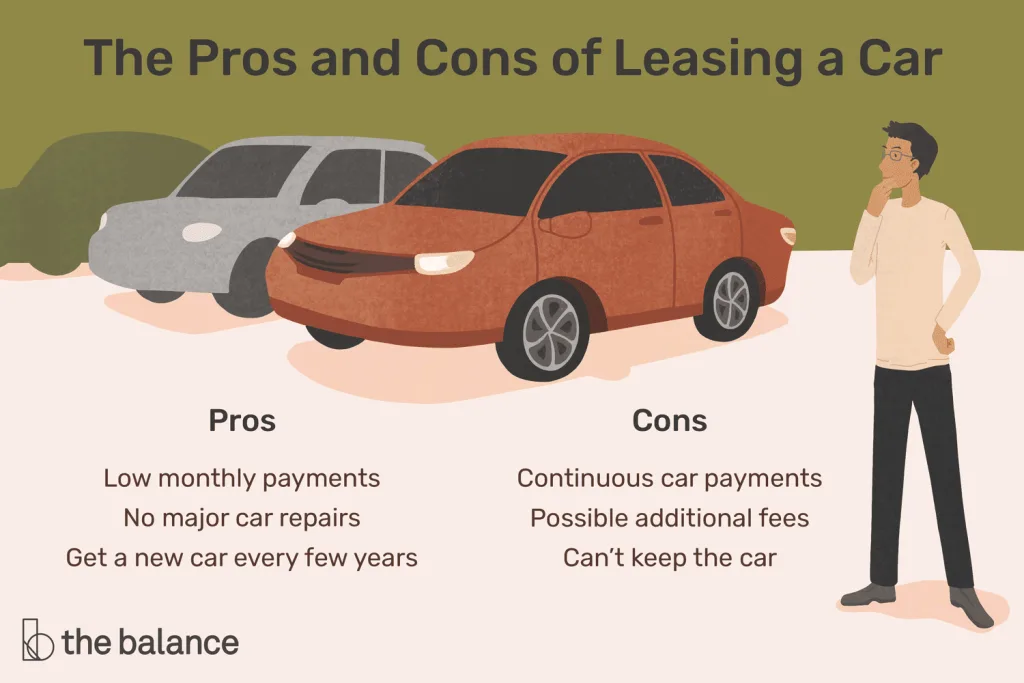
If you search how does leasing a car work, you are probably not looking for the fluffy version. You want to know what you are actually paying for, why lease payments can look lower than finance payments, what residual value really means, why mileage limits matter so much, and whether leasing is smart or just a way to get trapped in an endless cycle of car payments.
That is the real buyer question. Not just “what is a lease,” but how the math and the contract actually work in real life.
The short answer is this: when you lease a car, you are usually paying for the vehicle’s depreciation during the lease term, plus finance charges, taxes, fees, and any other contract costs. You do not typically pay for the full value of the vehicle the way you would with a purchase loan. The Consumer Financial Protection Bureau explains that with a standard lease, most of your monthly payment goes toward the amount the vehicle depreciates over the lease term, and you also pay a monthly fee to the lender for renting the vehicle. (Consumer Financial Protection Bureau)
What leasing a car actually means
A car lease is a contract that lets you use a vehicle for a set period, usually while making monthly payments under specific terms and limits. The legal structure behind this comes from the Consumer Leasing Act, which governs consumer leases longer than four months for personal, family, or household use and requires certain disclosures about lease costs and terms. (Federal Trade Commission)
In plain English, leasing is closer to paying for the portion of the car you use than paying to own the full vehicle. You get the car for a fixed number of months, usually 24 to 48, you agree to mileage and condition rules, and at the end you generally return it, buy it, or sometimes lease another one. CFPB auto-finance examination materials describe a lease as an agreement that lets the lessee use the vehicle for a set number of months, typically 12 to 48, while making payments to the lessor. (files.consumerfinance.gov)
Why lease payments are often lower than finance payments
This is the part that attracts most shoppers first. Lease payments often look cheaper than loan payments for the same vehicle. That is because with a purchase loan, you are normally paying down the entire price of the vehicle over time, plus finance charges. With a lease, you are usually paying for the expected depreciation during your lease term, plus rent charge or finance charge, fees, and taxes. The CFPB explains this directly in its leasing-versus-buying guidance. (Consumer Financial Protection Bureau)
That lower monthly number can make a more expensive car feel reachable. But it does not necessarily mean leasing is cheaper overall. It means the payment is structured differently. In many cases, leasing buys you a lower monthly obligation in exchange for not building ownership unless you later exercise a purchase option. The FTC also frames leasing as a distinct financing path from buying, with different obligations and tradeoffs. (Consumer Advice)
The main pieces of a car lease
If you want to understand how leasing works, you need to understand the parts that make up the deal.
1. Capitalized cost
The capitalized cost is basically the starting price used in the lease calculation. Federal model lease disclosures describe gross capitalized cost as the agreed-upon value of the vehicle plus certain other amounts that may be rolled into the lease, such as service contracts, insurance products, or outstanding prior balances in some cases. (Federal Reserve)
This matters because people sometimes focus only on the monthly payment and ignore the negotiated vehicle price. That is a mistake. Even in a lease, the price of the vehicle still matters because it affects how much depreciation you are financing over the term. NerdWallet’s lease guide also emphasizes negotiating the vehicle price rather than only shopping by payment. (NerdWallet)
2. Capitalized cost reduction
This is the amount that reduces the starting balance used in the lease. Federal disclosure forms define capitalized cost reduction as cash, rebates, trade equity, or other credits that lower the gross capitalized cost. (Federal Reserve)
This is why a dealer can advertise a very low lease payment with “$3,999 due at signing” or something similar. A chunk of money is being pushed upfront to lower the financed amount. That does lower the monthly payment, but it also means you are putting more money at risk upfront. CFPB guidance encourages consumers to look closely at the full cost structure rather than only the monthly payment. (Consumer Financial Protection Bureau)
3. Residual value
Residual value is the vehicle’s predicted value at the end of the lease. This is one of the most important numbers in the entire contract, because your payment is heavily shaped by the difference between the capitalized cost and the residual value. The higher the residual value, the less depreciation you are paying for during the lease term, and usually the lower the monthly payment. CFPB’s lease-payment explanation specifically includes depreciation over the lease term as a key driver of payment structure. (Consumer Financial Protection Bureau)
This is also why some vehicles lease much better than others. Cars expected to hold value well often produce stronger lease programs because the depreciation portion is smaller.
4. Rent charge or finance charge
A lease is not free money. Even though you are not buying the whole vehicle, you still pay a financing cost for the lease. CFPB says that with a standard lease, you pay a monthly fee to the lender for renting the vehicle. Federal lease disclosures also require finance-related amounts to be shown in specific ways. (Consumer Financial Protection Bureau)
This is why a lease payment is not just depreciation divided by months. There is still a cost of money built into the transaction.
5. Mileage limit
Most leases come with a mileage cap. Common limits might be 10,000, 12,000, or 15,000 miles per year, depending on the contract. If you go over, you usually pay an excess-mileage charge at lease-end. CFPB’s lease-vs-buy guidance specifically warns that leases have mileage limits and that going over them can cost you more. (Consumer Financial Protection Bureau)
Mileage is one of the easiest ways to turn a lease from a decent fit into a bad fit. If you drive a lot, a low-mileage lease can become expensive quickly.
6. Wear-and-tear rules
A leased vehicle must usually be returned in acceptable condition, minus normal wear. That means dents, scratches, tire wear, interior damage, glass damage, and other issues may create end-of-lease charges depending on the contract and inspection outcome. Federal model lease forms specifically tell consumers to review lease documents for information on maintenance responsibilities, warranties, and end-of-lease terms. (Federal Reserve)
This is another area buyers underestimate. A lease is not just about making payments. It is also about returning the vehicle under the contract’s condition standards.
How a lease payment is calculated
At a high level, the payment usually comes from this logic:
- Start with the negotiated vehicle value and related rolled-in amounts.
- Subtract any cap cost reduction.
- Estimate the vehicle’s end-of-lease value.
- Charge you for the depreciation between those two values.
- Add rent charge, taxes, and fees.
That is the framework CFPB uses in its explanation of standard lease payments. (Consumer Financial Protection Bureau)
So if two vehicles have the same sticker price, they can still lease very differently. A model with stronger residual value can have a much lower payment than a model that is expected to depreciate faster.
What “due at signing” really means
This phrase confuses a lot of people because it can include several things at once: first payment, security deposit if applicable, acquisition fee, registration fees, taxes, and cap cost reduction. The federal lease disclosure form breaks out several of these categories so consumers can see what they are paying at signing and what is being financed into the lease instead. (Federal Reserve)
This matters because a flashy advertised lease payment can look great until you realize it depends on several thousand dollars due upfront. The FTC’s advertising guidance on consumer leases exists largely because lease advertising can otherwise make deals look cleaner than they really are. (Federal Trade Commission)
How lease advertising can mislead people
Lease ads often highlight the lowest attractive number first: “$299/month” or “$349/month.” But under Regulation M and the Consumer Leasing Act, advertisers must provide certain additional disclosures when specific trigger terms are used, including details around total due at signing, number and timing of payments, and whether a security deposit is required. (Federal Trade Commission)
That does not mean lease ads are fake. It means you should never judge a lease offer by the monthly figure alone. You need to know:
- how much is due upfront,
- how many months the term runs,
- the mileage allowance,
- whether taxes are included,
- and what end-of-lease obligations apply.
What happens at the end of a lease
This is one of the most important parts of the whole process, and many shoppers barely think about it when signing.
At the end of a typical lease, you generally have three broad paths:
- Return the car
- Buy the car for the amount stated in the contract or purchase option terms
- Lease or buy another vehicle
Federal model forms explicitly tell consumers to review lease documents for information on purchase options, early termination, maintenance obligations, and other end-of-lease details. (Federal Reserve)
This is where residual value becomes very real. If your lease-end purchase option is attractive relative to the car’s actual market value, buying the car may make sense. If the car is worth less than the residual, returning it may be smarter.
Can you buy the car at the end?
Usually yes, if the lease includes a purchase option. Many auto leases do. The purchase price is often tied to the residual value stated in the contract, though the exact terms should be in the lease documents. Federal lease forms explicitly reference purchase options as something consumers should review in the lease agreement. (Federal Reserve)
This is one reason some people like leasing. It gives them a trial period with the vehicle before deciding whether to keep it long-term. But that only works well if the contract’s buyout terms and the vehicle’s real market value line up in your favor.
What if you want out early?
Early termination is one of the weak spots of leasing. Lease contracts can impose significant costs if you try to exit before the term ends. CFPB materials emphasize reviewing lease terms carefully, and federal model disclosures call attention to early termination information in the contract. (files.consumerfinance.gov)
That is why leasing usually works best for drivers who are confident about their near-term driving needs and vehicle timeline. If your job, commute, family size, or budget may change soon, a lease can become restrictive.
Who leasing usually works best for
Leasing tends to make the most sense for people who:
- want a lower monthly payment than financing the same new vehicle,
- like driving a newer car every few years,
- drive predictable annual mileage,
- want warranty coverage during most or all of the time they have the vehicle,
- and are comfortable not owning the car unless they buy it later.
CFPB’s lease-versus-buy guidance highlights lower monthly payments as a possible benefit, while also pointing out mileage limits and end-of-lease obligations as important tradeoffs. (Consumer Financial Protection Bureau)
Who leasing can work badly for
Leasing is often a poor fit for people who:
- drive a lot,
- are rough on vehicle condition,
- want to build equity,
- keep cars for many years,
- or may need to exit the contract early.
That is not anti-lease bias. It is just how the structure works. A lease is a contract built around short-term controlled use. If your life or driving pattern does not fit that structure, the math can turn against you quickly. FTC and CFPB materials both stress careful comparison of leasing versus buying before signing. (Consumer Advice)
Leasing versus buying
The cleanest way to think about it is this:
Buying is better for long-term ownership, equity-building, and unlimited use after payoff.
Leasing is better for shorter-term use, lower monthly payments in many cases, and frequent vehicle turnover.
CFPB specifically advises consumers to compare lease terms with buying terms and understand the different costs and obligations attached to each. Regulation M itself is designed to help consumers compare lease terms with credit transactions when appropriate. (Consumer Financial Protection Bureau)
So the right question is not “Is leasing good or bad?” It is “Does leasing fit how I actually use a car?”
The smartest way to evaluate a lease
Before signing, you should know:
- the negotiated vehicle price,
- the total amount due at signing,
- the monthly payment,
- the mileage limit,
- the excess-mileage charge,
- the end-of-lease wear standards,
- the residual value or purchase option terms,
- and the early-termination language.
Those are not side details. They are the core of how a lease works. Federal disclosure rules exist precisely so consumers can compare these terms meaningfully. (Federal Reserve)
Final verdict
A car lease works by charging you mainly for the vehicle’s depreciation during the lease term, plus finance charges, taxes, and fees, instead of having you pay off the entire vehicle like a purchase loan. That is why lease payments are often lower, but also why you usually face mileage limits, condition standards, and end-of-lease decisions. (Consumer Financial Protection Bureau)
So if you want the cleanest real-world answer to how does leasing a car work, it is this: you are renting the vehicle under a structured long-term contract where the payment is driven by depreciation, residual value, and contract terms, not by full ownership. Whether that is smart depends entirely on how you drive, how long you keep cars, and how carefully you read the lease before signing. (Federal Trade Commission)
Connect with us


