





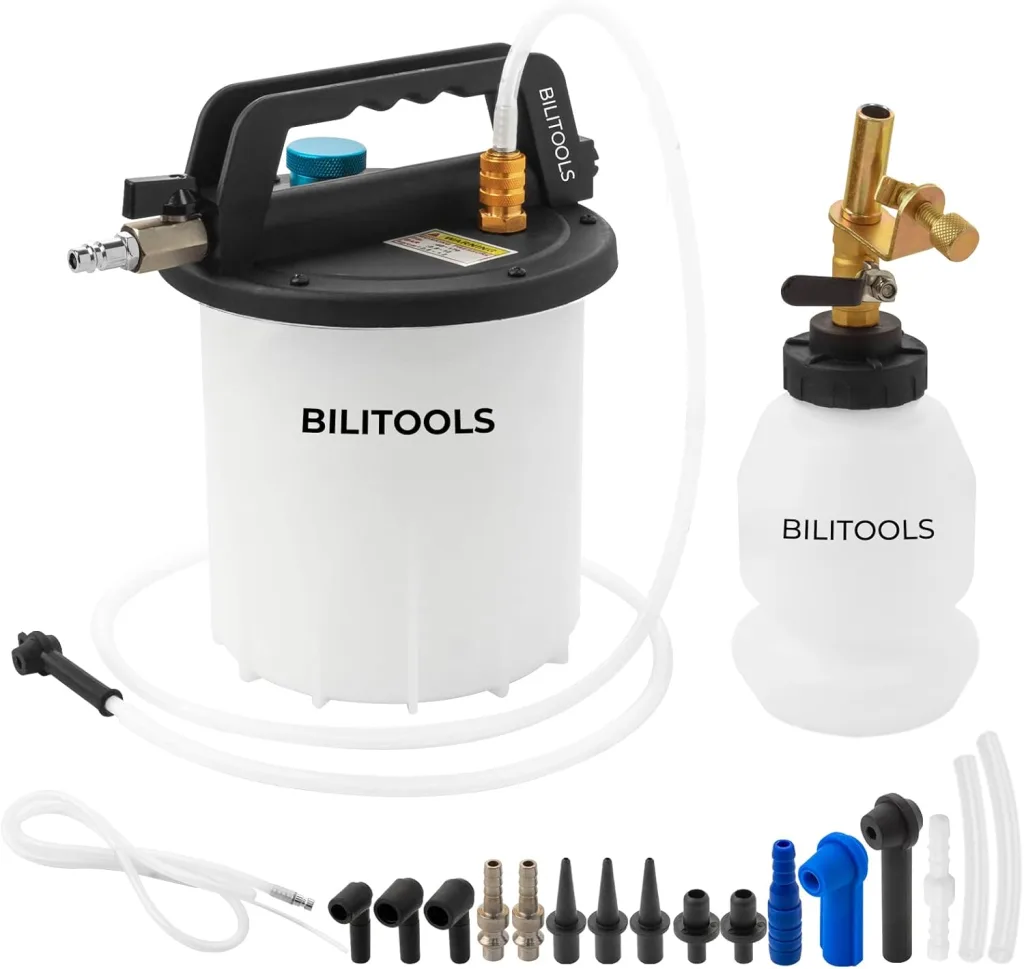
If you are trying to choose the right brake bleeder kit, learn how bleeding brakes works, or figure out whether you need a vacuum brake bleeder, brake pressure bleeder, or a simple one man brake bleeder kit, this is the guide that covers it properly.
Brake bleeding sounds simple, but it is one of those jobs people mess up all the time. A small mistake can leave you with a soft pedal, trapped air, wasted brake fluid, stripped bleeder screws, or in the worst case, unsafe braking performance. That is why understanding the process matters just as much as buying the right brake bleeder tool.
This guide explains:
- what a brake bleeder actually does,
- the different types of brake bleeding kits,
- the best methods for bleeding brakes by yourself,
- how to bleed ABS systems,
- common mistakes when bleeding brake lines,
- and how to choose the best brake bleeder kit for your garage.
What Is a Brake Bleeder?
A brake bleeder is any tool or setup used to remove air from a hydraulic brake system. Since brake systems rely on incompressible brake fluid to transfer force, any air trapped in the lines causes a spongy pedal and reduced braking performance.
When you open a bleeder screw and force fluid through the system, you push out trapped air bubbles. That process is called brake bleeding.
You usually need to bleed brakes after:
- replacing calipers,
- replacing brake hoses or hard lines,
- changing a master cylinder,
- installing wheel cylinders,
- opening the hydraulic system for repairs,
- or when the pedal feels soft and air contamination is suspected.
In some cases, a full flush is also done simply because old brake fluid absorbs moisture over time.
Why Bleeding Brakes Matters
A brake system works on hydraulic pressure. When you press the brake pedal, the master cylinder pushes fluid through lines to the calipers or wheel cylinders. If there is air in the system, that air compresses. Fluid does not compress the same way, but air does. That is what causes the mushy pedal feel.
Proper brake bleeding restores:
- firm pedal feel,
- consistent braking response,
- better modulation,
- safer stopping performance.
You are not just doing maintenance. You are restoring hydraulic integrity.
Types of Brake Bleeder Kits
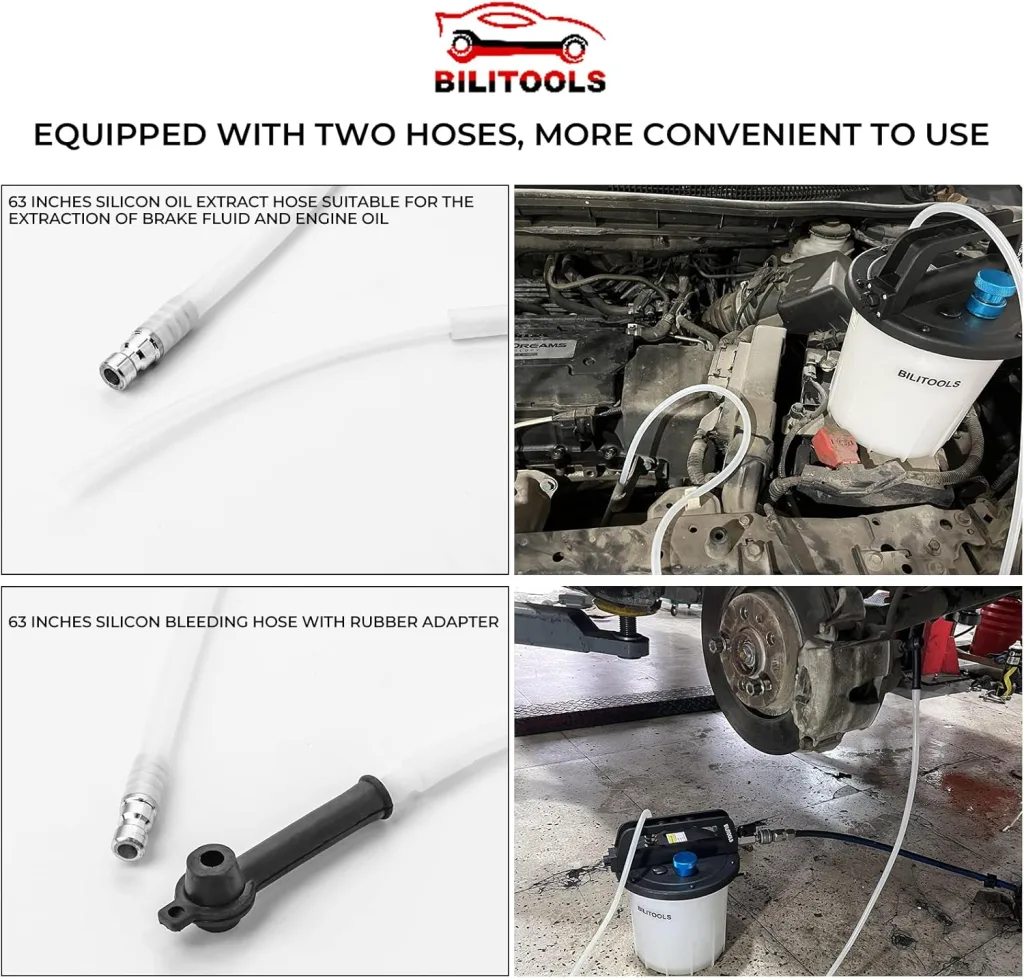
Not all brake bleeder kits work the same way. Choosing the right type depends on your budget, how often you work on brakes, and whether you usually work alone.
1. Manual two-person brake bleeding
This is the old-school method. One person pumps the brake pedal while another opens and closes the bleeder screw.
How it works
- One person pumps the pedal several times.
- The helper holds the pedal down.
- The second person opens the bleeder valve.
- Air and fluid escape.
- The bleeder is closed before the pedal is released.
Pros
- Cheap
- No special tools required
- Effective when done correctly
Cons
- Requires two people
- Easy to mess up timing
- Can overstroke an old master cylinder
- More annoying than modern methods
This still works, but it is not the best option for most DIYers today.
2. Vacuum brake bleeder
A vacuum brake bleeder uses suction at the bleeder screw to pull brake fluid and air through the system. This is one of the most popular options for DIY use.
It is often sold as a brake bleeder vacuum pump, vacuum brake bleeder kit, or brake bleeder and vacuum pump kit.
Pros
- Good for one-person operation
- Affordable
- Easy to use on many vehicles
- Useful for general fluid extraction tasks too
Cons
- Can pull false air past bleeder screw threads
- Sometimes confusing for beginners
- Requires good hose sealing
- May be slower on stubborn systems
If someone wants a practical one person brake bleeder, vacuum kits are often the first serious upgrade from the basic bottle-and-hose method.
3. Pressure brake bleeder
A brake pressure bleeder attaches to the master cylinder reservoir and pressurizes the system from the top. This pushes brake fluid through the lines and out the bleeder screws.
It is also called a pressure brake bleeder, pressurized brake bleeder, or power brake bleeder.
Pros
- Excellent for full system flushing
- Very effective for one-person use
- Fast and clean
- Often the best method for modern vehicles
- Great for consistent fluid flow
Cons
- Costs more than basic methods
- Requires the correct reservoir cap adapter
- Can make a mess if improperly sealed
- Needs careful pressure management
For many enthusiasts and serious home mechanics, a pressure brake bleeder is the best all-around tool.
4. Pneumatic brake bleeder
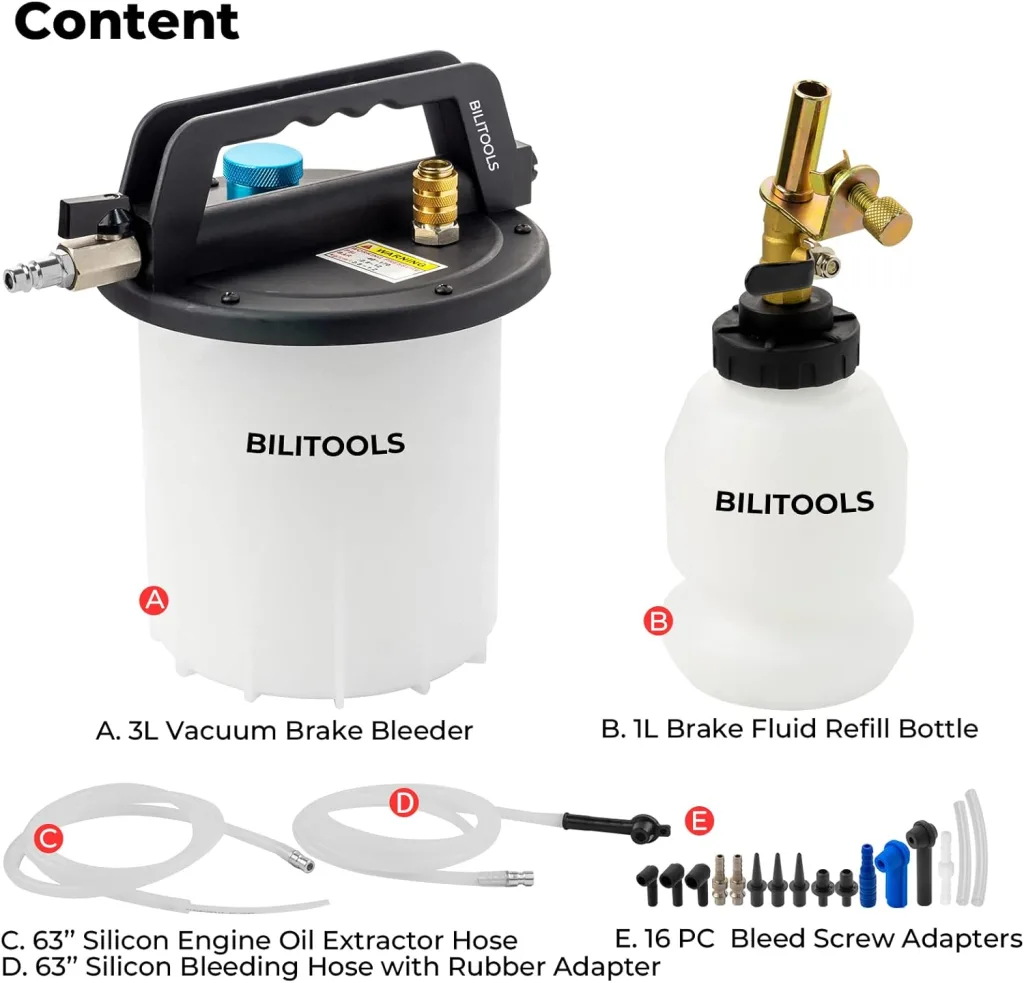
A pneumatic brake bleeder uses compressed air to generate vacuum or assist fluid extraction. These are more common in shop environments.
Pros
- Fast
- Good for repeated shop use
- Less manual effort
Cons
- Requires an air compressor
- Less practical for casual users
- More equipment involved
If you work on brakes frequently, this can be worthwhile. For occasional DIY jobs, a manual vacuum or pressure setup is usually more sensible.
5. One man brake bleeder kit
A one man brake bleeder kit is a general category. It may be vacuum-based, pressure-based, or use a simple one way brake bleeder valve or check-valve bottle setup.
Pros
- Lets you bleed brakes by yourself
- Great for DIY garages
- Available in many price ranges
Cons
- Cheap kits vary wildly in quality
- Simple check-valve kits are less reliable than pressure systems
- Not all designs work equally well on stubborn ABS systems
If your main goal is bleeding brakes by yourself, this is the category to shop carefully.
Brake Bleeder Tools You Should Know
A complete brake bleeding job often involves more than just one tool.
Brake bleeder wrench
A brake bleeder wrench is sized to fit bleeder screws without rounding them off. This matters more than people think. Bleeder screws strip easily.
Brake bleeder hose
A clear brake bleeder hose lets you see air bubbles and fluid color. It is one of the simplest but most helpful tools in the whole job.
Brake bleeder bottle
A brake bleeder bottle collects old fluid and helps you monitor bubbles. Many low-cost one-person kits rely on this.
Brake bleeder screw
The brake bleeder screw or brake bleeder valve is the small valve on the caliper or wheel cylinder that you open during bleeding. If it is seized, rusted, or damaged, your job becomes much harder.
Brake master cylinder bleeder kit
A brake master cylinder bleeder kit is usually for bench bleeding a master cylinder before installation. This is different from wheel-end bleeding and is essential when replacing the master cylinder.
The Best Brake Bleeder Kit for Different Users
Best for beginners
A quality vacuum brake bleeder kit is usually the easiest place to start. It is affordable, beginner-friendly, and lets one person do the job.
Best for serious DIYers
A brake pressure bleeder is often the best choice overall. It is cleaner, more consistent, and usually better for full fluid flushes.
Best for shops
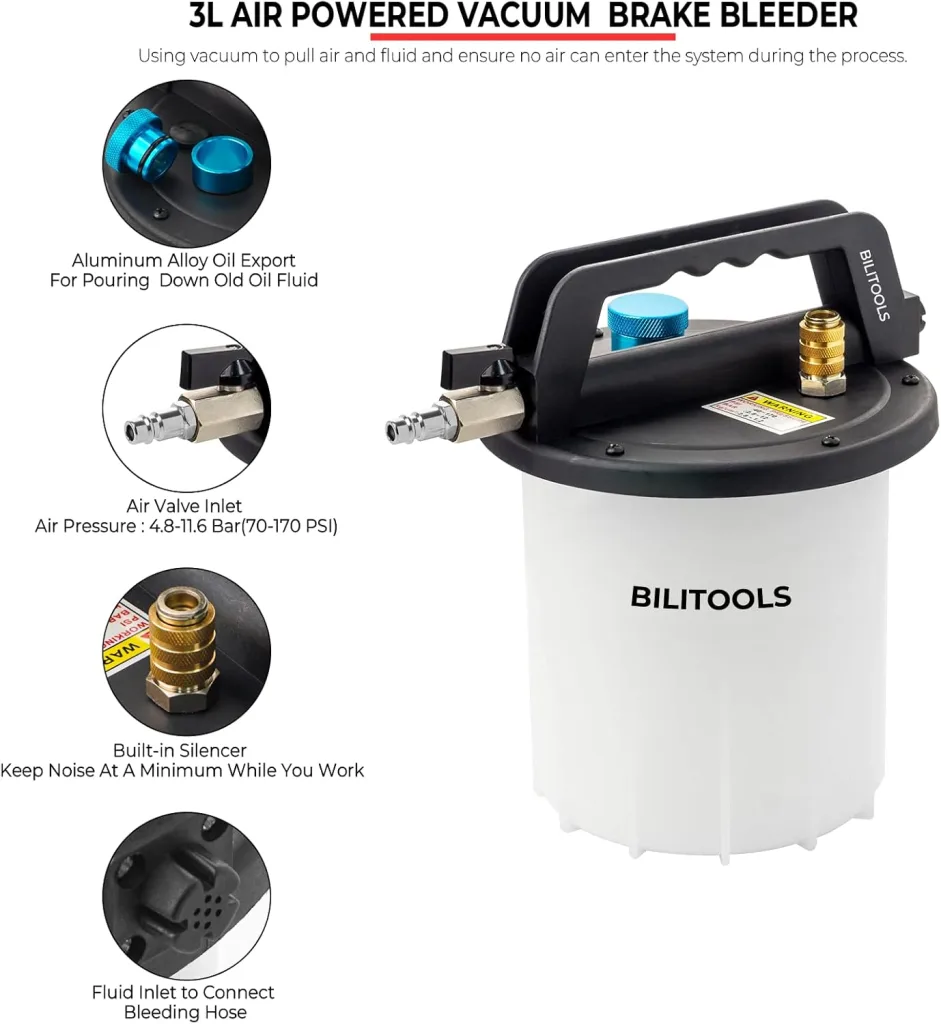
A pneumatic brake bleeder or high-quality power brake bleeder makes sense if you do brake work regularly.
Best for occasional users
A one man brake bleeder kit with a bottle, hose, and check valve can work, but quality matters. Cheap kits can waste time.
Best for ABS-heavy modern vehicles
A pressure brake bleeder is often the better starting point, especially when followed by the correct ABS bleed procedure for the vehicle.
How to Bleed Brakes Properly
Now let’s get into the actual brake bleeding procedure.
Step 1: Gather the right tools
You will usually need:
- correct brake fluid type,
- brake bleeder kit,
- wrench for bleeder screws,
- clear hose,
- catch bottle,
- gloves,
- eye protection,
- jack and stands if wheels need to come off,
- shop towels,
- penetrating oil if bleeders are rusty.
Do not start if you are not sure what brake fluid spec your vehicle requires.
Step 2: Bench bleed the master cylinder if it was replaced
If you installed a new master cylinder, you should usually bench bleed it first using a master brake cylinder bleeding kit or brake master cylinder bleeder kit.
If you skip this, you may fight trapped air for much longer than necessary.
Step 3: Keep the master cylinder reservoir full
This is one of the most important rules in all of bleeding brakes.
Never let the reservoir run dry.
If it runs dry, you introduce new air into the system and may have to start all over again.
Step 4: Follow the correct brake bleeding sequence
The basic brake bleeding sequence on many vehicles is to start with the wheel farthest from the master cylinder and work toward the closest.
A common sequence is:
- Right rear
- Left rear
- Right front
- Left front
But not every vehicle uses the same order. Some diagonal systems, ABS systems, and specific OEM procedures differ. Always verify for your exact vehicle if possible.
Step 5: Use your chosen bleeding method
Manual method
- Pump pedal slowly
- Hold pedal down
- Open bleeder
- Let fluid and air out
- Close bleeder
- Release pedal
- Repeat until no bubbles
Vacuum brake bleeder method
- Attach hose securely to bleeder screw
- Apply vacuum
- Open bleeder screw
- Draw fluid until no bubbles remain
- Monitor reservoir constantly
Pressure brake bleeder method
- Attach pressure bleeder to reservoir
- Pressurize to safe specified level
- Open bleeder screw at each corner
- Let fluid run until clear and bubble-free
- Close bleeder and move to next wheel
Bleeding Brakes by Yourself
Many people search for bleeding brakes by yourself, bleeding brakes one person, one person brake bleeder, or 1 person brake bleeder kit because solo brake work is common.
The best ways to do it alone are:
1. Pressure bleeder
Usually the most reliable one-person method.
2. Vacuum brake bleeder
Very effective if your hose connections seal well and you understand false bubble issues.
3. Check valve bottle kit
Works, but usually less refined and less consistent than the two methods above.
If you ask me for the best solo method overall, the answer for most modern vehicles is a brake pressure bleeder.
Bleeding Brakes With a Mityvac
Bleeding brakes with a Mityvac is one of the most searched brake service methods for a reason. A Mityvac-style hand pump is a common brake bleeder vacuum pump setup.
Best practices
- Wrap bleeder threads lightly if needed to reduce false air
- Keep the hose tight
- Pull vacuum before opening the bleeder
- Watch actual fluid movement, not just tiny bubbles
- Refill the reservoir constantly
One thing beginners often misunderstand: vacuum systems can sometimes show bubbles that are not actually from trapped air in the brake line, but from tiny air leaks around the bleeder screw threads. That does not automatically mean the system is still full of air.
Bleeding Brakes With a Pressure Bleeder
Bleeding brakes with a pressure bleeder is one of the cleanest and most efficient methods.
Why it works so well
Instead of sucking fluid from the caliper end, it pushes fluid from the master cylinder down through the entire hydraulic system. That usually gives smoother, more consistent flow.
Best practices
- Use the correct cap adapter
- Do not overpressurize
- Check for leaks before starting
- Protect painted surfaces from brake fluid
- Use fresh brake fluid only
For many serious DIYers, a power brake bleeder is the best investment in brake service tools.
Bleeding Brakes on ABS Systems
Bleeding brakes on ABS system jobs can be straightforward or annoying depending on what was replaced and how much air entered the system.
In many standard pad-and-caliper jobs, a normal bleed may be enough.
But if:
- the master cylinder ran dry,
- the ABS hydraulic control unit got air in it,
- major line work was done,
- or the manufacturer requires special cycling procedures,
then you may need an ABS brake bleeding scan tool.
Some ABS systems require electronically cycling the ABS pump and valves to purge trapped air. Without that scan tool function, you can end up with a pedal that still feels wrong even after ordinary bleeding.
So for bleeding brakes with ABS or bleeding brakes with ABS system, remember this:
A normal brake bleeder kit may not be enough if air is trapped inside the ABS module.
Common Mistakes When Bleeding Brakes
Searches for common mistakes when bleeding brakes are popular because people make the same errors over and over.
1. Letting the reservoir run dry
This is the biggest mistake.
2. Using the wrong fluid
DOT 3, DOT 4, DOT 5, and DOT 5.1 are not interchangeable in every case.
3. Opening bleeders too far
You only need them cracked open, not fully backed out.
4. Stripping bleeder screws
Use the correct brake bleeder wrench and be gentle.
5. Misreading vacuum bubbles
Tiny bubbles may come from bleeder threads, not trapped system air.
6. Pumping the pedal too aggressively
Fast pumping can aerate fluid.
7. Ignoring ABS procedure requirements
Some vehicles need scan tool activation.
8. Reusing contaminated fluid
Never do this.
9. Spilling brake fluid on paint
Brake fluid damages painted surfaces fast.
10. Bleeding in the wrong sequence
Always verify the correct order for the vehicle.
Brake Bleeding Pressure: How Much Is Too Much?
When using a brake pressure bleeder, more pressure is not automatically better.
Too much pressure can:
- cause reservoir leaks,
- make a mess,
- damage seals,
- or create unnecessary risk.
Most DIY pressure bleeder setups are run at modest pressure, not extreme pressure. Always follow tool and vehicle guidance. The goal is controlled hydraulic flow, not brute force.
Signs Your Brake Bleeding Worked
After proper brake bleeding, you should usually notice:
- firmer pedal feel,
- more consistent pedal height,
- no obvious sponginess,
- improved braking response,
- clean fluid at the bleeder,
- no visible bubbles in final flow.
If the pedal is still soft, possible reasons include:
- air still trapped in the system,
- rear brake adjustment issues on drum systems,
- master cylinder problems,
- flexible hose expansion,
- ABS module air,
- or external leaks.
Brake Bleeder Kit Buying Guide
If you are shopping for the best brake bleeder kit, here is the simplest way to decide.
Choose a vacuum brake bleeder if:
- you want affordable one-person bleeding,
- you are a beginner,
- you want a multi-purpose vacuum tool,
- you only do brake jobs occasionally.
Choose a pressure brake bleeder if:
- you work on your own vehicles regularly,
- you want faster full fluid flushes,
- you want the best one-person workflow,
- you work on newer cars often.
Choose a pneumatic brake bleeder if:
- you already have compressed air,
- you do frequent brake service,
- you want shop-style speed.
Choose a basic one-man bottle kit if:
- budget is extremely tight,
- you only do occasional simple bleeding,
- you understand its limitations.
Final Verdict
The best approach to brake bleeding depends on how often you do the job and what kind of vehicles you work on.
For the average DIYer, a quality vacuum brake bleeder kit is a strong starting point.
For the enthusiast or serious home mechanic, a brake pressure bleeder is often the best overall solution because it makes bleeding brakes by yourself cleaner, faster, and more consistent.
For shop use, a pneumatic brake bleeder or higher-end power brake bleeder usually makes the most sense.
No matter which brake bleeder tool you use, the fundamentals stay the same:
- keep the reservoir full,
- use the correct fluid,
- follow the proper brake bleeding sequence,
- do not rush,
- and understand when an ABS system needs scan tool intervention.
That is what separates a quick brake job from a correct one.
Connect with us


