





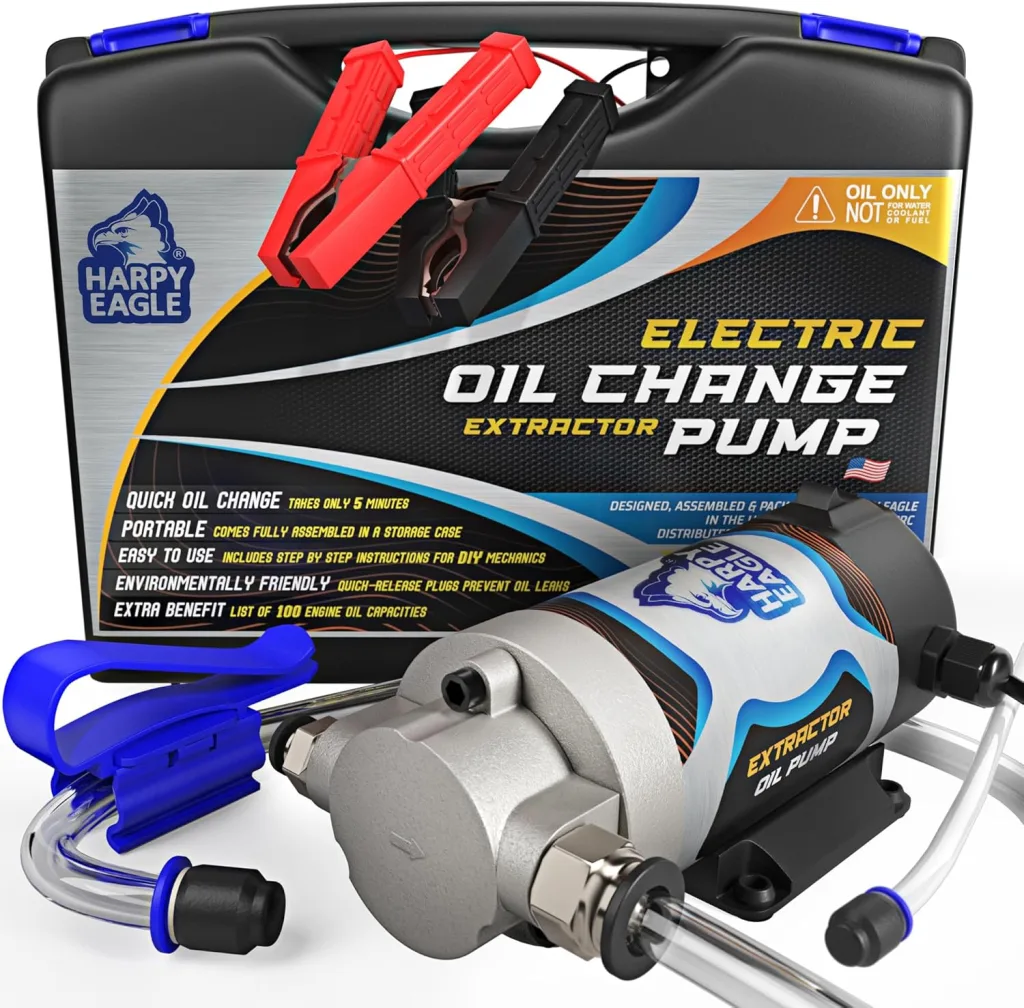
If you are shopping for an oil change pump extractor, chances are you want the same three things every DIYer wants: less mess, less time under the vehicle, and a faster way to pull used oil out of an engine. That is exactly the niche the Harpy Eagle Electric Oil Change Extractor Pump 12/24V 100W is trying to fill.
According to the product listing, this unit is a 12V/24V, 100W electric oil extractor that comes with a storage case, long hoses, and a design aimed at automotive, motorcycle, truck, and boat use. The listing also states that it can move oil at up to 1 gallon per minute, which immediately positions it as more than a small hobby tool.
For buyers searching terms like oil change pump extractor, oil change extractor pump, oil change extractor, oil extractor oil change, and fluid extractor oil change, this type of product is appealing because it can let you service certain engines without pulling the drain plug first. In many applications, that means a cleaner and more convenient oil service process. Guides from iFixit and Family Handyman both describe the extractor method as a practical way to remove oil through the dipstick tube or suction port rather than draining from below.
This blog breaks down what the Harpy Eagle unit appears to offer, where an electric oil extractor oil change setup makes sense, where it does not, and whether this style of fluid extractor oil change tool is worth adding to your garage.
What Is the Harpy Eagle Oil Change Pump Extractor?
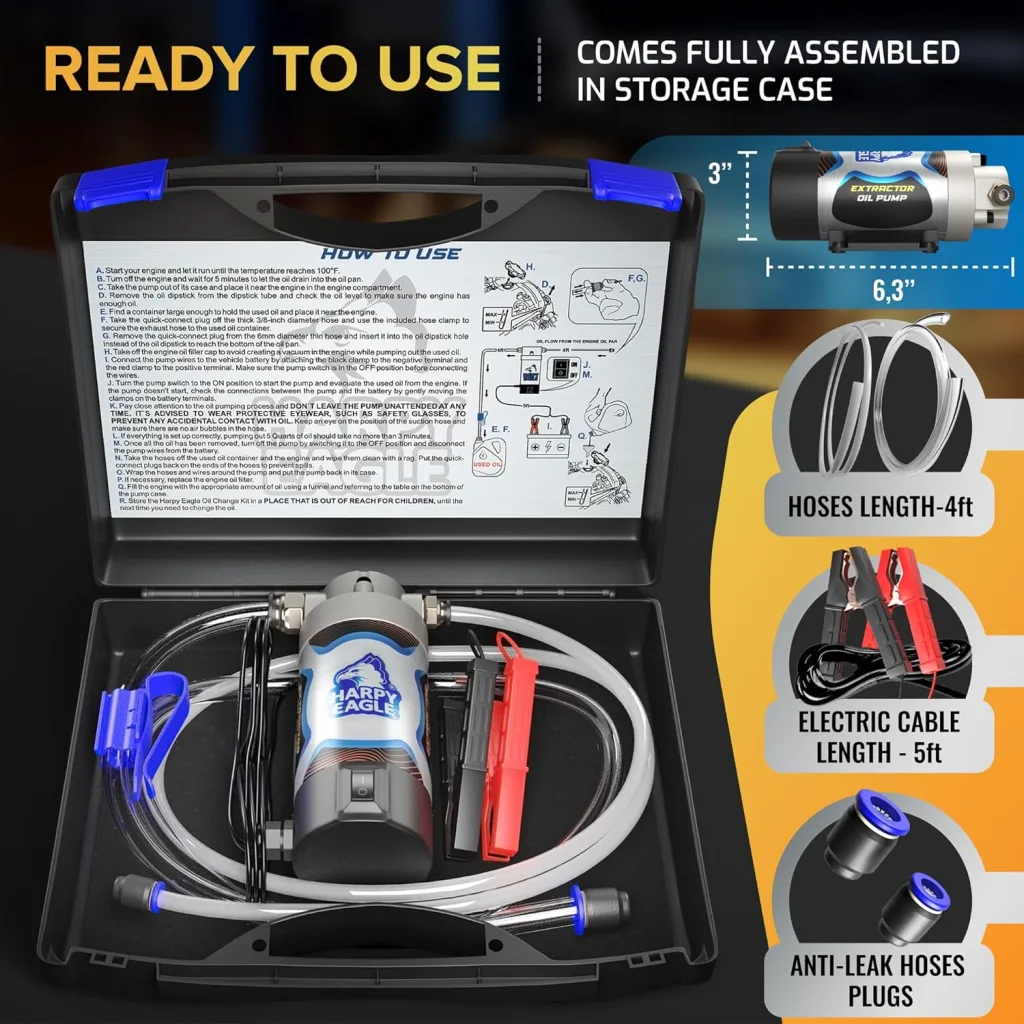
The Harpy Eagle product is marketed as an electric oil change extractor pump for 12V and 24V systems with a 100W motor. The listing highlights several practical details: a portable format, a storage case, roughly 4-foot extraction hoses, and a 1.5-meter power cable for flexible setup. It is also described as suitable for cars, boats, motorcycles, and trucks.
On paper, that makes it more versatile than a simple manual suction tank. Instead of relying on hand-pumped vacuum pressure, this unit uses powered extraction, which should reduce physical effort and make the process more repeatable. For people handling multiple vehicles, seasonal equipment, or marine engines, that is a real convenience advantage.
The biggest selling point is obvious: you can potentially perform an oil change extractor service with less crawling underneath the vehicle. That matters for anyone working in a driveway, a cramped garage, or on equipment where access to the drain plug is awkward.
Why So Many People Want an Oil Change Extractor
The popularity of the oil change extractor pump category comes down to workflow.
Traditional oil changes are simple in theory: lift the vehicle if needed, remove the drain plug, catch the oil, replace the plug or washer, swap the filter, and refill. But in real life, that process can become annoying fast. Splashing oil, stripped plugs, bad access, underbody panels, and limited working space all make a normal drain-and-fill less attractive.
That is why oil extractor systems keep growing in popularity. Family Handyman notes that extractor pumps can simplify DIY oil changes by pulling used oil through the dipstick tube. iFixit similarly outlines the process as a legitimate oil change method on vehicles that support top-side extraction. Industry and enthusiast discussions also consistently point to cleanliness and convenience as the main benefits.
The core advantages are easy to understand:
- Cleaner service process
- Less need to jack up the vehicle
- Better for engines with poor drain access
- Useful on boats, generators, lawn equipment, and motorcycles
- Faster setup in many routine maintenance situations
That is the environment where the Harpy Eagle oil change pump extractor is supposed to win.
Key Features That Stand Out
1. 12V/24V flexibility
A lot of extractor pumps are built only around one power standard. The Harpy Eagle listing specifically calls out 12V/24V compatibility, which broadens potential use cases across passenger vehicles, heavy-duty applications, and equipment that may not run on a single voltage standard.
If you work on multiple types of vehicles, that matters. It gives the tool more utility than a single-purpose extractor.
2. 100W motor
The product is listed with a 100W motor and claims a pumping speed of up to 1 gallon per minute. Even allowing for real-world variation due to oil temperature and viscosity, that suggests this is not meant to be a weak, low-flow novelty unit. Warm oil will always move faster than cold oil, but the listed output indicates a respectable performance ceiling for DIY service.
3. Portable kit with case
The included case is more important than it sounds. Fluid transfer tools become messy fast when hoses, clamps, and fittings are tossed loosely on a shelf. A dedicated case makes this more practical for recurring use and helps keep contamination down between services. The product listing explicitly includes the storage case as part of the value proposition.
4. Hose and cable length
The listing mentions 4-foot hoses and a 1.5-meter power cable, both of which are useful for real-world maneuverability. On pickup trucks, boats, and some equipment, that extra reach matters. You do not want the pump awkwardly hanging in a bad position or pulling against a cable that is too short.
Who This Oil Change Extractor Is Best For
This type of oil extractor oil change tool is not for every person or every engine, but it can make a lot of sense for several groups.
DIY car owners
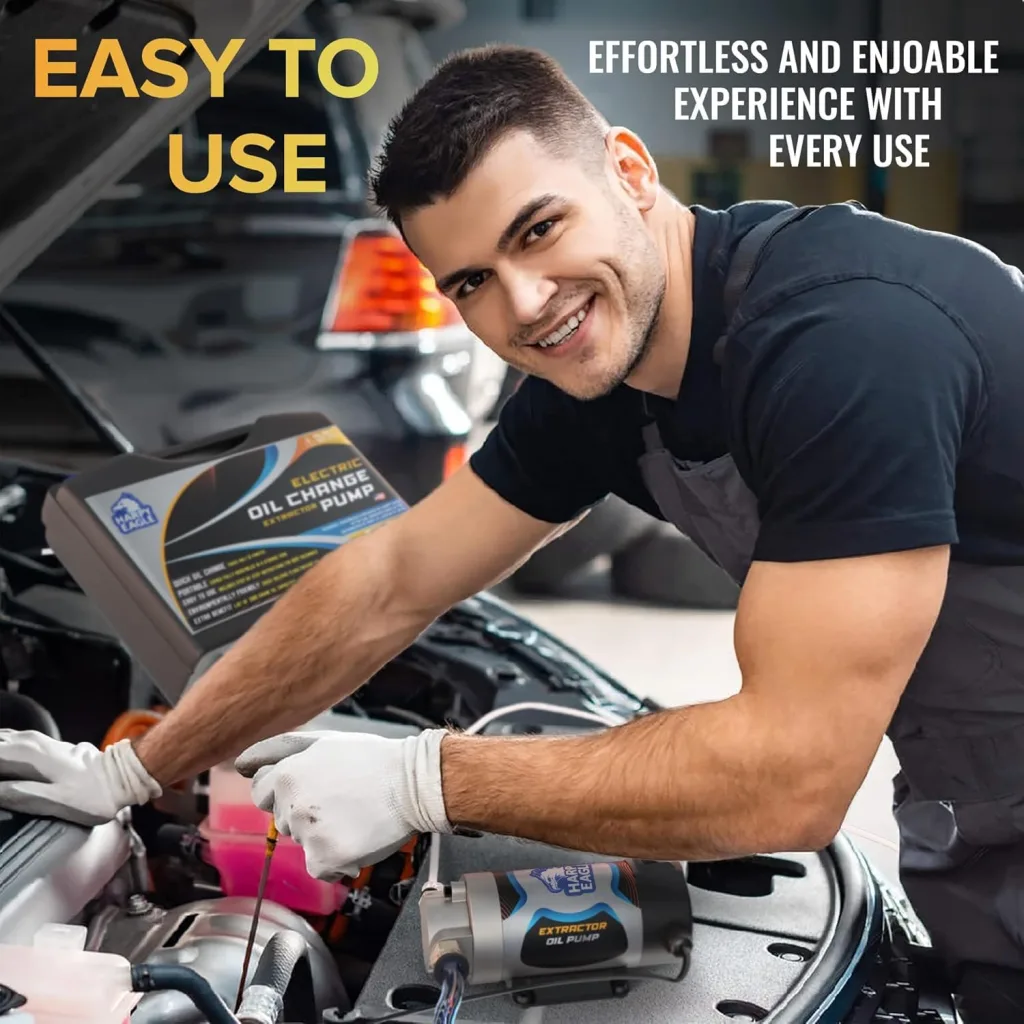
If your vehicle allows effective top-side extraction and the oil filter is easy to access, an electric oil change extractor can make routine maintenance much quicker. Some owners even prefer it because they never have to get under the car at all. That convenience has been echoed in both published DIY guides and enthusiast feedback.
Boat owners
Marine engines are one of the strongest use cases for extractors. Tight engine bays can make a conventional drain a chore. Discussions in marine forums often frame oil extractors as especially useful in boating applications, even though some still prefer draining when available.
Motorcycle and power equipment owners
Smaller engines can also benefit from controlled extraction, especially where access is awkward or you want to minimize spills. The Harpy Eagle product is specifically marketed for motorcycles and other equipment categories as well.
People maintaining multiple vehicles
If you do maintenance for your own fleet, family vehicles, or mixed equipment, convenience compounds over time. A powered fluid extractor oil change setup can save enough hassle to justify the upfront cost.
The Real Pros of an Electric Oil Change Pump Extractor
The biggest advantage is simple: less mess.
A traditional drain plug service can still be the gold standard in many cases, but there is no denying the cleanup factor. Extractors reduce the chance of oil splashing onto your hands, driveway, skid plate, crossmember, or garage floor. Sources discussing extractors versus draining consistently mention cleanliness and convenience as primary benefits.
Another major benefit is speed of setup. For a normal drain service, you may need ramps, jack stands, a creeper, gloves, drain pan placement, and possibly panel removal. With an oil change extractor pump, the setup is often closer to this:
- Warm the engine
- Remove the dipstick
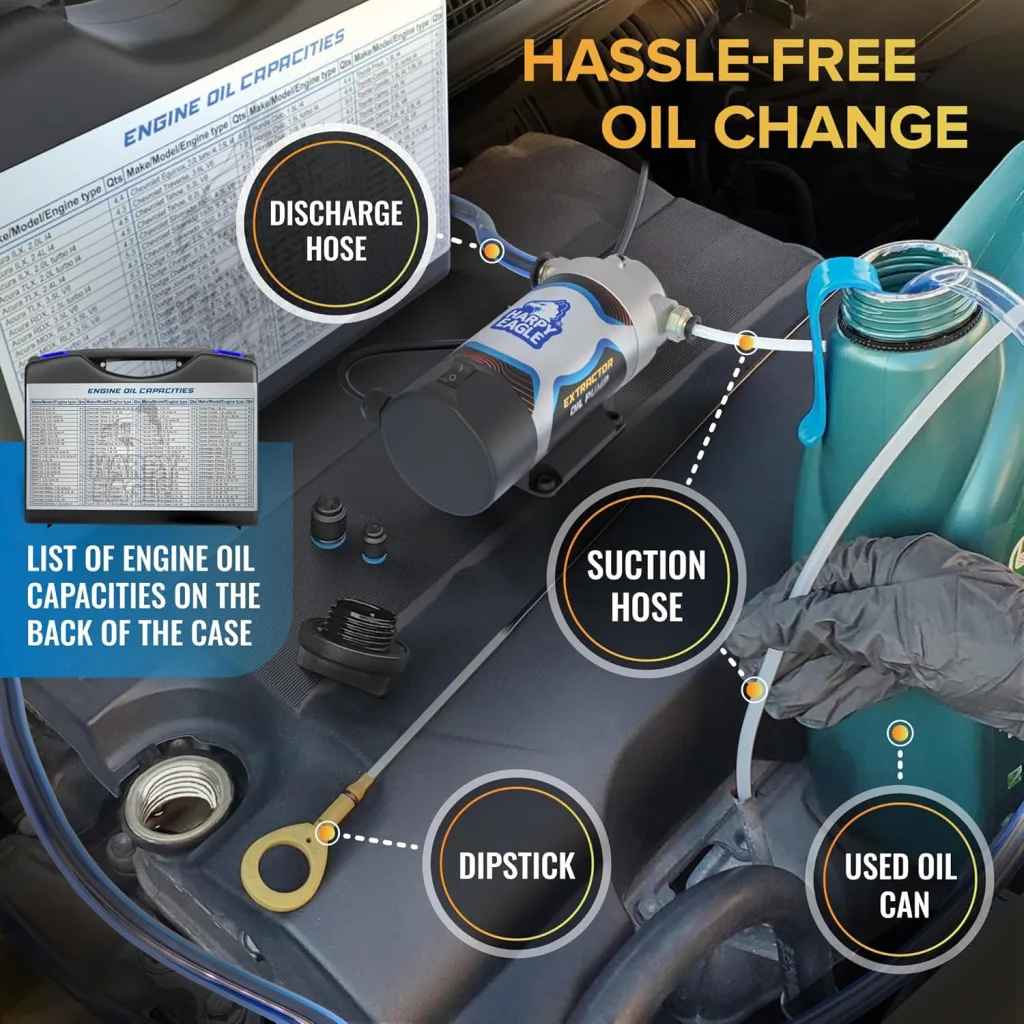
- Feed in the suction hose
- Connect power
- Extract the oil
- Change the filter if needed
- Refill with fresh oil
That is a cleaner workflow for many users. iFixit’s guide confirms this basic top-side extraction approach and shows why it is so attractive for home mechanics.
There is also the issue of accessibility. Some vehicles and machines are simply frustrating to drain conventionally. If you have ever fought a low car, an undertray with too many fasteners, or a boat engine wedged into a tight compartment, you already understand the appeal.
The Limitations You Should Know Before Buying
This is where buyers need to stay realistic.
An oil change extractor is not automatically better than every drain-plug method. In some engines, extraction works brilliantly. In others, it may be less complete or less ideal depending on pan design, tube routing, oil temperature, and sludge conditions.
Some discussions and guides note that proper extraction can remove nearly all of the oil when done correctly, while others still prefer the flushing effect of gravity draining, especially on neglected engines or applications where sediment at the bottom of the pan is a concern. The mixed opinions are real, and they are worth respecting.
So before buying any oil change pump extractor, keep these points in mind:
- It works best with warm oil
- It depends on your engine design
- It may not replace drain-plug service in every vehicle
- You still need to change the oil filter
- You still need to verify extracted volume against expected oil capacity
That last point is critical. Even enthusiasts who like extractor-based service often recommend checking that you removed approximately the amount of oil your engine is supposed to hold.
How to Use an Oil Extractor Oil Change Setup Properly
If you buy a product like this, technique matters as much as the pump itself.
Step 1: Warm the engine
Warm oil flows better than cold oil. This helps the extractor reach its intended performance and shortens extraction time. Guides on using oil extractors consistently assume the oil is warm rather than cold.
Step 2: Identify the correct extraction point
Most extractor workflows use the dipstick tube or a designated suction route. iFixit specifically notes locating the dipstick or oil suction hole before starting.
Step 3: Insert the hose carefully
Do not force it. The suction tube needs to reach the lowest point it can access in the sump. If you feel resistance, reassess the routing.
Step 4: Power the unit and monitor flow
With an electric oil change extractor pump, you want steady flow, not guesswork. Watch the hose, container, and extraction progress.
Step 5: Compare removed volume
This is one of the smartest habits in DIY maintenance. If your engine typically takes around 5 quarts and you extracted far less, you should pause and make sure the tube placement was correct.
Step 6: Replace the filter and refill
An extractor pump does not eliminate the rest of the oil change process. You still need the correct oil, filter, refill amount, and final dipstick verification.
Harpy Eagle Review: Strengths Based on the Listing
Based on the publicly visible product information, the Harpy Eagle unit looks like a well-positioned DIY/mid-duty extractor rather than a bargain-bin throwaway tool.
Its strongest apparent advantages are:
- Broad use case range across cars, boats, motorcycles, and trucks
- 12V/24V support
- 100W motor
- Claimed up to 1 gallon per minute
- Included case, hoses, and cable reach
- Portable format for field or garage use
That combination makes it attractive for buyers who want something more substantial than a tiny transfer pump but less elaborate than a professional shop vacuum extractor cart.
Is It Better Than a Manual Fluid Extractor Oil Change Tool?
That depends on what you value.
A manual extractor can be cheaper and simpler, but it also requires pumping effort and may feel slower or less consistent in repeated use. An electric fluid extractor oil change tool like the Harpy Eagle is more appealing if you value speed, reduced effort, and easy repeatability.
If you only service one small engine once or twice a year, manual might be enough.
If you service:
- multiple vehicles,
- marine engines,
- motorcycles,
- lawn or utility equipment,
- or you simply hate messy oil changes,
then the electric route makes more sense.
Who Should Skip It?
You may want to skip this kind of oil change extractor if:
- your vehicle’s drain plug is already extremely easy to reach,
- your engine design is known to drain better conventionally,
- you prefer inspecting the drain plug and crush washer every service,
- or you are working on an engine with unknown maintenance history and want the bottom-drain method for inspection.
There is also a philosophical divide here. Some mechanics simply trust gravity draining more because it feels more complete. That preference is not irrational. It is just a different maintenance style, and the best choice often depends on the specific engine rather than internet dogma.
Final Verdict
The Harpy Eagle Electric Oil Change Extractor Pump 12/24V 100W looks like a strong option for anyone specifically shopping for an oil change pump extractor that is portable, electric, and broad in application. The listing’s feature set suggests a product aimed at real DIY convenience rather than gimmick appeal: powered extraction, dual-voltage compatibility, decent hose reach, storage case, and a claimed flow rate of up to 1 gallon per minute.
For the right user, that can make oil service dramatically easier.
If your goal is a cleaner, faster oil change extractor pump setup for cars, boats, motorcycles, or trucks, this tool makes sense. If you want a no-lift, less-mess oil extractor oil change routine, it fits the brief well. And if you are comparing products in the fluid extractor oil change category, the Harpy Eagle’s power rating and portability are meaningful selling points.
The main caution is the same caution that applies to any extractor: make sure your engine is suitable for top-side extraction, use warm oil, and verify that you removed the expected amount. Do that, and an electric oil change extractor can be one of the handiest maintenance tools in your garage.
Connect with us


