





If you are searching for the best oil extractor pump, you are probably trying to solve a very specific problem: you want a cleaner, faster, and less frustrating way to remove engine oil without always crawling under the vehicle. That is exactly why terms like oil extractor pump, oil pump extractor, engine oil extractor pump, electric oil extractor pump, and extractor oil pump keep getting searched by DIYers, boat owners, small-equipment users, and even people maintaining multiple vehicles at home.
The truth is that the “best” oil extractor pump is not always the fastest or most expensive one. In many cases, the best option is the one that gives you the right balance of capacity, reliability, portability, and ease of use for your kind of maintenance routine. For a lot of users, that points directly toward a manual vacuum-style extractor rather than an electric one.
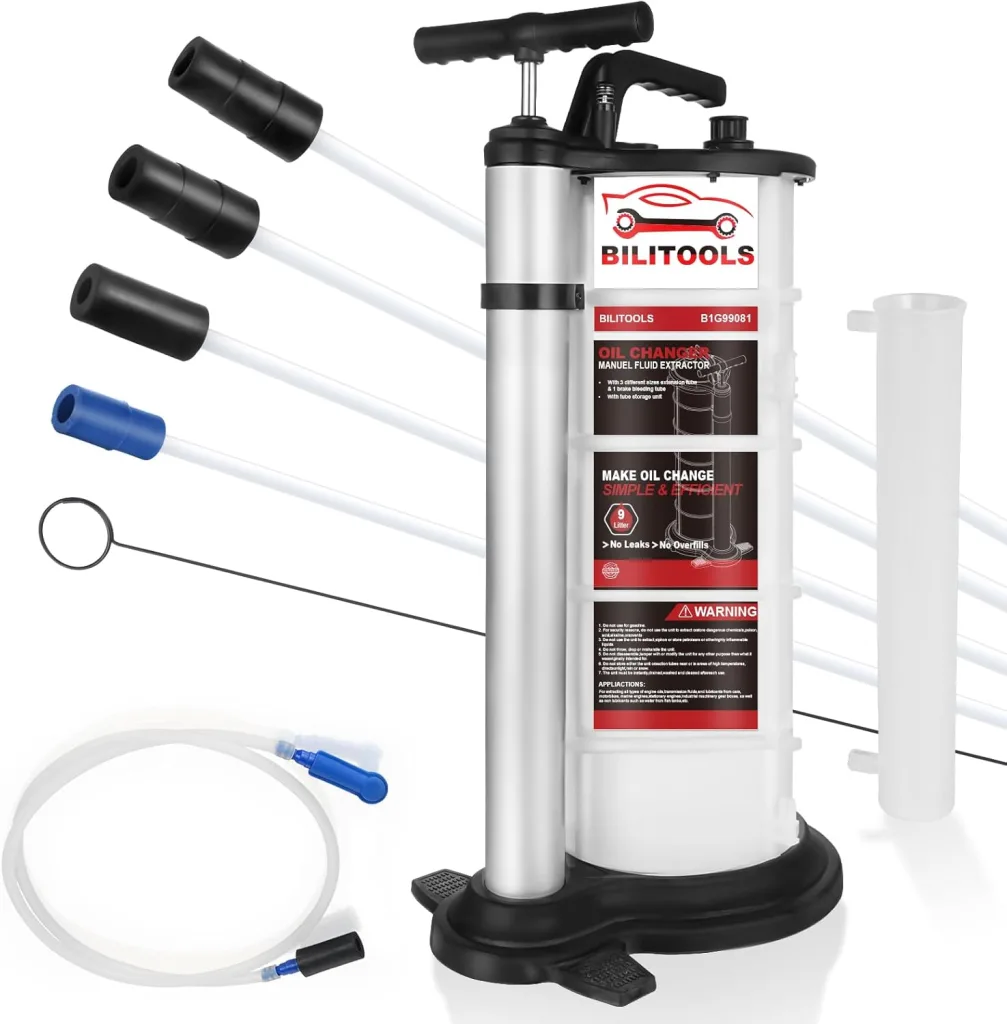
A good example is the BILITOOLS 9L Manual Oil Extractor Pump, which Amazon lists as a 9-liter manual vacuum fluid extractor designed for automotive engine oil changes and also marketed for boats, marine use, and jetskis. The listing highlights manual operation, a large 9L tank, a translucent body for fluid-level visibility, a hose storage solution, and the benefit of performing oil extraction without lifting the vehicle or crawling underneath it.
That combination makes it a strong case study for what many buyers should actually look for when choosing the best oil extractor pump.
What an Oil Extractor Pump Actually Does
An oil extractor pump is a tool that removes engine oil or other fluids by suction rather than by opening the drain plug underneath the vehicle. In most common automotive use cases, the user inserts a narrow hose down the dipstick tube, creates vacuum, and pulls the old oil up into a container or extractor reservoir. Family Handyman and iFixit both describe this as a valid top-side oil-change method for compatible vehicles.
That is the basic reason these tools have become so popular. They reduce mess, reduce setup time, and can make oil changes feel dramatically easier, especially when:
- the vehicle sits low to the ground,
- the drain plug is awkward to reach,
- underbody shields are annoying to remove,
- or you are servicing marine engines, lawn equipment, or motorcycles where access is limited.
In simple terms, the best engine oil extractor pump is the one that makes maintenance simpler without making the process unreliable.
Why So Many Buyers Are Looking for the Best Oil Extractor Pump
Traditional drain-plug oil changes still work perfectly well, and in some engines they may remain the preferred method. But there is a reason extractor pumps continue to gain attention.
Guides on oil extractors consistently point to the same advantages: less mess, easier access, and the ability to perform oil service from above the engine bay. Family Handyman specifically notes that extractor pumps are useful for removing oil through the dipstick tube, while iFixit provides a full step-by-step guide for using an oil extractor in a standard oil-change workflow.
For many DIYers, the real benefits are practical:
- no ramps or jack stands in some cases,
- cleaner hands and cleaner floor,
- easier maintenance on boats and seasonal equipment,
- less wrestling with drain pans,
- and more control in tight spaces.
That is why the category has expanded from simple oil pump extractor tools into a much broader market that includes manual, pneumatic, and electric oil extractor pump options. Industry guidance commonly divides the segment into those three main types.
The Three Main Types of Oil Extractor Pumps
Before deciding what the best oil extractor pump is, you have to understand the three major designs.
1. Manual oil extractor pump
This is the most common format for home users. A manual oil extractor pump uses a hand pump to create vacuum inside a reservoir. Once vacuum is established, the unit pulls oil through a hose into its tank. Guidance from EWK and other extractor-tool explainers notes that manual units are generally lower-cost, portable, and do not require electricity.
Pros:
- no electricity required,
- easy to use anywhere,
- fewer electrical components,
- often more affordable,
- great for garages, driveways, and mobile use.
Cons:
- slower than some powered units,
- requires hand pumping,
- less ideal if you are extracting large volumes repeatedly.
2. Electric oil extractor pump
An electric oil extractor pump uses a powered motor to move oil. These are attractive if you prioritize speed and want less manual effort. Some guides note that electric pumps can extract faster, making them appealing for larger jobs or repeat work.
Pros:
- faster extraction,
- less physical effort,
- convenient for repeated work.
Cons:
- requires a power source,
- often smaller and pump-only rather than all-in-one reservoir style,
- may be less convenient in remote or outdoor use.
3. Pneumatic oil extractor pump
These are more common in shop environments. They rely on compressed air and can be very effective, but they are usually less relevant for a casual home DIY buyer unless that buyer already has an air-compressor setup. Extractor-tool guides consistently list pneumatic systems as one of the standard categories.
For most people reading a blog on the best oil extractor pump, the real decision is between manual and electric.
Why the BILITOOLS 9L Manual Unit Stands Out
The Amazon listing for the BILITOOLS 9L Manual Oil Extractor Pump makes several notable claims that are directly relevant to buyers comparing options in this category.
According to the listing, this extractor offers:
- manual vacuum operation,
- a 9-liter capacity,
- a thick translucent tank so you can monitor fluid level,
- a hose storage holder,
- and a workflow designed to avoid lifting the vehicle or crawling underneath it.
That feature set matters because the best extractor oil pump is rarely about marketing hype. It is about solving the biggest pain points in DIY maintenance.
Large capacity is a bigger advantage than people think
A 9L tank is substantial for this class of product. The listing explicitly describes it as larger than competing options and frames that larger capacity as a way to reduce emptying frequency and speed up maintenance.
In practical terms, that matters because many passenger vehicles hold roughly 4 to 7 quarts of oil, and some hold even more. A larger extractor tank means you are less likely to interrupt the job mid-process. For someone working on SUVs, trucks, boats, or multiple engines, this is one of the strongest features a manual engine oil extractor pump can have.
Manual operation still has real value
A lot of buyers assume an electric oil extractor pump must automatically be better. Not necessarily.
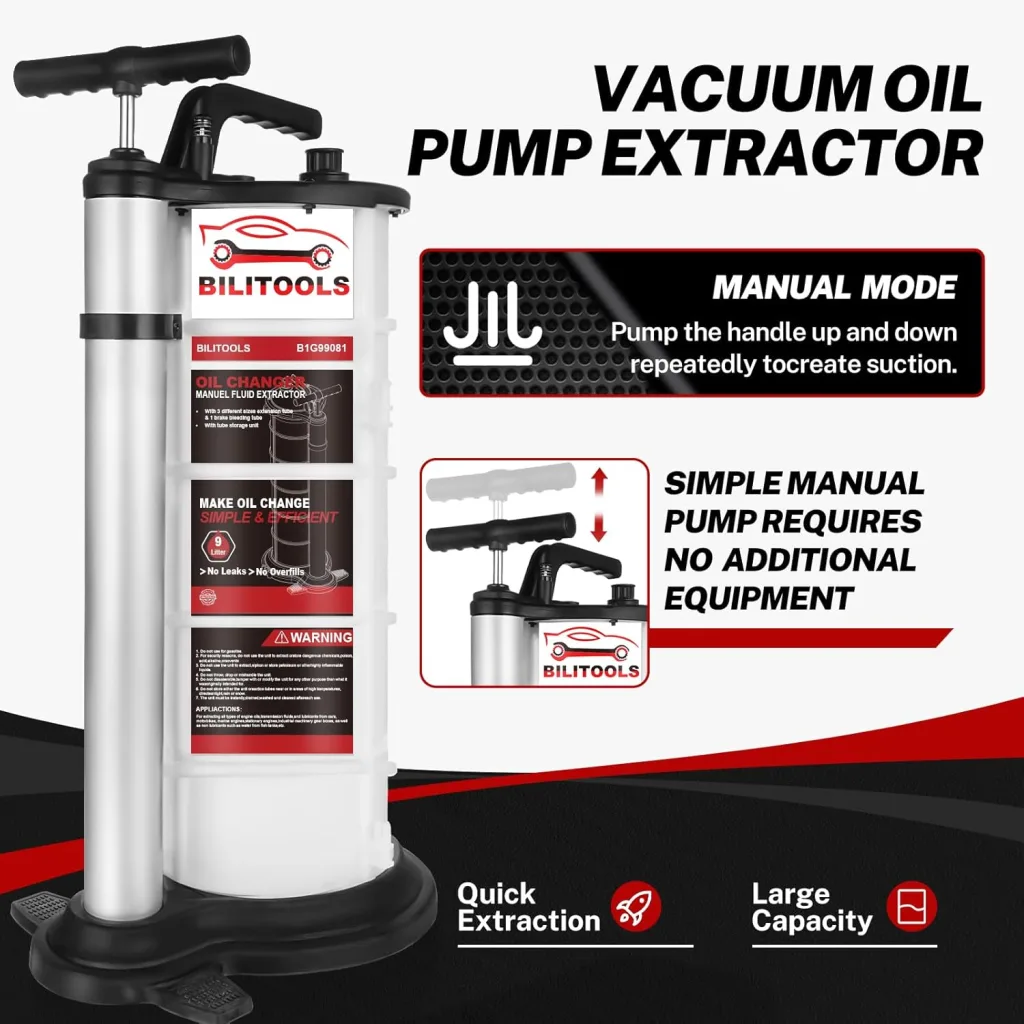
Manual extractors have a major advantage: they are simple. You do not need a battery connection, power outlet, adapter, or motorized pump. The BILITOOLS listing emphasizes that it is designed for easy manual operation without additional equipment, and that the user simply pumps the handle to create vacuum and suction.
That simplicity becomes especially useful when:
- working outdoors,
- servicing boats or marine engines,
- doing roadside or remote maintenance,
- or simply wanting a tool that is always ready.
Some industry guidance also notes that manual units remain attractive because they are cost-effective and not limited by access to power.
Better storage means less mess
This sounds minor until you actually own one. The BILITOOLS listing specifically mentions a storage tube holder to keep hoses organized and reduce spills.
That is not just a cosmetic feature. Residual oil in loose hoses is one of the most annoying parts of using fluid-extraction tools. A cleaner hose-storage setup makes the extractor far easier to live with long-term.
What Makes the Best Oil Pump Extractor for Most DIYers?
If we strip away branding, the best oil pump extractor for most non-professional buyers usually checks these boxes:
1. Enough capacity for full oil changes
This is non-negotiable. You do not want a tiny extractor that fills too quickly. A larger reservoir is especially useful if you service more than one machine or vehicle.
2. Easy vacuum generation
If the hand pump is weak, awkward, or inconsistent, the tool becomes annoying. The BILITOOLS listing says the user pumps the handle to create a strong vacuum and even notes a base designed for foot stability during pumping.
3. Hose management
Good hose storage is a quality-of-life feature that separates a product you will keep using from one that ends up tossed in a corner.
4. Clear fluid-level visibility
A translucent body is useful for monitoring progress and preventing overfill. The BILITOOLS listing specifically calls this out.
5. Compatibility with your use case
Some people need an automotive-only tool. Others need a flexible extractor that can handle boats, lawnmowers, motorcycles, or seasonal equipment. The BILITOOLS unit is marketed across several of those use cases.
Manual vs Electric: Which Is Better?
This is the core buying question.
If your main concern is speed, an electric oil extractor pump may look more attractive. Some guides note that electric pumps generally offer quicker extraction, especially in larger-volume scenarios.
But if your priorities are:
- simplicity,
- portability,
- no dependence on electricity,
- lower complexity,
- and an all-in-one reservoir design,
then a manual unit often makes more sense.
That is why a large-capacity manual extractor can still be the best oil extractor pump for many home users. The extra pumping effort is often a fair trade for reliability and flexibility.
How to Use an Engine Oil Extractor Pump Properly
Even the best tool will disappoint if you use it badly. General oil-extractor instructions from iFixit and other guides consistently emphasize a few key steps.
Warm the oil first
Warm oil flows much better than cold oil. Several usage guides recommend running the engine briefly before extraction.
Insert the hose carefully
Feed the extraction tube through the dipstick tube until it reaches the oil in the pan. Some owners note that hose diameter and even the cut angle of the tubing can affect how easily it passes through restrictions.
Create vacuum and monitor flow
With a manual extractor, pump enough to establish vacuum, then watch extraction progress. EWK’s guidance for manual extractors similarly describes pumping to initiate suction and re-pumping if necessary to maintain vacuum.
Verify removed volume
This is one of the smartest habits you can develop. If your engine normally takes around five quarts and you extract dramatically less, the tube may not have reached properly or your engine may not be an ideal candidate for top-side extraction.
Still change the filter
An extractor pump simplifies oil removal, but it does not replace the oil filter. You still need to complete the full service properly.
When an Extractor Oil Pump Is a Great Idea
A good extractor oil pump is especially useful when:
- your vehicle has easy dipstick access,
- the filter is accessible from above or from the side,
- your engine bay is easier to work in than the underside,
- your boat or marine engine has tight lower access,
- or you regularly service lawnmowers, generators, ATVs, or motorcycles.
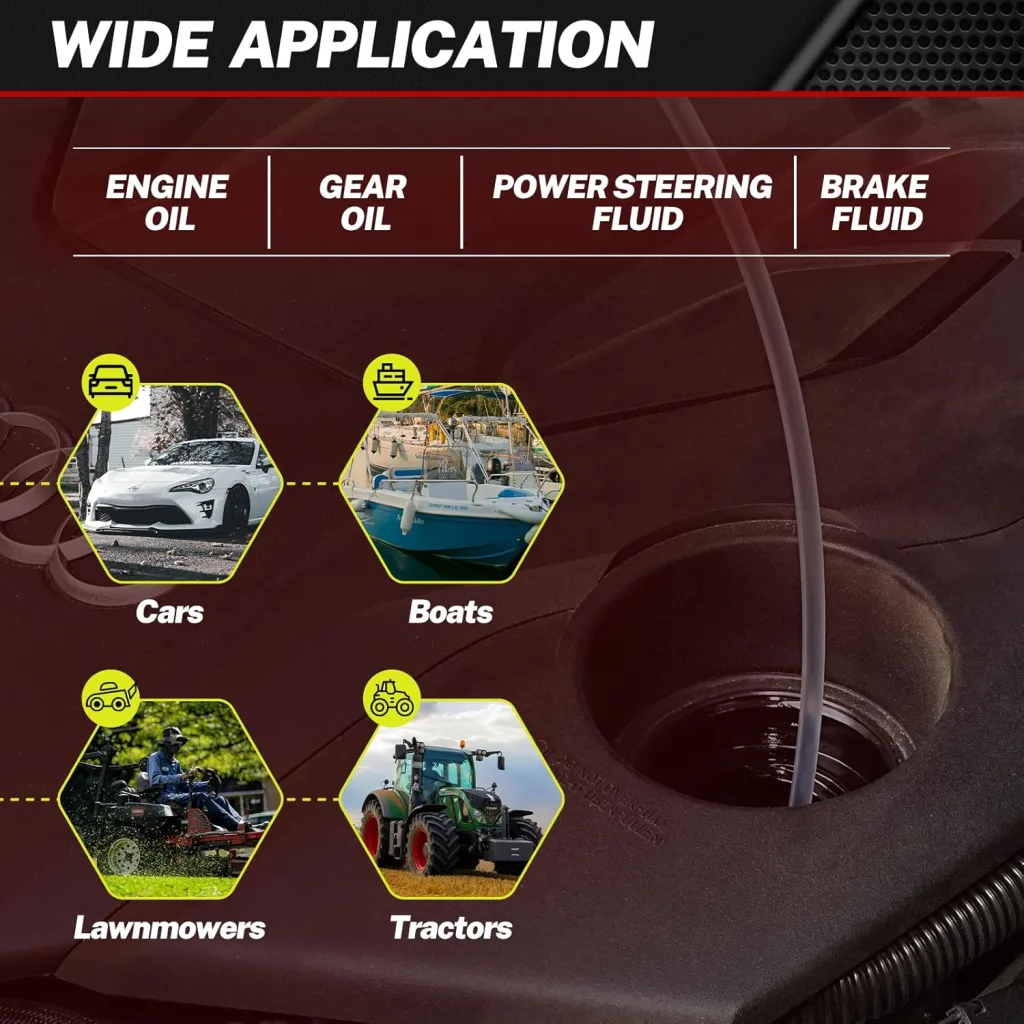
The BILITOOLS listing explicitly positions the tool for automotive, boats, trucks, and lawnmowers, which fits the kinds of tasks where extractors are often most appreciated.
When a Traditional Drain Might Still Be Better
No honest review should pretend extractors are perfect for every engine.
Some vehicles simply drain better through the plug. Some engines have sump designs, tube-routing quirks, or oil-pan geometry that make extraction less ideal. Enthusiast discussions show that while many users love extraction, others still prefer gravity draining for completeness or peace of mind.
That means the best engine oil extractor pump is not a universal replacement for every traditional oil change. It is the best option for the right engines and the right workflow.
Final Verdict: What Is the Best Oil Extractor Pump?
For many DIY users, the best oil extractor pump is not necessarily an electric one. A well-designed large-capacity manual extractor remains one of the smartest buys in the category because it combines portability, simplicity, and enough capacity for real oil-change work.
Based on the Amazon listing, the BILITOOLS 9L Manual Oil Extractor Pump stands out for exactly those reasons. It offers a 9L tank, manual vacuum operation, visible fluid-level monitoring, organized hose storage, and a use case tailored to cleaner, easier oil changes without lifting or crawling under the vehicle.
If you want:
- a dependable oil extractor pump,
- a practical oil pump extractor for home maintenance,
- a strong-value engine oil extractor pump,
- and a cleaner alternative to messy drain-pan oil changes,
then a large manual unit like this is a very credible answer.
If, however, your top priority is speed and minimal manual effort, then an electric oil extractor pump may still be the better fit.
For most DIYers, though, the real sweet spot is clear: a large-capacity manual extractor that is easy to use, easy to store, and big enough to handle real oil-change volume. That is exactly why this BILITOOLS model has a strong case as the best oil extractor pump in its segment.
Connect with us


