





Sometimes, yes, for a short, controlled trip to get it repaired. But it depends on where the nail is, how much air you’re losing, and whether the tire has already been driven underinflated. The wrong call here can turn a simple puncture repair into a tire replacement, a blowout, or wheel damage.
AAA and tire manufacturers emphasize that a “small problem, such as a nail,” should be addressed early before it becomes more expensive or unsafe. (exchange.aaa.com) Michelin is even more conservative and states any puncture should be checked by a qualified professional and warns that driving on a damaged tire can lead to rupture and unsafe handling. (michelin.ca)
Below is a practical, 2026-ready decision guide that prioritizes safety and cost control.
The fast decision rule
You can usually drive a short distance only if all these are true
- The tire is still holding close to normal pressure (or drops very slowly).
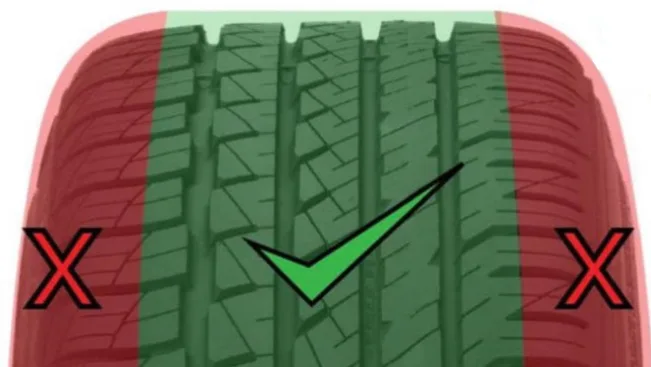
- The nail is in the tread area, not the sidewall or shoulder.
- There is no vibration, thumping, wobble, or pulling.
- You can go directly to a tire shop without high speeds or long highway miles.
You should NOT drive and should stop/air up/put on a spare if any of these are true
- The tire is visibly low, losing air fast, or the TPMS warning is on and pressure keeps dropping.
- The nail is in the sidewall or shoulder (near the outer edge of the tread).
- You hear hissing, feel handling changes, or see bulging, cuts, or tearing.
- You already drove on it while it was low (risk of internal sidewall damage).
- You have a run-flat that has been driven beyond its limits (run-flats still have strict distance/speed limits per brand).
Why driving with a nail can be risky (even if it “feels fine”)
A nail puncture is often deceptively stable because the nail can partially “plug” the hole. The danger is what happens when:
- the nail shifts
- the tire warms up
- the puncture widens
- the tire pressure drops below safe operating range
Once a tire runs underinflated, the sidewall flexes more, heat builds up, and internal damage can occur. That internal damage is not always visible from the outside, which is why reputable repair standards require removing the tire and inspecting the inside before repair. U.S. Tire Manufacturers Association guidance says tires must be removed from the wheel and inspected internally, and the proper repair uses a combination repair (plug/stem plus patch), not a plug alone. (ustires.org) Michelin also states the tire should be removed for inspection and that a repair performed without demounting can be improper and “can result in an accident.” (Michelin)
First steps: what to do the moment you notice a nail
1) Do not pull the nail out in the parking lot
Leaving it in place can reduce air loss until you reach a repair shop. Many tire safety guides advise assessing first and avoiding removing the object until you are prepared to repair. (gtradial-us.com)
2) Check tire pressure right away
Use a gauge. Do not rely only on how the tire looks.
- If pressure is near normal, you may be able to drive carefully to service.
- If pressure is low, add air (portable inflator) and reassess.
- If pressure won’t hold, put on the spare or tow.
3) Visually assess where the nail is
Location determines whether the tire is repairable.
The most important factor: nail location
Tread center area (often repairable)
Most punctures in the center of the tread can be repaired if they meet size and damage criteria. The Tire Industry Association notes repairs are limited to the center of the tread; punctures or damage in the shoulder or sidewall are not repairable. (tireindustry.org)
Shoulder and sidewall (usually not repairable)
A puncture in the shoulder or sidewall is typically a replacement because those zones flex more and are structurally critical. TIA specifically says shoulder/sidewall punctures are not repairable. (tireindustry.org)
Repairability rules (what shops follow)
A quality shop will generally follow rules like these (they vary slightly by manufacturer, but the theme is consistent):
1) Puncture must be in the repairable tread zone
Center tread only. (tireindustry.org)
2) Puncture size limit
TIA guidance: never repair tread punctures larger than 1/4 inch (6 mm). (tireindustry.org)
3) No overlapping repairs or structurally compromised damage
TIA warns that overlapping injuries or certain positioning can make the tire non-repairable. (tireindustry.org)
4) Proper method is a combination repair
USTMA says a plug/stem must fill the injury and a patch seals the inner liner; plug-only is unacceptable. (ustires.org)
Michelin similarly emphasizes that repairs must be the combined plug-and-inside-patch type and that demounting/inspection is required. (Michelin)
How far can you drive with a nail in the tire?
There is no universal mileage number because the leak rate varies. The safe guidance is “drive only as far as needed to reach service.”
A practical way to interpret that:
If the tire is holding pressure
- Drive directly to the nearest repair shop.
- Keep speed moderate and avoid aggressive maneuvers.
If the tire is losing air slowly
- Air it up to correct PSI.
- Drive only a short distance to service.
- If the TPMS warning returns quickly, stop and reassess.
If the tire is losing air fast
- Do not drive on it. Use a spare or tow.
The core idea is that the moment you drive underinflated, you risk internal damage that may force replacement even if the hole is small.
What if you have TPMS and it’s not warning you?
TPMS is helpful, but it is not perfect. Some systems only warn when pressure is significantly below the placard value. You can still be low enough to cause excess heat and wear without a warning. Always use a gauge if you suspect a puncture.
What you should avoid while driving to service
If you decide it’s safe to drive to a shop, reduce risk:
- Avoid highway speeds if possible.
- Avoid potholes and hard impacts.
- Avoid hard cornering and heavy braking.
- Keep the route short and direct.
- Recheck pressure if the drive is more than a few miles.
If you have passengers or cargo, keep loads lighter if possible.
Plug kit vs. proper repair (what’s actually “correct”)
You will see conflicting advice online about “just plug it.” Here is the standard the serious organizations push:
- The preferred repair is a demount + internal inspection + combination patch/stem repair. (ustires.org)
- Plug-only repairs are widely considered inferior because they may not seal the inner liner correctly and skip internal damage inspection. (ustires.org)
A plug kit can be a temporary roadside measure in some situations, but it should not replace a proper internal inspection and repair if you care about long-term safety and tire integrity.
Special cases that change the answer
Run-flat tires
Run-flats may allow limited driving after puncture, but they have strict distance and speed limits and can be damaged internally if driven too far. If you’re not sure, treat it conservatively and get professional help.
AWD/4WD vehicles
With AWD, tread depth mismatches can matter more. If you end up needing a replacement and the other tires are worn, you may need to consider replacing more than one tire depending on the manufacturer’s tolerance.
Nail near the edge of the tread
This is the gray zone. It might look like “tread,” but if it’s close to the shoulder, many shops will refuse repair based on industry guidance. (tireindustry.org)
The cost difference: repair now vs. replace later
Catching a nail early often means:
- a straightforward repair (if in the repairable zone)
- minimal risk of internal damage
- less chance you destroy the tire by driving low
Waiting often means:
- the puncture worsens
- you drive underinflated
- internal damage forces tire replacement
- possible wheel damage if driven flat
AAA’s maintenance guidance frames this as a classic “small problem becomes expensive” situation if ignored. (exchange.aaa.com)
What to tell the tire shop (to get the right result)
When you arrive, be specific:
- “There is a nail in the tire, pressure is currently at X PSI.”
- “I have/have not driven on it while low.”
- “Please demount and inspect internally.”
- “If repairable, I want a combination patch/stem repair.”
That aligns with USTMA and Michelin’s stated approach. (ustires.org)
If you’re in the Simi Valley area (CDJR owners)
If you drive a Ram, Jeep, Dodge, or Chrysler and want it inspected and handled properly, you can start with the dealership service page or book directly:
- https://www.simivalleychryslerdodgejeepram.com/service.aspx
- https://www.simivalleychryslerdodgejeepram.com/book-your-service.html
Bottom line
You can sometimes drive with a nail in your tire only long enough to reach service, and only if the tire is still holding pressure and the puncture is in the tread area. The safest move is:
- Do not remove the nail immediately (gtradial-us.com)
- Check pressure with a gauge
- If pressure is stable, drive carefully and directly to a shop
- Get a demount + internal inspection + combination patch/stem repair (if repairable) (ustires.org)
- If the nail is in the shoulder or sidewall, expect replacement because it is generally not repairable (tireindustry.org)
Connect with us


