



The Ultimate Guide to the Jeep Wrangler: A Timeless Off-Road Icon
The Jeep Wrangler is one of the few vehicles that still feels directly connected to its original purpose. It is rugged, removable-roof, body-on-frame-style, trail-focused, and instantly recognizable. The simple answer is this: the Jeep Wrangler is special because it is one of the last true off-road SUVs you can still buy new, with real 4x4 hardware, removable doors, open-air driving, strong resale appeal, and a design rooted in Jeep’s military and civilian heritage.
Jeep’s official brand history ties the brand to more than 80 years of freedom, adventure, authenticity, and passion. The modern Wrangler continues that story with a shape and mission that still echo the early Willys-style Jeep formula.
Why the Jeep Wrangler Became an Icon
The Wrangler is not popular because it is the smoothest SUV, the quietest SUV, or the most fuel-efficient SUV.
It is popular because it does something most modern SUVs stopped doing: it puts capability and character first.
A Wrangler has the upright windshield, short overhangs, exposed hinges, removable roof options, available removable doors, real 4x4 systems, rugged axles, trail-focused trims, and a huge aftermarket. It looks different because it is different.
That is why it has stayed relevant while so many other SUVs became softer, rounder, and more road-focused.
Jeep Wrangler Heritage
The Wrangler’s roots go back to the original military Jeep and the postwar civilian Jeep models that followed.
That history matters because the Wrangler is not simply a retro-styled SUV. It is the modern continuation of a vehicle idea that started with utility, durability, mobility, and simplicity.
The Wrangler name itself arrived later, but the concept is older: a compact 4x4 built to go places normal vehicles cannot. The Jeep history page shows how the brand evolved from early military-linked models into civilian 4x4s, CJs, and eventually the Wrangler family.
That lineage is one reason Wrangler buyers are so loyal. They are buying into a vehicle with a story.
What Makes a Wrangler Different From a Regular SUV?
Most modern SUVs are car-based crossovers. They are built for comfort, fuel economy, quietness, and daily driving.
The Wrangler is different. It is built around off-road capability and open-air driving. That means it can feel louder, firmer, and less refined than a normal crossover, but it also gives you capability and personality that a normal crossover cannot match.
A Toyota RAV4, Honda CR-V, Mazda CX-5, or Ford Escape may be easier for commuting. A Wrangler is better when you care about trails, snow, mud, rocks, camping roads, beach driving, and the feeling of driving something with real mechanical character.
Jeep Wrangler Body Styles
The Wrangler is offered mainly in two body styles: 2-door and 4-door Unlimited.
The 2-door Wrangler is the classic setup. It is shorter, lighter, easier to maneuver on tight trails, and closer to the original Jeep feel. It is best for drivers who want a simple, more agile off-road SUV.
The 4-door Wrangler Unlimited is the practical choice. It gives you more rear-seat room, more cargo space, better highway stability, and more family usability. It is the better daily driver for most shoppers.
If you want the purest Wrangler, choose the 2-door. If you need one vehicle for daily life, passengers, cargo, and road trips, choose the 4-door.
Jeep Wrangler Engines
Modern Wrangler engine options have varied by model year, but the core choices have included the 3.6L Pentastar V6, 2.0L turbocharged four-cylinder, Wrangler 4xe plug-in hybrid, and the 6.4L HEMI V8 in 392 models.
The 3.6L V6 is the familiar all-around choice. It is simple by modern standards, widely used, and available with a manual transmission in some configurations.
The 2.0L turbo gives strong low-end torque and can feel punchy in daily driving.
The Wrangler 4xe adds plug-in hybrid capability, instant torque, and short-range electric driving.
The Rubicon 392 adds the kind of V8 power that turns the Wrangler into something much more aggressive. Recent 392-based special editions continue to use the 6.4L HEMI V8 with 470 horsepower and 470 lb-ft of torque, according to Car and Driver.
Jeep Wrangler 4x4 Systems
Wrangler capability starts with its 4x4 systems.
Jeep offers different systems depending on trim and configuration. Some are more traditional part-time 4WD systems, while others are more automatic or full-time-friendly. Jeep Canada’s 4x4 basics explains how Jeep systems like Selec-Trac can automatically manage traction in changing conditions.
For most drivers, the key idea is simple: the Wrangler is built with real 4x4 hardware, not just light-duty AWD. That makes it stronger in low-traction, off-road, and rough-terrain situations.
Wrangler Sport: The Simple Starting Point
The Wrangler Sport is the basic Wrangler.
It is the right choice if you want the lowest entry price, classic Jeep shape, removable roof and doors, and a strong starting point for customization. The Sport is not the fanciest trim, but that is part of the appeal.
For owners who plan to build their Jeep with aftermarket wheels, tires, bumpers, lights, and suspension, the Sport can be a smart blank canvas.
Wrangler Willys: Heritage Meets Capability
The Willys trim leans into Jeep heritage and off-road style.
It usually gives buyers a tougher look, more trail-oriented equipment than the base Sport, and a design that feels connected to Jeep’s military-inspired roots. A Willys is a good middle ground if you want more capability and personality without jumping all the way to Rubicon pricing.
For many buyers, Willys is the sweet spot.
Wrangler Sahara: The Daily-Driver Wrangler
The Sahara is the more comfort-focused Wrangler.
It is usually aimed at drivers who want Jeep style and open-air driving but spend most of their time on pavement. It often brings a more polished appearance, more comfort features, and a cleaner city-friendly feel.
If your Wrangler will mostly be a daily driver, the Sahara may make more sense than a Rubicon.
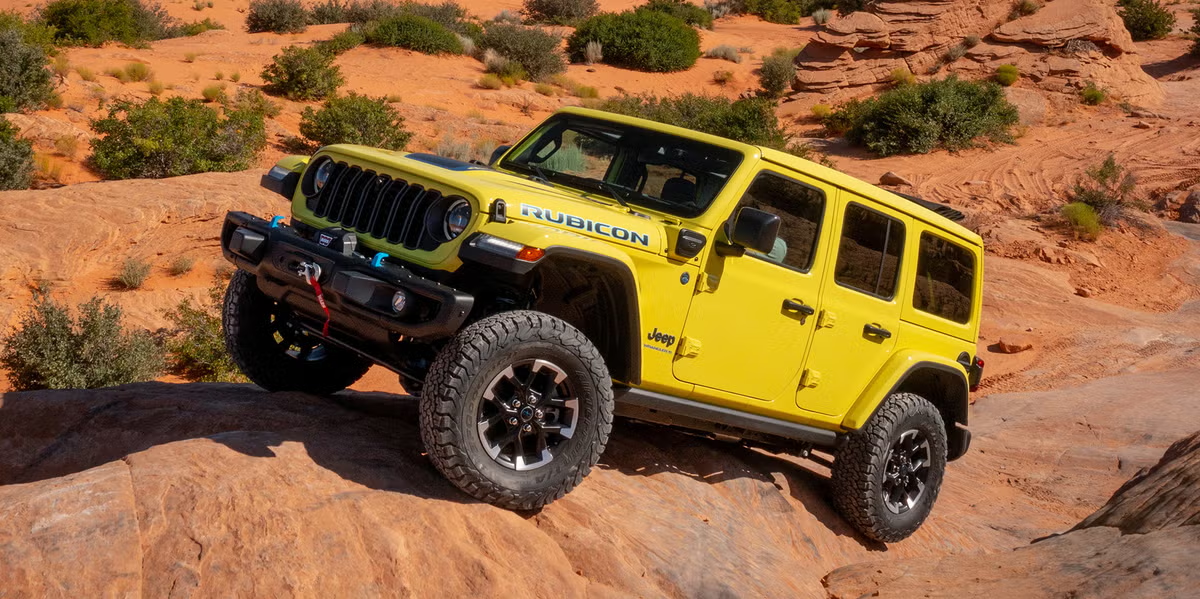
Wrangler Rubicon: The Factory Trail Machine
The Rubicon is the serious off-road Wrangler.
It is built for trails, rocks, ruts, and technical terrain. Depending on model year and configuration, Rubicon models can include locking differentials, Rock-Trac 4x4 hardware, heavy-duty axles, rock rails, off-road tires, and electronic sway bar disconnect.
The Rubicon costs more because it includes hardware that many off-roaders would otherwise add later. Jeep’s Wrangler specs show how towing, drivetrain, and capability vary by configuration, which is why choosing the right trim matters.
If you actually plan to off-road seriously, the Rubicon is the one to consider first.
Wrangler 4xe: Plug-In Hybrid Jeep Capability
The Wrangler 4xe is Jeep’s plug-in hybrid Wrangler.
It combines gasoline power with electric assist, giving strong torque and the ability to drive short distances on electric power when charged. It is especially appealing for drivers who want Wrangler capability but also have a short commute or access to home charging.
The important point is this: a 4xe only makes full sense if you plug it in regularly. If you never charge it, you are carrying extra hybrid weight without using the biggest benefit.
Wrangler 392: The V8 Legend
The Wrangler 392 is the wild one.
It takes the Wrangler formula and adds a 6.4L HEMI V8. That gives it a completely different personality: louder, faster, more emotional, and more expensive.
The 392 is not the practical Wrangler. It is the enthusiast Wrangler. It is for people who want a V8 Jeep before that kind of thing becomes even harder to find.
How Much Can a Jeep Wrangler Tow?
Wrangler towing depends on the exact model, body style, drivetrain, and equipment.
Jeep’s official Wrangler specs list towing capacity by configuration, with some models rated at 2,000 pounds and higher-rated configurations going beyond that depending on setup. Some 2026 four-door Rubicon and Rubicon X configurations are widely listed with up to 5,000 pounds of towing capacity.
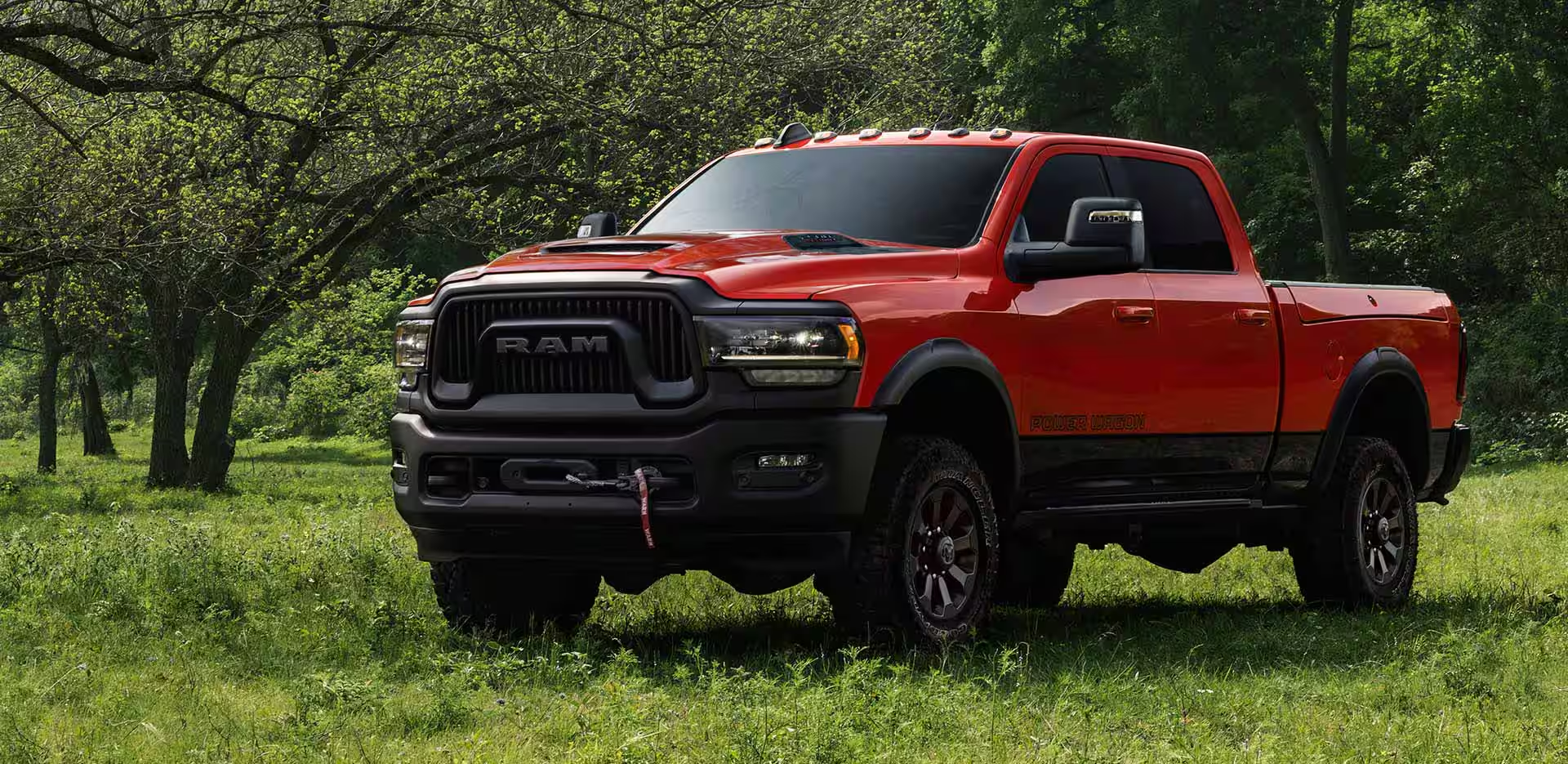
For most Wrangler buyers, towing is useful but not the main reason to buy one. If towing is your top priority, a Jeep Gladiator or Ram truck may be a better fit.
Is the Wrangler Good in Snow?
Yes, the Wrangler can be excellent in snow, especially deep snow and unplowed roads.
Its ground clearance, 4x4 systems, and rugged tires can make it very capable in winter conditions. But the real winter secret is tires. A Wrangler with proper winter tires will be much better than a Wrangler on worn all-seasons.
4x4 helps you move. Tires help you stop and turn.
Is the Wrangler Comfortable?
The Wrangler is more comfortable than it used to be, but it still feels like a Wrangler.
Newer models have better interiors, improved infotainment, better seats, better technology, and more refinement than older versions. But road noise, tire noise, wind noise, and a more rugged ride are still part of the experience.
If you want quiet luxury, buy a Grand Cherokee. If you want open-air adventure, buy a Wrangler.
Is the Wrangler Reliable?
The Wrangler can be reliable, but condition and maintenance matter.
A Wrangler is built for rugged use, but many are modified, driven off-road, exposed to water, lifted, or used hard. That means used buyers should inspect service history, rust, suspension, steering, tires, leaks, 4x4 operation, and modification quality.
A clean, mostly stock Wrangler with maintenance records is usually safer than a heavily modified one with unknown parts.
Wrangler Resale Value
The Wrangler is known for strong resale value.
That is because demand stays high, the design ages slowly, and the Wrangler has one of the strongest enthusiast communities in the SUV market. Used Wranglers often remain desirable because buyers want the capability, look, and lifestyle even when shopping pre-owned.
Color, trim, mileage, condition, roof type, tire setup, accident history, and modifications all affect value.
Best Jeep Wrangler for Most Buyers
For most buyers, the best Wrangler is a 4-door Sport S, Willys, or Sahara.
Sport S gives you the Wrangler formula with more daily convenience than the base Sport.
Willys gives you a stronger off-road look and more capability.
Sahara gives you better comfort and a cleaner daily-driver feel.
Rubicon is best if you actually need serious trail hardware. 4xe is best if you can charge regularly. 392 is best if you want the most emotional, V8-powered Wrangler.
Used Wrangler Buying Tips
When buying used, inspect the Wrangler carefully.
Check for rust underneath, especially on frame areas, suspension mounts, skid plates, and body seams. Look for roof leaks, door seal issues, worn tires, uneven tire wear, steering wobble, suspension wear, and 4WD operation.
Avoid poor-quality lift kits, bad wiring, cheap lights, mismatched tires, and unknown tune or drivetrain changes.
For Southern California shoppers, compare used Jeep inventory by year, trim, mileage, engine, condition, and modification history. If you want new warranty coverage, review current new Jeep inventory.
Wrangler vs Gladiator
The Wrangler is the better SUV.
The Gladiator is the better Jeep truck.
The Gladiator gives you a pickup bed, longer wheelbase, and more utility for hauling gear. The Wrangler is easier to maneuver off-road, more iconic in shape, and better if you do not need a truck bed.
If you want the classic Jeep experience, choose Wrangler. If you need pickup utility, choose Gladiator.
Wrangler vs Bronco
The Ford Bronco is the Wrangler’s closest modern rival.
The Bronco is more road-friendly in some versions and has strong off-road trims of its own. The Wrangler still has deeper heritage, a stronger aftermarket, removable doors and roof tradition, and a more established off-road community.
The Bronco is a serious competitor. The Wrangler is still the original icon.
Who Should Buy a Jeep Wrangler?
Buy a Wrangler if you want:
Real off-road capability.
Open-air driving.
Removable doors.
A huge aftermarket.
Strong resale value.
Rugged styling.
Trail confidence.
Jeep community culture.
A vehicle with personality.
Do not buy a Wrangler if your top priorities are quietness, fuel economy, soft ride quality, low wind noise, or luxury-crossover refinement.
Final Thoughts: The Wrangler Still Deserves Its Icon Status
The Jeep Wrangler is not perfect, and that is part of why people love it.
It is louder, rougher, and less conventional than most SUVs. But it is also more capable, more customizable, more recognizable, and more connected to its heritage than almost anything else on the road.
The Wrangler remains a timeless off-road icon because it has not forgotten what it is. It still gives drivers the open-air, go-anywhere, trail-ready experience that made Jeep famous in the first place.