





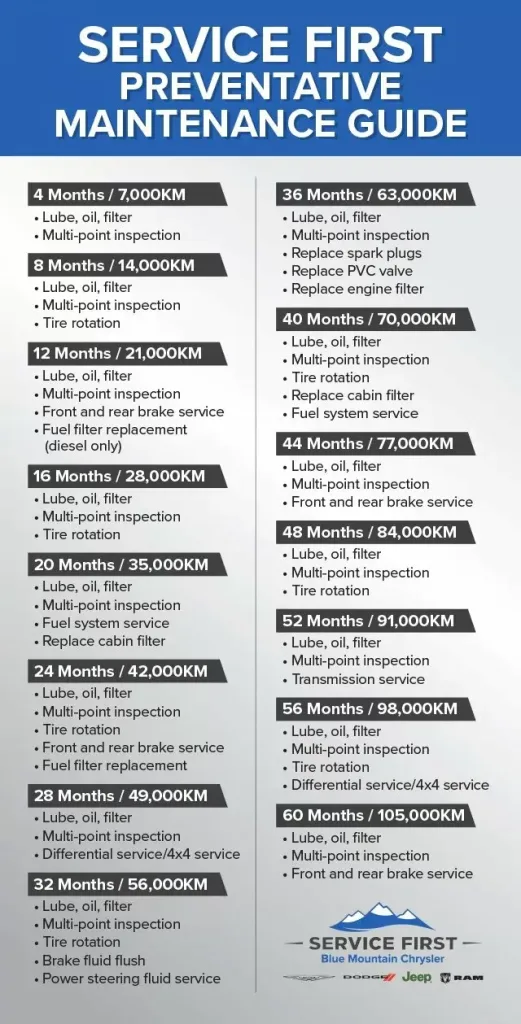
If you own a RAM truck, maintenance is not just about avoiding breakdowns. It is about protecting towing capability, preserving transmission behavior, keeping the engine clean under load, and making sure your truck still feels solid at 80,000, 120,000, or 180,000 miles.
That is why so many owners search for terms like ram maintenance, ram maintenance schedule, ram truck maintenance, and ram 1500 maintenance schedule. They are not looking for vague advice. They want to know what actually needs to be done, when to do it, and how service intervals differ between a RAM 1500 gas truck and a heavier-duty RAM 2500 or 3500.
The short version is this: RAM maintenance is mileage-based, time-based, and usage-based. If you tow, idle heavily, drive in dust, do repeated short trips, or run commercial duty, your truck often needs service sooner than a casual commuter vehicle. Official Mopar maintenance guidance also makes clear that oil change intervals are capped even if the truck seems to be running fine. For gasoline engines, oil changes generally must not exceed 8,000 miles (13,000 km), 12 months, or 350 engine hours, whichever comes first. For diesel engines in applicable heavy-duty models, oil change intervals must not exceed 15,000 miles (24,000 km) or 12 months, or sooner if the oil-life system calls for service. (Mopar Vehicle Information)
Why RAM maintenance matters more than people think
A RAM truck can be tough and still be maintenance-sensitive.
That is the part many owners overlook. A truck can tolerate abuse longer than a small car, but that does not mean skipped service is harmless. Delaying fluid service, ignoring brake wear, or stretching intervals too far can create expensive wear that shows up later as rough shifting, noisy front-end components, cooling issues under load, or driveline vibration.
RAM’s official owner resources and Mopar’s maintenance schedule tools are built around that reality. RAM directs owners to vehicle-specific manuals, maintenance schedules, and warranty information through its owner ecosystem, rather than implying one universal schedule covers every engine and truck configuration. (ramtrucks)
That means the smartest approach is not asking, “What is the maintenance schedule for all RAM trucks?” It is asking, “What is the correct schedule for my truck, engine, year, and workload?”
RAM 1500 maintenance schedule: what owners should expect
The RAM 1500 maintenance schedule is the search phrase that carries the most practical value because the 1500 is where light-duty ownership meets real truck use. Many owners daily-drive these trucks, tow on weekends, idle in traffic, and occasionally haul heavy loads. That mixed-use life is exactly why maintenance matters.
For modern gasoline RAM 1500 models, the oil change monitor helps determine service timing, but the hard limit still applies: no more than 8,000 miles (13,000 km), 12 months, or 350 engine hours between oil changes. Mopar notes that the 350-hour threshold especially matters for fleets and heavy idling use, but it can also matter for personal-use trucks that spend a lot of time warming up, idling on job sites, or sitting in traffic. (Mopar Vehicle Information)
A realistic RAM 1500 maintenance rhythm usually includes:
- engine oil and filter changes at the required interval
- tire rotation at regular service visits
- brake inspection
- suspension and steering checks
- air filter and cabin filter inspections
- fluid checks for coolant, brake fluid, and washer fluid
- driveline and axle attention depending on towing/use pattern
The reason owners search 2019 RAM 1500 maintenance schedule, 2020 RAM 1500 maintenance schedule, 2021 RAM 1500 maintenance schedule, and 2025 RAM 1500 maintenance schedule is that year-specific details can change, especially with engine options and trim content. But the general pattern remains: oil service, tire rotation, inspections, and periodic fluid or spark-plug-related work are the backbone.
RAM 2500 maintenance schedule: where heavy-duty service gets more serious
The RAM 2500 maintenance schedule matters because these trucks often live harder lives. Whether you own a gas 6.4 HEMI truck or a Cummins diesel, a 2500 usually sees more towing, more payload, more heat, and more stress than a typical half-ton.
Mopar’s published service guidance for RAM 2500/3500 trucks states:
- Gas engines: do not exceed 8,000 miles (13,000 km), 12 months, or 350 engine hours
- Diesel engines: do not exceed 15,000 miles (24,000 km) or 12 months, or sooner if prompted by the oil-life system (Mopar Vehicle Information)
That distinction is critical because many owners assume diesel automatically means “long intervals, less worry.” That is only partly true. Diesel intervals can be longer, but heavy towing, dust, idling, and severe use still change what “normal” really means.
Searches like ram 2500 diesel maintenance schedule, ram 2500 cummins maintenance schedule, and ram 2500 6.4 maintenance schedule exist for good reason. A gas 2500 and a diesel 2500 are not maintenance twins. Diesel ownership often introduces additional filter and emissions-system awareness, while gas trucks may bring their own spark plug and ignition-related maintenance priorities.
RAM 3500 maintenance schedule: built for work, but not maintenance-proof
The RAM 3500 maintenance schedule follows the same general logic as the 2500, but the stakes are higher because many 3500 trucks are used for commercial, towing, or heavy-load work.
If the truck regularly tows near its limits, idles on sites, or operates under severe service conditions, you should treat maintenance as an operating cost, not an optional inconvenience. Official RAM/Mopar materials repeatedly route owners to model- and year-specific schedules because that is the correct way to service a working truck. (Mopar)
In real-world terms, that means:
- be strict with oil intervals
- inspect brakes more often if towing
- pay attention to tires and rotation because heavy trucks can chew through edges fast when alignment or load habits are off
- watch cooling-system condition if the truck works hard in heat
- inspect driveline components and steering/suspension items before they become obvious problems
RAM maintenance schedule by usage, not just mileage
This is where smart owners save money.
A truck that drives 6,000 highway miles a year empty is not living the same life as a truck that tows trailers every weekend, idles on a worksite, or does short cold-start trips all winter. Yet both owners may believe they are “low mileage” drivers.
That is exactly why RAM and Mopar do not rely only on mileage. Engine hours and severe-service considerations exist because truck maintenance is about duty cycle, not just odometer reading. For gas trucks, that 350-hour limit is one of the most underappreciated service triggers in the entire schedule. (Mopar Vehicle Information)
If your RAM sees any of the following, your real maintenance needs are probably more aggressive than you think:
- frequent towing
- extended idling
- short-trip driving
- dusty roads or jobsite use
- extreme heat
- repeated stop-and-go traffic
- heavy payload use
What owners usually forget
The biggest RAM maintenance mistakes are rarely dramatic. They are routine things owners postpone because the truck still feels fine.
That includes:
- pushing past the oil interval because the engine sounds normal
- ignoring tire rotation and ending up with uneven wear
- delaying brake service on a truck that tows
- overlooking filters
- assuming “maintenance schedule PDF” means one simple chart covers every RAM forever
That last point matters because a huge number of searches in your keyword file revolve around RAM 1500 maintenance schedule PDF, RAM 2500 maintenance schedule PDF, and year-specific PDF queries. Owners want certainty. The right answer is to use the exact schedule for the exact truck, not a recycled chart from a forum post.
RAM maintenance near me: when local service matters
The keyword brief also shows local intent around ram maintenance near me. That search usually happens when owners know the truck is due and want someone who understands RAM service intervals, Mopar parts, and truck-specific inspection priorities.
That matters because trucks are more likely than passenger cars to be used hard, modified, or placed under towing stress. A shop that understands RAM trucks should be thinking beyond a quick oil sticker. They should be looking at brake wear patterns, steering play, suspension wear, tire condition, fluid history, and what kind of life the truck actually lives.
Final verdict
If you want the best long-term result from a RAM 1500, 2500, or 3500, the rule is simple: follow the correct schedule for the specific truck and do not treat maintenance like guesswork.
For most owners, the most important facts are these:
- modern gasoline RAM trucks generally should not go beyond 8,000 miles (13,000 km), 12 months, or 350 engine hours between oil changes (Mopar Vehicle Information)
- applicable diesel RAM heavy-duty trucks generally should not exceed 15,000 miles (24,000 km) or 12 months, or sooner if the oil-life system says so (Mopar Vehicle Information)
- towing, idling, dust, and heavy work can make “normal” service intervals too optimistic in practice (Mopar Vehicle Information)
- the correct source is always the truck’s official owner/manual and Mopar maintenance schedule, not a generic one-size-fits-all chart (ramtrucks)
That is why RAM maintenance is not just a checklist. It is part of truck ownership itself.
Connect with us


