




How Long to Keep a Car for the Best Value?

When it comes to owning a vehicle, timing is everything—especially if you want to maximize your investment. Whether you’re thinking about trading in your current ride or just curious about how long to keep a car, this guide will help you make the right financial move.
Let’s break down the key factors that influence the best time to trade in a vehicle, how vehicle depreciation works, and which cars hold their value the longest.
How Long Do Most People Keep a Car?
According to recent data, the average car ownership period in the U.S. is about 8.4 years. However, many drivers choose to trade in much sooner—between 3 to 5 years—depending on their lifestyle, financial goals, and vehicle condition.
Why? Because that’s the sweet spot between value retention, warranty coverage, and newer technology upgrades.
When Should You Trade in Your Car?
The best time to trade in a car is typically between years 3 and 5, especially if you:
- Want to avoid costly repairs after the manufacturer warranty ends
- Want to retain higher resale or trade-in value
- Prefer driving a vehicle with modern safety and tech features
- Are nearing the mileage threshold that lowers trade-in offers (usually 100,000 miles)
At Simi Valley Chrysler Dodge Jeep Ram, many of our trade-in customers opt to switch vehicles before hitting the 60,000–80,000 mile range, while their vehicles are still in high demand.
Understanding Depreciation: Why Timing Matters
All vehicles depreciate, but the rate of depreciation varies by brand, model, mileage, and condition. Here’s a general timeline of how car value drops:
| Years Owned | Average Depreciation (%) | Notes |
|---|---|---|
| 1 Year | 20–30% | Major value drop after first year |
| 3 Years | 35–50% | Best resale value before wear sets in |
| 5 Years | 50–65% | Warranty typically ends, value drops sharply |
| 7+ Years | 65–80% | Significant depreciation; value largely based on condition |
Key Insight: If you wait too long, your car’s value could dip well below the amount you’d need to upgrade affordably.
What Cars Keep Their Value the Best?
Some vehicles retain more value than others due to their reliability, brand reputation, and market demand. According to industry analysts, here are the top performers:
| Vehicle Type | Model Example | 5-Year Value Retention |
|---|---|---|
| Full-Size SUV | Jeep Wrangler | Up to 75% |
| Midsize Pickup | Toyota Tacoma | ~65% |
| Full-Size Pickup | RAM 2500 / 3500 | ~60–65% |
| Compact SUV | Honda CR-V, Jeep Cherokee | ~58% |
| Muscle Car | Dodge Charger / Challenger | ~55% |
At Simi Valley CDJR, RAM and Jeep models frequently lead trade-in value charts due to high durability and brand loyalty.
How to Maximize Trade-In Value
Here are tips to help you get the most when trading in your vehicle:
- Maintain a full service record
A clean service history builds buyer confidence and boosts appraisal value. - Keep mileage below key thresholds
Vehicles under 100,000 miles often bring better offers. - Avoid aftermarket modifications
They may hurt resale value or limit buyer interest. - Trade in during high-demand seasons
Spring and summer tend to bring higher trade-in offers due to increased demand. - Get your vehicle appraised
Use tools like Kelley Blue Book, then compare your value at trusted dealerships like ours.
Should You Sell Privately or Trade In?
Selling privately may get you a higher price—but it’s not always worth the hassle. Consider:
| Method | Pros | Cons |
|---|---|---|
| Private Sale | Higher sale price | More time, paperwork, and risk |
| Dealer Trade-In | Fast, easy, sales tax savings | Slightly lower price |
Bonus: In California, trading in a vehicle may reduce the taxable amount of your new car purchase, which can result in significant savings.
So, How Long Should You Keep a Car?
For most drivers, the best balance between value retention and usability is to keep your car for 3 to 5 years. This window allows you to:
- Drive a modern vehicle under warranty
- Avoid major depreciation losses
- Maintain strong trade-in value
And with models like the RAM 1500, Jeep Wrangler, and Dodge Charger, you’ll enjoy exceptional resale value even after several years.
Ready to Trade In?
Simi Valley Chrysler Dodge Jeep Ram makes it easy to get top dollar for your trade-in. Whether you’re upgrading to a new RAM 2500, a rugged Jeep Grand Cherokee, or a powerful Dodge Durango, our team is here to help.
Get a free appraisal today at
www.simivalleychryslerdodgejeepram.com
Or visit us at:
2350 First St, Simi Valley, CA 93065
Call: +1 (805) 387-9755
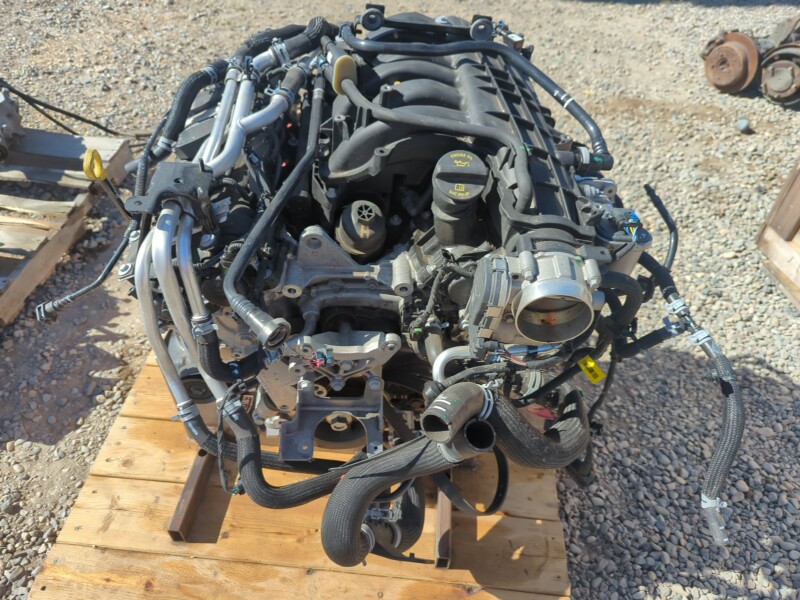
Few vehicles inspire as much debate about engines as the Jeep Wrangler. From the old-school V6s of the late 2000s to today’s turbocharged and plug-in hybrid options, Wrangler powertrains have evolved dramatically. Some are genuinely robust. Others demand compromises. This guide breaks down every major Jeep Wrangler engine, including the hybrid 4xe, explains real-world reliability, and answers the recurring question buyers ask: is the Wrangler engine weak without the hybrid assist?
Jeep Wrangler Engine Options Explained
Over the years, the Wrangler has offered one of the widest engine menus in the off-road segment. Each option exists for a different type of owner, and none are perfect for everyone.
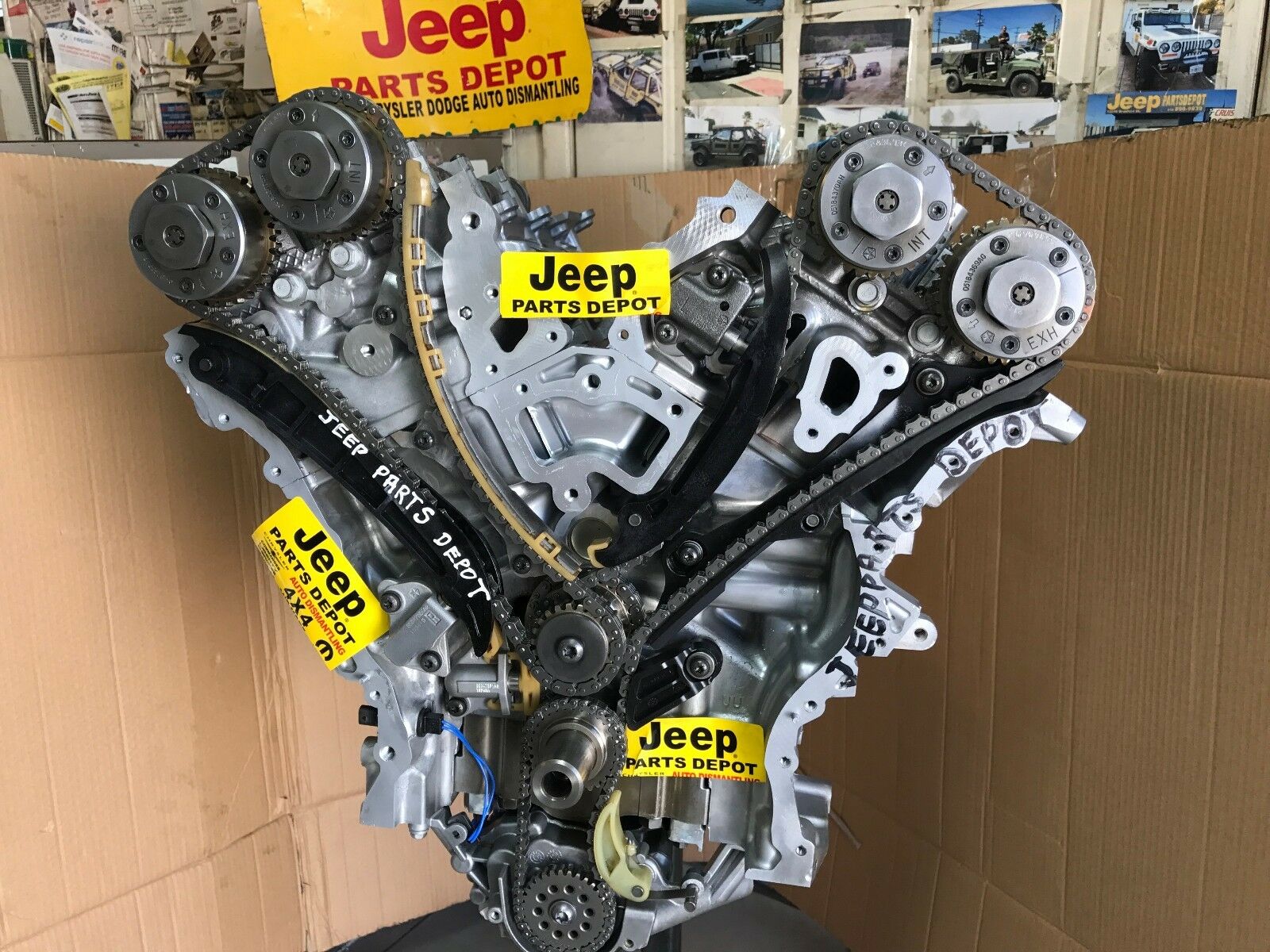
3.6L Pentastar V6 (2012–Present)

This is the backbone of modern Wrangler ownership.
Why it’s popular
- Naturally aspirated, simple by modern standards
- Strong low-end torque for crawling
- Proven across millions of Stellantis vehicles
What to know
Early versions (2012–2014) suffered from cylinder head failures and oil cooler leaks. These issues were largely resolved after mid-decade revisions. When maintained properly, this engine routinely crosses high mileage without internal failure.
For buyers asking “best Jeep Wrangler engine,” this is still the safest long-term bet.
3.8L V6 (2007–2011)
This engine powered the early JK generation and is widely criticized.
Reality check
- Underpowered for the Wrangler’s weight
- Poor fuel economy
- Not unreliable, just inefficient and dated
The 3.8L rarely catastrophically fails, but it struggles under load, especially with larger tires or armor. Owners upgrade around it rather than because of it.
2.0L Turbocharged Inline-4 (2018–Present)
This engine divides opinion more than any other Wrangler motor.
Strengths
- Strong torque delivery
- Better fuel economy than the V6
- Pairs well with the 8-speed automatic
Concerns
Turbo complexity means heat management matters. Oil quality and service intervals are critical. When maintained, it performs well. When neglected, it doesn’t forgive.
This engine feels stronger on-road than the V6 but less mechanical off-road purists trust it less long term.
3.0L EcoDiesel V6 (2020–2023)

Torque monster. Niche appeal.
Why people love it
- Exceptional low-rpm torque
- Ideal for towing and long-distance driving
Why it disappeared
- Emissions complexity
- Higher ownership costs
- Limited buyer demand
Reliable when driven regularly, problematic for short trips and infrequent use.
Jeep Wrangler 4xe Hybrid Engine: Is It Actually Better?
The Wrangler 4xe combines:
- 2.0L turbo gasoline engine
- Two electric motors
- 17-kWh battery pack
Total system output sits well above the standard engines, but raw numbers don’t tell the whole story.
Is the Wrangler engine weak without the hybrid assist?
This is a common search for a reason.
On its own, the 2.0L turbo is not weak. However, the instant torque from the electric motor completely changes how the Wrangler feels. Off the line, crawling over obstacles, and city driving all benefit from electric assist. Without it, the gas engine feels more conventional and less dramatic.
In other words:
- The engine isn’t weak
- The hybrid system makes it feel significantly stronger and smoother
Reliability reality of the 4xe
The hybrid system itself has proven solid so far, but ownership success depends heavily on usage patterns:
- Regular charging helps battery health
- Software updates are essential
- Long-term complexity is higher than any non-hybrid Wrangler
This is not a “set it and forget it” drivetrain. It rewards informed owners.

Older Wrangler Engines by Year (Quick Reality Check)
2007–2011 Wrangler engines
Reliable but underpowered. Buy for simplicity, not performance.
2012–2014 Wrangler engines
Avoid early Pentastar years unless documented repairs were completed.
2015–2017 Wrangler engines
Pentastar reliability improved significantly. Strong used-market years.
2018–2023 Wrangler engines
Modern performance, more electronics, higher repair costs if neglected.
Check Engine Light on Jeep Wrangler: What It Usually Means
The Wrangler is notorious for triggering check engine lights that range from trivial to serious.
Common causes include:
- Loose or failing gas cap
- EVAP system leaks
- Oxygen sensor faults
- Battery voltage irregularities
In hybrids, software and sensor calibration issues can also trigger warnings without mechanical failure.
Ignoring a Wrangler check engine light is a mistake. Diagnosing early prevents cascading issues.
Engine Replacement and Swap Reality
Engine replacement costs vary widely depending on generation and powertrain. Older V6 swaps are straightforward. Modern turbo and hybrid replacements are expensive and often not financially sensible unless under warranty.
Hellcat-swapped Wranglers exist, but they are novelty builds, not practical ownership choices.
So, What’s the Best Jeep Wrangler Engine?
It depends on priorities.
- Best long-term reliability: 3.6L Pentastar (2015+)
- Best daily driving feel: 2.0L Turbo
- Best performance and efficiency: 4xe Hybrid
- Best torque for towing: EcoDiesel
There is no universally perfect Wrangler engine. There is only the right engine for how you actually drive.
Final Verdict
The Jeep Wrangler engine lineup reflects the vehicle itself: purpose-built, imperfect, and unapologetically specialized. The hybrid doesn’t fix weaknesses so much as it reshapes the experience. The non-hybrid engines are not weak, but they are honest. They demand realistic expectations, consistent maintenance, and an understanding that Wranglers are engineered for capability first, comfort and efficiency second.
If you choose the right engine for your use case, the Wrangler remains one of the most mechanically characterful vehicles you can still buy.
1. Is the Jeep Wrangler engine reliable?
Yes, most Jeep Wrangler engines are reliable when properly maintained. The 3.6L Pentastar V6 (2015 and newer) has the strongest long-term reliability record, while earlier engines require more caution.
2. Is the Jeep Wrangler engine weak without the hybrid system?
No, the engine itself is not weak. However, the hybrid system in the Wrangler 4xe adds instant electric torque, which makes the vehicle feel significantly stronger at low speeds compared to the gas engine alone.
3. What engine does the Jeep Wrangler 4xe use?
The Wrangler 4xe uses a 2.0-liter turbocharged four-cylinder gasoline engine paired with electric motors and a battery pack to create a plug-in hybrid system.
4. Which Jeep Wrangler engine lasts the longest?
The 3.6L Pentastar V6 is widely considered the longest-lasting Wrangler engine, with many examples exceeding high mileage when oil changes and cooling system maintenance are done on time.
5. Are older Jeep Wrangler engines reliable?
Older Wrangler engines can be reliable, but performance and efficiency are lower. Engines from 2007–2011 are mechanically simple but underpowered, while 2012–2014 models had known cylinder head issues.
6. What causes the check engine light on a Jeep Wrangler?
Common causes include a loose gas cap, EVAP system leaks, oxygen sensor failures, battery voltage issues, or software faults. Many check engine lights are minor but should still be scanned.
7. Is the Jeep Wrangler 2.0L turbo engine reliable?
The 2.0L turbo engine is reliable when maintained correctly. Because it is turbocharged, oil quality, cooling, and service intervals are more critical than with naturally aspirated engines.
8. Is the Jeep Wrangler hybrid engine expensive to repair?
Potentially yes. Hybrid components add complexity, and repairs outside warranty can be more expensive than traditional gas engines. Regular charging and software updates reduce long-term risk.
9. What is the best Jeep Wrangler engine for daily driving?
For daily driving, the 2.0L turbo and the 4xe hybrid offer the best balance of power and efficiency. The hybrid is smoother in city driving due to electric assist.
10. Which Jeep Wrangler engine should I avoid?
Buyers typically avoid early 2012–2014 3.6L engines unless documented repairs were completed, and 2007–2011 models if performance and fuel economy matter.
11. Does the Jeep Wrangler engine overheat?
Wrangler engines do not commonly overheat when properly maintained. Cooling issues usually stem from neglected coolant service, faulty thermostats, or aftermarket modifications.
12. How much does it cost to replace a Jeep Wrangler engine?
Engine replacement costs vary by year and engine type. Older V6 engines are cheaper to replace, while turbocharged and hybrid engines are significantly more expensive.
13. Is the Jeep Wrangler diesel engine reliable?
The diesel engine offers excellent torque and highway efficiency, but emissions systems require regular use and proper driving patterns. It is less suitable for short trips only.
14. Does lifting a Jeep Wrangler affect engine reliability?
A lift itself does not damage the engine, but larger tires and added weight increase strain on the drivetrain. Regearing and proper tuning help preserve engine health.
15. What is the best Jeep Wrangler engine overall?
For long-term ownership and simplicity, the 3.6L V6 remains the best all-around choice. For performance and efficiency, the 4xe hybrid delivers the most capability if maintained correctly.
What are the Negatives of a Jeep Compass?
Is the 2024 Jeep Compass Reliable?
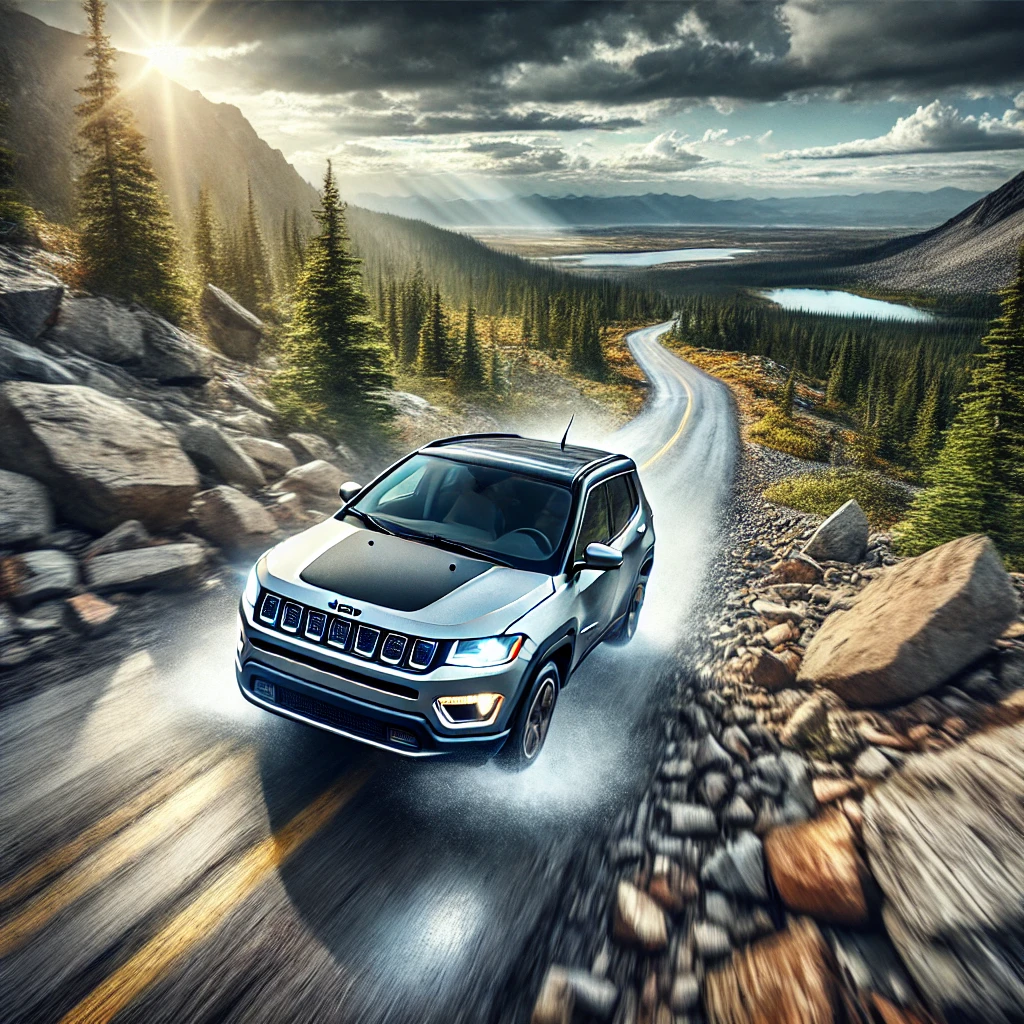
The 2024 Jeep Compass is part of a lineup that has been popular for its off-road capabilities, stylish design, and modern technology features. But for many buyers, one of the most crucial factors in choosing a vehicle is its reliability. In this article, we’ll dive into the reliability of the 2024 Jeep Compass, examining key factors such as mechanical performance, safety features, long-term durability, and owner satisfaction.
What are the Negatives of a Jeep Compass? Overview of the 2024 Jeep Compass
The 2024 Jeep Compass offers a refreshed design and improved technology compared to its predecessors. Available in several trims, from the base Sport to the off-road-focused Trailhawk, it caters to different types of drivers. Jeep has equipped the Compass with a 2.0-liter turbocharged engine that produces 200 horsepower, paired with an 8-speed automatic transmission.
While the Compass is known for its off-road capabilities, especially in the Trailhawk trim, potential buyers are often curious about whether it can stand the test of time and daily driving demands.
Engine and Transmission Reliability
The 2024 Jeep Compass is powered by a new 2.0-liter turbocharged engine, which is an upgrade from the previous 2.4-liter engine used in older models. This turbocharged engine delivers improved performance and better fuel efficiency. However, with new engines come questions about long-term reliability.
Performance and Durability
The 2.0-liter turbo engine is a modern powerplant, but it’s relatively new to the Compass lineup. While turbocharged engines can offer better fuel efficiency and power, they also tend to be more complex, which can raise concerns about long-term reliability. Turbo engines typically have more components that could wear out, like the turbocharger itself, leading to potential repair costs down the road.
That said, Jeep has worked to refine its engines over the years, and initial reports on the 2024 model’s engine have been positive, with smooth acceleration and improved fuel efficiency compared to previous years.
Transmission Performance
The 8-speed automatic transmission is a solid choice, providing smoother shifts and better fuel efficiency than older models with 6-speed transmissions. So far, there haven’t been any widespread reports of transmission issues with the 2024 model. However, Jeep’s history with transmissions has been mixed in previous generations, so it’s something buyers should keep in mind.
What are the Negatives of a Jeep Compass? Build Quality and Interior
The Jeep Compass has made strides in improving interior quality, but it still has room for growth in terms of refinement. While the higher trims offer better materials and a more upscale feel, the base models still feature a lot of hard plastics that may not age well over time.
Fit and Finish
The fit and finish of the interior materials can impact long-term reliability as well. In some previous models, owners have reported that interior components like dashboard panels and buttons can show signs of wear or become loose after several years of use. However, Jeep has been working to improve quality control, and the 2024 model does show improvements in this area.
Infotainment and Technology Reliability
The 2024 Jeep Compass comes with the latest Uconnect 5 infotainment system, which is highly regarded for its user-friendliness and responsiveness. However, technology can be a double-edged sword when it comes to reliability. While modern infotainment systems offer many conveniences, they can also be a source of frustration if they malfunction.
So far, the Uconnect 5 system in the 2024 Compass has received positive reviews, with minimal complaints of bugs or system crashes. However, it’s still early in the model’s life cycle, so long-term data on the system’s reliability is not yet available.
What are the Negatives of a Jeep Compass? Off-Road Durability
One of the Jeep Compass’s selling points is its off-road capability, especially in the Trailhawk trim, which comes with features like all-terrain tires, increased ground clearance, and skid plates. While this is a great feature for those who love adventure, taking the vehicle off-road can put more strain on components like the suspension and drivetrain.
Long-Term Durability for Off-Road Enthusiasts
For those who plan to use the Compass off-road regularly, it’s worth noting that the extra wear and tear from rough terrain can affect the vehicle’s long-term durability. However, Jeep’s reputation for building rugged vehicles suggests that the Compass should hold up well if maintained properly.
What are the Negatives of a Jeep Compass? Safety and Reliability Ratings
Safety ratings are often closely tied to reliability, as a safer vehicle is likely to experience fewer mechanical issues. The 2024 Jeep Compass is equipped with a variety of advanced driver-assistance systems (ADAS), such as blind-spot monitoring, lane-keeping assist, and adaptive cruise control.
Crash Test Ratings
The 2024 Compass has not yet been fully rated by safety organizations like the National Highway Traffic Safety Administration (NHTSA) or the Insurance Institute for Highway Safety (IIHS), but the 2023 model received decent scores, which bodes well for the latest version.
Advanced Safety Features
While advanced safety features are a welcome addition, they can also add complexity to the vehicle’s electronic systems. Over time, components like cameras and sensors may need repairs or recalibration, which can be costly. However, Jeep has integrated these features with reliability in mind, and there have been no widespread reports of issues so far with the 2024 model.
What are the Negatives of a Jeep Compass? Consumer and Expert Opinions
So far, the 2024 Jeep Compass has received generally positive reviews from both consumers and automotive experts. Early impressions indicate that the new engine is an improvement over the previous model, and the technology updates are well-received.
Owner Satisfaction
Long-term owner satisfaction will ultimately determine the Compass’s reliability. While Jeep has made improvements over the years, some owners of earlier Compass models reported issues with things like electrical systems or build quality. However, Jeep has been addressing these issues with each new model, and the 2024 version is expected to continue this trend of improvement.
What are the Negatives of a Jeep Compass? Warranty and Maintenance
The 2024 Jeep Compass comes with a 5-year/60,000-mile powertrain warranty and a 3-year/36,000-mile basic warranty, which is standard for the industry. This coverage provides peace of mind for the first few years of ownership, but it’s always a good idea to consider extended warranties if you plan to keep the vehicle long-term.
Maintenance Costs
Regular maintenance is essential to keeping any vehicle reliable, and the Jeep Compass is no exception. Oil changes, tire rotations, and brake checks should be done on schedule to avoid more serious issues down the road. Jeep vehicles typically have average maintenance costs compared to other brands, but it’s worth noting that off-road use or extensive travel can increase wear and tear, leading to higher repair costs over time.
Conclusion: Is the 2024 Jeep Compass Reliable?
The 2024 Jeep Compass shows promise in terms of reliability, with a new and improved engine, better technology, and a focus on safety. While it’s still too early to say how the vehicle will perform in the long term, early indicators suggest that Jeep has addressed some of the issues that plagued previous models. However, as with any vehicle, long-term reliability will depend on proper maintenance and care.
For those looking for a compact SUV with off-road capability, stylish design, and modern features, the 2024 Jeep Compass is a solid option. While there may be concerns about the complexity of the turbocharged engine and advanced safety systems, the overall reliability outlook is positive based on early feedback.
Ultimately, if you’re considering a Jeep Compass, it’s important to weigh the vehicle’s strengths and potential drawbacks based on your own driving needs.
What Does a Jeep Wagoneer Cost?
What Does a Jeep Wagoneer Cost? A Breakdown of Pricing and Features

The Jeep Wagoneer, a name synonymous with luxury and capability, has returned to the market in recent years as a high-end SUV. It merges Jeep’s rugged heritage with a new level of sophistication, making it a top contender in the full-size SUV segment. But how much does this impressive vehicle cost? Let’s explore the different trims and pricing to give you a clear understanding of what to expect when purchasing a Jeep Wagoneer.
What Does a Jeep Wagoneer Cost? Base Price: The Starting Point
The 2024 Jeep Wagoneer starts at around $63,595 for the base Series I model. This entry-level option comes well-equipped with premium features, including a 10.1-inch touchscreen, Apple CarPlay and Android Auto integration, three-row seating for up to eight passengers, and a powerful 5.7-liter V8 engine with mild-hybrid eTorque technology. Even at its starting price, the Wagoneer delivers plenty of power and luxury, making it an appealing choice for families and adventurers alike.
Mid-Level Models: Stepping Up the Luxury
For those seeking additional comfort and technology features, the Series II trim is the next step up, priced at approximately $70,995. This model includes advanced driver-assistance systems, leather-trimmed seating, a more powerful sound system, and enhanced towing capabilities. The Series II trim also allows for more customization options, letting buyers add packages like the Convenience Group, which includes features like a head-up display and additional safety technology.
At this price point, you’re getting a blend of rugged performance and refined luxury that stands out among competitors like the Chevrolet Tahoe or GMC Yukon.
What Does a Jeep Wagoneer Cost? The Fully Loaded Option: Wagoneer Series III
If you’re looking for the ultimate luxury SUV experience, the Wagoneer Series III is the top-tier model, starting at $76,395. This trim takes the premium nature of the Wagoneer to new heights with features like a 19-speaker McIntosh audio system, ventilated and massaging front seats, advanced four-wheel-drive options, and a rear-seat entertainment package. The Series III model is perfect for buyers who want the best of both worlds: the rugged off-road prowess of Jeep with the opulence of a high-end luxury vehicle.
Optional Packages: Tailoring Your Wagoneer
Jeep offers several optional packages that can further enhance the Wagoneer’s features, comfort, and capability. These packages, however, come with additional costs:
- Premium Group: Available for an additional $5,000 to $6,000, this package adds a panoramic sunroof, enhanced LED lighting, and a host of tech upgrades.
- Heavy-Duty Tow Package: This option, priced at around $1,300, improves the vehicle’s towing capacity to 10,000 pounds, making it an excellent choice for those who need a serious hauler.
- All-Terrain Package: For an extra $3,000 to $4,000, buyers can opt for off-road-focused features like skid plates, all-terrain tires, and a more robust suspension.
What Does a Jeep Wagoneer Cost? Additional Costs to Consider
Beyond the MSRP, there are additional costs that can influence the final price of your Wagoneer, including:
- Destination Charge: Typically around $2,000, this fee is standard across all trims.
- Taxes and Fees: Sales taxes, registration fees, and dealer fees will vary depending on your location but can add several thousand dollars to the final price.
- Upgrades and Accessories: Depending on your preferences, upgrading to larger wheels, premium paint finishes, or customized interior features can increase the total cost.
Is the Jeep Wagoneer Worth the Price?
With its blend of luxury, advanced technology, and Jeep’s legendary capability, the Wagoneer justifies its premium pricing in the full-size SUV market. Competitors like the Ford Expedition or GMC Yukon may offer similar price points, but the Wagoneer stands out for its unique combination of rugged performance and high-end comfort.
For families who need space, power, and luxury, the Jeep Wagoneer delivers all three without compromising the off-road capabilities that Jeep is known for. Whether you’re towing a boat, exploring off the beaten path, or simply enjoying a smooth highway drive, the Wagoneer is built to excel in any environment.
What Does a Jeep Wagoneer Cost? Conclusion
The Jeep Wagoneer is priced from $63,595 to $76,395, depending on the trim level and optional features. While the base model offers an impressive array of standard features, higher trims unlock a world of luxury, making the Wagoneer a worthy investment for those looking for a premium full-size SUV. If you’re after a vehicle that combines the rugged heart of a Jeep with upscale amenities, the Wagoneer might just be the perfect fit for you.

| Reason | Description |
|---|---|
| 1. Off-Road Capability | Legendary Jeep 4×4 systems, perfect for trails, mud, and sand. More on Jeep’s 4×4 systems |
| 2. Unique Pickup Design | The only open-air pickup truck on the market, combining the best of Jeep and truck worlds. Explore Gladiator design |
| 3. Removable Doors and Roof | Like the Wrangler, the Gladiator offers a convertible experience. See how the doors and roof come off |
| 4. Towing Capacity | Best-in-class towing capacity of up to 7,650 lbs, ideal for trailers and boats. More on towing |
| 5. Payload Capacity | Can carry a payload of up to 1,700 lbs, making it a solid workhorse. Payload info |
| 6. Trail Rated Performance | Every Gladiator comes Trail Rated, certified to tackle tough conditions like water fording and rocky trails. What Trail Rated means |
| 7. Off-Road Accessories | Offers tons of Mopar accessories to enhance its off-road prowess. See Mopar accessories |
| 8. Strong Resale Value | Jeep vehicles, including the Gladiator, hold their value well. Resale value trends |
| 9. Diesel Engine Option | Available 3.0L EcoDiesel engine offers excellent torque and fuel efficiency. Learn more about the EcoDiesel |
| 10. Advanced Tech Features | Equipped with Uconnect 4 or 4C NAV, including an 8.4-inch touchscreen, Apple CarPlay, and Android Auto. Explore Uconnect |
| 11. 4×4 Pickup Versatility | Combines Jeep’s iconic off-road prowess with the utility of a pickup bed. Learn more about versatility |
| 12. Rugged Durability | Built tough with a high-strength steel frame and durable underbody protection. Gladiator durability |
| 13. Spacious Interior | The Gladiator offers more rear-seat legroom than most midsize pickups, ensuring comfort for passengers. Interior details |
| 14. Water Fording Capability | Gladiator can ford up to 30 inches of water, perfect for adventurous trails. More on water fording |
| 15. Customization Options | Offers many factory and aftermarket options to customize it to your preferences. Jeep customization |
Is the Jeep Gladiator a Good Purchase? 15 Reasons Why
The Jeep Gladiator is one of the most distinctive and versatile vehicles on the market today, blending the iconic Jeep off-road capability with the utility of a pickup truck. Whether you’re into off-roading, need a vehicle that can tow and haul, or just love the rugged style, the Gladiator has a lot to offer. In this article, we’ll explore 15 reasons why the Jeep Gladiator is a smart purchase.
1. Is the Jeep Gladiator a Good Purchase? Legendary Off-Road Capability
Jeep vehicles are renowned for their off-road prowess, and the Gladiator is no exception. Equipped with Jeep’s 4×4 systems, the Gladiator is built for serious off-roading, from dirt trails to rocky terrain. It’s Trail Rated, meaning it has passed rigorous tests for traction, water fording, maneuverability, and ground clearance. This makes it perfect for those who love adventure.
2. Unique Pickup Truck Design
The Jeep Gladiator is the only open-air pickup truck currently available on the market. It takes the best features of a Jeep Wrangler—removable doors and roof—and adds a truck bed for extra utility. If you want the fun and freedom of a Wrangler but need the functionality of a pickup, the Gladiator gives you both.
3. Is the Jeep Gladiator a Good Purchase? Removable Doors and Roof for an Open-Air Experience
One of the most fun aspects of the Jeep Gladiator is the removable doors and roof, just like the Wrangler. This feature allows you to experience the outdoors in a way that no other pickup truck can offer. It’s the perfect vehicle for those who want to feel the wind in their hair while on an off-road adventure or cruising through the city.
How the doors and roof come off
4. Is the Jeep Gladiator a Good Purchase? Best-in-Class Towing Capacity
The Gladiator isn’t just about fun; it’s also a serious workhorse. With a best-in-class towing capacity of up to 7,650 lbs, it’s perfect for pulling a boat, trailer, or camper. Whether you’re working or playing, the Gladiator can handle your towing needs with ease.
5. Impressive Payload Capacity
In addition to its towing power, the Gladiator has an impressive payload capacity of up to 1,700 lbs. This means it can carry heavy loads in the truck bed, whether you’re hauling construction materials or gear for your next camping trip.
6. Is the Jeep Gladiator a Good Purchase? Trail Rated Performance
Every Gladiator comes with Jeep’s Trail Rated badge, which means it has been tested to perform under extreme off-road conditions. This includes traction, water fording, articulation, and ground clearance. For those who plan to take their truck off the beaten path, this is a big plus.
7. Wide Range of Off-Road Accessories
Jeep offers a ton of Mopar accessories designed to enhance the Gladiator’s off-road capabilities. From winches and lift kits to all-terrain tires, you can customize your Gladiator to tackle the most challenging trails.
8. Is the Jeep Gladiator a Good Purchase? Strong Resale Value
Jeep vehicles, particularly the Wrangler and Gladiator, are known for their strong resale value. This is a critical factor for many buyers, as it means the vehicle will retain a significant portion of its value over time, making it a smart investment.
9. Diesel Engine Option
For those who want extra power and fuel efficiency, the Gladiator offers a 3.0-liter EcoDiesel engine option. This engine provides plenty of torque for towing and off-road driving while also delivering better fuel economy than the standard gasoline engine.
Learn more about the EcoDiesel
10. Is the Jeep Gladiator a Good Purchase? Advanced Technology Features
The 2024 Jeep Gladiator comes with the Uconnect 4 or 4C NAV infotainment system, featuring an 8.4-inch touchscreen, Apple CarPlay, and Android Auto. This system is highly intuitive and user-friendly, ensuring that you stay connected whether you’re on the trail or the highway.
11. 4×4 Pickup Versatility
The Gladiator is not just an off-roader; it’s a highly versatile pickup truck as well. The 4×4 system, combined with the practicality of a truck bed, makes it a go-anywhere, do-anything vehicle. It’s the perfect blend of ruggedness and utility.
More about Gladiator versatility
12.Is the Jeep Gladiator a Good Purchase? Built for Durability
The Gladiator is built on a high-strength steel frame and features durable underbody protection, making it highly resistant to the rigors of off-road driving and heavy-duty use. Whether you’re on the trail or on the job site, the Gladiator is designed to last.
13. Spacious Interior
For a midsize truck, the Gladiator offers a surprisingly spacious interior. In fact, it has more rear-seat legroom than most competitors, making it a comfortable choice for passengers. Even tall adults will find plenty of room in the back seats.
14.Is the Jeep Gladiator a Good Purchase? Water Fording Capability
If you plan on taking the Gladiator off-road, you’ll be pleased to know that it can ford water up to 30 inches deep. This makes it an ideal choice for those who plan to traverse rivers, creeks, or mud-filled trails.
15. Customization Options
The Gladiator offers extensive customization options. Whether you’re looking for aftermarket accessories to enhance performance or just want to personalize the vehicle’s appearance, Jeep offers a wide range of factory and aftermarket options.
Conclusion: Why the Jeep Gladiator is a Great Purchase
The Jeep Gladiator stands out as a unique vehicle that combines the best of both worlds: the off-road capability of a Jeep and the practicality of a pickup truck. With its removable doors and roof, best-in-class towing, rugged durability, and spacious interior, it’s a versatile vehicle that’s perfect for work, play, or adventure.
While it may come with a higher price tag than some competitors, the Gladiator’s strong resale value, off-road performance, and customization options make it a solid investment for those who love adventure and need a capable, all-around vehicle.
For more information, explore the official Jeep Gladiator page or check out reviews on Kelley Blue Book and Edmunds.
Since its debut in 2019, the Jeep Gladiator has taken the automotive world by storm. Combining Jeep’s renowned off-road capabilities with the practicality of a pickup truck, the Gladiator has attracted a loyal following. Despite what some may perceive as sales struggles, the reality is quite different. The Gladiator continues to perform well in its segment, and it has carved out a distinctive place in the midsize truck market. Let’s explore why the Jeep Gladiator is more successful than some might believe.
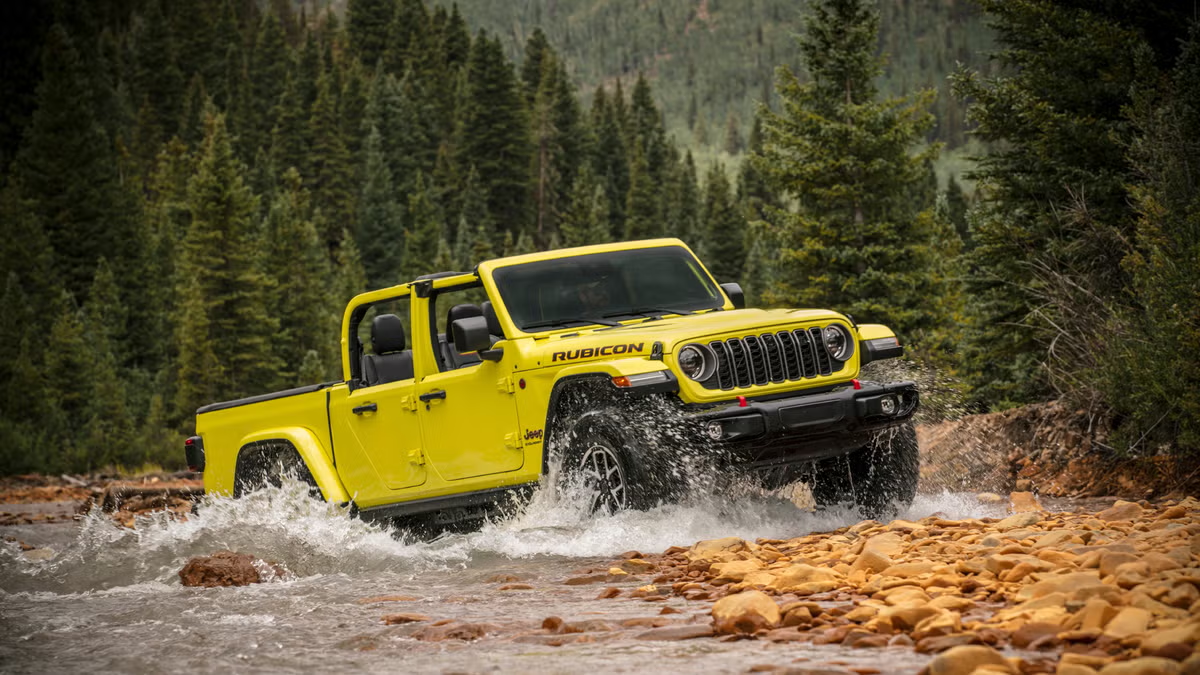
1. Market Competition is Fierce, But the Gladiator Stands Strong
The midsize truck market is crowded, with strong competitors like the Toyota Tacoma, Ford Ranger, and Chevrolet Colorado. However, the Gladiator offers something these trucks don’t—a unique blend of off-road prowess and pickup utility. This combination has resonated with a particular group of buyers who want more than just a traditional truck.
While some may see the crowded market as a challenge, the Gladiator’s ability to stand out from the pack is part of its success. Its Jeep DNA makes it a top choice for those who value adventure and outdoor capabilities, while still needing the practical functions of a truck.
2. Premium Pricing Reflects Premium Value
Some may point to the Gladiator’s price tag as a potential obstacle, but the reality is that its pricing reflects the high value it offers. With features that are unrivaled in the segment—such as removable doors, a fold-down windshield, and serious off-road capabilities—the Gladiator provides more than just a basic truck. The higher price point is a testament to the vehicle’s premium design and capabilities, and for those who understand the value of what the Gladiator offers, it’s a worthwhile investment.
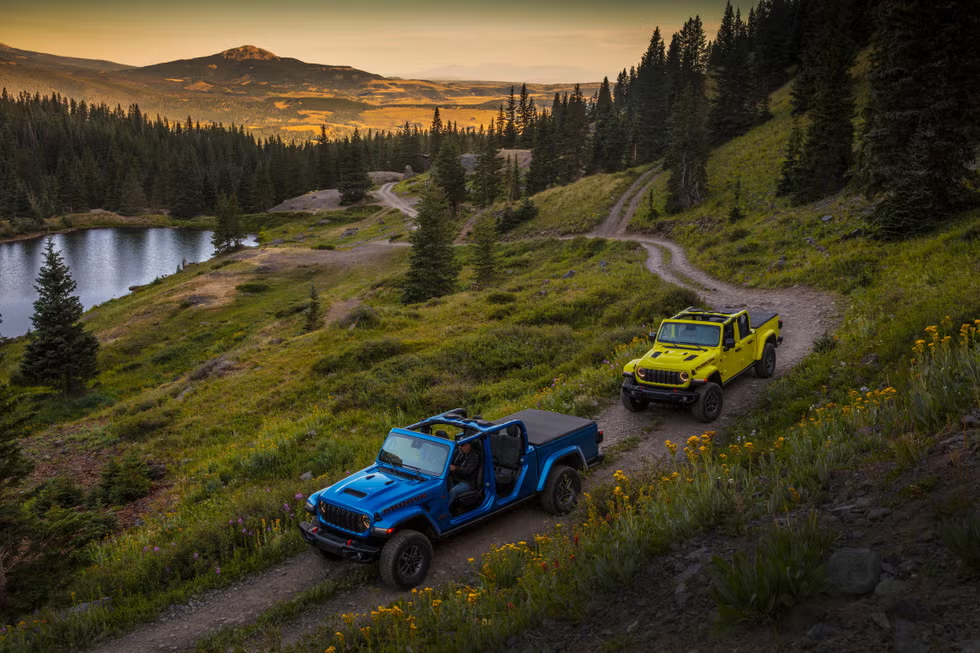
The Gladiator is also available in a variety of trims, allowing buyers to choose the one that fits their budget while still enjoying Jeep’s legendary performance.
3. Fuel Economy: A Balance Between Power and Efficiency
Fuel economy might be a consideration for some truck buyers, but the Jeep Gladiator delivers a solid balance between power and efficiency. The available 3.0-liter EcoDiesel V6 engine provides better fuel economy for those looking to maximize efficiency without sacrificing performance. For off-road enthusiasts who value both power and fuel savings, the EcoDiesel option makes the Gladiator an even more attractive choice.
Moreover, considering the Gladiator’s off-road capabilities and towing strength, its fuel efficiency remains competitive within its class. Consumers looking for a rugged truck that can handle tough terrains and long road trips have found the Gladiator’s performance to be more than satisfactory.
4. Jeep Gladiator’s Engine Options Meet Diverse Needs
The Jeep Gladiator offers a diesel engine option, which provides excellent torque for towing and off-road driving, as well as a standard gasoline engine for everyday driving. While some competitors may offer hybrid or electric options, Jeep is known for its focus on ruggedness and durability. The Gladiator’s current engine lineup aligns with Jeep’s brand promise—delivering powerful and reliable engines for outdoor adventures.
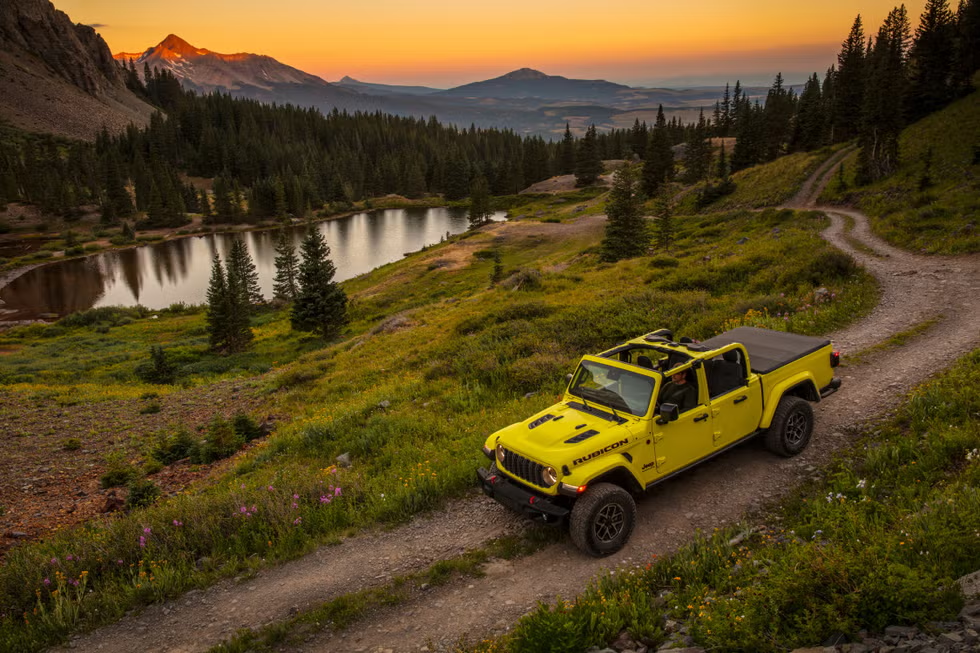
For buyers who prioritize off-road capability and robust towing power, the Gladiator’s engine options are more than sufficient, making it a strong contender in the midsize truck segment.
5. Niche Appeal is a Strength, Not a Limitation
Far from being a drawback, the Gladiator’s niche appeal is one of its greatest strengths. Jeep enthusiasts are a passionate and loyal group, and the Gladiator taps into that loyalty by offering the rugged, go-anywhere capability that buyers expect from the brand. It combines the best of Jeep’s off-road heritage with the utility of a pickup truck, creating a vehicle that has no direct competitors.
For those who love adventure, camping, or off-road exploration, the Gladiator is the perfect blend of form and function. Its distinctive design and unmatched versatility make it a standout choice for a growing number of buyers.
6. Interior Quality and Comfort Are Strong Points
The Jeep Gladiator doesn’t just excel in exterior ruggedness; it also offers a well-appointed interior. With high-quality materials, intuitive technology, and comfortable seating, the Gladiator’s cabin has been designed to meet the needs of both off-road enthusiasts and those who use it as a daily driver.
The available upgrades in higher trims, such as leather seating, advanced infotainment systems, and premium finishes, ensure that the Gladiator delivers on comfort as well as capability. This balance of rugged exterior and refined interior is part of what continues to draw buyers to the Gladiator.
7. Off-Road Capability is a Major Selling Point
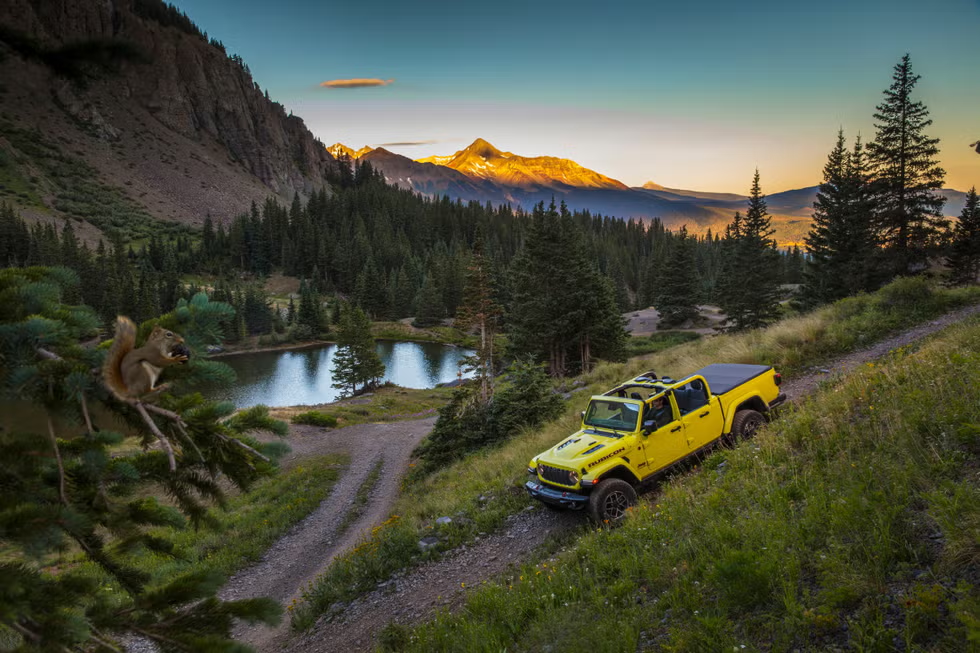
While the Jeep Gladiator’s off-road focus may appeal to a specific set of buyers, it’s important to note that this is a key strength, not a limitation. Many truck buyers specifically seek out vehicles that can handle off-road trails, rocky terrains, and inclement weather conditions, and the Gladiator delivers exactly that.
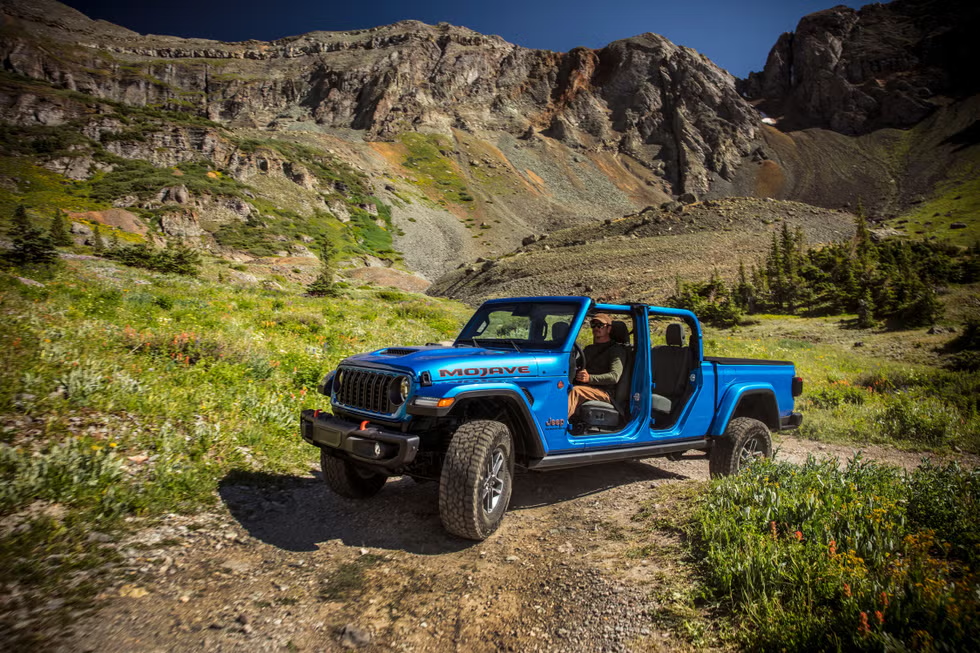
The Rubicon trim, in particular, is renowned for its world-class off-road capabilities. With features like lockable differentials, electronic sway-bar disconnect, and 33-inch all-terrain tires, the Gladiator is perfectly suited for those who prioritize off-road adventures.
8. Jeep’s Brand Reliability Continues to Improve
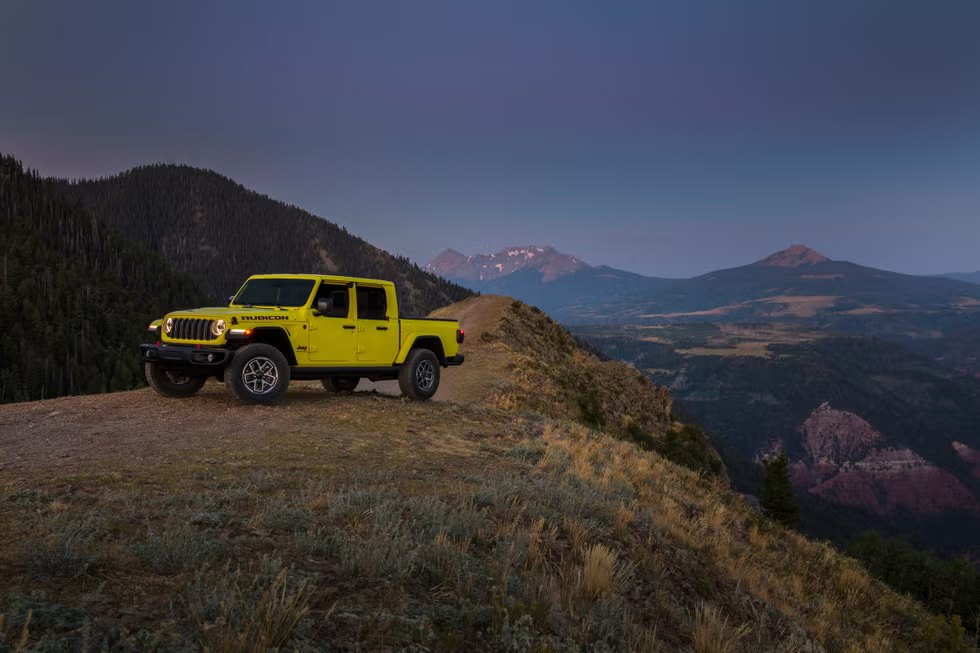
Jeep has made significant strides in terms of reliability and build quality in recent years. While every brand has its own perceptions in the marketplace, the Gladiator has proven itself to be a durable, reliable vehicle, especially in its core areas of strength—off-road driving and rugged terrain.
In fact, Jeep’s commitment to continuous improvement has been well-received by many buyers, and the Gladiator’s performance in various tests and reviews speaks to its reliability as both a daily driver and an adventure-ready machine.
9. Growing Popularity Through Strong Marketing Efforts
Jeep’s marketing strategy for the Gladiator has successfully highlighted its unique attributes. From its versatile design to its superior off-road capability, buyers are becoming more aware of the Gladiator’s strengths. The vehicle’s popularity is evident in its growing fan base, and as more consumers discover its potential, its sales performance continues to rise.
Through a combination of strong branding, targeted marketing, and consumer education, Jeep has positioned the Gladiator as a must-have vehicle for those seeking both adventure and practicality in one package.
Conclusion: The Jeep Gladiator is Gaining Momentum
Despite some misconceptions, the Jeep Gladiator is performing well in the midsize truck segment. With its distinctive blend of Jeep’s off-road capability and pickup utility, the Gladiator continues to attract a loyal customer base. From premium pricing that reflects premium value to engine options that meet diverse needs, the Gladiator is proving to be a vehicle that appeals to a wide range of buyers.
With its growing popularity and strong sales performance, the Jeep Gladiator is far from struggling. Instead, it is thriving in its niche, and as more consumers discover its unique strengths, it is poised to continue gaining momentum in the competitive truck market.
FAQs
1. Is the Jeep Gladiator a good-selling truck?
Yes, the Jeep Gladiator continues to perform well in sales, especially among off-road enthusiasts and those looking for a versatile midsize truck. Despite market rumors, its unique features and capabilities keep it in demand.
2. How does the Jeep Gladiator compare to the Toyota Tacoma?
The Jeep Gladiator offers superior off-road performance and versatility compared to the Toyota Tacoma. With features like a removable roof and doors, the Gladiator is ideal for adventure seekers, while the Tacoma focuses more on traditional truck utility.
3. What are the engine options for the Jeep Gladiator?
The Jeep Gladiator offers two engine options: a 3.6L V6 gas engine and a 3.0L EcoDiesel V6. The diesel option provides better fuel efficiency and towing capacity, making it a popular choice for those who need extra power.
4. What is the fuel economy of the Jeep Gladiator?
The Jeep Gladiator’s fuel economy ranges from 17-22 MPG with the gas engine and 22-28 MPG with the diesel engine. The EcoDiesel engine is ideal for those seeking better fuel efficiency in a midsize truck.
5. How much can the Jeep Gladiator tow?
The Jeep Gladiator has a maximum towing capacity of up to 7,650 pounds, making it one of the top performers in the midsize truck category for towing heavy loads.
6. Is the Jeep Gladiator good for everyday driving?
Yes, the Jeep Gladiator is suitable for daily driving, offering comfort, modern tech, and a smooth ride. While optimized for off-road adventures, it performs well on highways and city streets, making it versatile for everyday use.
7. Does the Jeep Gladiator have high resale value?
Yes, the Jeep Gladiator holds its value exceptionally well. Its off-road capabilities and brand reputation contribute to its strong resale value compared to other midsize trucks.
8. Can I customize my Jeep Gladiator?
Yes, the Jeep Gladiator is one of the most customizable trucks on the market. Jeep offers a wide array of factory and aftermarket accessories, from lift kits to roof racks, making it easy to personalize.
9. What safety features does the Jeep Gladiator offer?
The Jeep Gladiator comes equipped with advanced safety features, including blind-spot monitoring, adaptive cruise control, forward collision warning, and rear cross-path detection, providing both safety and peace of mind on and off the road.
10. Is the Jeep Gladiator a good off-road vehicle?
Absolutely. The Jeep Gladiator is designed for off-road enthusiasts with features like four-wheel drive, locking differentials, skid plates, and removable doors and roof. It’s one of the best off-road vehicles in its class.
Do Jeep Gladiators Hold Their Value?

Do Jeep Gladiators Hold Their Value? Do Jeep Gladiators Hold Their Value?
The Jeep Gladiator, a blend of rugged off-road capabilities and pickup truck utility, has garnered a unique place in the automotive market. A crucial consideration for prospective buyers is whether the Gladiator maintains its value over time. This article delves into the Gladiator’s resale value, comparing it with competitors and examining the factors that influence its worth.
Do Jeep Gladiators Hold Their Value? Resale Value Overview
Jeep vehicles, in general, are known for their strong resale value, and the Gladiator is no exception. Various factors contribute to the Gladiator’s ability to hold its value, including brand loyalty, demand for off-road vehicles, and its unique position in the midsize truck segment.
Do Jeep Gladiators Hold Their Value? Resale Value Comparison Chart
| Vehicle Model | 5-Year Depreciation Rate | Average 5-Year Resale Value |
|---|---|---|
| Jeep Gladiator | 35% | $33,000 |
| Toyota Tacoma | 30% | $37,500 |
| Ford Ranger | 36% | $31,000 |
| Chevrolet Colorado | 38% | $29,000 |
| Honda Ridgeline | 33% | $34,000 |
Note: Values are approximate and can vary based on condition, mileage, and market fluctuations.
Do Jeep Gladiators Hold Their Value? Factors Influencing Resale Value
- Brand Reputation:
- Jeep has a strong reputation for building vehicles that are both rugged and reliable. The brand’s loyal customer base often chooses to return to Jeep for their next vehicle, contributing to a strong resale market.
- Demand for Off-Road Vehicles:
- The rising popularity of off-road and adventure vehicles has positively impacted the Gladiator’s resale value. As more consumers seek vehicles capable of handling various terrains, the Gladiator’s specialized design appeals to this growing market.
- Unique Features:
- The Gladiator’s removable roof and doors, along with its off-road capabilities, set it apart from traditional pickups. These unique features attract buyers looking for a vehicle that stands out, which can help maintain demand and value.
- Mileage and Condition:
- As with any vehicle, resale value is heavily influenced by the mileage and condition of the Gladiator. A well-maintained Gladiator with lower mileage will command a higher resale price compared to one with higher mileage and signs of wear.
- Market Trends:
- Economic conditions and trends in the automotive market also play a role in resale value. When demand for trucks and SUVs is high, resale values tend to increase, benefiting the Gladiator.
Do Jeep Gladiators Hold Their Value? Conclusion
Overall, the Jeep Gladiator demonstrates a commendable ability to hold its value, primarily due to its brand reputation, demand for off-road vehicles, and unique features. While it may not always outpace its competitors, the Gladiator’s strong resale value makes it a worthwhile investment for those who appreciate its rugged capabilities.
For potential buyers considering the Gladiator, understanding its resale value can provide peace of mind, knowing that they are making a solid investment in a vehicle that is likely to retain its worth over time. As the off-road and adventure vehicle market continues to grow, the Gladiator’s standing appears favorable for maintaining its value in the years to come.
- Jeep Gladiator Official Site
Jeep Gladiator - Kelley Blue Book – Jeep Gladiator Review
2024 Jeep Gladiator Review - Car and Driver – Jeep Gladiator Review
2024 Jeep Gladiator Review - Edmunds – Jeep Gladiator Overview
2024 Jeep Gladiator Overview - MotorTrend – Jeep Gladiator Comparison
Jeep Gladiator vs. Competitors - U.S. News & World Report – Jeep Gladiator Rankings
2024 Jeep Gladiator Rankings - Consumer Reports – Jeep Gladiator Reliability
Jeep Gladiator Reliability Ratings - Autotrader – Jeep Gladiator Buying Guide
Jeep Gladiator Buying Guide - J.D. Power – Jeep Gladiator Ratings
2024 Jeep Gladiator Ratings - Cars.com – Jeep Gladiator Review and Comparison
Jeep Gladiator Review - The Drive – Jeep Gladiator Features
Jeep Gladiator Features and Specs - Autoblog – Jeep Gladiator News and Updates
Jeep Gladiator News - Off-Road.com – Jeep Gladiator Off-Road Capabilities
Off-Road Review of Jeep Gladiator - YouTube – Jeep Gladiator Reviews and Test Drives
Jeep Gladiator Reviews on YouTube
These links cover various aspects of the Jeep Gladiator
How Much Does a Ram 1500 Cost?
How Much Does a Ram 1500 Cost?
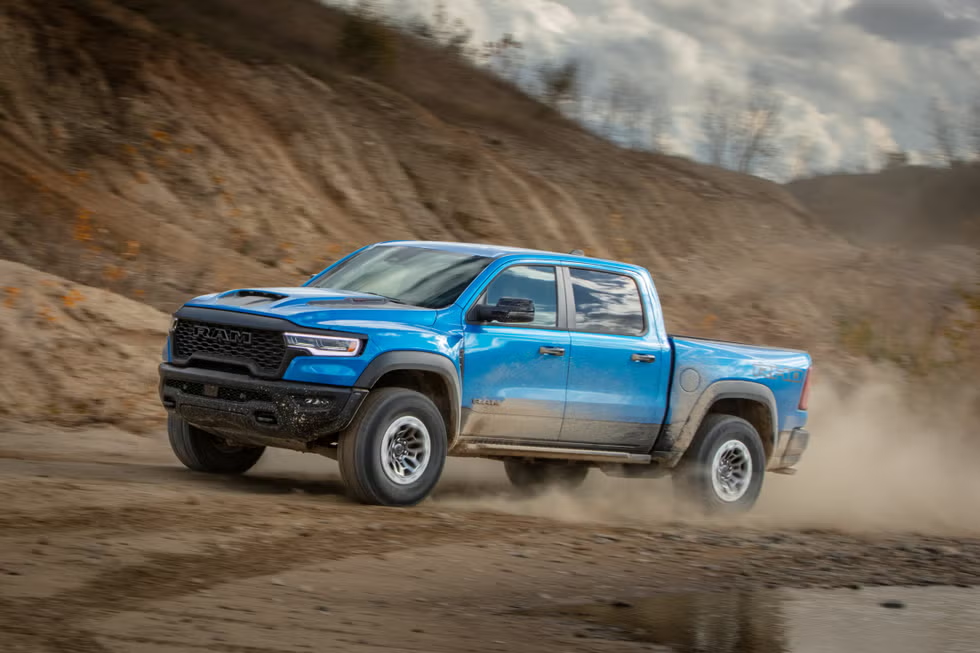
The Ram 1500 has carved out a reputation as one of the most versatile and capable full-size pickup trucks on the market. Known for its impressive towing capacity, comfortable ride, and a plethora of features, the Ram 1500 appeals to both everyday drivers and serious truck enthusiasts. However, one of the most common questions prospective buyers ask is, “How much does a Ram 1500 cost?” This article breaks down the various factors influencing the cost of the Ram 1500, including trims, optional features, and market trends.
How Much Does a Ram 1500 Cost? Base Price of the Ram 1500
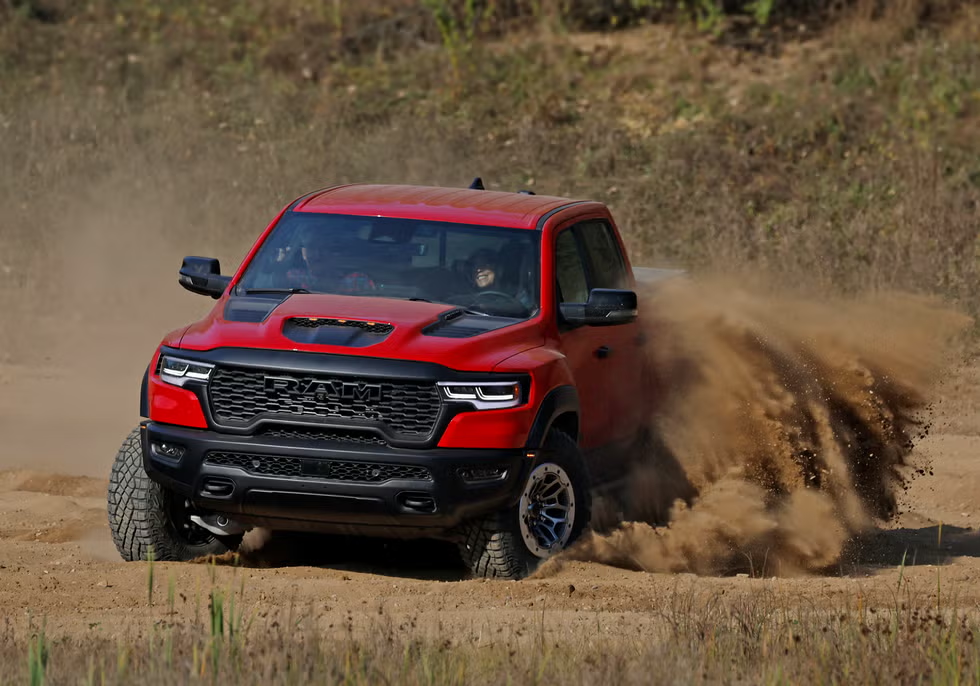
The cost of a Ram 1500 can vary significantly depending on the model year, trim level, and additional features. As of the latest models, the starting price of a 2024 Ram 1500 is typically around $40,000 for the base Tradesman trim. Here’s a brief overview of the pricing for various trims:
- Tradesman: Starting around $40,000
- Big Horn: Starting around $45,000
- Laramie: Starting around $50,000
- Rebel: Starting around $54,000
- Limited Longhorn: Starting around $58,000
- Limited: Starting around $65,000
Factors Influencing the Cost
Several factors can influence the overall cost of a Ram 1500:
- Trim Level:
- The trim level you choose significantly affects the price. Higher trims come with more luxurious features, advanced technology, and enhanced performance options, all contributing to a higher cost.
- Engine Options:
- The Ram 1500 offers various engine choices, including a V6, V8, and a fuel-efficient EcoDiesel. Opting for a more powerful engine typically adds to the overall cost.
- Packages and Options:
- Additional packages such as off-road packages, towing packages, or technology upgrades can increase the price. Features like upgraded infotainment systems, leather seating, and advanced safety technologies can also add to the cost.
- Exterior and Interior Features:
- Customization options, including paint colors, wheel sizes, and interior materials, can impact the overall price. Unique paint finishes or high-end materials can come with a premium.
- Market Demand:
- The cost can fluctuate based on market conditions and demand. High demand for trucks can lead to increased prices, while seasonal sales or promotions might offer savings.
How Much Does a Ram 1500 Cost? Average Cost Over Time
The Ram 1500’s pricing has generally increased over the years, reflecting inflation, advancements in technology, and enhanced features. For example, a 2014 Ram 1500 typically started around $27,000, while a comparable 2024 model starts at around $40,000. This trend illustrates how vehicle prices can change over time, making it essential for buyers to research and understand the current market.
Financing Options
For those interested in purchasing a Ram 1500, financing options are available. Many dealerships offer various financing plans, allowing buyers to make monthly payments instead of paying the full price upfront. Lease options are also popular, particularly for those who prefer to drive a new truck every few years.
How Much Does a Ram 1500 Cost? Used Ram 1500 Prices
If you’re considering a used Ram 1500, prices can vary widely based on the model year, mileage, condition, and location. On average, you might find used Ram 1500s ranging from $20,000 to $35,000, depending on the factors mentioned above. It’s advisable to check local listings, online marketplaces, and certified pre-owned programs for the best deals.
How Much Does a Ram 1500 Cost? Conclusion
The cost of a Ram 1500 can vary significantly based on various factors, including trim level, features, and market conditions. With a starting price of around $40,000 for the base model, buyers can expect to pay more for higher trims and additional options. As with any vehicle purchase, it’s essential to assess your needs, budget, and financing options to make an informed decision. Whether you’re looking for a reliable workhorse or a comfortable family truck, the Ram 1500 offers a range of options to suit different preferences and budgets.
Is RAM a Reliable Truck?
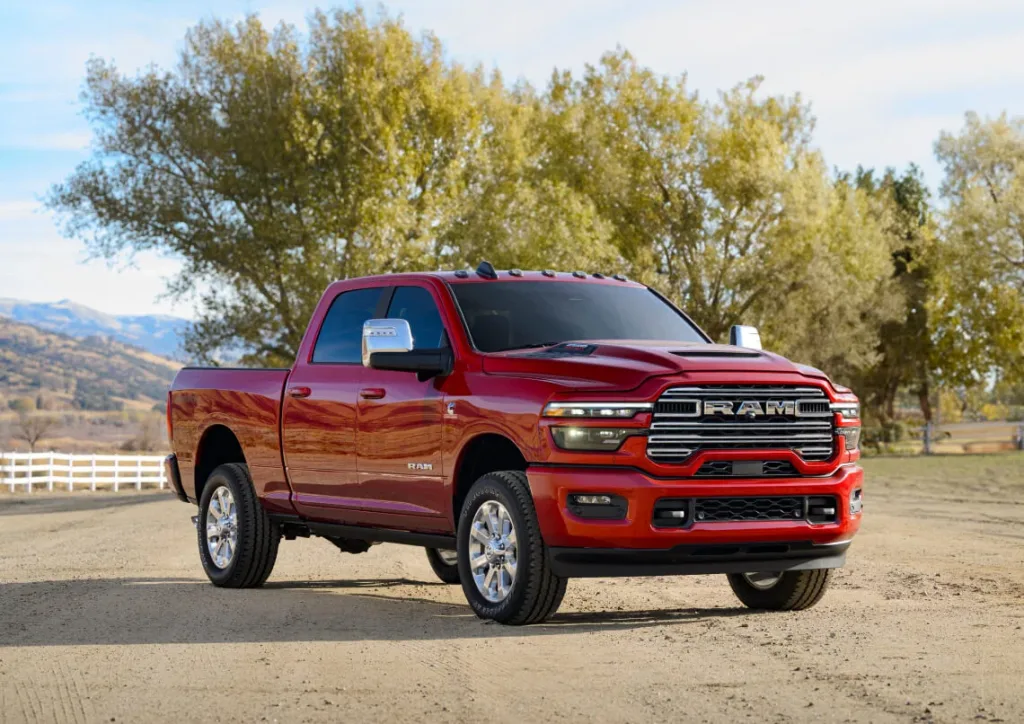
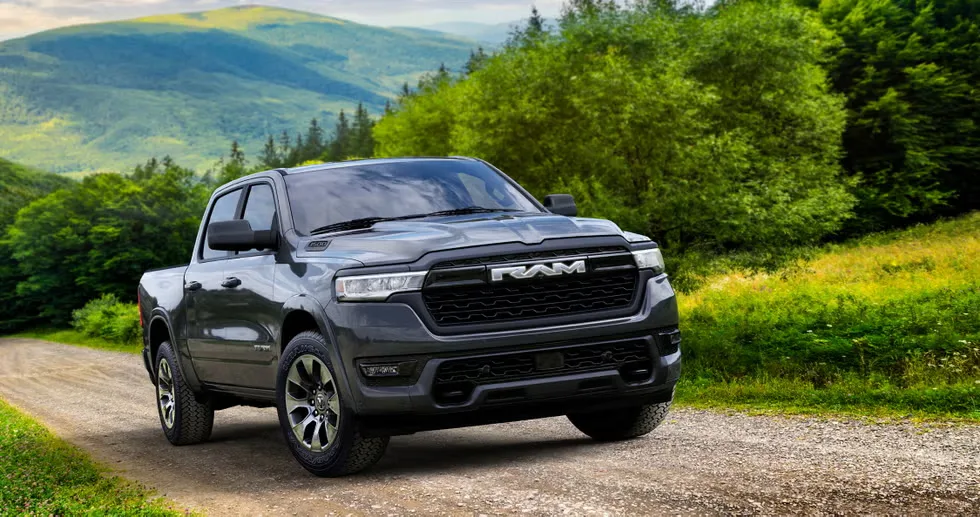
Short answer: Yes, RAM trucks, especially the RAM 1500, are generally regarded as reliable. According to Consumer Reports, the RAM 1500 has a reliability rating of approximately 83%. Additionally, around 75% of RAM 1500 owners report they would buy the truck again, highlighting strong owner satisfaction. J.D. Power also indicates that RAM scored 85 out of 100 on their dependability scale, suggesting above-average reliability. Overall, RAM trucks are considered dependable vehicles suitable for both work and everyday use.
RAM trucks, particularly the RAM 1500, are known for their robust performance and versatile features, making them popular among truck enthusiasts and casual users alike. Reliability is a crucial factor when considering a vehicle, especially for those who rely on their trucks for work, towing, or everyday driving. In this article, we’ll evaluate the reliability of the RAM 1500 across its various trims: Tradesman, Big Horn, Laramie, Rebel, Limited Longhorn, and Limited.
RAM 1500 Trim Reliability Overview
1.Is RAM a Reliable Truck? RAM 1500 Tradesman
The RAM 1500 Tradesman is designed primarily for those who need a reliable work truck without unnecessary frills. It features a rugged build and a straightforward design, focusing on functionality and durability. The Tradesman has received positive reliability ratings, particularly for its performance in heavy-duty tasks. The truck’s basic features are easy to maintain, making it a favorite among commercial users who prioritize utility over luxury.
2. RAM 1500 Big Horn
The RAM 1500 Big Horn strikes a balance between work and comfort. It includes more amenities than the Tradesman while still being a reliable choice for those who use their truck for both work and leisure. Reliability ratings for the Big Horn are favorable, with users praising its strong performance and durability. The upgraded technology features and additional comfort do not compromise its reliability, making it a well-rounded option for a variety of drivers.
3. Is RAM a Reliable Truck? RAM 1500 Laramie
The RAM 1500 Laramie offers a blend of luxury and capability. With its upscale interior and advanced technology, the Laramie is ideal for those looking for a more refined driving experience. Reliability ratings remain strong, as the Laramie shares the same robust platform as its lower trims. Owners report satisfaction with the vehicle’s performance and comfort, making it a reliable choice for those who want both style and functionality.
4. RAM 1500 Rebel
The RAM 1500 Rebel is geared towards off-road enthusiasts, featuring rugged styling and enhanced off-road capabilities. Its reliability is often highlighted by users who take it on challenging terrains. While the Rebel’s specialized features may require more maintenance, it is generally regarded as a dependable truck for adventurous drivers. The powerful engine options and reinforced components contribute to its reputation for reliability in demanding conditions.
5. Is RAM a Reliable Truck? RAM 1500 Limited Longhorn
The RAM 1500 Limited Longhorn is the epitome of luxury in the RAM lineup, offering premium materials and high-end technology. Despite its luxurious features, it maintains a strong reliability record. Owners appreciate the blend of performance and sophistication, with many reporting excellent experiences in both daily driving and towing. The Limited Longhorn’s well-built structure ensures that it stands up well over time, making it a reliable investment for those seeking luxury.
6. RAM 1500 Limited
The RAM 1500 Limited represents the pinnacle of RAM’s offerings, combining luxury, technology, and performance. Reliability ratings for the Limited are consistent with those of other trims, and it is frequently praised for its exceptional comfort and advanced features. The high-quality materials and attention to detail contribute to its durability, making it a solid choice for buyers who do not want to compromise on luxury or performance.
Is RAM a Reliable Truck? Reliability Ratings Overview
Here’s a chart summarizing the reliability ratings and common feedback for each RAM 1500 trim:
| RAM 1500 Trim | RAM 1500 Reliability Rating | Common Feedback |
|---|---|---|
| RAM 1500 Tradesman | 4.5/5 | Durable, straightforward, excellent for work applications. |
| RAM 1500 Big Horn | 4.4/5 | Great balance of comfort and utility, strong performance. |
| RAM 1500 Laramie | 4.6/5 | Luxurious feel without sacrificing reliability. |
| RAM 1500 Rebel | 4.3/5 | Excellent off-road capabilities, reliable in tough terrains. |
| Limited Longhorn | 4.7/5 | Premium features with solid durability. |
| RAM 1500 Limited | 4.6/5 | Top-tier comfort and technology, remains reliable over time. |
Is RAM a Reliable Truck? Conclusion
Overall, the RAM 1500 has proven itself to be a reliable truck across all trims. Each trim offers its unique features, catering to different needs, while maintaining the solid foundation that RAM trucks are known for. Whether you’re seeking a workhorse like the Tradesman or a luxurious ride like the Limited, you can expect a high level of reliability from the RAM 1500 lineup. As always, regular maintenance and care will ensure that your RAM truck continues to perform at its best for years to come.
RAM 1500 Reliability — Frequently Asked Questions
Are RAM trucks reliable overall?
Yes. The RAM 1500 consistently scores above average in third-party dependability studies and owner satisfaction surveys. Owners also report they would purchase the truck again at high rates, reflecting real-world confidence.
Which RAM 1500 trim is the most reliable?
All trims share the same core platform. Trims with fewer complex features (e.g., Tradesman, Big Horn) can be cheaper to maintain, while Laramie, Limited Longhorn, and Limited add comfort tech without sacrificing the underlying durability.
How many miles will a RAM 1500 typically last?
With regular maintenance, many RAM 1500 trucks reach 200,000–300,000 miles or more. Usage (towing, climate, off-road) and upkeep are the biggest variables.
Do RAM 1500 trucks have costly maintenance?
Routine costs are comparable to other half-ton pickups. Budget for oil changes, brake service, tires, and fluid exchanges. Trucks used for frequent towing may need more frequent service intervals.
Which RAM 1500 engine is best for long-term reliability?
The 3.6L Pentastar V6 and 5.7L HEMI V8 have long reliability track records. Your best choice depends on needs: V6 for everyday efficiency, HEMI for towing power. Diesel options excel in torque and longevity with diligent maintenance.
Does towing reduce reliability?
Towing within rated limits does not harm reliability. Overloading, poor weight distribution, or skipping transmission/axle service can accelerate wear. Use the correct tow package and follow maintenance intervals.
Are newer RAM 1500 models more dependable than older ones?
Recent models benefit from improved drivetrains, safety tech, corrosion protection, and software updates. As with any modern truck, more tech can mean more components—so preventive maintenance remains key.
What are common issues RAM 1500 owners should watch for?
Like all trucks, wear items (brakes, tires, batteries) and occasional electrical sensors can need attention. Staying current on software updates, TSBs, and recalls helps keep the truck trouble-free.
Does the eTorque mild-hybrid system affect reliability?
eTorque is a belt-driven mild-hybrid designed to enhance efficiency and low-speed torque. It has proven dependable when serviced per schedule (proper belt/12V system care and software updates).
What warranty coverage do RAM 1500 trucks include?
Most new RAM 1500 models include a limited bumper-to-bumper warranty and powertrain coverage. Terms vary by model year and region—review the specific warranty booklet for exact coverage.
How can I maximize the reliability of my RAM 1500?
- Follow factory maintenance intervals (oil, fluids, filters, tires).
- Address warning lights and unusual noises promptly.
- Use OEM-quality parts and correct fluids.
- Keep software/TSBs up to date; document all service.
- Stay within payload/tow ratings and distribute weight properly.
Which Ram 2500 Engine is the Best?
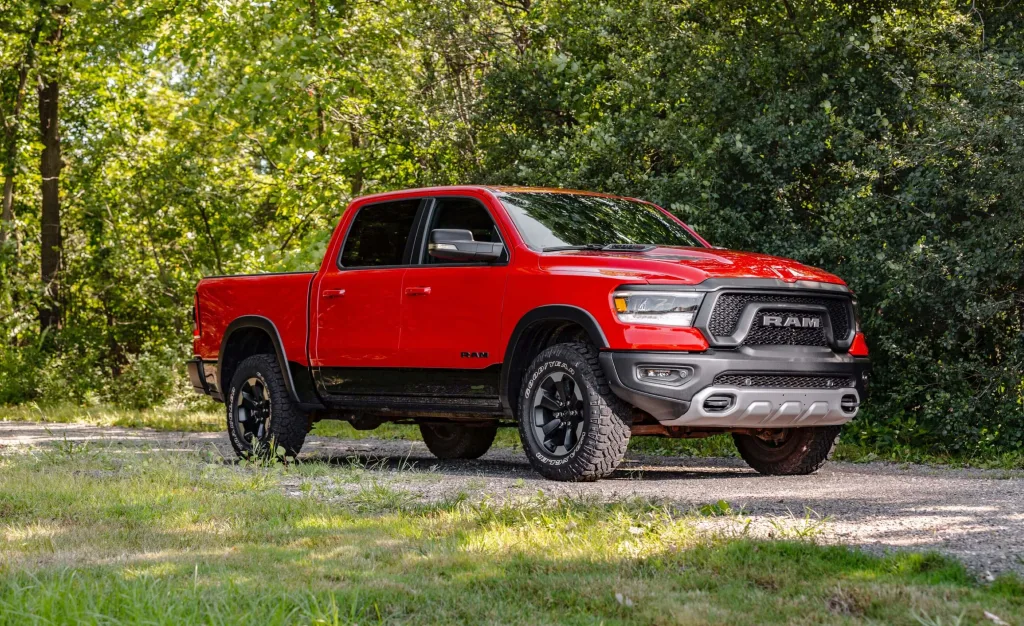
When choosing a heavy-duty truck like the Ram 2500, the engine you select determines far more than just horsepower. It affects towing, payload, fuel economy, maintenance costs, and even resale value. Ram offers multiple engine options to meet the wide range of needs—from commercial hauling to weekend recreation. But the real question is: Which Ram 2500 engine is the best?
Let’s break it down with a detailed comparison and expert-level insights into performance, specs, use cases, and ownership factors.
Overview: Ram 2500 Engine Options for 2025
As of the latest model year, the 2025 Ram 2500 offers the following engines:
| Engine | Type | Horsepower | Torque | Max Towing | Fuel System |
|---|---|---|---|---|---|
| 6.4L HEMI V8 | Gasoline | 410 hp @ 5,600 rpm | 429 lb-ft @ 4,000 rpm | 17,730 lbs | Sequential multi-port |
| 6.7L Cummins Turbo Diesel I6 | Diesel | 370 hp @ 2,800 rpm | 850 lb-ft @ 1,700 rpm | 19,990 lbs | High-pressure common rail |
| 6.7L Cummins High Output (3500 only) | Diesel | 400+ hp | 1,075+ lb-ft | 37,000+ lbs | (2500 Not applicable) |
Note: The high-output Cummins engine is exclusive to the Ram 3500 and not available on the 2500.
Engine #1: 6.4L HEMI V8 – The Best for Gas-Powered Utility
✅ Pros:
- Best-in-class gasoline towing (up to 17,730 lbs)
- Standard engine in most 2500 trims (Big Horn, Power Wagon)
- Delivers responsive performance at higher RPMs
- Paired with the 8-speed automatic, offering smoother gear shifts
- Lower upfront cost than diesel
❌ Cons:
- Less torque at low RPMs compared to diesel
- Lower fuel economy, especially under heavy load
- Louder engine note when under stress
Who It’s Best For:
- Weekend haulers
- RV owners
- General contractors who prefer lower maintenance costs
Real-World Use:
The 6.4L HEMI offers excellent acceleration, especially off the line. When paired with 4.10 axle gearing, it’s a strong performer for hauling medium-duty trailers and payloads without the diesel price premium.
Engine #2: 6.7L Cummins Turbo Diesel I6 – The Torque King
✅ Pros:
- Massive low-end torque (850 lb-ft @ just 1,700 rpm)
- Ideal for towing heavy loads and long-distance hauling
- Proven reliability with a legendary Cummins nameplate
- Better fuel economy than the 6.4L under full load
- 6-speed Aisin automatic transmission handles torque smoothly
❌ Cons:
- More expensive upfront and higher maintenance costs
- DEF (Diesel Exhaust Fluid) system requires upkeep
- Heavier engine affects front axle weight and payload capacity
- Slight turbo lag at low speeds
Who It’s Best For:
- Long-distance haulers
- Commercial operators
- Towing 5th wheels, horse trailers, or equipment
Real-World Use:
If you’re regularly towing more than 10,000 lbs, the Cummins diesel pays for itself. With fewer revs needed to achieve maximum torque, the engine stays cooler and more efficient under stress.
Gas vs Diesel: Which One Should You Choose?
| Factor | 6.4L HEMI V8 | 6.7L Cummins Diesel |
|---|---|---|
| Towing Capacity | Up to 17,730 lbs | Up to 19,990 lbs |
| Payload | Slightly higher | Slightly lower (due to engine weight) |
| Fuel Economy | Worse under load | Better under load |
| Upfront Cost | ~$9,000 less | More expensive |
| Maintenance | Lower | Higher (oil, filters, DEF) |
| Longevity | 150K–200K mi typical | 300K+ mi with maintenance |
| Transmission | 8-speed auto | 6-speed HD automatic (Aisin) |
| Engine Braking | Less effective | More effective (diesel exhaust brake) |
Cost of Ownership Comparison (Estimated Over 5 Years)
| Category | 6.4L HEMI V8 | 6.7L Cummins Diesel |
|---|---|---|
| Initial MSRP (Big Horn) | $61,000 CAD | $70,000 CAD |
| Annual Fuel Cost | $4,500 | $3,700 |
| Oil Changes (per year) | $150 x 2 | $250 x 2 |
| DEF Refills | N/A | $200/year |
| Repairs & Maintenance | $1,200 | $2,000 |
| Resale Value | Moderate | High |
Note: Prices vary by usage, region (like California vs Alberta), and load demands.
Reliability & Durability
- The 6.4L HEMI is known for its simplicity and lower long-term repair costs. It’s ideal for drivers who don’t plan on keeping the truck beyond 150,000 miles.
- The 6.7L Cummins, by contrast, is a workhorse. Known for million-mile durability in the right conditions, it’s built for longevity but comes with higher parts and service prices.
Which Ram 2500 Engine Is the Best?
🏆 Best Overall Engine for Most Drivers: 6.4L HEMI V8
It offers the best mix of performance, value, and lower maintenance for general-use buyers. With nearly 18,000 lbs of towing, it covers 90% of real-world needs.
🔧 Best Engine for Towing & Commercial Use: 6.7L Cummins Turbo Diesel
For frequent heavy haulers or those racking up mileage fast, the diesel’s durability and torque output make it the superior long-term investment.
Final Verdict
The best Ram 2500 engine depends entirely on how you plan to use the truck:
- Choose the 6.4L HEMI if you’re hauling a boat, camping trailer, or using it as a daily driver that occasionally tows.
- Choose the 6.7L Cummins Diesel if your life involves consistent heavy towing, cross-state hauling, or commercial-grade work.
Both engines are excellent—but each serves a different kind of driver.
📍 Visit Simi Valley Chrysler Dodge Jeep Ram to compare both in person:
2350 First St, Simi Valley, CA 93065
📞 (805) 387-9755
🔗 Explore inventory and engine specs at simivalleychryslerdodgejeepram.com
Connect with us


