





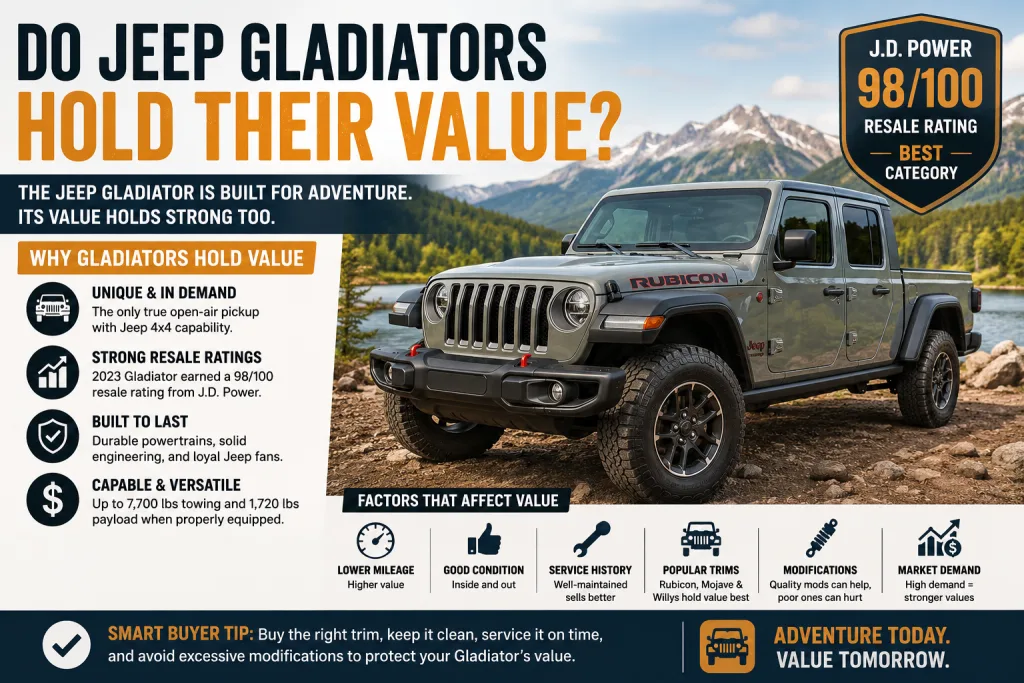
Do Jeep Gladiators Hold Their Value?
The Jeep Gladiator usually holds its value better than many vehicles, especially because it combines two things buyers continue to want: Jeep 4×4 capability and pickup truck utility. It is not a normal midsize truck, and that is exactly why resale value can stay strong when the right buyer is looking.
The short answer is yes, Jeep Gladiators can hold their value well, but not every Gladiator holds value the same way. Trim level, mileage, condition, modifications, market demand, and whether the truck was bought new or used all matter. A clean Rubicon, Mojave, or Willys with the right options can be more desirable than a heavily modified or high-mileage base model.
Why the Jeep Gladiator Holds Value
The Gladiator is different from most midsize pickups because it is both a truck and a Jeep. It offers four-wheel drive capability, removable roof panels, removable doors, trail-focused trims, and a pickup bed. That combination gives it a niche that competitors like the Toyota Tacoma, Ford Ranger, Chevrolet Colorado, and Nissan Frontier do not fully copy.
That uniqueness helps resale value. Some buyers want a truck. Others want a Wrangler-style Jeep. The Gladiator appeals to both groups, especially shoppers who need bed space but still want open-air Jeep character.
Jeep Canada lists the Gladiator with up to 7,700 pounds of towing capacity and 1,720 pounds of payload when properly equipped, which makes it useful beyond lifestyle driving. Those Jeep specs help explain why the Gladiator stays appealing to buyers who want fun and function in one vehicle.
Resale Value Ratings Are Strong
The Gladiator has performed well in resale and depreciation rankings. J.D. Power gave the 2023 Jeep Gladiator a resale rating of 98 out of 100, which falls into its “Best” category. That is a strong signal that the Gladiator is expected to retain value well compared with many other vehicles.
Depreciation estimates also show the Gladiator performing respectably. CarEdge estimates that a Jeep Gladiator depreciates about 37% after five years, leaving a five-year resale value around $29,578 based on its assumptions. That means it may retain roughly 63% of its value after five years, depending on purchase price, mileage, condition, and market conditions.
That is good for a vehicle that is still relatively expensive when new.
New vs. Used Gladiator Value
The biggest value question is whether you buy new or used. A new Gladiator gives you full warranty coverage, the latest features, and the exact trim you want. But like most vehicles, it will still take its largest depreciation hit in the early years.
A used Gladiator can be the smarter value play because someone else may have already absorbed part of that early depreciation. This is especially true if you find a clean, low-mileage Gladiator with the right trim and service history.
According to Edmunds, 2025 Jeep Gladiator trade-in values can vary widely depending on trim and condition, with estimates ranging from the high $20,000s to the mid-$40,000s. That wide range shows why trim, mileage, and equipment matter so much.
Which Jeep Gladiator Trims Hold Value Best?
The trims that tend to hold value best are usually the ones with clear buyer appeal. Rubicon and Mojave models often get the most attention because they have stronger off-road identity and more specialized hardware.
The Gladiator Rubicon is built for rock crawling and trail use. It is the one many Jeep buyers recognize immediately because of its off-road reputation. The Mojave is designed more for desert running and higher-speed off-road driving. Both trims have a stronger enthusiast following than basic versions.
Willys models can also be desirable because they offer a rugged look and useful off-road upgrades without the price of a Rubicon or Mojave. Sport and Sport S models can still hold value, but their resale strength depends more heavily on price, condition, mileage, and options.
Mileage Still Matters
Even though the Gladiator has strong Jeep appeal, mileage still affects value. A low-mileage Gladiator will usually be worth more than a high-mileage one with the same trim and equipment.
Mileage is especially important on trucks because buyers want to know how the vehicle was used. A Gladiator that spent most of its life commuting is different from one that towed heavy trailers, ran trails every weekend, or carried jobsite equipment every day.
A high-mileage Gladiator can still be a good buy if it has strong service records and no major issues. But for resale value, lower mileage almost always helps.
Condition Is a Big Deal
Condition can make or break the value of any used Gladiator. Because the Gladiator is popular with off-road buyers, shoppers will often look carefully for signs of hard use.
Scraped skid plates, frame damage, suspension wear, mismatched tires, rust, body dents, water leaks, or poorly installed aftermarket parts can all hurt value. Even if the truck looks good from a distance, a buyer or dealer may discount it if it looks abused underneath.
A clean Gladiator with original parts, good tires, a clean interior, and no accident history will usually be easier to sell and worth more.
Modifications Can Help or Hurt
Jeep owners love modifying their vehicles, but modifications do not always increase resale value. Some upgrades may make the truck more attractive to a specific buyer, but they can also narrow the market.
A quality lift kit, good tires, proper wheels, steel bumpers, or tasteful off-road accessories may help if they were installed correctly. But cheap parts, extreme lifts, poor wiring, loud exhausts, rough DIY work, or missing factory parts can lower value.
Most dealers and buyers prefer clean, well-documented upgrades. If you modify a Gladiator, keep receipts and keep the factory parts when possible.
Market Demand Matters
The Gladiator’s resale value also depends on the market. When truck demand is strong, used Gladiator values can benefit. When new vehicle incentives increase or used inventory grows, resale values can soften.
This is why the purchase price matters. A Gladiator bought with a strong discount may hold value better from the buyer’s perspective than one purchased at full sticker. Paying too much upfront can make depreciation feel worse even if the vehicle is still strong compared with competitors.
Local demand matters too. In areas where buyers love off-roading, camping, trails, and outdoor lifestyle vehicles, Gladiators may be easier to sell. In areas where buyers mainly want fuel economy or maximum towing, demand may be more limited.
How the Gladiator Compares to Other Trucks
The Gladiator competes with midsize trucks like the Toyota Tacoma, Ford Ranger, Chevrolet Colorado, GMC Canyon, and Nissan Frontier. The Tacoma is usually the resale-value benchmark in this class, but the Gladiator has its own advantage because it offers Jeep character that those trucks do not.
The Gladiator may not be the cheapest truck to buy, and it is not the smoothest or most fuel-efficient midsize pickup. But its removable roof, removable doors, 4×4 capability, and Jeep styling make it more unique.
That uniqueness helps it avoid becoming just another used truck on the lot.
Do Gladiators Depreciate?
Yes, Jeep Gladiators still depreciate. Every vehicle loses value over time, and the Gladiator is no exception. The strongest resale vehicles still drop in value as mileage rises, condition changes, and newer models arrive.
The better question is whether Gladiators depreciate less than many other vehicles. In many cases, yes. Strong resale ratings, Jeep brand loyalty, truck demand, and off-road appeal all help.
Still, buyers should be realistic. A Gladiator bought new at a high price with lots of options may lose more actual dollars than a used Gladiator bought after the first major depreciation hit.
How to Protect Gladiator Resale Value
The best way to protect value is to keep the truck clean, serviced, and close to factory condition. Regular oil changes, tire rotations, brake service, fluid checks, and documented maintenance all help.
Avoid cheap modifications and rough off-road damage. Keep the interior clean, fix small issues early, and save service records. If you use the Gladiator off-road, wash the underbody after mud, salt, sand, or trail use.
Also be smart when buying. Choose a desirable trim, useful options, good color, and fair purchase price. Resale value starts the day you buy the truck, not the day you sell it.
Is a Jeep Gladiator a Good Used Buy?
A used Jeep Gladiator can be a very good buy if you choose carefully. It gives you pickup utility, real 4×4 capability, and Wrangler-style personality in one package.
The best used Gladiators are clean, well-maintained, reasonably priced, and not heavily abused off-road. Rubicon, Mojave, and Willys trims can be especially attractive because they have stronger identity and buyer demand.
Before buying, check the vehicle history, inspect the underside, review maintenance records, look for signs of poor modifications, and test all roof and door seals. A Gladiator is fun, but condition still matters.
Find a Jeep Gladiator That Holds Its Value
Jeep Gladiators can hold their value well, especially when they are clean, properly maintained, reasonably priced, and equipped with desirable trims or options. Strong resale ratings, Jeep brand loyalty, truck practicality, and off-road capability all help the Gladiator stand out in the used market.
The smartest move is to buy the right Gladiator at the right price. A clean used model may offer better long-term value than paying top dollar for a new one, while a well-equipped new Gladiator can still make sense if you plan to keep it for years.
Visit Simi Valley Chrysler Dodge Jeep Ram to browse new inventory, compare used inventory, check your trade-in value, or apply for financing before choosing your next Jeep Gladiator.
Connect with us


