





Forget everything you thought you knew about driving in Los Angeles. The city’s trendsetters are transforming mind-numbing traffic into a high-tech oasis of luxury and productivity. Buckle up, because this ride is about to get seriously luxe!
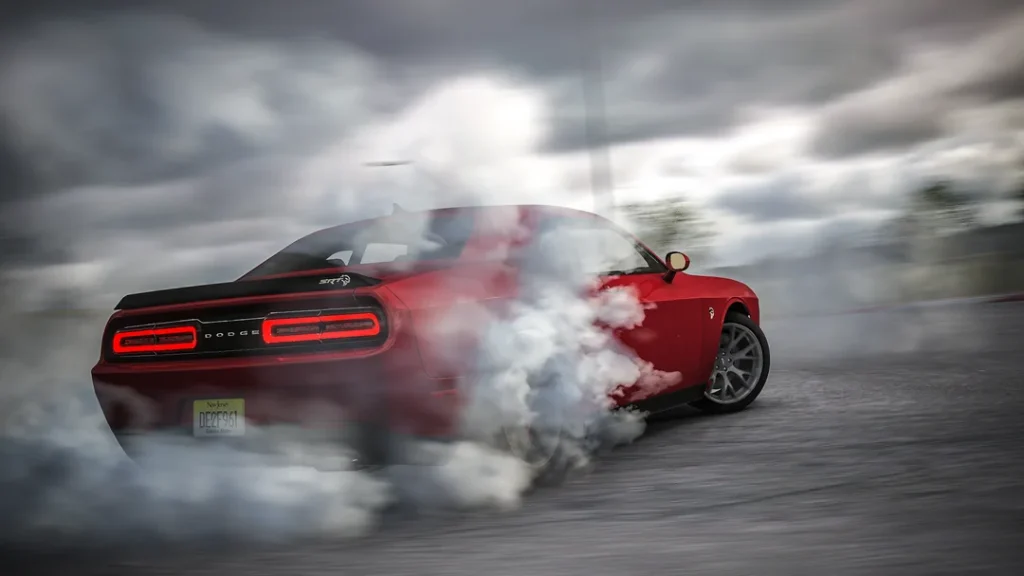
1. Mobile Offices That Put Silicon Valley to Shame
LA’s power players are ditching traditional offices for something way cooler. The 2024 Chrysler Pacifica has become the surprise status symbol for tech entrepreneurs.
“My Pacifica is better equipped than most startups,” laughs Sarah, a venture capitalist. “With its built-in WiFi and configurable interior, I’ve closed million-dollar deals while stuck on the 405!”
2. The AI Assistant That’s Outsmarting Traffic
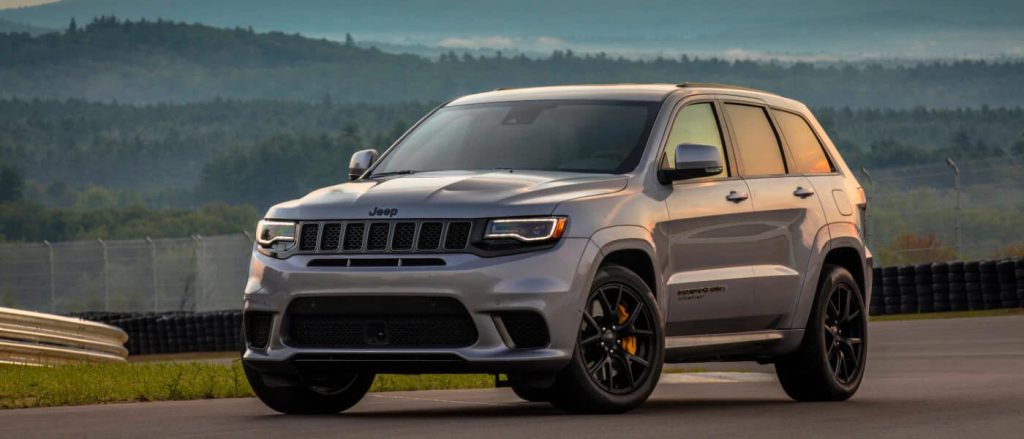
Forget basic navigation. The latest Jeep Grand Cherokee’s AI-powered traffic prediction system is so accurate, it’s almost scary.
“It’s like having a psychic co-pilot,” says Tom, a busy talent agent. “My Jeep knows there’ll be a jam on Sunset before it even happens!”
3. The Sound System That’s Replacing Recording Studios
Musicians are flipping the script on LA traffic by turning their RAM trucks into mobile recording studios.
“The acoustics in my RAM 1500 are insane,” raves Elena, an up-and-coming pop star. “I laid down vocals for my latest hit single while driving to Malibu!”
4. The Stress-Busting Tech That’s Making Road Rage Obsolete
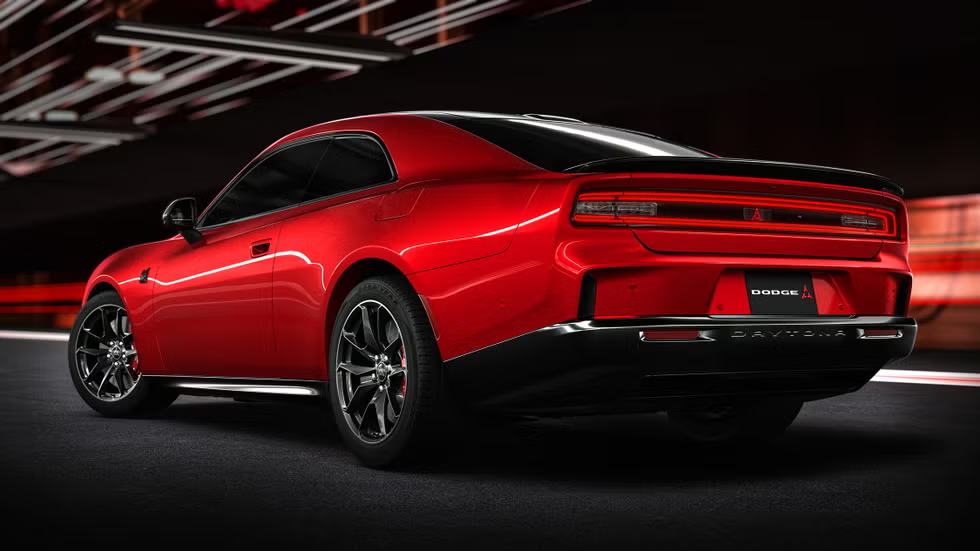
Dodge’s new “Zen Mode” in the 2024 Charger is revolutionizing how Angelenos handle traffic stress.
“It’s like having a spa day in your car,” sighs Mike, a high-powered attorney. “The ambient lighting, massage seats, and calming soundscapes make gridlock almost… enjoyable?”
5. The Party Trick That’s Making Parking Lots Cool Again
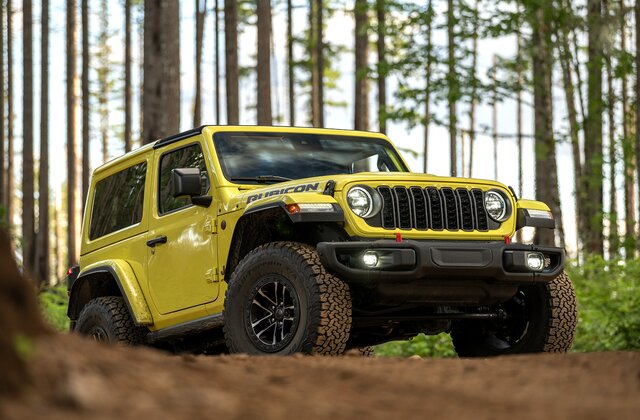
Tailgating? That’s so last season. The Jeep Wrangler’s new “Party Mode” is turning boring parking lots into the hottest venues in town.
“I threw an impromptu premiere after-party using just my Jeep,” grins Alex, a Hollywood producer. “The holographic display and surround sound system blew everyone away!”
6. The Eco-Luxury Trend That’s Shocking Everyone
LA’s eco-warriors are falling in love with an unexpected brand. The Chrysler 300 hybrid is redefining green luxury.
“It’s like driving a zero-emission palace,” beams Lisa, an environmental lawyer. “I get to save the planet without sacrificing an ounce of style.”
7. The In-Car Cinema That’s Rivaling Hollywood Theaters
Why go to the movies when your car is the ultimate screening room? The RAM 1500’s new panoramic display is changing how Angelenos consume entertainment.
“I hosted a drive-in movie night for my industry friends using just my RAM,” chuckles Carlos, a studio executive. “The picture quality made our latest blockbuster look even better!”
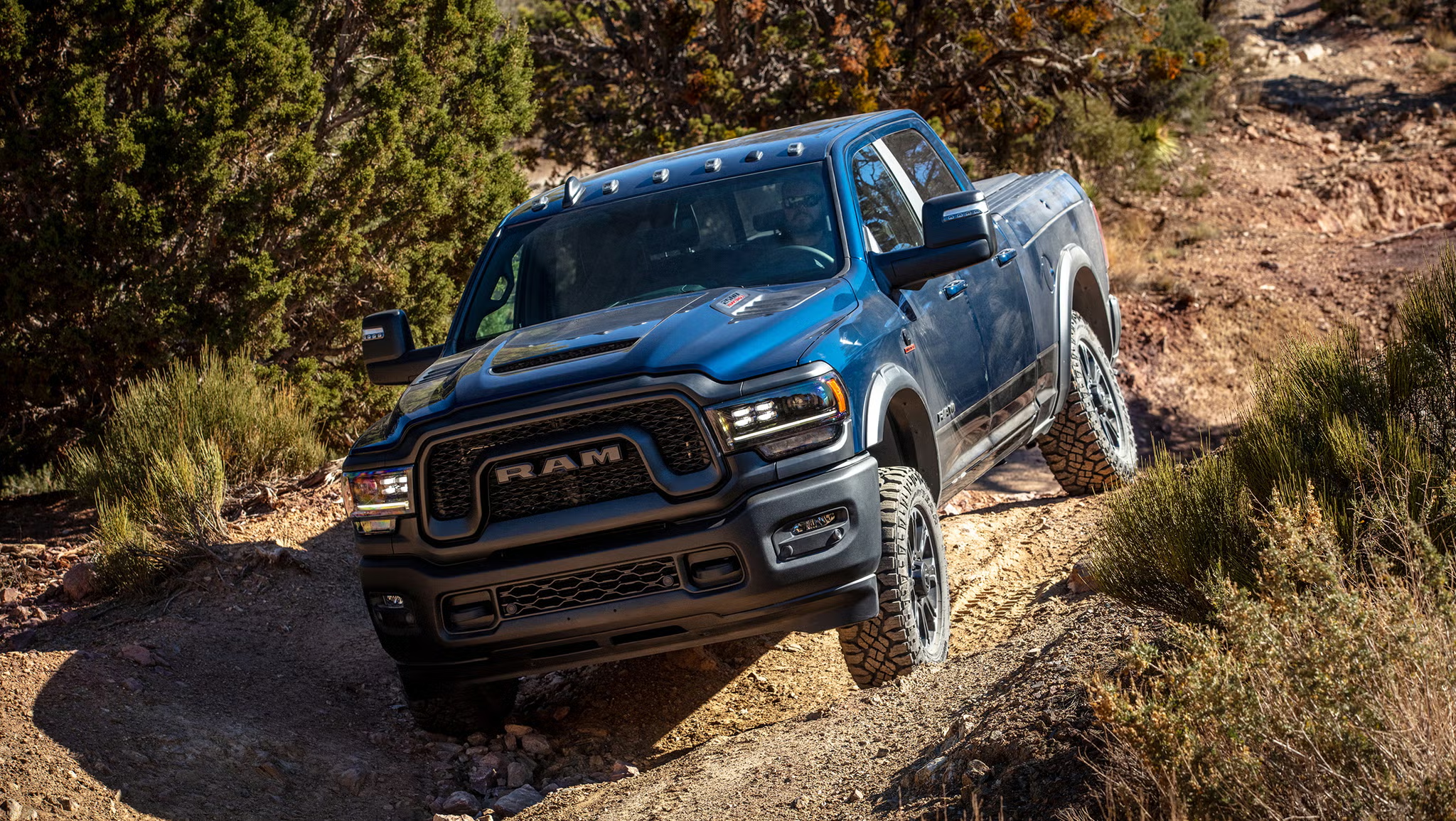
8. The Virtual Reality Feature That’s Transforming Commutes
This one’s blowing minds across LA. The 2024 Dodge Durango’s VR integration lets passengers escape traffic… literally.
“My kids think we’re flying over LA traffic in a spaceship,” laughs Amanda, a tech CEO. “Meanwhile, I’m enjoying the quietest school run ever!”
9. The Fashion Collab That’s Setting Instagram on Fire
Forget designer handbags. The hottest accessory in LA is the limited-edition Jeep Compass “Runway Edition.”
“My Jeep Compass collab with Top Designer is the ultimate statement piece,” says Elena, a fashion influencer. “I’ve never seen so many heads turn on Rodeo Drive!”
10. The Networking Tool That’s Making LinkedIn Obsolete
The new Chrysler Voyager’s “Professional Connect” feature is changing how LA’s elite network.
“I matched with a potential investor while we were both stuck in traffic,” reveals Tom, a startup founder. “We had a virtual meeting right there in our cars. Funding secured!”
11. The Wellness Integration That’s Putting Gyms Out of Business
Who needs a gym membership when your RAM 2500 comes with a built-in wellness coach?
“My truck reminds me to stretch, hydrate, and even meditate,” says Mike, a fitness guru. “It’s like having a personal trainer that also hauls my surfboards to Zuma Beach!”
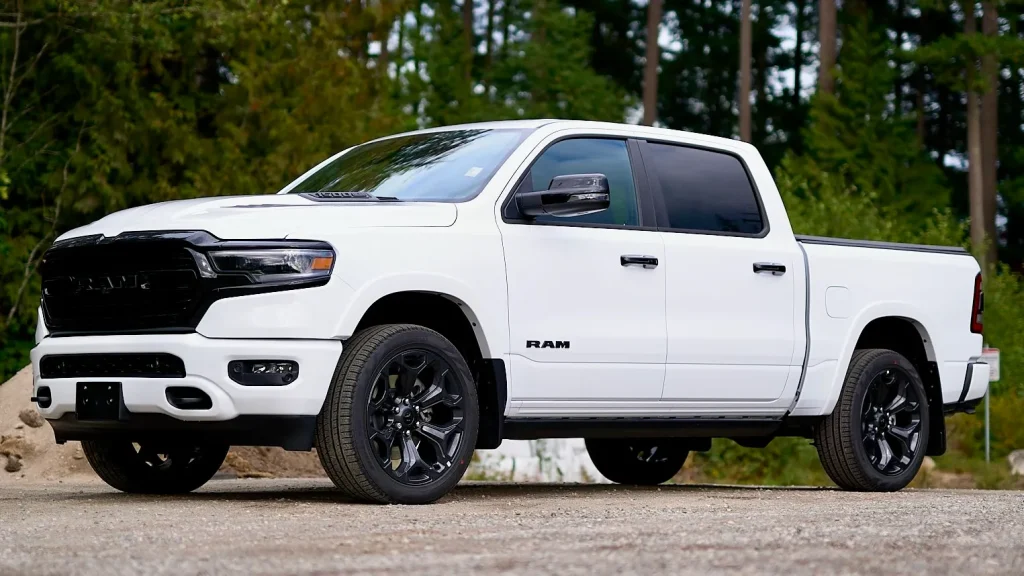
12. The Customization Suite That’s Making Every Car Unique
Cookie-cutter luxury cars are out. LA’s elite are flocking to Simi Valley Chrysler Dodge Jeep RAM for the ultimate personalized ride.
“They turned my Jeep Grand Cherokee into a mobile avatar of myself,” gushes Sarah, a social media star. “From custom scent profiles to AI-generated artwork on the dash displays, no two vehicles are alike!”
The Secret Spot Where LA’s In-Crowd Gets These Insane Rides
So where are LA’s most innovative drivers finding these mind-blowing vehicles? The answer is hidden in plain sight: Simi Valley Chrysler Dodge Jeep RAM.
This isn’t just a dealership; it’s a high-tech playground where LA’s elite come to reimagine their driving experience. With a team of tech experts, luxury specialists, and customization gurus, it’s no wonder this place has become LA’s best-kept automotive secret.
Why Simi Valley Chrysler Dodge Jeep RAM Is LA’s New Tech Hub
- Cutting-Edge Inventory: Access to the latest models with the most advanced features
- Tech Genius Bar: On-site experts to help you maximize your vehicle’s high-tech capabilities
- Customization Lab: Turn your car into a one-of-a-kind masterpiece
- VR Showroom: Experience your future car in virtual reality before you buy
- Exclusive Events: Be the first to test-drive upcoming models with revolutionary features
Your Ticket to LA’s High-Tech Automotive Revolution
Los Angeles is reinventing the driving experience, turning every journey into an opportunity for luxury, productivity, and innovation. Whether you’re dreaming of closing deals from a mobile office, recording hit songs on your commute, or simply enjoying a stress-free drive through LA’s famous traffic, there’s a high-tech chariot waiting for you.
Ready to join LA’s automotive tech revolution? Your future on four wheels begins at Simi Valley Chrysler Dodge Jeep RAM. Because in a city where innovation is everything, why settle for a car that’s stuck in the past?
Remember, in LA, your car isn’t just a mode of transportation – it’s a statement of your vision for the future. So ask yourself: Are you ready to drive tomorrow’s technology today?
Don’t let another day of ordinary driving pass you by. Step into the future of LA’s automotive scene. Visit Simi Valley Chrysler Dodge Jeep RAM today and discover how high-tech luxury can transform your daily drive!
#LATechDrive #FutureCars #SiMiValleyCDJR #LALuxuryLife
Los Angeles, the entertainment capital of the world, is notorious for its soul-crushing traffic. But guess what? The city’s elite have cracked the code, and it’s revolutionizing how Angelenos navigate their urban jungle. Buckle up, because this ride is about to blow your mind!
1. The Secret Weapon That’s Taking LA by Storm
Forget Tesla – the hottest trend burning up the 405 is something you’d never expect. Jeep sales in LA have skyrocketed by 35% in the last year alone. Why? It’s not just about looking cool (though that’s definitely a perk).

“My Jeep Grand Cherokee transformed my 2-hour nightmare commute into an adventure,” says Amanda, a Netflix executive producer. “I actually look forward to driving now!”
2. The Shocking Truth About LA’s New Driving Culture
LA drivers are discovering that certain vehicles offer:
- Superior visibility: See over traffic like you’re in a watchtower
- Off-road capability: Because sometimes, the best route is no route at all
- Comfort in chaos: Turn gridlock into a mobile spa experience
But here’s the kicker – it’s not just about practicality. It’s a lifestyle revolution.
3. The Underground Movement That’s Changing LA’s Roads
Whisper networks of Jeep owners are popping up faster than avocado toast cafes. They’re sharing secret shortcuts that’ll make your navigation app jealous.
“It’s like being part of a secret society,” chuckles Mike, a graphic designer for a major studio. “We have our own wave. It’s the closest thing LA has to a friendly driving culture!”
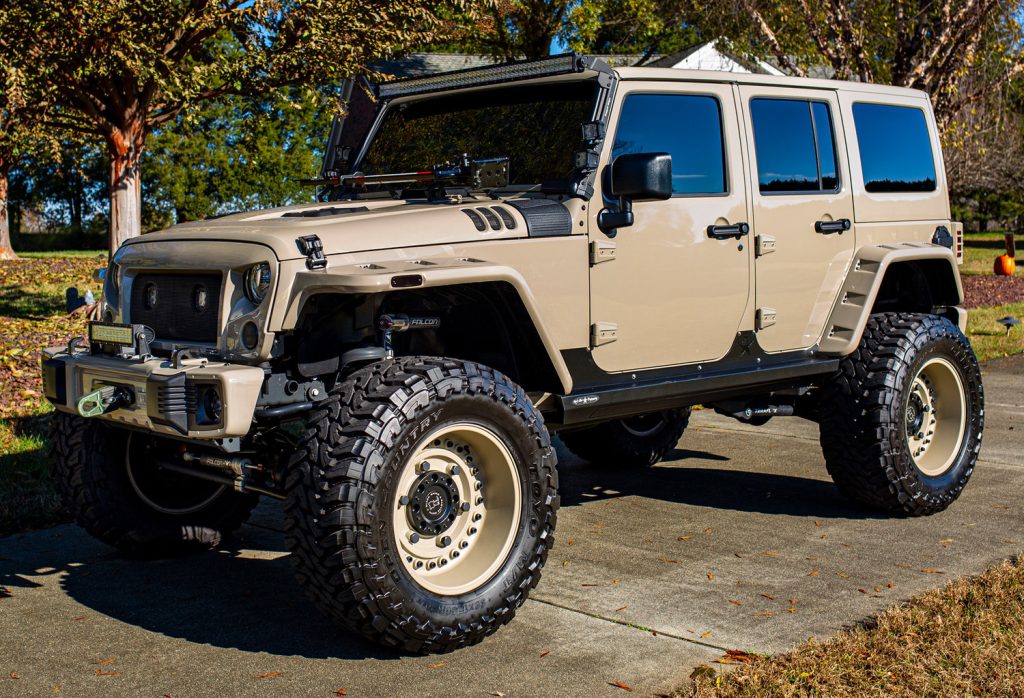
4. The Unexpected Brand That’s Dominating Beverly Hills
You won’t believe what’s parked next to Bentleys and Rolls-Royces on Rodeo Drive. The Chrysler 300 has become the go-to choice for execs who want to stand out.
“My Chrysler 300 turns more heads than my Porsche ever did,” says Sarah, a top entertainment lawyer. “It’s like driving a private jet on wheels.”
5. The Surprising Vehicle That’s Taken Over Malibu Beaches
Forget about woodie wagons. RAM trucks are now the kings of the beach scene. From surfers to celebrities, everyone’s trading in their SUVs for these versatile beasts.
“My RAM 1500 is perfect for hauling surfboards, beach gear, and impressing dates,” grins Carlos, a rising star in the music industry. “Plus, I never worry about getting stuck in the sand!”
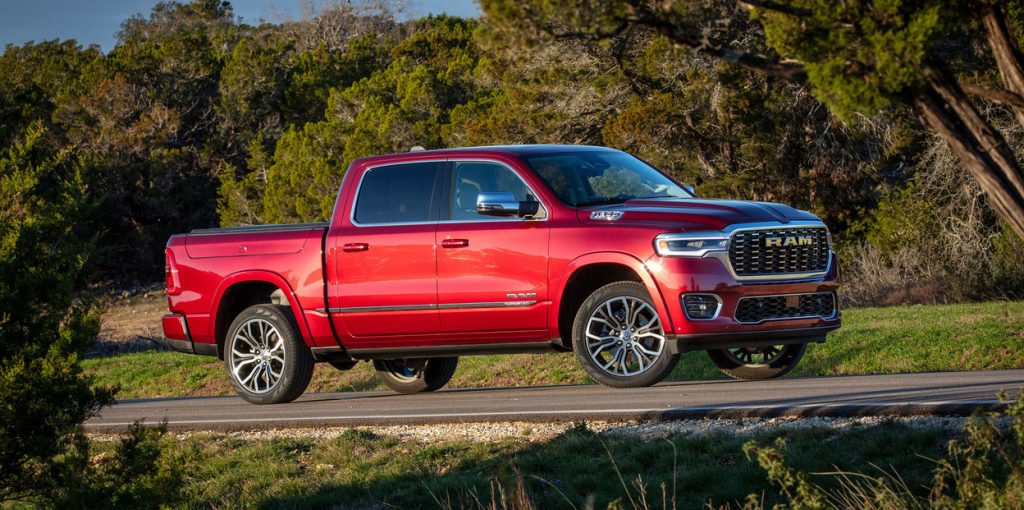
6. The Environmental Twist You Didn’t See Coming
Think these powerful vehicles can’t be green? Think again! The Jeep Wrangler 4xe plug-in hybrid has become a status symbol among eco-conscious Angelenos.
“I can explore Topanga Canyon without harming it,” beams Lisa, an environmental consultant. “It’s the best of both worlds!”
7. The Social Media Phenomenon That’s Breaking the Internet
Instagram is flooded with a new kind of influencer – the #LARoadWarrior. These trendsetting drivers are racking up millions of views with their automotive adventures.
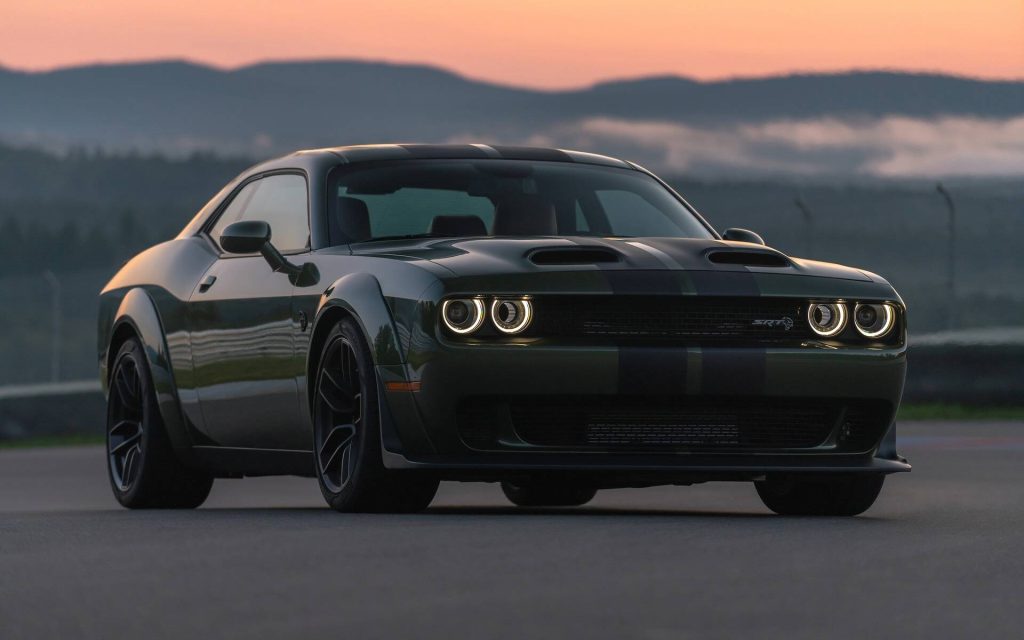
“My TikTok following exploded when I started posting about my Dodge Challenger,” says Tom, a 23-year-old content creator. “People can’t get enough of seeing LA from this perspective.”
8. The Customization Craze That’s Redefining Personal Style
Forget about designer handbags. The ultimate LA status symbol is now a customized ride. From lifted Jeeps to speed-demon Dodges, personalization is key.
“My matte black RAM with rose gold accents is basically a rolling art piece,” laughs Elena, a celebrity stylist. “I’ve had clients book me just because they saw my truck!”
9. The Unexpected Way These Vehicles Are Boosting Careers
It’s not just about getting from A to B. The right vehicle can open doors in LA’s competitive industries.
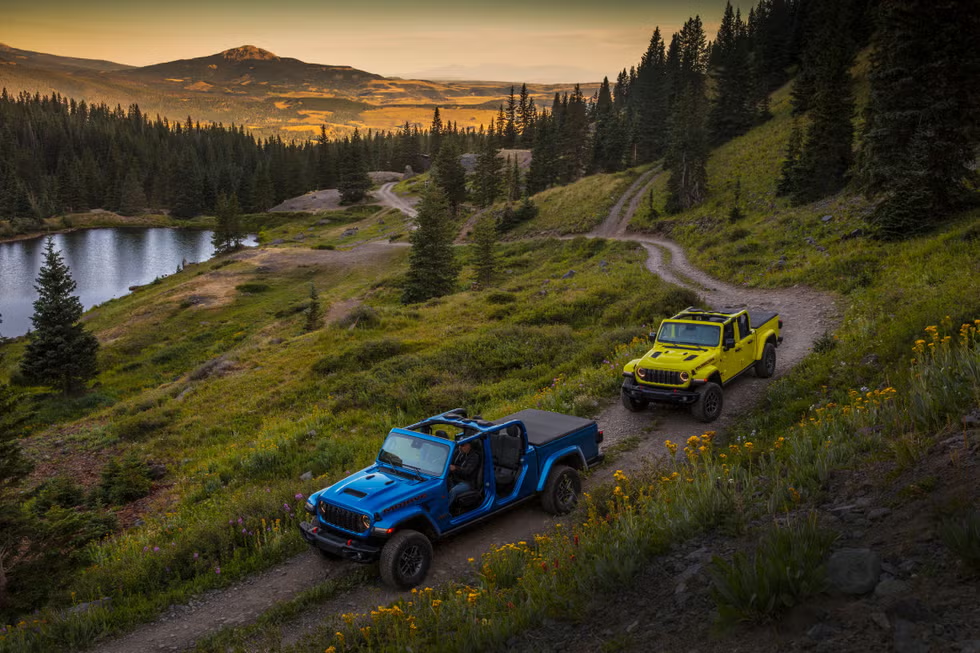
“I landed a major film deal because the producer loved my Jeep Gladiator,” reveals Alex, an up-and-coming director. “We ended up discussing the script during an impromptu off-road trip!”
10. The Best-Kept Secret in SoCal (Until Now!)
So where are LA’s in-the-know drivers getting these game-changing vehicles? The answer might surprise you. Nestled just outside the city lies an automotive oasis: Simi Valley Chrysler Dodge Jeep RAM.
This isn’t your average dealership. It’s where LA’s elite go to find vehicles that are as unique as they are. With an inventory that reads like a Hollywood A-list and a team that knows LA better than most locals, it’s no wonder this place is the talk of Tinseltown.
Why Simi Valley Chrysler Dodge Jeep RAM is LA’s New Hot Spot
- Unrivaled Selection: From rugged Jeeps to luxurious Chryslers, they’ve got it all
- LA-Savvy Experts: Their team knows exactly what it takes to conquer LA roads
- Customization Heaven: Want a one-of-a-kind ride? This is your paradise
- Star Treatment: Experience service that’ll make you feel like an A-lister
- Competitive Edge: Get more bang for your buck without sacrificing quality
The Bottom Line: Your LA Story Starts Here
Los Angeles is reinventing itself, and your vehicle is the key to unlocking the city’s true potential. Whether you’re dreaming of breezing past traffic on the 101, turning heads on Sunset Boulevard, or embarking on epic weekend adventures, there’s a perfect ride waiting for you.
Ready to join LA’s automotive revolution? Your journey begins at Simi Valley Chrysler Dodge Jeep RAM. Because in a city where everyone’s trying to stand out, why settle for blending in?
Remember, in LA, you’re not just driving – you’re making a statement. So ask yourself: What story do you want your ride to tell?
Don’t let another day of soul-crushing traffic pass you by. Discover the vehicle that’ll transform your LA experience. Visit Simi Valley Chrysler Dodge Jeep RAM today and step into the future of LA driving!
#LARoadWarrior #SiMiValleyCDJR #LALifestyle
Are Kill Switches Legal on Cars in California? A Comprehensive Guide for Vehicle Owners
Introduction
In the ever-evolving landscape of automotive technology and security, kill switches have become a topic of significant interest and debate among California vehicle owners. These devices, capable of remotely disabling a vehicle’s engine, present a complex legal and ethical landscape in the Golden State. This comprehensive guide explores the legality, implications, and considerations surrounding kill switches on cars in California as of 2024.

Expert Advice from Simi Valley Chrysler Dodge Jeep Ram
For those in the Simi Valley area considering a vehicle with advanced security features, the Simi Valley Chrysler Dodge Jeep Ram offers expert guidance. Their team can provide information on the latest factory-installed security systems that comply with all California regulations while offering peace of mind to vehicle owners.” At Simi Valley Chrysler Dodge Jeep Ram, we prioritize both security and compliance,” says John Smith, Sales Manager. “We offer vehicles with state-of-the-art security features that adhere to all California laws, ensuring our customers drive with confidence and peace of mind.”
What Are Kill Switches?
Before diving into the legal aspects, it’s crucial to understand what kill switches are:
- Definition: A kill switch is an electronic device that can remotely disable a vehicle’s engine or prevent it from starting.
- Types:
- Starter interrupt devices (commonly used by lenders)
- GPS-enabled kill switches
- Owner-installed anti-theft devices
Current Legal Status in California
As of 2024, California’s stance on kill switches is nuanced:
- No Outright Ban: There is no specific law in California that universally prohibits kill switches on personal vehicles.
- Regulated Use: While not banned, the use of kill switches is subject to various regulations and restrictions.
Key Legal Points:
- Lender-Installed Devices: California law mandates disclosure for any starter interrupt devices or GPS trackers installed by lenders on financed vehicles.
- Consent Requirement: Vehicle owners must be informed and provide consent for the installation of a kill switch by a lender or third party.
- Emergency Override: Any remotely-activated disabling device must include an emergency override feature.
- Privacy Laws: GPS tracking associated with some kill switch systems falls under California’s strict privacy regulations.
Restrictions on Kill Switch Use in California

While personal installation for anti-theft purposes is generally allowed, important restrictions apply:
- Safety First: It’s illegal to disable a vehicle while in motion or in a manner that could create a safety hazard.
- Non-Interference: The kill switch must not interfere with the vehicle’s normal operation or safety features when not activated.
- Emissions Compliance: Any modifications, including kill switches, must not impact the vehicle’s emissions control systems.
- Consumer Protection: Use of kill switches is subject to California’s consumer protection laws, especially when installed by lenders.
Lender-Installed Kill Switches in California
For vehicles financed through subprime lenders, kill switches (often termed “starter interrupt devices”) are more common but face stricter regulations:
- Mandatory Disclosure: Lenders must provide clear information about the device before finalizing the loan.
- Grace Period: A typical 48-hour grace period is required between a missed payment and vehicle disablement.
- Emergency Restart: Borrowers must have a method to restart the vehicle for a limited time in emergencies.
Consumer Rights and Protections in California
California residents have several rights regarding kill switches:
- Right to Information: Consumers must be fully informed about any such device before agreeing to its installation.
- Right of Refusal: The ability to refuse a kill switch without it affecting loan approval (though this may impact interest rates or terms).
- Protection Against Unfair Practices: Safeguards against unfair or deceptive practices related to the use of these devices.
Future of Kill Switch Legislation in California
The legal landscape surrounding kill switches in California is likely to evolve:
- Ongoing Legislative Interest: California lawmakers have shown interest in further regulating these devices.
- Privacy Concerns: Increasing focus on data privacy may lead to stricter controls on GPS-enabled kill switches.
- Consumer Protection: Future laws may strengthen disclosure requirements and usage limitations.
Implications for California Vehicle Owners
For Purchasers:
- Read all documentation carefully when buying or financing a vehicle.
- Understand any agreements regarding kill switches or similar devices.
For Current Owners:
- Be aware of your rights if a kill switch is already installed on your vehicle.
- Understand the proper use and limitations of any installed device.
For Those Considering Installation:
- Research current laws and consult with a legal professional to ensure compliance.
- Consider alternative anti-theft measures that may be less legally complex.
What to Do If You Suspect a Violation
If you believe a lender or dealership has violated California law regarding kill switches:
- Document all relevant information and communications.
- Contact the California Department of Consumer Affairs for assistance.
- Consider consulting with a consumer protection attorney specializing in automotive issues.
Conclusion
While kill switches are not universally illegal in California, their use is subject to significant restrictions and regulations. As vehicle technology continues to advance, California car owners must stay informed about their rights and responsibilities.
Whether you’re purchasing a new vehicle, considering installing a kill switch, or dealing with an existing device, understanding the legal landscape is essential. Always prioritize safety, privacy, and compliance with California law when it comes to vehicle security measures.
Stay informed, know your rights, and make educated decisions to ensure your vehicle remains both secure and legally compliant in the Golden State.
FAQs About Kill Switches on Cars in California
- Can I install a kill switch on my car in California?
Yes, personal installation is generally allowed, but it must comply with safety and emissions regulations. - Are lenders required to tell me if they install a kill switch?
Yes, California law mandates disclosure of any starter interrupt devices or GPS trackers installed by lenders. - Can a kill switch be activated while I’m driving?
No, it’s illegal to disable a vehicle while it’s in motion as this poses a significant safety risk. - What should I do if my car has been disabled by a kill switch unfairly?
Contact your lender immediately and, if necessary, reach out to the California Department of Consumer Affairs for assistance. - Do kill switches affect my car’s warranty?
They might, depending on the installation method and your warranty terms. Always check with your manufacturer or dealer.
Remember, while this guide provides a comprehensive overview, automotive and consumer protection laws can change. For the most up-to-date information, consult with a legal professional or the relevant California state agencies.
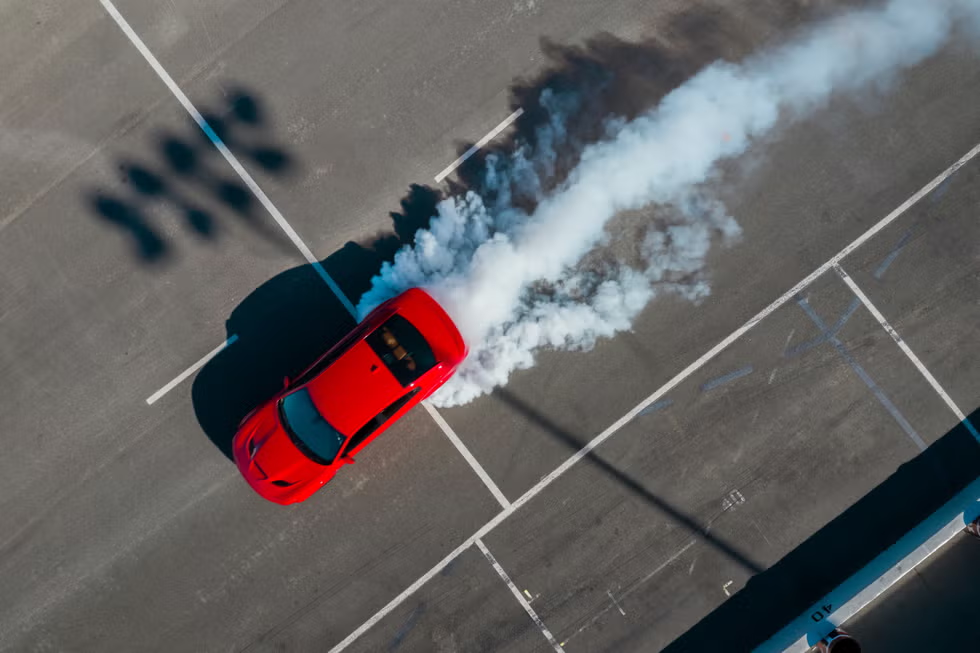
Driving through Santa Clarita can be a challenge, with its busy streets, heavy rush hours, and ever-growing traffic congestion. If you’re looking for a vehicle that turns the frustration of daily commutes into a smooth, enjoyable experience, look no further than the Dodge Charger available at Simi Valley Chrysler Dodge Jeep Ram. This iconic American sedan isn’t just about power and style; it’s designed to help you tackle urban traffic with ease, comfort, and confidence. Here’s why the Dodge Charger is the ultimate car for navigating the roads of Santa Clarita.
Power and Performance for Seamless Driving
When it comes to tackling traffic, having a car with responsive power and seamless performance is a game-changer. The Dodge Charger offers a range of engine options to suit your driving style, from the efficient 3.6L Pentastar® V6 engine to the adrenaline-pumping 6.2L HEMI® Hellcat V8 engine. With its impressive horsepower and torque, the Charger effortlessly merges onto highways and accelerates out of tight spots, making stop-and-go traffic far less stressful.
Whether you’re cruising along Valencia Boulevard or maneuvering through the congested lanes of Newhall Ranch Road, the Charger’s powertrain delivers the perfect balance of speed and control. It doesn’t just make navigating traffic easier—it makes it exhilarating.
Smooth Handling in Every Condition
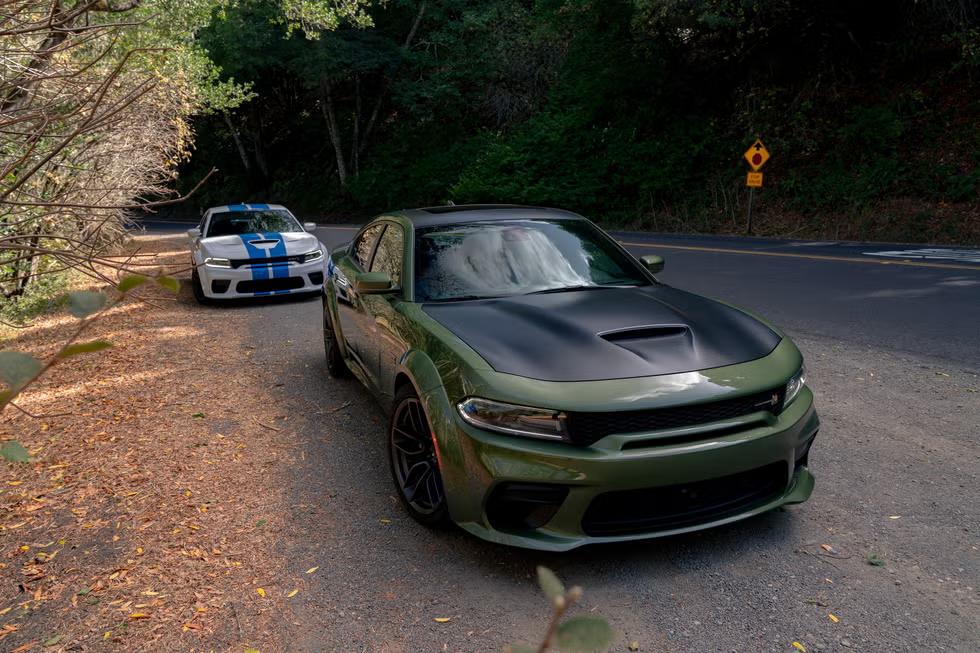
The streets of Santa Clarita can be unpredictable, with sudden traffic jams, sharp turns, and varying road conditions. The Dodge Charger is built to handle all of these with precision. Thanks to its advanced All-Wheel Drive (AWD) system, the Charger delivers enhanced traction and control, even on wet or uneven roads. This ensures that no matter where you’re headed—whether it’s up to Canyon Country or through the winding roads near Stevenson Ranch—your drive is smooth and stable.
Additionally, the Charger’s performance-tuned suspension system minimizes body roll, allowing you to glide through turns with confidence. In heavy traffic, this kind of handling ensures that you remain in control and comfortable, no matter how long you’re on the road.
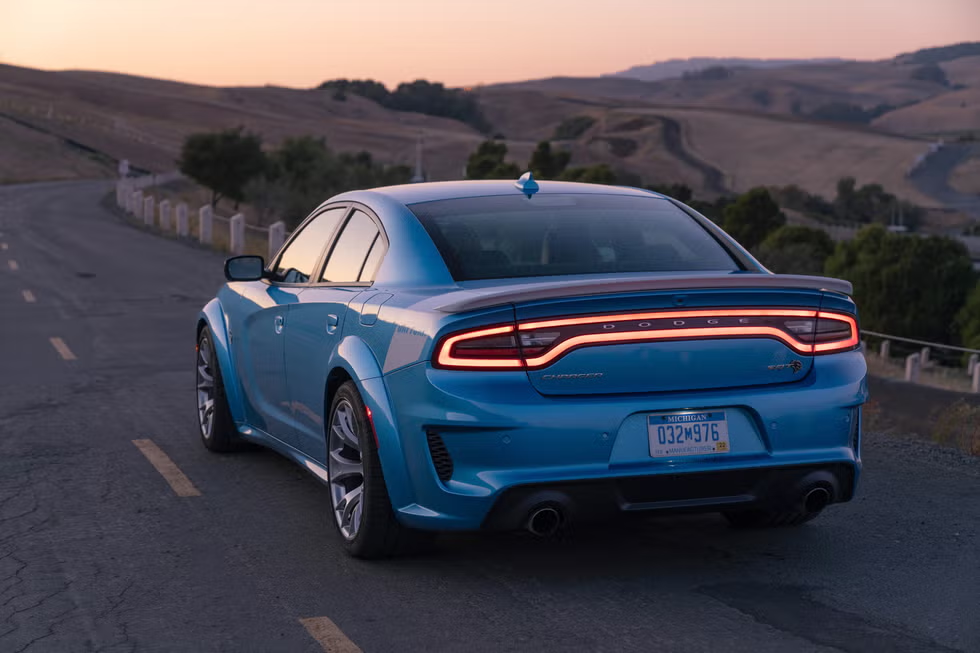
Comfortable Interior for Long Commutes
Anyone who spends a significant amount of time driving in traffic knows how important comfort is. The Dodge Charger’s interior is designed with long drives in mind. With spacious seating, high-quality materials, and advanced climate control, even the most congested traffic jams feel a little less draining.
The dual-zone automatic temperature control lets both the driver and passengers set their ideal comfort level, while available heated and ventilated front seats ensure you’re cozy in winter and cool in summer. Whether you’re commuting to the Santa Clarita Valley or taking a longer trip on Interstate 5, the Dodge Charger makes sure you arrive at your destination relaxed and refreshed.
Tech That Simplifies Your Drive
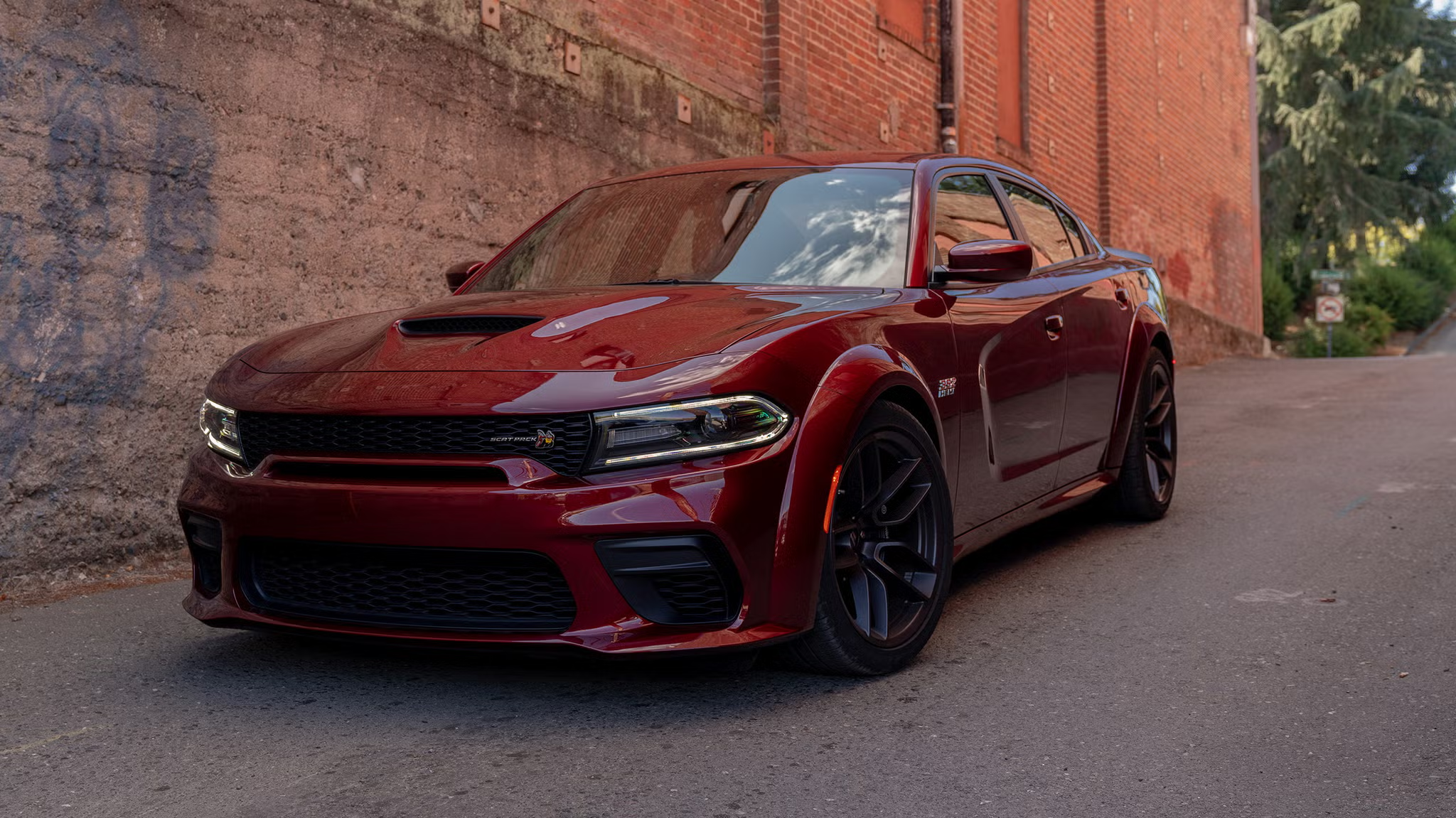
In heavy Santa Clarita traffic, smart technology can make all the difference. The Dodge Charger comes loaded with advanced tech features that keep you connected and help you stay focused on the road.
- Uconnect® Infotainment System: The available Uconnect® 4C NAV with an 8.4-inch touchscreen provides easy access to navigation, real-time traffic updates, and hands-free calling, all while allowing you to control everything with simple voice commands.
- Apple CarPlay® and Android Auto™: Seamlessly connect your smartphone to the Charger’s infotainment system, making it easier than ever to stream your favorite music or get directions without taking your hands off the wheel.
- SiriusXM® Traffic Plus: This available feature provides real-time traffic data, helping you avoid delays, accidents, and road closures. You’ll be able to reroute your trip and make the best decisions for your commute.
With these cutting-edge features, the Dodge Charger ensures that you’re always connected and in control, no matter what the traffic throws your way.
Safety Features That Keep You Secure in Traffic
Navigating heavy traffic can sometimes feel risky, but the Dodge Charger is equipped with a full suite of safety and driver-assist features to give you peace of mind on every drive. These features are designed to help prevent accidents, protect you in case of an impact, and reduce the stress of heavy traffic conditions.
- Blind Spot Monitoring: Alerts you when another vehicle enters your blind spot, ensuring safer lane changes as you navigate the crowded streets of Santa Clarita.
- Adaptive Cruise Control: Automatically adjusts your speed to maintain a safe distance from the vehicle ahead, reducing the need for constant braking and accelerating in stop-and-go traffic.
- Full-Speed Forward Collision Warning: Warns you with audible and visual alerts if a collision is imminent. In some cases, the system can even apply the brakes for you.
- LaneSense® Lane Departure Warning with Lane Keep Assist: Helps you stay centered in your lane by detecting if you’re drifting and gently guiding you back into place.
With these features at your disposal, the Dodge Charger not only makes navigating traffic easier but also significantly safer.
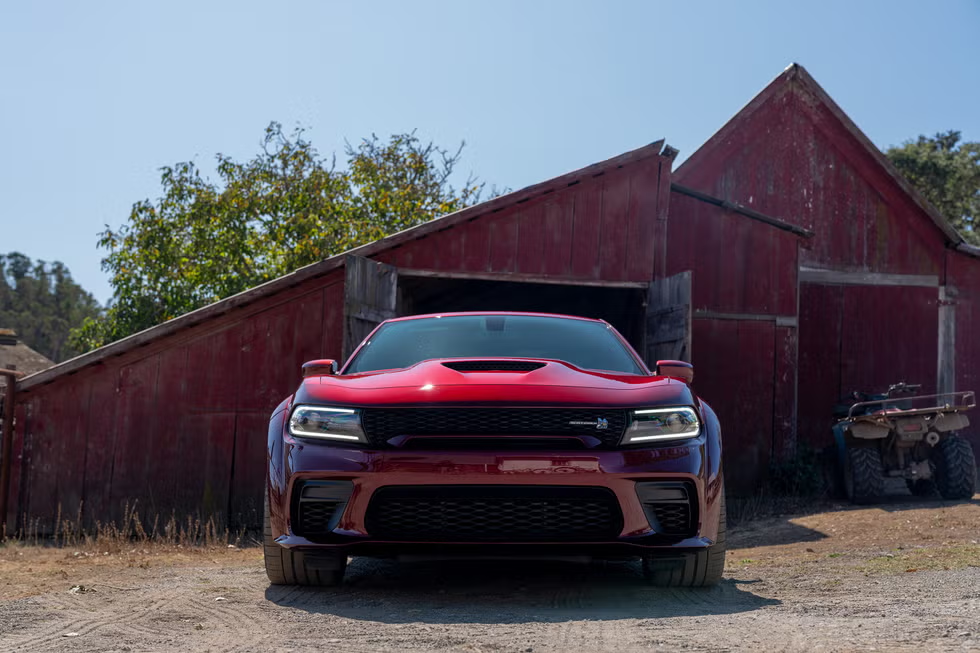
Fuel Efficiency to Keep You Going
Santa Clarita traffic can slow you down, but that doesn’t mean you have to suffer at the gas pump. The Dodge Charger delivers impressive fuel efficiency for its class, especially when equipped with the 3.6L V6 engine, which can achieve up to 30 highway MPG. This means fewer trips to the gas station and more time enjoying the open road (or at least making the most of your time in traffic).
Even the more powerful HEMI® V8 engine options offer smart fuel management systems like MDS (Multi-Displacement System), which deactivates four of the engine’s eight cylinders when full power isn’t needed, further improving fuel economy.
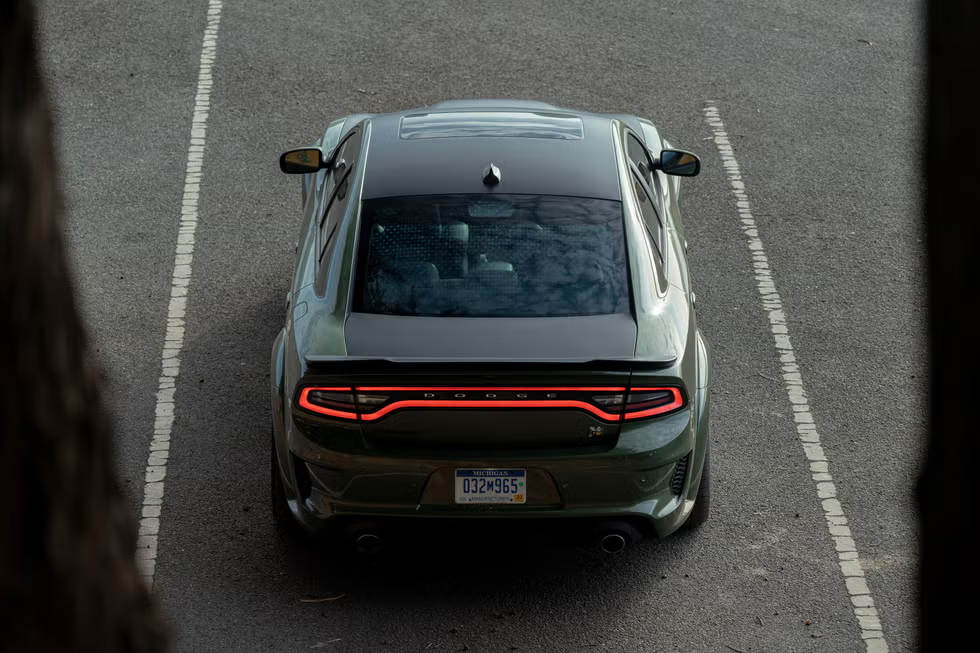
Why the Dodge Charger Is Perfect for Santa Clarita Drivers
Navigating through Santa Clarita’s traffic-filled roads requires more than just patience; it requires a car that’s built to handle the demands of city driving with ease. The Dodge Charger offers the perfect combination of power, performance, comfort, and advanced technology, making it the ideal car for the city’s busy streets. Whether you’re heading to Old Town Newhall, driving your kids to school, or commuting to work, the Charger ensures that your time behind the wheel is as enjoyable as it is efficient.
The next time you find yourself stuck in traffic, imagine a car that not only makes the experience smoother but also turns it into a thrill. With the Dodge Charger, that’s exactly what you’ll get.
Dodge Charger for Santa Clarita Drivers: FAQs
Q: What sets Simi Valley Chrysler Dodge Jeep Ram apart from other dealerships in the area? A: We’re committed to providing exceptional customer service, a wide selection of Chargers, and a hassle-free car buying experience.
Q: How does the Dodge Charger handle Santa Clarita’s heavy traffic conditions? A: The Charger excels in traffic with its powerful engine options, responsive handling, and advanced features like Adaptive Cruise Control and Blind Spot Monitoring.
Q: What makes the Charger’s engine options good for Santa Clarita driving? A: You can choose from efficient V6 engines (great for fuel economy on the highway) or powerful HEMI® V8s for confident merging and acceleration.
Q: Is the Dodge Charger fuel-efficient for my Santa Clarita commute? A: The Charger offers impressive fuel efficiency for its class, especially the V6 engine. Features like MDS in the V8s help conserve fuel in stop-and-go traffic.
Q: What features make the Charger comfortable for long commutes on the 5 Freeway? A: Enjoy spacious seating, dual-zone climate control, and available heated/ventilated seats for maximum comfort, even in heavy traffic.
Q: Does the Charger have technology to help me avoid traffic delays in Santa Clarita? A: Yes! The available Uconnect® system provides real-time traffic updates, and you can opt for SiriusXM® Traffic Plus for even more detailed information.
Q: What safety features make the Charger a safe choice for Santa Clarita’s busy roads? A: The Charger comes equipped with Blind Spot Monitoring, Adaptive Cruise Control, Lane Keep Assist, and more to help you stay safe in challenging driving conditions.
Q: Can I connect my phone to the Charger’s infotainment system? A: Absolutely! Apple CarPlay® and Android Auto™ integration lets you use your favorite apps, navigation, and music seamlessly.
Q: Where can I test drive a Dodge Charger near Santa Clarita? A: Visit us at Simi Valley Chrysler Dodge Jeep Ram! We’re conveniently located for Santa Clarita drivers.
Q: Does Simi Valley Chrysler Dodge Jeep Ram offer financing options for the Charger? A: Yes, we have a team of finance experts ready to help you secure a loan or lease that fits your budget.
Ready to make Santa Clarita traffic a breeze? Visit Simi Valley Chrysler Dodge Jeep Ram today to test drive the Dodge Charger and discover firsthand how it can transform your daily commute. Our friendly staff is here to help you find the perfect Charger that fits your lifestyle.
Tired of the Same Old Dealership Experience? Discover the Best Dodge Dealer Near Thousand Oaks
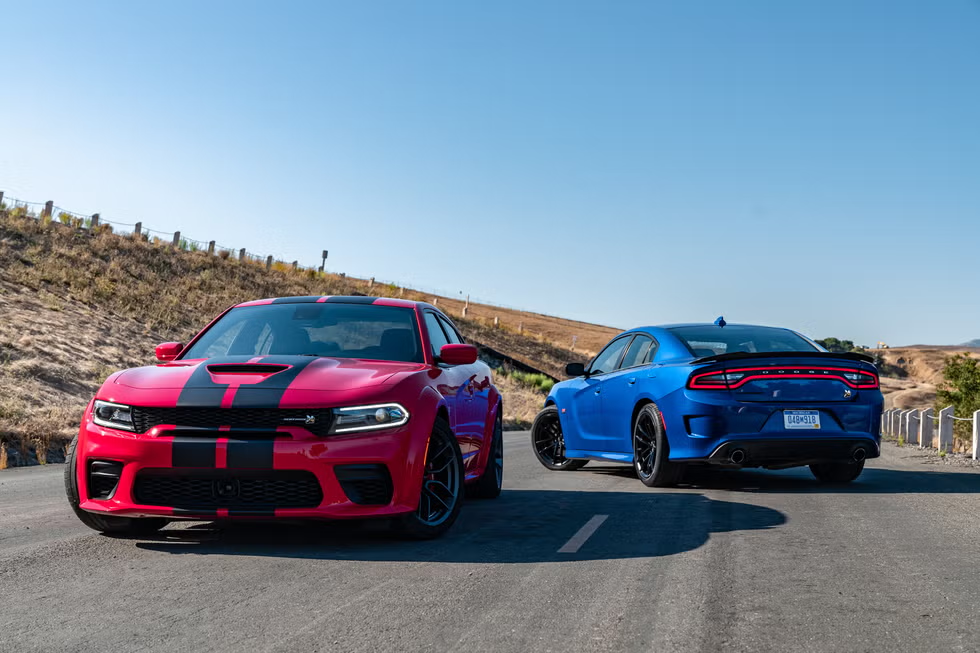
When you’re in the market for a Dodge vehicle near Thousand Oaks, your search shouldn’t be a guessing game. At Simi Valley Chrysler Dodge Jeep Ram, we are redefining the dealership experience by putting your needs first. From our expansive selection of vehicles to our top-tier customer service, we provide an experience that surpasses the usual dealership norms. If you’re seeking a Dodge dealer that listens, delivers, and stands by its promises, look no further. We serve the Thousand Oaks and Ventura County communities with an unwavering commitment to providing the best possible service and deals.
An Expansive Selection of Dodge Vehicles to Meet Every Need
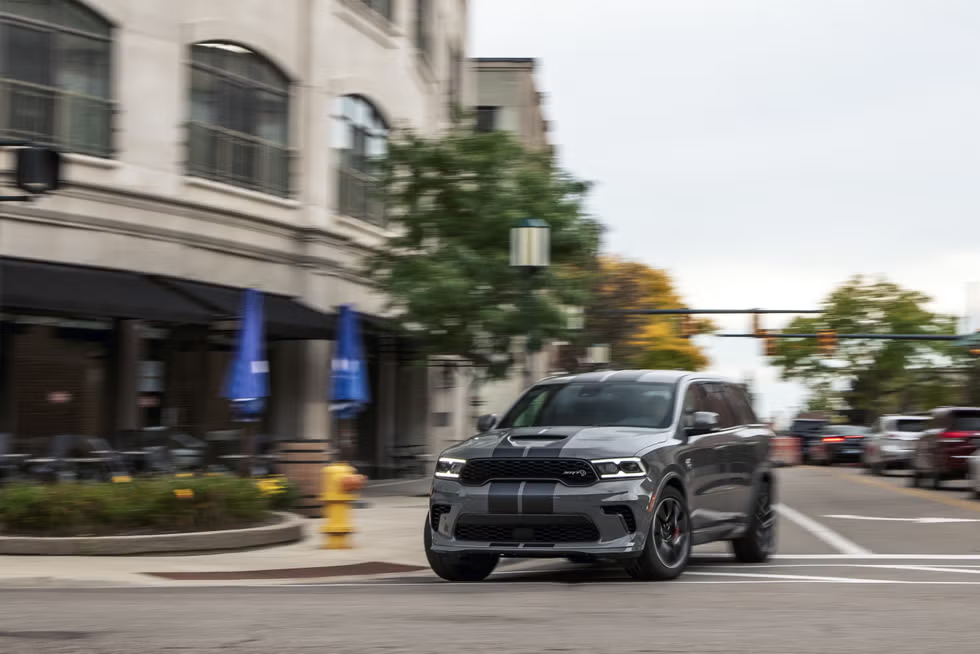
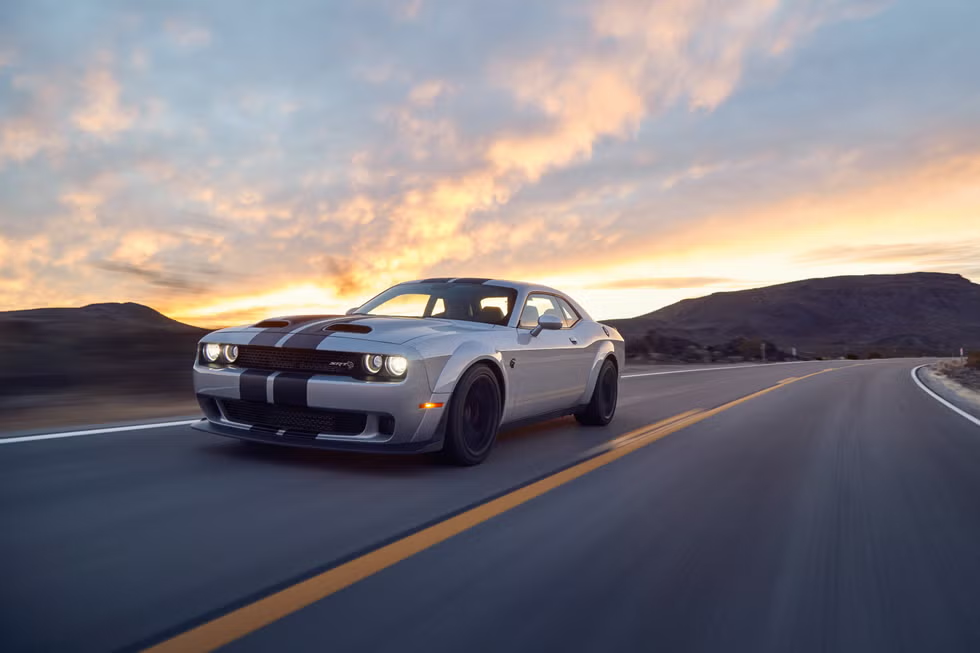
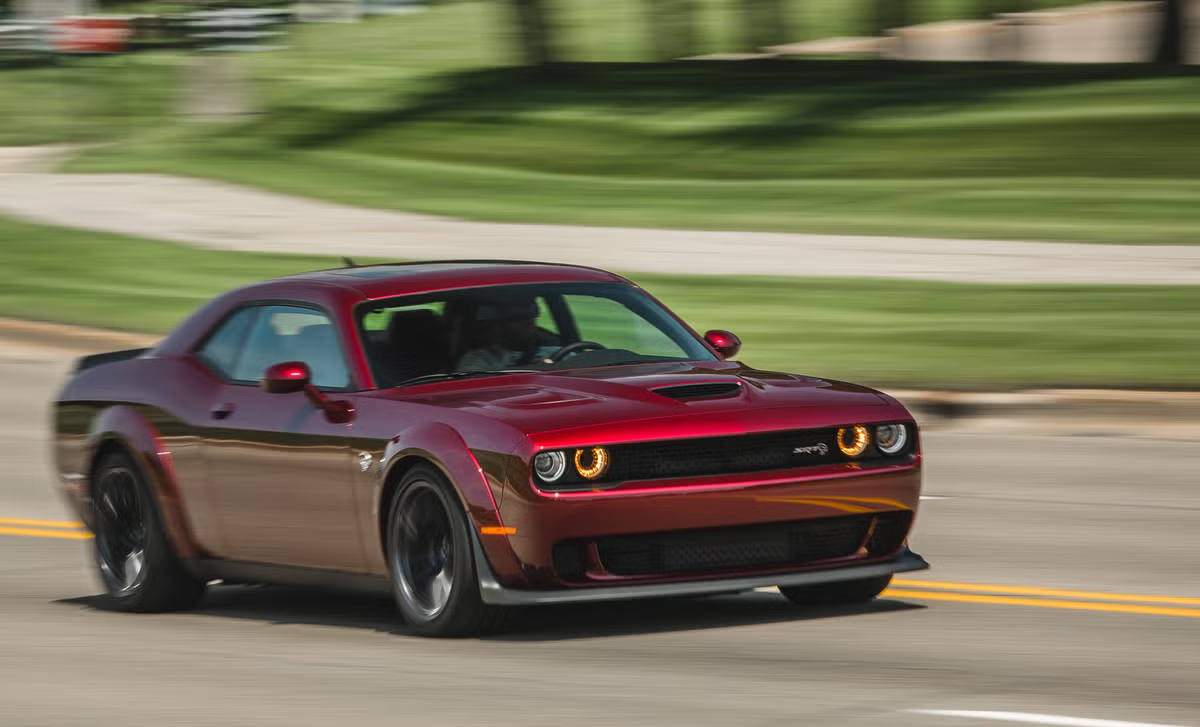
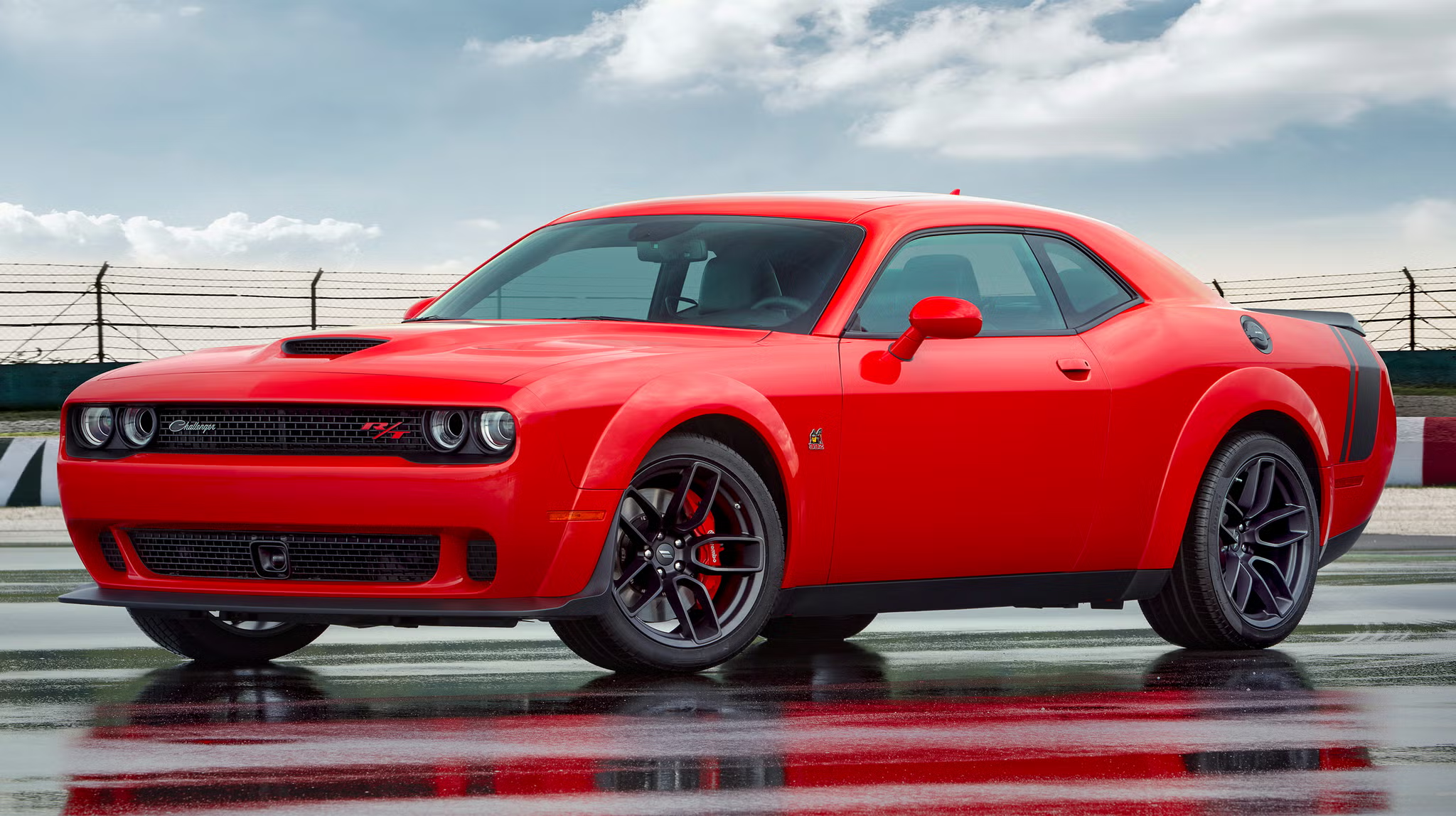
When it comes to buying a car, selection is key. We take pride in offering an expansive range of Dodge models to suit every type of driver. Whether you’re looking for the bold performance of the Dodge Challenger, the family-friendly Dodge Durango, or the value-packed Dodge Journey, we have the perfect vehicle for you. Our dealership carefully curates a broad inventory of new and pre-owned vehicles to cater to diverse needs and budgets.
Dodge Challenger: If you’re after raw muscle and exhilarating speed, the Dodge Challenger delivers a driving experience unlike any other. This car blends powerful performance with retro design elements, allowing you to feel the thrill of every drive.
Dodge Durango: For families or those who require more space without sacrificing style or power, the Dodge Durango is an exceptional choice. Its roomy interior comfortably seats up to seven passengers, while its bold exterior design and robust engine options offer unmatched versatility.
Dodge Journey: If efficiency and affordability are your top priorities, the Dodge Journey is your go-to SUV. Offering a comfortable ride, excellent fuel economy, and practical features for families, it ensures you won’t have to compromise on value.
A Team That Puts You First
Navigating the car-buying process can feel overwhelming. At Simi Valley Chrysler Dodge Jeep Ram, we take the stress out of the equation with our customer-first philosophy. Our team of seasoned professionals is here to assist you from the moment you step through our doors to long after you drive off the lot. We understand that every driver’s needs are unique, which is why we take the time to listen carefully, answer your questions thoroughly, and never pressure you into a decision.
Whether you’re purchasing your first vehicle, upgrading to something more powerful, or looking for a reliable family car, we are here to make the process seamless. Our team’s goal is to ensure that you drive away not just satisfied, but excited about your new Dodge.
Unmatched Service and Genuine Parts
Purchasing a car is just the beginning of your journey. At Simi Valley Chrysler Dodge Jeep Ram, we believe in forming long-lasting relationships with our customers, which means we’re here for you throughout your ownership experience. Our state-of-the-art service center is staffed by certified technicians who specialize in Dodge vehicles and have an in-depth understanding of how to keep them running at their best.
From routine maintenance, like oil changes and tire rotations, to more complex repairs, our team ensures your vehicle gets the care it deserves. We use only genuine Mopar parts, so you can trust that your Dodge is receiving components designed specifically for its make and model. Our service professionals also utilize the latest diagnostic tools to keep your vehicle in peak condition, allowing you to drive with peace of mind.
Flexible Financing Options for Every Budget
We understand that buying a car is a significant financial decision, which is why our finance experts are dedicated to helping you secure the best possible deal. Whether you’re looking for a new Dodge or a pre-owned model, our finance department works diligently to create a financing plan that fits your budget and lifestyle. We partner with a range of lenders to offer competitive rates and flexible terms, ensuring that your car-buying experience is as affordable as possible.
If you’re worried about your credit, don’t be! Our team will walk you through all of your options and work hard to find a plan that works for you. We believe that everyone deserves the opportunity to own the car of their dreams, regardless of their financial situation.
More Than Just a Dealership—We’re a Community Partner
At Simi Valley Chrysler Dodge Jeep Ram, we don’t just see ourselves as a car dealership; we see ourselves as an integral part of the Thousand Oaks and Ventura County communities. This means we go the extra mile to ensure that our customers receive the best service, deals, and vehicle care. We regularly offer special promotions and incentives to help you save even more on your new or pre-owned Dodge. We believe in transparent pricing, and we stand by our commitment to offering competitive deals with no hidden fees or surprises.
Convenience and Comfort for Every Visit
We know that your time is valuable, which is why we’ve designed our dealership experience with convenience and comfort in mind. From our welcoming waiting area—complete with complimentary refreshments and Wi-Fi—to our shuttle service that makes it easy to stay on schedule even when your vehicle is in for service, we do everything we can to make your visit as pleasant and hassle-free as possible.
Why Choose Simi Valley Chrysler Dodge Jeep Ram?
With so many dealerships to choose from, what sets Simi Valley Chrysler Dodge Jeep Ram apart? It’s our unwavering commitment to customer satisfaction. We don’t just want to sell you a car—we want to earn your trust and your business for years to come. We’re conveniently located near Thousand Oaks, making it easy for you to visit us and experience our dealership firsthand.
At Simi Valley Chrysler Dodge Jeep Ram, you’ll benefit from:
- A wide selection of new and pre-owned Dodge vehicles
- Competitive pricing and regular promotions to help you save
- Friendly, knowledgeable staff dedicated to helping you make the best choice
- Exceptional after-sales service that keeps your car running smoothly
Ready to find your next Dodge? Visit Simi Valley Chrysler Dodge Jeep Ram today and discover how we can make your car-buying experience both enjoyable and stress-free. Whether you’re in the market for a high-performance Challenger, a family-friendly Durango, or an affordable Journey, we’re here to help you every step of the way.
For more information or to schedule a test drive, visit our showroom or explore our current inventory online!

Jeep Wrangler Colors: Exploring the Hues of Adventure 2024, 2025, and 2026
The Jeep Wrangler color lineup changes often, but the main story is simple: 2024 had one of the boldest Wrangler paint palettes, 2025 tightened the lineup with more heritage-inspired colors, and 2026 continues the mix of classic Jeep shades, bright adventure colors, and special-edition appearance packages.
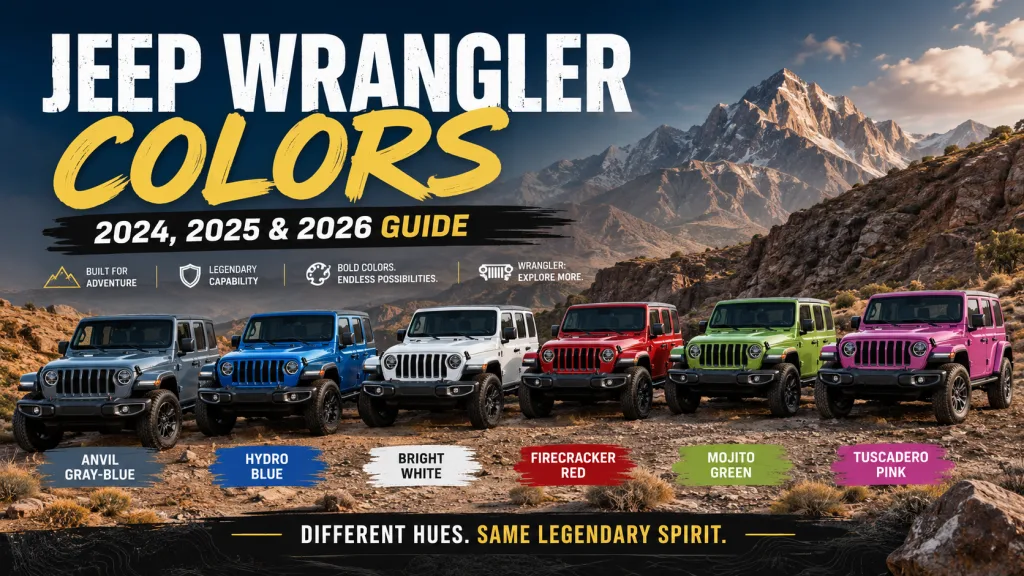
For 2024, the Wrangler offered colors like Anvil, Bikini, Earl, Firecracker Red, Hydro Blue, Sarge Green, High Velocity, Silver Zynith, Bright White, Black, and Granite Crystal. J.D. Power reported that Jeep added Bikini and Anvil to the 2024 Wrangler lineup, giving buyers two more personality-driven paint choices.
For 2025, the Wrangler color lineup leaned more mature and heritage-focused, with common options including Bright White, Black, Firecracker Red, Granite Crystal, Hydro Blue, Anvil, ’41, and Fathom Blue. For 2026, Jeep keeps several familiar colors while bringing in attention-grabbing choices like Mojito, Reign, Joose, Goldilocks, Tuscadero Pearl, and ’41, depending on trim, availability, and market. Jeep Canada shows 2026 Wrangler examples in colors like Firecracker Red, Hydro Blue, Black, Anvil, Mojito, Joose, Goldilocks, Tuscadero Pearl, Bright White, Reign, Granite Crystal Metallic, and ’41.
Why Jeep Wrangler Colors Matter
Wrangler colors matter more than they do on most SUVs.
A Toyota RAV4 in gray is just a gray crossover. A Jeep Wrangler in Anvil, Bikini, Mojito, Tuscadero, or Reign becomes part of the vehicle’s personality. Wrangler owners often choose paint based on lifestyle, trail presence, resale appeal, and how the Jeep looks with black wheels, body-color fenders, a soft top, a hardtop, or off-road accessories.
That is why Jeep keeps experimenting with colors. The Wrangler is not just transportation. It is an identity vehicle.
2024 Jeep Wrangler Colors
The 2024 Jeep Wrangler had one of the more exciting modern color lineups.
The key 2024 Wrangler colors included Black Clear-Coat, Bright White Clear-Coat, Granite Crystal Metallic, Silver Zynith, Earl, Anvil, Hydro Blue, Bikini, Firecracker Red, High Velocity, and Sarge Green. Some lists also show limited or late-availability colors such as Tuscadero Pearl depending on timing and trim.
J.D. Power described the 2024 Wrangler as offering 11 exterior colors, including new Bikini and Anvil shades, alongside Earl, Firecracker Red, Granite Crystal, Silver Zynith, High Velocity, Hydro Blue, Sarge, Bright White, and Black.
The big standouts were Anvil and Bikini.
Anvil gave the Wrangler a gray-blue military-inspired look. It works especially well on Willys, Rubicon, and black-accented builds. Bikini was the louder choice, a teal-style color that made the Wrangler feel beach-ready and more playful.
2024 Wrangler Color Personality
If you wanted a safe color in 2024, Bright White, Black, Granite Crystal, and Silver Zynith were the easy choices.
If you wanted a traditional Jeep look, Sarge Green, Earl, and Anvil were the strongest picks.
If you wanted a fun, high-attention Wrangler, Bikini, Hydro Blue, Firecracker Red, and High Velocity were the colors to watch.
This is why 2024 is a strong used-year color lineup. It gives shoppers both conservative resale-friendly colors and the type of bold Jeep shades that enthusiasts remember.
2025 Jeep Wrangler Colors
The 2025 Jeep Wrangler color lineup became a little more focused.
Common 2025 Wrangler exterior colors included Bright White, Black, Firecracker Red, Granite Crystal, Hydro Blue, Anvil, ’41, and Fathom Blue. Jeep’s 2025 Wrangler design page describes the model as having a refreshed lineup of available and limited-edition colors, which fits Jeep’s usual strategy of mixing core colors with limited-run shades.
The most interesting 2025 color was ’41.
The ’41 color is a heritage-inspired green that connects the Wrangler back to Jeep’s military roots. It is not as loud as Mojito or Bikini, but it feels authentic on a Wrangler. It works especially well on Willys and Rubicon-style builds because it gives the SUV a classic trail-ready appearance.
Fathom Blue was another strong 2025 choice. It gave the Wrangler a deeper, more refined blue compared with the brighter Hydro Blue.
2025 Wrangler Color Personality
The 2025 color palette worked well for buyers who wanted a more serious-looking Wrangler.
’41, Anvil, Black, Granite Crystal, and Fathom Blue gave the Wrangler a rugged, mature look.
Hydro Blue and Firecracker Red kept the fun side alive.
Bright White remained one of the smartest choices for hot climates, clean contrast with black accessories, and simple resale appeal.
If 2024 was the louder year, 2025 felt more controlled and heritage-driven.
2026 Jeep Wrangler Colors
The 2026 Wrangler continues Jeep’s tradition of rotating colors and special-edition looks.
Available or commonly shown 2026 colors include Black, Bright White, Firecracker Red, Granite Crystal Metallic, Hydro Blue Pearl, Anvil, ’41, Mojito, Reign, Joose, Goldilocks, and Tuscadero Pearl, though availability can vary by trim, package, timing, and market. CarsDirect lists 2026 Wrangler exterior colors including Anvil, Black, Bright White, Firecracker Red, Goldilocks, Granite Crystal Metallic, Hydro Blue, Joose, Mojito, Reign, Tuscadero Pearl, and ’41.
This is a very Jeep-like mix. You still have the safe colors: Black, Bright White, Granite Crystal, Firecracker Red, and Hydro Blue. But you also get attention-grabbers like Mojito, Reign, Joose, Goldilocks, and Tuscadero.
That gives the 2026 Wrangler one of the most personality-heavy palettes in the SUV market.
2026 Special-Edition Color Stories
Jeep is also using special editions to make Wrangler colors more interesting.
Car and Driver reported that the 2026 Wrangler Whitecap package uses a retro look inspired by early civilian Jeeps, with a Bright White roof, white grille accents, a “1941” side decal, and special appearance details.
Car and Driver also covered the 2026 Wrangler Rockslide special edition, which uses an Anvil-painted roof and grille surround, Blue Agave body stripes, mountain graphics, Indigo Blue interior accents, and Jean Blue cloth seats.
That matters because Wrangler color is no longer just body paint. Jeep is using roofs, decals, wheels, interiors, graphics, and accents to create complete visual themes.
Best Jeep Wrangler Color for Resale
The safest Wrangler colors for resale are usually White, Black, Gray, Silver, and dark blue.
For the Wrangler, that means Bright White, Black, Granite Crystal, Silver Zynith, Anvil, Fathom Blue, and Hydro Blue are usually safer long-term picks than extremely bold colors.
That does not mean bold colors are bad. In fact, Jeep is one of the few brands where loud colors can help resale with the right buyer. A clean Wrangler in Tuscadero, Mojito, Bikini, Reign, or High Velocity may attract enthusiasts faster than a generic black one.
The difference is audience. Neutral colors appeal to more buyers. Rare Jeep colors appeal harder to the right buyer.
Best Wrangler Color for Off-Road Builds
For off-road builds, the best colors are usually Anvil, ’41, Sarge Green, Granite Crystal, Black, and Bright White.
Anvil looks rugged without being too dark. ’41 and Sarge Green lean into Jeep’s heritage. Granite Crystal hides dirt better than pure black. Bright White works well in hot climates and contrasts nicely with black bumpers, wheels, rock rails, fenders, and roof options.
Black looks tough, but it shows dust, scratches, swirl marks, and trail pinstripes more easily. If you actually use your Wrangler on trails, black may require more upkeep to keep looking clean.
Best Wrangler Color for Daily Driving
For daily driving, Bright White, Granite Crystal, Anvil, Fathom Blue, and Hydro Blue are some of the best choices.
Bright White stays cooler and looks clean with black trim. Granite Crystal is easy to live with and hides road grime better than black. Anvil gives you personality without being too loud. Fathom Blue feels upscale. Hydro Blue is bright enough to stand out without being as polarizing as Tuscadero or Mojito.
If the Wrangler is your only vehicle, a color you will still like after three years matters more than what looks exciting for one week.
Best Bold Jeep Wrangler Colors
Jeep is famous for bold colors, and the 2024 to 2026 range gives shoppers plenty of them.
The boldest choices include Bikini, Mojito, Tuscadero Pearl, Reign, High Velocity, Joose, Goldilocks, Hydro Blue, and Firecracker Red.
These colors make the Wrangler feel more like a lifestyle vehicle. They photograph better, stand out in traffic, and give the Jeep more character.
They are not for everyone. But on a Wrangler, they make sense.
Which Wrangler Color Should You Choose?
Choose Bright White if you want the safest, cleanest, most practical color.
Choose Black if you want a classic aggressive look and do not mind keeping it clean.
Choose Granite Crystal if you want a low-risk color that hides dirt better.
Choose Anvil if you want a rugged Jeep color without going too loud.
Choose ’41 or Sarge Green if you like military-inspired Jeep heritage.
Choose Hydro Blue if you want bright color without going extreme.
Choose Firecracker Red if you want classic high-visibility Jeep energy.
Choose Bikini, Mojito, Reign, Tuscadero, Joose, or Goldilocks if you want people to notice the Jeep immediately.
Do Wrangler Colors Change by Trim?
Yes, Wrangler colors can change by trim, package, market, and availability.
A color may be available on Sport and Willys but not on Rubicon 392. Some colors may be late availability. Some may be limited-run. Some may disappear quickly and return later. Special editions may also use unique roofs, graphics, decals, or interior accents that are not available on normal trims.
That is why shoppers should always confirm the current build sheet or dealer inventory before assuming a color is available.
If you are shopping locally, compare current new Jeep inventory and check actual units by trim, exterior color, roof type, interior, and package. If you are looking for a rare discontinued color, browse used Jeep inventory because older colors like Bikini, Earl, High Velocity, and Sarge Green may be easier to find pre-owned.
2024 vs 2025 vs 2026 Wrangler Colors
The 2024 Wrangler was the year for bold variety. It brought back energetic choices and added new shades like Bikini and Anvil.
The 2025 Wrangler felt more heritage-inspired and mature, especially with ’41 and Fathom Blue.
The 2026 Wrangler keeps the core Jeep colors while leaning hard into special-edition personality, with colors and themes like Mojito, Reign, Joose, Goldilocks, Tuscadero Pearl, Whitecap, Rockslide, and other appearance-focused releases.
In simple terms:
2024 is the bold used-color year.
2025 is the heritage and refined-color year.
2026 is the special-edition and personality-color year.
FAQs About Jeep Wrangler Colors
What colors did the 2024 Jeep Wrangler come in?
The 2024 Jeep Wrangler commonly came in colors like Black, Bright White, Granite Crystal, Silver Zynith, Earl, Anvil, Hydro Blue, Bikini, Firecracker Red, High Velocity, and Sarge Green. Some limited colors may vary by timing and trim.
What colors did the 2025 Jeep Wrangler come in?
The 2025 Wrangler commonly offered Bright White, Black, Firecracker Red, Granite Crystal, Hydro Blue, Anvil, ’41, and Fathom Blue, depending on trim and availability.
What colors does the 2026 Jeep Wrangler come in?
The 2026 Wrangler color lineup commonly includes Black, Bright White, Firecracker Red, Granite Crystal Metallic, Hydro Blue, Anvil, ’41, Mojito, Reign, Joose, Goldilocks, and Tuscadero Pearl, depending on trim, timing, and market.
What is the best Jeep Wrangler color?
The best all-around Wrangler color is usually Bright White, Granite Crystal, or Anvil because they are easy to live with and have broad appeal. For personality, Hydro Blue, Mojito, Tuscadero, Reign, and Bikini are stronger choices.
What Jeep Wrangler color has the best resale value?
Neutral colors like Bright White, Black, Granite Crystal, Silver, and dark blue are usually safest for resale. Rare Jeep colors can also do well with enthusiasts if the Wrangler is clean and well-equipped.
Is Anvil a good Jeep Wrangler color?
Yes. Anvil is one of the best modern Wrangler colors because it looks rugged, unique, and Jeep-specific without being too flashy.
Are bright Jeep Wrangler colors harder to sell?
Not always. On a regular SUV, bright colors can narrow the buyer pool. On a Wrangler, colors like Tuscadero, Mojito, Bikini, Hydro Blue, and Reign can attract Jeep enthusiasts who specifically want something different.
Final Thoughts: Wrangler Colors Are Part of the Jeep Experience
Jeep Wrangler colors are not just paint codes. They are part of why people love the Wrangler.
The 2024 lineup brought bold shades like Bikini and Anvil. The 2025 lineup leaned into heritage with colors like ’41 and Fathom Blue. The 2026 lineup continues Jeep’s personality-first approach with colors like Mojito, Reign, Joose, Goldilocks, Tuscadero Pearl, and special editions like Whitecap and Rockslide.
If you want the safest choice, go Bright White, Granite Crystal, Black, Anvil, or Hydro Blue. If you want the full Jeep personality, choose the color that makes the Wrangler feel like yours.
If you’re considering a Jeep Wrangler for your next adventure, one of the big questions on your mind might be: “How much can a Jeep Wrangler tow?” Known for its off-road prowess and iconic design, the Jeep Wrangler is more than just a trailblazer—it’s also a capable towing machine. But, towing capacity can vary depending on the model, engine, and equipment. In this detailed guide, we’ll break down everything you need to know about the Jeep Wrangler’s towing capacity to help you make the best decision for your next haul.
Understanding Towing Capacity
Before diving into the specifics of the Jeep Wrangler’s towing capabilities, it’s important to understand what towing capacity means. Towing capacity refers to the maximum weight that a vehicle can safely tow. This includes the weight of the trailer and any cargo it carries. Exceeding this limit can lead to dangerous situations, including loss of control, brake failure, and increased wear on the vehicle.
Key Terms to Know
- Gross Vehicle Weight Rating (GVWR): The maximum weight a vehicle can safely carry, including its own weight, passengers, cargo, and the trailer tongue weight.
- Tongue Weight: The downward force exerted at the coupling point of the trailer. It typically should be about 10-15% of the total trailer weight.
- Payload Capacity: The maximum weight your vehicle can carry, including passengers and cargo, which affects towing capacity.
Jeep Wrangler Towing Capacity by Model
Jeep Wrangler Sport & Willys (2-Door)
- Towing Capacity: Up to 2,000 pounds
- Key Features: Standard 3.6L V6 engine, available with a manual or automatic transmission. Ideal for towing small trailers, lightweight campers, or a pair of jet skis.
- Best For: Off-road adventurers who need occasional towing capacity without sacrificing the Wrangler’s nimbleness.
The 2-door Wrangler is perfect for those who want a compact vehicle that can handle light towing tasks. Its shorter wheelbase makes it agile on trails, while still offering enough power for small loads.
Jeep Wrangler Unlimited (4-Door)
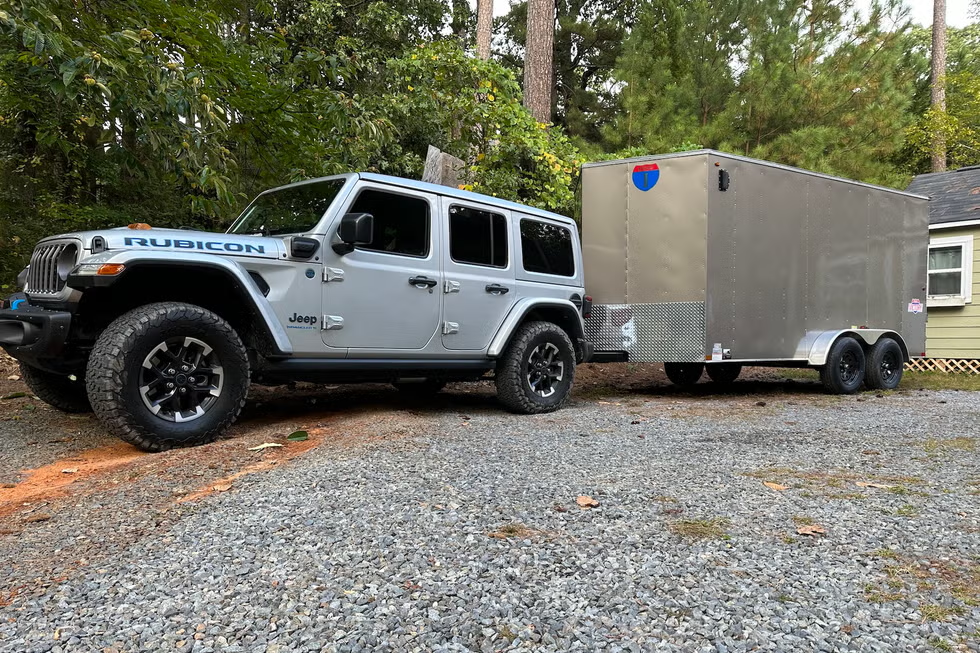
- Towing Capacity: Up to 3,500 pounds
- Key Features: This larger, 4-door version of the Wrangler offers a significant boost in towing power, with the same 3.6L V6 engine, but a longer wheelbase for added stability. It’s perfect for towing small to mid-sized boats, pop-up campers, or utility trailers.
- Best For: Families or outdoor enthusiasts looking for more cargo space and towing capacity without compromising on Wrangler’s legendary off-road performance.
The 4-door Wrangler is ideal for those who need more space and power. Whether you’re planning a family camping trip or need to tow a small boat, this model provides the versatility you need.
Jeep Wrangler 4xe (Plug-in Hybrid)
- Towing Capacity: Up to 3,500 pounds
- Key Features: The 4xe’s combination of a 2.0L turbocharged engine and electric motor gives it impressive low-end torque, which is essential for towing. With the same towing capacity as the standard 4-door, it’s an eco-friendly choice that doesn’t skimp on power.
- Best For: Eco-conscious adventurers who want the best of both worlds—fuel efficiency and solid towing capabilities.
The 4xe model is perfect for those who are environmentally conscious but still want the ruggedness of a Jeep. It allows for efficient towing without sacrificing performance.
Jeep Wrangler Rubicon 392 (V8-Powered)
- Towing Capacity: Up to 3,500 pounds
- Key Features: The powerhouse of the Wrangler lineup, the Rubicon 392 comes with a 6.4L HEMI® V8 engine that delivers 470 horsepower and 470 lb-ft of torque. While the towing capacity remains capped at 3,500 pounds, the 392’s unmatched acceleration and raw power make it a thrill to drive with or without a trailer.
- Best For Drivers who want maximum performance both on the trail and while towing heavier loads, such as larger campers or off-road equipment.
The Rubicon 392 is designed for those who demand the best performance. Its powerful engine ensures that you can tow heavier loads while still enjoying the off-road capabilities that Jeep is known for.
What Can You Tow with a Jeep Wrangler?
The Wrangler is versatile when it comes to towing, but it’s important to match the trailer weight to the model’s capacity. Here’s a quick look at what you can tow depending on the configuration:
Small Trailers (up to 1,500 pounds)
Ideal for the 2-door Wrangler, this category is perfect for carrying kayaks, motorcycles, or small camping trailers. The lighter weight allows for easy maneuvering and towing.
Mid-Size Trailers (up to 3,500 pounds)
The 4-door models can handle mid-sized campers, boats, or utility trailers loaded with gear. This range is ideal for families or outdoor enthusiasts who need to transport more equipment.
Off-Road Equipment
The Wrangler’s rugged build and powerful engine options make it ideal for towing off-road toys like ATVs, dirt bikes, or side-by-sides. Whether you’re heading to the dunes or the trails, the Wrangler can handle your off-road gear.
Must-Have Towing Accessories for Your Wrangler
To get the most out of your Wrangler’s towing capabilities, consider adding these accessories:
Trailer Tow Group Package
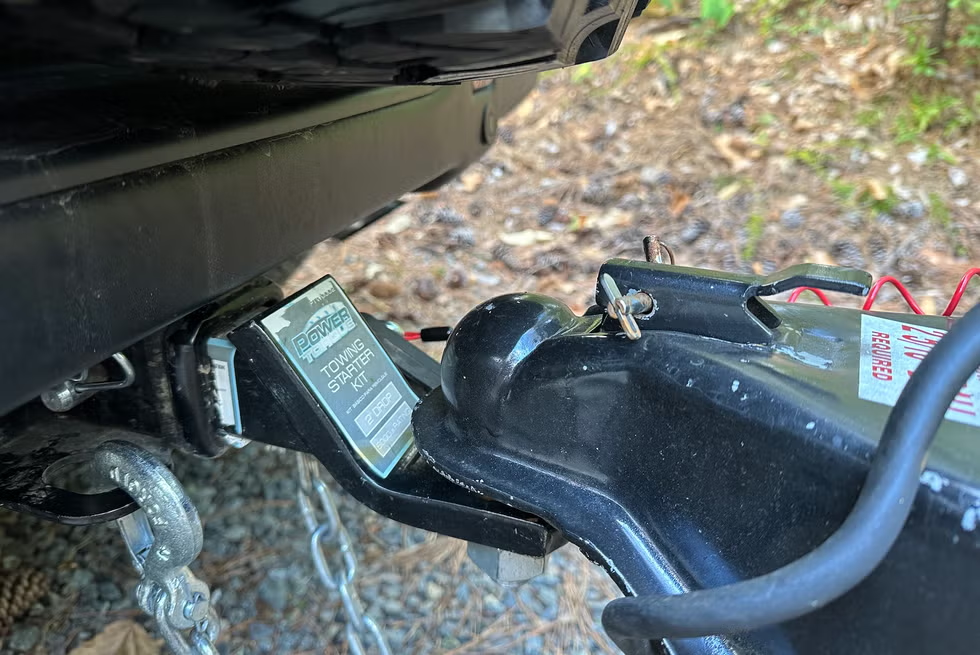
Includes a Class II receiver hitch and a 4-pin and 7-pin wiring harness. This is essential for ensuring your Wrangler is ready to tow.
Trailer Sway Control
This feature helps keep the trailer in line during towing, particularly useful in windy conditions or when driving on uneven terrain.
Heavy-Duty Brakes
For those who frequently tow near the maximum capacity, upgrading your brakes can improve stopping power and safety.
Factors That Affect Towing Capacity
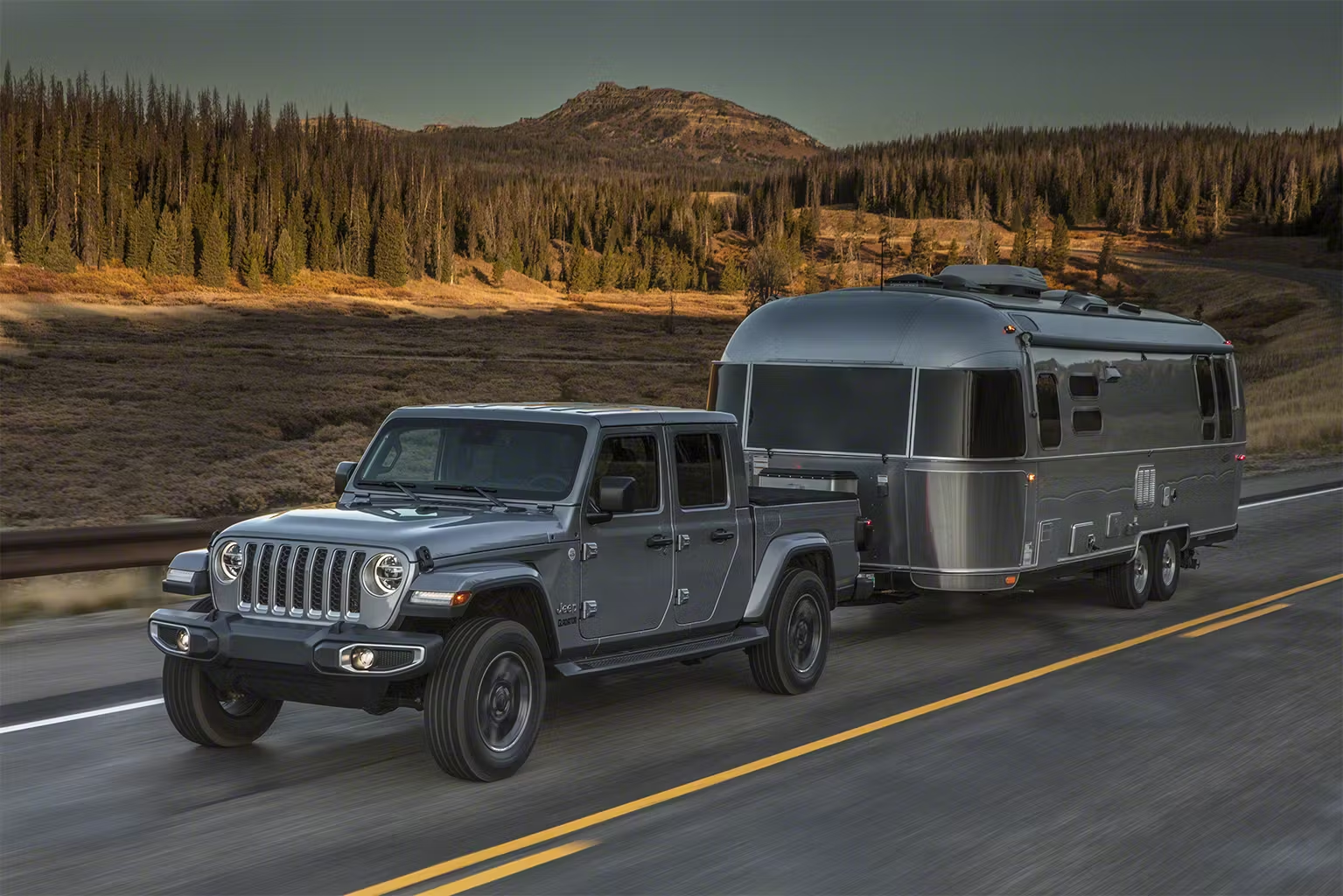
Several factors impact how much your Jeep Wrangler can tow, so it’s important to keep these in mind:
Payload
The total weight of passengers, cargo, and trailer tongue weight can reduce how much you can tow safely. Always check your Wrangler’s Gross Vehicle Weight Rating (GVWR) to avoid overloading.
Terrain
Towing on steep grades or off-road can strain your vehicle more than towing on flat highways. Consider the terrain of your trip when calculating towing limits.
Transmission and Gear Ratios
Models with automatic transmissions or higher gear ratios often handle towing better because they can distribute the load more effectively.
Conclusion: Is the Jeep Wrangler the Right Choice for Towing?
While the Jeep Wrangler isn’t designed to pull the same heavy loads as a full-size pickup, its towing capacity of up to 3,500 pounds makes it more than capable for most recreational and light-duty needs. Whether you’re hauling a camper to the mountains, towing your off-road toys for a weekend adventure, or simply moving gear for a day at the lake, the Wrangler has you covered.
If you’re planning to tow frequently or near the upper limits of the Wrangler’s capacity, we recommend opting for a 4-door model or considering the 4xe for added torque. The Jeep Wrangler remains a solid choice for those who want both off-road excellence and towing versatility.
Looking for more tips on how to get the most out of your Wrangler’s towing capabilities? Click here to explore detailed towing guides and see how the Wrangler stacks up against other SUVs in its class!
Frequently Asked Questions:
Q: What is the maximum towing capacity of a Jeep Wrangler? A: The maximum towing capacity of a Jeep Wrangler is up to 3,500 pounds, depending on the model and configuration.
Q: Can I tow a camper with a Jeep Wrangler? A: Yes, the Jeep Wrangler can tow small to mid-sized campers, depending on the model and configuration.
Q: What accessories do I need to tow with a Jeep Wrangler? A: You’ll need a Trailer Tow Group Package, which includes a Class II receiver hitch and a 4-pin and 7-pin wiring harness. Additionally, consider adding Trailer Sway Control and Heavy-Duty Brakes for improved safety and performance.
Q: How do I calculate my Jeep Wrangler’s towing capacity? A: To calculate your Wrangler’s towing capacity, consider the Gross Vehicle Weight Rating (GVWR), payload capacity, and the weight of the trailer and its cargo. Always consult your owner’s manual or a dealership for guidance.
Battle of the Beasts: Jeep vs. Toyota in Off-Roading Glory
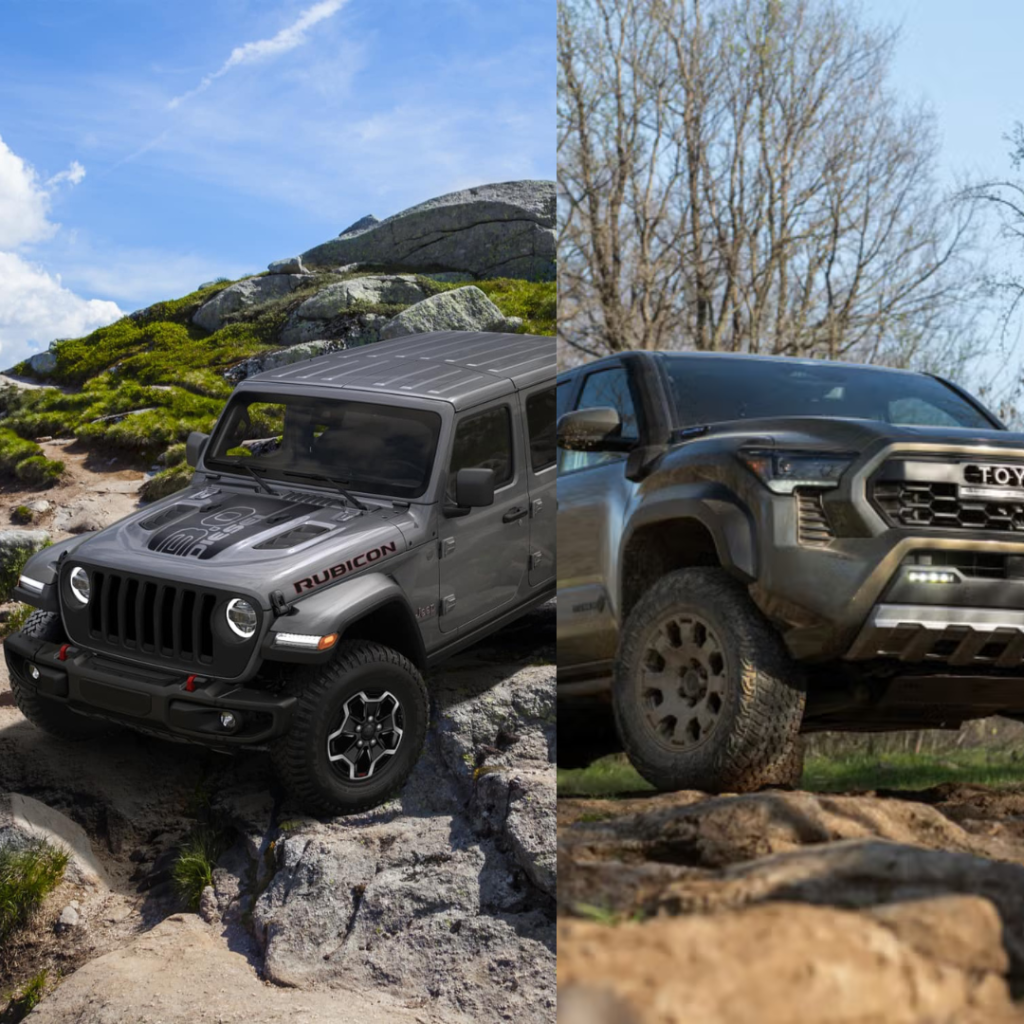
In the world of off-road vehicles, Jeep and Toyota have established themselves as the quintessential brands for adventurers looking to conquer uncharted territories. With decades of experience in rugged terrains and challenging conditions, both companies continue to push the limits of capability and durability in their latest models. Whether it’s rock crawling, mud-splashing, or sand dune running, each brand brings a unique set of features that appeal to off-road enthusiasts. Let’s delve deep into a comprehensive comparison of the 2024 Jeep Wrangler Rubicon and the Toyota Tacoma TRD Pro, evaluating them across categories that matter most to those who love the call of the wild.
Contenders: Jeep Wrangler Rubicon and Toyota Tacoma TRD Pro
Jeep Wrangler Rubicon
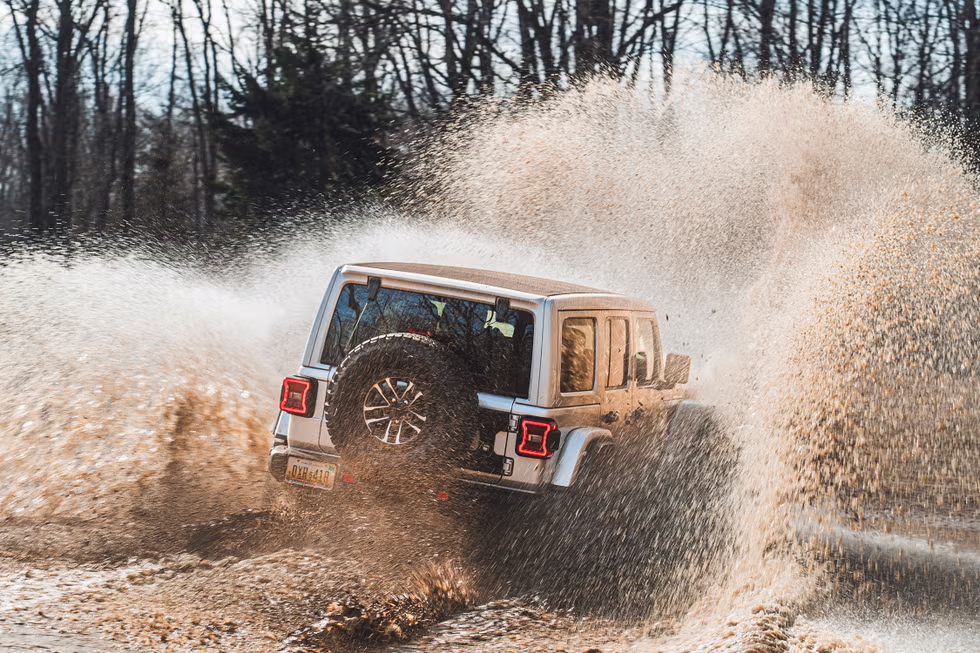
The Jeep Wrangler Rubicon has long been revered as the pinnacle of factory-offered off-road capability. This SUV is tailor-made for the enthusiast who prioritizes off-road performance over all else. For the 2024 model, Jeep has once again focused on enhancing the Wrangler’s legendary rock-crawling and all-terrain handling abilities. Here’s a rundown of its core features:
- Solid front and rear axles: These provide improved ground clearance and articulation, essential for handling extreme trails and rocky terrain.
- Electronic locking differentials: These allow the vehicle to transfer power more efficiently to the wheels that have traction, a significant advantage when navigating steep, slippery slopes.
- 33-inch all-terrain tires: Larger tires allow the Wrangler to tackle challenging surfaces without sacrificing stability.
- Rock-Trac 4:1 low-range gearing: The ultra-low gearing ratio ensures that the Wrangler can crawl over obstacles slowly and with precision, crucial for technical off-roading.
- Electronic sway bar disconnect: This feature offers enhanced wheel articulation, allowing the vehicle to better adapt to uneven ground.
The Wrangler Rubicon has undoubtedly built a legacy as a purpose-built machine for the most extreme off-road adventures. With its rugged build and tactical features, it’s a natural choice for rock crawling and serious trail exploration.
Toyota Tacoma TRD Pro
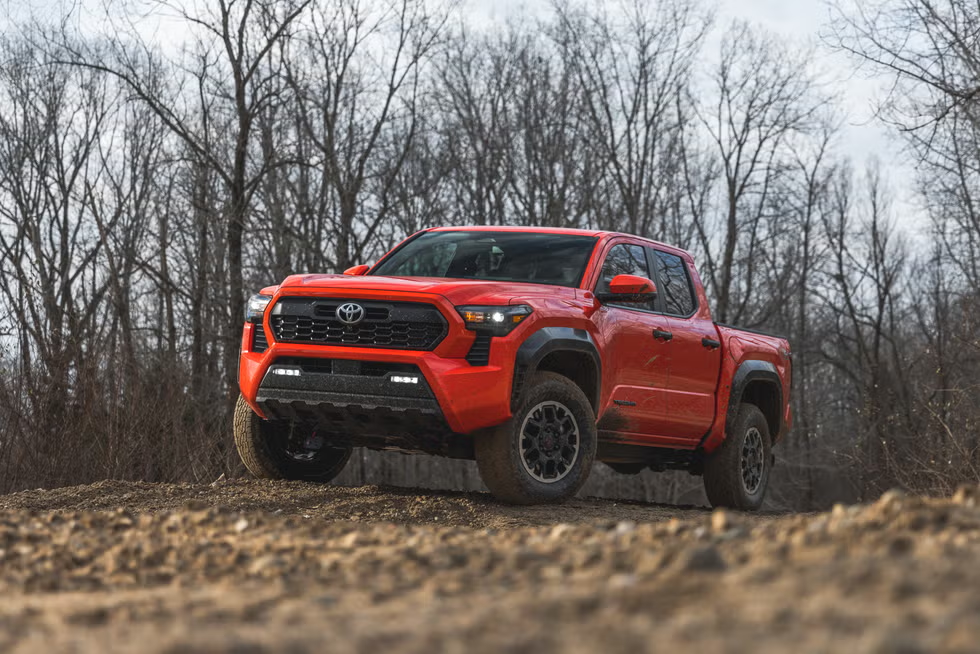
While Toyota is known for its durable SUVs like the 4Runner, the Tacoma TRD Pro stands out as a midsize truck with impressive off-road performance. With a blend of power and innovative off-road tech, the Tacoma TRD Pro appeals to those looking for a more versatile vehicle that performs on trails and highways alike. Key highlights of the Tacoma TRD Pro include:
- 2.4L turbocharged hybrid powertrain: This powertrain delivers an impressive 326 horsepower and 465 lb-ft of torque, offering high performance and fuel efficiency.
- FOX internal bypass shocks: These shocks provide enhanced suspension control, allowing the Tacoma to handle high-speed off-roading with ease.
- Electronically controlled locking rear differential: Like the Wrangler, this feature helps the Tacoma navigate low-traction environments by distributing power to the wheels with grip.
- Multi-terrain select and crawl control systems: Toyota’s advanced off-road assist features are designed to make challenging trails accessible to drivers of all skill levels.
- Forged aluminum skid plates: These offer underbody protection against rocks and other off-road hazards, enhancing the vehicle’s durability.
The Toyota Tacoma TRD Pro blends capability with comfort, making it a well-rounded choice for enthusiasts who want a truck that can do it all. Its high-speed desert prowess and advanced electronics make it equally suited for rugged trails and urban commutes.
Performance Comparison
Rock Crawling
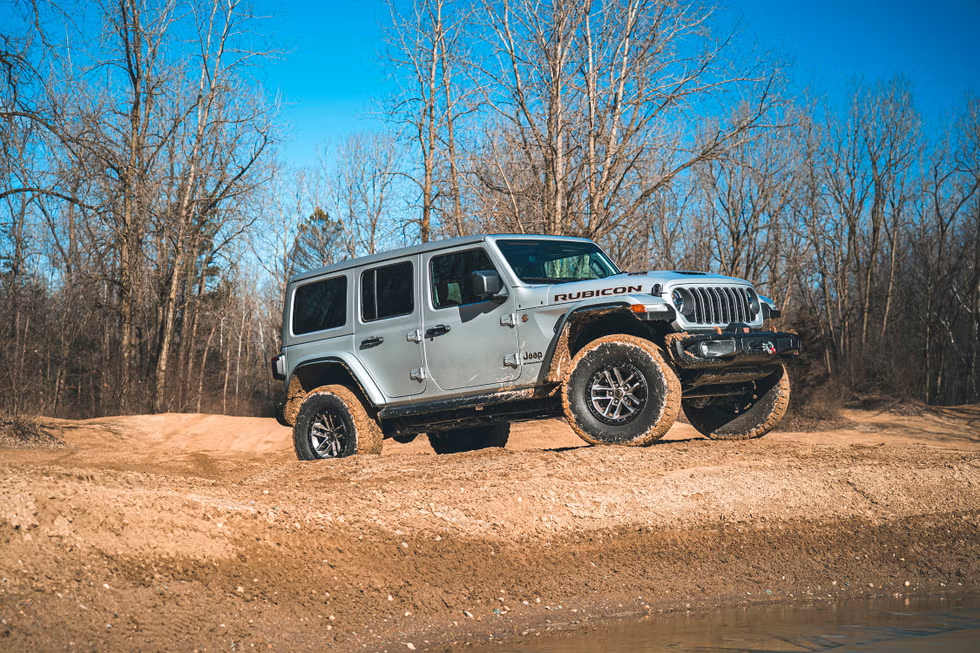
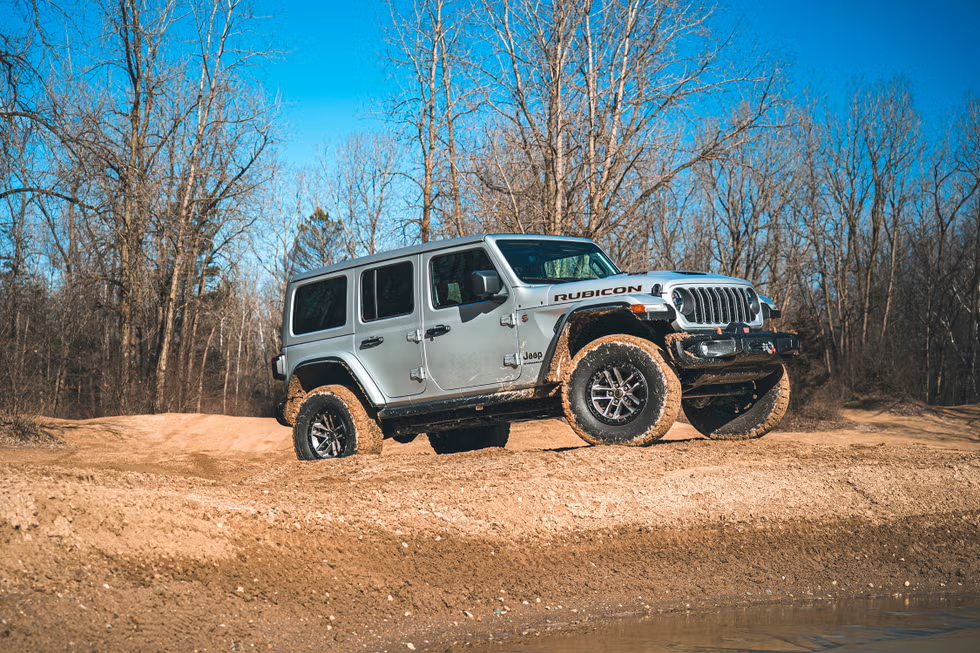
When it comes to rock crawling, the Jeep Wrangler Rubicon has few competitors. Its combination of solid axles, low-range gearing, and superior articulation make it an ideal choice for scaling boulders and navigating uneven landscapes. The electronic sway bar disconnect enhances the Wrangler’s wheel articulation, which is essential for keeping all four tires on the ground in challenging conditions. This allows the Rubicon to power through obstacles that would leave other vehicles struggling.
On the other hand, while the Toyota Tacoma TRD Pro holds its own on rough terrain, it falls short of the Wrangler’s rock-crawling prowess. The Tacoma’s suspension, while capable, is geared more toward higher-speed desert driving and less toward the ultra-low-speed precision crawling the Wrangler excels at. The Tacoma’s longer wheelbase also limits its ability to navigate tight, rocky sections as effectively as the Wrangler.
High-Speed Desert Running
High-speed desert running, however, is where the Tacoma TRD Pro shines. Thanks to its FOX internal bypass shocks, the Tacoma can handle washboard surfaces and rough desert paths at higher speeds. Its turbocharged hybrid powertrain provides excellent power, making it an ideal choice for off-roaders who love the thrill of fast-paced adventure. The combination of a well-tuned suspension and ample horsepower allows the Tacoma to absorb bumps and maintain stability over rough terrain without losing control.
While the Jeep Wrangler Rubicon is capable of handling similar environments, it’s less suited for high-speed off-roading. Its solid axles provide exceptional durability but tend to create a more rigid ride. The Rubicon’s focus on low-speed control doesn’t lend itself as well to high-speed desert terrain, where the softer suspension and shock technology of the Tacoma give it a clear advantage.
Mud and Deep Water Fording
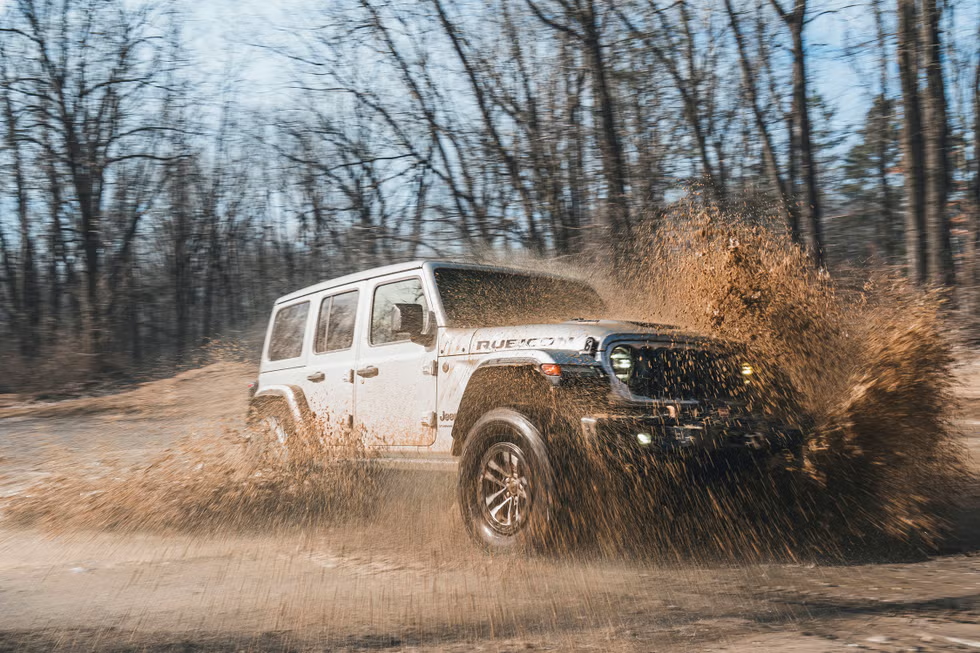
When it comes to traversing mud and water, both the Wrangler and Tacoma are highly capable. The Jeep Wrangler, however, has a slight edge with its 33.6-inch fording depth, compared to the Tacoma’s 32 inches. Jeep also offers a snorkel option for the Wrangler, which allows it to tackle water crossings that would otherwise flood the engine. This makes the Wrangler an excellent choice for deep water and mud-filled trails.
The Toyota Tacoma TRD Pro, while not quite matching the Wrangler’s fording depth, still offers excellent ground clearance and skid plates that make it more than capable in muddy conditions. The multi-terrain select system and crawl control in Tacoma also provide a level of precision that helps less experienced drivers navigate challenging mud trails without bogging down.
Trail Comfort and Everyday Usability
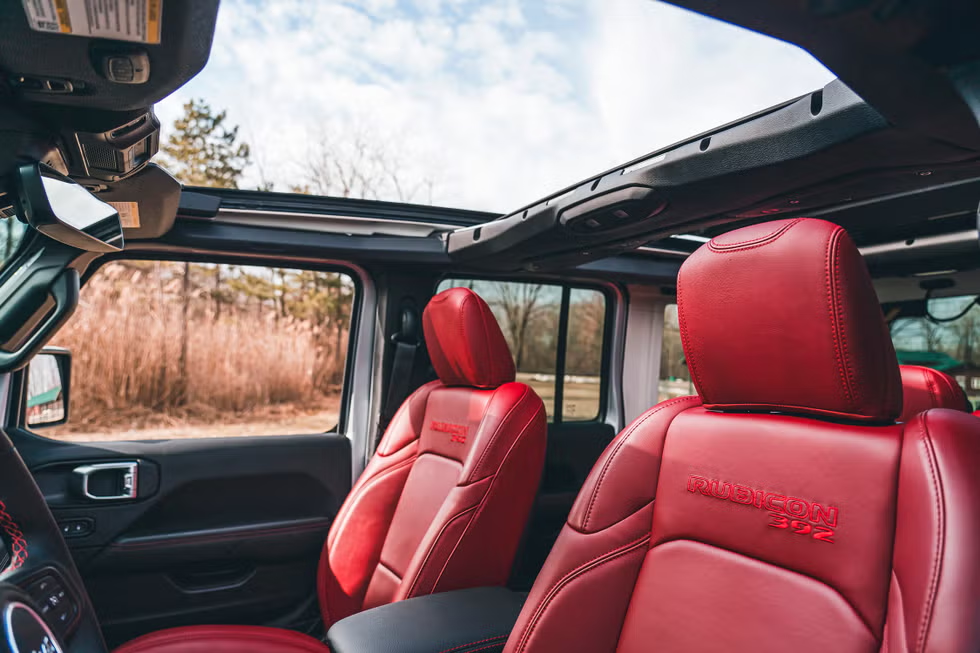
When assessing comfort and usability, the Toyota Tacoma TRD Pro takes the lead. Its independent front suspension and advanced shock technology create a smoother on-road ride, which is important for those using their vehicle as a daily driver. The Tacoma’s hybrid powertrain also provides better fuel efficiency, making it a more economical choice for both everyday commuting and long-distance overlanding trips. Additionally, the Tacoma’s truck bed offers more cargo space, which is ideal for camping, gear, and other essentials.
The Jeep Wrangler Rubicon, while highly improved in recent models, retains a more utilitarian feel. Its off-road focus means that on-road comfort is somewhat compromised compared to the Tacoma. For those looking to take long road trips or use their vehicle as a primary mode of transportation, the Wrangler may feel more rugged and less refined.
Technology and Features
Off-Road Assist Systems
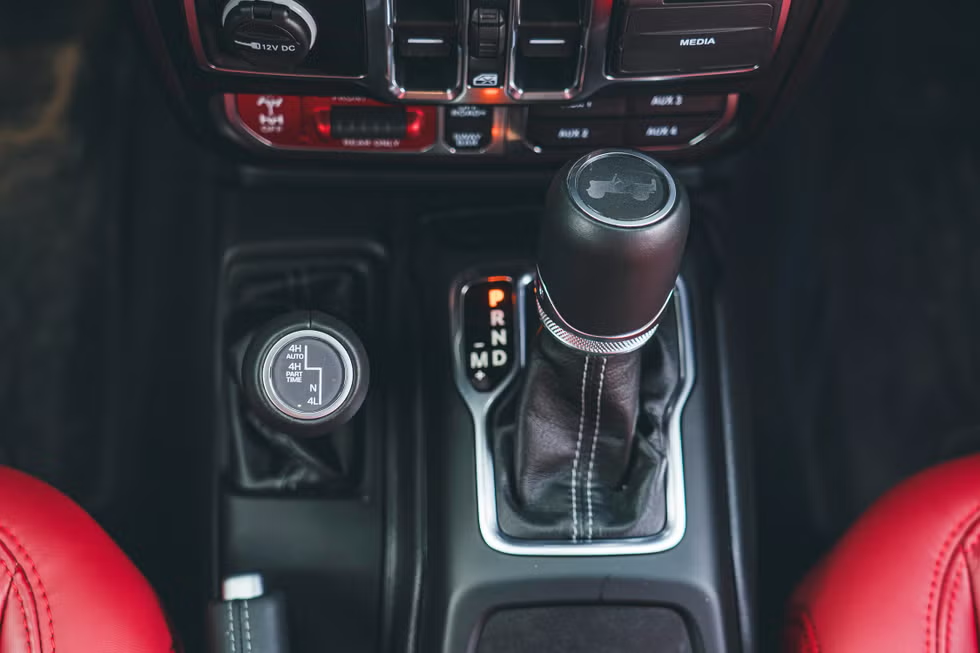
Both the Wrangler and Tacoma offer sophisticated off-road assist systems, but they’re tailored to different styles of off-roading. Toyota’s multi-terrain select and crawl control systems provide intuitive traction management that helps drivers of all skill levels tackle challenging trails. These systems are particularly useful for drivers new to off-roading, as they simplify tasks like rock crawling and sand driving.
Jeep’s Off-Road Pages, meanwhile, cater to enthusiasts who want real-time vehicle data during their adventures. This feature displays information like pitch, roll, and wheel articulation, offering detailed insights that can be useful for those who prefer manual control over assisted systems.
Infotainment and Connectivity
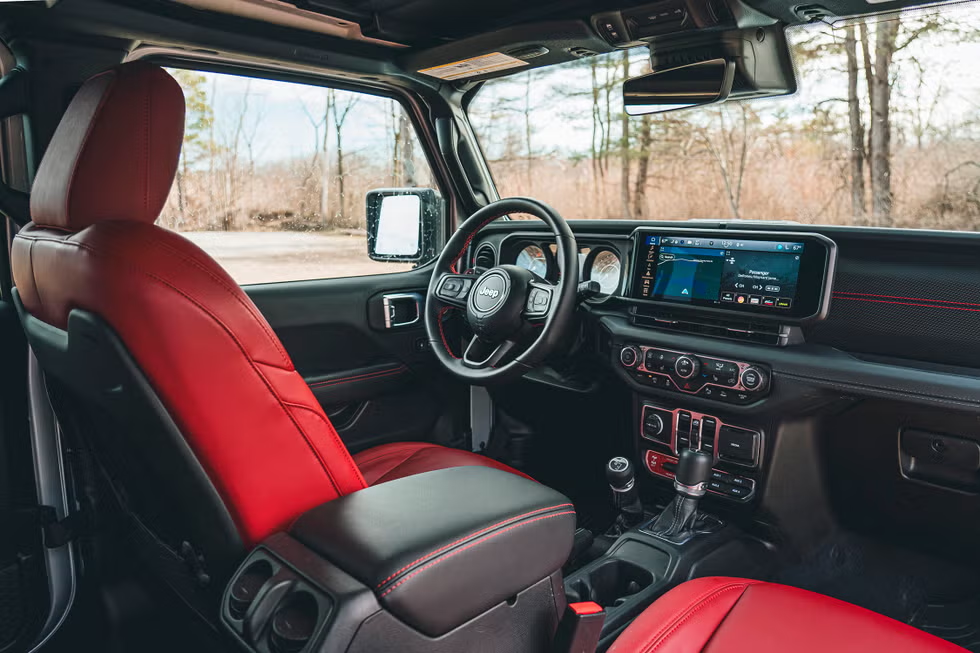
Both the Jeep Wrangler Rubicon and Toyota Tacoma TRD Pro feature touchscreen infotainment systems with smartphone connectivity. Toyota, however, provides a larger screen with a more intuitive interface, giving it an advantage in user-friendliness. The Tacoma’s infotainment system also offers voice control, making it easier for drivers to adjust settings without taking their hands off the wheel.
Safety Features
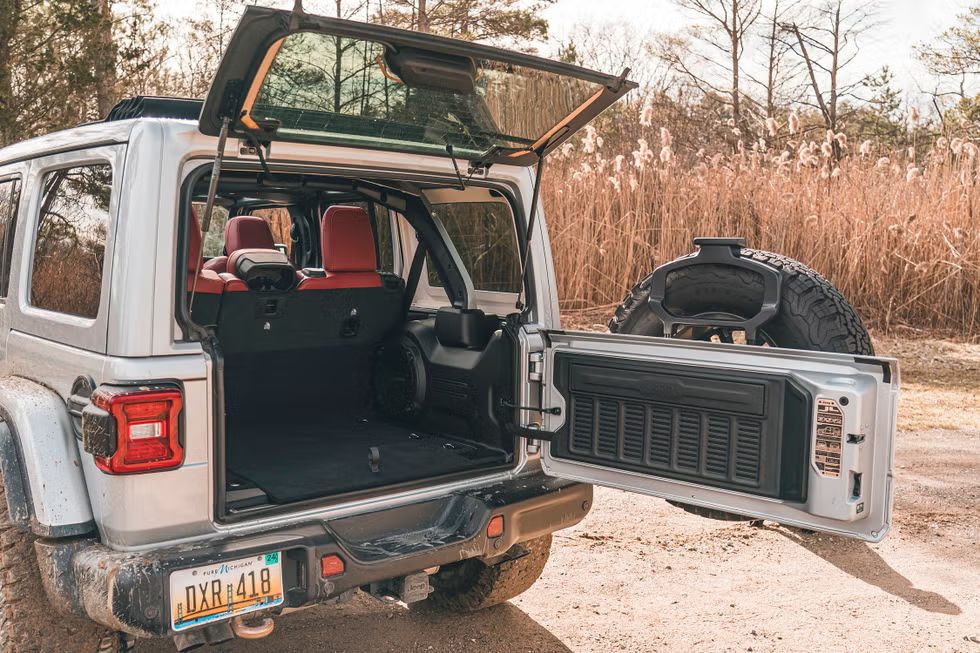
Toyota equips the Tacoma TRD Pro with its Safety Sense suite, which includes features like lane departure alert, adaptive cruise control, and pre-collision braking. This suite comes standard, offering drivers peace of mind on both highways and trails. Jeep offers similar safety features in the Wrangler Rubicon, but these are part of optional packages rather than standard equipment.
Customization and Aftermarket Support
One of the Jeep Wrangler’s most significant advantages is its immense aftermarket support. Jeep enthusiasts have access to a vast range of modifications, including lift kits, bumpers, winches, and lighting upgrades. This customization culture allows Wrangler owners to tailor their vehicle to their specific needs, whether it’s hardcore rock crawling or overlanding.
The Toyota Tacoma TRD Pro also enjoys strong aftermarket support, but it doesn’t match the Wrangler’s breadth of options. Nevertheless, Tacoma owners can still find numerous options for lifts, skid plates, and armor, making it relatively easy to personalize the vehicle.
Why Jeep Wrangler Rubicon Outshines Toyota Tacoma TRD Pro
Jeep Wrangler Rubicon: Built for the Toughest Trails
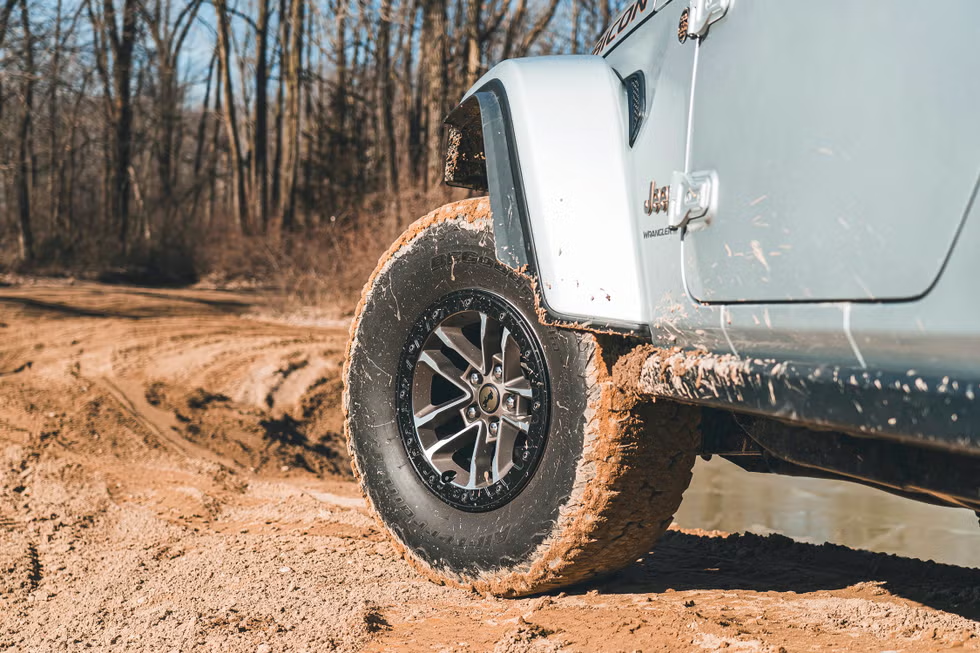
The Jeep Wrangler Rubicon’s off-road performance has no equal. Its design and engineering have been purpose-built for those who crave extreme adventures in places where traditional SUVs falter. Key features that make the Rubicon the undeniable leader include:
- Solid front and rear axles: These provide unbeatable ground clearance and articulation, helping the Wrangler conquer rock-strewn paths and rugged landscapes that challenge other vehicles.
- Electronic locking differentials: Essential for maximizing power to each wheel, locking differentials allow the Wrangler to muscle through obstacles that leave competitors stuck.
- 33-inch all-terrain tires: The Wrangler’s oversized tires enhance its stability on challenging surfaces, providing unparalleled grip.
- Rock-Trac 4:1 low-range gearing: Jeep’s unique 4:1 transfer case ensures that the Wrangler moves at a crawl on steep inclines, allowing precise control that no other off-roader can match.
- Electronic sway bar disconnect: This feature allows for unparalleled wheel articulation on tough trails, helping the Wrangler maintain control on the most uneven terrain.
These features aren’t just for show—they equip the Wrangler Rubicon to tackle technical trails with ease, making it the go-to choice for serious off-roaders.
Conclusion: The Jeep Wrangler Rubicon Stands Supreme
For those who are serious about off-roading, the Jeep Wrangler Rubicon is the ultimate choice. With features tailored for technical trails, the Wrangler doesn’t just handle off-road terrain—it conquers it. For those who want a versatile vehicle that offers some off-road capability, the Tacoma TRD Pro is a good choice, but it lacks the specialization, legacy, and flexibility that Jeep provides.
FAQs about the Jeep Wrangler Rubicon and Toyota Tacoma TRD Pro
1. What makes the Jeep Wrangler Rubicon better for rock crawling?
The Wrangler Rubicon’s solid axles, low-range gearing, and superior articulation make it ideal for rock crawling. It can navigate rocky trails with ease, unlike many competitors.
2. How does the Jeep Wrangler handle deep water fording?
With a 33.6-inch fording depth and an optional snorkel, the Wrangler is built to tackle water crossings, offering more water capabilities than the Tacoma TRD Pro.
3. What are Off-Road Pages in the Wrangler Rubicon?
Jeep’s Off-Road Pages display real-time vehicle data, such as pitch and wheel articulation, allowing off-roaders to make precise adjustments for challenging terrain.
4. Can the Toyota Tacoma TRD Pro handle challenging trails?
Yes, the Tacoma TRD Pro is capable on challenging trails, but it lacks the specialized equipment of the Wrangler Rubicon for extreme off-roading.
5. Why is the Jeep Wrangler Rubicon more customizable?
The Wrangler has a massive aftermarket following, offering a vast range of modifications, from lift kits to armor. This flexibility is unmatched by the Tacoma.
6. How comfortable is the Jeep Wrangler Rubicon on daily commutes?
The Wrangler Rubicon is off-road-focused, so while it’s improved for daily driving, its ride is stiffer and more utilitarian than the Tacoma TRD Pro.
7. What are locking differentials, and why does the Rubicon have them?
Locking differentials allow power to go directly to the wheels with the most traction. They’re essential for extreme off-roading and provide an advantage over standard differentials.
8. How does the Tacoma TRD Pro perform at high speeds off-road?
The Tacoma’s FOX shocks allow for smoother, high-speed desert driving, but it doesn’t excel in slow, technical terrain like the Rubicon.
9. Is the Jeep Wrangler Rubicon more fuel-efficient?
The Rubicon’s focus is on off-road capability rather than fuel efficiency, so the Tacoma’s hybrid powertrain may be more fuel-friendly on highways.
10. Which vehicle has a stronger off-road legacy?
Jeep has been an off-road leader since World War II, while Toyota’s off-road models are durable but don’t have the same historic off-road identity as Jeep.

Is it a Good Deal to Trade in your car? Full Answer
| Option for your old car | Positives | Negatives |
|---|---|---|
| Trade-In | – Quick and convenient process | – Generally lower value compared to selling privately |
| – Instant credit towards a new vehicle | – Limited negotiation opportunities | |
| – No need to advertise or deal with potential buyers | – Dealer may offer a lower price due to their profit margin | |
| Selling Privately | – Potential for higher sale price | – Time-consuming process (advertising, showings, etc.) |
| – Greater control over the sale price | – Need to handle negotiations and paperwork yourself | |
| – Opportunity to connect with buyers directly | – Possible safety concerns when meeting buyers | |
| Online Car Buying Services | – Fast and easy process | – Prices may vary widely, so research is necessary |
| – Can compare offers from multiple services | – Some services may charge fees or have hidden costs | |
| – Usually less hassle than private sales | – Value might be lower than selling privately |
Is it a Good Deal to Trade in your car?
This chart helps to clarify the benefits and drawbacks of each option when considering what to do with your vehicle.
When considering upgrading to a new vehicle, one of the most significant decisions car owners face is whether to trade in their current car or sell it privately. While both options have their advantages, trading in a car often presents a more convenient and beneficial choice for many. In this article, we’ll explore the pros and cons of trading in your vehicle, factors to consider, and why it might be the right decision for you.
Trade in your Car get bonus $1k
Is it a Good Deal to Trade in your car? Benefits of Trading In Your Car
- Convenience: One of the primary advantages of trading in your vehicle is the convenience it offers. The process is typically straightforward and can often be completed in a single visit to the dealership. You won’t need to spend time advertising your vehicle, meeting with potential buyers, or negotiating prices.
- Tax Benefits: In many states, when you trade in your vehicle, you only pay sales tax on the difference between the new car’s price and the trade-in value. This means that if you trade in a car worth $10,000 for a new vehicle priced at $30,000, you would only pay sales tax on the $20,000 difference, potentially saving you a significant amount.
- Instant Value: Dealerships will provide you with a trade-in offer on the spot. This instant gratification can be appealing, as you’ll know exactly how much your vehicle is worth in that moment.
- Time-Saving: Trading in your car can save you a lot of time. You won’t have to deal with the lengthy process of selling your car privately, which includes listing it online, communicating with interested buyers, and handling paperwork.
- Incentives: Many dealerships, like Simi Valley CDJR, offer additional bonuses or incentives for trade-ins, making the deal even sweeter. For example, Simi Valley CDJR currently offers a $1,000 bonus for trade-ins, which can significantly increase the value you receive for your vehicle.
Trade in your Car get bonus $1k
Is it a Good Deal to Trade in your car? Factors to Consider
While trading in your car has numerous advantages, there are also some factors to consider:
- Trade-In Value: Dealerships may offer less for your car than you could potentially receive by selling it privately. It’s essential to research your car’s market value using online tools like Kelley Blue Book or Edmunds to ensure you get a fair offer.
- Condition of the Vehicle: The condition of your car plays a critical role in determining its trade-in value. If your vehicle has significant wear and tear, it might not fetch a high price at the dealership.
- Market Demand: The demand for your specific make and model can impact the trade-in value. Certain cars may have high demand in the market, which could yield better offers if sold privately.
- Negotiation: While trading in is generally straightforward, it’s still crucial to negotiate. Be prepared with your research and don’t hesitate to discuss offers with the dealer.
Trade in your Car get bonus $1k
Is it a Good Deal to Trade in your car? Conclusion
In conclusion, trading in your car can be an excellent deal, especially if you’re looking for convenience and quick cash towards your next vehicle. The potential tax savings and instant value can make it a practical choice for many car owners. With the added bonus offers available at dealerships like Simi Valley CDJR, trading in could significantly enhance your overall car-buying experience.
Before making a decision, it’s always a good idea to do your research, compare trade-in offers, and weigh the pros and cons of trading in versus selling your car privately. Ultimately, the choice will depend on your individual circumstances and what works best for your financial situation. If you’re considering a trade-in, visit Simi Valley CDJR to explore your options and take advantage of their current offers!
Yes, trading in your car can be a great deal, especially when considering the convenience and potential financial benefits it offers. One significant advantage is that you can use the trade-in value as a down payment on your next vehicle, reducing the overall amount you need to finance. Plus, trading in saves you the hassle of selling your car privately, which can be time-consuming and complicated.
At Simi Valley CDJR, you can take advantage of their exclusive offer of a $1,000 bonus for trade-ins. This extra incentive makes trading in your vehicle even more appealing, allowing you to maximize your financial return while simplifying your car-buying experience. If you’re considering upgrading your vehicle, now is a great time to explore the benefits of trading in your car at Simi Valley!
Edmunds – Trade-In Value: What to KnowKelley Blue Book – How to Get the Best Trade-In ValueNADA Guides – Car Trade-In Value GuideCars.com – How to Trade In Your CarAutotrader – Trade-In Value vs. Private Sale ValueCarMax – Get an Offer for Your Trade-InConsumer Reports – Understanding Car Trade-InsUS News – Best Cars for Trade-InMotorTrend – Tips for Trading In Your CarCarGurus – Trade-In Value Estimator
Jeeps Woodland Hills
Woodland Hills Jeep Buying Guide
When looking for a Jeep in Woodland Hills, you’ll find a range of options to suit your needs. Whether you’re seeking an off-road adventure or a luxurious ride for city driving, Jeep offers models with something for everyone.
Popular Jeep Models in Woodland Hills
- Jeep Wrangler: Known for its rugged design, the Wrangler is a favorite among off-road enthusiasts. With its legendary 4×4 capabilities and open-air freedom, the Wrangler is perfect for exploring the hills surrounding Woodland Hills.
- Jeep Grand Cherokee: A more refined choice, the Grand Cherokee offers luxury, performance, and off-road power. It’s a top pick for families looking for a comfortable and feature-packed SUV.
- Jeep Gladiator: Combining the off-road prowess of the Wrangler with the utility of a truck bed, the Gladiator is ideal for those who need towing capability alongside adventure-ready performance.
Where to Buy a Jeep Near Woodland Hills
While there are many Jeep dealerships around Woodland Hills, a standout option is Simi Valley Chrysler Dodge Jeep Ram (CDJR). Located just a short drive from Woodland Hills, this dealership offers a wide selection of new and pre-owned Jeeps, along with great service and financing options.
Simi Valley CDJR is known for its knowledgeable sales team and competitive pricing. Whether you’re looking to buy or lease, they have flexible financing options to fit your budget. Additionally, they offer a comprehensive service department to help keep your Jeep running smoothly for years to come.
Jeep Lease Deals and Financing
One of the key considerations when purchasing a new Jeep is whether to lease or finance. Jeep leases often come with lower monthly payments, making them a popular option for those who want a new vehicle every few years. On the other hand, financing allows you to own the vehicle outright once the loan is paid off. Simi Valley CDJR offers both options and can help you decide which is best for your situation.
You can explore current Jeep lease deals and financing specials by visiting Simi Valley CDJR’s offers page to find the best deals on popular models like the Wrangler, Grand Cherokee, and Gladiator.
Why Buy a Jeep in Woodland Hills?
Woodland Hills provides an ideal backdrop for Jeep ownership. The nearby Santa Monica Mountains offer numerous off-road trails perfect for Jeep enthusiasts. Whether you’re exploring Malibu Creek State Park or taking a weekend trip to Joshua Tree, a Jeep gives you the freedom to tackle any terrain.
For city drivers, models like the Jeep Compass or Jeep Cherokee provide a comfortable ride with advanced tech features, while still offering 4×4 capabilities for weekend adventures.
Jeep Maintenance and Service in Woodland Hills
Regular maintenance is key to keeping your Jeep running at its best, especially if you plan on taking it off-road. Simi Valley CDJR’s service department offers everything from routine maintenance like oil changes and tire rotations to more extensive repairs. They use genuine Mopar parts to ensure the best performance and longevity for your vehicle.
FAQs About Buying a Jeep in Woodland Hills
Q: What is the best Jeep model for off-roading in Woodland Hills? A: The Jeep Wrangler is the top choice for off-roading, offering unbeatable 4×4 capabilities. The Rubicon trim is especially well-equipped for tackling tough terrain with features like locking differentials and an upgraded suspension.
Q: Are there good Jeep lease deals in Woodland Hills? A: Yes, Simi Valley CDJR frequently offers competitive Jeep lease deals, especially on popular models like the Wrangler and Grand Cherokee.
Q: How far is Simi Valley CDJR from Woodland Hills? A: Simi Valley CDJR is only about a 25-minute drive from Woodland Hills, making it a convenient dealership for Jeep shoppers in the area.
Q: What should I look for when buying a used Jeep? A: When purchasing a used Jeep, check for signs of off-road wear, ensure regular maintenance was performed, and consider a certified pre-owned option from Simi Valley CDJR for added peace of mind.
Q: Is the Jeep Grand Cherokee good for families? A: Absolutely! The Grand Cherokee offers plenty of space, a luxurious interior, and advanced safety features, making it an excellent choice for families in Woodland Hills.
For more information on purchasing your Jeep, visit Simi Valley Chrysler Dodge Jeep Ram to browse their inventory and schedule a test drive today.
Variety of Jeep Models in Woodland Hills
Buying a Jeep in Woodland Hills offers you access to a wide range of models, each tailored to different driving experiences. The iconic Jeep Wrangler stands out for those seeking off-road adventures, while the Jeep Grand Cherokee is perfect for drivers who prioritize a blend of ruggedness and luxury. The Jeep Gladiator brings the utility of a pickup truck with the legendary off-road capabilities of a Wrangler. Whether you’re exploring mountain trails or commuting around the city, Woodland Hills has plenty of Jeep options to suit your needs.
Financing and Leasing Options
When buying a Jeep in Woodland Hills, there are flexible financing and leasing options available to meet a variety of budgets. Dealerships in the area often provide competitive interest rates for financing, making it easier for buyers to get into their dream Jeep. Leasing is another popular option, allowing drivers to enjoy the latest Jeep models with lower monthly payments and the option to upgrade every few years. Local dealerships, like those near Simi Valley, offer attractive terms that make Jeep ownership accessible to a wide range of customers.
Jeep Service and Maintenance in Woodland Hills
Purchasing a Jeep in Woodland Hills also means having access to top-tier service and maintenance facilities. Jeeps are known for their durability, but regular maintenance is key to keeping your vehicle in peak condition, especially if you plan on using it for off-roading. Local service centers provide everything from routine oil changes to more complex repairs, using genuine Mopar parts to ensure longevity and performance. Choosing a trusted Jeep dealership for service ensures your vehicle remains adventure-ready.
Benefits of Jeep Ownership in Woodland Hills
Jeep ownership in Woodland Hills comes with several benefits, especially for those who love outdoor activities. The Santa Monica Mountains and nearby off-road trails provide plenty of opportunities to put your Jeep’s 4×4 capabilities to the test. For city drivers, Jeep models like the Compass and Cherokee offer comfort, tech features, and fuel efficiency. Moreover, Jeep’s strong resale value makes it a sound investment, whether you’re purchasing new or used.
Customer Experience and Jeep Dealerships
The buying experience in Woodland Hills is typically seamless, thanks to the customer-focused approach of dealerships in the region. Dealerships like Simi Valley CDJR, which is nearby, offer knowledgeable staff who guide buyers through the process. From test driving multiple models to exploring financing plans, they help make Jeep ownership as stress-free as possible.
Connect with us


