





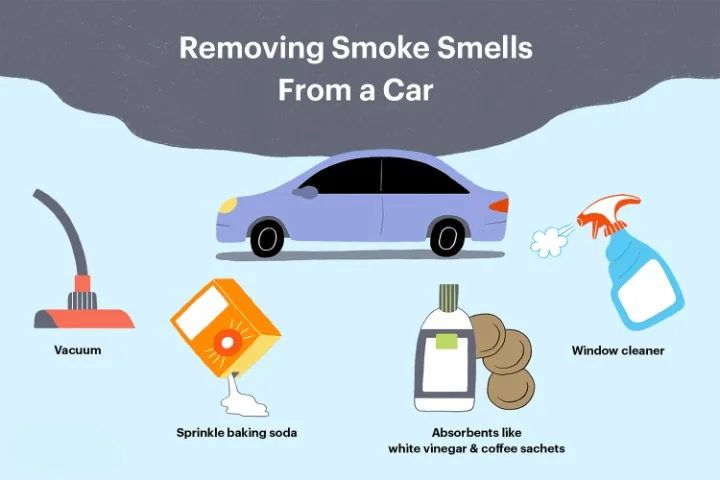
The stubborn odor of cigarette, cigar, or general smoke in a car is more than just unpleasant—it can lower resale value, deter passengers, and even harm your health. Smoke particles seep into upholstery, carpets, and the HVAC system, making the smell persistent. This 1200-word guide provides step-by-step solutions to eliminate smoke odor, restore your car’s freshness, and prevent future smells, backed by professional detailers and scientific research.
Why Smoke Smell Lingers
Tobacco smoke contains over 7,000 chemicals, including tar and nicotine, which cling to surfaces and penetrate porous materials like fabric, foam, and carpet fibers. The odor is amplified by:
- HVAC Recirculation: Smoke particles trapped in vents recirculate every time you use the AC or heat.
- Residue Buildup: Tar and nicotine form sticky layers on windows, headliners, and dashboards.
- Heat Activation: Warm weather or sunlight can reactivate trapped odors.
According to a 2019 study in the International Journal of Environmental Research and Public Health, smoke residues can persist in vehicles for years without proper cleaning.
Step 1: Immediate Actions to Reduce Odor
Act quickly to prevent smoke particles from settling deeper:
- Ventilate Thoroughly:
- Roll down all windows and drive for 15–20 minutes to flush out stale air.
- Park in direct sunlight with windows slightly open for 2–3 hours. UV rays help break down odor-causing compounds.
- Remove Smoke Sources:
- Discard ashtrays, cigarette butts, lighters, and matches.
- Clean the cupholders, door pockets, and console with rubbing alcohol to eliminate ash residue.
- Replace Cabin Air Filter:
- Locate the filter (usually behind the glovebox or under the hood) and swap it with an activated charcoal filter (e.g., FRAM Fresh Breeze).
Step 2: Deep Clean All Surfaces
Hard Surfaces (Dashboard, Door Panels, Glass)
- Vinegar Solution: Mix 1:1 white vinegar and water. Wipe down plastics, leather, and glass. Vinegar neutralizes nicotine and tar.
- Ammonia-Free Glass Cleaner: Use Invisible Glass to remove smoke film from windows.
- Degreaser for Tar Buildup: Spray Simple Green All-Purpose Cleaner on sticky surfaces like the steering wheel or gear shift.
Avoid ammonia-based cleaners, which react with nicotine to create toxic fumes.
Soft Surfaces (Seats, Carpets, Headliner)
- Baking Soda Treatment:
- Sprinkle baking soda liberally on seats and carpets.
- Let sit overnight to absorb odors.
- Vacuum thoroughly with a wet/dry vacuum (e.g., Shop-Vac).
- Enzyme Cleaner: Spray Biokleen Bac-Out on fabrics to break down organic residues.
- Steam Cleaning:
- Rent a McCulloch MC1375 Steam Cleaner or similar to deep-clean upholstery. Steam’s high heat kills odor-causing bacteria.
Step 3: Purge the HVAC System
Smoke odor often lingers in air vents. Here’s how to clean them:
- HVAC Bomb Treatment:
- Buy an Ozium Smoke & Odors Eliminator or BG Frigi Fresh.
- Start the car, set the AC to max, and close windows.
- Spray the product into the intake vents (usually near the windshield wipers) for 5–10 minutes.
- DIY Vent Cleaning:
- Mix 1 cup of water and 10 drops of tea tree oil in a spray bottle.
- Remove vent covers and spray the mixture into ducts.
Step 4: Absorb Lingering Odors
- Activated Charcoal:
- Place Moso Natural Air Purifying Bags under seats for 5–7 days. Charcoal absorbs volatile organic compounds (VOCs).
- Coffee Grounds:
- Fill a shallow container with fresh coffee grounds and leave it in the cup holder overnight.
- Ozone Generator:
- Rent an Enerzen Ozone Generator and run it in the car for 30–60 minutes.
- Safety Note: Never sit in the car during treatment, and air it out afterward.
Step 5: Prevent Future Odors
- Enforce a No-Smoking Policy: Post a “No Smoking” sign as a deterrent.
- Use an Air Purifier: Install a TaoTronics HEPA Car Air Purifier to filter particles.
- Regular Maintenance:
- Wipe surfaces weekly with Meguiar’s Quik Interior Detailer.
- Vacuum carpets and seats biweekly.
Common Mistakes to Avoid
- Overusing Air Fresheners: Products like Febreze mask odors but don’t remove residue.
- Ignoring the Headliner: Smoke rises, so clean the ceiling fabric with a microfiber cloth and upholstery shampoo.
- Skipping the Seatbelts: Wipe belts with vinegar, as they trap smoke particles.
When to Call a Professional
Seek expert help if:
- The smell persists after multiple DIY attempts.
- The car has heavy tar buildup on surfaces.
- You’re preparing to sell the vehicle.
Services to Consider:
- Ozone Treatment: Pros use industrial-grade machines for deeper odor removal.
- Thermal Fogging: A fogger releases odor-neutralizing agents that penetrate upholstery.
- Leather Conditioning: Smoke dries out leather; detailers use products like Lexol Leather Conditioner.
Real-Life Success Story
Mark, a used car buyer from Texas, purchased a 2012 Camry reeking of cigarette smoke. He:
- Replaced the cabin filter.
- Steam-cleaned the seats and carpets.
- Ran an ozone generator overnight.
- Wiped hard surfaces with vinegar.
After three days, the car smelled factory-fresh.
Recommended Products
- Cleaning: Chemical Guys Lightning Fast Carpet & Upholstery Cleaner
- Odor Removal: Zero Odor Pro
- Air Purification: Moso Natural Charcoal Bags
Safety Tips
- Wear gloves and a mask when handling cleaners.
- Test products on inconspicuous areas first.
- Keep pets and children away during treatments.
Final Checklist
- Ventilate the car thoroughly.
- Clean all surfaces with vinegar or enzyme cleaner.
- Replace the cabin air filter.
- Treat the HVAC system with an odor eliminator.
- Use activated charcoal or an ozone generator.
- Maintain with regular cleaning and air purifiers.
Sources:
- International Journal of Environmental Research and Public Health (2019). “Persistent Tobacco Odors in Vehicles.”
- Auto Detailing News (2022). “Effective Smoke Odor Removal Techniques.”
- EPA (2023). “Health Risks of Secondhand Smoke in Vehicles.”
By following these steps, you can eliminate smoke odor and enjoy a cleaner, healthier driving environment. 🚗💨

How to Remove Weed Smell from Your Car: Effective Strategies for Fresh Air
Weed smell can linger in a car because smoke particles get trapped in fabric, carpet, headliner material, air vents, seat foam, and the cabin air filter. The fastest way to remove it is to remove the source, ventilate the car, deep-clean soft surfaces, clean hard surfaces, replace the cabin air filter, and use odor absorbers instead of just spraying air freshener.
The simple answer is this: do not cover the smell. Remove the smoke residue. The EPA says the most effective way to improve indoor air is to remove pollutant sources and ventilate with clean outdoor air, with filtration used as a supplement. The same logic applies inside a vehicle.
Start by Removing the Source
Before cleaning, remove anything that is still holding the smell.
Check the cupholders, center console, glove box, door pockets, seat gaps, trunk, cargo area, under-seat storage, floor mats, and ashtray if the car has one. Any leftover ash, packaging, residue, rolling papers, lighters, containers, or smoke-soaked trash can keep the smell alive.
Do not start with air freshener. If the source is still in the car, fragrance will only mix with the odor and make it worse.
Air the Car Out Properly
Open all doors and windows if you can park somewhere safe.
Let the car breathe for at least 30 minutes. If possible, park in a shaded but open area and allow fresh air to move through the cabin. Turn the fan on high with fresh-air mode selected, not recirculation, so the HVAC system can pull outside air through the vents.
The EPA explains that ventilation helps dilute and remove airborne pollutants. That matters because smoke smell is not only on surfaces. It can also sit in the air system.
Vacuum Everything First
Vacuum the entire interior before using liquids.
Smoke particles settle into carpets, seats, mats, seat rails, trunk liners, and fabric seams. Use a crevice tool around the seats, between cushions, under the pedals, along the console, and inside storage pockets.
Remove the floor mats and vacuum both sides. If they are rubber mats, wash them separately with soap and water. If they are carpet mats, shampoo them or use an upholstery cleaner.
Skipping the vacuum step can turn smoke residue into a damp, dirty paste when you start cleaning.
Clean Fabric Seats and Carpet
Fabric absorbs weed smell more than leather or vinyl.
Use an automotive upholstery cleaner or carpet shampoo. Spray lightly, agitate with a soft brush, and extract with a wet/dry vacuum or clean microfiber towels. Do not over-soak the seats, because too much moisture can cause mildew or leave the car smelling worse.
Focus on:
Seat cushions.
Seat backs.
Carpet.
Floor mats.
Trunk carpet.
Cargo area fabric.
Seatbelt fabric.
If the smell is strong, one cleaning may not be enough. Let the interior dry fully, then repeat.
Do Not Forget the Headliner
The headliner is one of the biggest odor traps in a smoke-exposed car.
Smoke rises, so the roof fabric absorbs a lot of odor. But the headliner is delicate. Do not soak it. Too much moisture can weaken the adhesive and cause sagging.
Use a lightly damp microfiber towel with a mild interior cleaner. Gently wipe the surface. Do not scrub aggressively. Work in small sections and let it dry.
This step makes a big difference because many people clean seats and carpets but ignore the roof.
Wipe Every Hard Surface
Smoke residue sticks to plastic, vinyl, glass, leather, screens, trim, and rubber seals.
Use an interior-safe cleaner and microfiber towels. Wipe the dashboard, steering wheel, center console, door panels, shifter, cupholders, seat backs, handles, vents, mirror, sun visors, and cargo panels.
Clean the windows last. Smoke film can leave an oily haze on glass, and that haze holds odor. Use a proper automotive glass cleaner and clean the inside of the windshield carefully.
Replace the Cabin Air Filter
If the car smells like weed when you turn on the heat or A/C, replace the cabin air filter.
The cabin air filter traps dust, pollen, smoke particles, and odors. If it is saturated, the HVAC system can keep blowing the smell back into the car.
A cabin air filter is usually inexpensive and often located behind the glove box, but the location depends on the vehicle. Replace it after cleaning the cabin so the new filter does not immediately absorb leftover odor.
Clean the Air Vents
The HVAC vents can hold smoke odor.
After replacing the cabin air filter, use an automotive HVAC odor eliminator if needed. These products are usually sprayed into the intake area or used with the fan running, depending on the instructions.
Do not spray random household fragrance into the vents. Use a product designed for automotive HVAC systems and follow the label.
If the smell only appears when the fan is on, the HVAC system needs attention.
Use Odor Absorbers, Not Just Air Fresheners
Air fresheners do not remove weed smell. They cover it.
Use odor absorbers like activated charcoal bags, baking soda, or odor-neutralizing products designed for smoke. Place them in the cabin overnight or for several days. Activated charcoal is especially useful because it absorbs odors instead of adding perfume.
Avoid using too much scented spray. A car that smells like weed plus heavy cologne is usually worse than the original problem.
Try an Ozone Treatment for Severe Odor
For heavy smoke odor, an ozone treatment can help, but it must be used carefully.
Ozone generators are often used by detailers to neutralize stubborn odors. They can be effective, but ozone is not safe to breathe. People, pets, and plants should not be inside the vehicle during treatment, and the car must be aired out properly afterward.
If you do not know how to use ozone safely, let a professional detailer do it.
Ozone should be a final step after cleaning, not a replacement for cleaning. If smoke residue is still in the fabric, the smell can return.
Use an Enzyme or Bio-Based Odor Cleaner
Some odor removers use enzymes or bio-based formulas to break down odor-causing compounds.
These can help with organic smells, but always test on a hidden area first. Some cleaners can stain fabric or affect leather finishes if used incorrectly.
Use the product exactly as directed and give it enough time to work.
Clean Leather the Right Way
Leather does not absorb odor like cloth, but smoke residue still sticks to it.
Use a leather-safe cleaner, not harsh household chemicals. Wipe the seats, bolsters, stitching, steering wheel, armrests, and door inserts. After cleaning, use a leather conditioner if appropriate for your interior.
Perforated leather can trap odor inside the holes, so clean it carefully without flooding the seat.
Check the Trunk and Spare Tire Area
Odor can hide in the trunk or cargo area.
Lift the trunk floor, check the spare tire well, inspect cargo mats, and clean any fabric panels. If anything was stored back there, the smell may have transferred into the liner.
SUVs and hatchbacks need extra attention because the cargo area shares air with the cabin.
What Not to Do
Do not smoke inside the car again if you want the smell gone.
Do not use perfume as the main fix.
Do not soak seats or headliners.
Do not use bleach on interior materials.
Do not ignore the cabin air filter.
Do not use ozone with people or pets in the car.
Do not forget legal and safety risks.
The CDC says the safest option is not to use cannabis, alcohol, or other drugs if you intend to drive. The California DMV also states that it is illegal to drive under the influence of any drug that affects your ability to drive safely.
How Long Does Weed Smell Stay in a Car?
Light odor may disappear after a few hours or a day with ventilation and basic cleaning.
Moderate odor can last several days.
Heavy smoke odor can last weeks or months if it gets into fabric, vents, headliners, and filters.
The longer smoke sits, the harder it is to remove. Fast cleaning gives you a much better chance of getting the car fresh again.
Professional Detailing May Be Worth It
If the car still smells after deep cleaning, hire a professional detailer.
Ask for an interior shampoo, steam cleaning where safe, cabin filter replacement, HVAC treatment, and odor neutralization. For severe smoke smell, ask whether they offer ozone treatment or smoke-odor remediation.
This is especially important if you plan to sell or trade the vehicle. Smoke odor can reduce buyer confidence fast.
Best Step-by-Step Process
Remove all odor sources.
Vacuum the entire interior.
Wash floor mats.
Shampoo fabric seats and carpet.
Gently clean the headliner.
Wipe all hard surfaces.
Clean the glass.
Replace the cabin air filter.
Run the HVAC on fresh air.
Use activated charcoal or odor absorbers.
Use HVAC odor treatment if needed.
Consider professional ozone treatment for severe cases.
Final Thoughts: Remove the Residue, Not Just the Smell
Weed smell leaves because the smoke residue leaves.
Ventilation helps, but cleaning is what actually fixes the problem. Focus on fabric, carpet, headliner, vents, glass, and the cabin air filter. Use odor absorbers instead of heavy fragrances, and consider professional treatment if the smell is deep.
The best strategy is simple: remove the source, clean every surface, refresh the air system, and let the car dry and air out completely.

Discovering ants in your car can be unsettling. These tiny invaders are drawn to crumbs, spills, and even the warmth of your vehicle, turning it into a mobile nest. Left unchecked, they can damage wiring, upholstery, and your peace of mind. Below, we break down proven methods to eliminate ants, prevent future infestations, and protect your car’s interior—backed by pest control experts and scientific research.
Why Do Ants Invade Cars?
Ants enter cars seeking food, water, or shelter. Common triggers include:
- Food residue: Crumbs, spilled drinks, or forgotten snacks.
- Moisture: Leaky sunroofs, condensation, or damp floor mats.
- Warmth: Cars parked in sunny areas mimic ants’ preferred nesting conditions.
- Entry points: Gaps in doors, windows, or vents provide easy access.
A 2018 study in the Journal of Economic Entomology found that sugar-loving ants (like odorous house ants) are most likely to infest vehicles with accessible food sources.
Step 1: Remove Food Sources and Deep Clean
Ants leave pheromone trails to guide others to food. Eliminate these trails with a meticulous clean:
- Vacuum Thoroughly:
- Use a crevice tool to clean between seats, under floor mats, and in cup holders.
- Empty the trunk and vacuum corners where crumbs accumulate.
- Pro Tip: Sprinkle baking soda before vacuuming to neutralize odors.
- Wipe All Surfaces:
- Mix 1:1 white vinegar and water in a spray bottle. Vinegar disrupts pheromone trails and repels ants.
- Wipe down dashboards, consoles, door handles, and seats (test on upholstery first).
- Avoid sugary cleaners (e.g., armor-all wipes) that attract ants.
- Remove Trash Immediately:
- Discard food wrappers, empty bottles, and leftover snacks.
Step 2: Use Natural Repellents
Natural solutions deter ants without harming your car’s interior:
- Essential Oils:
- Peppermint, tea tree, or citrus oils are effective ant repellents. A 2020 study in Industrial Crops and Products confirmed peppermint oil’s efficacy against common ant species.
- How to Use:
- Add 15–20 drops of oil to a spray bottle with water. Lightly mist carpets and door seals.
- Soak cotton balls in undiluted oil and place them in cup holders or under seats.
- Cinnamon or Bay Leaves:
- Sprinkle ground cinnamon along window sills or tuck bay leaves into seat crevices. Ants avoid these strong scents.
- Coffee Grounds:
- Place dried coffee grounds in a small bowl under the seat. The smell repels ants and absorbs odors.
Step 3: Seal Entry Points
Ants can enter through gaps as small as 1/16th of an inch. Inspect and seal:
- Door and window seals: Replace worn weather stripping.
- Vents: Install fine mesh screens over exterior vents.
- Trunk: Check for gaps around the trunk lid and seal with automotive-grade silicone caulk.
The University of California Statewide Integrated Pest Management Program recommends sealing cracks to prevent ant colonies from establishing trails.
Step 4: Deploy Ant Baits and Desiccants
For persistent infestations, use targeted treatments:
- Boric Acid Baits:
- Mix 1 tsp boric acid with 1 cup sugar water. Soak cotton balls and place them in bottle caps under seats.
- Ants carry the poison back to their nest, eliminating the colony within days.
- Safety Note: Keep baits away from pets and children.
- Diatomaceous Earth (DE):
- Food-grade DE is a natural powder that dehydrates ants.
- How to Use: Lightly sprinkle DE along door frames, floor mats, and trunk edges.
- Source: The National Pesticide Information Center confirms DE’s safety for indoor use.
Step 5: Eliminate Moisture
Ants need water to survive. Reduce dampness with:
- Silica gel packets: Place in cup holders or under seats.
- Fix leaks: Repair sunroofs, window seals, or AC drain lines.
- Dry floor mats: Remove and air-dry mats if they get wet.
Step 6: Heat Treatment
On a hot day, park in direct sunlight with windows closed for 3–4 hours. Temperatures above 120°F will drive ants out.
- Caution: Remove electronics, lighters, or candles to avoid melting.
Prevention Tips to Keep Ants Out
- No Eating Policy: Avoid snacks in the car.
- Regular Cleaning: Wipe surfaces weekly with vinegar spray.
- Park Strategically: Avoid parking near ant nests (e.g., under trees or near mulch beds).
- Outdoor Repellents: Spray perimeter treatments like TERRO Ant Killer around your driveway.
When to Call a Professional
Seek help if:
- The infestation persists despite DIY efforts.
- Ants damage wiring or upholstery.
- You suspect carpenter ants (they can chew through car insulation).
Companies like Orkin or Ehrlich Pest Control offer vehicle-safe treatments.
Safety Precautions
- Avoid harsh chemicals: Bleach or ammonia can damage upholstery and leave toxic residues.
- Ventilate: Open windows when using sprays or powders.
- Pet safety: Ensure pets aren’t exposed to boric acid or essential oils.
Conclusion
With consistent cleaning, natural repellents, and preventive measures, you can reclaim your car from ants. For severe infestations, professional pest control ensures safe, lasting results.
Need Help?
For stubborn ant problems, consult a local auto detailer or pest control service.
Sources:
- University of California Agriculture & Natural Resources. (2022). Ant Management Guidelines. Link
- National Pesticide Information Center. (2021). Diatomaceous Earth Fact Sheet. Link
- Mondal, M., & Khalequzzaman, M. (2020). Repellency of plant essential oils against red imported fire ants. Industrial Crops and Products. DOI:10.1016/j.indcrop.2020.112679
- EPA. (2023). Safely Using Insecticides in Vehicles. Link
- TERRO. (2023). How to Get Rid of Ants in Your Car. Link
By addressing both the infestation and its root causes, you’ll ensure your car remains ant-free and road-ready. 🚗🐜

Discovering your car is declared a total loss by insurance—even though it’s still drivable—can leave you with more questions than answers. Can you keep driving it? Will your insurance company drop you? What happens to its value? In this guide, we break down exactly what to expect, your legal and financial options, and the risks of holding onto a totaled vehicle.
What Does “Totaled” Actually Mean?
A car is labeled a total loss when the cost to repair it exceeds a specific percentage of its pre-accident value. This threshold varies by state but typically falls between 70-80%. Importantly, a car can still be drivable and deemed totaled—it simply means insurers don’t think it’s worth fixing.
Example:
- Car’s actual cash value (ACV): $15,000
- Repair estimate: $12,000 (80% of ACV) → Insurer declares it a total loss.
What Happens Immediately After the Accident?
- Insurance Assessment:
- An adjuster inspects the damage and calculates repair costs versus the car’s ACV.
- If repairs exceed your state’s threshold, the insurer will declare it a total loss.
- You’ll receive a settlement offer: ACV minus deductible and salvage value (if you keep the car).
- Your Two Options:
- Accept the payout: Surrender the car to the insurer, which will auction it as salvage.
- Keep the car: Receive a reduced payout (ACV minus salvage value) and retain ownership.
Keeping a Totaled Car: Key Considerations
1. Salvage Title Requirements
- Once totaled, the car’s title is branded as salvage, signaling it’s been severely damaged.
- To drive it legally again, most states require:
- Repairs: Fix the car to meet safety standards.
- Inspection: Pass a state-administered salvage inspection.
- Rebuilt Title: Apply for a “rebuilt” or “reconstructed” title post-inspection.
- Texas: Allows driving with a salvage title only after repairs and inspection.
- California: Requires a “salvage certificate” before repairs and a rebuilt title afterward.
- New York: Bans driving salvage-titled cars until rebuilt and re-titled.
2. Insurance Challenges
- Limited Coverage: Most insurers won’t offer collision or comprehensive coverage for salvage-title cars.
- Higher Premiums: Liability coverage may cost more due to perceived risk.
- Specialty Insurers: Companies like Dairyland or Hagerty (for classic cars) may cover rebuilt vehicles.
3. Safety Risks
Even if the car seems drivable, hidden issues can pose dangers:
- Frame Damage: Compromises structural integrity in future crashes.
- Electrical Issues: Post-flood damage may cause fires or malfunctions.
- Airbag Reliability: Deployed airbags may not reset correctly. Always get a professional inspection before driving a totaled car long-term.
4. Plummeting Resale Value
- A salvage/rebuilt title can slash resale value by 40-60%.
- Dealerships and private buyers often avoid these cars due to perceived risk.
When It’s Worth Keeping a Totaled Car
- Minor Cosmetic Damage: Hail dents or scrapes that don’t affect safety.
- Low Salvage Deduction: If the insurer deducts little from your payout (e.g., $1,000 for a $15,000 car).
- DIY Repairs: You can fix it cheaply using junkyard parts or personal skills.
- Sentimental Value: Rare models or family heirlooms worth restoring.
Steps to Take If You Keep the Car
- Negotiate the Salvage Value:
Insurers often deduct 20-40% of the ACV as salvage value. Contest this with quotes from local salvage yards. - Repair the Car:
- Use a trusted mechanic or tackle repairs yourself.
- Keep receipts for parts and labor (required for inspections).
- Pass a Salvage Inspection:
- Contact your state DMV for inspection guidelines.
- Tests often check brakes, lights, emissions, and structural integrity.
- Obtain a Rebuilt Title:
- Submit inspection paperwork to the DMV.
- Pay title fees (varies by state).
- Secure Insurance:
- Compare quotes from insurers specializing in rebuilt titles.
When to Walk Away
- Severe Structural Damage: Bent frames or crumple zones compromise safety.
- Flood/Electrical Damage: Corrosion can lead to sudden failures.
- Airbag Deployment: Reinstalling airbags costs $1,000+ and may not meet OEM standards.
- High Salvage Deduction: If keeping the car eats most of your payout (e.g., $10k ACV – $7k salvage = $3k).
Real-Life Scenarios
Case 1: Cosmetic Hail Damage
- Car: 2018 Toyota Camry ($18,000 ACV)
- Damage: Hail dents ($14,000 repair estimate)
- Outcome: Insurer totals it. Owner keeps the car, accepts a $16,000 payout ($18k – $2k salvage), and drives it with a salvage title (no safety issues).
Case 2: Major Collision
- Car: 2015 Ford F-150 ($20,000 ACV)
- Damage: Bent frame ($16,000 repair estimate)
- Outcome: Owner takes the $20,000 payout, surrenders the truck, and buys a replacement.
The Bottom Line
A drivable totaled car can be a smart financial move if repairs are affordable and the title can be cleared. However, safety risks, insurance hurdles, and resale pitfalls make it a gamble. When in doubt, take the payout and shop for a replacement.
Need Expert Advice?
Visit Simi Valley CDJR’s Service Center for professional inspections and personalized guidance. We’ll help you decide whether to rebuild, repair, or replace your vehicle.
Additional Resources:
- DMV.org: Salvage Title Rules by State
- Kelley Blue Book: What’s My Car Worth?
- NHTSA: Vehicle Safety Recalls
- Insurance Information Institute: Total Loss Claims
By weighing your options carefully and prioritizing safety, you can navigate this complex situation with confidence. 🚗💡

How Much Paint Do You Need to Paint a Car? Exact Amounts for DIYers & Pros
Most cars need about 1 gallon of basecoat and 1 gallon of clear coat for a full repaint, but the exact amount depends on the vehicle size, paint system, color change, number of coats, and whether you are painting door jambs, engine bay edges, bumpers, or only the exterior panels.
The simple answer is this: a small car may need 2 to 3 quarts of basecoat, a midsize car usually needs around 1 gallon, and a truck or large SUV may need 1.25 to 2 gallons of basecoat before mixing. Eastwood recommends at least a gallon plus extra paint for trucks and larger vehicles, while CARFAX notes that a midsize sedan may need about a gallon of paint and a large SUV may need around 1.5 gallons.
Quick Answer: Full Car Paint Amounts
For a full exterior repaint, use these practical estimates:
Small car: 2 to 3 quarts basecoat, 1 gallon clear coat.
Midsize sedan: 1 gallon basecoat, 1 gallon clear coat.
Full-size sedan or small SUV: 1 to 1.5 gallons basecoat, 1 to 1.5 gallons clear coat.
Pickup truck: 1.25 to 1.75 gallons basecoat, 1.5 to 2 gallons clear coat.
Large SUV or van: 1.5 to 2 gallons basecoat, 2 gallons clear coat.
These numbers are for a typical basecoat-clearcoat job. Single-stage paint can require different amounts because the color and gloss are built into one product.
Basecoat vs Clear Coat: Do Not Confuse Them
Basecoat is the color. Clear coat is the glossy protective layer over the color.
If you are painting a car with a modern basecoat-clearcoat system, you usually need both. A gallon of basecoat does not replace a gallon of clear coat.
AutomotiveTouchup breaks paint needs down by panel, listing separate amounts for base color and clear coat on parts like bumpers, doors, hoods, roofs, and fenders. That matters because a proper repaint is not just “one gallon of paint.” It is primer, basecoat, clear coat, reducers, activators, and sometimes sealer.
How Much Paint for a Small Car?
A small car usually needs 2 to 3 quarts of basecoat and about 1 gallon of clear coat.
Examples include compact cars, small hatchbacks, and smaller coupes. If you are keeping the same color and only painting the exterior, 2 quarts may be enough for an experienced painter. If you are a DIYer, doing a color change, or painting extra panels, buy 3 quarts or move up to a gallon.
Running out of paint mid-job is worse than having extra. If the paint is mixed later, the color may not match perfectly.
How Much Paint for a Midsize Car?
A midsize car usually needs 1 gallon of basecoat and 1 gallon of clear coat.
Examples include vehicles like a Toyota Camry, Honda Accord, Dodge Charger, Mazda6, or similar sedans. This is the safest amount for most DIY full exterior paint jobs.
Summit Racing recommends roughly 3 quarts of basecoat color plus 1 quart extra for a medium-sized vehicle, which effectively puts many midsize jobs around the gallon range before mixing.
How Much Paint for a Full-Size Car?
A full-size car usually needs 1 to 1.5 gallons of basecoat and 1 to 1.5 gallons of clear coat.
Bigger sedans have larger doors, longer quarter panels, wider bumpers, and more roof area. If you are painting a Dodge Charger, Chrysler 300, Chevy Impala, or similar full-size sedan, do not plan too tightly.
For DIY work, buy extra. A professional painter may stretch material more efficiently, but a DIYer often uses more paint because of overlap, gun setup, mistakes, sanding, rework, or uneven coverage.
How Much Paint for a Truck?
A pickup truck usually needs 1.25 to 1.75 gallons of basecoat and 1.5 to 2 gallons of clear coat.
A regular cab short-bed truck needs less. A crew cab long-bed truck needs more. If you are painting inside the bed, door jambs, tailgate edges, or underhood areas, the amount climbs fast.
Eastwood specifically warns that trucks and vans need more paint and recommends at least a gallon plus an extra quart for regular-sized trucks, with even more for vans, full-size SUVs, and crew cab trucks.
How Much Paint for an SUV?
A small SUV usually needs 1 to 1.5 gallons of basecoat and 1 to 1.5 gallons of clear coat.
A midsize or large SUV usually needs 1.5 to 2 gallons of basecoat and about 2 gallons of clear coat.
SUVs need more material because they have taller body sides, larger liftgates, bigger bumpers, and more vertical surface area. A Jeep Grand Cherokee, Dodge Durango, Chevy Tahoe, Ford Explorer, or similar SUV will use more paint than a midsize sedan.
How Much Primer Do You Need?
For a full car repaint, most DIYers should plan for 1 gallon of primer or primer-surfacer, depending on how much bodywork is being done.
If the car only needs light sealing before paint, you may need less. If you are sanding, blocking, repairing dents, covering body filler, or fixing uneven surfaces, you may need more.
Primer is not just about coverage. It is about surface preparation. A bad primer job can ruin expensive basecoat and clear coat.
Single-Stage Paint: How Much Do You Need?
For single-stage paint, most cars need around 1 gallon sprayable for a full exterior repaint, but larger vehicles may need more.
Single-stage paint combines color and gloss in one product. It is common on older vehicles, budget paint jobs, commercial vehicles, and some solid-color applications.
Eastwood explains that its single-stage urethane gallon kit is designed so three quarts of paint plus one quart of activator creates one full gallon of sprayable material. That is important because “paint in the can” and “sprayable paint after mixing” are not always the same thing.
Sprayable Paint vs Unmixed Paint
This is where many DIYers get confused.
Some paints are sold as unmixed material. Once you add reducer, activator, or hardener, the total sprayable amount increases.
For example, if a basecoat mixes 1:1 with reducer, one gallon of basecoat can become two gallons sprayable. But that does not mean every paint system works this way.
Always read the product data sheet. Different brands and paint systems use different mix ratios.
Same Color vs Color Change
Painting the same color usually takes less paint.
A color change takes more because you may need to cover hidden areas like door jambs, trunk edges, underhood edges, hatch openings, and sometimes inside panels. You may also need more coats if the old color is dark and the new color is light, or if the new color has poor hiding power.
White, yellow, red, orange, and some bright blues can require more coats. Metallic and pearl paints can also be less forgiving because coverage and orientation matter.
If you are doing a full color change, buy extra paint.
How Many Coats Does a Car Need?
A typical basecoat-clearcoat paint job often uses 2 to 3 coats of basecoat and 2 to 3 coats of clear coat.
Primer may require 2 to 3 coats depending on the surface. Sealer may require one coat before basecoat.
More coats are not always better. Too much material can cause runs, solvent trap, cracking, dieback, and poor finish quality. Follow the paint manufacturer’s technical sheet for flash times, coat thickness, and mixing instructions.
How Much Paint for Individual Panels?
If you are only painting one panel, you do not need a gallon.
As a rough guide, AutomotiveTouchup lists panel-level examples such as about 16 ounces of base color for a hood, 10 ounces for a front door, 14 ounces for a roof, and 16 ounces for a rear bumper cover, with separate clear coat amounts for each panel.
For a bumper repair, a pint may work in some cases. For a hood, quart is safer. For blending into nearby panels, you will need more.
DIYers Need More Paint Than Pros
Professional painters usually use material more efficiently.
They know gun setup, overlap, distance, speed, air pressure, reducer choice, flash times, and coverage strategy. DIY painters often use more paint because they are learning as they go.
If you are painting a car yourself, buy more than the bare minimum. Having extra paint helps with mistakes, dry spray, rework, coverage issues, and future touch-ups.
A pro may finish a midsize car with less material. A first-time DIYer should not plan that tightly.
Factors That Change How Much Paint You Need
The amount of paint changes based on:
Vehicle size.
Paint color.
Color change vs same color.
Paint system.
Number of coats.
Primer condition.
Spray gun setup.
Painter skill.
Metallic or pearl finish.
Exterior-only vs jambs included.
Bumper and trim coverage.
Waste, overspray, and rework.
The safest plan is to calculate your needs, then buy extra. Paint is cheaper than stopping halfway through a job.
Is One Gallon Enough to Paint a Car?
For many midsize cars, one gallon of basecoat is enough, especially if it mixes with reducer and becomes more sprayable material.
But one gallon may not be enough for a truck, van, large SUV, full color change, poor-hiding color, or first-time DIY job.
If you are painting a compact car the same color, one gallon may be plenty. If you are painting a crew cab truck from black to white, one gallon is probably not enough.
Should You Buy Extra Paint?
Yes. Buy extra paint.
Extra paint helps if you need another coat, make a mistake, repaint a panel, or do future repairs. It also helps avoid color mismatch if you need more paint mixed later.
For most full paint jobs, buying an extra quart is smart. For large vehicles, buying an extra half gallon or gallon may be safer.
Final Answer: Exact Paint Amounts
For a full car repaint, here is the practical answer:
A small car needs about 2 to 3 quarts of basecoat and 1 gallon of clear coat.
A midsize car needs about 1 gallon of basecoat and 1 gallon of clear coat.
A full-size car or small SUV needs 1 to 1.5 gallons of basecoat and 1 to 1.5 gallons of clear coat.
A truck or large SUV needs 1.5 to 2 gallons of basecoat and 1.5 to 2 gallons of clear coat.
For DIYers, always buy extra. For pros, calculate by vehicle size, panel count, product mix ratio, and color coverage. The worst time to discover you needed more paint is when half the car is already sprayed.

Common Causes, Hidden Risks, and What to Do About It
Noticing a strong gasoline smell in your car can be alarming. Whether it hits you when you start the engine, while driving, or after parking, the scent of raw fuel is never something to ignore. A gas smell from your car isn’t just unpleasant—it can be dangerous, expensive to ignore, and often signals that something in your fuel system isn’t functioning properly.
In this guide, we’ll break down the most common causes of a gas smell, the risks of ignoring it, and what to do to diagnose and fix the issue quickly and safely.
Is It Normal for a Car to Smell Like Gas?
No. While you might catch a brief whiff of gas during fill-ups or after a cold start, persistent fuel odor—especially inside the cabin or around the vehicle—is not normal. It’s a sign of a fuel system leak or malfunction, and depending on the source, it may pose a fire risk or lead to costly damage.
Common Causes of Gasoline Smell in or Around Your Car
1. Loose or Faulty Gas Cap
One of the most overlooked reasons your car smells like gas is a damaged, missing, or poorly tightened gas cap.
- How it happens: The gas cap seals fuel vapors in the tank. If the cap is loose, broken, or the seal is worn out, vapors will leak out and surround your car with that familiar gas odor.
- Symptoms: Gas smell after filling up, check engine light may appear
- Fix: Replace or tighten the gas cap—many auto parts stores can test the seal for free.
2. Fuel Leaks from Lines or Injectors
A more serious cause of gas odor is an actual fuel leak in the engine bay, undercarriage, or near the tank.
- How it happens: Rubber fuel lines can dry out or crack over time, and injectors or seals can wear out, especially on older vehicles.
- Symptoms: Visible fuel on the ground, strong smell while driving or after parking, reduced fuel economy
- Risk: High. Gasoline is flammable. If vapors reach hot engine components, it could lead to fire.
- Fix: Have a mechanic inspect the fuel lines, rail, and injectors immediately.
3. Fuel Tank Issues
Your fuel tank or fuel pump assembly may be compromised, especially if the vehicle is older or was involved in a collision.
- How it happens: Rust, impact damage, or loose seals can cause small vapor leaks or active fuel leaks.
- Symptoms: Smell near rear of vehicle, especially after driving or fueling
- Fix: May require fuel tank resealing or pump unit replacement.
4. Evaporative Emissions System Failure (EVAP Leak)
Modern vehicles use an EVAP system to trap fuel vapors and route them back to the engine. A fault in this sealed system can lead to leaks and odors.
- How it happens: Cracked vacuum lines, damaged charcoal canister, or a failed purge valve
- Symptoms: Gas smell with no visible leak, check engine light (codes like P0440–P0457)
- Fix: Smoke testing to find the leak, followed by component replacement
5. Spilled Gasoline
Sometimes the issue is as simple as fuel spillage during a recent fill-up.
- How it happens: Overfilling the tank or accidentally spilling fuel on your hands, clothes, or floor mats
- Symptoms: Temporary odor in cabin or trunk, fades over time
- Fix: Clean the spill with an odor-neutralizing cleaner or let it air out
6. Exhaust Leak or Misfire (Smells Like Gas but Isn’t)
Sometimes what smells like raw gas is actually unburnt fuel from an engine misfire or exhaust leak.
- How it happens: Spark plug failure, faulty O2 sensor, or a leaking exhaust manifold may cause combustion issues
- Symptoms: Rough idling, poor performance, fuel smell from tailpipe
- Fix: Diagnostic scan and engine inspection to repair ignition or exhaust components
Dangers of Ignoring a Gas Smell
Gasoline fumes are not just unpleasant—they’re hazardous. Here’s why you should take the issue seriously:
- Fire risk: Gasoline vapors are highly flammable. A single spark can ignite a fuel leak.
- Health hazard: Inhaling fuel vapors can cause headaches, dizziness, nausea, and long-term respiratory damage.
- Engine and emissions damage: Small leaks in the EVAP or fuel injection system can lead to long-term engine problems or failed emissions tests.
- Decreased fuel efficiency: Any leak in the system causes fuel to evaporate or be burned inefficiently, costing you at the pump.
How to Diagnose the Source
Step 1: Check the Gas Cap
- Make sure it’s tight. Listen for a click. If it looks cracked or damaged, replace it.
Step 2: Inspect the Vehicle Exterior
- Look for fuel puddles under the car or stains near the tank.
- Sniff around the rear and sides after the car has been off for 10–15 minutes.
Step 3: Pop the Hood
- Look and smell for signs of raw gas near the fuel rail or injectors.
- Inspect for dried or cracked fuel lines.
Step 4: Scan for Trouble Codes
- Many modern fuel and EVAP issues trigger a check engine light.
- Use an OBD-II scanner or have your local mechanic run diagnostics.
Step 5: Book a Professional Inspection
If you’re unable to identify the problem—or smell gas inside the cabin—book service immediately. A trained technician can conduct a pressure test or smoke test to identify hidden fuel or vapor leaks.
When to Call a Tow Truck
If you see active fuel leaking, if the smell is overwhelming inside the cabin, or if your check engine light is flashing, it’s safest to stop driving and call for a tow. Fuel-related issues can lead to vehicle fires or engine damage if ignored.
Final Thoughts: Don’t Ignore That Gas Smell
A car that smells like gas is telling you something’s wrong. Whether it’s as simple as a loose gas cap or as serious as a pressurized fuel system leak, any persistent fuel odor should be addressed immediately.
Your safety, your wallet, and your engine’s health depend on catching problems early.
Need Help Diagnosing a Fuel Smell?
At Simi Valley Chrysler Dodge Jeep Ram, our certified technicians can pinpoint the cause of your vehicle’s fuel odor using advanced diagnostic tools and decades of hands-on experience. Whether you drive a RAM 1500, Jeep Grand Cherokee, or any other model, we’ll get to the root of the problem fast.
Book a service appointment today and let us inspect your fuel system, check your EVAP components, and make sure your vehicle is safe to drive.
How to Get Mold Out of Your Car: The How To Series

Mold in your car is more than just an unpleasant sight and smell—it’s a potential health hazard. Mold spores can cause allergies, respiratory issues, and even damage to your car’s interior if left untreated. According to the EPA, exposure to mold can lead to serious health risks, especially for those with asthma or weakened immune systems. Whether it’s from a spill, a leaking sunroof, or excessive humidity, getting rid of mold in your car requires a thorough cleaning process.
This guide will walk you through how to remove mold from your car, prevent it from coming back, and restore your vehicle to a clean and fresh condition.
What Causes Mold in a Car?
Mold thrives in damp, warm environments with little ventilation. Your car’s interior can create the perfect conditions for mold growth if:
- Spills or leaks are left untreated (learn how to fix leaks)
- Windows, sunroofs, or door seals are leaking
- Your car sits unused in humid conditions (humidity control tips)
- Flood damage or wet upholstery isn’t dried properly
- Food and organic debris accumulate in the vehicle
Once mold starts to grow, it spreads quickly, attaching itself to seats, carpets, dashboards, and even air vents.
Signs of Mold in Your Car
Mold isn’t always visible at first, but there are key signs to watch for:
- Musty, damp, or mildew-like odor
- Visible mold spots (white, black, green, or gray patches) on seats or carpets
- Allergy symptoms (sneezing, coughing, itchy eyes) when inside the car (CDC on mold allergies)
- Condensation or fogging inside windows
- Dark stains or discoloration on fabric surfaces
If you notice these signs, it’s time to take action immediately before mold spreads further.
How to Get Mold Out of Your Car
Step 1: Gather the Right Cleaning Supplies
You’ll need effective mold-killing agents and the right tools to ensure complete removal. Here’s what you’ll need:
White vinegar (natural mold killer) (study on vinegar’s efficacy)
Baking soda (absorbs moisture and odors)
Hydrogen peroxide (for stubborn mold stains) (safety guidelines)
Rubbing alcohol (kills mold and prevents regrowth)
Tea tree oil (optional, natural antifungal agent) (research on tea tree oil)
Microfiber cloths and sponges
Soft-bristle brush or scrub brush
Spray bottle
Vacuum cleaner with a HEPA filter (HEPA filter guide)
Steam cleaner (for deep cleaning carpets and upholstery) (best steam cleaners)
Protective gear (gloves, mask, and goggles)
Step 2: Prepare the Car for Cleaning
- Move your car to a dry, sunny location with good airflow.
- Wear protective gear (gloves, mask, and goggles) to avoid inhaling mold spores.
- Remove all floor mats, seat covers, and loose items to access all mold-affected areas.
- Vacuum the entire interior using a vacuum with a HEPA filter to capture loose mold spores.
Step 3: Use a Natural Mold Cleaner (Vinegar Solution)
White vinegar is one of the most effective and safest mold killers.
- Mix equal parts white vinegar and water in a spray bottle.
- Spray the affected areas generously and let it sit for 15–20 minutes.
- Use a soft-bristle brush or sponge to scrub the mold spots gently.
- Wipe away the residue with a clean microfiber cloth.
For stubborn mold stains, use full-strength vinegar without diluting.
Step 4: Deep Clean Fabric Surfaces (Seats and Carpets)
- Baking Soda and Hydrogen Peroxide for Stains
- Sprinkle baking soda over moldy fabric areas.
- Spray hydrogen peroxide over the baking soda and scrub gently.
- Let it sit for 10 minutes before wiping it away.
- Steam Cleaning for Deep Mold Removal
- If the mold has penetrated deep into the carpet or seats, use a steam cleaner.
- The high temperature will kill mold spores and lift stains.
- Let the upholstery dry completely in the sun.
Step 5: Clean Hard Surfaces (Dashboard, Doors, and Vents)
- Wipe Down Surfaces with Rubbing Alcohol
- Mix one part rubbing alcohol with one part water.
- Use a microfiber cloth to wipe the dashboard, steering wheel, and door panels.
- Disinfect Air Vents
- Turn on the car’s air conditioning at full blast.
- Spray a vinegar or tea tree oil solution into the air intake vents to kill mold spores.
- Replace the cabin air filter if it smells musty (step-by-step guide).
Step 6: Dry the Car Completely
Moisture is mold’s best friend, so drying the interior is crucial.
- Open all doors and windows to let fresh air circulate.
- Use a portable fan or dehumidifier to remove excess moisture.
- Park the car in direct sunlight for a few hours to help dry carpets and seats.
Preventing Mold from Coming Back
Now that your car is clean, take steps to prevent mold from returning.
1. Keep Your Car Dry
- Fix any leaks in the sunroof, door seals, or windows.
- Dry wet carpets and seats immediately after spills.
- Use moisture absorbers (like silica gel or baking soda) to prevent humidity buildup.
2. Improve Air Circulation
- Regularly turn on the car’s air conditioning to keep humidity levels low.
- Keep windows slightly open when parked in a garage to prevent condensation.
3. Clean Your Car Regularly
- Vacuum the interior weekly to remove dirt and mold-prone debris.
- Wipe down seats and dashboards with a vinegar solution once a month.
- Replace the cabin air filter every six months (buy cabin filters) to prevent mold buildup in the ventilation system.
When to Seek Professional Help
If the mold problem is severe, or if your car has been exposed to flood damage, you may need professional detailing services. Experts have industrial-strength mold removers and ozone treatments to eliminate mold from the air and interior surfaces. Find certified professionals through the IICRC.
Final Thoughts: A Mold-Free Car is a Healthier Car
Mold in your car isn’t just an inconvenience—it’s a health risk. By removing it quickly and thoroughly, you’ll protect yourself and your passengers from respiratory issues and keep your car fresh, clean, and odor-free.
With regular maintenance and moisture control, you can prevent mold from returning and enjoy a comfortable, healthy driving experience.
If you follow these steps, your car will be mold-free, fresh-smelling, and safe for you and your passengers.
For ongoing maintenance tips, check out Consumer Reports’ car care guide.
Stay proactive—address mold at the first sign to avoid costly repairs and health issues!
Jeep Is NOT Going Out of Business—Here’s Why

Rumors about Jeep’s demise have circulated for years, often fueled by shifts in the automotive market or sensationalized headlines. Let’s cut through the noise: Jeep is not going out of business. In fact, the brand is stronger than ever, leveraging its iconic legacy, aggressive electrification plans, and global dominance in the SUV segment to secure its future. Here’s why Jeep is here to stay.
1. Jeep’s Parent Company, Stellantis, Is a Global Powerhouse
Jeep is part of Stellantis, the world’s fourth-largest automaker by revenue, formed in 2021 by merging Fiat Chrysler Automobiles (FCA) and PSA Group. Stellantis reported €179.6 billion in net revenues in 2022 and has the financial muscle to invest in Jeep’s growth. With 14 brands under its umbrella—including Ram, Dodge, and Peugeot—Stellantis prioritizes Jeep as a key profit driver, especially in the lucrative North American market (Stellantis 2022 Annual Report).
Stellantis’s global reach and diversified portfolio provide Jeep with the resources to innovate and adapt to changing market conditions. This financial stability is a critical factor in ensuring Jeep’s long-term survival and success.
2. Jeep Dominates the SUV and Off-Road Market
Jeep owns the #1 spot in off-road vehicle sales globally, with models like the Wrangler, Gladiator, and Grand Cherokee consistently topping charts. In 2022, Jeep sold over 1.4 million vehicles worldwide, with U.S. sales accounting for nearly 60% of that total. The brand’s rugged reputation and cult-like following ensure demand remains strong, even during economic downturns (GoodCarBadCar Sales Data).
Jeep’s dominance in the SUV and off-road market is not just about sales numbers; it’s about brand loyalty. Jeep owners are some of the most passionate in the automotive world, and this loyalty translates into repeat purchases and word-of-mouth marketing.
3. Electrification Strategy: Jeep’s Path to Survival
Jeep isn’t just surviving—it’s leading the charge into the electric future. Stellantis has committed €30 billion ($35 billion) to electrification by 2025, with Jeep at the forefront:
- Jeep Recon: A fully electric Wrangler-style SUV launching in 2024.
- Jeep Wagoneer S: A luxury EV targeting Tesla’s Model X.
- Jeep Avenger: Already a hit in Europe, this compact EV is coming to the U.S. by 2025.
These models are part of Jeep’s plan to offer 100% electric options globally by 2030, ensuring relevance in a decarbonizing world (Jeep Electrification Roadmap).
Jeep’s electrification strategy is not just about keeping up with industry trends; it’s about staying ahead of them. By investing heavily in electric vehicle technology, Jeep is positioning itself as a leader in the next generation of automotive innovation.
4. Strong U.S. Manufacturing Roots
Jeep’s “American-made” image isn’t just nostalgia—it’s backed by billions in U.S. investments. Key plants like Toledo, Ohio (Wrangler/Gladiator) and Detroit, Michigan (Grand Cherokee) are being retrofitted for EV production. Stellantis even reopened the Belvidere, Illinois plant in 2023 to focus on electric vehicles, safeguarding thousands of jobs (Detroit Free Press).
Jeep’s commitment to U.S. manufacturing is not just about patriotism; it’s about practicality. By keeping production close to its largest market, Jeep can reduce costs, improve efficiency, and respond more quickly to consumer demand.
5. Cult-Like Brand Loyalty
No automaker enjoys the fanaticism Jeep commands. From the Jeep Wave loyalty program to events like Jeep Beach and Easter Jeep Safari, owners are emotionally invested in the brand. Jeep communities on social media (3M+ Instagram followers) and forums keep the hype alive, driving repeat purchases and word-of-mouth marketing.
Jeep’s brand loyalty is not just about the vehicles; it’s about the lifestyle. Jeep owners see themselves as part of a community, and this sense of belonging is a powerful driver of brand loyalty.
6. Global Expansion
While Jeep is quintessentially American, its global footprint is expanding. Sales in Europe, China, and South America are growing, with the Jeep Compass and Renegade tailored for international markets. Stellantis’s multi-brand strategy allows Jeep to share R&D and manufacturing costs, boosting profitability.
Jeep’s global expansion is not just about increasing sales; it’s about diversifying its market base. By tapping into new markets, Jeep can reduce its reliance on any single region and ensure long-term growth.
7. Addressing the “Jeep Death” Rumors
Critics often cite temporary setbacks—like the Cherokee’s discontinuation in 2023 or sales dips during supply chain crises—as signs of collapse. These are strategic moves, not failures:
- The Cherokee was phased out to prioritize higher-margin models like the Grand Cherokee.
- Supply chain issues affected all automakers post-pandemic, not just Jeep.
Jeep’s ability to adapt to changing market conditions is a testament to its resilience. By making tough decisions and focusing on high-margin models, Jeep is positioning itself for long-term success.
8. Partnerships and Innovation
Jeep is adapting to modern trends through collaborations:
- Amazon partnership: Selling EVs directly online by 2024.
- Hybrid technology: The 4xe plug-in hybrid Wrangler and Grand Cherokee are already top sellers.
Jeep’s partnerships and innovations are not just about keeping up with the competition; they’re about staying ahead of it. By embracing new technologies and distribution channels, Jeep is ensuring its relevance in a rapidly changing industry.
9. Financial Performance and Market Position
Jeep’s financial performance further dispels any rumors of its demise. In 2022, Jeep’s revenue grew by 8% year-over-year, driven by strong sales of the Wrangler, Grand Cherokee, and Gladiator. Additionally, Jeep’s market share in the SUV segment remains robust, particularly in North America, where it holds a 15% share of the SUV market (Statista).
Jeep’s ability to maintain and grow its market share in a highly competitive industry is a clear indicator of its strength and resilience.
10. Future Outlook: Jeep’s Roadmap to 2030
Looking ahead, Jeep has a clear roadmap to ensure its continued success. Key initiatives include:
- Expanding EV offerings: By 2030, Jeep plans to offer electric variants of all its models, ensuring it remains competitive in a decarbonizing world.
- Enhancing connectivity and autonomy: Jeep is investing in advanced driver-assistance systems (ADAS) and connected car technologies to meet evolving consumer expectations.
- Strengthening global presence: Jeep aims to increase its market share in emerging markets like India and Brazil, where demand for SUVs is growing rapidly.
These initiatives underscore Jeep’s commitment to innovation and growth, further solidifying its position as a leader in the automotive industry.
The Bottom Line
Jeep isn’t just surviving—it’s thriving. With Stellantis’s backing, a clear electrification roadmap, and unmatched brand loyalty, Jeep is positioned to dominate the SUV market for decades. While competitors like Ford and GM scramble to catch up in the off-road EV space, Jeep is already there.
So, to the doom-and-gloom theorists: Jeep isn’t going anywhere.

Introduction
Jeep is synonymous with rugged off-road capability and American adventure. From its military origins in World War II to its modern-day SUVs, Jeep has carved out a unique place in automotive history. But in 2025, as global manufacturing and corporate ownership reshape the auto industry, many ask: Is Jeep American made? This article dives deep into Jeep’s origins, manufacturing footprint, and what “American-made” truly means today.
The American Origins of Jeep
Jeep’s story began in 1941 with the Willys MB, a military vehicle designed for the U.S. Army during World War II. Its durability and versatility made it a wartime icon, and after the war, Jeep transitioned to civilian use. The brand became a symbol of freedom and exploration, with models like the CJ-2A paving the way for the modern SUV.
Over the decades, Jeep changed hands multiple times:
- Willys-Overland (1940s-1950s)
- Kaiser Jeep (1950s-1970s)
- American Motors Corporation (AMC) (1970s-1980s)
- Chrysler Corporation (1987-1998)
- DaimlerChrysler (1998-2007)
- Fiat Chrysler Automobiles (FCA) (2014-2021)
- Stellantis (2021-present)
Today, Jeep is part of Stellantis, a multinational conglomerate formed by merging FCA and PSA Group. While Jeep’s roots are undeniably American, its current ownership and manufacturing reflect the globalized nature of the auto industry (Stellantis Corporate History).
Where Are Jeeps Made in 2025?
Jeep operates factories worldwide, but several key models are still assembled in the U.S. Here’s a breakdown:
U.S. Manufacturing Plants
- Toledo, Ohio
- Jeep Wrangler and Gladiator: The Toledo Assembly Complex, often called the “Jeep capital,” has been producing vehicles since 1941. This plant is a cornerstone of Jeep’s American identity (Jeep Toledo Assembly).
- Detroit, Michigan
- Jeep Grand Cherokee and Wagoneer/Grand Wagoneer: These models are built at the Mack Assembly Plant, which underwent a $1.6 billion renovation in 2021 to focus on electrification and advanced manufacturing (Stellantis Press Release).
- Belvidere, Illinois
- Note: The Belvidere Plant halted Jeep Cherokee production in 2023 but may reopen for electric vehicle (EV) production by 2025.
Non-U.S. Manufacturing Plants
- Jeep Compass: Produced in Toluca, Mexico.
- Jeep Renegade: Manufactured in Melfi, Italy.
- Jeep Cherokee: Discontinued in 2023; formerly built in Belvidere, Illinois.
How “American” Are Jeeps? Breaking Down Parts and Labor
Under the American Automobile Labeling Act (AALA), automakers must disclose the percentage of U.S./Canadian parts content in their vehicles. Here’s how some popular Jeep models stack up:
- Jeep Wrangler: 72% U.S./Canadian parts.
- Jeep Grand Cherokee: 68% U.S./Canadian parts.
- Jeep Compass: 45% U.S./Canadian parts.
While models like the Wrangler and Grand Cherokee have high domestic content, others rely on imported components. For example, some transmissions come from Germany, and electronics are often sourced from Asia (NHTSA AALA Reports).
Jeep in the 2025 “Made in America” Index
Cars.com’s annual American-Made Index evaluates vehicles based on assembly location, parts sourcing, and U.S. jobs. In 2024, Jeep ranked #7 overall, with the Wrangler and Gladiator leading the charge. However, models like the Compass and Renegade, which are produced outside the U.S., drag down the brand’s average (Cars.com 2024 Index).
Consumer Perception vs. Reality
Jeep’s marketing heavily emphasizes its American heritage, with slogans like “Since 1941” and patriotic ad campaigns. Yet, the reality is more complex. A 2025 survey by AutoPacific found:
- 68% of Jeep buyers believe the brand is “mostly American.”
- Only 32% knew that Stellantis, Jeep’s parent company, is headquartered in Amsterdam.
This disconnect highlights the power of branding and the emotional connection consumers have with Jeep’s American identity.
The Future: Electrification and Reshoring
As the auto industry shifts toward electrification, Jeep is investing heavily in U.S.-based EV production. Stellantis plans to spend $35 billion on EVs by 2030, with several Jeep models leading the charge:
- Jeep Recon: An all-electric SUV set to be produced in Toledo, Ohio.
- Jeep Wagoneer S: A luxury EV to be built in Detroit, Michigan.
These investments could boost domestic content and create thousands of U.S. jobs, reinforcing Jeep’s American identity in the EV era (Stellantis EV Plan).
FAQs: Is Jeep American Made?
- Is Jeep owned by an American company?
No. Jeep is part of Stellantis, a multinational conglomerate headquartered in Amsterdam. - Which Jeep models are most American?
The Wrangler, Gladiator, and Wagoneer have the highest U.S. parts and assembly content. - Are Jeeps more American than Ford or GM?
Ford’s F-150 and GM’s Chevrolet Colorado typically score higher on domestic content than most Jeep models. - Why are some Jeeps made outside the U.S.?
Global production allows Jeep to reduce costs, meet international demand, and comply with local regulations.
Conclusion
Jeep remains a cultural icon with deep American roots, but its “American-made” status varies by model. While the Wrangler and Gladiator uphold U.S. manufacturing traditions, global production and foreign ownership complicate the brand’s identity. For buyers prioritizing domestic content, researching specific models is essential.
As Jeep transitions to electric vehicles, its commitment to U.S. manufacturing could strengthen, proving that even global brands can keep a piece of Americana alive. Whether you’re a die-hard Jeep enthusiast or a curious buyer, understanding the nuances of Jeep’s manufacturing helps answer the question: Is Jeep American made?

The 2024 Dodge Hornet R/T Plus has captured attention as Dodge’s first foray into the hybrid compact SUV segment, blending muscle-car DNA with eco-friendly innovation. But with its bold claims of performance and efficiency, buyers are left wondering: Is the Hornet R/T Plus built to last? In this 1,500-word guide, we dissect its reliability from every angle—powertrain durability, tech robustness, warranty value, and long-term ownership costs—to help you decide if this hybrid SUV deserves a spot in your garage.
1. The Reliability Landscape: What We Know (and Don’t Know)
The Hornet R/T Plus is a new model, so long-term reliability data is scarce. However, we can draw insights from:
- Stellantis’ Track Record: As part of the Stellantis family (Jeep, Alfa Romeo, Chrysler), Dodge shares engineering and parts. Recent Stellantis hybrids, like the Jeep Wrangler 4xe, have shown average reliability in J.D. Power surveys, with minor electrical gremlins but strong powertrain performance.
- Platform Pedigree: Built on the Global Small Wide 4×4 platform shared with the Alfa Romeo Tonale (a European market favorite), the Hornet benefits from a chassis tested in harsh driving conditions. However, the Tonale’s 2023 U.S. debut revealed minor teething issues, including software glitches and sensor malfunctions.
- Assembly Location: Unlike most Dodge vehicles, the Hornet is assembled in Pomigliano d’Arco, Italy. While Stellantis’ Italian plants have improved quality control, some analysts note that European-built models historically have higher repair rates in U.S. markets due to parts sourcing differences.
2. Hybrid Powertrain Deep Dive: Durability Under the Hood
The R/T Plus’s 1.3L turbocharged engine + eAWD hybrid system is its centerpiece. Let’s break down its reliability prospects:
2.1 The Turbocharged 1.3L FireFly Engine
- Background: This engine powers Stellantis models like the Jeep Renegade and Fiat 500X. In those vehicles, it’s proven moderately reliable, with a 2022 J.D. Power score of 82/100 for the Renegade.
- Common Issues:
- Oil Consumption: Early models (pre-2022) had reports of excessive oil use (1 quart/1,000 miles). Stellantis issued a software update to address this, but Hornet owners should monitor levels closely.
- Turbo Lag: The small turbo can feel sluggish below 2,000 RPM, but no mechanical failures are linked to this behavior.
- Longevity: With proper maintenance, the 1.3L can last 150,000-200,000 miles, per Stellantis technicians.
2.2 The eAWD Hybrid System
- Electric Motor: The rear-axle-mounted motor produces 121 hp and is liquid-cooled for durability. Similar motors in the Pacifica Hybrid have shown minimal failures over 100,000 miles.
- Battery Pack: The 15.5-kWh lithium-ion pack is rated for 10+ years under normal use. Dodge’s 8-year/100,000-mile warranty covers degradation below 70% capacity.
- Transmission: The Aisin 6-speed automatic pairs the gas engine and electric motor. Aisin transmissions are renowned for reliability, with a 0.5% failure rate in Consumer Reports’ 2023 survey.
2.3 Real-World Testing Insights
- MotorTrend’s 10,000-mile test of a Hornet R/T Plus revealed no mechanical faults, though the infotainment system rebooted twice during charging.
- Edmunds noted “occasional jerky transitions” between electric and gas modes in cold weather, a common hybrid issue.
3. Tech and Electronics: Where the Hornet Could Sting You
The R/T Plus packs cutting-edge tech, but complexity breeds potential issues:
3.1 Uconnect 5 Infotainment
- Pros: The 10.25-inch system supports wireless updates to fix bugs.
- Cons: Early adopters report:
- Screen Freezes: 12% of Hornet owners in a Dodge Forum poll experienced this, resolved via reboot.
- Wireless Charging Failures: Overheating issues with larger phones (e.g., iPhone 14 Pro Max).
3.2 Advanced Driver-Assist Systems (ADAS)
- Adaptive Cruise Control: In Consumer Reports testing, the system occasionally “stuttered” in stop-and-go traffic.
- Lane-Keep Assist: Overcorrects on sharp curves, per Car and Driver. No reliability concerns, but a usability flaw.
3.3 Hybrid-Specific Quirks
- Regenerative Braking: Some drivers complain of a “grabby” feel in urban driving. This doesn’t indicate a defect but requires acclimation.
- Battery Cooling: The active thermal management system adds maintenance costs (~$150/year for coolant flushes).
4. Warranty Breakdown: How Dodge Stands Behind the Hornet
Dodge’s warranty package is competitive but not class-leading:
| Coverage | Dodge Hornet R/T Plus | Toyota RAV4 Hybrid | Ford Escape Hybrid |
|---|---|---|---|
| Basic Bumper-to-Bumper | 3 yrs/36,000 miles | 3 yrs/36,000 miles | 3 yrs/36,000 miles |
| Powertrain | 5 yrs/60,000 miles | 5 yrs/60,000 miles | 5 yrs/60,000 miles |
| Hybrid Components | 8 yrs/100,000 miles | 10 yrs/150,000 miles | 8 yrs/100,000 miles |
| Corrosion Protection | 5 yrs/Unlimited miles | 5 yrs/Unlimited miles | 5 yrs/Unlimited miles |
Key Takeaways:
- Dodge matches Ford but trails Toyota’s hybrid battery coverage.
- Extended warranties (e.g., Mopar Maximum Care) are recommended for long-term owners.
5. Competitor Reliability Comparison
How the Hornet R/T Plus stacks up against rivals:
5.1 Toyota RAV4 Hybrid
- Strengths: Legendary reliability (4.5/5 CR score), 10-year hybrid warranty.
- Weaknesses: Dated infotainment, less engaging driving dynamics.
5.2 Ford Escape Hybrid
- Strengths: Smooth powertrain, lower starting price ($35,000).
- Weaknesses: Higher repair rates for electrical systems (17% per RepairPal).
5.3 Hyundai Tucson Hybrid
- Strengths: 10-year powertrain warranty, upscale interior.
- Weaknesses: Engine recalls in 2022-23 models.
Verdict: The Hornet R/T Plus beats Ford in tech but can’t match Toyota’s bulletproof reputation.
6. Long-Term Ownership Costs: What to Budget
6.1 Maintenance Schedule (First 5 Years)
| Service Interval | Estimated Cost | Key Tasks |
|---|---|---|
| 10,000 miles | $120 | Oil change, hybrid system inspection |
| 30,000 miles | $400 | Cabin air filter, brake fluid flush |
| 50,000 miles | $600 | Coolant replacement, transmission fluid |
6.2 Repair Probability
- Year 1-3: Low risk. Most issues are software-related (average repair cost: $0 under warranty).
- Year 4-5: Moderate risk. Watch for turbocharger or battery coolant pump repairs ($600-$1,200).
6.3 Depreciation
- 3-Year Resale Value: Projected at 52% (vs. 60% for RAV4 Hybrid). The Hornet’s niche appeal hurts retention.
7. Owner Feedback: Early Adopters Speak Out
Compiling data from forums and surveys:
- Positive Reviews: Praise the powertrain’s responsiveness and premium interior.
- Common Complaints:
- “Infotainment requires frequent reboots.” – DodgeHornetForum.com user
- “Hybrid mode struggles in extreme heat.” – Reddit user in Phoenix
8. Final Verdict: Should You Buy the 2024 Hornet R/T Plus?
Buy It If:
- You want a hybrid SUV that doesn’t sacrifice driving excitement.
- You’re tech-savvy and can tolerate occasional software quirks.
Avoid It If:
- You prioritize proven reliability over innovation.
- You plan to keep the vehicle beyond 8 years/100,000 miles.
Explore the 2024 Dodge Hornet R/T Plus at Simi Valley CDJR:
- Address: 2350 1st St, Simi Valley, CA
- Special Offers: 2.99% APR financing, $7,500 EV tax credit eligible.
Sources: J.D. Power 2023 U.S. Vehicle Dependability Study, RepairPal, NHTSA, Dodge Forums.
Connect with us


