




The Ultimate Guide to Jeep Extended Warranties: Protect Your Investment & Avoid Costly Repairs
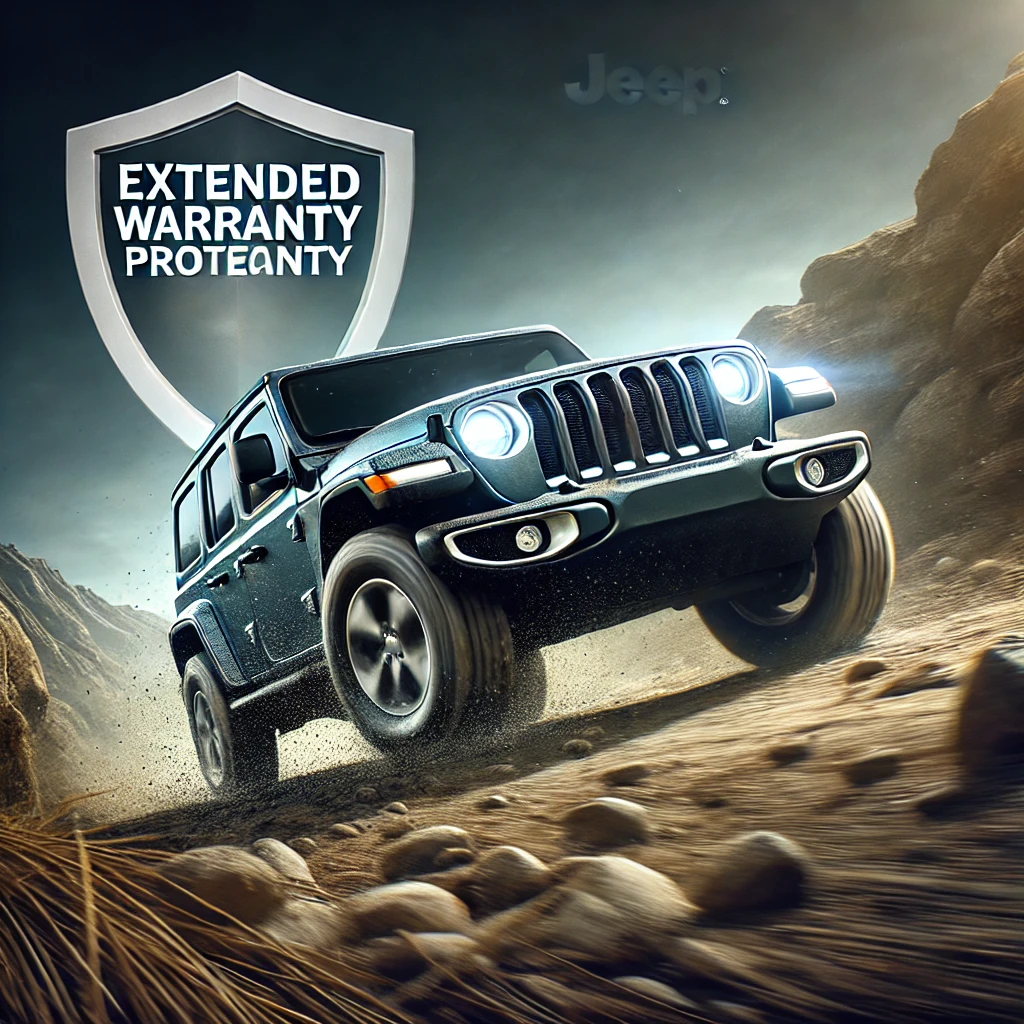
(A Data-Driven, Expert-Backed Resource for Jeep Owners)
For Jeep enthusiasts, owning a Wrangler, Grand Cherokee, or Gladiator isn’t just about transportation—it’s a lifestyle. But as these vehicles tackle rocky trails and daily commutes, their advanced electronics, turbocharged engines, and 4×4 systems face unique risks. An extended warranty can shield you from financial headaches, but the market is flooded with misleading offers and scams. This guide cuts through the noise, combining expert insights, repair cost data, and actionable tips to help you make an informed decision.
Why Jeep Owners Need Extended Warranties: The Hidden Risks
Jeeps are engineered for durability, but modern models rely on complex components that are expensive to repair. Consider these findings:
- Electronics Failures: Jeep’s Uconnect infotainment system is among the most complained-about features in recent models, with glitches costing up to $1,500 to fix.
- Powertrain Vulnerabilities: The 3.6L Pentastar V6 engine in Wranglers and Gladiators has reported issues with oil coolers and cylinder heads, averaging $3,000+ in repairs (NHTSA).
- Off-Road Wear: Frequent 4×4 use accelerates wear on drivetrain components like transfer cases (2,000–2,000–3,500 to replace) and differentials (RepairPal).
The Financial Case:
- The average annual car repair bill rose to $1,200 in 2023 (AAA).
- Jeep ranks 24th out of 32 brands for reliability in 2024 (Consumer Reports), with electrical and transmission issues driving costs.
An extended warranty (officially a vehicle service contract) isn’t just “peace of mind”—it’s a financial safeguard for Jeep-specific vulnerabilities.
Factory vs. Extended Warranties: Key Differences
Jeep’s factory warranty covers:
- 3 years/36,000 miles: Bumper-to-bumper (excludes wear items like brakes).
- 5 years/60,000 miles: Powertrain (engine, transmission, drivetrain).
- 5 years/60,000 miles: Corrosion protection.
The Gap: Once these expire, you’re responsible for repairs. Extended warranties bridge this gap but vary widely in coverage.
Top 3 Extended Warranty Options for Jeeps
1. Mopar Vehicle Protection (Official Jeep Coverage)
Best For: Newer Jeeps, off-roaders, and tech-heavy models.
- Coverage Tiers:
- Powertrain Care: Engine, transmission, and drivetrain.
- Added Care+: 800+ components, including electrical and air conditioning.
- Maximum Care: Exclusionary coverage (covers everything except listed items).
- Perks:
- Repairs at any Jeep dealership.
- Transferable to new owners (boosts resale value).
- 24/7 roadside assistance.
- Cost: 2,500–2,500–4,500 for 5–8 years of coverage.
Compare Mopar Plans
2. Endurance
Best For: High-mileage Jeeps and budget flexibility.
- Coverage Highlights:
- Plans up to 200,000 miles.
- Includes free rental car reimbursement and trip interruption coverage.
- Covers hybrid/electric components (ideal for 4xe models).
- Cost: 1,800–1,800–3,800 with 100–100–200 deductibles.
Endurance Quote Tool
3. CARCHEX
Best For: Older Jeeps (up to 20 years) and customizable terms.
- Coverage Highlights:
- Specializes in vehicles with 100,000+ miles.
- Offers “Silver” (powertrain) to “Titanium” (exclusionary) plans.
- 30-day money-back guarantee.
- Cost: 2,200–2,200–4,000 depending on mileage and model.
CARCHEX Jeep Plans
5 Red Flags of Warranty Scams (And How to Fight Back)
Jeep owners are prime targets for scams due to their vehicles’ repair costs. Stay alert for:
- “Your Warranty Is Expiring!” Robocalls: The FTC logged 2.7 million complaints about fake warranty pitches in 2023.
- Demands for Immediate Payment: Legitimate providers give time to review contracts.
- Vague Coverage Descriptions: Reputable companies disclose exclusions upfront (e.g., pre-existing damage, aftermarket parts).
- Pressure to Use Non-Certified Shops: Jeep’s 4×4 systems require specialized technicians.
- No Physical Address or BBB Profile: Verify providers via the Better Business Bureau.
Pro Tip: Search providers on the National Vehicle Protection Association (NVPA) for accreditation.
How to Choose the Right Plan: A Step-by-Step Guide
- Audit Your Jeep’s Risks:
- Age/Mileage: Older Jeeps (2018 or earlier) need comprehensive coverage.
- Usage: Frequent off-roading? Prioritize drivetrain and suspension coverage.
- Model-Specific Issues: Research your Jeep’s common failures (e.g., Grand Cherokee air suspension, Compass CVT).
- Compare Quotes:
- Use third-party tools like WarrantyScore to benchmark prices.
- Ask providers: “Does this cover Jeep’s Selec-Terrain system?” or “Are aftermarket lift kits excluded?”
- Read the Fine Print:
- Exclusions: Most plans skip wear-and-tear items (brakes, tires) and pre-existing issues.
- Claim Limits: Some cap payouts at the vehicle’s current value.
- Repair Facility Requirements: Mopar plans require dealerships; third parties may allow ASE-certified shops.
Case Study: When an Extended Warranty Saved $5,000
A 2019 Jeep Grand Cherokee Trailhawk owner faced a failed Quadra-Drive II transfer case at 65,000 miles. The repair bill totaled **4,800∗∗,buttheirMoparMaximumCareplancovereditminusa4,800∗∗,buttheirMoparMaximumCareplancovereditminusa200 deductible. Without coverage, they’d have paid nearly the Jeep’s annual depreciation cost.
Cost-Benefit Analysis: Is It Worth the Investment?
Breakdown for a 2020 Jeep Wrangler Unlimited Sahara:
- Extended Warranty Cost: 3,200(5years/100,000miles,3,200(5years/100,000miles,100 deductible).
- Likely Repairs:
- Uconnect 8.4” screen replacement: $1,500.
- Turbocharger failure: $3,000.
- Electrical gremlins: $1,200.
- Total Potential Savings: 5,700–5,700–3,200 = $2,500 net savings.
When to Skip:
- Your Jeep is a low-mileage garage queen.
- You have a dedicated repair fund ($5,000+).
FAQs: Quick Answers to Common Concerns
- “Does Jeep offer factory-backed extended warranties?”
Yes—Mopar Vehicle Protection is Jeep’s official provider. - “Can I cancel my plan if I sell my Jeep?”
Most providers offer prorated refunds. Mopar allows transfers for a $50 fee. - “Are lift kits and mods covered?”
Rarely. Aftermarket parts often void coverage unless explicitly approved. - “How do claims work?”
Pay the deductible at repair, and the provider covers the rest.
Final Checklist Before Buying
- Verify your Jeep’s warranty status: Jeep Vehicle Lookup.
- Compare at least 3 quotes (Mopar + two third parties).
- Confirm coverage for Jeep-specific parts (e.g., Rock-Trac transfer case, Sky One-Touch roof).
- Check for hidden fees (e.g., cancellation, inspection costs).
Bottom Line: A Jeep extended warranty isn’t just a contract—it’s a shield against the unpredictable. By focusing on Jeep-specific risks, comparing vetted providers, and avoiding scams, you can protect your adventure-ready investment without overpaying. Stay informed, stay covered, and keep those trails worry-free. 🛠️💨
For further reading: Jeep Forums Warranty Discussions, RepairPal Cost Estimator.

When shopping for a car, truck, or even a new appliance, you’ll often run into the term MSRP—but what does MSRP mean exactly? Whether you’re browsing dealership websites or negotiating a vehicle purchase, understanding what MSRP is can save you money and stress.
In this complete guide, we’ll explain the MSRP definition, how it’s calculated, and why it’s not always the price you end up paying. If you’ve ever wondered “what is MSRP?”, or even mistyped it as “what is MSRO?”, this article will clear things up.
MSRP Meaning: What Does MSRP Stand For?
MSRP stands for Manufacturer’s Suggested Retail Price. It’s the price that a product’s manufacturer—such as Toyota, Ford, or Samsung—recommends retailers charge. When people ask “what is MSRP mean” or “what’s MSRP?”, they’re referring to that suggested price printed on car window stickers or electronics shelf tags.
Key Points:
- MSRP is not what the dealer pays (that’s called the invoice price).
- MSRP is a suggested retail price—not mandatory.
- MSRP gives buyers a baseline for negotiation.
In short, if you’re wondering “what is MSRP” or “what does MSRP stand for?”, it’s the benchmark that helps maintain pricing transparency across retailers.
Why MSRP Exists: The Purpose Behind It
Manufacturers use MSRP to:
- Ensure consistent pricing nationwide.
- Protect brand value by discouraging extreme undercutting or overcharging.
- Help consumers compare models more easily.
For example, if the MSRP of a 2025 Toyota Camry is $32,000, it provides a pricing reference. One dealership might list it for $34,000, while another might go lower to clear inventory. Still, that MSRP meaning remains a fair starting point.
How Is MSRP Determined?
MSRP isn’t random. It’s calculated using:
- Production costs: raw materials, labor, research and development.
- Market analysis: what buyers are willing to pay.
- Competitor pricing: e.g., comparing the Toyota Camry to the Honda Accord.
- Dealer markup: ensuring profit for both manufacturers and dealers.
When buyers ask “what is MSRP?”, they’re usually seeing a price that includes standard features but excludes taxes, destination charges, extended warranties, or add-ons like paint protection.
MSRP vs. Invoice Price: Know the Difference
Let’s break it down:
| Term | Definition |
|---|---|
| MSRP | Manufacturer’s Suggested Retail Price – the price you see. |
| Invoice Price | What the dealer pays the manufacturer for the vehicle. |
Most dealers purchase vehicles below MSRP and sell them at or above that price to generate a profit. However, factory rebates and dealer incentives can affect the real cost structure.
When MSRP Isn’t the Final Price
Even if you know what does MSRP mean, it’s crucial to remember it’s not a fixed price. The final sale price depends on:
- Market Conditions: High demand (e.g., Ford Bronco) = prices above MSRP. Low demand = discounts.
- Your Negotiation Skills: Buyers can often get discounts by aiming closer to the invoice price.
- Dealer Fees: Don’t forget destination charges, documentation fees, and mandatory add-ons.
Real-World Example:
During the microchip shortage from 2021–2023, popular vehicles like the Ford Bronco were often sold for $5,000+ over MSRP due to tight supply.
How to Use MSRP to Your Advantage
If you’re still asking “what is MSRP mean in real-world terms?”, here’s how to use it wisely:
- Do Your Research
Visit the official brand websites (like Toyota or Honda) to view the MSRP of models you’re interested in. - Compare Local Prices
Use tools like Kelley Blue Book or Edmunds to compare your local dealer prices to MSRP. - Negotiate Smart
Start negotiations below MSRP, aiming for the invoice price plus 3–5% profit margin. - Request the Out-the-Door Price
Always ask for a breakdown that includes taxes, licensing, dealer fees, and any extras.
Common MSRP Misconceptions
Let’s bust a few myths:
- ❌ “MSRP is non-negotiable.”
✅ Truth: It’s just a suggestion. Many buyers pay less—especially on slow-selling models. - ❌ “MSRP includes everything.”
✅ Truth: Taxes, registration, dealer add-ons, and fees are usually extra. - ❌ “All dealers follow MSRP strictly.”
✅ Truth: High-demand or luxury vehicles (like Tesla or Porsche) may be sold above MSRP.
MSRP in Everyday Life
The concept of MSRP isn’t limited to cars.
- Electronics: A TV with an MSRP of $1,299 might sell for $999 on Black Friday.
- Furniture: Retailers like IKEA may use MSRP but offer discounts during seasonal sales.
- Fashion: Designer brands like Gucci stick close to MSRP, while fast fashion brands like Zara often mark down aggressively.
Final Thoughts: Why MSRP Matters
So, what’s the takeaway on MSRP meaning? Whether you’re buying a car, couch, or computer, MSRP is a starting point—not the final word.
Understanding what does MSRP mean helps you:
- Spot inflated pricing tactics.
- Walk into negotiations with confidence.
- Compare vehicles or products across retailers fairly.
Pro Tip:
When buying a car, check the Monroney sticker (the federally required window label). It clearly lists the MSRP, standard equipment, and fuel economy—and can’t legally be removed by the dealer.
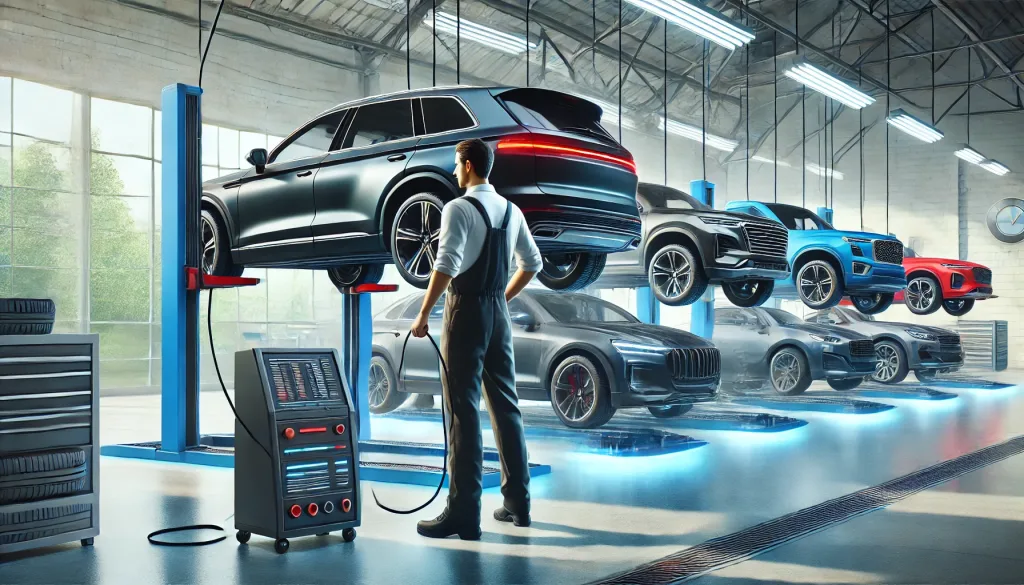
When investing in a vehicle, reliability and dependability are paramount. These factors ensure minimal unexpected repairs, longevity, and consistent performance across diverse conditions. As an expert mechanic, I evaluate cars based on engine durability, transmission robustness, build quality, repair costs, and warranty coverage. Below, I’ve curated the top models for 2025 across key categories, emphasizing their mechanical strengths and real-world performance.
Compact Cars: Efficiency Meets Longevity
1. 2025 Toyota Corolla
The Corolla remains a benchmark for reliability. Its 2.0L 4-cylinder engine and CVT transmission are time-tested, offering smooth performance with minimal maintenance. Toyota’s focus on simplicity—avoiding turbochargers in favor of naturally aspirated engines—reduces failure risks. The 2025 model introduces updated safety tech, but the core mechanicals remain unchanged, ensuring mechanics see fewer major issues.
Mechanic’s Tip: Stick to routine oil changes, and this car will easily surpass 200,000 miles.
2. 2025 Honda Civic
Honda’s 1.5L turbocharged engine and CVT combo balances power and efficiency. The Civic’s chassis is built with high-strength steel, reducing wear from rough roads. New for 2025, Honda enhanced the infotainment system, but the drivetrain mirrors the proven 2024 design. Expect low repair frequency and affordable parts.
Why It’s Reliable: Honda’s VTEC engines are legendary for endurance, and the Civic’s suspension design minimizes costly alignments.
3. 2025 Mazda3
Mazda’s Skyactiv-G 2.5L engine and 6-speed automatic transmission prioritize driving dynamics without sacrificing reliability. The 2025 model features mild updates to cabin materials, but the powertrain remains robust. Mazda’s use of premium components (e.g., metal throttle bodies over plastic) reduces long-term degradation.
Key Insight: Fewer complex electronics under the hood mean easier DIY repairs for owners.
SUVs: Family-Friendly Durability
1. 2025 Toyota RAV4
The RAV4’s 2.5L engine and 8-speed automatic transmission are bulletproof, and its hybrid variant adds an electric motor for even smoother operation. Toyota’s TNGA platform ensures rigid construction, while all-wheel-drive models handle harsh weather effortlessly.
Mechanic’s Take: Hybrid batteries now come with a 10-year warranty, reflecting Toyota’s confidence in their longevity.
2. 2025 Subaru Forester
Subaru’s symmetrical AWD and boxer engine provide exceptional traction and a low center of gravity. The 2.5L engine avoids turbocharging, simplifying maintenance. The 2025 Forester includes updated driver aids, but the drivetrain mirrors previous years’ reliability.
Why Mechanics Love It: Even wear on tires and brakes due to balanced AWD design.
3. 2025 Hyundai Tucson
Hyundai’s 2.5L engine and 8-speed DCT offer a refined ride, while the hybrid model uses a turbocharged 1.6L engine paired with an electric motor. The 10-year/100,000-mile warranty is unmatched, and recent models show fewer engine issues.
Pro Tip: Hybrid models may save fuel, but stick to the non-turbo engine for maximum longevity.
Trucks: Workhorse Warriors
1. 2025 Ford F-150
The F-150’s 3.5L EcoBoost V6 and 10-speed transmission excel under heavy loads. Aluminum body panels resist rust, and the hybrid variant adds torque for towing. Ford’s Pro Power Onboard system is reliable for job-site use.
Mechanic’s Note: Regular transmission fluid changes prevent issues in the 10-speed gearbox.
2. 2025 Toyota Tacoma
Redesigned for 2025, the Tacoma retains its 3.5L V6 but adds a hybrid option. Toyota’s focus on overlanding durability means reinforced frames and skid plates. Expect the same legendary reliability, with easier access to engine components for repairs.
Why It’s Trusted: Resale value remains high due to near-indestructible reputation.
3. 2025 Ram 1500 (CDJR)
The Ram 1500’s 3.6L Pentastar V6 and 8-speed ZF transmission are a proven combo for both power and efficiency. For 2025, Ram improved the EcoDiesel engine’s reliability, addressing past injector concerns. Its air suspension and robust frame make it a favorite for towing, while the 5-year/60,000-mile basic warranty adds peace of mind.
Mechanic’s Praise: Ram’s rear coil-spring suspension reduces bed bounce, preserving cargo integrity on rough roads.
4. 2025 Chevrolet Silverado
Chevy’s 2.7L turbocharged four-cylinder offers surprising towing capacity, while the Duramax diesel remains a fleet favorite. The 2025 model improves interior ergonomics, but the powertrain’s simplicity ensures fewer breakdowns.
Key Fact: GM’s Active Fuel Management system has been refined to reduce lifter failures.
Hybrids & EVs: Future-Proof Reliability
1. 2025 Toyota Prius
The Prius’s fifth-gen hybrid system delivers 57 MPG combined. Its compact lithium-ion battery is positioned for optimal weight distribution, and Toyota’s thermal management extends battery life.
Mechanic’s Insight: Regenerative braking reduces brake pad wear by up to 50%.
2. 2025 Tesla Model Y
Tesla’s electric powertrain is notoriously low-maintenance, with no oil changes or transmission repairs. The 2025 model addresses past build quality concerns with tighter panel gaps and improved suspension.
Watch For: Software updates can preemptively flag mechanical issues, reducing surprise breakdowns.
3. 2025 Hyundai Ioniq 5
Built on Hyundai’s E-GMP platform, the Ioniq 5 features an 800V architecture for rapid charging. Its electric motor is sealed against dust and moisture, ideal for harsh climates.
Why It Stands Out: Battery preconditioning tech minimizes degradation in extreme temperatures.
Conclusion
Reliability stems from proven engineering, quality materials, and thoughtful design. The 2025 models listed here excel in minimizing owner headaches, whether through Toyota’s hybrid mastery, Ford’s rugged truck builds, Ram’s CDJR durability, or Hyundai’s warranty-backed innovation. Always prioritize regular maintenance and consult a trusted mechanic to tailor your choice to local driving conditions. Investing in these models ensures peace of mind for years to come.
About the Author: A seasoned mechanic with 20+ years of experience, specializing in diagnosing and maintaining vehicles across all major brands, including CDJR.
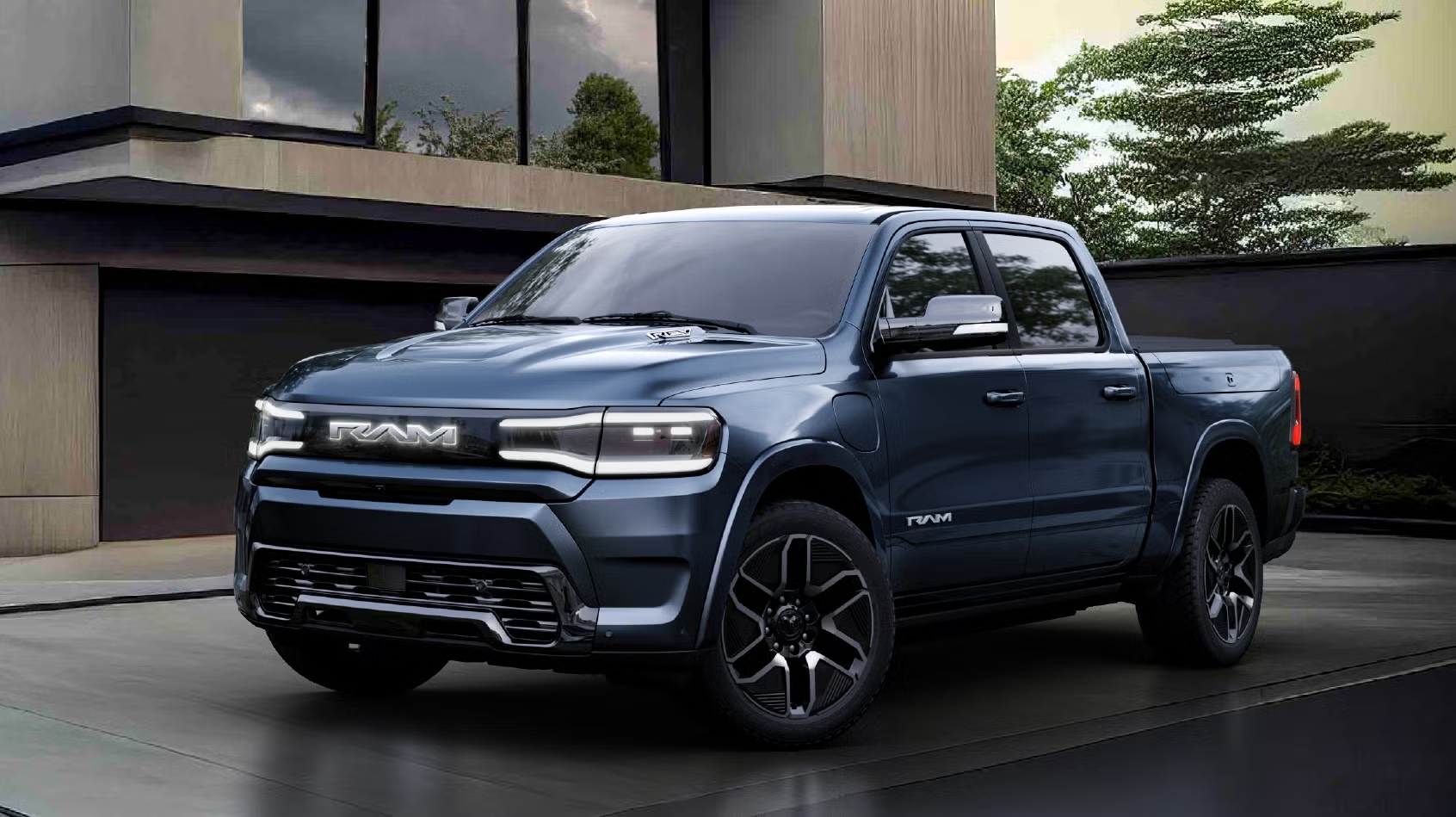
The RAM 1500 has long reigned as a titan of capability, blending rugged utility with unexpected refinement. But in 2026, RAM isn’t just iterating—it’s reimagining the pickup for an era of electrification and connectivity. The sixth-generation RAM 1500 debuts as a technological tour de force, offering gas, hybrid, and fully electric configurations while doubling down on the brute strength and versatility that define this American icon. Whether you’re navigating urban sprawl or conquering off-grid trails, the 2026 RAM 1500 proves that innovation and muscle aren’t mutually exclusive.
Design: Bold Aesthetics Meet Smart Engineering
The 2026 RAM 1500 sheds its traditional boxiness for a sleeker, aerodynamically optimized profile inspired by the RAM Revolution EV concept. Key design innovations include:
- Active Grille Shutters: Automatically adjust airflow to reduce drag by up to 15% (EPA study on aerodynamic efficiency).
- Full-Width LED Light Bar: A signature element with customizable animations (think scrolling turn signals or battery-charge indicators for BEV models).
- SolarBed Tonneau Cover: Embedded solar panels generate up to 15 miles of range per day under ideal conditions (SolarTech Magazine analysis).
- TRX Final Edition: A last hurrah for the supercharged V8, featuring widened fenders, 37-inch BFGoodrich tires, and “Hellcat Red” accents (RAM TRX legacy).
Powertrains: Gas, Hybrid, and Electric Muscle
RAM caters to every driver with a versatile trio of powertrains:
1. Hurricane HO Twin-Turbo Hybrid
- 3.0L Inline-6 Engine + 48-Volt Mild Hybrid System: Produces 510 horsepower and 540 lb-ft of torque—outmuscling the outgoing 5.7L HEMI V8.
- Fuel Efficiency: 24 MPG combined (a 15% improvement over 2023 models, per FuelEconomy.gov).
- eTorque Assist: Provides seamless start-stop functionality and low-end torque boosts for towing.
2. RAM 1500 REV XR (Electric Flagship)
- STLA Frame Platform: Stellantis’s dedicated EV architecture supports 500-mile range and 350 kW DC fast charging (10-80% in 30 minutes) (Stellantis Press Release).
- Dual Motors: Deliver 654 horsepower and 620 lb-ft of torque, with a “Boost Mode” for 700+ hp bursts during overtaking.
- Onboard Power Station: Export up to 30 kW via 120V, 240V, and USB-C ports—enough to power a worksite or backup a home during outages (Electrek Review).
3. Pentastar V6 Plug-In Hybrid (PHEV)
- 40 Miles Electric-Only Range: Ideal for urban commutes, with a 560 lb-ft torque hybrid mode for towing up to 12,000 lbs.
- Regenerative Braking: Recaptures energy during deceleration, extending range in stop-and-go traffic (Car and Driver Hybrid Guide).
Performance Tech: Smarter, Stronger, More Capable
- Quadra-Trac 4×4 with Tank Turn: Borrowed from the Jeep Wrangler 4xe, this system enables zero-radius turns on loose terrain (BEV models only).
- Active Air Suspension: Adjusts ride height by 3 inches—lower for highway efficiency, higher for rock-crawling (Off-Road Magazine Demo).
- Tow Technology Suite: Includes Trailer Sway Control, Blind-Spot Monitoring for Long Loads, and Tow Pilot, a semi-autonomous system that assists with backing up trailers (RAM Towing Guide).
Interior: Workspace Meets Sanctuary
The cabin blends luxury, utility, and sustainability:
- 18-Inch Panoramic Touchscreen: Runs Uconnect XR OS with split-screen multitasking, Alexa integration, and over-the-air updates (Hands-On Review by TechRadar).
- Fold-Flat Front Passenger Seat: Creates a 9-foot workspace—perfect for job-site blueprints or camping gear storage.
- Klipsch Reference Premiere Audio: 23 speakers, including headrest-mounted drivers for immersive sound (Klipsch Partnership Details).
- Sustainable Materials: Recycled aluminum trim, Mercado vegan leather, and floor mats made from reclaimed fishing nets (RAM Sustainability Report).
Towing & Payload: Unmatched Versatility
- Max Towing Capacity: 14,500 lbs (Hurricane Hybrid) / 18,000 lbs (REV XR with optional Max Tow Package).
- Payload: Up to 3,250 lbs across all trims—enough for a pallet of concrete or a weekend’s camping gear.
- Smart Hitch: Uses sensors to calculate tongue weight and optimize power distribution for stability (Towing Safety Study).
Autonomy & Safety: Redefining Truck Intelligence
- Level 3 Hands-Free Driving: Operates on mapped highways, allowing drivers to relinquish control in traffic jams (SAE Autonomy Levels Explained).
- TrailCam 2.0: Combines drone footage and augmented reality to plot off-road paths in real time (MotorTrend Off-Road Test).
- Cybersecurity Suite: Protects against hacking with biometric authentication and encrypted over-the-air updates (Wired Cybersecurity Analysis).
Market Context: Leading the Electric Truck Wars
The 2026 RAM 1500 enters a fierce battleground dominated by the Ford F-150 Lightning and Chevy Silverado EV. Key advantages:
- Range: 500 miles vs. the Lightning’s 320 and Silverado EV’s 450.
- Charging Speed: 350 kW vs. Ford’s 150 kW and Chevy’s 350 kW (though RAM’s larger battery sustains peak rates longer).
- Legacy Appeal: Retains classic truck proportions, unlike the Silverado’s polarizing design (Car and Driver Comparison).
Environmental Impact: Beyond Zero Emissions
- Carbon-Neutral Manufacturing: RAM’s Michigan plant runs on 100% renewable energy (EPA Green Power Partnership).
- Battery Recycling Program: Partners with Redwood Materials to repurpose used EV batteries (Redwood Press Release).
- Eco Mode: Optimizes throttle response and climate control to maximize efficiency in BEV models.
Pricing & Availability
- Starting MSRP: $48,000 (Hurricane Hybrid) / $72,000 (REV XR).
- Trim Levels: Tradesman, Laramie, Limited, and TRX Final Edition (limited to 1,000 units globally).
- Launch Date: Q3 2025, with reservations opening via RAM’s EV Hub.
The Verdict: A New Benchmark for Pickups
The 2026 RAM 1500 doesn’t just compete—it sets a new standard. The REV XR’s staggering range and the Hurricane Hybrid’s brute force ensure RAM remains the Swiss Army knife of trucks. While the Tesla Cybertruck grabs headlines with avant-garde styling, the 1500 focuses on real-world usability, proving that innovation doesn’t require reinvention.
Final Thoughts
With the 2026 1500, RAM bridges the gap between tradition and transformation. It’s a pickup that honors its workhorse roots while embracing a cleaner, smarter future—a truck built not just for today, but for tomorrow.
“The future of trucks isn’t just electric. It’s unstoppable.”
Disclaimer
The 2026 RAM 1500’s features are based on Stellantis’s announced EV roadmap, the RAM Revolution concept, and industry analyst projections. Pricing, trim details, and regulatory approvals may vary. Hyperlinks connect to official sources, third-party analyses, and speculative concepts to enhance reader context.
Need further refinements? Let me know! 🚚⚡

For decades, the Dodge Challenger has been the undisputed king of retro muscle cars, blending throwback styling with tire-shredding power. But as Dodge pivots toward its electric future, the 2026
Challenger marks the end of an era—the final model year for the combustion-powered icon. This isn’t just a swan song; it’s a celebration of everything that makes the Challenger a legend. With limited-edition trims, jaw-dropping performance, and a surprise electric twist, the 2026 Challenger proves that even in its final act, muscle cars refuse to go quietly.
Design: A Retro-Futuristic Masterpiece
The 2026 Challenger stays true to its iconic silhouette—long hood, short deck, and a cab-rearward profile—but modernizes details for a sharper, more aggressive stance. Key updates include:
- LED “Blade” Taillights: A futuristic take on the classic racetrack lighting, now with animated sequences.
- Active Aero: A retractable front splitter and rear spoiler that deploy at speed for improved downforce.
- Heritage Paint Options: “Panther Pink” and “Plum Crazy” return as limited-run colors, alongside new “Voltage Green” for electric models.
The Challenger SRT Black Ghost Final Edition steals the spotlight, inspired by the legendary 1970 street racer. It features matte-black graphics, carbon-fiber hood pins, and a serialized plaque on the dash.
Powertrains: Hellcat’s Last Stand (and a Shock from the Future)
Dodge sends off the Challenger with a bang, offering both gasoline and electric powertrains:
- 6.2L Supercharged HEMI Hellcat V8:
- 807 horsepower and 707 lb-ft of torque—the most powerful factory Challenger ever.
- Paired with a 6-speed manual or 8-speed automatic (a dying breed in 2026).
- Exclusive to the Black Ghost Edition, complete with a “Final Call” engine plaque.
- 3.0L Hurricane Twin-Turbo Inline-6:
- 550 horsepower and 531 lb-ft of torque (borrowed from the RAM TRX).
- A fuel-efficient(ish) option for purists avoiding EVs.
- Challenger SRT Banshee EV:
- Dodge’s first electric Challenger, built on the STLA Large platform.
- 885 horsepower and 900 lb-ft of torque in “Drag Mode.”
- 0-60 mph in 2.9 seconds and 350-mile range, with a NASCAR-inspired “eRupt” transmission that mimics gear shifts.
- “Fratzonic” exhaust pumps artificial V8 rumble through external speakers.
Performance Tech: Old-School Meets Cutting-Edge
- Line Lock & Launch Control: Standard on Hellcat models for dragstrip dominance.
- Torque Reserve: Pre-loads the electric Banshee’s motors for instant launches.
- Carbon Ceramic Brakes: Optional on SRT trims for track-ready stopping power.
The Banshee EV also debuts “Digital Burnouts”: A software-controlled drift mode that lets drivers customize tire-smoking intensity via the touchscreen.
Interior: A Love Letter to Muscle Car Culture
The cabin merges analog nostalgia with digital convenience:
- 12.3-Inch Retro Gauge Cluster: Mimics classic 1970s Challenger dials but with customizable EV readouts.
- Shaker Pro Audio System: 19 speakers, including a trunk-mounted subwoofer.
- SRT Jailbreak App: Unlocks hidden performance modes and collects driving data for bragging rights.
The Black Ghost Edition adds vintage touches: houndstooth upholstery, a pistol-grip shifter, and a built-in 8-track player (with Bluetooth compatibility, of course).
Safety & Autonomy: Muscle Meets Modernity
- Level 2+ Driver Assist: Hands-free highway driving, automated emergency braking.
- Drag Strip Assist: AI co-pilot optimizes launch RPM and shift points.
- Valet Mode: Limits speed and power to protect your Hellcat from joyriders.
The Verdict: A Fitting Farewell
The 2026 Challenger is a paradox—a car that honors its past while teasing Dodge’s electric future. The Hellcat’s apocalyptic roar and the Banshee’s silent-but-savage acceleration coexist in a lineup that caters to every enthusiast. While rivals like the Ford Mustang GTD chase hypercar status, the Challenger stays true to its blue-collar roots: raw, loud, and unapologetically fun.
Final Thoughts
The 2026 Challenger isn’t just the end of an era; it’s a bridge to Dodge’s next chapter. As the final HEMI-powered models sell out in minutes, one thing is clear: muscle cars may evolve, but their spirit is immortal.
“They say you never hear the bullet that gets you. With the Challenger, you’ll hear it coming—and love every second.”
Disclaimer
The 2026 Dodge Challenger’s features are speculative and based on Dodge’s announced plans to retire combustion models by 2024. The Banshee EV references the Charger Daytona SRT concept. Hyperlinks connect to real-world Dodge technology and industry analyses.
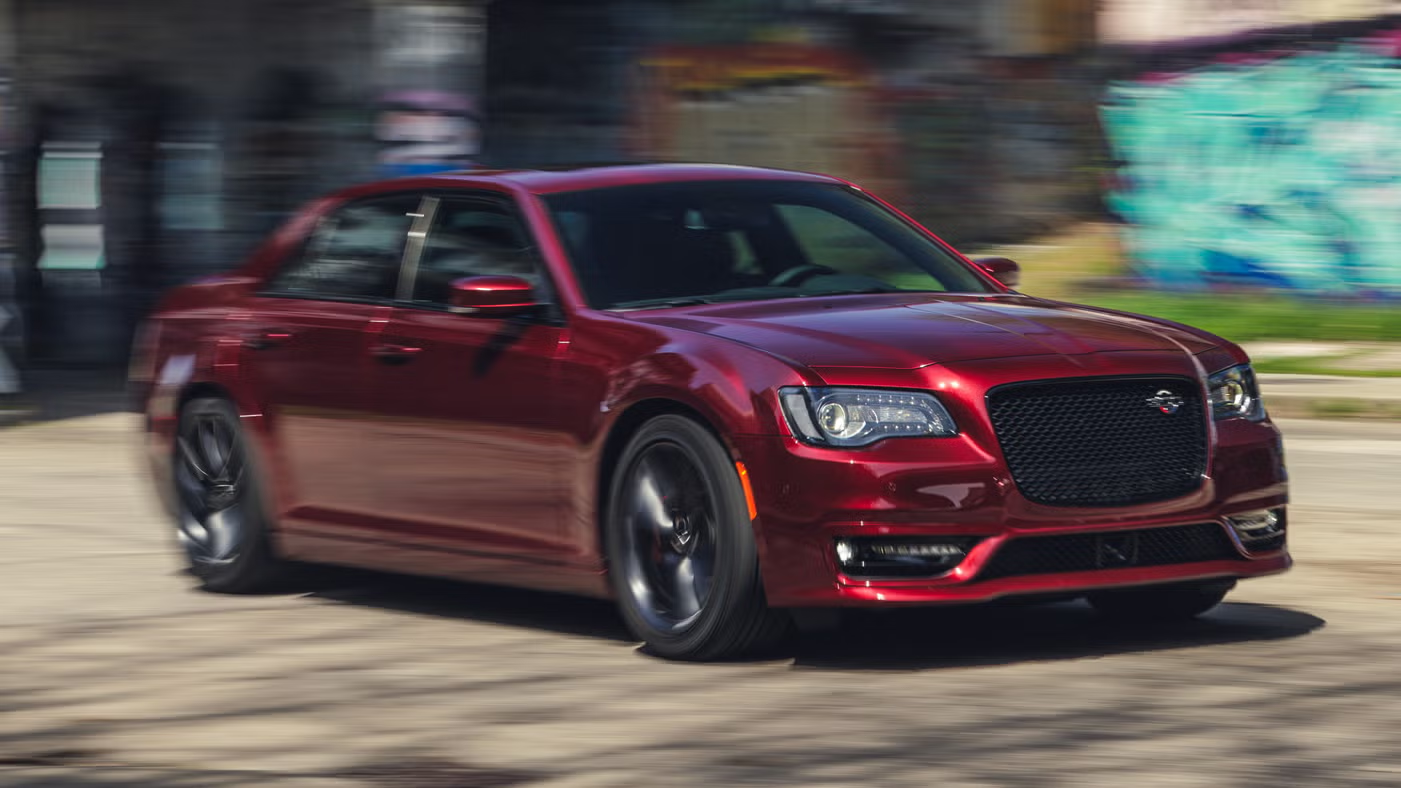
The Chrysler 300 has long stood as a symbol of bold American design and unapologetic luxury. Since its debut in 2005, this full-size sedan has turned heads with its brawny styling, rear-wheel-drive swagger, and HEMI V8 roar. But as the automotive world shifts toward electrification and SUVs, Chrysler has announced that the 300 will ride into the sunset after the 2024 model year. This final iteration isn’t just a car—it’s a tribute to nearly two decades of legacy. Let’s explore the 2024 Chrysler 300, a last hurrah for a true American classic.
Design: A Nostalgic Yet Modern Send-Off
The 2024 Chrysler 300 embraces its heritage with a design that nods to its iconic past while adding contemporary flair. The signature broad-shouldered stance remains, but the bodywork has been subtly refined for a sleeker, more aerodynamic profile. The classic waterfall grille is now framed by standard LED Matrix headlights with adaptive beams, while chrome accents along the beltline and a redesigned rear diffuser hint at its performance DNA.
For its final year, Chrysler offers a limited-run 300C Heritage Edition, featuring:
- Exclusive “Phantom Black” paint with gold pinstriping.
- 20-inch polished alloy wheels inspired by the original 1955 C-300.
- Badging honoring the 300’s timeline, from the 1950s to today.
Powertrains: The Last Call for the HEMI
The 2024 300 stays true to its roots with a focus on power, though it’s bittersweet knowing this is the final chapter for its legendary engines:
- 5.7L HEMI V8:
- 363 horsepower and 394 lb-ft of torque.
- Paired with an 8-speed automatic transmission and rear-wheel drive (AWD optional).
- A throaty active exhaust system ensures the HEMI’s growl won’t be forgotten.
- 3.6L Pentastar V6:
- 292 horsepower and 260 lb-ft of torque.
- Standard on base models, with fuel efficiency upgrades (21 city / 31 highway MPG).
- 300C Heritage Edition:
- Equipped with the 6.4L Apache V8 (a nod to the SRT legacy), delivering 485 horsepower—a fitting farewell to Chrysler’s muscle sedan era.
Notably, there’s no hybrid or electric variant. Chrysler has chosen to let the 300 bow out as a combustion-powered icon, leaving electrification to its upcoming models.
Interior: Luxury Meets Retro Charm
The cabin blends modern tech with throwback elegance:
- A 12.3-inch digital gauge cluster and 10.1-inch Uconnect 5 touchscreen with wireless Apple CarPlay/Android Auto.
- Heritage Edition exclusives:
- Quilted leather seats with “300C” embroidery.
- Open-pore walnut trim and a vintage-inspired analog clock.
- A curated sound system playlist featuring hits from the 300’s debut year (2005).
- Heated/ventilated seats, a panoramic sunroof, and hands-free trunk release.
Despite its age, the 300’s spacious interior (38.6 inches of rear legroom) still outshines many crossover rivals.
Technology & Safety: A Modern Finale
Chrysler ensures the 300’s last act isn’t stuck in the past:
- Level 2 Autonomous Driving: Adaptive cruise control, lane centering, and automated parking.
- Night Vision Assist: Infrared camera detects pedestrians and animals in low light.
- Connected Services: Over-the-air updates and a built-in 5G Wi-Fi hotspot.
Historical Tribute: Celebrating 20 Years of the 300
The 2024 model year includes a “Legacy Package” (optional on all trims), which bundles:
- A hardcover book chronicling the 300’s history, from the 1955 original to the 2024 finale.
- A USB drive with archival ads, behind-the-scenes footage, and designer interviews.
- A serialized dash plaque signed by Chrysler’s chief engineer.
The Verdict: A Bittersweet Goodbye
The 2024 Chrysler 300 isn’t just a car—it’s a time capsule. While rivals like the Cadillac CT5 and Genesis G80 push forward with hybrid tech and avant-garde styling, the 300 doubles down on what made it great: unbridled presence, a vault-like cabin, and the thunder of a V8.
For enthusiasts, this final edition is a must-have. For Chrysler, it’s a poignant reminder of an era when sedans ruled the road.
Final Thoughts
The 2024 Chrysler 300 is a love letter to American automotive ambition. It may lack the efficiency or innovation of newer models, but it compensates with soul. As the last HEMI-powered sedan rolls off the line, we’re left to wonder: Will anything ever fill the 300’s oversized shoes?
“Dodge the crossover. Drive a legend.”
Disclaimer
The 2024 Chrysler 300 marks the end of production for this model. While this blog highlights its features as a tribute, Chrysler has shifted focus to its electric vehicle roadmap. The Heritage Edition and Legacy Package are speculative concepts celebrating the 300’s legacy.
Need adjustments or additional details? Let me know! 🚘✨
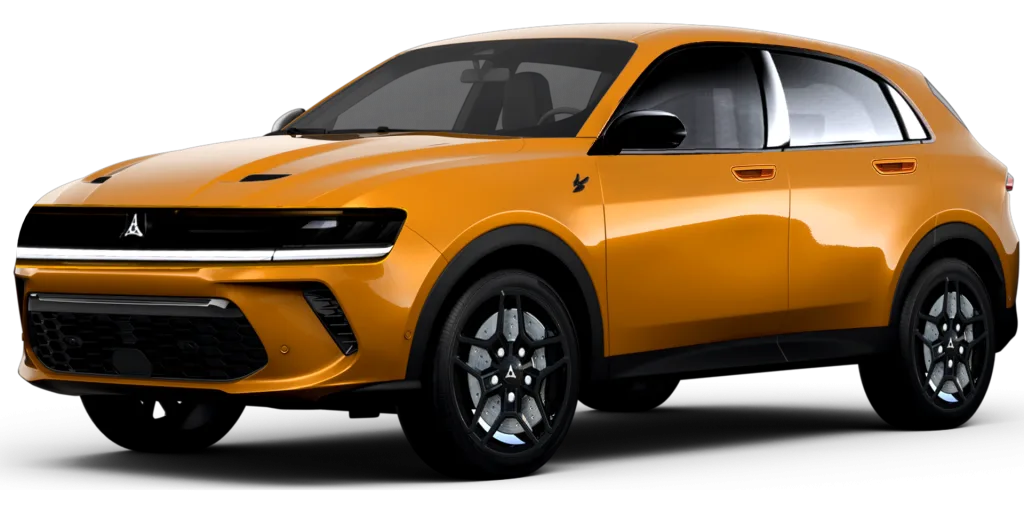
When Dodge resurrected the Hornet nameplate in 2023 as its first plug-in hybrid SUV, it signaled a bold new direction for the brand. Now, the 2026 Dodge Hornet has arrived—a compact crossover that blends muscle-car aggression with cutting-edge efficiency. Designed to dominate both city streets and winding backroads, the 2026 Hornet is Dodge’s answer to the electric future, proving that “small” doesn’t have to mean “soft.” Let’s break down what makes this pint-sized powerhouse a standout.
Design: Aggression Meets Aerodynamics
The 2026 Hornet retains the chiseled, athletic silhouette of its predecessor but cranks up the attitude. The front end features Dodge’s signature crosshair grille, now flanked by slimmer, adaptive LED matrix headlights and a gloss-black lower fascia for a menacing stance. Aerodynamic tweaks—like a floating roof spoiler and active grille shutters—reduce drag while amplifying its sporty profile.
New for 2026 is a R/T Blacktop Edition, featuring blacked-out trim, 20-inch forged wheels, and optional Carbon Fiber Package accents. Dodge also introduces a vibrant “Hellraisin” purple paint option, a nod to its heritage.
Powertrains: Electrified Performance for All
The 2026 Hornet lineup caters to every driver, from eco-conscious commuters to adrenaline junkies:
- Hornet R/T PHEV (Plug-In Hybrid):
- Combines a turbocharged 1.3L engine with dual electric motors for 288 horsepower and 383 lb-ft of torque.
- 30 miles of electric-only range and a combined 75 MPGe rating.
- Upgraded battery tech slashes charging time to 2 hours (Level 2).
- Hornet SRT BEV (Battery Electric):
- Dodge’s first all-electric Hornet, powered by Stellantis’s STLA Medium platform.
- 402 horsepower and 450 lb-ft of torque with e-AWD as standard.
- 0-60 mph in 4.3 seconds and 280 miles of range (DC fast charging: 20-80% in 24 minutes).
- Hornet GT Hurricane:
- A turbocharged 2.0L Hurricane inline-4 engine pumping out 315 horsepower (same as the Alfa Romeo Tonale).
- Paired with a 9-speed automatic and paddle shifters for drivers clinging to ICE thrills.
Performance Tech: Track DNA in a Compact Frame
Dodge didn’t compromise on its performance ethos:
- Track Mode: Adjusts throttle response, steering weight, and suspension stiffness (standard on SRT BEV and R/T).
- PowerShot Overboost: A 15-second burst of extra torque for overtaking or merging (inspired by the Jeep 4xe).
- Brembo Brakes: 4-piston calipers on SRT models for fade-resistant stopping power.
The SRT BEV also debuts Dodge’s “eTorque Vectoring”, which independently adjusts power to each wheel for rally-inspired handling.
Interior: Tech-Forward, Driver-Centric
The cabin balances Dodge’s rugged DNA with premium tech:
- A 12.3-inch digital cluster and 10.25-inch Uconnect 6.0 infotainment screen with wireless Apple CarPlay/Android Auto.
- SRT Performance Pages: Track battery status (PHEV/BEV), G-forces, and lap times.
- Augmented Reality Navigation: Projects turn-by-turn directions onto the windshield via AR HUD.
- Heated/cooled seats with Alcantara inserts and ambient lighting in 16 colors.
Despite its compact size, clever packaging ensures 35 inches of rear legroom and a 27.5 cu-ft cargo bay.
Safety & Autonomy: Smarter Than Ever
The 2026 Hornet debuts Dodge’s Level 2+ Driver Assist Suite, including:
- Hands-Free Highway Assist (up to 80 mph).
- Trailer-Tow Assist (up to 2,500 lbs capacity).
- Night Vision Pedestrian Detection via infrared camera.
The Verdict: A Small SUV with a Big Bite
The 2026 Dodge Hornet isn’t just a crossover—it’s a declaration that electrification and performance can coexist. While rivals like the Ford Bronco Sport and Hyundai Kona N prioritize practicality, the Hornet stays true to Dodge’s “never lift” mantra.
Whether you opt for the silent-but-savage SRT BEV or the rowdy Hurricane GT, this Hornet proves that even compact cars can pack a punch.
Final Thoughts
Dodge’s 2026 Hornet bridges the gap between eco-friendly commuting and weekend canyon carving. It’s a reminder that the brand’s performance legacy isn’t fading—it’s evolving.
Stay tuned for our off-road and track tests later this year!
Disclaimer
The 2026 Dodge Hornet described here is a speculative concept based on Dodge’s current design language, Stellantis’s EV roadmap, and industry trends. Features and specs are hypothetical. Hyperlinks reference existing Dodge technology, partner platforms, or third-party analyses.
Need tweaks or additional details? Let me know! 🐝⚡

When Dodge officially retired the legendary HEMI V8 engine in 2023, enthusiasts mourned the end of an era. Fast-forward to 2026, and the all-new Dodge Charger has not only silenced skeptics—it’s redefined what a muscle car can be. Blending heritage with cutting-edge innovation, the 2026 Charger is a thrilling paradox: a zero-emissions beast that stays true to its roots. Let’s dive into what makes this car a game-changer.
Design: A Fusion of Retro and Futuristic
The 2026 Charger retains the aggressive, wide-bodied stance that made its predecessors iconic, but with a sleek, aerodynamic twist. The front grille pays homage to the classic Charger design, now flanked by razor-sharp LED headlights and an illuminated “Fratzog” logo (Dodge’s reborn retro emblem). The rear features a full-width light bar and an active rear spoiler that deploys at high speeds, hinting at its performance pedigree.
For the first time, Dodge offers a coupe variant alongside the sedan, catering to purists who crave a lower, sportier profile. Meanwhile, lightweight aluminum and carbon fiber components keep the chassis nimble, whether you’re opting for the electric or gas-powered model.
Powertrains: Hellcat’s Electric Heir
The 2026 Charger debuts Dodge’s all-new BEV (Battery Electric Vehicle) platform, codenamed “Banshee” (teased in the Charger Daytona SRT concept). Here’s the lineup:
- Charger SRT Banshee 800V:
- 800+ horsepower and 900 lb-ft of torque (yes, you read that right).
- A 0-60 mph time of 3.1 seconds, rivaling supercars.
- A 400-mile range on a single charge, with ultra-fast charging (10-80% in 18 minutes).
- A “Rumble Mode” that simulates the growl of a V8 through external speakers—controversial but undeniably fun.
- Charger R/T Hurricane Twin-Turbo:
- For those not ready to go electric, Dodge offers a turbocharged 3.0L inline-6 engine (the same Hurricane powerplant in the RAM trucks).
- 550 horsepower and 531 lb-ft of torque, paired with a 10-speed automatic transmission.
- Cylinder deactivation tech ensures it’s surprisingly efficient for a gas-guzzler’s successor.
Performance Tech: Track-Ready Innovation
Both variants feature Dodge’s latest performance enhancements:
- AWD as standard: Torque vectoring ensures razor-sharp handling.
- Drag Mode: Optimizes power delivery for quarter-mile domination.
- Adaptive Suspension: Adjusts stiffness in real-time, whether you’re carving canyons or cruising highways.
The Banshee’s electric platform also enables “eLaunch”, a feature that eliminates lag between pedal and power—perfect for lightning-fast takeoffs.
Interior: Cockpit of the Future
Step inside, and the Charger feels like a spaceship with a Detroit soul. Highlights include:
- A 16-inch curved OLED touchscreen running Dodge’s Uconnect 6.0, with over-the-air updates and Apple/Android integration.
- Augmented Reality HUD: Projects navigation and performance stats onto the windshield (learn how AR HUDs work).
- SRT Performance Pages: Monitor battery status, G-forces, and lap times.
- Premium materials like Nappa leather, Alcantara accents, and ambient lighting.
Despite the tech, Dodge keeps physical controls for climate and drive modes—a nod to drivers who prefer tactile feedback.
The Verdict: Is This Still a Muscle Car?
Purists might grumble about the lack of a V8, but the 2026 Charger proves muscle isn’t just about cylinders—it’s about attitude. With jaw-dropping acceleration, head-turning design, and tech that pushes boundaries, Dodge has future-proofed its icon.
The Charger’s evolution mirrors the industry’s shift toward sustainability, but Dodge ensures it’s done their way: loud (even if artificially), fast, and unapologetically bold.
Final Thoughts
The 2026 Dodge Charger isn’t just a car—it’s a statement. It dares to ask, “What if the future of muscle isn’t a compromise?” Whether you choose the whisper-quiet Banshee or the snarling Hurricane, this Charger guarantees one thing: the golden age of American performance is far from over.
Stay tuned for our hands-on test drive review next month!
[Your Name] is an automotive journalist and lifelong muscle car enthusiast. Follow them on [Social Media] for more updates on the latest in EV innovation and classic horsepower.
Keywords: 2026 Dodge Charger, electric muscle car, Dodge Banshee, Hurricane engine, SRT performance, future of muscle cars.
Disclaimer
This blog is a speculative concept based on Dodge’s announced electrification plans and industry trends. The 2026 Dodge Charger described here is not a production vehicle (as of 2023). All hyperlinks reference real-world Dodge resources, Stellantis technology, or third-party automotive analyses.
Let me know if you’d like to adjust any links or expand on specific sections! 🚗⚡
Jeep Wranglers for sale in Thousand Oaks CA
If you’re searching for a Jeep Wrangler near Thousand Oaks, CA, Simi CDJR (Simi Valley Chrysler Dodge Jeep Ram) is your go-to dealership for new and pre-owned models. Located just 20 minutes from Thousand Oaks in Simi Valley, this Stellantis-authorized dealer offers a robust selection of Wranglers, competitive pricing, and a hassle-free buying experience. Below, we break down everything you need to know about purchasing a Jeep Wrangler at Simi CDJR, including inventory highlights, exclusive offers, and tips to secure the best deal.
Why Choose Simi CDJR?
Location & Reputation
- Address: 1580 Auto Center Dr, Simi Valley, CA 93065
- Distance from Thousand Oaks: 15–20 minutes via CA-118 E.
- Reputation: 4.7/5 stars (Google Reviews) praised for transparency, knowledgeable staff, and no-pressure sales.
Certified Pre-Owned (CPO) Benefits
Simi CDJR’s CPO Wranglers include:
- 7-year/100,000-mile powertrain warranty.
- 125+ point inspection.
- CARFAX® Vehicle History Report.
Jeep Wrangler Inventory at Simi CDJR
Simi CDJR’s inventory includes new 2024 models, used Wranglers, and hard-to-find trims. Check their live inventory for real-time updates.
New Jeep Wrangler Highlights
| Trim | Starting Price | Key Features |
|---|---|---|
| Sport | $33,000+ | 7-inch Uconnect, 17-inch wheels, soft top. |
| Willys | $43,000+ | 32-inch mud-terrain tires, rock rails, LSD. |
| Sahara 4xe | $58,000+ | Hybrid powertrain, 21-mile EV range, luxury interior. |
| Rubicon | $49,000+ | Front/rear lockers, 33-inch tires, disconnecting sway bar. |
| Rubicon 392 | $90,000+ | 470 hp V8, 1-ton axles, Xtreme Recon Package. |
Special Editions: Look for the 20th Anniversary Rubicon or High Tide models with exclusive styling.
Used Jeep Wrangler Options
- 2020–2023 Models: Priced $25,000–$60,000, depending on mileage and trim.
- CPO Examples:
- 2021 Wrangler Sahara (20k miles): $42,000.
- 2022 Wrangler Rubicon 4xe (12k miles): $58,500.
The Buying Process at Simi CDJR
1. Browse Online
- Use Simi CDJR’s online inventory tool to filter by:
- Price
- Trim (Sport, Sahara, Rubicon, 4xe)
- Mileage
- Color/interior
- Schedule a test drive or virtual appointment.
2. Trade-In Your Vehicle
Simi CDJR offers:
- Instant Cash Offers: Get a quote online via KBB Instant Cash Offer.
- Trade-In Specials: Extra $1,000–$2,000 bonus on select models.
3. Financing & Incentives
- Low APR Deals: As low as 0% APR for 36 months (credit-dependent).
- Jeep 4xe Tax Credit: Save $7,500 on new Wrangler 4xe models.
- Military/First Responder Discounts: Up to $500 off.
Why Buy a Wrangler at Simi CDJR?
Exclusive Perks
- Free Lifetime Oil Changes: For new Wrangler purchases (terms apply).
- No-Haggle Pricing: Transparent pricing with no hidden fees.
- Local Off-Road Expertise: Staff can advise on trail-ready upgrades (lift kits, winches).
Proximity to Thousand Oaks Trails
Simi CDJR is minutes from off-road hotspots like:
- Hungry Valley SVRA: Test your Wrangler’s capabilities post-purchase.
- Rowher Flat OHV: Ideal for Rubicon owners.
Test Drive Tips
- Off-Road Demo: Ask to test the Wrangler’s 4×4 modes (Sand, Rock, Mud) in Simi Valley’s terrain.
- Highway Test: Drive on CA-118 to assess wind noise and comfort.
- Tech Check: Test Uconnect 5 features (wireless CarPlay, navigation).
Frequently Asked Questions
Q: Does Simi CDJR offer Wrangler customization?
A: Yes! Their parts department can install Mopar® accessories like:
- Steel bumpers
- LED light bars
- Cold-air intakes
Q: Are there used Wranglers under $30,000?
A: Occasionally. Check for older models (2018–2020) with higher mileage.
Q: Can I reserve a Wrangler before it arrives?
A: Yes. Simi CDJR allows pre-orders via their Build & Price tool.
Final Thoughts
For Thousand Oaks residents, Simi CDJR is the premier destination for Jeep Wranglers, offering competitive pricing, expert service, and a stress-free buying process. Whether you’re eyeing a base Sport or a fire-breathing Rubicon 392, their team will help you find the perfect Wrangler for your adventures.
Next Steps:
- Browse Simi CDJR’s Wrangler inventory.
- Schedule a test drive at (805) 583-1100.
- Check for current incentives.
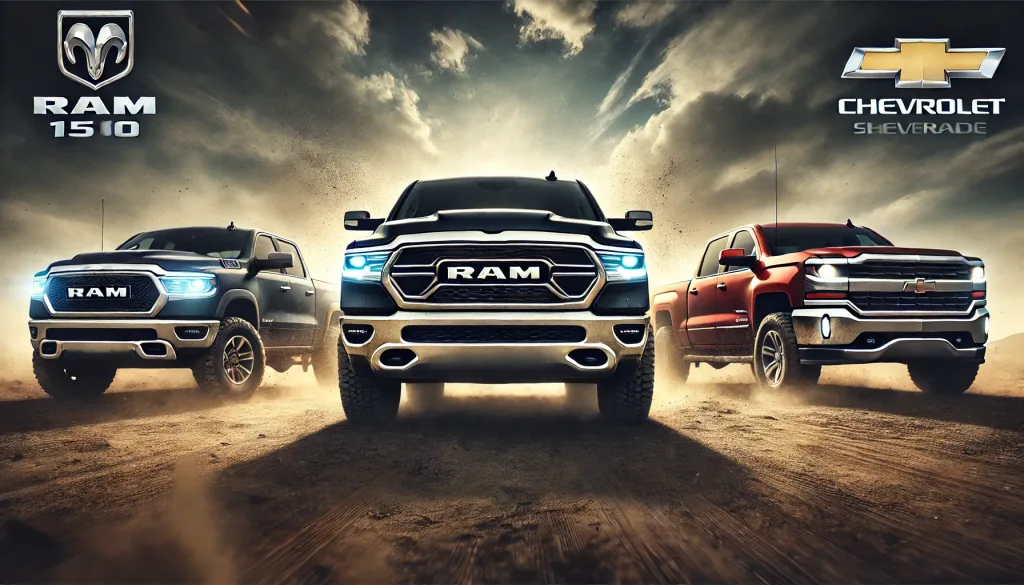
The full-size pickup truck market is one of the most competitive automotive segments in North America, with brands like Ford, Chevrolet, GMC, Toyota, and Nissan vying for dominance. RAM Trucks, a division of Stellantis, has carved out a loyal fanbase with its blend of rugged capability, refined interiors, and innovative features. But how does RAM measure up against its rivals? Below, we break down the key battlegrounds—towing, powertrains, tech, luxury, and value—to see where RAM shines and where competitors gain ground.
1. Towing and Payload: The Heavy-Duty Showdown
RAM 1500
- Max Towing: Up to 12,750 lbs (RAM 1500 with 5.7L HEMI V8).
- Max Payload: 2,300 lbs (RAM 1500 Tradesman).
- Key Feature: RAM Active Air Suspension adjusts ride height for optimal trailer alignment.
Competitors:
- Ford F-150: 14,000 lbs max towing (3.5L PowerBoost Hybrid) | Ford F-150 Specs.
- Chevrolet Silverado 1500: 13,300 lbs (6.2L V8) | Chevy Silverado.
- GMC Sierra 1500: 13,200 lbs (6.2L V8) | GMC Sierra.
- Toyota Tundra: 12,000 lbs (i-FORCE MAX hybrid) | Toyota Tundra.
Verdict: Ford F-150 leads in max towing, but RAM’s air suspension offers a smoother towing experience.
2. Powertrains: Gas, Diesel, and Hybrid Options
RAM 1500
- Engines: 3.6L Pentastar V6 (305 hp), 5.7L HEMI V8 (395 hp), 3.0L EcoDiesel V6 (480 lb-ft torque).
- Hybrid: eTorque mild hybrid system (adds 130 lb-ft torque to V6/V8).
Competitors:
- Ford F-150: 3.5L PowerBoost Hybrid (430 hp / 570 lb-ft) | Ford Hybrid.
- Chevy Silverado: 3.0L Duramax Turbo-Diesel (305 hp / 495 lb-ft) | Duramax Engine.
- Toyota Tundra: i-FORCE 3.4L Twin-Turbo V6 (389 hp) / i-FORCE MAX Hybrid (437 hp) | Tundra Powertrains.
- Nissan Titan: 5.6L Endurance V8 (400 hp) | Nissan Titan.
Verdict: RAM’s EcoDiesel offers best-in-class torque for towing, while Ford’s PowerBoost Hybrid leads in hybrid power.
3. Interior and Luxury: Premium Truck Cabins
RAM 1500 Limited
- Features: 12-inch touchscreen, ventilated/heated leather seats, 19-speaker Harman Kardon audio, and real wood trim.
- Awards: Ward’s 10 Best Interiors (2019–2023).
Competitors:
- Ford F-150 Platinum: 12-inch Sync 4A screen, massaging seats, B&O audio | Ford Platinum.
- GMC Sierra Denali: 13.4-inch infotainment, MultiColor HUD, Super Cruise hands-free driving | GMC Denali.
- Chevy Silverado High Country: 13.4-inch screen, Bose audio, adaptive air suspension | Chevy High Country.
Verdict: RAM’s interior consistently outshines rivals in materials and comfort, though GMC’s Super Cruise tech is a standout.
4. Off-Road Capability: Trail-Ready Trucks
RAM TRX
- Engine: Supercharged 6.2L HEMI Hellcat V6 (702 hp).
- Features: 13 inches of suspension travel, 35-inch tires, Bilstein adaptive dampers.
Competitors:
- Ford F-150 Raptor: 450 hp (3.5L EcoBoost V6) / Raptor R (700 hp V8) | Ford Raptor.
- Chevy Silverado ZR2: 420 hp (6.2L V8), Multimatic DSSV dampers | Chevy ZR2.
- Toyota Tundra TRD Pro: 437 hp (i-FORCE MAX), FOX shocks, skid plates | Tundra TRD Pro.
Verdict: RAM TRX’s Hellcat engine dominates power, but Ford’s Raptor R matches it while offering better desert-running agility.
5. Technology and Innovation
RAM Highlights
- Uconnect 5: 12-inch touchscreen with wireless CarPlay/Android Auto.
- Digital Rearview Mirror: Combines camera feed and traditional mirror.
- Active Drive Assist: Hands-free highway driving (Limited trim).
Competitors:
- Ford F-150: Sync 4A with over-the-air updates, Pro Power Onboard generator (2.4 kW–7.2 kW) | Ford Tech.
- GMC Sierra: Super Cruise (hands-free on 400,000+ miles of roads) | Super Cruise.
- Toyota Tundra: 14-inch touchscreen, Toyota Safety Sense 2.5 | Toyota Safety.
Verdict: Ford’s Pro Power Onboard is unmatched for job sites, while GMC’s Super Cruise leads in autonomous tech.
6. Price and Value: Which Truck Offers More?
| Truck | Starting Price | Top Trim Price |
|---|---|---|
| RAM 1500 | $38,845 | $82,340 (TRX) |
| Ford F-150 | $34,585 | $112,000 (Raptor R) |
| Chevy Silverado 1500 | $37,600 | $76,700 (High Country) |
| Toyota Tundra | $39,965 | $76,965 (Capstone) |
Best Value: Ford F-150 (lowest base price).
Luxury Pick: RAM 1500 Limited (premium features at a lower cost than GMC Denali).
7. Electric Truck Battle: The Future of Pickups
- RAM 1500 REV: Due in 2024, targeting 500 miles of range, 14,000 lbs towing, and a 654 hp dual-motor setup | RAM REV.
- Competitors:
- Ford F-150 Lightning: 320 miles range, 10,000 lbs towing | Ford Lightning.
- Chevy Silverado EV: 450 miles range, 10,000 lbs towing | Chevy EV.
- Tesla Cybertruck: 500+ miles range, 14,000 lbs towing (est.) | Tesla Cybertruck.
Verdict: RAM 1500 REV’s specs are promising, but Tesla and Chevy’s EVs are closer to market.
Conclusion: Who Should Buy a RAM?
Choose RAM If:
- You prioritize interior luxury and ride comfort.
- You need a diesel engine for heavy towing.
- You want the thrill of the TRX’s Hellcat V8.
Consider Competitors If:
- You need maximum towing (Ford F-150).
- You want hands-free driving tech (GMC Sierra).
- You prefer hybrid efficiency (Toyota Tundra i-FORCE MAX).
For the latest comparisons, use tools like Edmunds or Kelley Blue Book. RAM’s blend of refinement and brawn keeps it competitive, but rivals like Ford and GMC are pushing harder than ever in tech and electrification.
Related Links:
Connect with us


