




“New brakes” usually means brake pads or brake shoes, and sometimes rotors or drums if they are worn, warped, or below minimum thickness. There is no single universal interval because brake wear is driven by friction, heat, vehicle weight, and driving environment. That said, there are reliable mileage ranges and inspection habits you can use to stay ahead of it.
If you want a professional inspection or brake repair on a Chrysler, Dodge, Jeep, or Ram, start here:
https://www.simivalleychryslerdodgejeepram.com/service.aspx
https://www.simivalleychryslerdodgejeepram.com/book-your-service.html
The realistic mileage range for brake pads
For most modern vehicles, brake pads commonly last somewhere around 30,000 to 70,000 miles, but that range can swing wider depending on use and pad material. (Northside Ford)
A more conservative way to think about it is:
- City driving, hills, heavy loads, frequent stop and go: pads can wear faster, sometimes closer to the lower end of typical ranges.
- Mostly highway cruising, gentle braking, flat terrain: pads often last longer, sometimes reaching the higher end of the normal range. (AutoZone.com)
If you want a clean, practical benchmark for planning purposes, use this:
- Plan on checking brake pads every oil change
- Expect replacement sometime between 30,000 and 70,000 miles
- Expect earlier replacement if you do mostly city, hills, towing, or heavy payloads (Northside Ford)
How long do rotors last?
Rotors often last longer than pads, but not always. Many drivers can get around 60,000 miles or more in lighter use, while heavy stop and go use can shorten rotor life significantly.
If you want a planning range, a common expectation is:
- Rotors can last 30,000 to 70,000 miles, and sometimes longer depending on conditions and how the brakes are serviced. (CarParts)
Important nuance: rotors do not always need replacement every time you do pads. A good technician measures rotor thickness, checks runout, and looks for heat spotting, cracking, and uneven wear before deciding whether to resurface or replace.
For a brake inspection and measurement-based recommendation, use the service entry points here:
https://www.simivalleychryslerdodgejeepram.com/service.aspx
https://www.simivalleychryslerdodgejeepram.com/book-your-service.html
Front brakes vs rear brakes
On most vehicles, front pads wear faster than rear pads because the front axle does more of the braking work due to weight transfer under deceleration. That means it is normal to replace front pads more often.
However, some vehicles with aggressive rear brake bias, certain stability control tuning, or heavy rear loads can wear rears faster. The only correct way to know is inspection.
A better way to think about “how often” is inspections, not mileage
Because the range is wide, the best practice is:
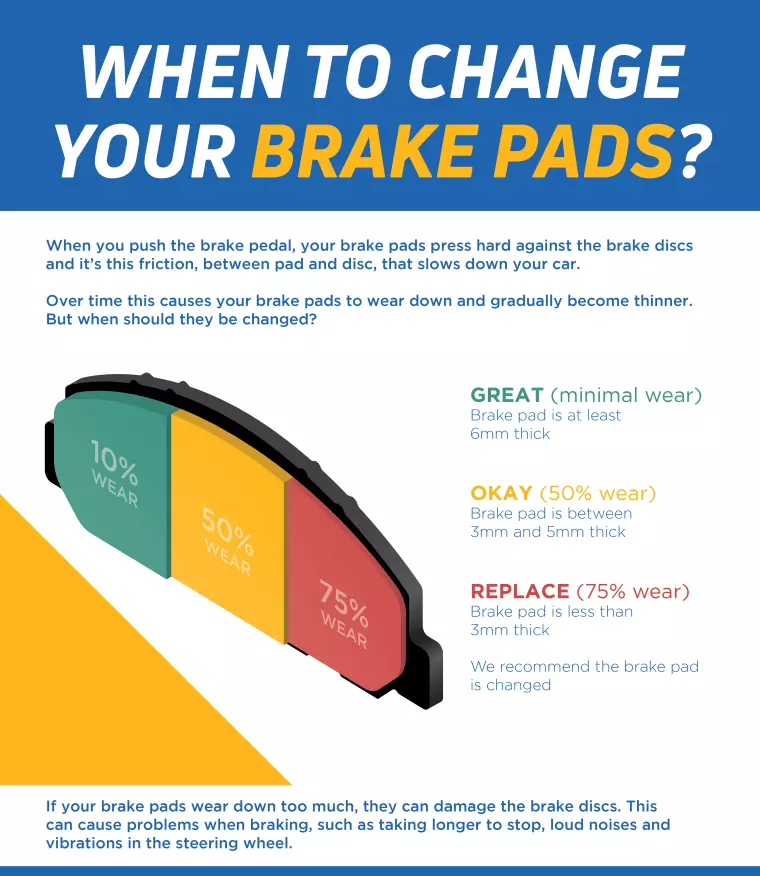
- Inspect pad thickness regularly, not just when symptoms start.
- Replace pads when they reach the minimum safe thickness range recommended by manufacturers and service standards.
- Evaluate rotors by measurement and condition, not guesswork.
Many pads have wear indicators designed to alert you as they approach the end of life. (Firestone Complete Auto Care)
Signs you likely need new brakes now
Mileage is only a planning tool. The decision is made by symptoms and measurements. These are the most common real-world indicators that it is time to inspect, and often replace, brake components:
1) Squealing or chirping during braking
Many pads have a metal wear tab that contacts the rotor when the pad material is low. That creates a high-pitched squeal designed to get your attention. (Firestone Complete Auto Care)
2) Grinding, scraping, or metal-on-metal noise
Grinding is a red flag because it can mean the friction material is gone and you are into backing plate contact. This can quickly damage rotors and push the repair from “pads” to “pads plus rotors.” (Subaru of Ontario)
3) Vibration or pulsation in the pedal or steering wheel
This can indicate rotor thickness variation, heat spots, or runout issues. Mopar notes that jittering, jerking, and vibration sensations are warning signs worth addressing. (blog.mopar.com)
4) Soft or mushy pedal feel
A mushy pedal can be related to brake fluid condition, air in the system, or other hydraulic concerns. Mopar specifically calls out “mushy” pedal feel as a symptom to take seriously. (blog.mopar.com)
5) Pulling left or right under braking
Pulling can indicate uneven pad wear, caliper issues, or hydraulic imbalance. Mopar flags pulling as a brake warning sign. (blog.mopar.com)
6) Increased stopping distance or reduced brake response
If your braking performance feels worse, do not wait for a noise. Performance drop is a common sign that pads are worn or there is another brake system issue. (Subaru of Ontario)
If any of these apply, book a check:
https://www.simivalleychryslerdodgejeepram.com/book-your-service.html
What factors change brake life the most?
Here is what moves you toward the low end or high end of brake life.
Driving environment
- Stop and go traffic: more braking events per mile equals faster wear.
- Hills and mountain roads: more heat and repeated braking cycles.
- Short trips: brakes can see frequent heat cycling without long cooldown periods.
- Wet or dusty environments: can accelerate corrosion and contamination.
City driving and aggressive stop and start can shorten rotor life dramatically compared with gentle highway driving. (AutoZone.com)
Driving style
- Late braking, hard braking, and riding the brakes will wear pads faster.
- Smooth deceleration, longer following distances, and earlier lift-off reduce wear.
Vehicle weight and use case
- Trucks and large SUVs often stress brakes more because there is more mass to slow down.
- Towing and hauling increases brake workload and heat.
- Performance trims or larger wheels can change brake hardware and heat behavior.
Brake pad material
- Ceramic pads: often quieter, low dust, may last longer in some conditions, but feel and heat behavior varies by application.
- Semi-metallic pads: often good bite and heat tolerance, sometimes more dust and noise.
- Organic pads: softer, can wear faster depending on formulation.
Material impacts wear rate, heat performance, and rotor wear. The best choice depends on how you drive and what the vehicle is designed for.
Brake system health
A stuck caliper slide pin, a dragging caliper, or uneven piston movement can destroy pad life quickly on one corner. This is why a proper brake service includes hardware inspection, not just pad swapping.
A practical replacement schedule that actually works
If you want a simple plan that will keep you out of “surprise brake job” territory, use this.
Every 5,000 to 10,000 miles (or every oil service)
- Quick visual inspection of pad thickness
- Check for uneven wear
- Look for leaks, torn dust boots, or abnormal rotor scoring
Every 20,000 to 30,000 miles
- More thorough inspection
- Measure pad thickness and rotor thickness
- Inspect caliper operation and slide hardware
- Check fluid condition if pedal feel is changing
At the first sign of noise, vibration, pull, or soft pedal
- Diagnose immediately, not later
Simi Valley CDJR lists brake repair and fluid checks among its service capabilities, which is exactly what you want when you are diagnosing symptoms instead of guessing. (Simi Valley Chrysler Dodge Jeep Ram)
Service link: https://www.simivalleychryslerdodgejeepram.com/service.aspx
“Do I need pads, rotors, or both?”
This is the question that matters for cost and safety.
You likely need pads if:
- Pad thickness is low but rotors are within spec and not damaged.
- No major vibration or pulsation.
- Rotor surfaces are healthy and wear is even.
You may need rotors and pads if:
- Rotors are below minimum thickness
- Rotors are heat spotted, cracked, badly scored, or warped
- There is consistent pulsation under braking
- Pads wore down to metal and rotor damage occurred
Rotors can sometimes warp or develop thickness variation earlier in harsh city use, while highway use can extend their life. (AutoZone.com)
How long do brakes last in years?
If you drive an average number of miles per year, the pad mileage range often works out to something like 3 to 7 years, but it depends heavily on your annual miles and driving conditions. (Northside Ford)
If you drive relatively little, you still should not ignore brakes. Corrosion, sticking hardware, and old fluid can create problems even when miles are low.
Safety and cost reality: waiting usually costs more
A common pattern is: squeal ignored becomes grinding, and grinding becomes rotors. The longer you wait once symptoms start, the more likely collateral damage becomes. That is why inspections are cheaper than repairs.
If you are hearing noise or feeling vibration, it is better to get a measured diagnosis rather than drive until it gets worse:
https://www.simivalleychryslerdodgejeepram.com/book-your-service.html
Bottom line
Most drivers will need brake pads somewhere around 30,000 to 70,000 miles, and rotors often last longer but can fall in similar ranges depending on conditions. (Northside Ford)
The most reliable approach is to inspect regularly and act on symptoms plus measurements, not just mileage.
Connect with us


