





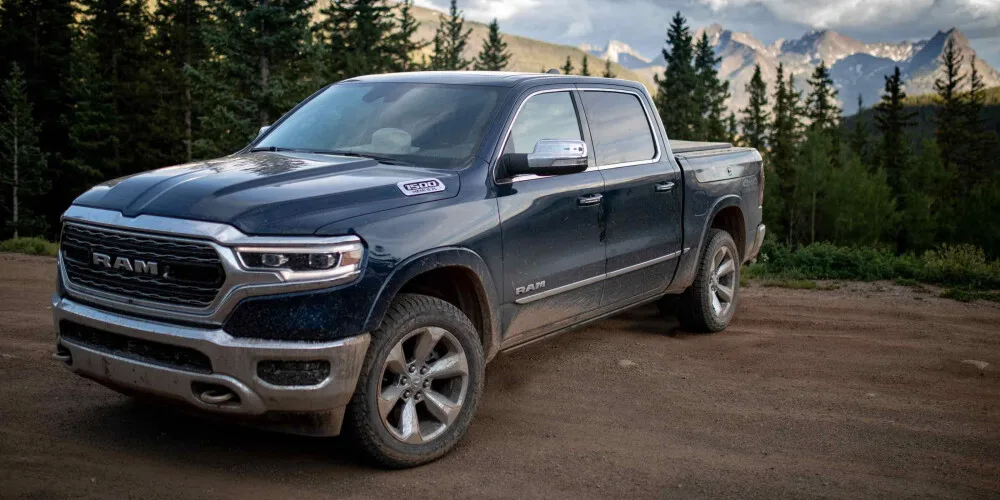
The short answer: a Ram 1500 typically weighs between 4,800 and 5,800 pounds
(about 2,180 to 2,630 kg).
But that range exists for a reason. There is no single fixed weight for a Ram 1500. The number changes significantly based on configuration. Cab style, drivetrain, engine, bed length, trim level, suspension, and factory options all alter curb weight — sometimes by more than 1,000 pounds between two trucks that share the same model name.
That’s why asking “how much does a Ram 1500 weigh?” doesn’t have one correct number — only correct ranges.
This guide breaks it down properly, the way engineers, fleet managers, and serious buyers look at it.
Understanding What “Weight” Actually Means
Before numbers, you need clarity on terminology:
Curb weight
= The weight of the truck itself with fluids, no passengers, no cargo, no trailer.
GVWR (Gross Vehicle Weight Rating)
= Maximum legal weight of the truck plus everything in it.
Payload capacity
= GVWR − curb weight
Most people asking about weight mean curb weight, not GVWR. That’s the base mass of the truck before you load it.
Real-World Ram 1500 Weight Range
Here’s the realistic expert range for modern Ram 1500 trucks:
Typical Curb Weight Range
👉 4,800–5,800 lbs
(2,180–2,630 kg)
This includes:
- 2WD and 4WD
- Quad Cab and Crew Cab
- Short and long beds
- V6 and V8 engines
- Standard and luxury trims
- Stock suspension setups
A stripped-down work configuration sits near the low end.
A fully loaded 4WD Crew Cab with a long bed, large wheels, air suspension, tow package, and luxury features sits near the high end.
Why the Weight Varies So Much
Two Ram 1500s can weigh very differently because of these variables:
1. Drivetrain
- 2WD: lighter
- 4WD: heavier
4WD adds:
- Transfer case
- Front differential
- CV axles
- Additional driveshafts
- Reinforced components
Typical weight increase: 200–300+ lbs
2. Cab Configuration
- Regular Cab = lightest
- Quad Cab = heavier
- Crew Cab = heaviest
More doors, more structure, more glass, more airbags, more seats, more electronics = more mass.
3. Bed Length
- Short bed = lighter
- Standard bed = heavier
- Long bed = heaviest
Steel length directly equals weight.
4. Engine Choice
- V6 engines = lighter
- V8 engines = heavier
- Hybrid systems = heavier still
Engines bring:
- Cooling systems
- Exhaust systems
- Transmission load changes
- Drivetrain reinforcement
5. Trim Level
Luxury trims add real weight:
- Larger infotainment systems
- Power seats
- Sound insulation
- Driver-assist systems
- Bigger wheels and tires
- Panoramic roofs
- Electronic modules
- Air suspension components
Modern trucks carry far more equipment than older trucks, and every feature adds pounds.
Typical Configuration Weights
Here are realistic real-world examples:
Ram 1500 2WD, Quad Cab, short bed
→ ~4,800–5,000 lbs
Ram 1500 4WD, Quad Cab, short bed
→ ~5,100–5,250 lbs
Ram 1500 4WD, Crew Cab, short bed
→ ~5,300–5,500 lbs
Ram 1500 4WD, Crew Cab, long bed, loaded
→ ~5,600–5,800 lbs
These are not brochure numbers — these are practical engineering ranges.
Why Weight Matters in the Real World
Truck weight affects everything important:
Payload Capacity
Payload is what you can carry in the cab and bed.
Payload = GVWR − curb weight
Heavier truck = lower payload.
Example:
- Curb weight: 5,600 lbs
- GVWR: 7,100 lbs
→ Payload: 1,500 lbs
Lighter configuration:
- Curb weight: 4,900 lbs
- Same GVWR
→ Payload: 2,200 lbs
Same model. Huge difference in usable capacity.
Towing Performance
Weight affects towing in two ways:
- Stability: heavier trucks feel more planted
- Capacity math: heavier trucks reduce available towing margin
Maximum tow ratings are achieved on light configurations, not luxury builds.
Fuel Economy
Mass affects:
- Acceleration efficiency
- City fuel economy
- Braking energy loss
- Drivetrain strain
Heavier trucks consume more fuel, especially in stop-and-go driving.
Ride and Handling
Weight improves highway stability but:
- Increases braking distance
- Increases inertia in turns
- Increases wear on suspension
- Increases brake load
- Increases tire wear
It’s a trade-off between comfort, stability, and efficiency.
Why Modern Ram 1500s Are Heavier Than Older Trucks
Modern half-ton trucks are heavier because of:
- Crash safety structures
- Reinforced frames
- Side-impact protection
- Multiple airbag systems
- Advanced electronics
- Emissions equipment
- Larger brakes
- Larger cooling systems
- Infotainment systems
- Sound insulation
- Driver-assistance systems
- Hybrid components (on newer models)
This is regulatory, safety, and consumer-driven weight — not inefficiency.
Aftermarket Modifications That Increase Weight
Many trucks exceed factory curb weight due to mods:
- Steel bumpers
- Winches
- Lift kits
- Larger wheels and tires
- Toolboxes
- Bed racks
- Roof racks
- Camper shells
- Auxiliary fuel tanks
- Skid plates
- Armor systems
It’s common for modified Ram 1500s to gain 300–800+ lbs over factory weight.
Curb Weight vs GVWR (Critical Distinction)
People often confuse these:
Curb weight: empty truck
GVWR: fully loaded truck limit
Payload and towing math depend on GVWR, not curb weight alone.
If you don’t understand this difference, you will miscalculate capacity.
How to Find the Exact Weight of Your Ram 1500
If you need precise numbers:
1. Driver-side door sticker
Lists:
- GVWR
- GAWR
- Factory ratings
2. VIN build sheet
Shows exact configuration and factory specs.
3. Owner’s manual
Contains weight tables by configuration.
4. Public vehicle scale
Most accurate method, especially if modified.
Comparison Context
For perspective:
Midsize trucks:
~4,000–4,500 lbs curb weight
Half-ton trucks (Ram 1500):
~4,800–5,800 lbs curb weight
Heavy-duty trucks (2500/3500):
6,000+ lbs curb weight
The Ram 1500 sits exactly where a modern half-ton should.
Common Misconceptions
“All Ram 1500s weigh the same.”
False. Configuration matters.
“Heavier means stronger.”
False. Engineering matters more than mass.
“Lighter trucks tow better.”
Not always. Stability and braking matter too.
“Weight doesn’t matter for daily driving.”
False. It affects fuel economy, braking, handling, and wear.
Expert Summary
A Ram 1500 typically weighs:
👉 ~4,800 to ~5,800 lbs
👉 Depends on configuration
👉 Cab, bed, drivetrain, engine, trim, and options all matter
👉 No single correct number exists
This is normal for a modern full-size half-ton pickup.
Final Takeaway
If you’re asking “how much does a Ram 1500 weigh,” the correct expert answer is not a number — it’s a range.
Because the truck is a platform, not a single configuration.
Light builds = higher payload, better efficiency.
Heavy builds = more comfort, more features, more stability.
But every pound affects:
- Payload
- Towing
- Fuel economy
- Handling
- Braking
- Suspension wear
- Tire wear
- Operating cost
So weight is not trivia — it’s a functional spec that shapes how the truck actually performs in real life.
Bottom Line
A Ram 1500 weighs between ~4,800 and ~5,800 pounds, depending on configuration.
If you need the exact number:
- Use the VIN
- Check the door sticker
- Weigh the truck
That’s the only accurate method.
Connect with us


